 Michelle
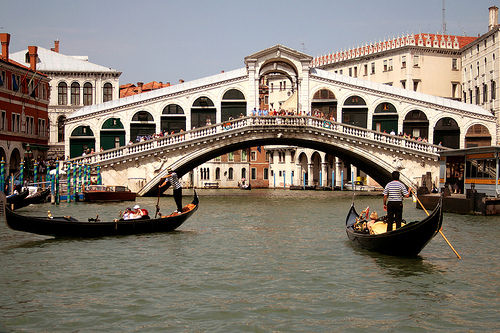
 Most people who go to Venice for the first time go to see the canals. They go to stand on the Rialto Bridge, to visit the Basilica di San Marco, to take a gondola at sunset. All of these things are exactly as beautiful as promised, and none of them will disappoint you. But there is another Venice that most visitors barely touch: the Venice of the table, of the canal-side bacaro at midday, of the glass of chilled Prosecco and the plate of sarde in saor, of the fish market at dawn and the baccala mantecato that takes three hours to prepare and lasts on your palate for the rest of the day. The food of Venice is as extraordinary as its canals, and it is one of the most underappreciated culinary traditions in all of Italy. This article is for those who want both: the three places you absolutely must visit, and the food that will make the whole experience complete.
Place 1: The Rialto Market and the Living Heart of Venice
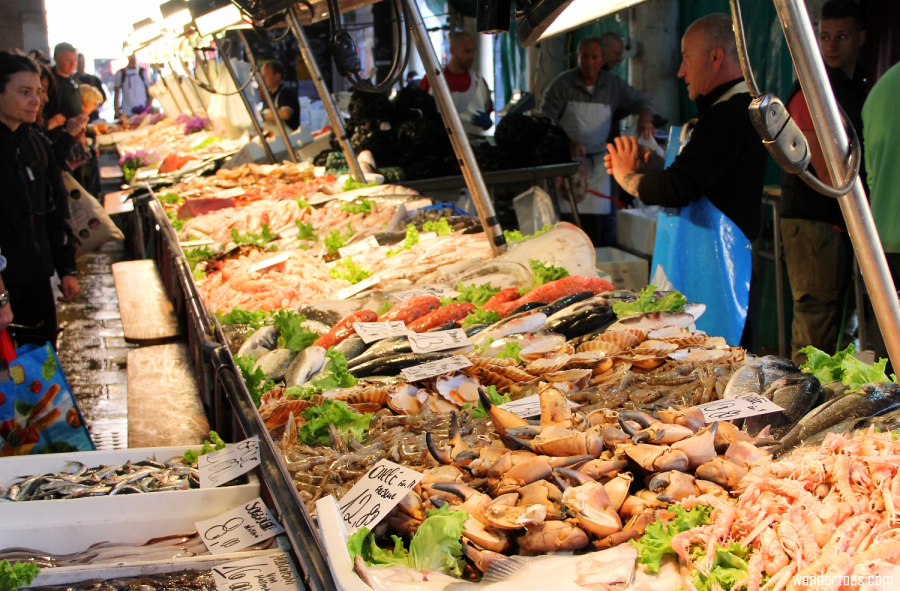
If Venice has a beating heart, it is here. The Mercato di Rialto, operating on the San Polo bank of the Grand Canal since at least the twelfth century, is one of the oldest and most atmospheric markets in Italy, and a visit to it tells you more about how Venice actually works than any number of museums or guided tours. The market is divided into two sections: the Pescheria, the fish market, and the Erberia, the fruit and vegetable market. Both are free to walk through, both are extraordinary, and both are at their best on weekday mornings between 7am and 10am.
The Pescheria occupies a neo-Gothic loggia built directly on the canal in 1907, and its marble slabs display a catch that reflects the extraordinary biodiversity of the Venetian lagoon and the northern Adriatic. You will see moleche, the soft-shell crabs unique to the lagoon, available only in spring and autumn during the brief window when the crabs moult their shells; moeche in their crispy fried form are one of the great seasonal delicacies of Venetian cuisine. You will see canestrelli (small scallops), caparossoli (clams), canoce (mantis shrimp, known elsewhere as cicale di mare), and the extraordinary schie, tiny grey lagoon shrimps so delicate that they must be boiled alive and served immediately. On the vegetable side, look for radicchio di Treviso, the long-leafed bitter red chicory from the nearby mainland, and carciofi violetti, the small purple artichokes of Sant'Erasmo island in the lagoon, available in spring and as different from a supermarket artichoke as a fresh truffle is from a jar of truffle oil.
The area around the Rialto market is also the finest territory in Venice for the bacaro experience. The cluster of traditional wine bars immediately adjacent to the market, including the celebrated All'Arco on Calle dell'Arco, open from early morning and serving the freshest cicchetti in the city (the ingredients sourced directly from the market stalls opposite), represents everything that is most genuine and most pleasurable about eating in Venice.
Go very early. The Rialto fish market closes by midday and is at its absolute best before 9am, when the catch is freshest and the atmosphere most authentic. Venetian chefs and restaurateurs arrive at dawn to make their selections. The tourist crowds begin to appear around 10am. If you want to see the market at its most vital, set your alarm for 7am and walk there before breakfast. You will be rewarded.
Place 2: The Gallerie dell'Accademia
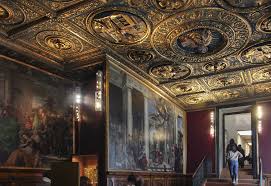
The Gallerie dell'Accademia contains the greatest collection of Venetian painting in the world, assembled over centuries in the former monastery and scuola of Santa Maria della Carita in the Dorsoduro sestiere. To walk through its rooms is to trace the entire arc of Venetian artistic achievement from the Byzantine-influenced altarpieces of the fourteenth century through the golden age of the sixteenth century and into the extraordinary twilight of the eighteenth.
The collection is anchored by works that belong to the first rank of European art: Giovanni Bellini's luminous altarpieces, their figures bathed in a warm, contemplative light that no other painter of his generation could approach; Giorgione's mysterious and endlessly discussed La Tempesta, a painting that has resisted definitive interpretation for five centuries and continues to exert an almost hypnotic fascination; Titian's magnificent Presentation of the Virgin, still in the room for which it was commissioned and therefore perfectly integrated into the architectural space in a way that no museum installation could replicate; Veronese's vast Feast in the House of Levi, originally painted as a Last Supper and so lavish in its depiction of a Venetian aristocratic banquet that the Inquisition summoned the artist to account for its irreverence; and Tintoretto's cycle of paintings for the Scuola di San Marco, works of almost reckless energy and ambition that still feel startling five hundred years after their creation.
Allow at least three hours for a proper visit to the Accademia, and book your ticket online in advance to avoid queues that in high season can be substantial. The museum cafe is serviceable but not remarkable: save your appetite for the bacari of the nearby Zattere waterfront, where you can decompress over a glass of wine and a plate of cicchetti after the intensity of the paintings.
Beyond the Accademia: the Peggy Guggenheim Collection. A five-minute walk from the Accademia along the Grand Canal brings you to the Peggy Guggenheim Collection, housed in the unfinished eighteenth-century palazzo where the American heiress lived for thirty years. Her collection of twentieth-century art, from Picasso and Braque to Pollock, Rothko and Calder, is one of the finest in Europe and a natural complement to a morning spent with Bellini and Titian. The sculpture garden overlooking the Grand Canal is one of the most beautiful outdoor spaces in Venice.
Place 3: The Islands of Murano and Burano
A vaporetto pass and a morning of curiosity are all you need to reach two of the most beautiful and most distinctively Venetian places in the entire lagoon. Murano and Burano are not the same kind of experience: they complement each other as perfectly as a pair of contrasting wines, and if your schedule permits, visiting both on the same day is entirely possible and deeply rewarding.
Murano: The Island of Glass
Murano is a ten to fifteen minute vaporetto ride from the Fondamente Nove stop on the north side of Venice, and it has been the undisputed capital of Venetian glass production since 1291, when the Republic of Venice ordered all glass furnaces moved to the island to reduce the fire risk to the city's mostly wooden buildings. The decision concentrated the island's master glassblowers into a community of extraordinary density and creativity, and over the following seven centuries they developed techniques, from millefiori (a thousand flowers, tiny rods of coloured glass fused together to create intricate floral patterns) to filigrana (delicate latticework of white glass threads twisted through clear crystal) that became the most imitated and least equalled glassmaking tradition in the world.
Watching a master vetraio at work in one of Murano's glass furnaces is genuinely extraordinary: the speed, the precision and the apparent ease with which a molten blob of glass is transformed by a few movements of the blowpipe and a pair of shears into a horse, a chandelier drop or a perfectly symmetrical wine glass is one of those craft demonstrations that makes you question your assumptions about human skill. Several furnaces on the island offer free demonstrations open to visitors, though the expectation is that you will at least browse the adjacent showroom afterwards, which is entirely reasonable given the quality of what you will have seen.
Burano: The Island of Colour and Lace
Burano is an hour from Venice by vaporetto (changing at Murano or taking a direct boat from Fondamente Nove), and it is, without question, one of the most photogenic places in Italy. A fishing village whose houses are painted in colours of such vivid, unapologetic intensity that the effect from the water, as the island appears from around a bend in the channel, is genuinely startling: cobalt blue next to acid yellow next to deep crimson next to mint green, the entire spectrum of the paintbox applied to a small island with complete and delightful seriousness. The colours are not decorative: tradition holds that fishermen painted their houses in distinctive colours so they could identify their home from the water on foggy days, and the tradition has been maintained and elaborated upon ever since.
Burano is also the historical centre of Venetian lace-making, a craft of extraordinary delicacy that reached its peak in the sixteenth and seventeenth centuries, when Burano lace was prized at royal courts across Europe and a single collar could cost more than a merchant ship. The Museo del Merletto (Lace Museum) on the main square documents this history with remarkable thoroughness, and several elderly merlettaie (lacemakers) still practise the craft in their homes, occasionally visible through open doorways working at their cushions with an unhurried concentration that seems to belong to another century.
Eat on Burano. The island has several excellent restaurants serving some of the freshest fish in the lagoon at prices significantly lower than Venice itself. The classic Burano dish is risotto di gò, a risotto made with the ghiozzetto, a small lagoon fish with an intense, almost muddy flavour that is the culinary signature of the island. It is served almost nowhere else in the world. Order it.
The Essential Dishes of Venetian Cuisine
Venetian cuisine is one of the great undersung culinary traditions of Italy, overshadowed by the louder fame of the Neapolitan pizza and the Bolognese ragu but equal to either in depth, originality and sheer deliciousness. It draws on two great pantries: the lagoon and the northern Adriatic on one side, with their extraordinary abundance of fish and shellfish, and the agricultural richness of the Veneto mainland on the other, with its rice fields, vegetable gardens and livestock. The result is a cuisine of remarkable variety, from the most delicate fish preparations to the most robustly satisfying meat and vegetable dishes, unified by a flavour sensibility that favours balance, seasoning and technique over richness and excess.
Sarde in Saor: The Signature Dish of Venice
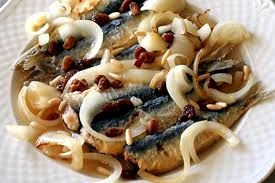
Sarde in saor is the dish that, more than any other, defines Venetian cooking. Sardines (or occasionally other small fish) are lightly floured and fried, then layered with slow-cooked onions, wine vinegar, raisins and pine nuts, and left to marinate for at least 24 hours, ideally 48, before serving. The combination of the oily fish, the sweet onion, the sharp vinegar, the plump raisins and the crunch of the pine nuts achieves a balance of sweet, sour, rich and savoury that is deeply satisfying and completely unlike anything else in Italian cooking. The recipe dates to at least the thirteenth century, when sailors discovered that the vinegar marinade preserved the fish for weeks at sea, and it has survived unchanged because it is, quite simply, perfect. You will find it on the menu of almost every serious bacaro and osteria in Venice, and you should order it at every opportunity.
Baccala Mantecato: Salt Cod as You Have Never Tasted It
Baccala mantecato is one of those dishes that sounds, in description, considerably less interesting than it tastes in practice. Salt cod (stoccafisso, actually, the air-dried variety rather than the salt-cured) is soaked for 48 hours to rehydrate it, then poached in milk with garlic and bay leaf, and finally beaten with olive oil, a little of the cooking liquid and white pepper until it reaches a consistency that is simultaneously light and unctuous, somewhere between a mousse and a cream. The result is served at room temperature on slices of grilled white polenta, and it is extraordinary: rich but not heavy, intensely flavoured but delicately seasoned, with a texture that seems to dissolve on the tongue. It is the cicchetto that appears most frequently on the counter of every serious bacaro in Venice, and it is the one that, once you have tasted a truly excellent version, you will spend the rest of your time in the city comparing all others against.
Bigoli in Salsa: The Pasta of the Lagoon
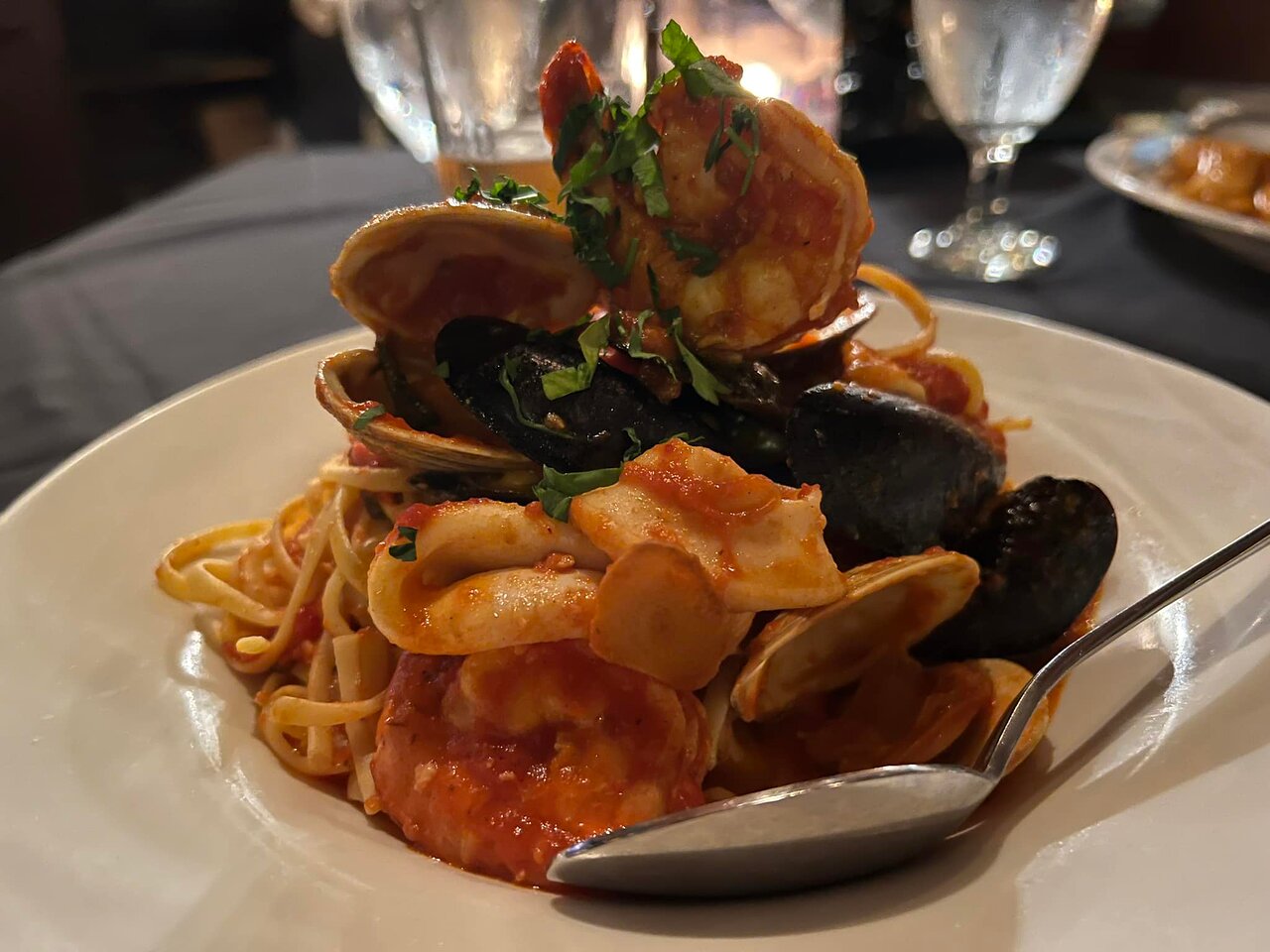
Bigoli in salsa is Venice's definitive pasta dish, a preparation of such simple and apparently unlikely ingredients that its quality, when you first encounter it properly made, comes as something of a shock. Bigoli are thick, rough-surfaced wholemeal spaghetti made with a press called a bigolaro, a pasta form unique to the Veneto region. The sauce is made by slowly cooking salted anchovies and onions in olive oil for a very long time, at least 45 minutes and ideally over an hour, until both have dissolved into a single, intensely savoury, deeply amber-coloured sauce of extraordinary depth. No cream, no tomato, no herbs: just the interplay of the sweet slow-cooked onion and the salt and umami of the dissolved anchovy, tossed with the rough-textured pasta that catches and holds every trace of the sauce. It is one of the greatest pasta dishes in Italy, and it costs almost nothing to produce.
Risi e Bisi: Spring on a Plate
Risi e bisi, rice and peas, is the dish that the Doge of Venice was traditionally served on St Mark's Day, the 25th of April, the first day of the fresh pea season in the Venetian market gardens. It is neither a risotto nor a soup but something perfectly positioned between the two: looser than a risotto, thicker than a minestra, with a texture that the Venetians call all'onda (like a wave), meaning it should move and flow on the plate rather than holding a rigid shape. The peas must be very fresh and very sweet, the rice (Vialone Nano, the round-grained variety grown in the Po Valley) cooked slowly in a good broth with onion, pancetta and Parmigiano until it achieves the characteristic silky, starchy consistency that no other rice variety produces in quite the same way. It is a spring dish only, available from late April to early June, and if your visit coincides with the season, ordering it is not optional.
Seppie in Nero: Cuttlefish in Its Own Ink
Seppie in nero, cuttlefish braised slowly in its own ink with onion, white wine and a little tomato, is the most dramatically presented dish in the Venetian repertoire: jet black, intensely savoury, with a depth of flavour that comes from the ink itself, which contains compounds that give it a slightly mineral, almost metallic quality that is in fact entirely delicious and completely unlike any other flavour in Italian cooking. It is served on a mound of white polenta, the contrast of the black sauce against the ivory polenta as visually striking as a painting. The dish is also used as a pasta sauce, particularly with tagliolini neri, pasta coloured black with squid ink, doubling the intensity of the flavour. Do not let its appearance deter you. It is magnificent.
Cicchetti, Bacari and the Ombra Tradition
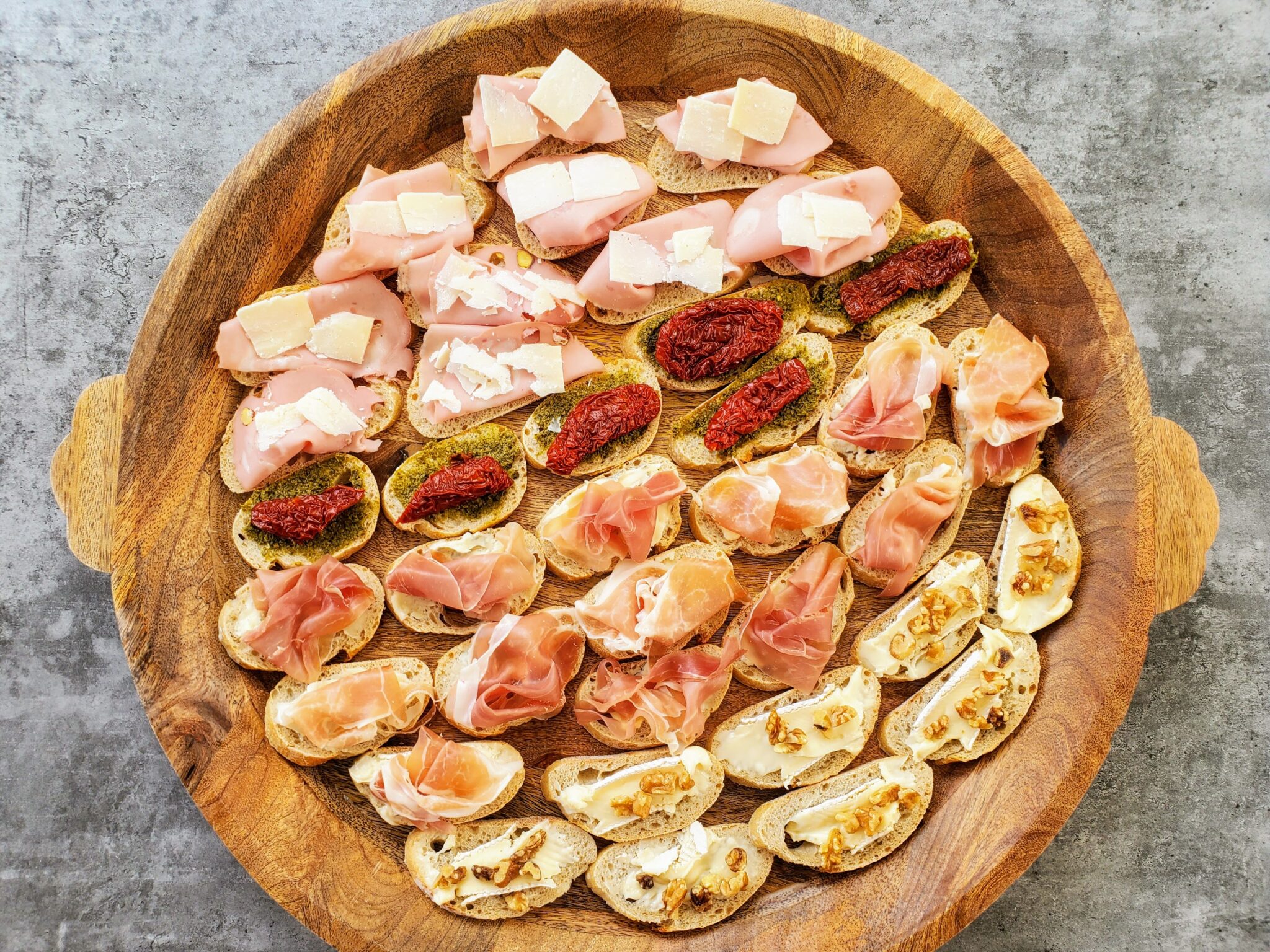
The bacaro is the institution around which Venetian food culture revolves, and understanding it is the single most useful thing you can do before arriving in the city. A bacaro is a traditional wine bar, typically small, standing-room only, with a counter covered in plates of cicchetti (the Venetian form of the word cicheto, a small bite or snack) and a wine list that runs from local Prosecco and Soave to the darker, earthier reds of the Valpolicella and the Euganean Hills. You do not sit down, or you sit only if the place has a few stools and you are lucky. You stand at the counter, point at what appeals to you, eat with your fingers or with a small fork, drink your ombra (a small glass of wine, typically white, the name referring to the shadow of the campanile where wine sellers once sheltered their barrels from the Venetian sun), and move on to the next bacaro. This is the giro di ombra, the Venetian pub crawl, and it is one of the great pleasures of the city.
The cicchetti you will encounter most frequently on a well-stocked bacaro counter are these: baccala mantecato on white polenta, the silky salt cod cream described above; sarde in saor on bread; folpetti, small whole octopus boiled and dressed with olive oil and parsley, their texture tender and their flavour intensely of the sea; moeche fritte in season, the soft-shell crabs fried whole in a light batter; nervetti in vinaigrette, strips of calf's cartilage dressed with onion and vinegar in a preparation that sounds alarming and tastes remarkable; alici marinate, fresh anchovies marinated in lemon juice and olive oil; and the endlessly varied crostini, slices of white bread toasted and topped with whatever is freshest that morning.
The best bacari in Venice are not necessarily the best known. The following are consistently excellent and genuinely local in atmosphere: All'Arco (Calle dell'Arco, San Polo, open mornings only), the closest bacaro to the Rialto market and the best for morning cicchetti made with that day's catch; Cantina Do Mori (Calle Do Mori, San Polo), one of the oldest bacari in Venice, with low-beamed ceilings hung with ancient copper pots and a selection of wines by the glass that would make a serious sommelier pay attention; Osteria alla Vedova (Calle del Pistor, Cannaregio), a neighbourhood institution with a short menu of traditional Venetian cooking that has not changed in decades and does not need to; and Al Timon (Fondamenta degli Ormesini, Cannaregio), a canal-side bacaro with tables outside on the fondamenta in summer that is particularly lively and relaxed in the evening.
Venetian Drinks: Spritz, Bellini, Prosecco and Raboso
Venice has given the world two of the most famous drinks in Italy, and both are best experienced in their city of origin.
The Spritz: Venice's Daily Drink
The Spritz was born in Venice, where the practice of adding sparkling water (spritz in Venetian dialect, borrowed from the German spritzen) to the local white wine was common long before the liqueurs that now define it arrived on the scene. The modern Venetian Spritz is made with Prosecco, a splash of sparkling water and either Aperol (the lighter, orange-bitter version, the most popular), Campari (more bitter and more complex), or Select (the traditional Venetian bitter, made in Venice since 1920 and the most historically correct choice). It is served over ice with a slice of orange and usually a green olive. In a neighbourhood bacaro, it costs two to three euros. In Piazza San Marco, it costs five times as much. Choose your venue accordingly and drink it as the Venetians do: standing at the counter, mid-morning or early evening, as a prelude to the rest of the day.
The Bellini: Harry's Bar and the White Peach
The Bellini was invented at Harry's Bar on the Calle Vallaresso in the late 1930s, when Giuseppe Cipriani combined fresh white peach juice with Prosecco and created a drink of such immediate and intuitive rightness that it has never required improvement. The drink is named after the Venetian Renaissance painter Giovanni Bellini, whose use of warm pinks and golds in his paintings the colour of the drink was said to evoke. A Bellini at Harry's Bar costs more than almost any other drink in Venice and is worth every cent, at least once: the bar itself is a piece of living history, small and unpretentious in its decor but saturated with the atmosphere of a place where Hemingway, Chaplin, Welles, Capote and virtually every other major cultural figure of the twentieth century came to drink at some point. Go for the experience, not just the cocktail.
Prosecco and Raboso: The Wines of the Veneto
Prosecco DOC is the sparkling wine of the Veneto, produced from Glera grapes grown in the hills between Conegliano and Valdobbiadene north of Treviso, and it is the wine you will drink most often in Venice. The best versions, labelled Conegliano Valdobbiadene Prosecco Superiore DOCG, are considerably more complex and interesting than the generic Prosecco sold internationally: fresh, with a fine bead, notes of white peach, apple blossom and almond, and a clean, dry finish that makes them ideal partners for the delicate fish preparations of Venetian cuisine. For still white wine, look for Soave Classico from the western Veneto, made from Garganega grapes on volcanic soil: at its best it is one of the most underrated whites in Italy. For red, Raboso del Piave is the native Venetian red grape variety, producing wines of austere structure, deep colour and a characteristic dry, slightly tannic finish that cuts beautifully through the richness of sarde in saor and baccala mantecato. It is the wine that serious Venetians drink with their food, and it is almost never seen outside the Veneto.
Where to Eat: The Best Neighbourhoods and What to Order
The quality of eating in Venice is directly and consistently inversely proportional to the proximity of the restaurant to Piazza San Marco. This is a rule of thumb rather than an absolute law, but it holds true with sufficient regularity to serve as a reliable guide. The following neighbourhoods offer the best combination of genuine Venetian cooking, authentic atmosphere and reasonable prices.
San Polo and the Rialto Area
The area immediately around the Rialto market is the best in Venice for morning cicchetti and lunchtime eating. The bacari of this neighbourhood are at their best between 10am and 1pm, when the cicchetti are fresh and the atmosphere most local. For a sit-down lunch, the osterie along the Calle dei Boteri and in the side streets off the Campo San Polo offer traditional Venetian menus at prices that reflect their local rather than tourist clientele. Look for handwritten menus in dialect: this is always a good sign. Order the bigoli in salsa or the seppie in nero con polenta, and finish with a glass of Raboso.
Cannaregio: The Fondamenta della Misericordia
The Fondamenta della Misericordia and the parallel Fondamenta degli Ormesini in Cannaregio constitute the most reliably genuine eating and drinking street in Venice for evening use. The canal-side fondamenta is lined with bacari, pizzerias and small restaurants that serve primarily local residents and students, and the atmosphere in the evening, particularly in summer when the tables extend along the canal-side walkway, is lively, unpretentious and entirely removed from the tourist circuit. This is also the neighbourhood where you will find the best aperitivo prices in the city: a Spritz here costs what it should cost, and no one will look at you strangely for drinking it standing at the bar. Start with a giro di ombra along the fondamenta, then settle in at one of the canal-side tables for a simple dinner of grilled fish and local wine.
Dorsoduro: Campo Santa Margherita and the Zattere
Campo Santa Margherita is the social centre of Dorsoduro, a large, irregular square surrounded by bars, restaurants and market stalls that is particularly lively from mid-afternoon onwards when the university students who populate the neighbourhood begin to gather. The bars around the campo are good value and genuinely local. For a more refined eating experience, the restaurants along the Zattere waterfront, overlooking the broad Giudecca canal, offer some of the finest outdoor dining in Venice, with views that compensate to some extent for the slightly higher prices that the location commands. This is the right place for a longer lunch on a warm day, with a bottle of Soave Classico and a plate of grilled branzino that arrived in Venice that morning.
Venetian desserts and sweet things. Do not leave Venice without trying tiramisu in its authentic Veneto form, made with mascarpone, egg yolks, savoiardi biscuits soaked in strong coffee, and a generous hand with the cocoa. It was invented not in Venice itself but in the neighbouring city of Treviso, at the restaurant Le Beccherie, in the 1960s, and it remains considerably better in the Veneto than in most of the world that has since adopted it. In Carnival season, look for fritole veneziane, small yeasted fritters with pine nuts and raisins, and galani, thin fried pastry ribbons dusted with powdered sugar, both of which disappear on Ash Wednesday and cannot be found again for a year. The pasticcerie of the Castello sestiere, particularly around the Via Garibaldi, make excellent versions of both throughout the Carnival period.
Common Mistakes When Eating in Venice
Eating at a restaurant with a photographs on the menu displayed outside. This is the single most reliable indicator of a tourist-oriented establishment. Any restaurant that needs to show you photographs of the food before you order it does not trust you to understand a written menu, and is not primarily concerned with the quality of what it serves. The best places in Venice have handwritten menus or a chalkboard, sometimes in Venetian dialect, and the staff will explain what things are if you ask.
Ordering pizza in Venice. Pizza is not a Venetian dish. It exists in Venice, and in some places it is perfectly decent, but ordering pizza in a city with one of the most extraordinary seafood traditions in Italy is a significant missed opportunity. Order the sarde in saor, the bigoli in salsa, the baccala mantecato. You can eat pizza anywhere. You can eat authentic Venetian cooking almost nowhere else in the world.
Drinking coffee sitting at a table in Piazza San Marco. The coffee is the same coffee served standing at the bar in any other part of Venice, and the price at the table in the piazza reflects the location, the orchestra and the history rather than the quality of the espresso. All of these things have their value, and a morning coffee at Caffe Florian or Quadri is a genuine Venetian experience worth having once in your life. Just do not make it your daily coffee habit and then complain that Venice is expensive.
Not asking what is fresh that day. In any serious bacaro or osteria in Venice, the menu changes daily based on what came from the market that morning. Always ask the server what the fresh catch is, what is good today, what they would recommend. This question will almost always produce a better answer than anything printed on the permanent menu.
Comments
No comments yet. Be the first to share your thoughts!
Leave a Comment
Your comment will appear after moderation.