 Michelle
 Imagine a city where, for months at a time, no one knew who you were. Where a senator of the Republic could walk through the same calle as a fisherman from the lagoon, both of them invisible behind the same white mask, indistinguishable in the crowd. Where the noblewomen of the great palazzi could move through the city at night unrecognised, free from the protocols of rank and the weight of reputation. This was Venice in the seventeenth century, and the mask was not a party accessory. It was a legal institution, a social equaliser, a philosophical act. It was, in the most literal sense, the face the city showed the world and chose not to show itself.
Why the Mask Became the Soul of Venice
To understand why Venetians wore masks throughout the year, you need to understand the particular nature of the Venetian Republic. Unlike the monarchies and principalities that governed most of Europe, Venice was an oligarchic republic, ruled by a tightly closed elite of noble families whose power depended on a delicate and perpetually contested balance of interests. Public life was intensely political, intensely observed, and intensely regulated. Every gesture, every association, every friendship carried potential consequences. In this environment, the ability to move through the city anonymously was not merely convenient. It was, at times, essential.
The practice of wearing masks in Venice dates at least to the thirteenth century, and possibly earlier. The earliest documentary evidence comes from 1268, when a decree by the Great Council prohibited masked figures from entering convents, a prohibition that suggests the practice was already common enough to require regulation. Over the following three centuries, successive decrees attempted to restrict, codify and control the use of masks, and the sheer volume of these regulations tells you everything you need to know about their effectiveness: Venetians wore masks regardless, and the state eventually resigned itself to a policy of managed tolerance.
By the seventeenth century, masks had become so deeply embedded in Venetian daily life that foreigners visiting the city expressed astonishment not at the spectacle of the Carnival, but at the sight of masked figures going about perfectly ordinary business at seemingly any time of year. The English traveller John Evelyn, visiting Venice in 1645, recorded his bewilderment at finding the streets full of masked citizens conducting the routine transactions of daily life.
Historical note: The word maschera in Venetian usage came to mean not just the physical mask but the entire act of disguised public appearance. A Venetian who went out "in maschera" was not simply wearing a mask; they were performing a specific social and legal act, one that carried both privileges and obligations defined by law.
1. When Did Venetians Actually Wear Masks?
The common assumption is that Venetian masks were purely a feature of the Carnival season. The historical reality is considerably more interesting and considerably more complex. While Carnival was certainly the most intense and spectacular period of mask-wearing, the Venetian state formally permitted, and in some contexts legally mandated, the wearing of masks across a surprisingly large portion of the calendar year.
Carnival: From December 26 to Shrove Tuesday
The Venetian Carnival was, by the seventeenth century, the longest and most elaborate in Europe. It began officially on the day after Christmas, the 26th of December, and ran without interruption until the stroke of midnight on Shrove Tuesday, when the masks came off and the Lenten fast began. During these weeks, the entire city was given over to festivity. The rules of ordinary social life were suspended. The boundaries of class, gender and profession dissolved behind the mask. A married woman could walk the streets unaccompanied. A young nobleman could gamble his inheritance in a ridotto without his family knowing. A government official could engage in conversation with people he could not have acknowledged in public life. The mask made all of this possible, and the state, recognising the social function of this collective release, protected it by law.
Ascension Week and the Feast of the Sensa
Beyond Carnival, masks were legally permitted during the fortnight following Ascension Day, when Venice celebrated the Sensa, the great spring festival marking the symbolic marriage of the city to the sea. This was the period when the Doge performed the ancient ceremony of casting a gold ring into the Adriatic from the state galley, the Bucintoro, and the city filled with traders and visitors from across the Mediterranean world. During these two weeks, the streets were as animated as Carnival itself, and masks were worn freely.
Elections, Gambling and Civic Life
Perhaps the most revealing aspect of Venetian mask culture is the role it played in the formal institutions of the Republic. Masks were legally required, not merely permitted, when entering the Ridotto, the state gambling house that opened in 1638 and became one of the most famous establishments in Europe. They were commonly worn during the complex electoral processes by which the Venetian Senate and Great Council were chosen, allowing members to cast their votes without the social pressure of being observed by rivals. They were worn when visiting convents, when attending certain theatrical performances, and during the visits of foreign dignitaries when ceremonies required a generalised anonymity of the crowd.
In practice, as contemporary accounts make clear, the legal calendar was only loosely observed. Masks appeared at any occasion that seemed to call for them, and the magistrates charged with enforcing the regulations against out-of-season mask-wearing frequently found themselves overwhelmed. One famous decree from 1608 complained that men were wearing masks in churches during Mass, a development the Council of Ten found simultaneously impious and difficult to prosecute.
The law and the mask: Venetian law prohibited masks from being worn in churches (with exceptions), in the presence of magistrates, at certain religious processions, and by men entering female spaces disguised as women. Each of these prohibitions was regularly violated, and the archives of the Council of Ten contain hundreds of cases brought against masked individuals for precisely these infractions. The mask, it seems, was always slightly ahead of the law.
2. The Five Great Masks of the Venetian Republic
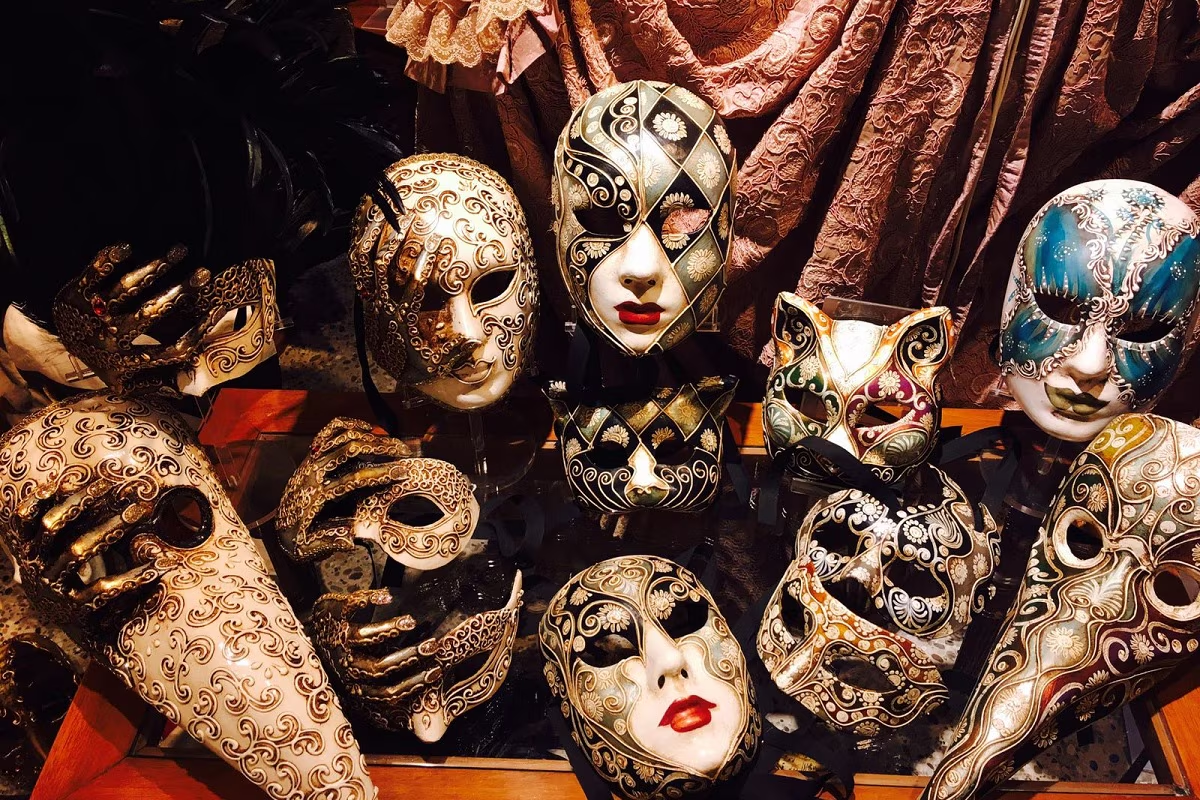
Not all Venetian masks were equal. Each had its own history, its own social context, its own rules of use. Understanding the differences between them opens a window into the extraordinary complexity of Venetian social life and the uses to which anonymity was put in a city that had elevated secrecy to a political art form.
The Bauta: The Mask of the Republic
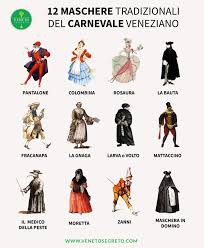
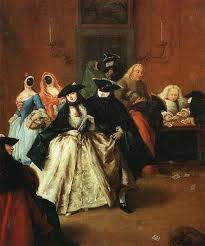
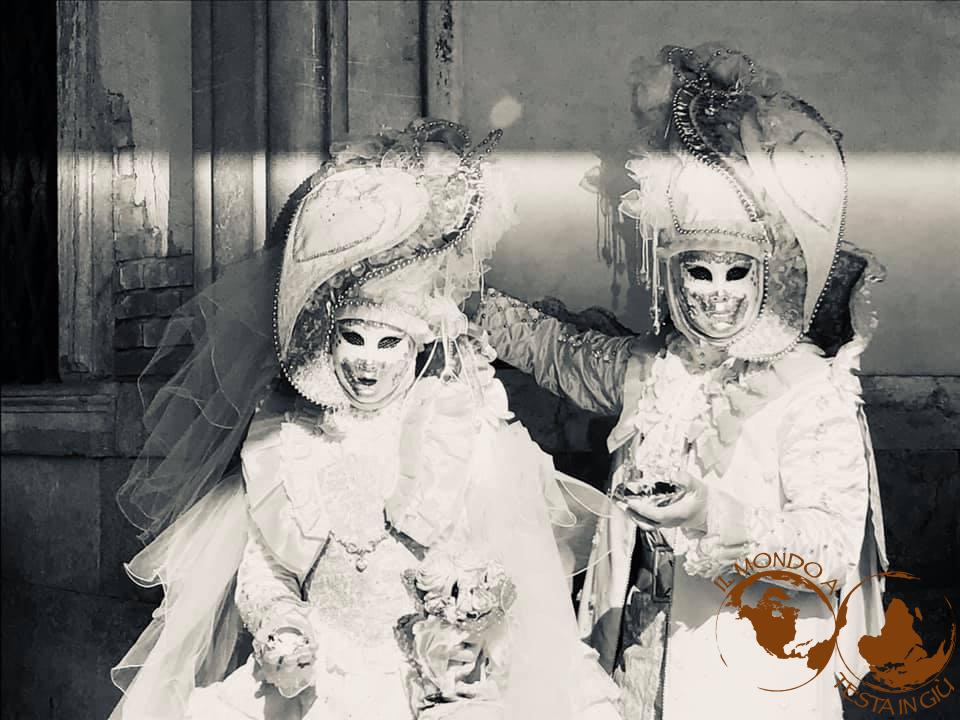
The Bauta is the quintessential Venetian mask, and the one most closely identified with the civic life of the Republic. Its form is distinctive: a white or off-white mask covering the upper face, with a pronounced square jaw that projects outward from the chin, leaving the mouth entirely uncovered. This was a deliberate design feature. The wearer could eat, drink and speak without removing the mask, maintaining anonymity throughout. The Bauta was worn with a black tricorn hat and a long black cloak called the Tabaro, which concealed the wearer's clothing and therefore their social status. The effect was a complete erasure of identity: you could not tell, from a figure in full Bauta, whether you were looking at a senator or a carpenter.
The Bauta was not a Carnival mask. It was an everyday mask, worn by both men and women throughout the permitted calendar periods, and it was the closest thing Venice had to an official public disguise. The Venetian government at various points effectively endorsed it as the standard form of anonymous public dress, and portraits of the period often show Venetian citizens in full Bauta as a matter of civic normalcy rather than festive exuberance.
The Moretta: The Silent Woman
The Moretta, meaning "the dark one," was an exclusively female mask: a small, oval black velvet mask worn without any straps or ties. The wearer held it in place by gripping a small button on the inside between her teeth. This meant that while wearing the Moretta, a woman could not speak. The mask enforced silence as a condition of its own use, and this quality was considered, by the men of the time, to be one of its chief attractions. Contemporary writers noted that the Moretta made women more mysterious, more alluring and more perfectly unknowable. It was worn at all social levels and remained fashionable throughout the seventeenth and eighteenth centuries as a marker of feminine elegance and discretion.
The Medico della Peste: The Doctor of the Plague
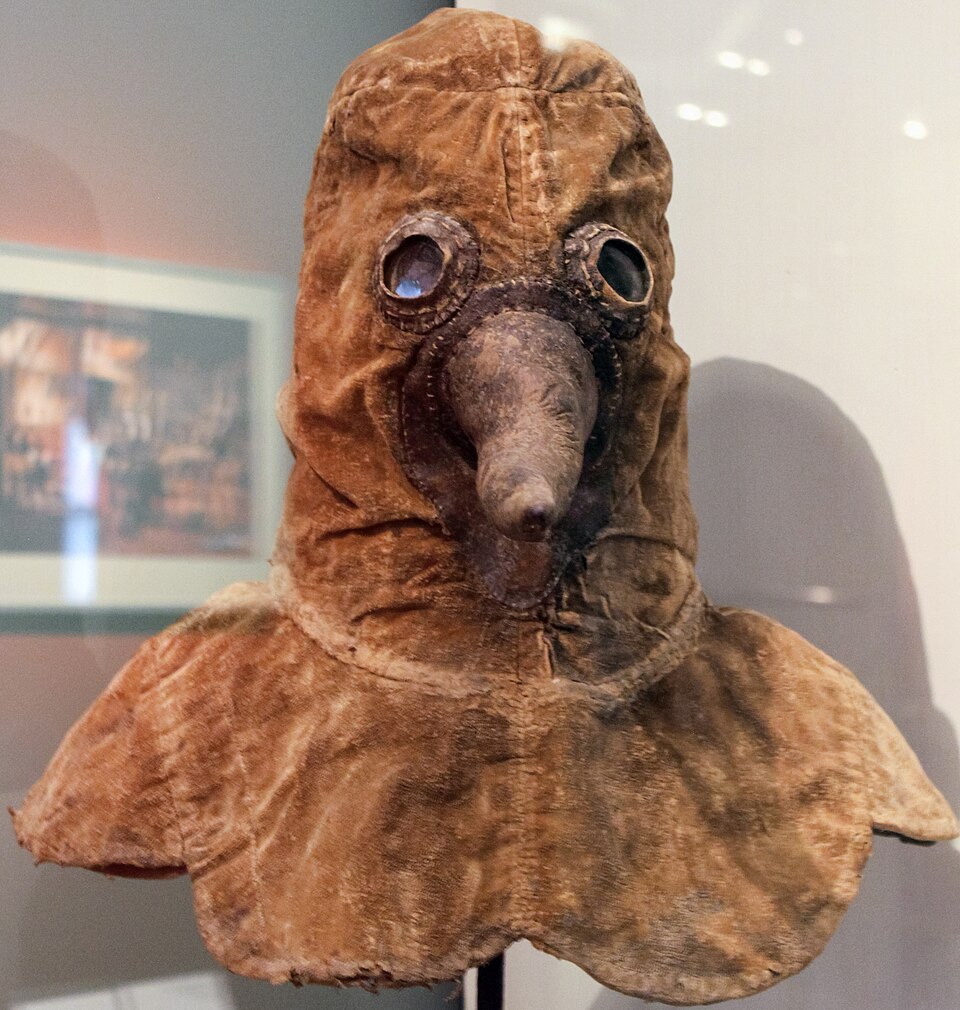
Of all the masks associated with Venice, none carries a darker historical weight than the Medico della Peste, the Plague Doctor mask. With its long beaked nose, round glass eyes and pale, expressionless face, it was originally not a costume at all but a genuine piece of medical equipment. Designed in the early seventeenth century for physicians treating plague patients, the long beak was stuffed with aromatic herbs, spices and vinegar-soaked sponges, believed to filter the pestilential air before it reached the doctor's lungs. The full costume included a waxed linen overcoat, leather gloves, boots and a wide-brimmed hat, all designed to prevent contact with contaminated material.
Venice, as a major port city at the crossroads of trade routes from the East and from the rest of Europe, was devastated by repeated outbreaks of plague throughout the sixteenth and seventeenth centuries. The sight of the Plague Doctor moving through the streets was one of the most feared images of Venetian life. It is one of the great ironies of history that this symbol of suffering and death became, centuries later, one of the most sought-after Carnival costumes in the world.
The Colombina: The Mask of Theatre
The Colombina is the most decorative and theatrical of the great Venetian masks, a half-mask covering only the upper portion of the face, often elaborately gilded, painted with flowers and jewels, and sometimes adorned with real feathers or gemstones. It takes its name from the character Colombina from the Commedia dell'arte, the travelling theatrical tradition that originated in Italy in the sixteenth century and whose characters, from Arlecchino to Pantalone, became the archetypes of European comedy. The Colombina was essentially the mask of the performing world, worn by actresses and courtesans, and its deliberately partial concealment, revealing the mouth and chin while hiding the eyes, carried its own erotic charge in a society where the eyes were understood to be the primary instrument of seduction.
The Gnaga: The Mask of Transgression
The Gnaga was perhaps the most transgressive mask in the Venetian repertoire, worn exclusively by men who wished to cross-dress as women. The costume involved a full female dress, a cat-face mask and a basket containing a kitten or a baby doll, which the wearer would ostentatiously tend to while speaking in a falsetto voice and adopting female mannerisms. The Gnaga was a Carnival costume, officially at least, though contemporary accounts suggest it was worn on other occasions as well. It occupied a peculiar place in Venetian social life: simultaneously tolerated as a Carnival eccentricity and condemned by moralists as an affront to public order, it endured throughout the period of the Republic as a persistent and rather gleeful form of social commentary.
3. The Ridotto: Where the Mask Was the Law
In 1638, the Venetian Great Council took a decision that would have profound consequences for the city's social life: it authorised the opening of the Ridotto, the world's first publicly licensed gambling house, in the palazzo of the Dandolo family near the church of San Moise. The Ridotto was a four-storey building of extraordinary elegance, its rooms hung with mirrors and chandeliers, its tables presided over by patrician bankers who ran the games of chance with an air of languid authority. It rapidly became one of the most celebrated and most notorious establishments in Europe.
The rules of the Ridotto were simple and absolute: entry required a mask. This was not a suggestion or a tradition but a legal condition of admission, enforced by the doorkeepers. The reasoning was elegant: by requiring everyone to wear a mask, the state ensured that no one inside the Ridotto could be identified, which in theory meant that the powerful could not coerce the powerless, the creditor could not pressure the debtor, and the social hierarchies of Venetian life were, for the duration of a card game, suspended. In practice, it also meant that patricians could lose enormous sums in relative privacy, and that women of all social stations could enter a public establishment without scandal.
The Ridotto operated for more than a century before the Great Council, alarmed by the scale of noble bankruptcies it had facilitated, voted to close it in 1774. But for those 136 years, it was the ultimate expression of the Venetian mask as civic institution: a place where anonymity was not merely permitted but required, where the mask was simultaneously a costume, a social contract and a passport to a world operating by entirely different rules.
Giacomo Casanova, the most famous Venetian of his age, was a habitue of the Ridotto and described the experience in his memoirs with characteristic vividness: the rooms full of masked figures of every class and condition, the click of cards and dice, the murmur of conversation in which no one knew and no one asked the name of the person beside them. "In Venice," he wrote, "the mask is not a disguise. It is the truest face."
4. Venice Carnival Today: How to Experience It
The modern Venice Carnival was revived in 1979 after more than a century of dormancy (Napoleon had suppressed it in 1797, along with the Republic itself), and has grown into one of the great festivals of Europe, attracting hundreds of thousands of visitors from around the world in the ten days before Shrove Tuesday. It is spectacular, theatrical, occasionally overwhelming and, at its best, genuinely magical. With the right preparation, it is one of the most extraordinary experiences Italy has to offer.
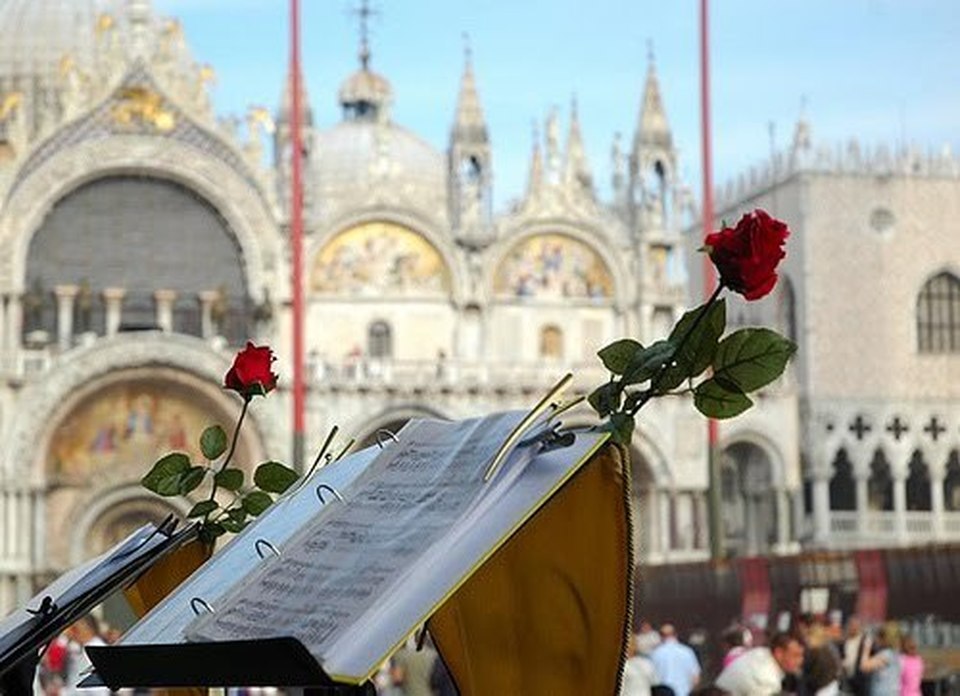
The heart of the Carnival is Piazza San Marco and the surrounding sestieri, where the programme of official events takes place. The most celebrated set piece is the Volo dell'Aquila, the Flight of the Eagle, in which a costumed figure descends on a wire from the campanile of San Marco to the piazza below, scattering confetti over the crowd. The Volo delle Colombe (Flight of the Doves) and the Volo dell'Angelo (Flight of the Angel) are variations on the same theme at different points in the calendar. Alongside these official performances, the city fills with an extraordinary procession of privately organised costume parades, masked balls, historical regatta re-enactments and theatrical events in the city's palazzi and theatres.
Getting to Venice for Carnival requires planning that begins months in advance. Marco Polo Airport receives increased traffic during the festival period, and private airport transfers to Piazzale Roma should be booked well ahead of time to ensure availability and a fixed price regardless of traffic conditions.
Common Tourist Mistakes at Venice Carnival
The Venice Carnival attracts some of the largest crowds of any event in Italy, and arriving unprepared can turn a dream experience into an exhausting ordeal. Here are the most common mistakes and how to avoid them.
Arriving in Venice without a hotel booking. This seems obvious, but the volume of visitors who attempt to visit Venice during Carnival without pre-booked accommodation is genuinely astonishing. Hotels and guesthouses fill up weeks or even months in advance, particularly for the final weekend before Shrove Tuesday. Book your accommodation as early as possible, ideally at least three to four months ahead for the main Carnival weekend.
Confusing costume with mask. Many visitors arrive with a simple commercial mask bought online and find themselves underdressed for the extraordinary spectacle around them. If you want to participate properly in the Carnival's theatrical atmosphere rather than simply photograph it, consider renting a full historical costume from one of the specialist houses in Venice that cater to Carnival visitors. A complete eighteenth-century costume, complete with wig, tricorn and Bauta, transforms your experience of the event entirely.
Spending the entire Carnival in Piazza San Marco. The piazza is spectacular but crushingly crowded during the main events. Venture into the sestieri of Dorsoduro, Cannaregio and Castello, where the Carnival is quieter, more local and, in many ways, more genuinely Venetian. The campi (the smaller squares) of these neighbourhoods host their own processions and events, and you will find that the city reveals an entirely different character when you step away from the main tourist circuit.
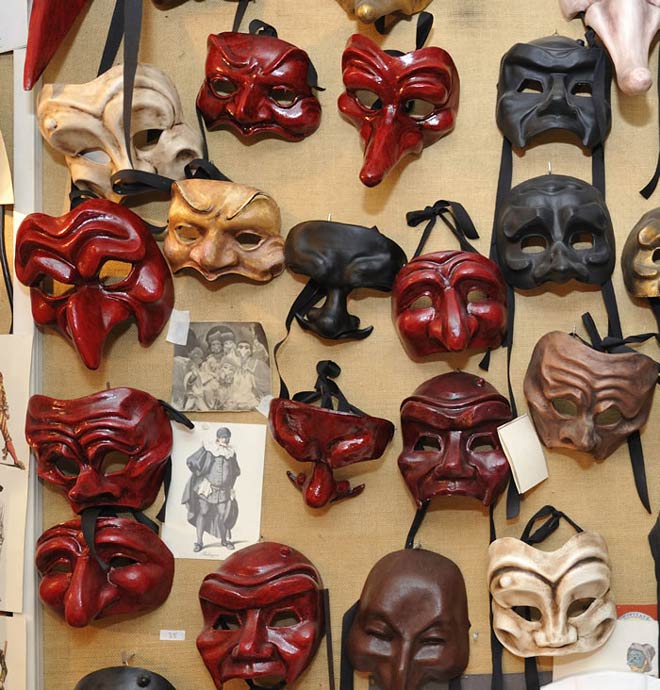
Buying a cheap souvenir mask. Most of the masks sold in Venice's tourist shops are made in China and have no connection to the genuine Venetian craft tradition. If you want to take home an authentic maschera veneziana, look for the shops and workshops of the mascherari, the traditional mask-makers who still use the ancient techniques of papier-mache and leather modelling. Several excellent workshops in the Dorsoduro and San Polo sestieri welcome visitors and offer tours of the mask-making process. These masks cost more, but they are genuine works of craft with a history behind them.
Best time of day during Carnival: The finest experience of Venice Carnival is in the early morning, before the day-trippers arrive from the mainland. Between 7am and 10am, the city belongs to its overnight guests, and the sight of a figure in full historical costume crossing the Rialto Bridge in the morning mist, with the Grand Canal still and silent below, is one of the most unforgettable images Italy has to offer. Set your alarm early and go out before breakfast.
Food, Wine and the Pleasures of Carnival Season in Venice
Carnival in Venice is not only a visual feast. The season has its own culinary traditions, deeply rooted in the city's lagoon culture, and spending the festival without eating your way through them would be a serious omission.
The signature Carnival food is the fritola veneziana, a small round fritter made from a yeasted dough enriched with pine nuts, raisins and grappa, fried in lard and rolled in sugar. The fritola has been the emblematic street food of the Venetian Carnival since at least the sixteenth century, when the fritoleri (fritter-sellers) had their own guild and their own designated pitch in the city's principal campi. You will find them at almost every bakery and street food stall during the Carnival period, and they are irresistible: crispy on the outside, soft and fragrant within, best eaten warm from the paper cone.
The other great Carnival sweet is the galani (known in other parts of Italy as chiacchiere), thin ribbons of egg-enriched pastry fried until golden and showered with powdered sugar. Light, shattering, impossibly delicate and impossible to stop eating, they appear in every pasticceria and bar in Venice during the Carnival weeks and disappear entirely on Ash Wednesday. The name galani comes from the Venetian word for a decorative ribbon, and the connection to the elaborate ribbons and bows of Carnival costume is entirely intentional.
For a more substantial meal, look for sarde in saor, the quintessential Venetian dish of sweet and sour sardines marinated with onions, raisins and pine nuts in wine vinegar. Rich, complex and deeply satisfying, it has been a fixture of the Venetian table since the Middle Ages, when sailors discovered that the vinegar marinade preserved the fish for long sea voyages. Order it as a starter in any bacaro (the Venetian word for a traditional wine bar) and pair it with a glass of local Prosecco or the darker, earthier Raboso del Piave, a native Venetian grape variety of startling character.
The bacaro tradition: Venice has a unique bar culture built around the ombra (a small glass of wine, typically white) and the cicheti (small snacks served at the bar counter, from grilled polenta squares topped with baccala to tiny sandwiches of prosciutto and artichoke cream). During Carnival, the bacari of the Rialto market area are full from mid-morning onwards. Join the locals at the counter, order a glass and a selection of cicheti, and you will have had one of the most authentically Venetian experiences of your entire trip.
When Is the Best Time to Visit Venice (Carnival and Beyond)
If you are visiting specifically for the Carnival, the answer is straightforward: the ten days before Shrove Tuesday, with the most spectacular events concentrated in the final weekend. However, the sheer volume of visitors during this period means that Venice during the Carnival is simultaneously at its most magical and at its most crowded. For those who want the atmosphere without the extreme congestion, the first week of Carnival is significantly quieter than the final days.
Outside of Carnival, Venice is at its most beautiful in October and November, when the summer tourists have gone, the light on the lagoon turns to pure, cold gold, and the city recovers something of its essential character as a place of contemplation and water and silence. November in particular, with its fogs and its acqua alta (the periodic flooding of the lowest-lying calli and campi), is the most photogenic month of the year in Venice. It is also when prices are at their lowest and hotel availability is at its best.
April and May offer a second peak of beauty, when the weather is mild, the cruise ships have not yet arrived in full force and the city's extraordinary museums and churches are accessible without excessive queuing. The Vogalonga, the great non-competitive rowing regatta that takes place on a Sunday in May, is one of the most joyful and least touristic events in the Venetian calendar.
Acqua alta preparation: If you visit Venice in autumn or winter, pack a pair of lightweight rubber boots or waterproof overshoes. The acqua alta (high water) typically reaches depths of 20 to 30 centimetres in the lowest-lying areas, and while the raised walkways that the city erects during flood events make navigation possible, waterproof footwear transforms the experience from mildly stressful to genuinely enjoyable. The sight of St Mark's Square under a centimetre of still water, reflecting the basilica, is one of the most extraordinary views in Italy.
Comments
No comments yet. Be the first to share your thoughts!
Leave a Comment
Your comment will appear after moderation.