 Michelle
 There are cities whose beauty you admire, and there are cities whose beauty you feel in a different register altogether, one that involves knowledge of what was lost and what was recovered and at what cost. Dresden is emphatically in the second category. The Baroque city on the Elbe that was once called the Florence of northern Europe was destroyed in four nights of Allied bombing in February 1945 that killed tens of thousands of people and reduced its extraordinary architectural heritage to rubble. What the city's citizens then did over the following decades, first under the constraints of the German Democratic Republic and then with the full resources of a reunified country, was to rebuild it: stone by stone, carved figure by carved figure, gilded detail by gilded detail, from the original plans and from the rubble itself. The result is one of the most extraordinary stories of cultural reconstruction in the modern world, and a city of genuine and moving beauty.
Why Dresden Is One of Central Europe's Most Extraordinary Cities
Dresden's greatness as a city is inseparable from the figure of Augustus the Strong, Elector of Saxony and King of Poland from 1694 to 1733, whose ambition to make Dresden the finest capital in the German-speaking world produced a building programme of extraordinary scope and quality. Augustus was a collector, a patron and an architectural visionary on a scale that few European rulers of any era could match. He brought the finest architects, sculptors, goldsmiths, painters and craftsmen of his time to Dresden and set them to work on a sequence of palaces, gardens, churches and public buildings that transformed the city along the Elbe into one of the great Baroque centres of Europe. He also assembled, with the dedicated obsession of a man who genuinely could not stop, one of the finest collections of art, armour, scientific instruments, porcelain and jewelled treasure ever accumulated in a single place.
The porcelain, in particular, deserves a word before we move on. Augustus's passion for Asian porcelain, which he pursued with an intensity that his contemporaries found excessive, led directly to the establishment of the Meissen manufactory in 1710, the first European producer of hard-paste porcelain, located in the castle of Albrechtsburg twenty kilometres upstream from Dresden. The Meissen works that resulted from this obsession are displayed today in the Dresden porcelain collection, the Porzellansammlung, in the Zwinger palace, and they are genuinely extraordinary: not merely decorative objects but evidence of a technical and artistic revolution whose consequences shaped European design and manufacturing for the next two centuries. But they are, as this guide's original title suggests, only one part of what Dresden has to offer, and a visitor who spends all their time among the chinoiserie cabinets will miss most of the extraordinary things waiting for them outside.
Best time to visit Dresden: May through June and September through October are the finest months, with mild weather, manageable crowds and the full range of cultural programming including the Dresden Music Festival in May and June and the Dresden Film Festival in October. The Christmas markets in December are among the finest in Germany: the Striezelmarkt, held on the Altmarkt since 1434, is the oldest Christmas market in the world and worth a winter visit on its own merits. July and August are warm and busy; the Elbe riverbank and the Altstadt are pleasant but the museums can be crowded.
1. The Zwinger: the Palace That Defined a Century
The Zwinger is the building in which Augustus the Strong's ambitions and his architect Matthäus Daniel Pöppelmann's genius most completely met, and it is one of the finest Baroque complexes in Europe. Built between 1710 and 1728 on the site of a former fortification, the Zwinger consists of a large open courtyard surrounded on three sides by curving galleries of extraordinary sculptural richness, connected at the corners by ornate pavilions, with the fourth side originally open to the Elbe and subsequently closed by the addition of the Semper Gallery in the nineteenth century. The entire complex is decorated with stone sculptures by Balthasar Permoser that represent one of the summits of German Baroque sculptural art: figures of such physical energy and expressive intensity that they seem to be in a state of perpetual arrested movement, frozen at the peak of some gestural argument with the air around them.
The central courtyard, with its fountains and its extraordinary ensemble of architecture and sculpture, is freely accessible and is one of the finest outdoor spaces in Germany. Sitting on the steps of the Nymphenbad, the grotto fountain on the north wall, in the early morning before the tour groups arrive, and looking across the sunlit courtyard to the Crown Gate and its gilded corona beyond, is one of those travel experiences that stays precisely because it exceeds what you expected to find.
The Zwinger's galleries house several of Dresden's most important museums. The Old Masters Picture Gallery (Gemäldegalerie Alte Meister) contains one of the finest collections of European painting from the fifteenth to the eighteenth centuries assembled anywhere in the world, centred on Raphael's Sistine Madonna, which has been in Dresden since 1754 and which remains one of the most celebrated single paintings in existence. The Sistine Madonna is famous internationally for the two cherubs at the bottom of the composition who have become independently iconic, but the painting as a whole, with the Virgin floating on clouds above an assembly of saints and angels, is a work of such serene technical perfection and spiritual presence that standing in front of it in person consistently produces a response of quiet astonishment in visitors who thought they already knew it from reproductions. The gallery also contains Giorgione's Sleeping Venus, Titian's Girl Reading a Letter, Vermeer's Girl Reading a Letter at an Open Window and works by Rembrandt, Rubens, van Dyck, Holbein, Dürer and dozens of other major figures.
The Rüstkammer, the armoury, and the Porzellansammlung, the porcelain collection, occupy the remaining galleries of the Zwinger and together present the full range of Augustus's collecting obsessions. The armoury is one of the finest in Europe, containing ceremonial armour, jousting equipment, weapons and the extraordinary Dresden Green Diamond in a supporting role within the larger jewel collection. The porcelain collection's holdings of Meissen and Asian ceramic, covering essentially every significant technique and style of ceramic production from the Song dynasty to the eighteenth-century European masters, is of international scholarly importance and visually remarkable even to those who do not consider themselves particularly interested in ceramics.
2. The Frauenkirche: Rebuilt from Rubble, Stone by Stone
On the night of 13 and 14 February 1945, British and American bombers dropped approximately 3,900 tonnes of high explosives and incendiary bombs on Dresden in a series of raids that created a firestorm of extraordinary intensity in the city centre. The temperature at the core of the firestorm reached 1,500 degrees Celsius. Tens of thousands of people died. The medieval city and its Baroque successor were reduced almost entirely to rubble. The Frauenkirche, the great Lutheran church of Our Lady built between 1726 and 1743, collapsed after burning for two days. Its dome, which had been designed by the architect George Bähr to act as its own support, remaining standing for thirty-six hours after the fire began before the heat finally overcame the stone and it fell, creating a heap of rubble eighty metres across and eight metres deep at the centre of what had been the church.
Throughout the period of the German Democratic Republic, the GDR government left the ruins of the Frauenkirche standing as a war memorial and a political statement. The rubble pile, with its surviving fragments of wall, was a place of quiet mourning in a city that had been forced into an uncomfortable relationship with its own history. After reunification in 1990, a citizens' initiative proposed the reconstruction of the church from the original stone, using both new sandstone and the original blocks recovered from the rubble, catalogued and numbered so that each piece could be returned to its correct position in the rebuilt structure. The project, funded by donations from around the world including significant contributions from Britain and the United States, the countries that had bombed the church, was completed in October 2005, when the rebuilt Frauenkirche was consecrated in a ceremony that was genuinely and properly understood as a moment of historical reconciliation.
The visual evidence of the reconstruction is still present in the exterior of the building today, and it is one of the most affecting things about it. The new sandstone, pale and clean, contrasts with the darker, fire-blackened original stones recovered from the rubble and built back into the walls in their correct positions. The pattern created by this contrast, pale new stone and dark old stone interspersed across the facade, makes the church's history literally visible on its surface, and the meaning of what you are looking at becomes immediately clear when you understand it. The interior, completely reconstructed in the original eighteenth-century style, is one of the finest Protestant church interiors in Germany, and the view from the dome over Dresden's Altstadt and the Elbe is one of the finest in the city.
Visiting the Frauenkirche: Entry to the church for prayer and contemplation is always free. Guided tours of the interior and the opportunity to climb to the dome platform (which requires a ticket and advance booking) are available at specific times throughout the day. The church is particularly moving in the early morning before the tourist groups arrive, and on Sunday mornings when the Lutheran service is held and the music fills the extraordinary acoustics of the rebuilt dome. The square in front of the church, the Neumarkt, has been substantially reconstructed with Baroque-style buildings and is one of the most coherent architectural ensembles in the new Dresden.
3. The Green Vault and the Treasures of the Saxon Electors
The Green Vault (Grünes Gewölbe) in the Dresden Royal Palace is one of the most extraordinary museum experiences available anywhere in Europe: a sequence of rooms containing approximately 4,000 objects of gold, silver, jewels, ivory, amber and semi-precious stone assembled by the Saxon electors over three centuries and displayed in environments of such opulence that the objects and their settings are effectively inseparable. Augustus the Strong opened the vault to the public in 1723, making it one of the first public museums in Europe, and the rooms were restored to their original appearance after being damaged in the bombing, reopening in 2006 after reconstruction of extraordinary fidelity.
The historic rooms of the vault, through which visitors must progress in a specific sequence, represent the full arc of European decorative arts from the Renaissance through the Baroque period. The Amber Cabinet, lined entirely with amber carvings and objects of extraordinary craftsmanship. The Ivory Room, whose ceiling and walls are decorated with turned ivory columns and carved relief panels that represent decades of dedicated skilled work. The Silver Room, with its extraordinary display of silver-gilt vessels, table centrepieces and ceremonial objects. The Jewel Room, which is the climax of the sequence and which contains the most dazzling concentration of precious stones and worked gold of any room in Germany: the Dresden Green Diamond, a natural fancy green diamond of 41 carats that is one of the largest and finest of its kind in the world; the Birthday Ensemble of the Court of Augustus, a miniature court scene of 137 figures decorated with 5,223 diamonds, 189 rubies, 53 emeralds and hundreds of other precious stones; and the Great Mogul table ornament, a jewelled and enamelled piece of such complexity and richness that it requires several visits before you begin to understand its full composition.
In addition to the historic rooms, the New Green Vault in the adjacent wing of the Royal Palace presents the collection in a more conventional modern museum setting, allowing closer examination of individual objects than the historic rooms' carefully maintained atmosphere permits. Together, the two sections of the Green Vault constitute the most concentrated display of European goldsmith's and jeweller's art available anywhere in the world, and they should be allocated a full half-day minimum, with advance booking strongly recommended for the historic rooms which have strictly limited visitor numbers to protect the atmosphere of the original eighteenth-century presentation.
Common tourist mistakes in Dresden: Limiting the visit to the Zwinger without allocating time to the Frauenkirche, the Semperoper exterior and the Brühlsche Terrasse walk, which together constitute one of the finest Baroque urban promenades in Europe. Visiting in August without pre-booking museum tickets, particularly for the Green Vault historic rooms which sell out days in advance during peak season. Missing the Neustadt neighbourhood across the river, which has an excellent restaurant and bar scene entirely different from the tourist-oriented Altstadt. Not walking along the Elbe riverbank south of the old city, where the meadows and vineyards that surround Dresden on both banks give it a relationship with its landscape that is very different from most German cities of equivalent cultural importance.
4. The Semperoper, the Elbe Walk and the City Beyond the Museums
The Semperoper, the Dresden State Opera House on the Theaterplatz, is one of the great opera houses of the world and one of the finest examples of nineteenth-century theatre architecture in existence. Designed by the architect Gottfried Semper and completed in its current form in 1878 (the original building of 1841 burned down in 1869), it is the home of the Sächsische Staatsoper and the Sächsische Staatskapelle, one of the world's oldest and most celebrated orchestras, which traces its history to 1548 and whose former chief conductors include Carl Maria von Weber, Richard Wagner and Richard Strauss. The premiere of Strauss's Der Rosenkavalier, Salome and Elektra were all given here, and the house remains one of the most important venues in the international opera calendar.
The exterior of the Semperoper, facing the Theaterplatz with its equestrian statue of King Johann and flanked by the Zwinger on one side and the Royal Palace on the other, constitutes one of the finest Baroque and Neoclassical urban ensembles in Germany. Even for those who do not attend a performance, the Theaterplatz itself merits a significant amount of time simply standing and looking. Guided tours of the opera house interior run daily and provide access to the extraordinary auditorium, the royal boxes and the backstage areas. Attending a performance, if your dates coincide with the season, is one of the finest cultural experiences available in Germany, and the Semperoper's acoustics and the quality of its productions justify the reputation entirely.
The Brühlsche Terrasse and the Elbe walk
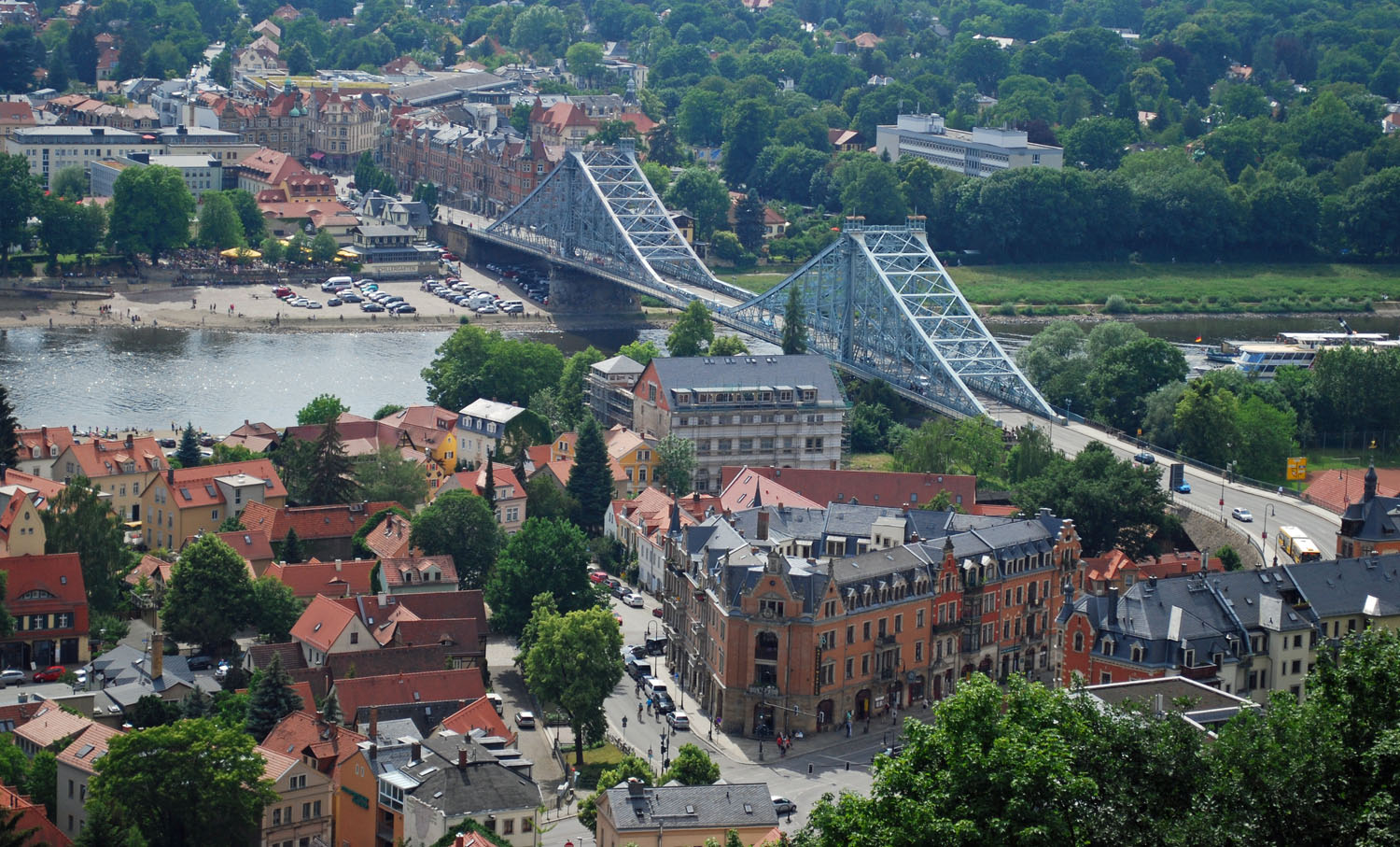
The Brühlsche Terrasse, the elevated promenade along the northern edge of the Altstadt above the Elbe, has been called the Balcony of Europe since the eighteenth century, and walking it in the late afternoon, when the light is golden on the river and the view across the Elbe to the vineyards and meadows on the far bank is at its most peaceful, is one of the most pleasant things the city offers. The terrace connects the Albertinum art museum at its eastern end, which houses one of the finest collections of German Romantic and twentieth-century art in Germany, to the Augustusbrücke bridge at its western end, from which the full panorama of the Zwinger, the Hofkirche and the Royal Palace is visible across the river. The walk along the river upstream from the Augustusbrücke, continuing past the floating stage of the Staatsoperette and along the meadows towards the Blaues Wunder bridge, is one of the finest urban riverside walks in Germany and can be extended for several kilometres through an increasingly natural landscape.
The Neustadt neighbourhood
Crossing the Augustusbrücke from the Altstadt brings you into the Neustadt, the neighbourhood north of the Elbe that was less severely damaged in the bombing than the Altstadt and that has developed over the last thirty years into the most interesting and most locally inhabited part of the city. The Neustadt has a concentration of independent restaurants, bars, galleries and shops in the streets around the Alaunstrasse and the Böhmische Strasse that constitute a genuinely excellent contemporary neighbourhood scene. The Kunsthofpassage, a series of four interconnected courtyards decorated with imaginative street art and housing small boutiques, cafes and galleries, is one of Dresden's most original and most enjoyable small-scale architectural spaces, and it is not quite like anything else in Germany. The quality of eating and drinking in the Neustadt is consistently higher than in the Altstadt and the prices are consistently lower, which makes it the obvious choice for dinner after a day of museum culture in the old city.
Dresden is a city that asks you to hold two things in mind simultaneously: the extraordinary beauty of what was built here in the eighteenth century, and the knowledge of what was destroyed and what it took to rebuild it. This is not a comfortable way to visit a city. But it is an honest one, and the experience it produces, of standing in a space of genuine Baroque beauty knowing exactly how recently that beauty was recovered from rubble, is one that very few other European cities can provide.
5. Eating and Drinking in Dresden: Saxon Food and the Pfunds Dairy
Dresden and the Saxon tradition have a genuine food culture that is worth exploring beyond the standard tourist establishments. Saxon cooking is hearty, ingredient-focused and unpretentious: Sauerbraten (marinated braised beef), Quarkkeulchen (fried potato and quark patties, a Saxon speciality), Striezel (the traditional Christmas stollen cake sold throughout the year), and the various preparations of the local Elbe freshwater fish are all worth seeking out at restaurants in the Neustadt that serve them properly. The local beer tradition, represented particularly by the Feldschlösschen brewery and the Radeberger Pilsner, which was the official beer of the GDR and is still brewed in the town of Radeberg a short distance from Dresden, is of consistent quality and is drunk throughout the city at prices that are modest by the standards of the western German cities.
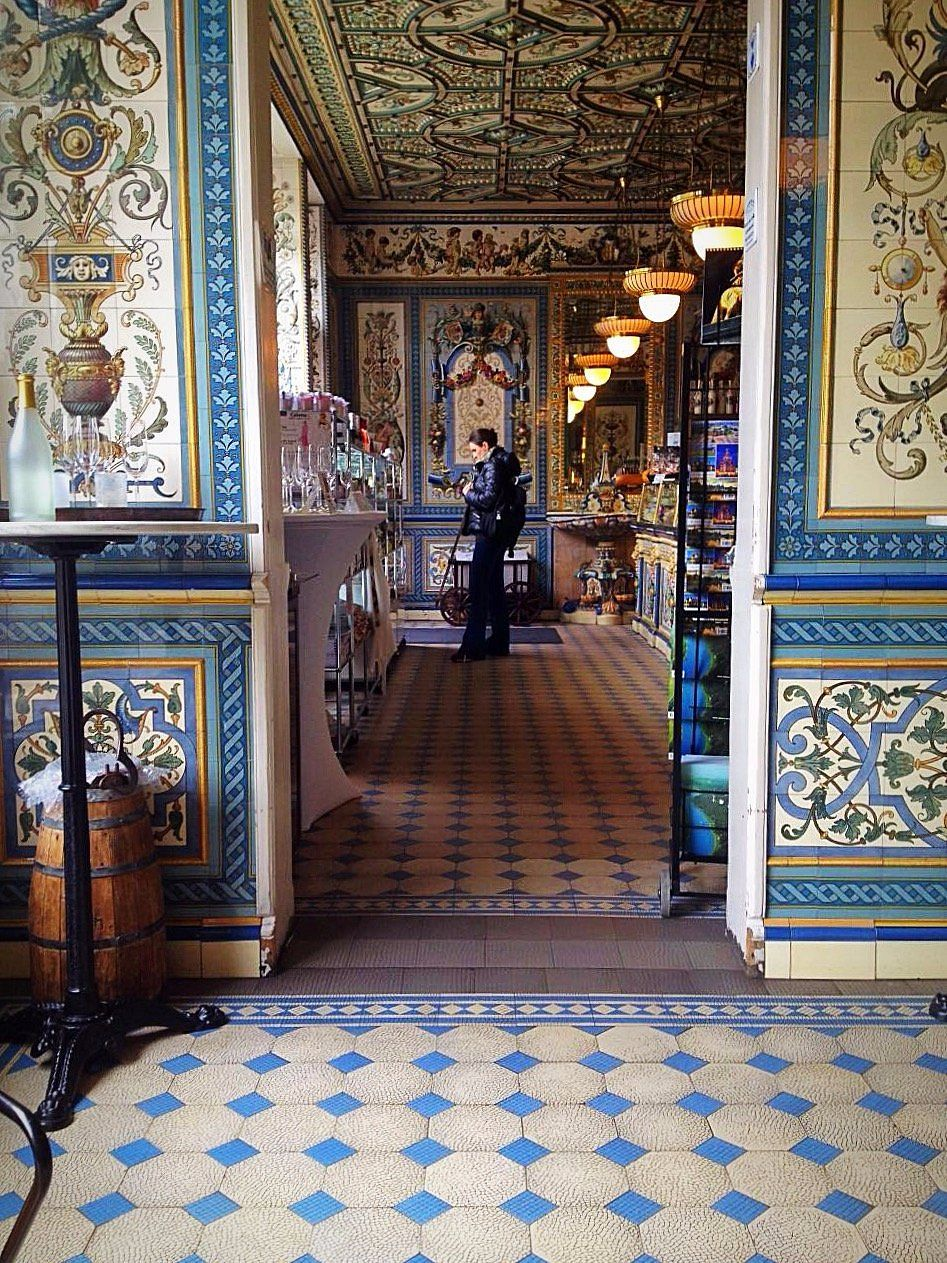
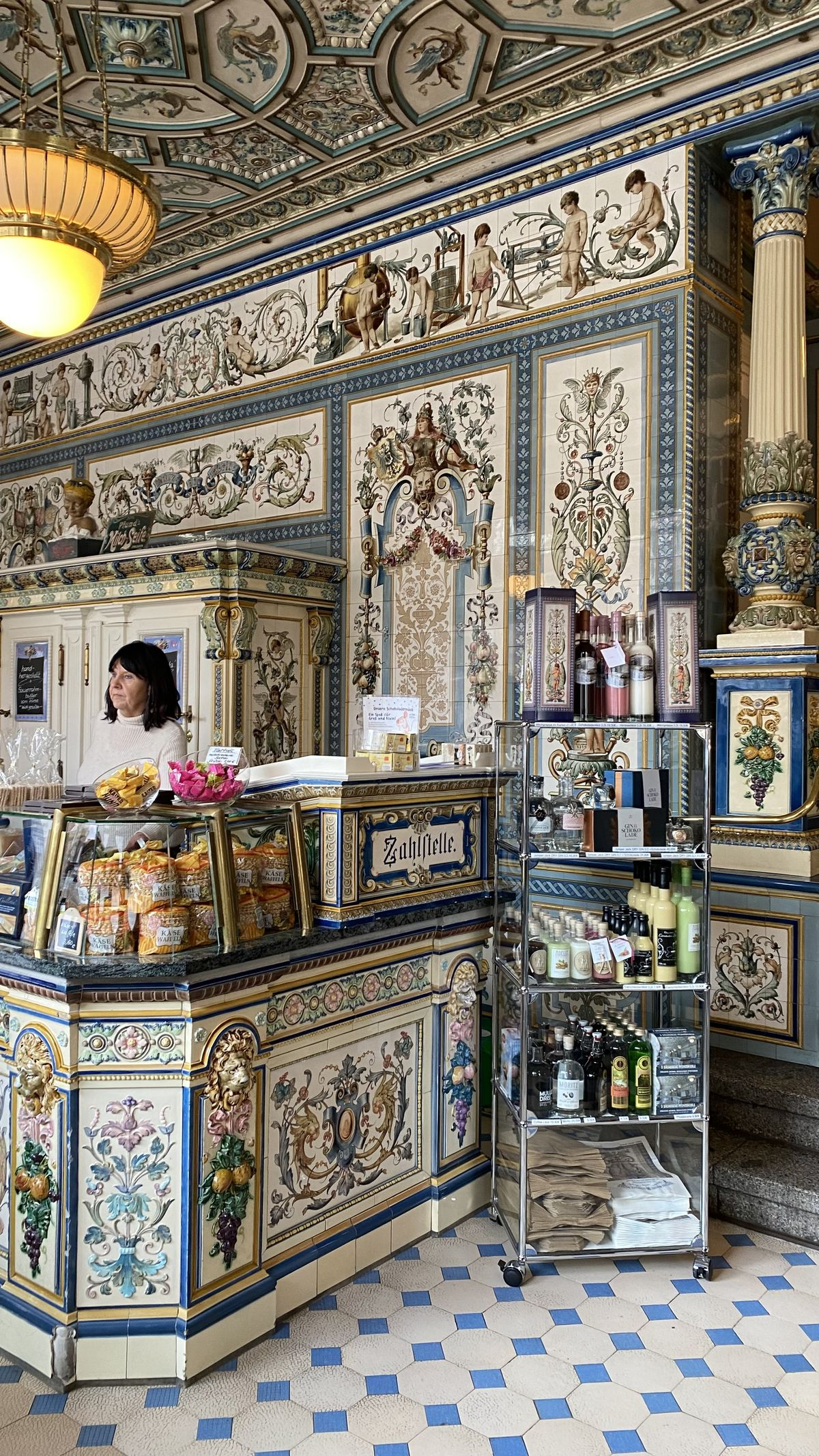
One of the most extraordinary food-related experiences in Dresden is the Pfunds Dairy (Pfunds Molkerei), on the Bautzner Strasse in the Neustadt, which was entered in the Guinness World Records as the world's most beautiful dairy shop and is an extraordinary example of Victorian commercial interior design: every surface of the small shop, including the ceiling, is covered with hand-painted Villeroy and Boch tiles depicting dairy farming scenes, heraldic devices and decorative patterns in a combination of royal blue, cream and gold that is genuinely extraordinary and is completely unlike anything else in the city. The dairy still operates as a cheese shop and deli counter and the products, Saxon and central European cheeses, charcuterie and dairy products, are of good quality. But the real reason to visit is simply to stand inside and look, which does not cost anything and takes approximately twenty minutes and is one of those small, unexpected urban discoveries that makes a travel day significantly better than it would otherwise have been.
Getting from Dresden Airport to the city: Dresden Airport (DRS) is one of Germany's most conveniently located city airports, just 9 kilometres north of the Altstadt. The S-Bahn S2 connects the airport to Dresden Hauptbahnhof in approximately 22 minutes. A private airport transfer to your hotel in the Altstadt or Neustadt takes approximately 20 to 25 minutes at a fixed price and is the most comfortable option, particularly for evening arrivals or when travelling with luggage. Dresden is also within two hours by high-speed train from Berlin and approximately one and a half hours from Prague, making it an excellent base for a longer central European itinerary.

Comments
No comments yet. Be the first to share your thoughts!
Leave a Comment
Your comment will appear after moderation.