 Michelle
 Cologne is one of Germany's most visited cities, and the reason most people give for visiting is the cathedral. This is entirely reasonable: the Kölner Dom is one of the greatest Gothic buildings in Europe, its twin spires dominated the city skyline for centuries before they were overtaken by the modern towers of the financial districts, and standing inside it on a quiet weekday morning when the light is filtering through the medieval stained glass is a genuinely extraordinary experience. But the cathedral takes, at most, a morning. And Cologne is a city with two thousand years of history, a world-famous museum dedicated entirely to chocolate, the birthplace of a fragrance that gave its name to a category of personal care product, a beer culture protected by law and drunk by ritual, and a contemporary neighbourhood life that most visitors never find. Here is the rest of the city.
Why Cologne Rewards More Than the Standard Day Trip
Cologne was founded by the Romans in 38 BC as a military camp on the west bank of the Rhine and elevated to the status of Roman colony in 50 AD under the Emperor Claudius, whose wife Agrippina the Younger was born here. The city, then known as Colonia Claudia Ara Agrippinensium, became one of the most important administrative and commercial centres of the Roman provinces, with a population at its peak estimated at fifty thousand people and an infrastructure of roads, baths, temples and warehouses that shaped the topography of the city for two millennia. The street pattern of the medieval Altstadt still follows the grid of the Roman colony, and the remains of that Roman city lie directly beneath the modern streets, accessible in places through the extraordinary underground archaeological sites that are one of Cologne's most compelling and least-visited attractions.
The medieval city that succeeded the Roman one became one of the most powerful in the Holy Roman Empire: a free imperial city of great wealth, the seat of an archbishop whose political influence extended across the Rhineland, and the largest city in German-speaking Europe for several centuries. The great Gothic cathedral begun in 1248 was the project of this medieval prosperity, an architectural ambition so enormous that construction continued for over six hundred years, was interrupted for three centuries during the Reformation and was only completed in 1880. That combination of ancient Roman foundations, medieval ambition and modern creative energy is what makes Cologne genuinely interesting, and it takes more than a cathedral visit to begin to understand it.
Best time to visit Cologne: Spring and early summer (April to June) and autumn (September to October) are the finest times. The Christmas markets in November and December are among the finest in Germany and draw enormous crowds, but they are also genuinely beautiful and worth experiencing. July and August are warm and lively but the city is busy with tourists. The Cologne Carnival in February and early March is one of the most extraordinary street celebrations in Europe, transforming the city for several days in a way that is either exhilarating or overwhelming depending on your temperament.
1. The Chocolate Museum: a Serious Cultural Experience With a Fountain
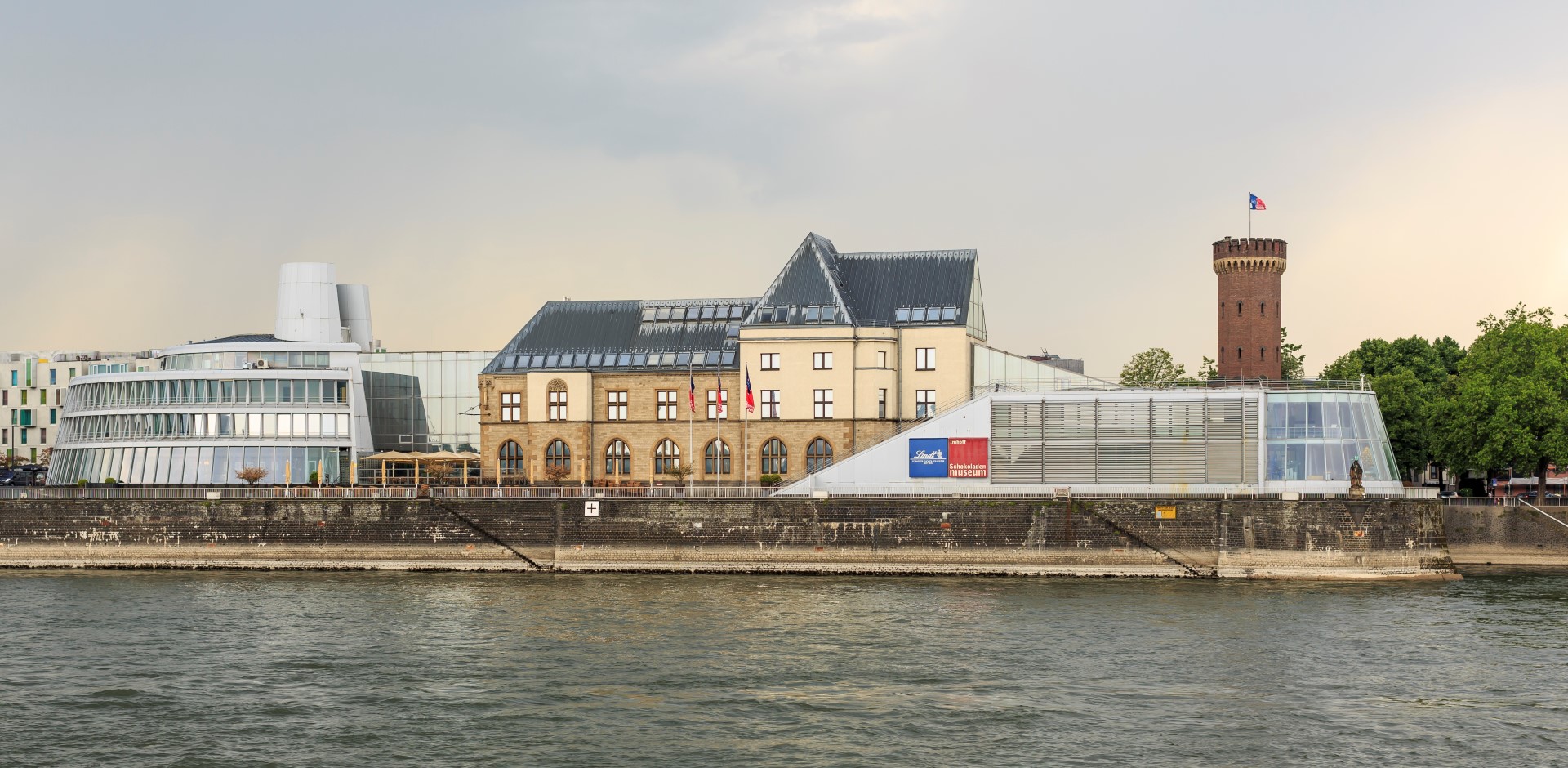
The Schokoladenmuseum Köln, the Chocolate Museum of Cologne, is one of the most visited museums in Germany and, in the opinion of anyone who has spent time there, one of the most genuinely enjoyable. It was founded in 1993 by Hans Imhoff, the owner of the Stollwerck chocolate company, and occupies a striking modern building in the shape of a ship on a peninsula in the Rhine, a location that gives it excellent views of the river and the cathedral across the water and a certain visual drama that is entirely appropriate for a museum dedicated to one of the world's most seductive substances.
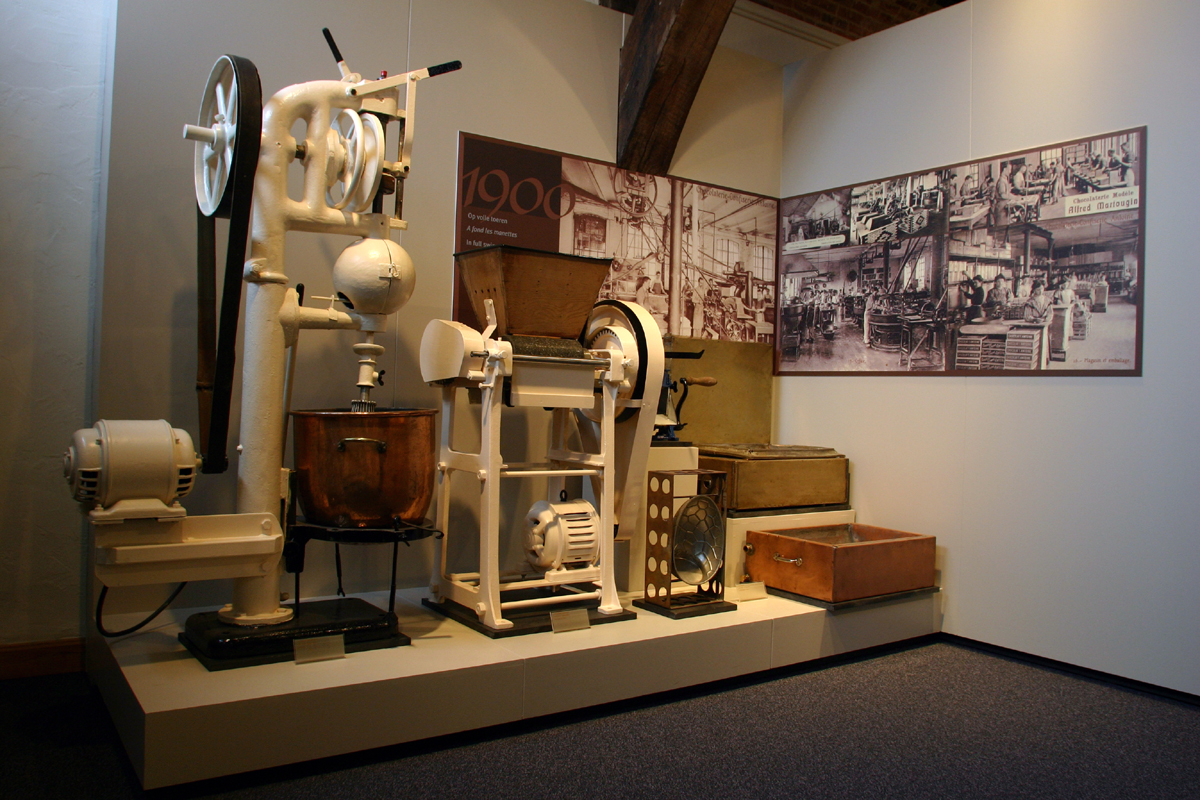
The museum tells the full history of chocolate from its origins in Mesoamerican civilisation, where the cacao tree was first cultivated by the Olmecs and then the Maya and Aztec peoples who used the beans as currency and prepared chocolate as a ritual drink of considerable cultural significance, through the colonial period when cacao arrived in Europe and was transformed from a bitter drink to the sweetened confection that changed the food culture of the continent, to the industrial revolution of the nineteenth century when the development of milk chocolate, the cocoa press and the mechanical production line made chocolate available to the mass market for the first time. The historical narrative is presented with intelligence and visual richness, and the collection of packaging, advertising, machinery and cultural objects related to chocolate is one of the finest of its kind in the world.
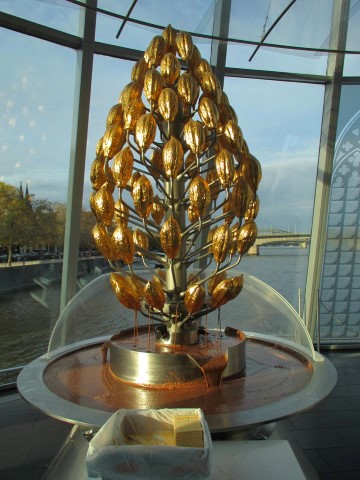
But the highlight that most visitors mention first, and that children and adults alike find genuinely delightful, is the chocolate fountain: a three-metre-high structure of golden metal through which tempered liquid chocolate cascades continuously in a warm, aromatic flow. Museum staff stand at the fountain and dip long wafer sticks into the chocolate for visitors to taste directly. The taste, of properly tempered, high-quality dark chocolate at exactly the right temperature, is one of those simple pleasures that travel occasionally produces: an experience so uncomplicated and so immediately satisfying that it makes you smile regardless of your age, your sophistication or your general disposition. Allow at least two hours for the full museum.
The museum also has an excellent shop and a cafe with Rhine views, and it hosts temporary exhibitions on specific aspects of chocolate culture, history and production throughout the year. The location in the Rheinauhafen district, a former industrial harbour now developed into one of Cologne's most architecturally interesting contemporary quarters, is worth exploring in its own right: the three distinctive Kranhäuser (crane houses), modern residential towers designed to resemble harbour cranes, are one of Cologne's most recognisable contemporary landmarks and the waterfront promenade alongside them offers some of the finest views of the cathedral and the old city bridge from the southern approach.
2. The Romano-Germanic Museum and the Roman City Beneath Cologne
Directly adjacent to the cathedral, the Romano-Germanic Museum (Römisch-Germanisches Museum) is one of the finest archaeological museums in Germany and one of the most undervisited by tourists who focus their attention on the cathedral and the old city without realising that some of the most remarkable objects in the city lie immediately next door. The museum was built in 1974 around its most famous exhibit, the Dionysus Mosaic, a Roman floor mosaic from the mid-third century AD covering approximately 70 square metres that was discovered during the construction of an air raid shelter in 1941 directly beneath the site of the museum. The mosaic, which depicts the god Dionysus surrounded by scenes of drinking, music, eros and mythology in a composition of extraordinary richness and technical perfection, is one of the finest surviving examples of Roman floor mosaic in the world, and the building was specifically designed around it to allow it to remain in situ.
The museum's permanent collection extends the story of Cologne's Roman and early medieval history through thousands of objects recovered from excavations throughout the city and the surrounding region: glass vessels of extraordinary delicacy, bronze statues and fittings, ceramic pottery, jewellery, weapons, inscriptions and the full material culture of a Roman provincial city at the peak of its prosperity. The Poblicius tomb, a monumental funerary column from the first century AD reconstructed to its full height within the museum, is one of the best-preserved Roman funerary monuments in northern Europe. The collection of Roman glass, in particular, is internationally significant and includes pieces of technical refinement that demonstrate why Roman glassblowing remained unsurpassed as a craft tradition for over a thousand years after the fall of the empire.
Below the streets of the Altstadt, accessible through guided tours organised by the city's archaeological service, the Praetorium is the remains of the Roman governor's palace that occupied the centre of the Roman colony, discovered and excavated during construction work beneath the city hall in the 1950s and subsequently opened to the public as an underground archaeological site. Walking through the preserved rooms and corridors of the palace, with the modern city overhead and the Rhine visible in imagination a short distance to the east, is one of those experiences of direct contact with antiquity that makes urban archaeology so compelling. Check current opening hours as restoration work periodically affects access.
The Roman city beneath Cologne: The modern street level of central Cologne is approximately two to four metres above the level of the Roman city, and the remains of that city, its streets, its buildings, its cemeteries and its infrastructure, lie throughout the underground of the Altstadt. Several significant Roman monuments are visible in situ beneath modern buildings: the Roman city gate incorporated into the basement of a department store on the Neumarkt, the Roman harbour road visible through a glass floor in the Heumarkt square, and the mosaics and painted rooms preserved under the Dom Hotel. A half-day spent exploring these underground Roman remains gives Cologne a historical depth that most visitors never suspect it to have.
3. The Farina House: the Birthplace of Eau de Cologne
In 1709, an Italian immigrant named Giovanni Maria Farina, who had settled in Cologne in 1709 after working in the spice trade, created a new fragrance and named it after his adopted city. He called it Eau de Cologne, water of Cologne, and in a letter to his brother he described it as smelling like a spring morning in Italy, of mountain narcissus and orange blossom after the rain, of grapefruit and bergamot and the faint memory of lemons. The fragrance was an immediate success with the European aristocracy and courts to whom Farina supplied it, and his company, the Farina Fragrance Museum on the Obenmarspforten, is the oldest fragrance manufacturer in the world still operating continuously under the same family name and at the same address.
The museum occupies the original building where the fragrance was first created and has been continuously operated by the Farina family for over three hundred years, through the Napoleonic wars, two world wars and the complete transformation of the global perfume industry. The guided tours, which run throughout the day and are available in multiple languages, take you through the history of the company and the fragrance from its origins in the early eighteenth century to the present, through rooms that still contain the original equipment and furniture and correspondence of the founding family. The story of how a single fragrance named for a city became a generic term for an entire category of product, how Cologne's name entered every language in the world as a word for a type of scent, is one of the most extraordinary stories in the history of commerce and culture, and it is told here with the authority of the people who have been living it for ten generations.
The tour ends with a tasting of the original Eau de Cologne formula, applied to the skin in the traditional manner: a drop on each wrist, rubbed together lightly, then inhaled from the pulse point. The fragrance is lighter, fresher and more citrus-forward than most contemporary interpretations of the name, and smelling it in the building where it was created three hundred years ago produces a quality of historical connection that is surprisingly moving. The museum shop sells the original formula in bottles of various sizes and is one of the finest and most genuinely Cologne-specific gifts available in the city.
4. Koelsch Beer Culture and the Traditional Brewery Taverns
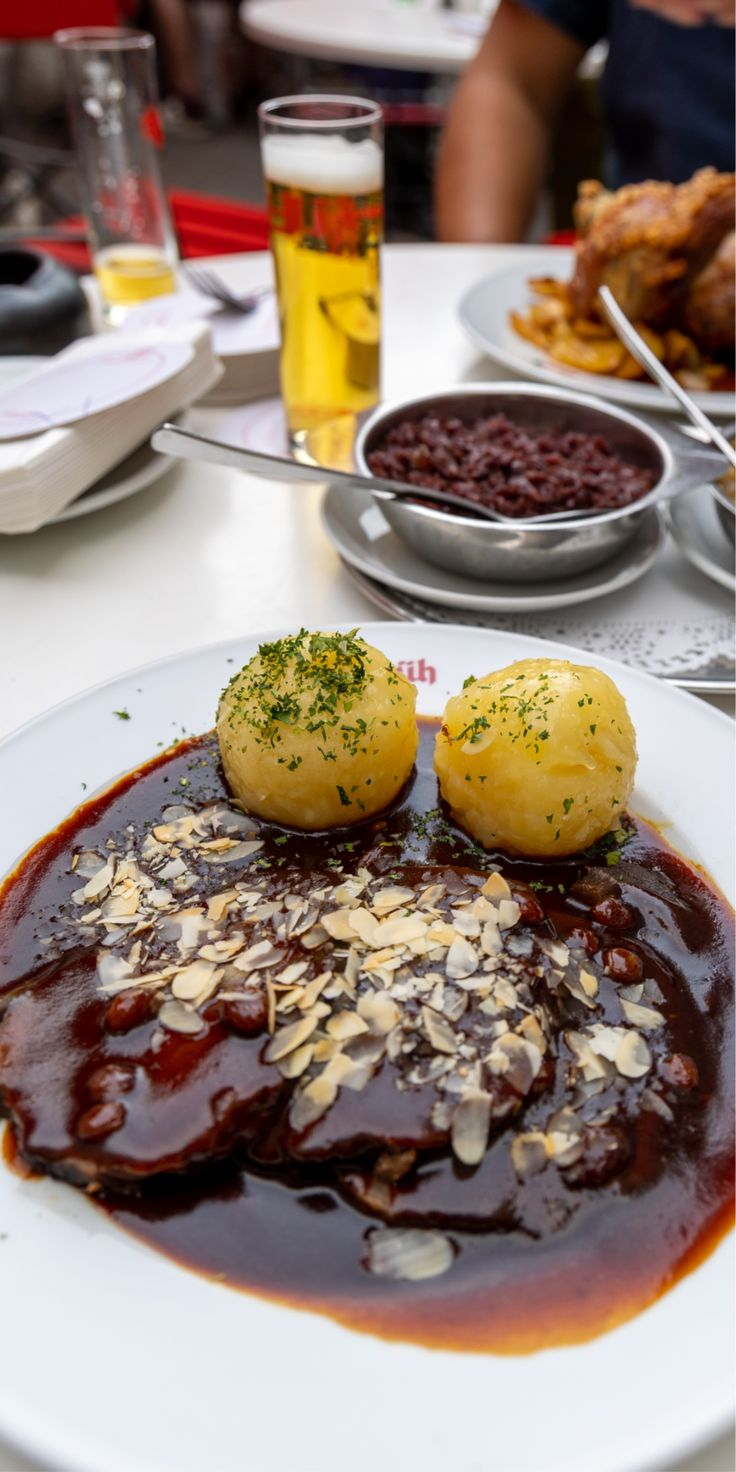
Cologne has one of the most distinctive and most rigorously maintained beer cultures in Germany. Koelsch is a Protected Designation of Origin beer that can legally only be brewed within the city limits of Cologne and a small surrounding area, and its production is governed by a formal convention adopted by the brewers in 1985 that specifies its character, its serving temperature, the glass in which it must be served and the manner of service. It is a pale, clear, top-fermented ale, brewed to a relatively low alcohol content, with a clean, slightly hoppy flavour and a refreshing lightness that distinguishes it from the heavier ales and lagers of the surrounding German beer culture. It is served in a thin, straight cylindrical glass of exactly 200ml called a Stange, and the convention of service dictates that the waiter, called a Kobes in Cologne dialect, continues to replace empty glasses automatically with fresh ones without being asked, carrying his tray of full glasses through the crowded tavern with the practised efficiency of someone who has been doing this their entire working life, until the customer signals they have had enough by placing their beer mat on top of their glass.
The traditional brewery taverns of Cologne's Altstadt, the Brauhauser, are among the most characterful drinking establishments in Germany. Früh am Dom, the brewery tavern directly opposite the cathedral entrance, is the most centrally located and perhaps the most visited, but it maintains the traditional atmosphere and the Koelsch ritual with complete fidelity regardless of the tourist pressure. Gaffel am Dom, equally central, is similarly authentic. For a slightly less tourist-oriented experience, Peters Brauhaus on the Mühlengasse and Brauhaus Sion on the Unter Taschenmacher are excellent alternatives that attract a more mixed local and visitor clientele. All of these establishments serve the same traditional Rhineland food alongside the Koelsch: Halver Hahn (half a rye bread roll with aged Gouda and mustard, despite the name having no chicken in it), Himmel un Ääd (black pudding with apple sauce and mashed potato), and the various pork and offal dishes of the Rhineland kitchen that have been feeding this city for centuries.
Common tourist mistakes in Cologne: Spending the entire visit at the cathedral and the surrounding tourist area without exploring the Rheinauhafen waterfront, the Belgisches Viertel neighbourhood or the Ehrenfeld district. Drinking a Koelsch in a tourist bar near the main station rather than in one of the traditional brewery taverns where the ritual of service is properly maintained. Missing the Romano-Germanic Museum because it is next to the cathedral and seems like an afterthought when it is in fact one of the finest Roman archaeology museums in Germany. And visiting the Chocolate Museum without allowing enough time to follow the full historical narrative from Mesoamerican origins to the European industrial chocolate revolution, which is genuinely interesting and not simply a pretext for the fountain.
5. The Neighbourhoods Beyond the Old City: Belgisches Viertel and Ehrenfeld
The Cologne that most visitors experience, the area within a ten-minute radius of the cathedral, is in many respects the least typical part of the city. The real neighbourhood life of Cologne, the cafes, galleries, independent shops, street markets and restaurants that Cologne residents actually use and value, is found in two areas west of the old city that together constitute one of the most rewarding neighbourhood experiences in western Germany.
The Belgisches Viertel (Belgian Quarter), so named because its streets are named after Belgian cities, is a dense, well-preserved grid of late nineteenth-century apartment buildings between the Hohenzollernring and the Aachener Strasse that has developed over the last twenty years into Cologne's most creative and fashionable neighbourhood. The streets are lined with independent boutiques, concept stores, vintage and secondhand shops, design galleries, coffee roasters, natural wine bars and small restaurants of high quality and considerable variety. On weekends, the neighbourhood attracts a mix of Cologne's creative class, young professionals, students and visitors with enough time to walk beyond the obvious, and the atmosphere on a sunny Saturday afternoon, with the outdoor tables full and the shops busy and the street life maintaining the specific quality of relaxed intensity that characterises a neighbourhood that has not yet been entirely consumed by its own success, is one of the best arguments Cologne makes for being taken seriously as a contemporary European city.
Ehrenfeld, further west, is the more raw, more diverse and more energetically creative of the two neighbourhoods, a former industrial and working-class district that has been transformed by successive waves of immigration and gentrification into one of the most interesting places in Cologne. Street art on a significant scale covers many of the neighbourhood's walls, and the Ehrenfeld visual style, a combination of Turkish market traders, independent music venues, organic food shops and gallery spaces converted from former factories, is distinctive and entirely its own. The neighbourhood's main street, the Venloer Strasse, and the streets around the Neptunplatz and the Körnerstrasse are the best places to start exploring. Allow a full afternoon and end the day in one of the neighbourhood's excellent bars or restaurants, which serve everything from excellent Turkish food to natural wine and contemporary German cooking.
Cologne is a city that rewards the visitor who arrives without a fixed itinerary and gives themselves permission to be surprised. The chocolate fountain and the Roman mosaic and the fragrance that named itself for a city and the thin glass of Koelsch on a wooden table in a brewery tavern that has been in operation for a hundred and fifty years: none of these things appear in the same brochure, but they are all, in their different ways, entirely Cologne. And each of them is better than simply standing outside the cathedral and taking the same photograph everyone else has taken.
Getting to Cologne: Arriving and Getting Around
Cologne Bonn Airport (CGN) serves both Cologne and the former German capital of Bonn, located approximately 15 kilometres southeast of Cologne city centre. The S-Bahn S13 line connects the airport directly to Cologne Hauptbahnhof in approximately 15 minutes, with trains running every 20 minutes throughout the day. The central station is located immediately beneath the cathedral, which means that stepping off the train from the airport and walking up the steps to the street level produces the full frontal impact of the cathedral facade at essentially point-blank range, which is one of the more theatrical arrivals available at any European city.
For the most comfortable arrival, particularly with luggage or when arriving late at night, a private airport transfer to your hotel takes approximately 20 to 30 minutes at a fixed price. Within the city, Cologne is compact enough that the main sights and neighbourhoods are walkable from one another, and the tram and U-Bahn network covers the wider city efficiently. The Rhine promenade and the old city bridges are best experienced on foot, and a walk south along the Rhine from the cathedral to the Chocolate Museum and the Rheinauhafen, then back through the Altstadt brewery district in the evening, makes an excellent first day in the city that costs almost nothing and covers most of what makes it distinctive.
Comments
No comments yet. Be the first to share your thoughts!
Leave a Comment
Your comment will appear after moderation.