 Michelle
 I have visited Venice a number of times, and I return time and again to enjoy its magnificent history and beauty. Every visit is different. Every visit reveals something new. And yet the feeling that greets you the moment you step off the train at Santa Lucia station or emerge from the car park at Piazzale Roma and see the Grand Canal for the first time is always exactly the same: a jolt of pure, unfiltered astonishment that this city exists, that it has always existed, that it continues to exist against every reasonable expectation, rising from its lagoon with the improbable serenity of something that has always been exactly where it is and always will be. This is why Venice is one of my favourite cities in the world.
A City Unlike Any Other on Earth
Venice occupies a category entirely its own. There are beautiful cities in Italy, and beautiful cities in Europe, and beautiful cities across the world. But Venice is not simply beautiful: it is structurally impossible, a city that should not exist by any rational account of urban planning or civil engineering, and yet has existed for over a millennium, surviving floods and plagues and conquests and the slow subsidence of its own foundations with a resilience that feels almost personal.
The city is built on 116 small islands in the Venice Lagoon, in the northern reaches of the Adriatic Sea. The islands are separated by a network of some 150 canals and connected by approximately 400 bridges, and the buildings that rise from their edges rest on millions of wooden piles driven deep into the lagoon floor, a construction technique that has kept the city standing since the early Middle Ages. There are no roads in Venice in the conventional sense: no cars, no motorbikes, no bicycles. Movement is either on foot, through the extraordinary labyrinth of narrow streets, bridges and squares that make up the city's pedestrian network, or by water, on the vaporetti (public water buses), gondolas, traghetti (the shared gondola ferries that cross the Grand Canal at a handful of points) and private water taxis that are the city's true transport system.
The effect of a city without motor traffic is one that visitors remark on universally and remember for years. The sounds of Venice are water sounds: the lap of a wave against stone, the creak of a mooring rope, the distant throb of a vaporetto engine, the bells of San Marco carried on the wind across the lagoon. The smells are water smells: salt and algae and, at low tide, something darker and more ancient beneath it. The light is a water light: reflected upward from the canals onto the facades of the buildings, shifting constantly, impossible to predict and impossible to adequately photograph. There is no other city where all five senses are engaged so consistently and so profoundly from the moment of arrival.
Get lost on purpose. The single best thing you can do in Venice is put away your phone, pick a direction and walk. The city is small enough that you cannot walk for more than 20 minutes in any direction without hitting water, which means you can always reorient yourself. The finest things in Venice are found not on the main tourist routes but in the quiet campielli (tiny squares) and calli (narrow alleys) that most visitors walk past without noticing. Do not be afraid to be lost. In Venice, getting lost is the point.
1. Piazza San Marco and the Basilica
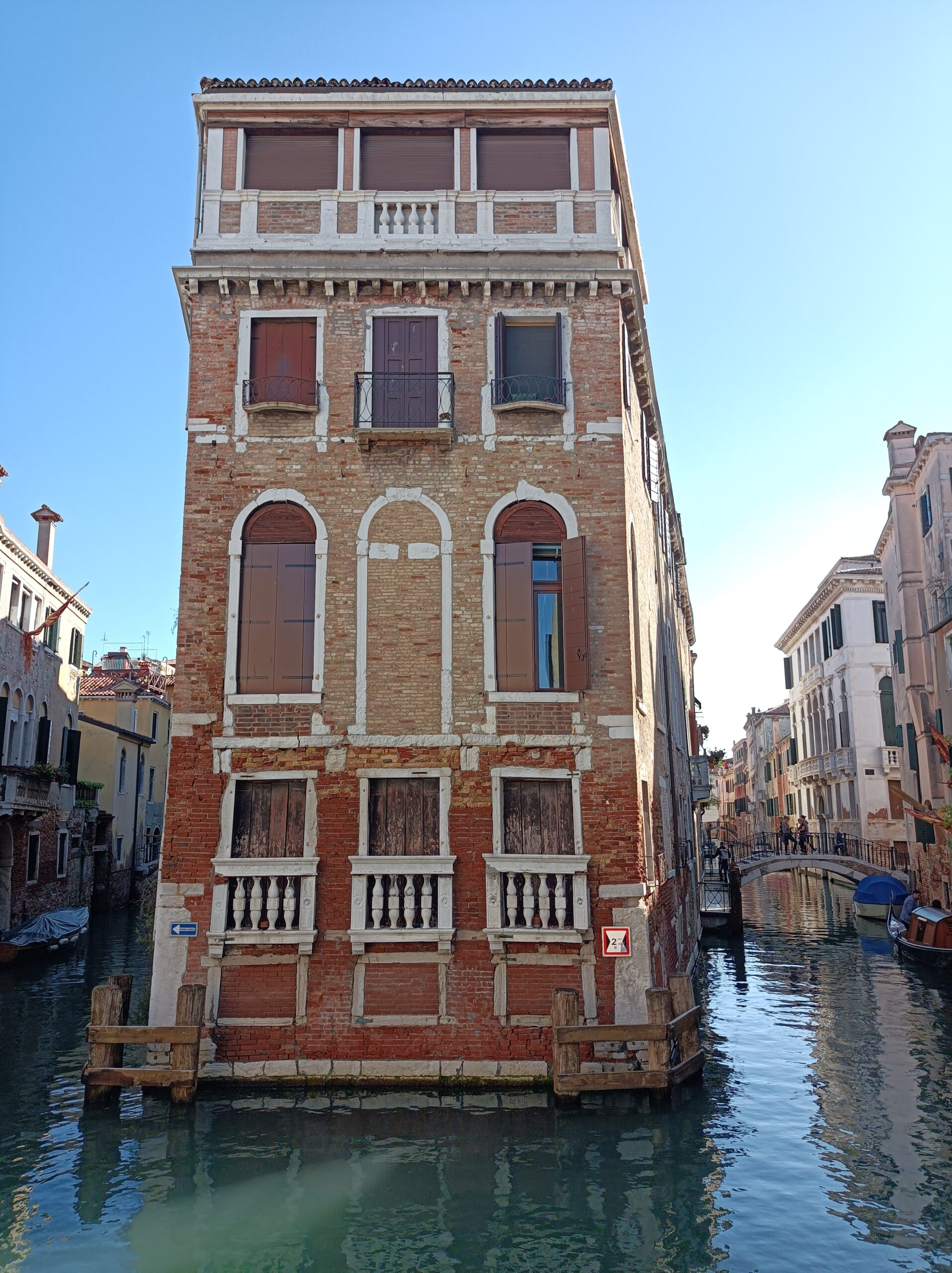
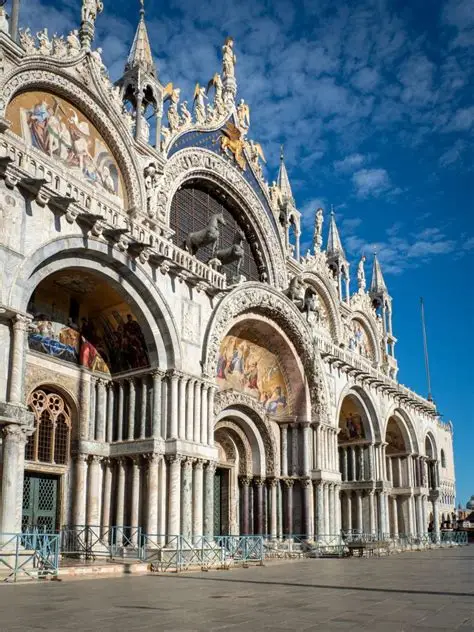
Napoleon famously called Piazza San Marco "the finest drawing room in Europe," and the description holds up rather well eight centuries after the square reached its present form. Surrounded on three sides by the elegant colonnaded arcades of the Procuratie Vecchie and Procuratie Nuove and on the fourth by the extraordinary facade of the Basilica di San Marco, it is one of the great urban spaces of the world: a place that manages to be simultaneously grand in scale and intensely intimate in atmosphere, a stage set for the drama of Venetian public life for a thousand years.
The Basilica di San Marco is unlike any other church in Italy and, arguably, in the world. Its architecture is not Latin or Gothic or Renaissance but Byzantine, a direct inheritance from Constantinople and the Eastern Roman Empire, and its extraordinary interior, covered in approximately 8,000 square metres of gold mosaic, produces an effect of shimmering, otherworldly splendour that is among the most powerful aesthetic experiences the peninsula has to offer. The mosaics depict scenes from the Old and New Testaments, the life of Saint Mark, and the history of Venice itself, in a visual programme of extraordinary ambition and complexity that took centuries to complete and continues to astonish visitors who take the time to look carefully at what surrounds them.
Entry to the main nave of the basilica is free, though certain areas carry a charge. The Museo Marciano on the upper floor gives access to the loggia above the main entrance, where you stand level with the four famous bronze horses (replicas: the originals are inside the museum, removed to protect them from atmospheric pollution) and look out over the piazza below. The Pala d'Oro, the Byzantine altarpiece of gold, enamel and precious stones assembled over several centuries, is one of the greatest examples of medieval decorative art in existence. Both are worth the modest admission charge.
Visit the Basilica early. Queue-skipping reservations for the Basilica can be made online through the official website for a small booking fee, and they are genuinely worth using in spring and summer, when the queue to enter stretches across the piazza and can take over an hour. Alternatively, arrive before 9am when the doors first open: the atmosphere in the early morning, with the light just beginning to penetrate the golden mosaics, is unforgettable.
2. The Grand Canal, the Rialto and the Gondola
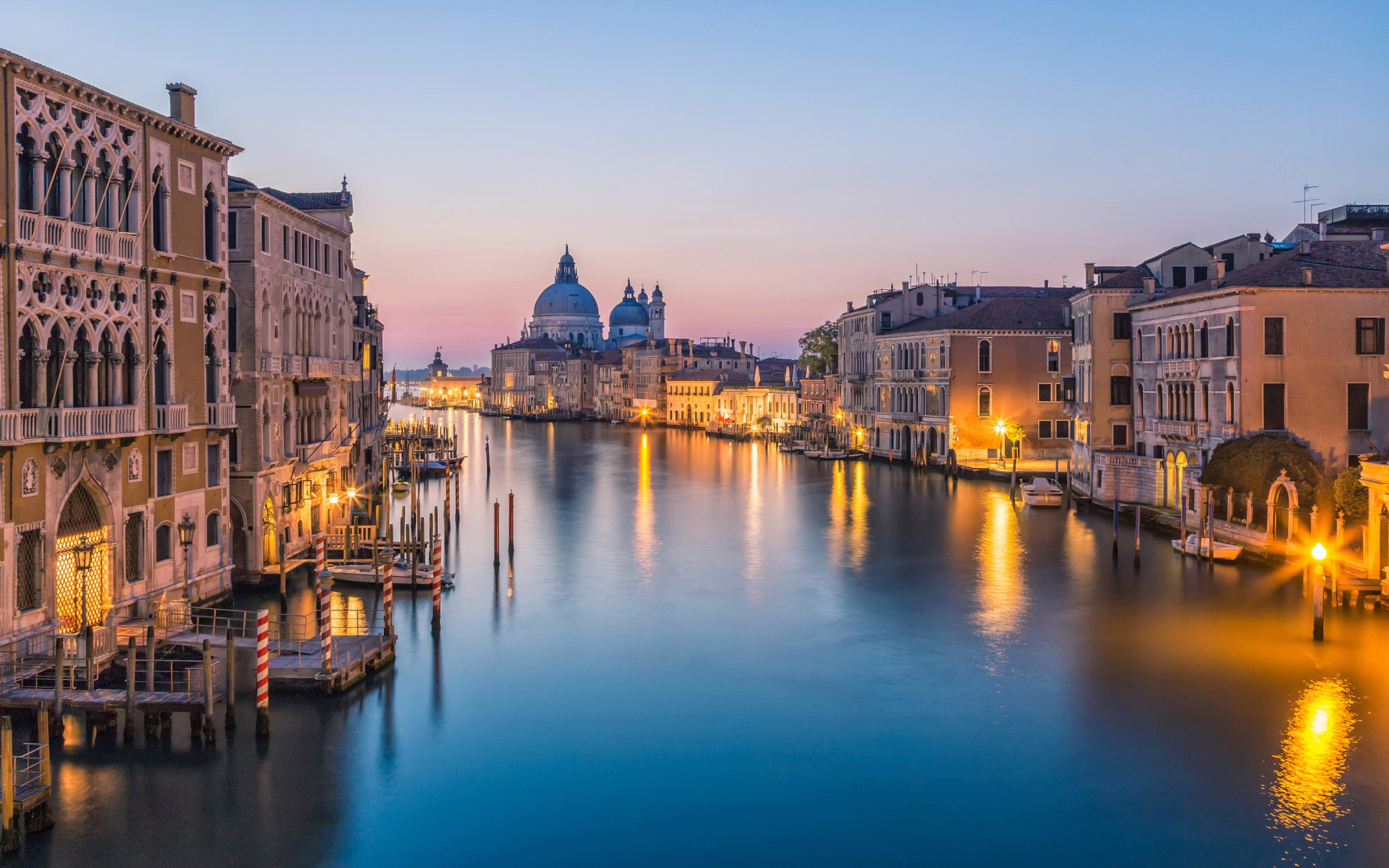
The Grand Canal is Venice's main artery: a reverse S-shaped waterway approximately 3.8 kilometres long and between 30 and 70 metres wide, running through the heart of the city from the railway station at Santa Lucia to the Punta della Dogana at the entrance to the lagoon. Along its banks stands the most extraordinary collection of medieval and Renaissance palaces in Europe, a continuous procession of Ca' d'Oro, Ca' Rezzonico, Palazzo Grimani, Ca' Pesaro and dozens more, their facades rising directly from the water in colours ranging from ivory and ochre to the deep terracotta-red of weathered brick. Arriving in Venice by train and emerging onto the Grand Canal for the first time is one of the great arrival experiences of European travel.
The best and cheapest way to see the Grand Canal in its entirety is to take vaporetto line 1, which stops at every landing stage along both banks and takes around 45 minutes to complete the full journey from Piazzale Roma to San Marco. For the price of a single vaporetto ticket, this is one of the great scenic journeys in Europe. Sit at the front of the boat if you can, or at the open stern, and let the city come to you at the pace of the water.
The Rialto Bridge, the oldest and most famous of the four bridges that cross the Grand Canal, was completed in 1591 to a design by Antonio da Ponte and remained the only crossing of the Grand Canal for nearly three centuries. Today it is one of the most visited structures in Venice, and it earns its fame: the view from the bridge in both directions along the Grand Canal, with the palaces and the vaporetti and the light on the water, is one of those views that genuinely matches every photograph you have ever seen of it. The Rialto market, immediately to the north of the bridge on the San Polo bank, has been the commercial heart of Venice since the Middle Ages: the fish market (Pescheria) and the fruit and vegetable market (Erberia) are among the most atmospheric places in the city and are free to explore on any morning from Tuesday to Saturday.
The Gondola: Romance on the Water
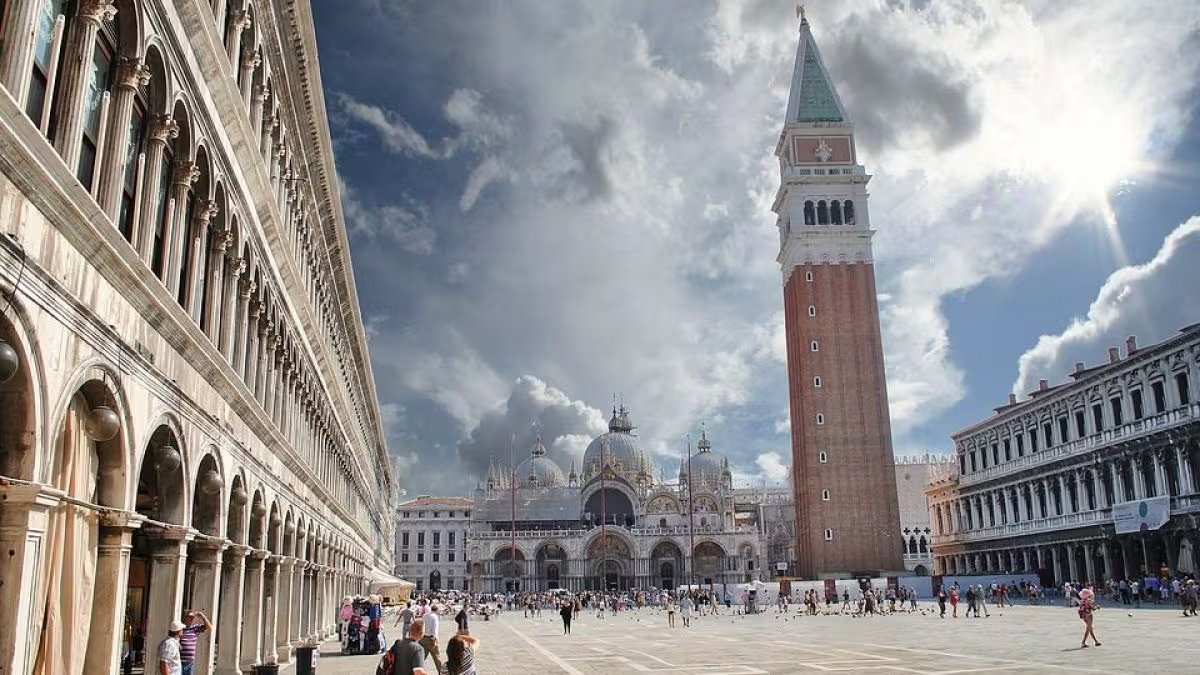
What could be more romantic than floating down the canal, taking in the breathless scenery of Venice with someone you love? The gondola is the most iconic image of Venice and, despite being expensive by any objective measure, remains one of those experiences that a significant proportion of visitors feel compelled to have at least once. The official rate is 80 euros for 30 minutes during the day, rising to 120 euros after 7pm. The gondolier will not, contrary to popular belief, automatically serenade you, though this can be arranged separately and at additional cost.
The most rewarding gondola routes are not on the Grand Canal itself, where traffic is heavy and the experience somewhat impersonal, but on the smaller rii (secondary canals) of the inner sestieri, particularly in the Dorsoduro and Cannaregio areas, where the canals are narrow enough to touch both banks, the buildings lean toward each other overhead, and the experience is intimate, quiet and genuinely removed from the rest of the city. Ask your gondolier to take you through the minor canals rather than the Grand Canal, and you will get considerably more for your money.
The traghetto: a gondola for one euro. The traghetto is the working gondola ferry that crosses the Grand Canal at six points where there is no nearby bridge. The crossing costs one euro, takes about two minutes, and involves standing in a gondola alongside a handful of Venetian commuters going about their daily business. It is not the romantic gondola experience, but it is a genuine piece of Venetian daily life and costs exactly 79 euros less than the tourist version.
3. The Doge's Palace and the Art of the Republic
The Palazzo Ducale, the Doge's Palace, is the defining monument of Venetian power and the most important secular building in the city. Standing at the edge of the Piazzetta di San Marco, its extraordinary Gothic facade of white Istrian stone and pink Verona marble rising directly from the water, it served for nearly a thousand years simultaneously as the residence of the Doge (the elected head of the Venetian Republic), the seat of government, the supreme court and the state prison. Everything that mattered in Venice happened here.
The interior is one of the great surprises of Italian art history. The rooms of the Doge's Palace are decorated with works by Tintoretto, Veronese, Titian and Tiepolo on a scale and at a level of quality that matches and in some respects surpasses anything in the Uffizi or the Vatican Museums. Tintoretto's Paradise in the Sala del Maggior Consiglio, painted in 1594 and measuring 22 by 7 metres, is the largest oil painting on canvas in the world and one of the most astonishing single works of art you will encounter anywhere in Italy. It covers the entire end wall of a room the size of a small cathedral, and standing before it for the first time produces an effect of genuine, slightly overwhelming awe.
The Bridge of Sighs, connecting the palace to the New Prison across the Rio di Palazzo, takes its name from the story that condemned prisoners, crossing it for the last time, would sigh at their final glimpse of Venice and the lagoon through its small stone-latticed windows. The bridge can be seen from outside (the view from the Ponte della Paglia on the Riva degli Schiavoni is the classic angle) and crossed from inside on the Doge's Palace tour. Book tickets online well in advance to avoid queues that in high season can stretch to two hours.
The Secret Itineraries tour. The Doge's Palace offers a separate guided tour called the Secret Itineraries (Itinerari Segreti), which takes small groups through parts of the palace not open to the general public, including the torture chamber, the prison cells (one of which Casanova famously escaped from in 1756) and the attic spaces used for state administration. It is one of the best guided experiences in Venice and should be booked online as far in advance as possible.
4. Beyond San Marco: The Sestieri and the Islands
Venice is administratively divided into six sestieri (sixths), each with its own distinct character, its own social history and its own particular atmosphere. Most tourists spend the majority of their time in the sestiere of San Marco and the immediately adjacent areas around the Rialto, and while these areas are magnificent and entirely deserve their fame, confining your Venice experience to them is like visiting Rome and not leaving the area around the Colosseum. The other sestieri are where Venice becomes three-dimensional, local and genuinely surprising.
Dorsoduro, on the south bank of the Grand Canal, is the most sophisticated and in many ways the most beautiful of the sestieri. It is home to the Gallerie dell'Accademia, the greatest collection of Venetian painting in the world (Bellini, Carpaccio, Giorgione, Titian, Veronese, Tintoretto, all together in a single building), and to the Peggy Guggenheim Collection, housed in the unfinished eighteenth-century palazzo where the American heiress lived for thirty years and assembled one of the finest collections of twentieth-century art in Europe. The Zattere promenade along the southern waterfront is perfect for a quiet evening walk, with views across the Giudecca canal to the island opposite.
Cannaregio, the northernmost sestiere, is the most lived-in and the least visited by tourists, and this is precisely what makes it so rewarding. Its wide fondamente (canal-side promenades) are lined with local bars, market stalls and neighbourhood restaurants that operate at prices aimed at Venetian residents rather than foreign visitors. The Ghetto, the world's first Jewish ghetto (the word itself is Venetian, derived from the local term for the foundry that once occupied the site), is a place of extraordinary historical depth and quiet poignancy, its tall buildings and enclosed squares telling a story of community, survival and extraordinary cultural richness that stretches over five centuries.
Adjacent to the main square, Campo Santa Margherita in Dorsoduro is the liveliest and most convivial square in Venice, particularly in the evening when its bars and restaurants fill with university students and young Venetians. It is the best place in the city to experience something close to normal Venetian social life, away from the tourist circuit.
The Islands of the Lagoon
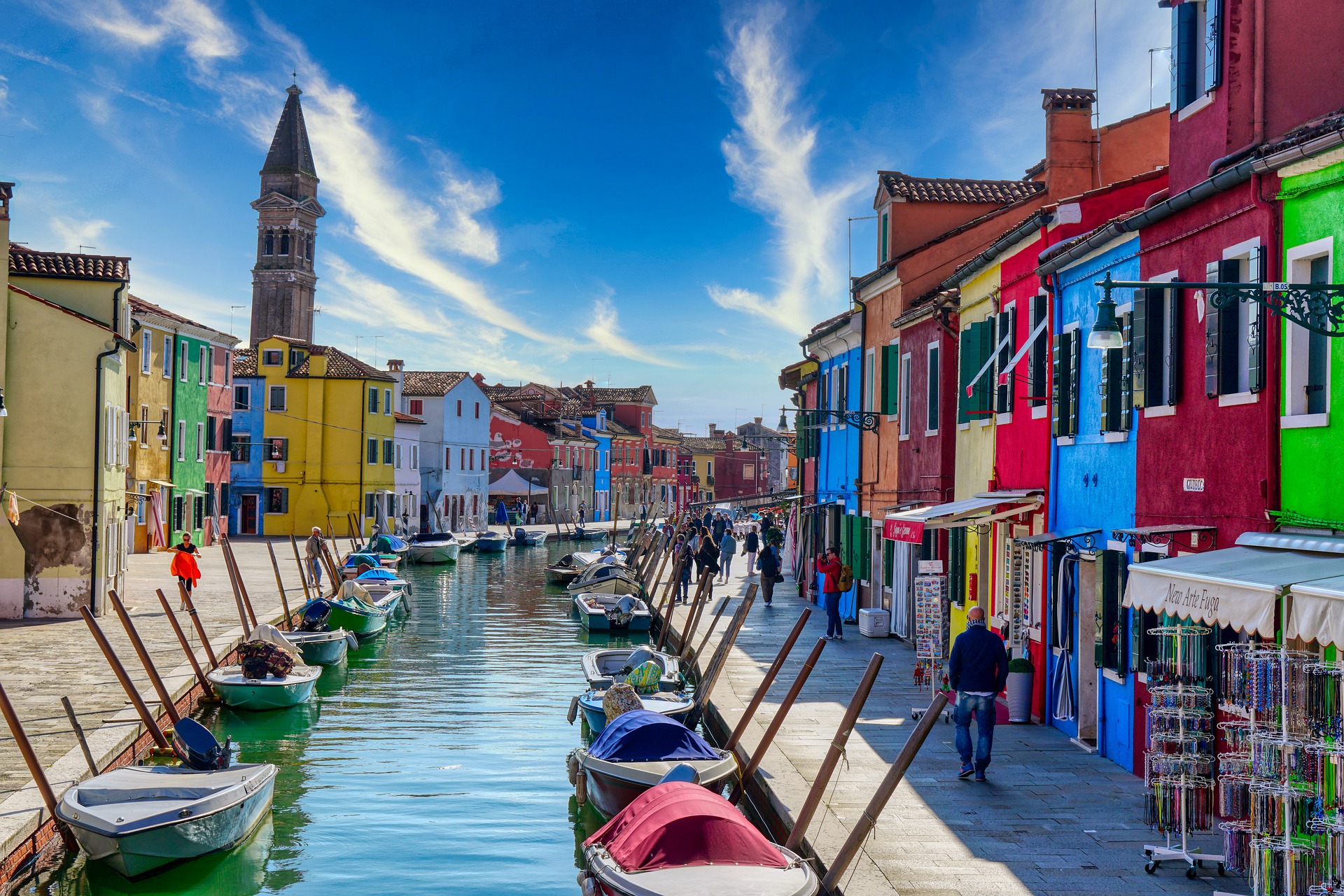
A vaporetto pass opens the entire lagoon, and the islands immediately accessible from Venice deserve at least a full day of exploration. Murano, fifteen minutes by vaporetto, has been the centre of Venetian glass production since 1291, when the Republic ordered all glass furnaces moved to the island to reduce the fire risk to the city. The tradition of Murano glass-blowing is one of the most remarkable examples of craft continuity in the world, and watching a master vetraio at work in one of the island's furnaces is a genuinely extraordinary experience. Burano, an hour from Venice, is the most photogenic place in the entire lagoon: a fishing village whose houses are painted in colours so vivid that the effect from the water, as the island comes into view, is almost hallucinatory. Torcello, the most remote island accessible by vaporetto, was once the most populated island in the lagoon; today it is largely uninhabited, and its cathedral of Santa Maria Assunta, founded in the seventh century and containing the most beautiful Byzantine mosaics in northern Italy, stands in a silence that feels ancient and very profound.
The Biennale. Venice hosts the Biennale d'Arte, the world's oldest and most prestigious international contemporary art exhibition, in odd-numbered years from May to November. Adjacent to the Arsenale, the great medieval shipyard where the Republic built its fleet, and in the public gardens of the Giardini, the Biennale transforms Venice into the global capital of contemporary art for six months. If your visit coincides with a Biennale year, make sure you allocate at least a full day to it.
5. The Food, the Bellini and Harry's Bar
One of the true highlights of any visit to Venice is the food, and the city rewards those who take the trouble to eat well. Venetian cuisine draws on the double tradition of the lagoon and the sea on one side, and the agricultural richness of the Veneto mainland on the other, producing a table of extraordinary variety and genuine distinctiveness. Do not leave Venice without trying sarde in saor (sardines in a sweet and sour marinade of onion, raisins, pine nuts and wine vinegar, a recipe unchanged since the Middle Ages), baccala mantecato (salt cod whipped with olive oil into a rich, silky cream, served on grilled polenta), risi e bisi (the Venetian spring dish of rice and fresh peas, halfway between a risotto and a soup), and fegato alla veneziana (calf's liver slowly braised with sweet onions and white wine until it achieves a tenderness and depth of flavour that transforms a humble ingredient into something genuinely sublime).
Yet the Venetian kitchen holds further treasures, dishes less frequently remarked upon by the hurried traveller but cherished by those who linger. Bigoli in salsa, for instance, presents a pasta of rough, earthy buckwheat or whole wheat flour, thick as bootlaces and tossed with a sauce of slow-cooked onions and salted anchovies, a preparation so ancient that its origins recede into the fog of the lagoon's earliest settlements. The dish humbles the palate with its austerity, teaching the eater that Venetian refinement is not always ornate; sometimes it is the patient alchemy of poverty transformed into poetry. Moeche, soft-shell crabs from the shallows of the lagoon, appear only in spring and autumn, when the crabs moult their armour. They are dredged in flour and fried swiftly until golden, and to eat them is to taste the very essence of the brackish waters from which Venice arose, a flavour both delicate and profoundly mineral. Seppie al nero, cuttlefish cooked in their own ink, arrives on the plate as a dish of blackest night, the rice or polenta beneath stained the colour of obsidian, the taste a revelation of the sea's hidden depths, simultaneously briny and sweet, with an umbral richness that lingers on the tongue long after the meal has ended. And for those with a taste for the unexpected, castraure, the tender second-growth artichokes from the island of Sant'Erasmo, are eaten raw in spring, drizzled with olive oil and a squeeze of lemon, their flavour so delicate and sweet that they scarcely resemble the thorny globes of the Roman campagna.
Nor should one neglect the Venetian interpretation of that most humble of ingredients: the pea. Risi e bisi, already mentioned, deserves a second invocation, for it is more than a dish; it is a ritual of spring, a celebration of the moment when the first peas appear at the Rialto market, so sweet that they need no adornment save a little broth and the patient stirring of a wooden spoon. The Venetians do not classify it as either a soup or a risotto; it occupies a category of its own, as Venice itself does among cities.
For the sweet conclusion of a Venetian meal, the city offers frittelle, light fritters of ricotta and raisins dusted with sugar, traditionally prepared for Carnival but worth seeking out at any time of year from a neighbourhood pasticceria. And zaeti, small yellow biscuits made from maize flour and studded with raisins, are the perfect accompaniment to a glass of sweet Vin Santo, their rustic texture and gentle sweetness a fitting end to a long and satisfying exploration of the Serenissima's culinary inheritance. To eat in Venice is to read the city's history in the language of flavour, and no visitor who pays attention to that language departs without a deeper understanding of what this extraordinary place has been, and remains.
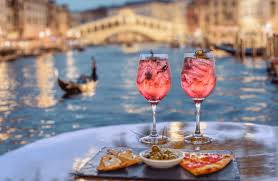
You absolutely cannot visit Venice without sampling a Bellini. The combination of fresh white peach juice and Prosecco was invented, as far as anyone knows, at Harry's Bar in the late 1930s, and named after the Venetian Renaissance painter Giovanni Bellini by Giuseppe Cipriani, the founder of the bar, who saw a resemblance between the drink's pale pink colour and the tonality of a Bellini painting. Harry's Bar, tucked into a narrow building a few steps from the Gritti Palace on the Calle Vallaresso, opened in 1931 and became one of the most famous bars in the world. Ernest Hemingway was a regular and set several scenes of Across the River and into the Trees here. Charlie Chaplin, Orson Welles, Woody Allen, Truman Capote and virtually every major figure of twentieth-century culture passed through its doors at some point. The food is excellent and the prices are stratospheric, which is entirely in keeping with its legend. A Bellini at Harry's Bar is an act of deliberate, joyful extravagance, and entirely worth it at least once.
For more economical but equally authentic Venetian drinking, the bacaro tradition is one of the great pleasures of the city. A bacaro is a traditional wine bar serving cicchetti (small snacks on slices of bread, typically topped with baccala, sardine in saor, or prosciutto) alongside a glass of local wine for one to two euros each. The best bacari in Venice are concentrated around the Rialto market area in San Polo and along the canal-side fondamente of Cannaregio, and a giro di ombra (a tour of bacari, moving from one to the next with a small glass at each) is as authentic a Venetian experience as taking a gondola, and significantly cheaper.
The Spritz: Venice's other great invention. The Aperol Spritz was born in Venice, where the addition of sparkling water (spritz in the local dialect, from the German spritzen) to local wine was a practice of long standing before Aperol arrived to give it its modern form. A Spritz al Aperol or al Campari in a neighbourhood bacaro costs two to three euros. The same drink served at a table in Piazza San Marco costs four to five times as much. Both are correct choices at the right moment.
Common Tourist Mistakes in Venice
Venice receives millions of visitors every year, and the combination of its extraordinary beauty and its compact geography means that certain mistakes are made so regularly that they have become almost a category of their own. Here are the most avoidable ones.
Trying to see everything in a day. Venice is frequently visited as a day trip from other cities, and the day-trippers who arrive in the morning on coach tours and leave in the evening having seen the Piazza and the Rialto have technically visited Venice, but they have not experienced it. Venice requires at least three days to begin to reveal itself properly. The city changes entirely at night, when the day-trippers have gone and the streets belong to the people staying in the city. Spending at least one evening and one early morning in Venice, when the light is extraordinary and the crowds have not yet arrived, transforms the experience completely.
Eating at the first restaurant you find near the main sights. The restaurants immediately surrounding Piazza San Marco and the Rialto Bridge serve variable food at prices that reflect their location rather than their quality. Walk three streets away in any direction and you will find better food for significantly less money. Any restaurant displaying photographs of dishes on a board outside is a restaurant designed primarily for tourists who do not know what to order: find somewhere without photographs and without a menu translated into six languages on a laminated board, and your meal will almost certainly be better.
Ignoring the acqua alta. The periodic flooding of Venice's lowest-lying areas, known as acqua alta (high water), is a feature of autumn and winter life in the city and affects primarily the area around Piazza San Marco and the Riva degli Schiavoni. Pack waterproof ankle boots or lightweight rubber overshoes if you are visiting between October and February. The city erects raised wooden walkways during flood events, and the sight of the piazza under water, reflecting the Basilica in a sheet of still water, is actually one of the most extraordinary visual experiences Venice has to offer. It is worth experiencing rather than avoiding, as long as your feet are dry.
Getting to Venice from the airport. Venice Marco Polo Airport (VCE) is approximately 12 kilometres from the city, and the choice of transfer matters more than it might at first appear. Water taxis directly to your hotel on the canal are expensive and slow. The Alilaguna boat is scenic but takes over an hour. The ATVO bus to Piazzale Roma is economical and quick. For groups of three or more, a private airport transfer to Piazzale Roma is often the most practical and cost-effective option, with a fixed price, no queuing and door-to-door service.
Getting to Venice: Practical Information
Venice is served by Marco Polo International Airport (VCE), one of the most beautifully situated airports in Europe, rising at the edge of the lagoon approximately 12 kilometres north of the historic centre. The airport receives direct flights from most major European cities and long-haul connections from the Americas, the Middle East and Asia. A second airport, Treviso Airport (TSF), located about 30 kilometres from the city, serves several low-cost carriers with connections across Europe.
The most comfortable way to begin your Venice experience is with a private airport transfer from Marco Polo to Piazzale Roma, taking approximately 20 to 30 minutes depending on traffic, with a fixed price agreed before departure. From Piazzale Roma, vaporetti and water taxis reach every corner of the historic centre and the lagoon islands.
Comments
No comments yet. Be the first to share your thoughts!
Leave a Comment
Your comment will appear after moderation.