 Michelle
 Most travellers pass through Naples on their way to somewhere else: to Pompeii, to the Amalfi Coast, to the islands of the Bay. That is a mistake. Naples is not a transit city. It is one of the oldest continuously inhabited cities in the world, a UNESCO World Heritage Site, the birthplace of pizza, and a place of such raw, chaotic, overwhelming beauty that it tends to either terrify first-time visitors or seduce them completely. There is rarely a middle ground. If you give it time: a few days, a willingness to get lost in its labyrinthine streets, an appetite for the best food in Italy: Naples will reward you in ways that no amount of guidebook preparation can fully anticipate.
When Is the Best Time to Visit Naples?
Naples is a city that can be visited year-round, but the experience varies enormously by season. The ideal windows are April through June and September through October: when the light over the Bay of Naples is at its most extraordinary, the temperatures are comfortably warm (18°C–26°C), and the city operates at a pace that allows you to actually enjoy it. Spring brings flowering jacaranda and wisteria tumbling from the ancient walls; autumn offers a softer golden quality to the light and the satisfaction of the summer crowds having largely departed.
July and August are intensely hot: temperatures regularly exceed 32°C, and the city, particularly the waterfront and the islands, can feel overwhelmingly busy. If summer is your only option, start your days early, plan your island excursions for weekdays rather than weekends, and book everything in advance. Winter, meanwhile, is mild and uncrowded: an excellent time for museum visits and long lunches in the city's historic trattorie, where the locals reclaim their city with evident pleasure.
Getting there: Naples Capodichino Airport (NAP) is located just 7 kilometres from the city centre. When you land, the simplest and most comfortable way to reach your hotel is a private airport transfer: door to door in around 20 minutes, with no queues, no confusing bus routes and no dragging luggage through the streets on arrival. Start your Naples experience the right way.
1. The UNESCO Historic City Centre
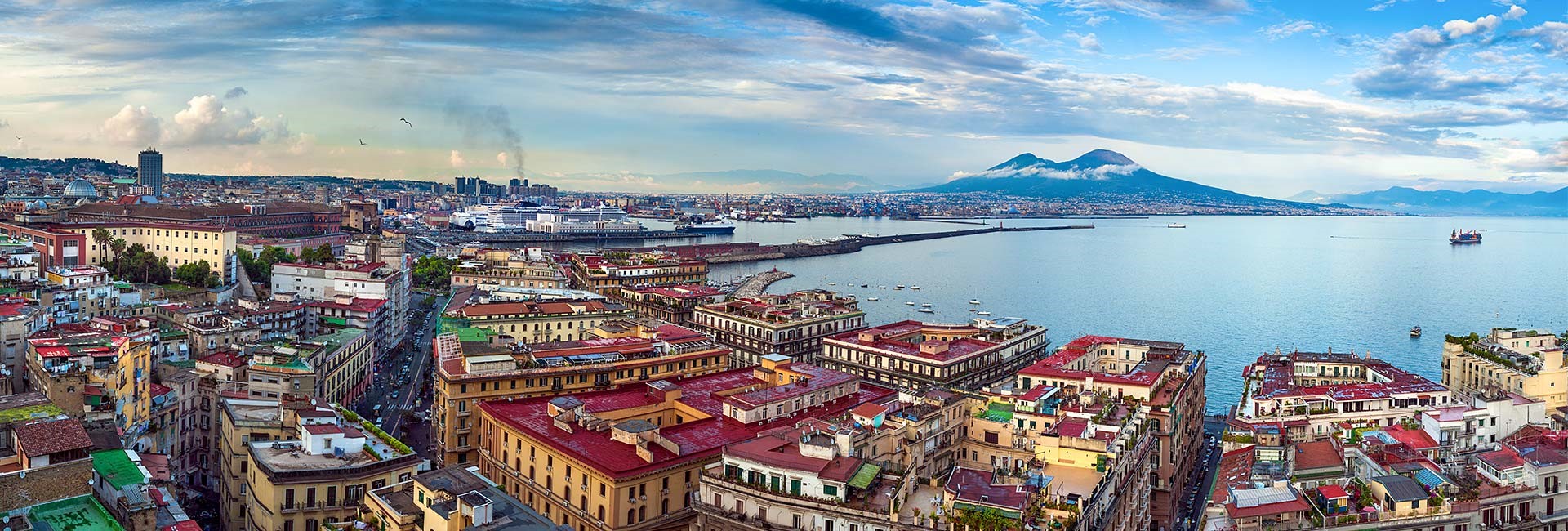
To walk through the historic centre of Naples is to walk through three thousand years of uninterrupted human civilisation. Designated a UNESCO World Heritage Site in 1995, the centro storico is one of the densest accumulations of art, architecture, history and street life anywhere in the Mediterranean world: a place where a Roman temple becomes the base of a medieval church, where baroque palaces crowd against Greek-era streets, and where daily life unfolds with an intensity that is uniquely, unmistakably Neapolitan.
The backbone of the historic centre is formed by the three great Decumani: the ancient east-west streets originally laid out by Greek settlers in the 5th century BC, later adapted and expanded by the Romans. The main artery, Spaccanapoli (literally "Naples-splitter"), cuts through the heart of the old city in an almost perfectly straight line and is one of the great urban walks in Europe: a kilometre-long corridor of churches, artisan workshops, street food stalls, bookshops and baroque monuments, all compressed into a street so narrow that the buildings on either side almost touch above your head.
Do not miss the Museo Archeologico Nazionale, one of the finest classical antiquities museums in the world. Its collections include treasures from Pompeii and Herculaneum: mosaics, bronzes, frescoes, sculptures and objects of everyday Roman life, that bring the ancient world into breathtaking proximity. Allow at least half a day. Immediately in front of the museum stands the Galleria Principe di Napoli, the city's oldest shopping arcade: a magnificent cast-iron and glass structure from 1883, decorated with allegorical sculptures and almost entirely ignored by the crowds heading to its more famous counterpart in Milan.
Food tip: The historic centre is the birthplace of Neapolitan pizza. For the authentic experience, join the queue at L'Antica Pizzeria da Michele on Via Cesare Sersale, open since 1870, serving only two varieties (Margherita and Marinara), and consistently producing what many consider the finest pizza on the planet. The queue moves faster than it looks. It is absolutely worth it.
2. Castel dell'Ovo: The Castle on the Sea
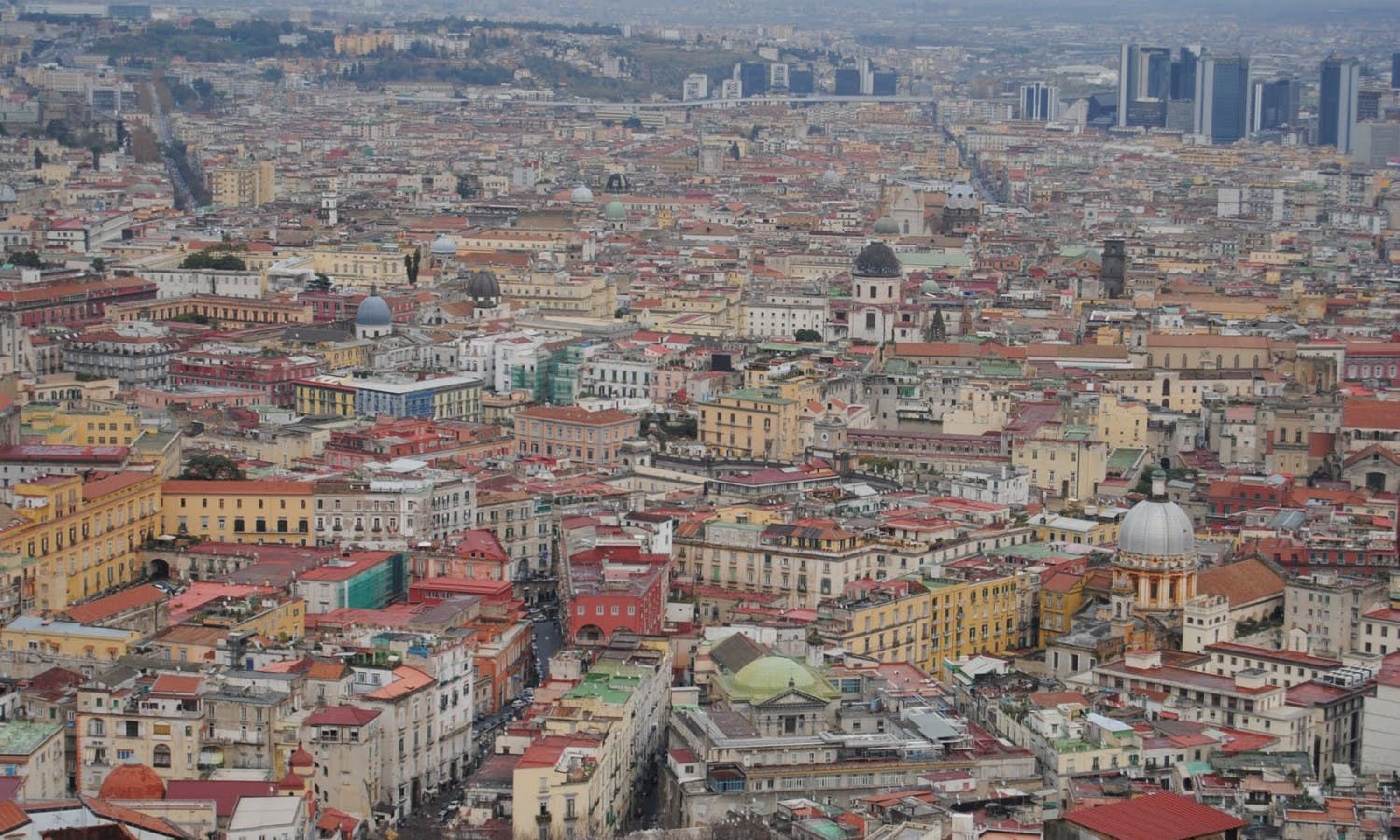
Of all the sights in Naples, Castel dell'Ovo: the Castle of the Egg: may be the one that stops you most completely in your tracks. Rising from a small island connected to the Santa Lucia waterfront by a narrow causeway, this ancient fortress has occupied its rocky promontory since at least the 9th century, though its foundations are considerably older: the site was originally built upon by the Greek colonists who settled this coast, and later by the Romans, who constructed a magnificent villa here that once belonged to the general Lucullus.
The castle's extraordinary name comes from a legend of irresistible medieval charm: the poet Virgil, who was believed throughout the Middle Ages to have possessed magical powers, is said to have hidden a magic egg (uovo) within the castle's foundations. As long as the egg remains intact, the legend holds, the castle will stand and the city of Naples will prosper. Whether or not you find the legend plausible, it captures something true about the way Naples relates to its own mythology: with absolute seriousness and a knowing wink simultaneously.
The castle was rebuilt and expanded repeatedly over the centuries: by the Normans, the Swabians, the Angevins, and served for long periods as a royal residence. Today it houses the Museum of Ethno-Prehistory and a series of exhibition spaces used for temporary art and cultural events. But the real reason to visit is the experience of the place itself: the walk along the causeway with the sea on both sides, the extraordinary views from the castle's towers across the Bay to Vesuvius, and the quiet of the island at the end of a long afternoon, when the day-trippers have departed and the light on the water turns gold.
Photography tip: For the best photographs of Castel dell'Ovo, position yourself along the Via Partenope waterfront promenade at the golden hour: approximately one hour before sunset. The castle catches the warm evening light magnificently, with Vesuvius visible on the horizon behind it. This is one of the great urban panoramas of southern Italy.
3. Capo Posillipo: Naples from the Sea
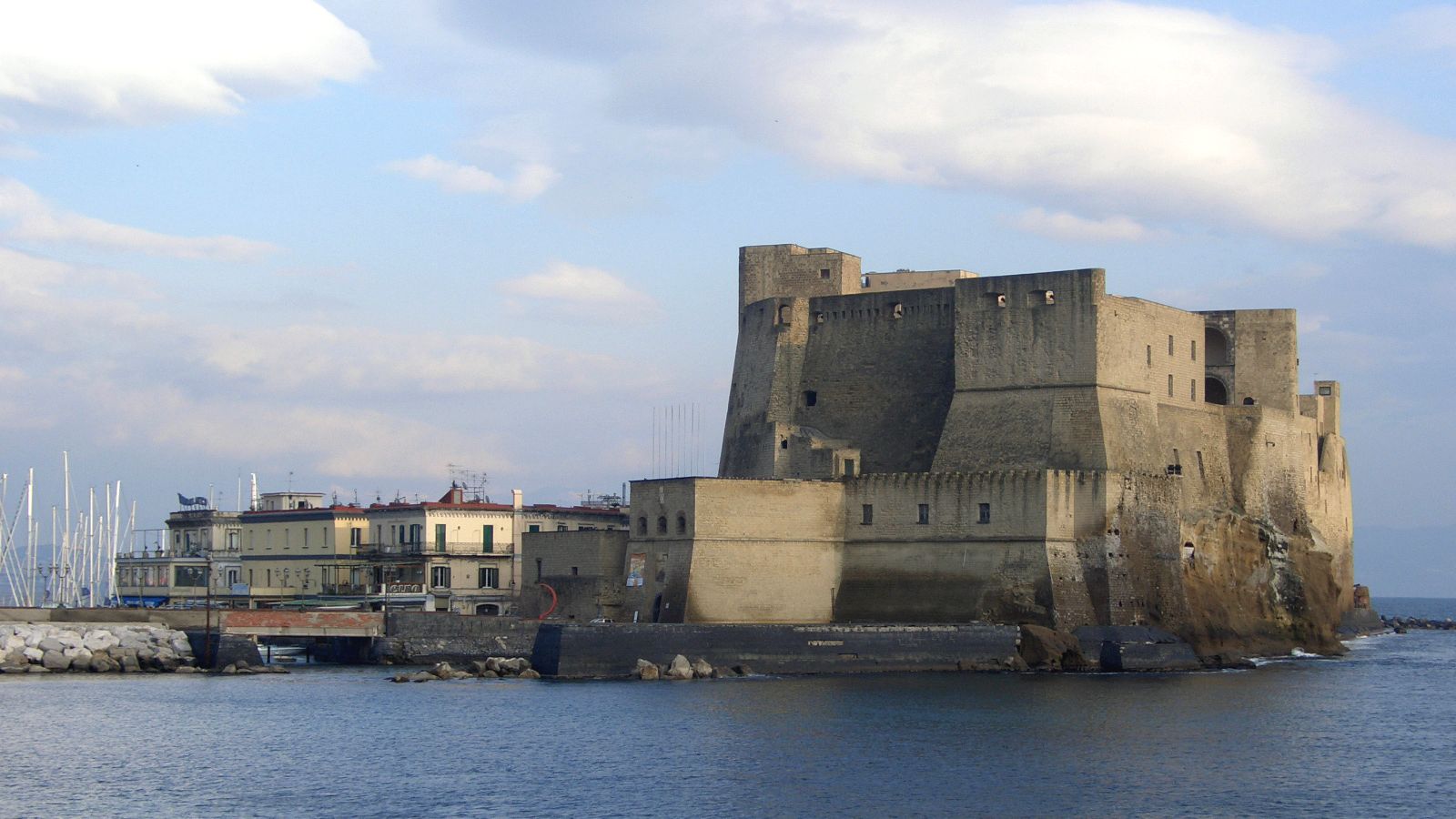
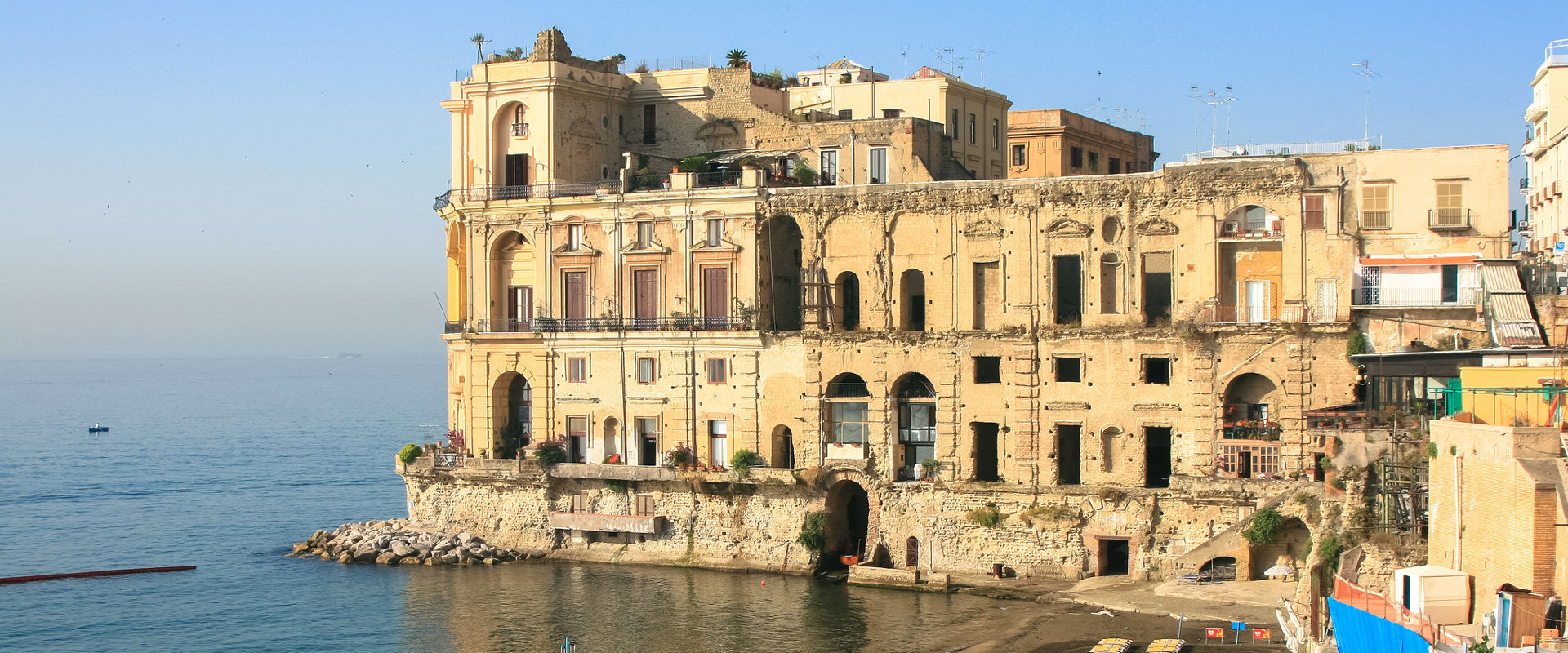
If there is one road in Naples that every visitor should travel at least once, it is Via Posillipo. Beginning at Mergellina port, where the fishermen still bring in their catch each morning and the smell of coffee and salt water mingles in the early air, this spectacular coastal road winds westward along the cliffs above the Bay for several kilometres, offering a succession of views that have been inspiring artists, poets and travellers for centuries.
The headland of Capo Posillipo has been a place of aristocratic retreat since Roman times: the name derives from the Greek Pausilypon, meaning "relief from pain," and you understand the sentiment the moment you stand on one of its viewpoints and look out over the Bay. Below the road, grand villas cling to the cliff face, their gardens tumbling down to private jetties. Above, umbrella pines frame the horizon. And everywhere, the extraordinary blue of the Tyrrhenian Sea.
Stop at the Veduta Panoramica di Posillipo: a public belvedere that offers perhaps the single most comprehensive view of Naples: the entire sweep of the Bay, from the industrial port in the east to Pozzuoli and the Campi Flegrei in the west, with Capri visible on clear days as a dark shape rising from the horizon. On the road below, a handful of excellent seafood restaurants make this a natural place to stop for a long, unhurried lunch. Order the frittura di paranza: lightly battered mixed fried seafood, and a glass of chilled Falanghina, and let the afternoon take care of itself.
Restaurant tip: Along Via Posillipo, Giuseppone a Mare has been serving seafood with an unimprovable view since 1889. Book a table on the terrace for lunch: the combination of honest Neapolitan seafood cooking and a panorama that encompasses the entire Bay is one of the great dining experiences in southern Italy.
4. Discesa Marechiaro: Legend, Poetry and the Sea
A short distance further along the Posillipo coast, tucked below the main road at the bottom of a steep lane, lies one of the most evocative and least-visited corners of Naples: Discesa Marechiaro. The name means "descent to the clear sea," and the place lives up to it: a tiny fishing hamlet clinging to the rocks above the water, its houses painted in faded terracotta and ochre, with small boats pulled up on the stone quay and cats sleeping in the afternoon sun.
The soul of Marechiaro is a single window. According to local legend, a woman named Carolina once stood for hours at this particular window, gazing out to sea waiting for her fisherman lover to return. The window, which still bears a red carnation in a terracotta pot, became the inspiration for Marechiaro: a love song written in 1885 by the Neapolitan poet Salvatore Di Giacomo and set to music by Francesco Paolo Tosti. The song became one of the most beloved Neapolitan songs of all time, and the window became a place of quiet pilgrimage for those who know the story.
To truly appreciate the scene: the window, the hamlet, the extraordinary quality of the light on the water: you need to see it from the sea. Take a short boat excursion from Mergellina or the nearby small harbour: the view from the water looking back at the coloured houses cascading down the cliff, with the window just visible among the flowers and greenery, is the kind of image that stays with you. Several local fishermen offer informal boat trips along this stretch of coast: ask at the Mergellina port.
Cultural note: The song Marechiaro by Di Giacomo and Tosti is one of the classics of the Neapolitan songwriting tradition: a tradition that also gave the world O Sole Mio and Funiculì Funiculà. If you visit Naples in summer, check whether any outdoor concerts are taking place in the area: hearing these songs performed live, by the sea, as the sun goes down over the Bay, is an experience with no equivalent.
5. The Islands of the Bay: Capri, Ischia and Procida
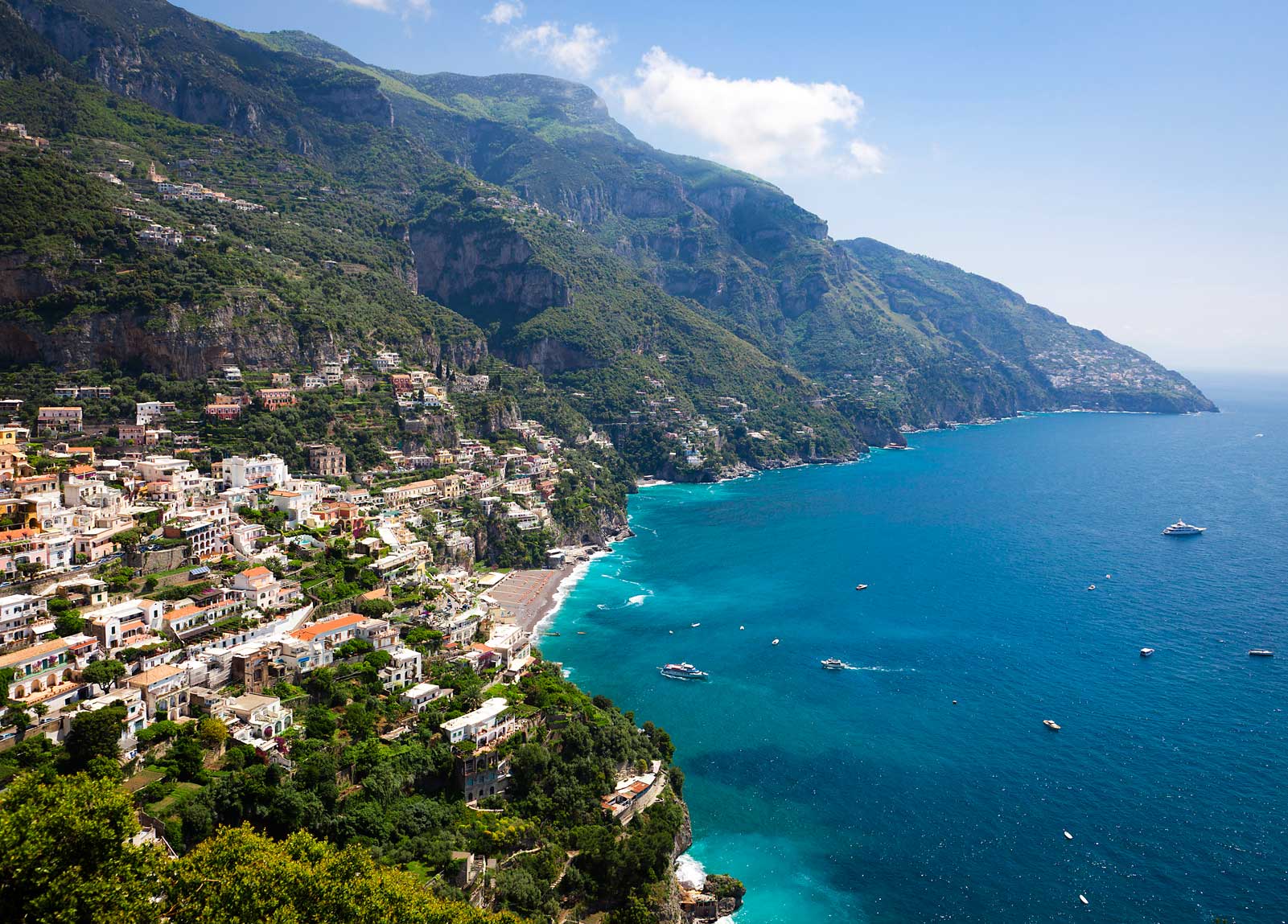
The Bay of Naples contains three islands, each utterly distinct in character, and each offering an experience that no visit to this part of Italy should miss. Ferries and hydrofoils depart regularly from both the Molo Beverello port and the Mergellina harbour: journey times range from 20 minutes to just over an hour depending on the island and the vessel type.
Capri: Glamour and Geology
Capri is the most famous and the most visited of the three islands, and justifiably so, for its natural beauty is genuinely extraordinary. The island rises dramatically from the sea in a series of limestone cliffs and sea stacks, its two towns (Capri town and Anacapri) connected by a vertiginous road that should probably not exist. The Blue Grotto (Grotta Azzurra), a sea cave illuminated by an otherworldly blue light, is one of the most remarkable natural phenomena in Italy. The Gardens of Augustus offer a terraced garden above the sea with views that are almost incomprehensibly beautiful. The Via Krupp, a hairpin zigzag path carved into the cliff face in 1902, is one of the great walks in Europe. And the Basilica di San Michele in Anacapri contains an extraordinary 18th-century majolica floor depicting the Garden of Eden in exquisite detail. Arrive early on a day trip and leave by mid-afternoon to avoid the worst of the summer crowds.
Ischia: Volcanic Spa Island
The largest island in the Bay, Ischia is a volcanic island of remarkable diversity: thermal hot springs, lush gardens, sandy beaches, medieval castles and authentic fishing villages. The Aragonese Castle, connected to the main island by a stone bridge and rising from its own rocky islet, dates back to 474 BC in its original form: the views from its summit over the entire island and the Bay are spectacular. The island's thermal waters, heated by volcanic activity deep beneath the surface, supply a remarkable network of thermal parks and spa hotels: the Poseidon Thermal Gardens and Negombo are among the finest. Ischia is also worth exploring by local bus or rented scooter: the road around the island passes through six distinct municipalities, each with its own character, seafront and gastronomy.
Procida: Italy's Best-Kept Secret
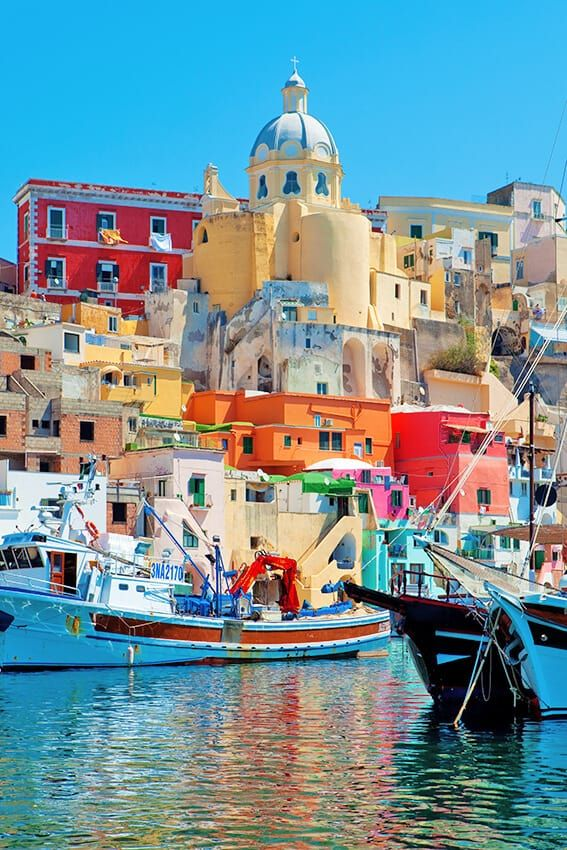
The smallest and least-visited of the three islands, Procida rewards those who make the journey with something the other two can no longer easily offer: authenticity. The island's extraordinary pastel-coloured waterfront: a cascade of lemon yellow, terracotta, rose and ochre houses reflected in the water of the Marina Corricella: is one of the most photographed scenes in Italy, yet somehow the island remains genuinely unspoiled, its fishing culture intact, its beaches uncrowded, its restaurants serving honest seafood to an overwhelmingly local clientele. Procida served as a location for several films, most famously Il Postino (1994), and the island still feels like a film set, in the best possible sense. Designated Italian Capital of Culture in 2022, Procida is arguably the finest day trip from Naples, and the one least likely to disappoint.
Standing at the stern of the ferry as it pulls away from the Molo Beverello and the Naples skyline recedes: the city stacked improbably up the hillside, Vesuvius behind it, the Bay glittering in the morning light: you understand why travellers have been making this journey for centuries. Some things do not diminish with repetition.
Practical Tips for Visiting Naples
Getting around: The historic centre is best explored on foot: many of its most interesting streets are too narrow for vehicles anyway. For longer journeys, Naples has a metro system (Line 1 and Line 2) and a comprehensive bus network. The funiculars: four of them, connecting the lower city to the Vomero hill: are worth riding for the experience as much as the utility. Avoid driving in the city centre unless you are very experienced with Italian urban traffic.
Common tourist mistakes to avoid: Do not eat at restaurants that display photographs of their food on outdoor menus: these are almost universally aimed at tourists and rarely represent the city's genuine culinary culture. Do not attempt to visit Pompeii and the Amalfi Coast on the same day: both deserve far more time than a rushed day trip allows. And do not underestimate the value of simply wandering without a plan: some of the most remarkable things in Naples (a hidden courtyard containing a baroque church, a street artist of extraordinary talent, an impromptu folk music performance) are found only by those willing to lose themselves.
Safety: Naples has a reputation: partly earned, partly exaggerated: for petty crime. Exercise normal urban common sense: keep valuables out of sight, use a money belt in crowded areas, and be aware of your surroundings on buses. The vast majority of visitors experience no problems whatsoever. The city is genuinely welcoming to travellers who approach it with curiosity and respect.
The Neapolitan coffee ritual: Naples takes its coffee more seriously than anywhere else in Italy: which is saying something. Order a caffè standing at the bar, in the Neapolitan fashion: it costs less, it tastes better, and you will be participating in one of the city's great daily rituals. The caffè sospeso tradition, paying for a coffee in advance for a stranger who cannot afford one, originated here and is still practised in the old neighbourhood bars.
Comments
No comments yet. Be the first to share your thoughts!
Leave a Comment
Your comment will appear after moderation.