 Michelle
 Rome is one of those cities that people visit intending to spend a weekend and end up returning to for the rest of their lives. Too many first-time visitors make the mistake of treating it as a checklist — racing from the Colosseum to the Vatican to the Trevi Fountain in an exhausting blur of queues and selfies. Rome rewards a different approach entirely. Slow down. Choose carefully. Give each place the time and attention it deserves. Here are the five experiences that, in our view, no visit to the Eternal City should be without — and how to make the most of each one.
1. The Colosseum — Two Thousand Years of History in Stone
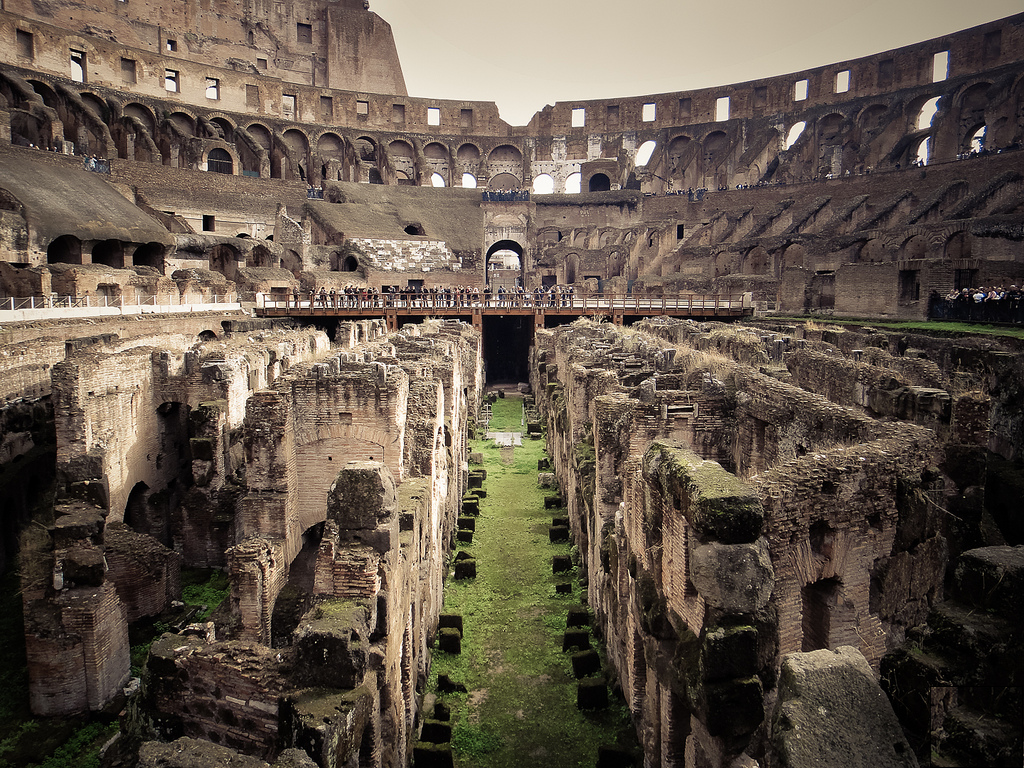
Nothing quite prepares you for your first sight of the Colosseum. You emerge from the metro at Colosseo station and there it is — an enormous, ancient, slightly battered oval of travertine limestone rising against the Roman sky, as immediate and overwhelming as if it had been built yesterday. It is the largest amphitheatre ever constructed in the ancient world, and after two thousand years it remains one of the most extraordinary buildings on Earth.
Construction began under the Emperor Vespasian in 72 AD and was completed by his son Titus in 80 AD. At its peak capacity, the Colosseum could hold between 50,000 and 80,000 spectators — a figure that rivals many modern sports stadiums — who entered through 80 numbered arches and were seated according to their social rank. The games held here included gladiatorial combat, wild animal hunts (venationes), public executions and occasionally mock naval battles when the arena was flooded. For nearly four centuries, the Colosseum was the social and entertainment heart of the Roman Empire.
Today, you can explore the arena floor itself — where gladiators once stood — as well as the hypogeum, the extraordinary underground network of tunnels and chambers beneath the arena where animals, gladiators and equipment were held before being raised to the surface by a system of lifts and trapdoors. The upper tiers offer sweeping views over the Roman Forum and Palatine Hill, giving you an immediate sense of how the ancient city was organised around this central monument.
Essential tip: Book your tickets online well in advance — the Colosseum sells out weeks ahead during spring and summer. The combined ticket includes the Roman Forum and Palatine Hill and is valid for two consecutive days, giving you time to explore both sites properly. Arrive at opening time (9am) to beat the crowds and experience the arena at its most atmospheric.
2. The Sistine Chapel — Standing Beneath Michelangelo's Vision
There are very few moments in travel that genuinely stop you in your tracks. Standing in the Sistine Chapel for the first time is one of them. You have seen the images a thousand times — the finger of God reaching towards Adam, the swirling figures of the Last Judgement covering the entire altar wall — but nothing prepares you for the experience of being in the room itself, tilting your head back and finding yourself surrounded on all sides and above by one of the greatest sustained acts of artistic creation in human history.
The chapel was built between 1473 and 1481 for Pope Sixtus IV — from whom it takes its name — and was intended as the Pope's private chapel and the location of the papal conclave. Its proportions (40.23 metres long, 13.41 metres wide and 20.7 metres high) precisely mirror the measurements of the Temple of Solomon as described in the Old Testament, a deliberate theological statement about the continuity between the old covenant and the new.
Michelangelo painted the famous ceiling between 1508 and 1512, working largely alone on scaffolding 20 metres above the floor, covering 500 square metres with more than 300 figures. The result — nine scenes from Genesis at the centre, surrounded by prophets, sibyls and the ancestors of Christ — is not merely beautiful but theologically complex, a visual argument about human nature, divine grace and the meaning of salvation that rewards repeated and careful study. He returned to the chapel more than twenty years later, between 1536 and 1541, to paint the terrifying Last Judgement on the altar wall — a work that shocked even his admirers with its raw emotional power and its unflinching vision of divine judgement.
Plan your visit carefully: The Sistine Chapel is at the far end of the Vatican Museums — you will walk through approximately 7 kilometres of galleries to reach it. Start early and pace yourself. Photography without flash is permitted in most of the Museums but is strictly forbidden in the Sistine Chapel itself. Book skip-the-line tickets online to avoid the notoriously long entrance queues.
3. Vatican City and Saint Peter's Square — The Centre of the Catholic World
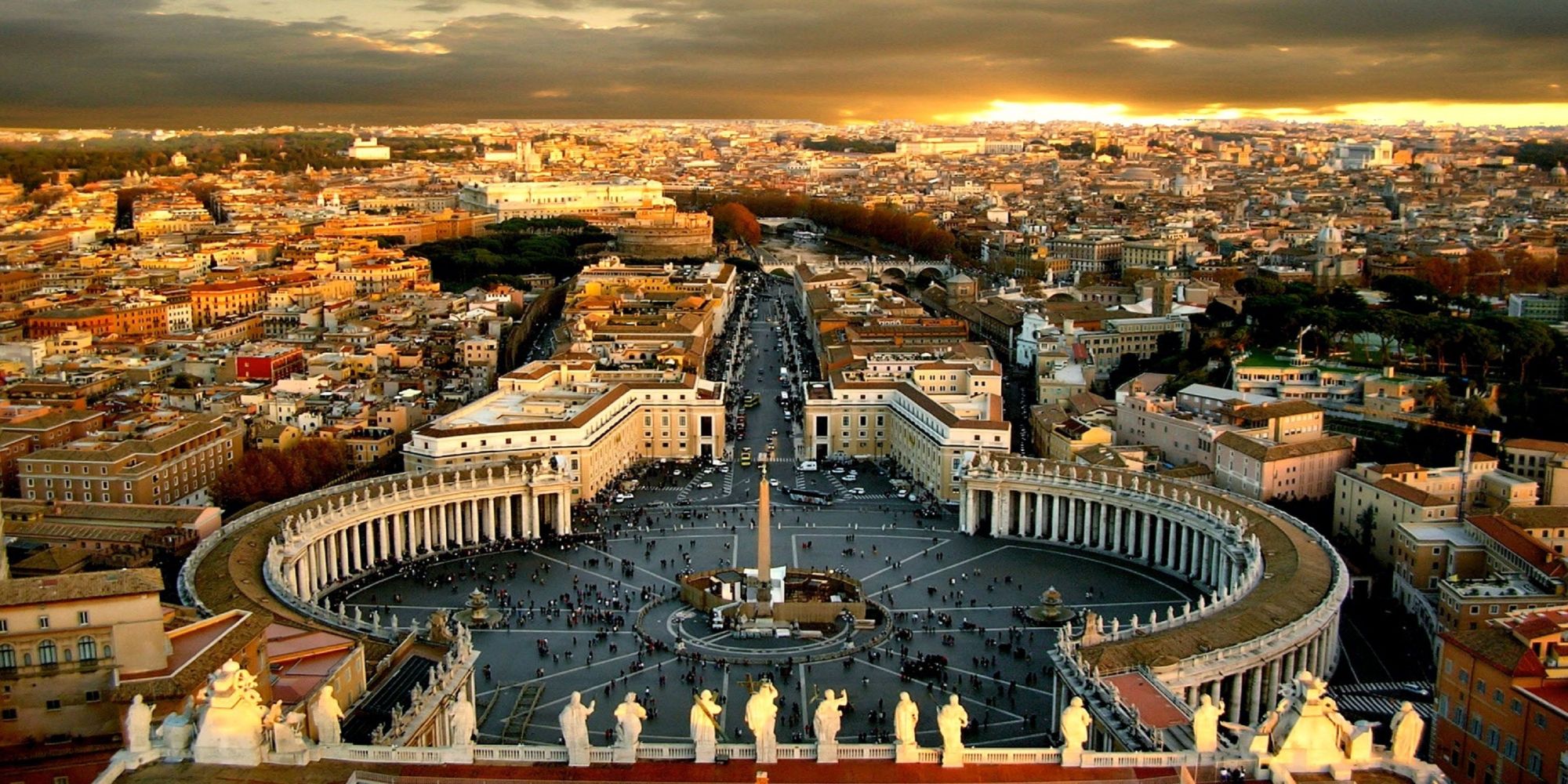
Before you enter the Vatican Museums, give yourself time to simply stand in Saint Peter's Square and absorb where you are. The elliptical piazza, designed by Gian Lorenzo Bernini between 1656 and 1667, is one of the most magnificent public spaces ever created — 340 metres wide at its broadest point, enclosed by two sweeping colonnades of 284 columns four rows deep, topped by 140 statues of saints. At the centre stands an Egyptian obelisk brought to Rome by the Emperor Caligula. The effect — especially in the early morning light, before the tour groups arrive — is overwhelming.
Saint Peter's Basilica itself is the largest church in the world and contains some of the most important works of art in existence. Michelangelo's Pietà — a 24-year-old Michelangelo's vision of the Virgin cradling the body of Christ, carved from a single block of Carrara marble — is displayed behind glass to the right of the entrance and is one of the most moving sculptures ever made. The baldachin over the main altar, also by Bernini, is 29 metres high — taller than the Palazzo Farnese — and was cast from bronze stripped from the Pantheon's portico.
For the finest view of Rome, climb the 323 steps to the top of Michelangelo's dome (there is also a lift for part of the way). On a clear day you can see the entire city spread out below you, from the Colosseum to the Borghese gardens, with the Tiber winding through the middle. It is one of the great urban panoramas in the world.
The Vatican contains over 70,000 artworks across 54 galleries — more than any single visitor could properly absorb in a week. Choose a few rooms to focus on: the Raphael Rooms, the Gallery of Maps and the Sistine Chapel are the essential experiences. Give yourself permission to walk past everything else.
4. Capitoline Hill — The Sacred Centre of the Ancient World
Of Rome's legendary seven hills, the Capitoline was always the most sacred — the political and religious heart of the ancient city, home to the Temple of Jupiter Optimus Maximus, the most important temple in the Roman world, where triumphing generals came to give thanks after their victories. Today, the hill is dominated by Piazza del Campidoglio, one of the most beautiful squares in Italy, designed by Michelangelo in 1536 at the request of Pope Paul III, who was embarrassed by the hill's neglected state ahead of a visit by Holy Roman Emperor Charles V.
The approach to the piazza is via the cordonata — a gently sloping ramp rather than steps, designed so that it could be climbed on horseback — flanked by the ancient statues of Castor and Pollux. At the top, you enter a world of extraordinary spatial sophistication: an oval pavement design radiating from a central point, three Renaissance palaces arranged around three sides of the square, and originally at its centre the magnificent equestrian statue of Marcus Aurelius — the only large-scale ancient bronze equestrian statue to survive from antiquity (the original is now inside the Capitoline Museums; the bronze in the square is a copy).
The Capitoline Museums — the world's oldest public museums, opened in 1471 — deserve several hours. The collections include the original Marcus Aurelius statue, the Capitoline Wolf (the famous she-wolf nursing Romulus and Remus), the Dying Gaul, and an extraordinary collection of ancient portrait busts and imperial sculptures. The view from the terrace behind the Palazzo dei Senatori, looking directly down over the Roman Forum with the Colosseum rising beyond, is one of the finest in Rome.
Hidden viewpoint: The Tabularium, the ancient Roman record office built into the hillside, now forms part of the Capitoline Museums and contains a covered walkway with arched windows looking directly out over the Roman Forum. It is one of the most dramatic views in Rome and is included in the museum ticket — yet surprisingly few visitors find it.
5. The Spanish Steps and Piazza di Spagna — Rome's Most Elegant Corner
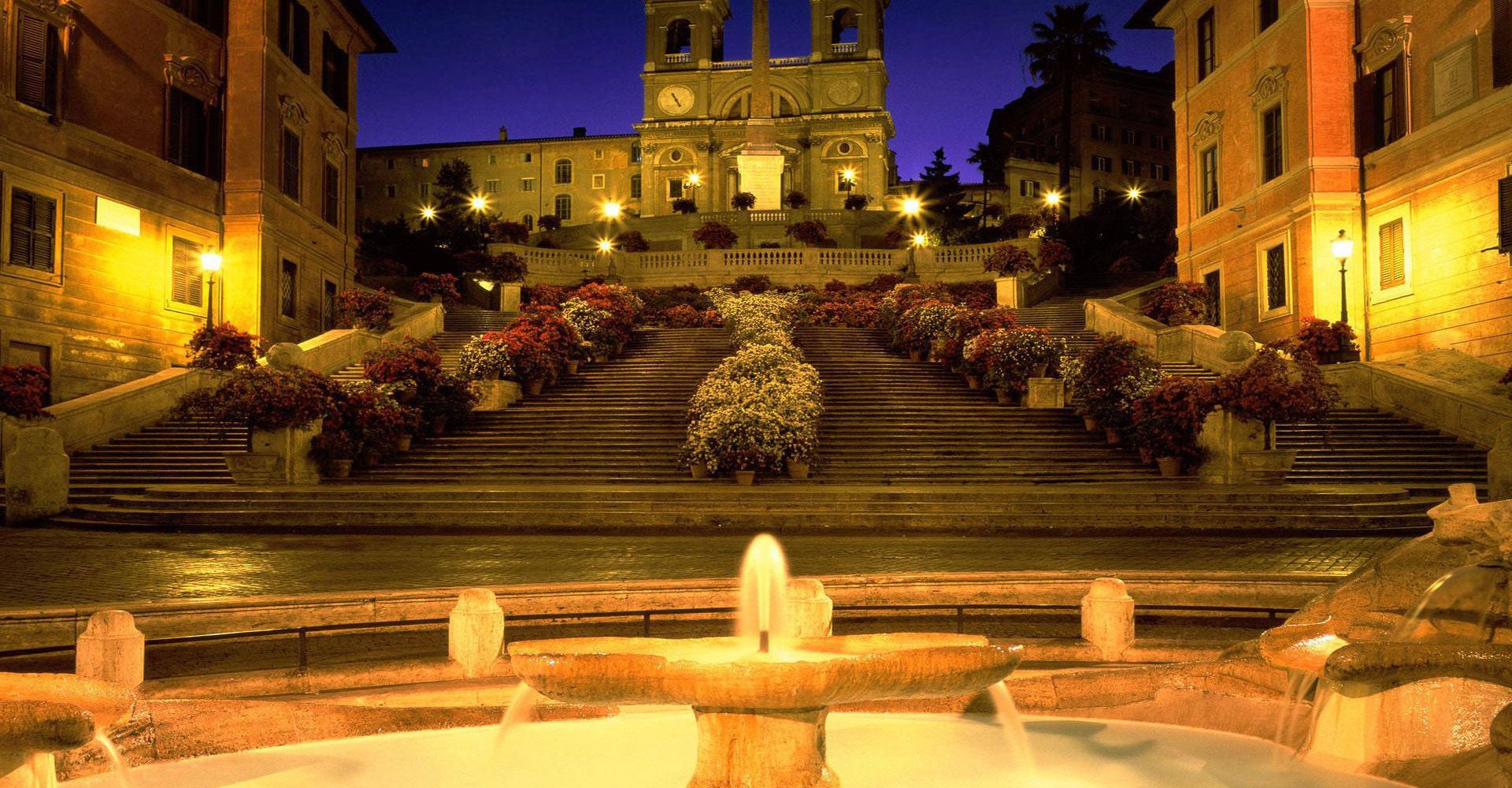
The Spanish Steps — 135 steps of travertine marble sweeping up from Piazza di Spagna to the twin-towered church of Trinità dei Monti — were built between 1723 and 1726 and funded by a French diplomat, despite their Spanish name (which comes from the nearby Spanish Embassy to the Holy See). They are one of the widest staircases in Europe and one of Rome's great gathering places — a space designed not merely for transit but for lingering, for watching and for being watched.
In April and May, the steps are decorated with thousands of azaleas in pink, white and red — one of the most photographed sights in the city. In the evening, the steps and the piazza below fill with Romans and visitors, street musicians set up at the edges, and the atmosphere is that particular kind of easy Roman sociability that makes you want to stay for hours.
At the bottom of the steps, the Fontana della Barcaccia — the Fountain of the Ugly Boat — was designed by Pietro Bernini (father of the more famous Gian Lorenzo) in 1627. The curious boat-shaped basin sits below street level, a solution to the low water pressure from the Acqua Vergine aqueduct that fed it. Around the piazza, the streets leading off in every direction — Via Condotti, Via Borgognona, Via della Croce — contain some of Rome's most prestigious shopping, from Gucci and Prada to independent jewellers and antique shops that have been in the same family for generations.
The neighbourhood around the Steps is also rich in literary history. The poet John Keats lived and died in the house at the right-hand corner of the Steps in 1821 — now the Keats-Shelley House, a small museum dedicated to the English Romantic poets who found Rome irresistible. A short walk away, the Piazza del Popolo marks the northern gateway to the ancient city, flanked by twin baroque churches and watched over by the Egyptian obelisk of Ramesses II, brought to Rome by Augustus and erected here in 1589.
Best time to visit: Come early — the Spanish Steps at 7.30am on a spring morning, with the light falling at an angle across the travertine and almost no one else around, are one of Rome's secret pleasures. By 11am the steps are packed. If you visit in the evening, sit at the top and watch the sun set over the Roman rooftops — it is an experience you will not forget.
Beyond the Five — Rome Has No Bottom
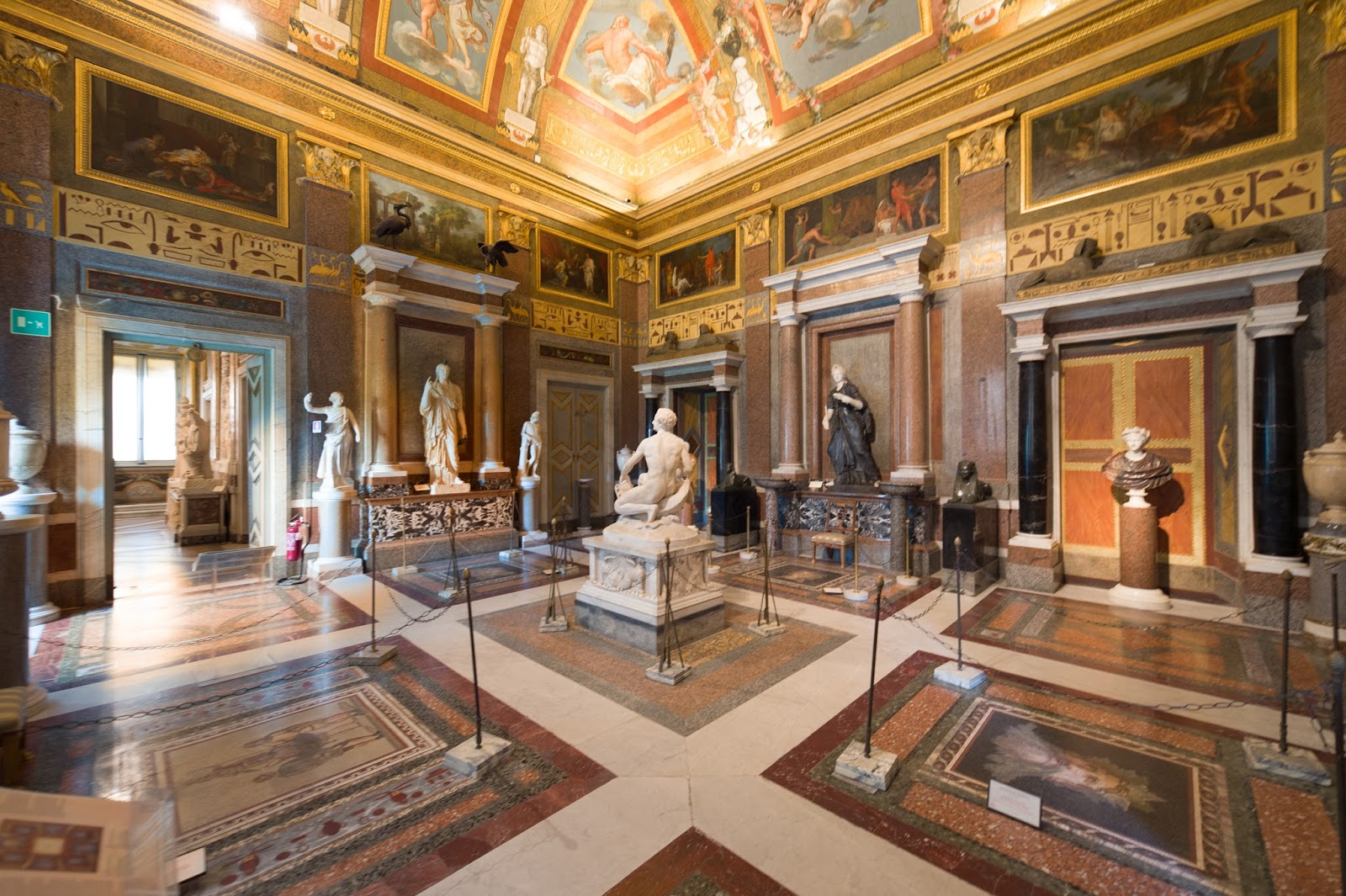
These five experiences are essential — but Rome has no bottom. Scratch the surface and there is always more: the Borghese Gallery, with its unrivalled collection of Bernini sculptures in a sunlit villa above the city's finest park; the Pantheon, the best-preserved building from the ancient world, whose unreinforced concrete dome remained the largest in existence for 1,300 years; the Trevi Fountain, Nicola Salvi's baroque masterpiece tucked into a narrow piazza in the heart of the historic centre; the Baths of Caracalla, the best-preserved ancient bath complex in Rome, where 1,600 people once bathed simultaneously in a building larger than most modern sports arenas.
And then there is the food. Rome's culinary tradition is one of the great regional cuisines of Italy — deeply rooted in a cucina povera tradition that transformed humble ingredients into extraordinary dishes. Cacio e pepe, carbonara, amatriciana, coda alla vaccinara — these are not tourist dishes but the daily food of Romans, served at their best in the neighbourhood trattorias of Testaccio, Pigneto and Trastevere. A meal at a good Roman trattoria, with a carafe of house wine and no particular plan for the afternoon, is as much a part of visiting Rome as any monument.
When you arrive in Rome — whether from Fiumicino or Ciampino Airport — the city begins the moment you step outside the terminal. A private airport transfer takes you directly to your hotel, door to door, without the stress of luggage, connections or language barriers. From your hotel, everything described in this guide is within reach. Rome is waiting.
Comments
No comments yet. Be the first to share your thoughts!
Leave a Comment
Your comment will appear after moderation.