 Michelle
 Everyone who visits Capri visits the Blue Grotto. It is the most famous sea cave in the world, a genuinely extraordinary natural phenomenon, and it deserves every superlative that has ever been applied to it. But Capri is an island of approximately ten square kilometres containing an embarrassment of remarkable things, and the visitor who limits their experience to the famous cave and a walk along the Via Camerelle in search of designer sunglasses has seen, in the most fundamental sense, almost nothing. The real Capri, the one that has been drawing poets, emperors, artists, writers and seekers of exceptional Mediterranean beauty for two thousand years, is the one that most visitors never find. Here is where to look.
The Blue Grotto: What to Expect and When to Go
Before moving beyond the Blue Grotto, it is worth spending a moment on the grotto itself, because understanding what it is and how it works will help you get the most out of the experience and avoid the most common disappointments. The Grotta Azzurra is a sea cave on the northwestern coast of the island, approximately 54 metres long, 30 metres wide and up to 15 metres high at its tallest interior point. It was known to the Romans, who used it as a private bathing grotto and decorated its walls with statues, several of which have been recovered from the sea floor and can now be seen in Capri's small museum. It was rediscovered for European tourists in 1826 by the German writer August Kopisch, and its reputation spread rapidly through the travel literature of the nineteenth century to the point where it became, and has remained, the single most visited natural attraction on the Italian coast.
What makes the grotto extraordinary is the quality of the light inside it. Sunlight enters through a submerged opening approximately one metre high by two metres wide, refracts through the water and illuminates the interior from below, giving the water an intense, electric blue colour that has no parallel in nature and that photographs, despite the best efforts of generations of photographers, consistently fail to reproduce with full accuracy. To see it properly, the light must be entering from the right angle, which means that morning visits, when the sun is directly opposite the cave entrance, produce the most vivid colour. By afternoon, the effect is considerably diminished.
The practical experience of visiting the Blue Grotto requires some honest preparation. Entry is made by lying flat in a small wooden rowing boat while the rower pulls the boat through the low entrance by a chain fixed to the cave wall. The interior is spectacular but small, the experience lasts approximately five to ten minutes, and the cost is significant, comprising the boat ticket from the harbour plus the cave entrance fee. In summer the queues of boats waiting to enter can be long enough that the total time spent waiting substantially exceeds the time spent inside. Arrive by the first boats of the morning, when the light is best and the queues are shortest.
When the Blue Grotto closes: The Blue Grotto is closed in rough weather (when the swell makes the entrance impassable) and in the winter months when sea conditions are frequently unsuitable. Even in summer, the cave can close without warning if conditions change. Check current status at the Marina Grande before committing your morning to the visit. If it is closed, the rest of this guide will ensure your day remains extraordinary.
1. Villa Jovis: Tiberius on the Clifftop at the End of Empire
Of all the things that Capri contains, the most historically extraordinary is the Villa Jovis, the clifftop palace of the Emperor Tiberius, who ruled Rome from this island from 27 AD until his death in 37 AD. The villa occupies the summit of Monte Tiberio, the highest point on the eastern end of the island at 354 metres above sea level, and reaching it requires a walk of approximately forty-five minutes from the Piazzetta of Capri town along a path that climbs steadily through the island's interior, past gardens and orchards and the small country roads that connect the island's scattered farms and villas.
Tiberius chose Capri deliberately. He had governed Rome from the city for the first decade of his reign, and the experience of managing the empire from the centre of its political life had left him deeply disillusioned with the Senate, the nobility and the city itself. In 26 AD, he withdrew to Capri and never returned to Rome, governing the largest empire in the world by correspondence from this island palace for the last eleven years of his life. The ancient sources, particularly Suetonius, describe the Villa Jovis as a place of extraordinary luxury and, according to the more sensational accounts, equally extraordinary vice. These accounts are now generally considered to be largely propaganda by historians, but they contributed to a reputation that followed Tiberius down the centuries and made Capri, by association, a place of transgressive freedom that attracted the unconventional and the libertarian in every subsequent era.
What survives of the Villa Jovis today is a complex of ruins covering approximately seven thousand square metres: the service quarters, the cisterns that provided the palace's water supply, the bath suites, the loggia, the kitchen wing and, most dramatically, the Salto di Tiberio, the cliff edge from which ancient sources claim that Tiberius had his enemies thrown into the sea 330 metres below. The historical accuracy of this claim is doubtful, but standing at the cliff edge and looking down at the water far below and across the bay towards the mainland, with Vesuvius visible in the distance and the entire curve of the Bay of Naples laid out before you, is one of the finest views in the Mediterranean. The sense of isolation and of imperial power exercised at this extraordinary geographical extremity is entirely present and entirely genuine, and the Villa Jovis is, in the most complete sense, worth the walk.
The site is open to the public for a modest entry fee, and the walk to reach it passes through some of the most beautiful and least visited parts of Capri. Go early in the morning, before the heat and before the day-trippers who do attempt the walk: the path in the first hour after sunrise, with the light golden on the limestone and the sound of cicadas in the scrub, and the sea already a deep blue below, is one of the finest walking experiences southern Italy offers. Take water, wear good shoes, and allow at least three hours in total for the walk, the site and the return.
2. Anacapri, Monte Solaro and the View Above Everything
The island of Capri is divided between two municipalities: the lower town of Capri, with its famous Piazzetta and its luxury shops and its great terrace gardens, and the upper town of Anacapri, reached by a winding road that climbs the limestone escarpment on the island's western side. The two places have always had a certain rivalry: Anacapri was historically the poorer and more isolated of the two, accessible from the harbour only by the ancient Scala Fenicia, the 800-step Phoenician staircase cut into the cliff face that was the island's only connection between the two levels until a road was built in 1874. Anacapri remains the quieter, more genuinely local of the two towns, and it repays a visit with several experiences that Capri town itself cannot provide.
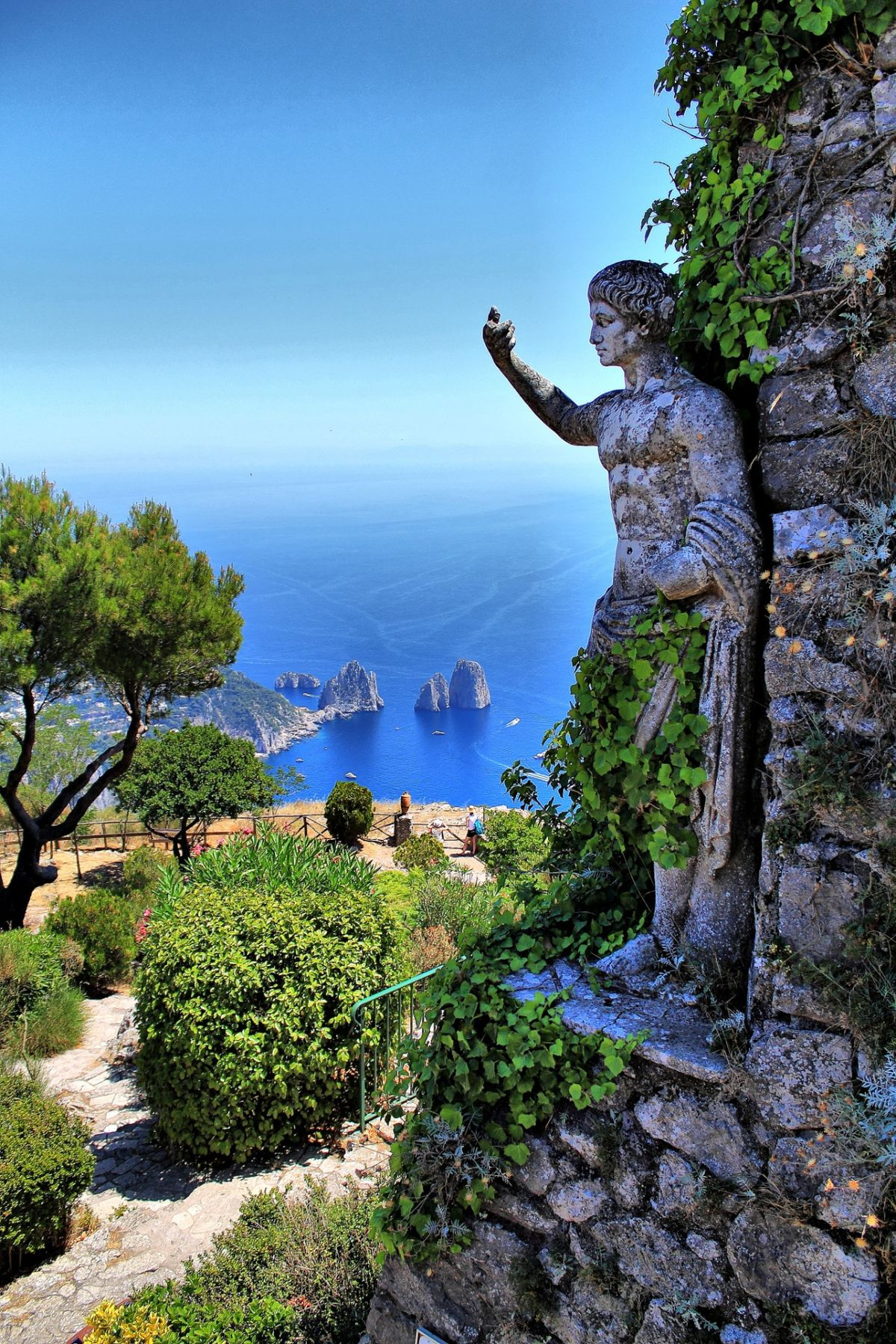
The most compelling of these is the chair lift to Monte Solaro, the highest point on the island at 589 metres. The chair lift, a single-seat open gondola of delightfully old-fashioned design, departs from the Piazza Vittoria in Anacapri and climbs through pine woods and terraced gardens to the summit in approximately twelve minutes. The ride itself, suspended in the air with the island dropping away below you and the sea appearing progressively around the edges of the limestone, is one of the most enjoyable and most photogenic experiences on the island. At the summit, the view is simply one of the finest in the Mediterranean: the entire Bay of Naples spread from Punta Campanella on the Sorrentine Peninsula in the west to Ischia in the north and the volcanic cone of Vesuvius visible behind Naples in the distance, with the sea below in every direction and the island's limestone cliffs dropping away at your feet. On a clear day, the outline of the Pontine Islands is visible to the northwest. Stay for as long as you can and take the walk back down rather than the chair lift for a different perspective on the island's landscape.
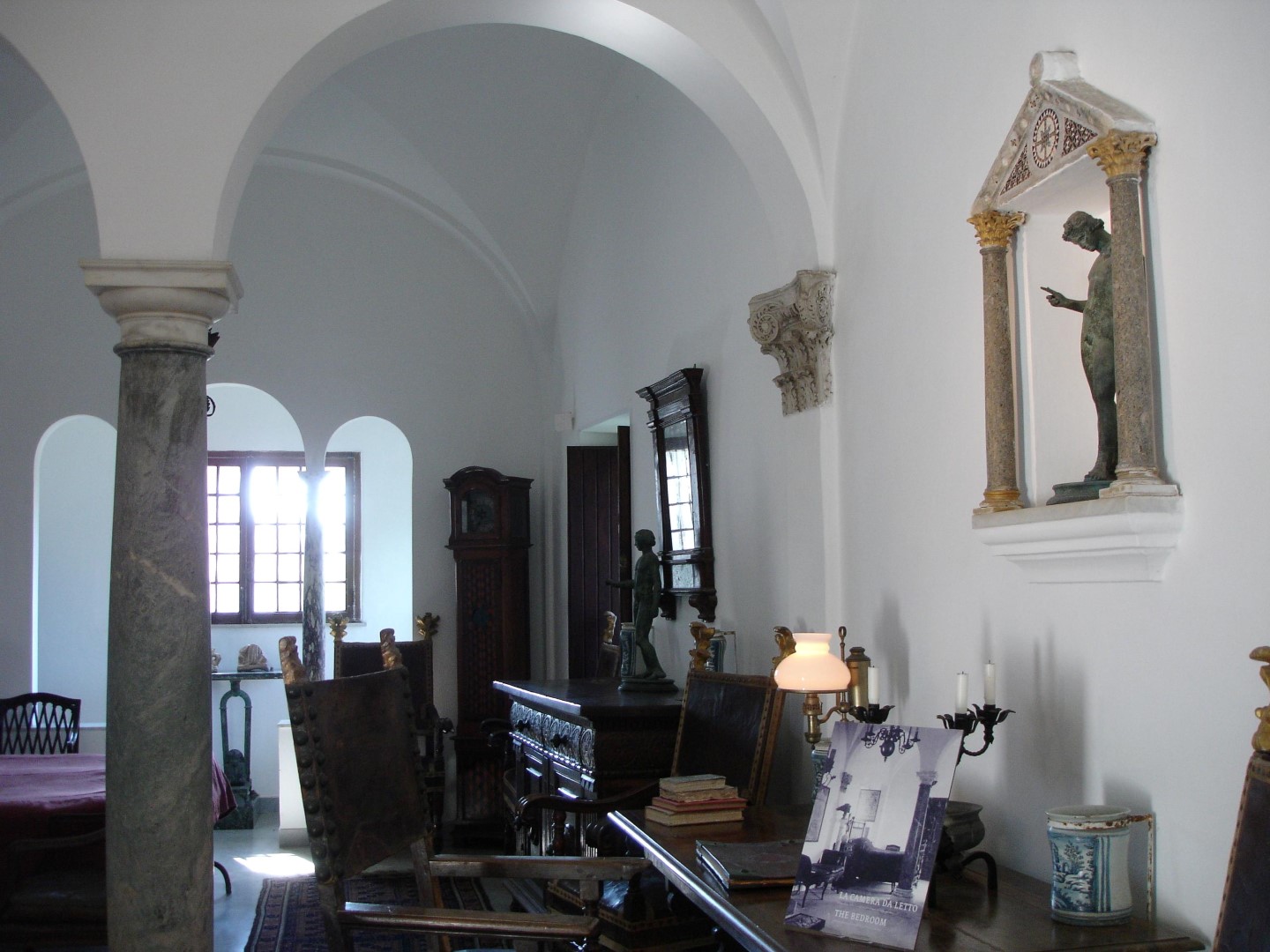
In Anacapri itself, the Villa San Michele is one of the most beautiful and most unusual houses in Italy: the villa and garden created by the Swedish physician Axel Munthe at the end of the nineteenth century on the site of one of Tiberius's smaller villas, incorporating Roman columns, medieval capitals and Renaissance fragments into a garden of extraordinary beauty that opens onto a pergola walkway with one of the finest views on the island. Munthe's memoir of his life on Capri, The Story of San Michele, published in 1929, became one of the bestselling books of the twentieth century and remains one of the finest accounts of the island's particular atmosphere and charm. The villa is open to the public, charges a modest entry fee, and is one of those places that leaves most visitors wishing they had planned to stay longer.
Common tourist mistakes on Capri: Arriving in July or August on a day trip on a crowded ferry and spending most of your time navigating the crowds on the Via Camerelle. Buying food or drinks anywhere on the Piazzetta or the harbour front, where prices reflect the island's luxury positioning rather than the actual value of the product. Missing Anacapri entirely because the shuttle bus seems like an additional complication. And above all, leaving without walking to the Arco Naturale, a natural limestone arch on the eastern edge of the island reached by a path of about thirty minutes from Capri town that offers views of such dramatic beauty that they stop even experienced travellers in their tracks.
3. The Faraglioni, the Walks and the Best Viewpoints
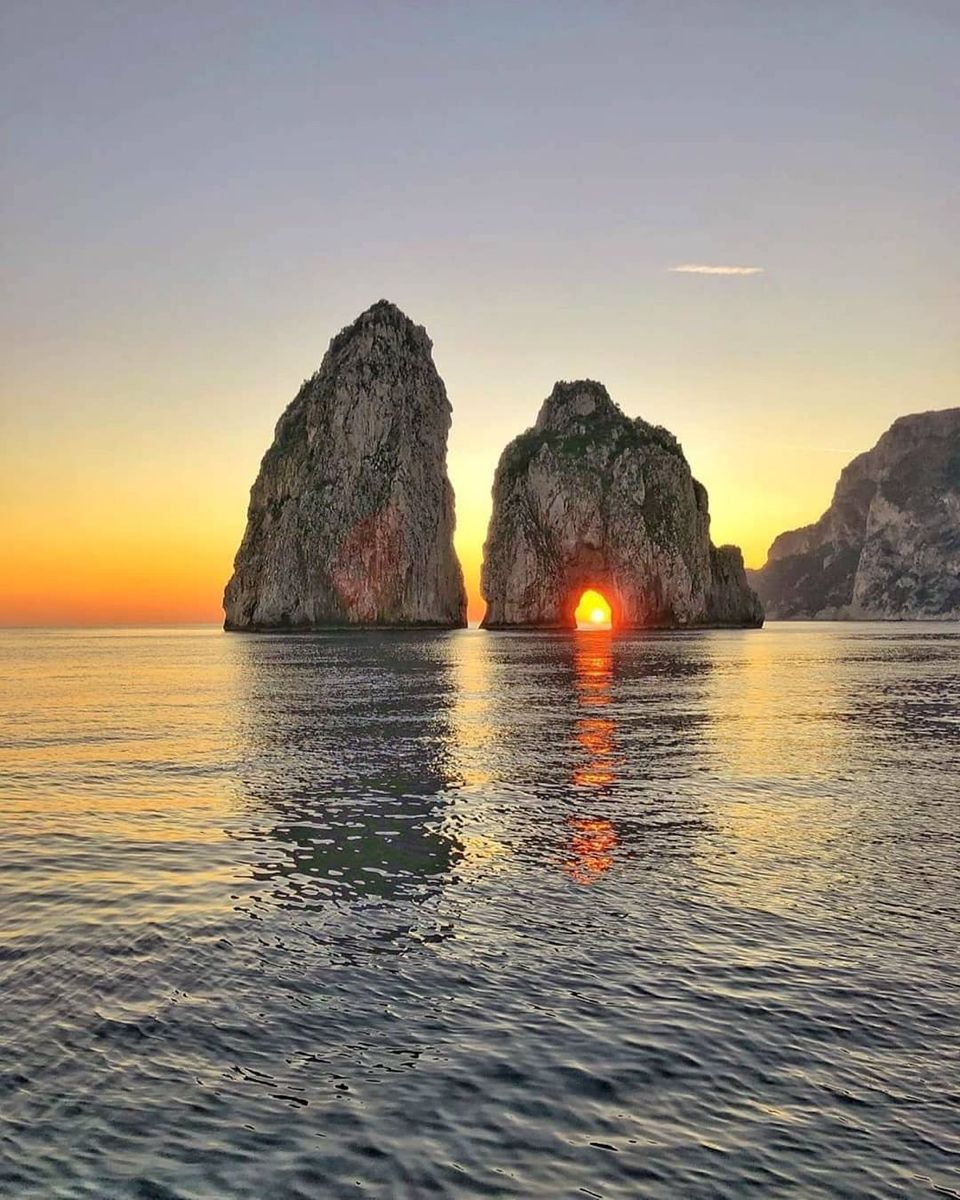
The Faraglioni are the three sea stacks that rise from the water off the southern coast of Capri and that are, after the Blue Grotto, the island's most recognisable and most photographed natural feature. The three rocks, named Faraglione di Terra, Faraglione di Mezzo and Faraglione di Fuori, rise to heights of 109, 81 and 104 metres respectively, and the middle stack is pierced by a natural arch through which small boats can pass. They are home to a subspecies of the wall lizard, Podarcis siculus coeruleus, which has developed a distinctive blue colouring unique to these rocks. Standing on the Punta Tragara terrace or on the Augustus Gardens belvedere and looking at the Faraglioni in the late afternoon, when the shadows deepen and the rock faces change colour from white to ochre to rose as the sun descends, is one of those experiences that makes the case for Capri's beauty more eloquently than any description could manage.
The Augustus Gardens
The Gardens of Augustus (Giardini di Augusto), a terraced garden on the southern edge of Capri town overlooking the Faraglioni and the Via Krupp, are among the finest public gardens on the island. Created in the early twentieth century on the site of a former Roman garden and donated to the municipality of Capri, they are arranged in a series of descending terraces planted with bougainvillea, roses, jasmine and Mediterranean perennials, with a statue of Lenin (donated by Maxim Gorky, who lived on the island for several years) presiding over the lower level with a certain ideological incongruity. The view from the upper terrace towards the Faraglioni is one of the defining visual experiences of Capri, and the gardens provide one of the few genuinely tranquil green spaces on an island that can feel overwhelmingly crowded in high season.
The Via Krupp and the Arco Naturale
The Via Krupp, the extraordinary zigzag path cut into the cliff face below the Gardens of Augustus by the German industrialist Friedrich Alfred Krupp in 1902, descends in a series of tight switchbacks from the gardens to the Marina Piccola on the island's southern coast. The path, carved directly from the living limestone, is an engineering feat of considerable elegance and provides one of the most dramatic cliff walks in Italy, with the sea a brilliant blue below and the rock face close on either side. It is sometimes closed for maintenance or for falling rock, so check current status before planning your descent. When open, the combination of the Via Krupp with the Augustus Gardens and the Faraglioni view constitutes one of the finest half-day itineraries the island offers.
The Arco Naturale, reached by a footpath of approximately thirty minutes from the Piazzetta that passes through the Matromania cave (a Roman grotto) and along the island's eastern cliff edge, is a limestone arch of dramatic proportions that frames a view of the sea and the distant coastline of extraordinary beauty. The walk to it is one of the finest short walks on the island: the path follows the cliff edge through dense Mediterranean vegetation, with the sea visible below through gaps in the scrub, before arriving at the arch itself, which rises to approximately 18 metres and provides a natural frame for one of Capri's most photographed views. Arrive in the afternoon when the light is falling from the west and the arch is backlit against the sea: the effect is theatrical in the most positive sense.
Eating and drinking on Capri
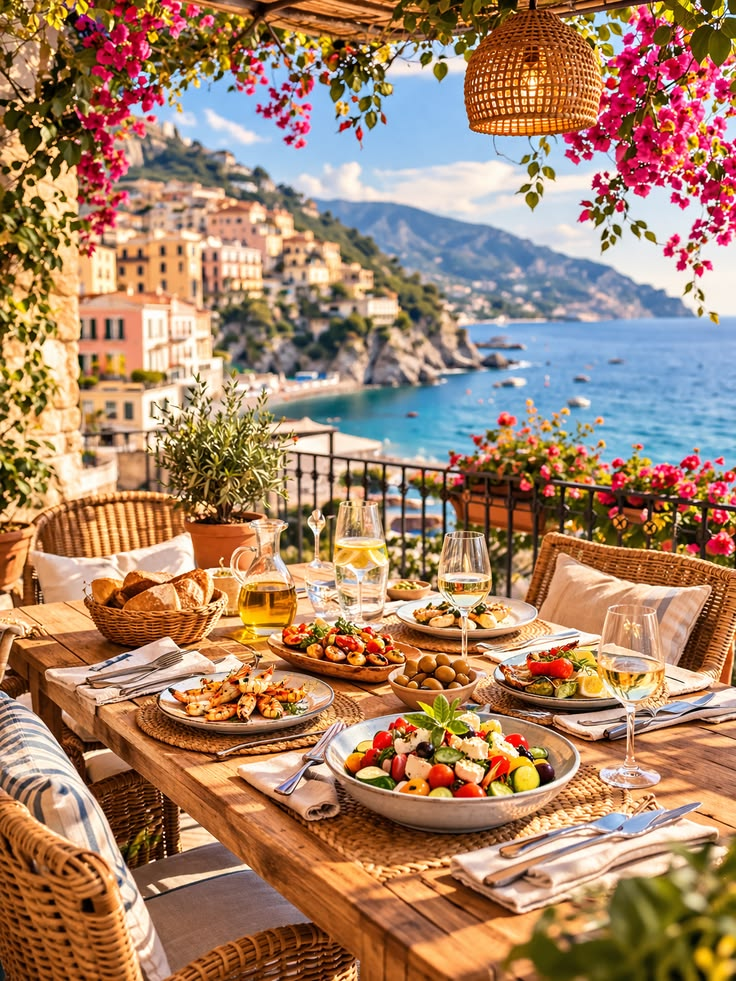
Capri's food culture reflects the island's dual identity as a luxury destination and a genuinely Italian community. The restaurants in Capri town aimed at tourists, particularly those along the Via Camerelle and on the Piazzetta itself, are expensive in proportion to the location rather than the food. Two or three streets away from the Piazzetta, and in Anacapri generally, the prices are more modest and the cooking is more genuinely Neapolitan. The island is famous for the insalata caprese, the tomato and mozzarella salad named for the island, and for ravioli alla caprese, a local pasta stuffed with fresh caciotta cheese and herbs. The local lemon liqueur, limoncello, made from the large, intensely perfumed lemons grown on the island's terraces, is at its finest here at source. Order it after dinner at room temperature, not ice-cold, and you will understand immediately why it has conquered the world.
Capri has been extraordinary for two thousand years, and it remains so. The Blue Grotto is genuinely magnificent. But the island that rewarded emperors, inspired poets and transformed the lives of a remarkable range of people who chose to come and never quite managed to leave is not the one visible from the queue for the grotto boats. It is the one on the other side of the walk to the Villa Jovis, in the chair lift above Anacapri, on the cliff path to the Arco Naturale. Go there. Take your time. It will be worth it.
Getting to Capri: Ferries, Timing and the Transfer from Naples
Capri is reached exclusively by sea, and the quality of your crossing experience depends substantially on the timing and the terminal you use. Fast hydrofoils, which carry passengers only and take approximately 50 minutes from Molo Beverello in Naples, are the most comfortable and most popular option for independent travellers. Conventional ferries, which carry both passengers and vehicles and are slower, depart from the nearby Calata Porta di Massa terminal. During summer, hydrofoils and ferries also run from Sorrento (25 minutes), from Positano and from other points on the Amalfi Coast.
Reaching the Molo Beverello terminal in Naples from the airport is the first logistical step of any trip to Capri, and it is one where a private transfer represents genuine practical value. Naples Airport is approximately 7 kilometres from the Molo Beverello, a distance that on paper suggests a short journey but in practice, depending on traffic, can take anywhere from 20 to 45 minutes. Missing your hydrofoil because a taxi was delayed in Neapolitan traffic is an experience that can derail an entire carefully planned day on Capri. A pre-booked private transfer, with a driver who knows the city and the terminal, eliminates this risk and lets you board your boat with time to spare.
On the island itself, private taxis (the famous open-top convertible cabs) operate from the Marina Grande harbour and from the Piazzetta and are the most comfortable way to cover distances between the harbour, the two towns and the more remote points of the island. They are expensive by mainland standards, as is almost everything on Capri, and the drivers are not always inclined to use the meter rather than a fixed negotiated rate. Agree the price before you get in. The local bus network connects Marina Grande, Capri town and Anacapri at frequent intervals for a modest flat fare and is perfectly adequate for the main inter-town journey. For the walking routes described in this guide, no transport is needed or desirable: the paths are the experience.
Comments
No comments yet. Be the first to share your thoughts!
Leave a Comment
Your comment will appear after moderation.