 Michelle
 Other cities invite you. Vienna summons you. There is a quality in its approach, in the long formal avenues that lead toward its imperial palaces and in the particular weight of the architecture that lines its great ring road, that communicates something more than civic confidence. Vienna is a city that was, for the better part of six hundred years, the administrative centre of one of the largest empires in European history, and the built fabric of that city has absorbed this fact so completely that it is impossible to walk its streets for more than ten minutes without feeling the pressure of it: the pressure of accumulated centuries of concentrated power, ambition, artistic genius, political violence, philosophical innovation and operatic passion, all deposited in a relatively compact area on the right bank of the Danube, and all still present in the stone and the stucco and the surprisingly affordable coffee. Five days will not exhaust it. Nothing will exhaust it. But five days, approached with the right quality of attention, will mark you in ways that you will carry for the rest of your life.
Day One: The Hofburg, or Power as a Form of Architecture
Begin, as every serious engagement with Vienna must begin, at the Hofburg. The Hofburg is not a palace. It is a condition: a complex of interconnected buildings, courtyards, wings, chapels, libraries, museums, apartments and administrative spaces that has been growing, organically and without interruption, since the thirteenth century, and that now covers an area of approximately 240,000 square metres in the centre of the first district. It housed the Habsburg emperors from the thirteenth century to the dissolution of the empire in 1918, and it housed them with an increasing grandeur that reflects, in precise architectural terms, the expanding ambitions and the expanding anxieties of a dynasty that governed, at its greatest extent, an empire of fifty million people across central Europe, the Balkans and large portions of Italy and the Iberian peninsula.
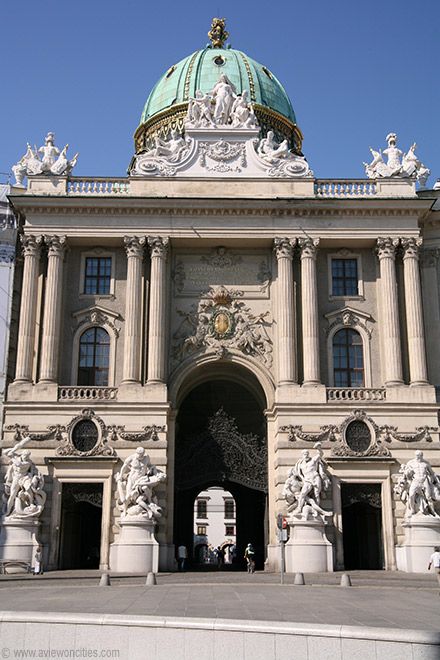
The visitor's entrance to the residential sections of the Hofburg, the Imperial Apartments, the Sisi Museum and the Imperial Silver Collection, is through the Michaelerplatz, the circular plaza on the northwest side of the complex whose semicircular facade, completed in 1893 to a design substantially dating to the mid-eighteenth century, is one of the most theatrical architectural presentations of imperial authority in Europe. As you pass through the Michaelertor into the Innerer Burghof, the inner courtyard, the city disappears behind you. You are, for the duration of your visit, in the interior world of the Habsburgs, and the scale and the quality of that world's appointments are not something that any description fully prepares you for.
The Imperial Apartments occupy a sequence of rooms on the first floor of the Reichskanzleitrakt and the Amalienburg wings, and they present the paradox that is at the heart of any encounter with Habsburg imperial culture: spaces of extraordinary formal grandeur inhabited by people of considerable personal simplicity. The Emperor Franz Joseph I, who occupied these rooms for sixty-eight years from his accession in 1848 to his death in 1916, was a man of severe personal austerity who slept on a narrow iron campaign bed, rose before five in the morning to begin work at his desk, worked a sixteen-hour day with consistency that impressed observers across the entire span of his reign, and ate his meals alone at a rate of speed that left his guests' food half-finished when the servants cleared the table. The rooms he inhabited are grand. He was not. The contrast is one of the most illuminating available to anyone who wishes to understand the particular psychology of the Habsburg tradition.
The Sisi Museum, dedicated to the Empress Elisabeth, occupies an adjacent suite and presents a portrait of a woman whose fame has long since escaped the control of any historical narrative and become something more like a cultural myth: the beautiful, unhappy empress who fled the court, who maintained an obsession with her own physical appearance that the twenty-first century would diagnose without hesitation, who wrote poetry in cipher and rode horses with a recklessness that alarmed her household, and who was finally killed, in Geneva in 1898, by a man who barely knew who she was. The museum is thoughtful, its curators clearly aware that the Sisi mythology is as much a burden as a gift, and its attempt to present the historical person beneath the icon is, within the inevitable constraints of a museum dedicated to an icon, reasonably successful.
The Sisi Ticket: A combined ticket, known as the Sisi Ticket, covers the Imperial Apartments, the Sisi Museum, the Imperial Silver Collection at the Hofburg, and the State Rooms and Grand Tour at Schönbrunn Palace. For a visitor planning to see all four elements over the course of the five days described in this guide, it represents the most economical option and should be purchased at the first point of entry. The ticket is valid across multiple days, which makes it entirely suitable for the programme outlined here.
The Stephansdom and the Catacombs Beneath the Nave
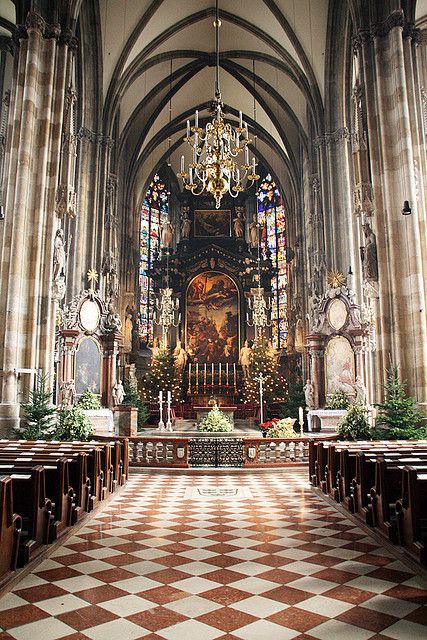
Walk from the Hofburg through the Kohlmarkt and the Graben, two of the finest pedestrian streets in central Europe, their facades a procession of baroque and historicist architecture of the highest quality, and you will arrive at the Stephansdom: the Cathedral of Saint Stephen, whose south tower rises 136 metres above the city in the most recognisable silhouette in Vienna and one of the most recognisable in all of German-speaking Europe. The cathedral has been standing on this site, in various forms, since the twelfth century. The present structure, predominantly Gothic in its character though incorporating elements of earlier Romanesque building in its west facade, was built between 1359 and 1433 to its present form and has dominated the visual and spiritual life of the city ever since.
The exterior of the south tower, which you are invited to climb by a staircase of 343 steps to a viewing platform at 72 metres, is notable not only for its height but for the extraordinary quality of the decorated tiled roof that covers the nave: a pattern of chevrons in green, gold and black that is the most distinctive single element of the Stephansdom's exterior appearance, visible from distances that make it the navigational reference point of the inner city. The tiles are a late nineteenth-century restoration of a medieval original, and their condition today reflects a programme of conservation that has been maintained, with considerable expense and commitment, since the cathedral was badly damaged by fire at the end of the Second World War.
What most visitors to the Stephansdom do not see, and what is among the most extraordinary experiences available in Vienna, is what lies beneath it. The catacombs beneath the cathedral contain, in addition to the bones of plague victims deposited during the epidemic of 1713, the viscera of the Habsburg emperors: the hearts and the intestines of the dynastic line, preserved in urns and deposited in the catacombs in a practice of anatomical distribution that strikes the modern visitor as simultaneously macabre and somehow entirely consistent with the Habsburg approach to almost everything. The Habsburg dead are distributed across three locations: the bodies in the Kaisergruft beneath the Augustinerkirche, the hearts in the Herzgruft of the Augustinerkirche, and the intestines in the Ducal Crypt beneath the Stephansdom. It is a funerary system of considerable organisational complexity, and it reflects a dynastic preoccupation with the physical remains of sovereignty that one could spend a considerable time analysing without exhausting.
The Ducal Crypt is accessible through a guided tour that descends beneath the cathedral to the bone houses and the ducal burial chambers. The space is cool, close and profoundly atmospheric, and the guides who lead the tours through it have clearly made a professional commitment to the cultivation of the particular quality of controlled unease that the combination of the setting and its contents naturally produces. Book in advance, particularly in the summer months.
Day Two: The Kunsthistorisches Museum and the Ringstrasse
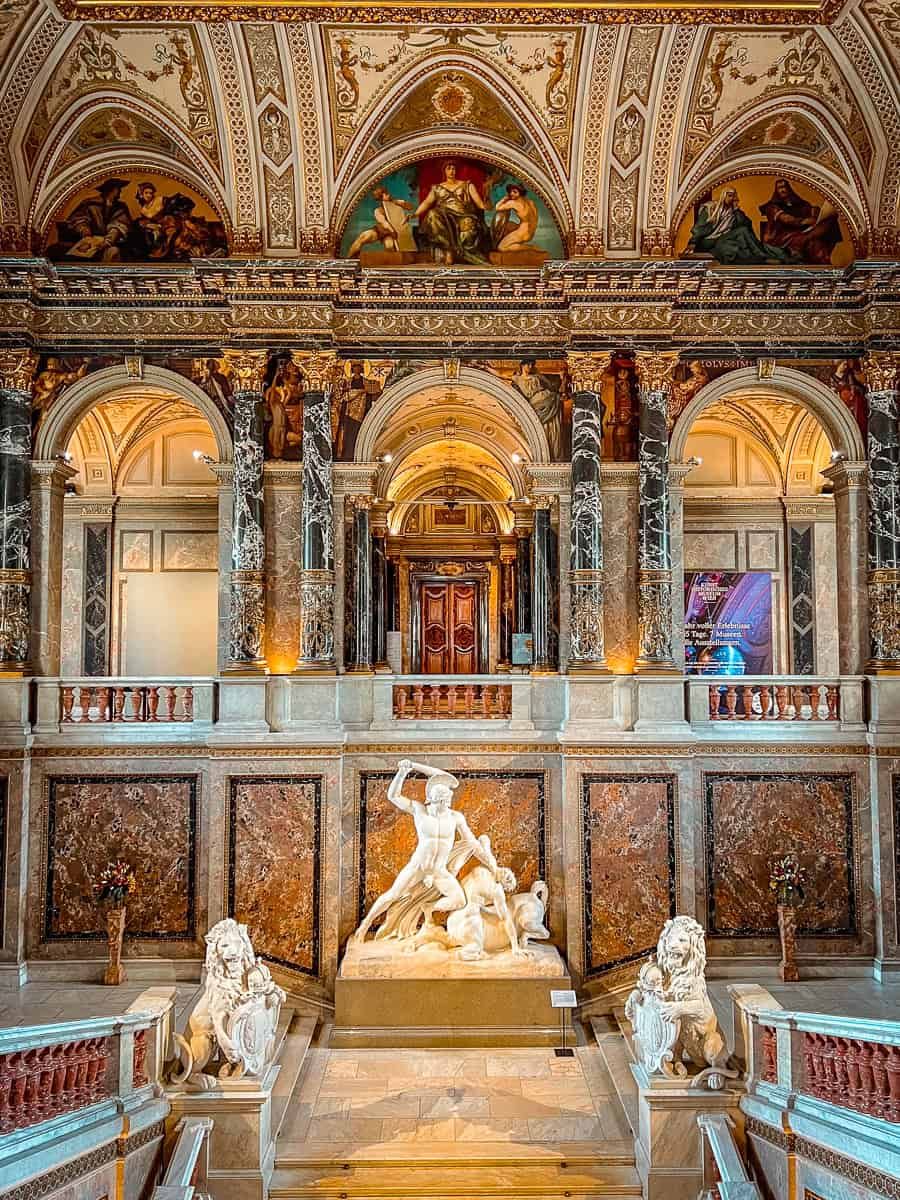
The Kunsthistorisches Museum, the Museum of Art History, stands on the Maria-Theresien-Platz facing its twin, the Naturhistorisches Museum, across a formal square that is one of the grandest urban set pieces of nineteenth-century Vienna. The building was designed by Gottfried Semper and Karl von Hasenauer and opened in 1891 as the permanent repository for the imperial art collections assembled by the Habsburgs over four centuries of ruling, conquering, purchasing, inheriting and occasionally confiscating some of the finest artworks produced in Europe from the Renaissance to the baroque period. The result is a collection of the very first rank, and a museum building whose own interior decoration, including the ceiling paintings on the staircase executed by a young Gustav Klimt, is itself a significant work of art.
Allow a minimum of four hours, and ideally the entire morning and part of the afternoon, for the Kunsthistorisches Museum. The Picture Gallery on the first floor contains works by Titian, Raphael, Caravaggio, Rubens, Rembrandt, Vermeer, Velázquez and Bruegel in concentrations that represent, in the case of Bruegel particularly, the finest single-institution collection in the world. The twelve paintings by Pieter Bruegel the Elder in the KHM constitute approximately a third of his entire surviving painted output, a circumstance that means that any serious engagement with this artist requires a visit to this museum, and that makes the museum, for students of sixteenth-century Netherlandish painting, a place of genuine pilgrimage. The Egyptian and Near Eastern Collection in the basement, the Greek and Roman Antiquities on the ground floor, and the Kunstkammer, the collection of decorative arts and curiosities assembled by the Habsburg emperors over the sixteenth and seventeenth centuries, are all of outstanding quality and all require more time than a single day can provide.
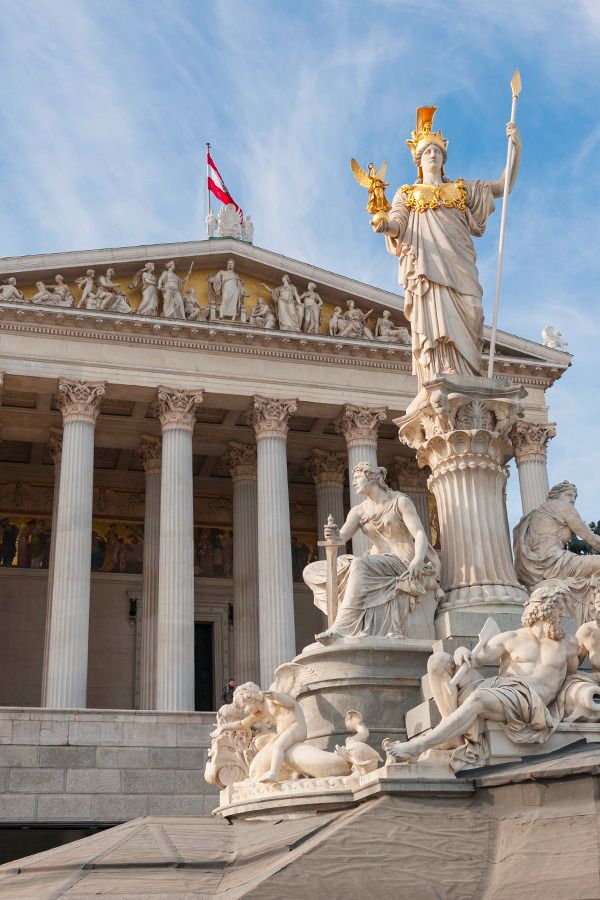
In the afternoon, walk the Ringstrasse, the great boulevard constructed between 1857 and 1900 on the order of the Emperor Franz Joseph I, who demolished the city walls that had enclosed the inner districts for centuries and replaced them with a sweeping ring road lined with the grandest public buildings that the nineteenth century's ambitions and its ample resources could commission. The Opera House, the Parliament, the Rathaus, the Burgtheater, the Natural History Museum, the Art History Museum, the Votivkirche: these eight monumental buildings, each in a different historical style, each representing the nineteenth century's conception of the appropriate architectural language for a specific civic function, together constitute the most complete surviving example of Historicist urban planning in Europe. Walk it slowly. Read the buildings. Understand that you are looking at a city's dream of itself, made stone.
The Vienna State Opera: An evening at the Vienna State Opera is not a luxury addition to a visit to Vienna. It is, for anyone with any interest in music or in the particular quality of cultural experience that Vienna at its best provides, a necessity. Standing room tickets, available at the box office from one hour before performance, cost between three and six euros and place you at the rear of the stalls or the gallery in conditions that are, admittedly, more physically demanding than a seat but that place you in a tradition of democratic access to high culture that the house has maintained since the nineteenth century. Book seated tickets well in advance for new productions and star performances. The standing room, however, is always available and is its own very Viennese kind of experience.
Day Three: Schönbrunn and the Ghost of the Empress
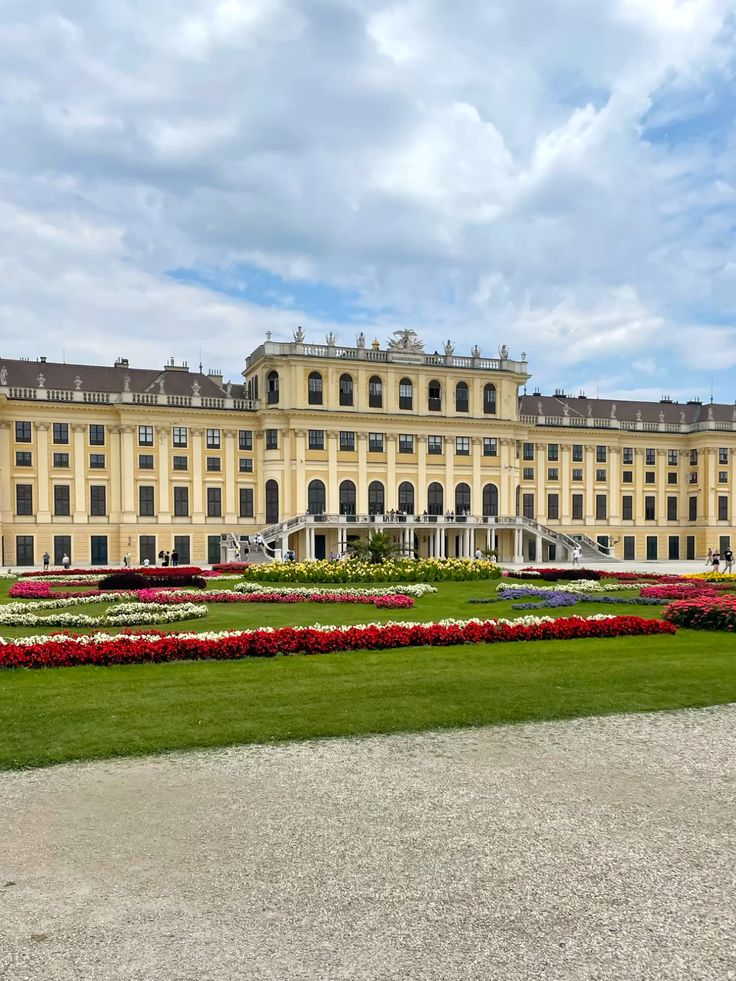
Schönbrunn Palace, the imperial summer residence, lies in the thirteenth district of Vienna, some four kilometres southwest of the city centre, and it is reached most conveniently by the U4 metro line, which deposits you at the Schönbrunn station directly in front of the palace's main gate. Arrive early. The palace opens at eight-thirty in the morning, and the first hour before the tour coaches arrive from the city hotels is of a quality that the later parts of the day cannot match: the light on the yellow baroque facade is at its finest in the early morning, the gardens are quiet, and the state rooms of the palace convey the particular atmosphere of a inhabited space rather than a monument in a way that five hundred simultaneous visitors make impossible.
Schönbrunn is, by any objective measure, one of the supreme achievements of European baroque architecture. The palace as it exists today was built between 1696 and 1730 to designs by Johann Bernhard Fischer von Erlach, who had studied in Rome and who brought back from that education a comprehensive understanding of the Roman baroque tradition that he then applied, with creative independence, to the quite different requirements and the quite different landscape of the Vienna basin. The result is a building of extraordinary confidence and apparently effortless formal control: a long, low facade of 186 metres in the distinctive imperial yellow that has become so associated with this building that the colour is now known, in decorators' catalogues, as Schönbrunn Yellow, organised around a central projecting corps de logis whose proportions achieve the difficult balance between grandeur and accessibility that the baroque at its best always seeks and rarely finds.
The interior of the palace, accessible through various tour combinations of which the Grand Tour of forty rooms is the most comprehensive, presents the accumulated domestic environment of the Habsburg dynasty from the eighteenth century to the twentieth. Maria Theresa, who enlarged and redecorated the palace extensively in the 1740s and who raised her sixteen children here, including the future Marie Antoinette, is the dominant personality in the earlier rooms: her taste, confident and warm and slightly excessive in its enthusiasm for lacquerwork and chinoiserie, pervades the spaces she created and makes them feel genuinely inhabited in a way that purely ceremonial rooms never do. The six-year-old Wolfgang Amadeus Mozart performed in these rooms in 1762, improvised a concerto for the Empress and then asked to marry her youngest daughter. Maria Theresa, who by all accounts was genuinely charmed, declined.
In the later rooms, the atmosphere shifts. The apartments occupied by the Emperor Franz Joseph I and the Empress Elisabeth in the second half of the nineteenth century carry the weight of a marriage that was, by the evidence of every surviving document, simultaneously one of the most publicly celebrated and most privately miserable in European royal history. Franz Joseph loved Elisabeth with a devotion that survived sixty-four years, her persistent absences, her clear preference for the company of almost anyone else, and her assassination. Elisabeth, who by the age of thirty had understood that the life she was required to live was one she could not sustain, spent the next thirty years attempting to live a different one in the margins of the one she could not escape. The rooms that document this arrangement are among the most psychologically charged spaces in any palace in Europe.
The Legends of Vienna's Palaces
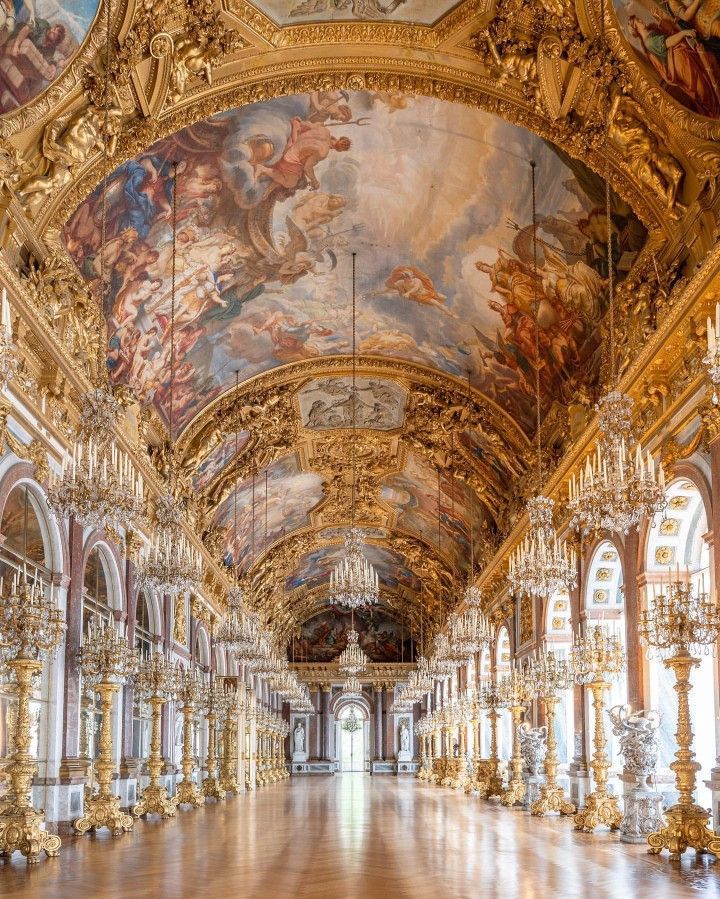
Vienna's palaces carry their legends as naturally as they carry their stucco, and the legends, in several cases, illuminate the history they decorate with a directness that the official guides are sometimes reluctant to match. Of all these stories, two in particular deserve the attention of the visitor who arrives in the city with more than a superficial interest in what its walls contain.
The first concerns the Hofburg itself and the room in the Amalienburg wing known, in Viennese oral tradition, as the Room of the Red Curtains. The story, which circulates in various versions among Viennese who know the palace well, holds that the Empress Elisabeth, on the night before her final departure for Geneva in September 1898, the departure from which she would not return alive, spent several hours alone in this room, which had been her private sitting room for much of her married life. The servants who prepared the room the following morning found the curtains in a state of disarray that they attributed, in the cautious professional language of palace documentation, to the effect of wind from the open window. The window was not, according to the same accounts, open. The Empress was already in Geneva when her assassin found her on the quayside. The curtains, which were red, are no longer there. The room is now accessible on the standard tour, in a different decoration, and does not advertise its former identity. Knowing this, you will look at it differently.
The second legend concerns Schönbrunn and the room known as the Million Room, the Millionenzimmer, which takes its name from the reputed cost of its construction in 1760 and which is lined with Indo-Persian miniatures set in gilded rococo frames of extraordinary elaboration. The legend holds that one of the miniatures, specifically a small portrait of an Indian princess that occupies an upper position on the east wall, has been seen to change expression depending on the light and the weather: that on overcast days it appears to smile, and on bright days to show a quality of sadness that those who have observed both states describe as distinctly personal. This is, clearly, an optical phenomenon rather than a supernatural one. The explanation is the complex interaction of the miniature's multiple layers of pigment with varying intensities of ambient light. None of this prevents the experience of standing in the Millionenzimmer on a grey Viennese November morning and watching the Indian princess smile at you from her gilded frame from being, whatever its cause, genuinely unsettling.
Day Four: The Belvedere, Klimt and the Kiss
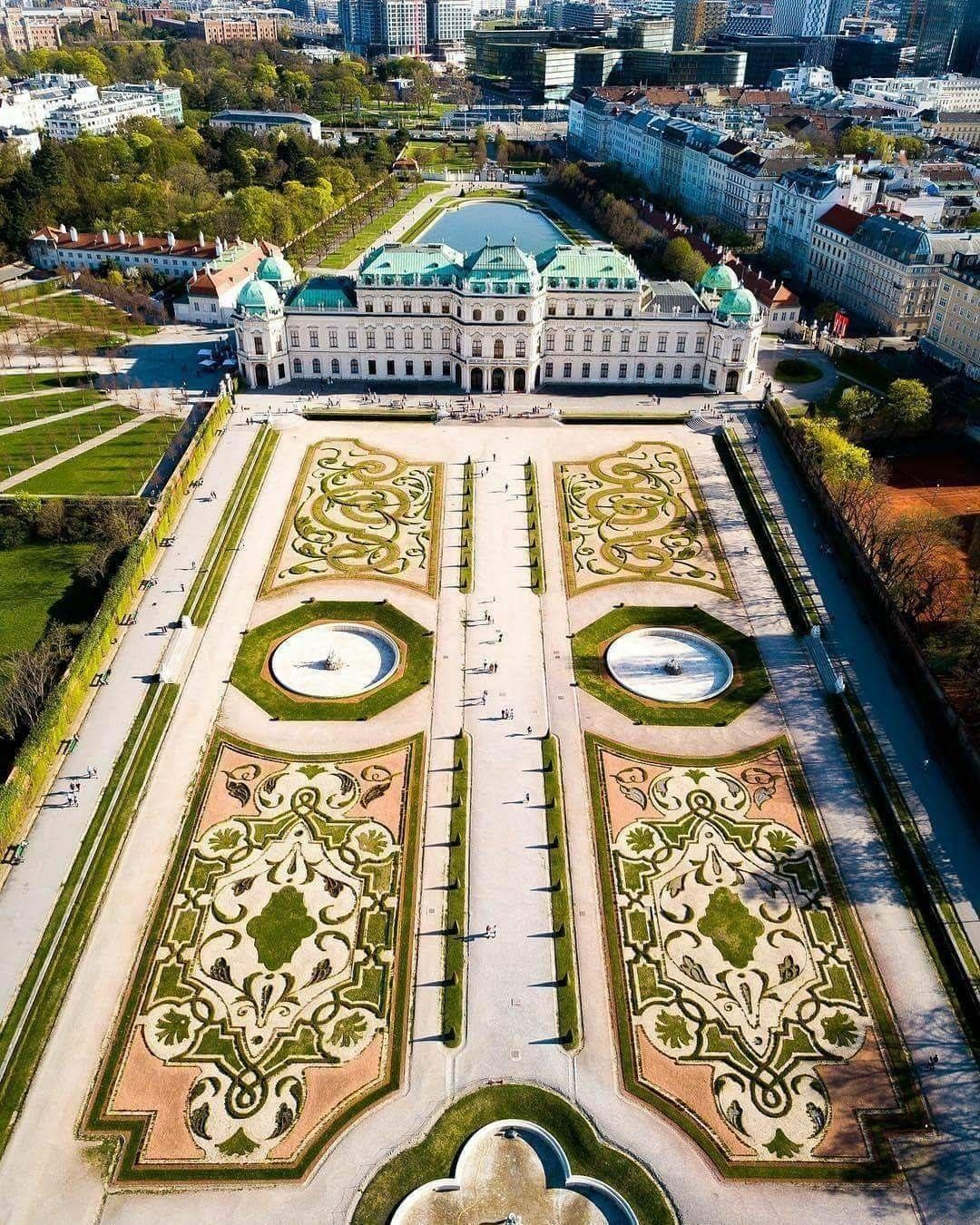
The Belvedere is the palace complex built between 1714 and 1723 for Prince Eugene of Savoy, the most celebrated military commander in Habsburg history, whose victories over the Ottomans at Belgrade in 1717 effectively ended five centuries of Ottoman military pressure on central Europe. Prince Eugene was not a Habsburg but a Savoyard, and his decision to build the most spectacular private palace in Vienna was an act of competitive display, directed at the imperial family that employed him, whose subtleties would have been appreciated by every member of the court that was its intended audience. The Belvedere was designed to be more beautiful than the Hofburg. Prince Eugene had the money and the architect, Johann Lukas von Hildebrandt, to make this aspiration credible, and the result is a building that the Habsburgs subsequently purchased precisely because its continued existence in private hands was insufficiently dignified for the dynasty that the empire required.
The Upper Belvedere, the principal garden facade, now houses the permanent collection of the Österreichische Galerie Belvedere, and the collection is dominated, in the popular imagination and in its actual holdings, by the works of Gustav Klimt. Klimt was the most important painter of the Viennese Secession, the anti-academic artistic movement that declared its independence from the established Viennese cultural institutions in 1897 and produced, in the two decades that followed, a body of work of extraordinary originality and sensory richness that was simultaneously the last flowering of a certain kind of European ornamental tradition and the first gesture toward something that the twentieth century would elaborate in very different directions. His great painting The Kiss, executed between 1907 and 1908 and now displayed in Room 4 of the Upper Belvedere's first floor, is the most visited work of art in Austria and one of the most recognised paintings in the world.
To stand in front of The Kiss in the room where it has been displayed since 1908 is an experience that rewards considerably more time than the average visitor's photographic priorities allow. The painting is large, almost two metres square, and its scale, combined with the extraordinary density of its gold leaf surface and the precision with which Klimt has distributed colour, pattern and form across a composition that is, in formal terms, radically flat and anti-perspectival, produces an effect of visual richness that requires some time to absorb. The figures are locked in an embrace whose character, tender or desperate depending on one's reading, is one of the most discussed questions in the entire literature of modern European art. The woman's face, the only part of her that is clearly visible, carries an expression whose ambiguity is, whatever one concludes about it, entirely deliberate. Klimt knew exactly what he was doing. He usually did.
Beyond Klimt: The Belvedere collection contains much more than Klimt, and the visitor who spends the entire morning in Room 4 and then leaves is making a significant error of allocative judgment. The works of Egon Schiele, Klimt's most gifted student and the most uncompromisingly honest draughtsman in the Viennese Secession, are represented by several major paintings whose psychological intensity makes Klimt's decorative richness look, by comparison, reassuringly comfortable. Oskar Kokoschka, the third major figure of Viennese Expressionism, is also well represented. The medieval collection in the lower floors, including the gilded devotional pieces of the Gothic period and the extraordinary Verdun Altar panels, requires a separate visit that most Klimt-focused tourists never make. It should.
Day Five: The Prater, the Central Cemetery and the Composers
The fifth day is the day for Vienna's more unexpected dimensions, the ones that the standard itinerary, focused on imperial palaces and great museums, tends to overlook in the press of its more obviously monumental priorities. Begin in the Prater, the large public park in the second district that was opened to the general public by the Emperor Joseph II in 1766 and that has been, in the two and a half centuries since, the most democratic space in Vienna: a place where the Viennese of every class and every era have gone to eat, to drink, to dance, to walk, to ride horses and bicycles and miniature railways, and to visit the Riesenrad, the great Ferris wheel built in 1897 that is the most beloved single object in the city and that offers, from its highest point, a view of Vienna and its setting in the basin between the Wienerwald and the Danube that is available nowhere else.
The Riesenrad appears in Orson Welles's The Third Man, in the scene where Harry Lime explains his philosophy of human expendability to Holly Martins from one of its revolving gondolas, and the film has given the wheel a sinister ambience that the actual experience of riding it, in the company of cheerful Austrian families and international tourists, slightly but pleasantly undermines. The view from the top, however, is exactly as extraordinary as the scene suggests, and on a clear day the city spreads from the Wienerwald to the Slovak border in a panorama of considerable grandeur. The gondolas are large, the revolution is slow, and the entire ride takes approximately fifteen minutes. It is one of those experiences that costs very little and produces a disproportionate quantity of the feeling of having been somewhere.
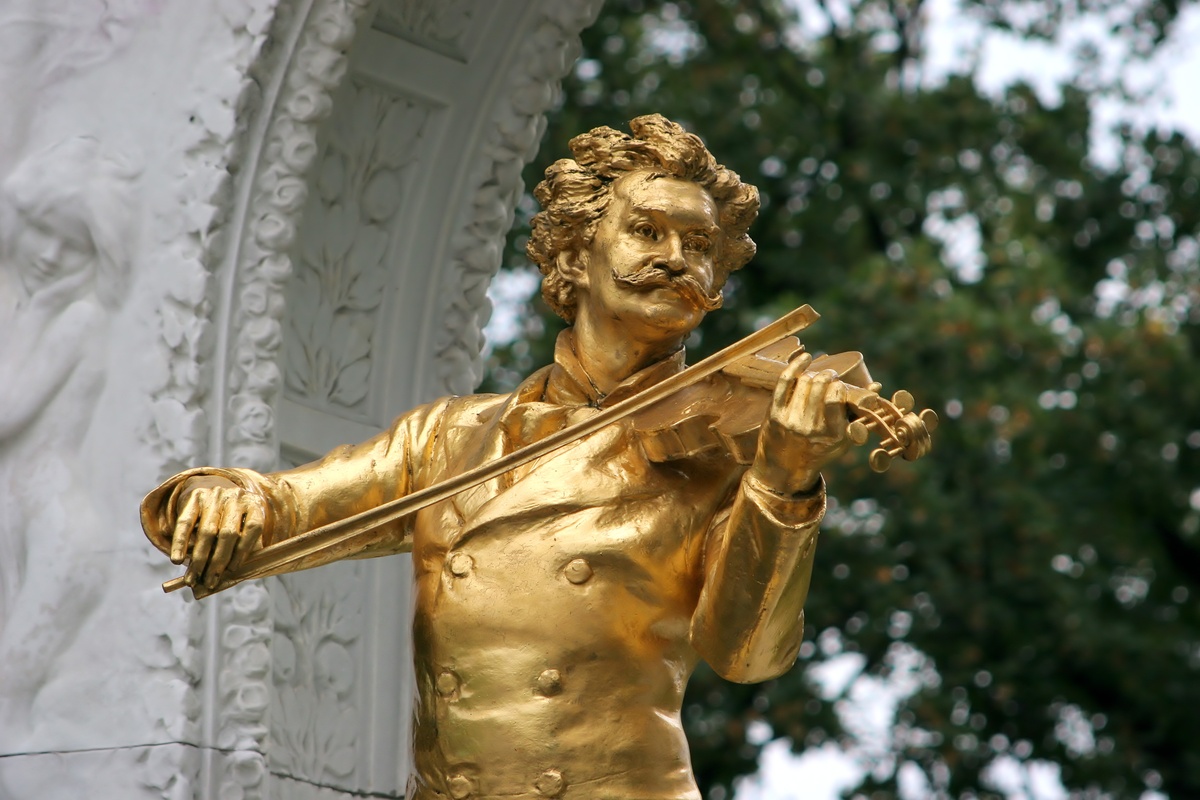
In the afternoon, take the U3 metro to Simmering and walk to the Zentralfriedhof, the Central Cemetery, one of the largest cemeteries in Europe and one of the most extraordinary public spaces in Vienna. The Zentralfriedhof was opened in 1874 and covers an area of approximately 2.4 square kilometres, its grid of grave avenues housing some three hundred and thirty thousand graves of Viennese citizens from the nineteenth century to the present day. In the famous grave section along the Gruppe 32A, the musical section, the tombs of Ludwig van Beethoven, Franz Schubert, Johannes Brahms and Johann Strauss the Younger stand within a few metres of each other, their headstones designed with a formal restraint that contrasts effectively with the baroque exuberance of some of the neighbouring monuments. Wolfgang Amadeus Mozart is represented by a memorial, though not buried here, his actual place of burial in the churchyard of Sankt Marx being less grandly appointed but more historically accurate.
To stand in Section 32A as the light fades over the Zentralfriedhof on a late afternoon in autumn, with the rows of graves receding into the grey-green distance and the occasional sound of a tram on the Simmeringer Hauptstrasse beyond the wall, is to experience something that Vienna does better than any other city I know: the feeling that the past is not past at all but simply adjacent, occupying a different section of the same city, audible through the wall on a quiet afternoon if one listens with sufficient patience.
The Coffee House Civilisation
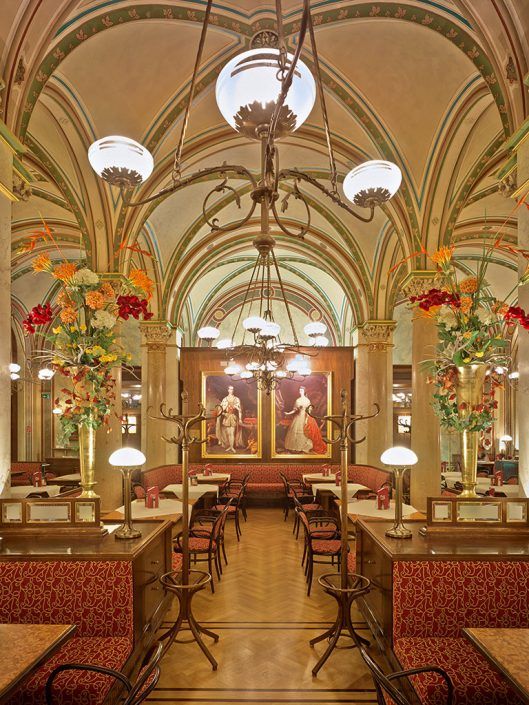
No account of Vienna that omits the coffee houses is an account of Vienna at all. The Viennese coffee house is not merely a place to drink coffee. It is, or has been historically, the primary intellectual and social institution of a city that has been producing philosophers, psychologists, novelists, architects and composers in disproportionate numbers since the eighteenth century, and the coffee house has been the space in which much of this production has taken place. Sigmund Freud frequented the Café Landtmann on the Ringstrasse. Karl Kraus conducted his polemical war against the entire Viennese cultural establishment from the tables of various coffee houses over several decades. Peter Altenberg, the poet who loved the coffee house so intensely that he had his mail delivered to the Café Central and effectively lived there for twenty years, is commemorated by a life-sized figure seated at a corner table of the Café Central that startles visitors who encounter it unexpectedly from behind. Arthur Schnitzler, Stefan Zweig, Hugo von Hofmannsthal: the coffee house was the ecosystem in which their intellectual lives were conducted, and its particular qualities, the availability of every newspaper in Europe, the tolerance for hours spent over a single coffee, the tradition of leaving the guest entirely in peace, produced a culture of sustained and unhurried thought that the contemporary world has largely lost the patience to sustain.
The coffee houses to visit are, in order of historical significance and current quality: the Café Central in the Palais Ferstel (the most beautiful room, the Altenberg figure, the consistently good coffee, the justifiably famous apple strudel); the Café Hawelka in the Dorotheergasse (the most atmospherically unreconstructed, its walls covered in the accumulated poster art of sixty years and its proprietors for much of that period the Hawelkas themselves, whose tenure in the house became one of the most celebrated examples of Viennese institutional continuity in the twentieth century); the Café Landtmann on the Ringstrasse (the grandest room, the most distinguished clientele historically, the most reliable kitchen of the three); and the Café Sperl in the sixth district (the least touristic, the most genuinely Viennese in its current clientele, the best billiard tables). Each requires at minimum an hour and ideally two, and the minimum requirement is not negotiable.
In a Viennese coffee house, you order once and you are left alone. The waiter will not return to ask how you are getting on or to suggest that you might like the dessert menu. He will bring your coffee on a silver tray with a small glass of water, and he will then proceed to ignore you with a professional completeness that is not rudeness but its opposite: a considered respect for the fact that you came here to think, or to read, or to talk with whoever is opposite you, and that none of these activities benefits from interruption. When you want something, you catch his eye. He will appear. This is a system of considerable sophistication, and it works.
What to order: A Melange is the standard morning coffee: half espresso, half steamed milk, served in a glass with a handle. A Großer Brauner is a large black coffee with a small jug of milk on the side. A Einspänner is espresso served in a glass and topped with a generous layer of unsweetened whipped cream through which the coffee is drunk. It is the most Viennese of the coffee preparations and the most misunderstood by non-Viennese visitors who stir the cream in before drinking. You do not stir it in. You drink through it, which produces a sequence of flavours whose calculated sequence of cold cream and hot bitter coffee was arrived at through centuries of trial and error and should not be interfered with.
Practical Information: Getting to Vienna and Moving Through It
Vienna International Airport, known as Schwechat after the district in which it is located, is approximately 18 kilometres southeast of the city centre. The airport is one of the principal hubs for air travel in central Europe, with direct connections to the major airports of Europe and to long-haul destinations in Asia, the Americas and the Middle East. A private airport transfer from Schwechat to any address in the city centre takes approximately 20 to 30 minutes depending on traffic, with a fixed price agreed in advance and no requirement to manage luggage through public transport connections. The City Airport Train (CAT) offers the fastest public connection, reaching Wien Mitte station in the city centre in sixteen minutes, running every thirty minutes. The less expensive S-Bahn S7 line takes approximately thirty minutes to Wien Mitte.
Within the city, the Vienna U-Bahn, the metro system, covers the principal tourist areas and the most important outlying destinations, including Schönbrunn and the Prater, with a reliability and a comfort that reflects the Viennese approach to public infrastructure generally. A 24-hour, 48-hour or 72-hour ticket covers unlimited travel on the U-Bahn, the trams and the buses within the city's transport zones and represents the most practical option for a visitor planning to move extensively across the city over several days. The inner districts, the first through the ninth, are compact enough to be covered on foot between most of the principal sights, and walking is always preferable to taking the metro when the weather and the time allow it, because the streets of Vienna are consistently interesting and consistently beautiful in the way that cities built for the entertainment of a culturally ambitious aristocracy tend to be.
Comments
No comments yet. Be the first to share your thoughts!
Leave a Comment
Your comment will appear after moderation.