 Michelle
 There are regions in Germany that are celebrated for their industrial heritage, their architecture, their modern cultural energy. And then there is Baden-Württemberg, which is celebrated for none of those things and does not particularly need to be: it is celebrated for its forests, its valleys, its medieval market towns and, above all, for its food. This is the region of the Black Forest, the Rhine plain and the Swabian highlands, a landscape of extraordinary beauty and variety that has produced, over centuries, a culinary tradition of equal richness. The dishes of Baden-Württemberg are not showy or elaborate. They are honest, deeply flavoured and rooted in a landscape and a seasonal rhythm that you begin to understand the moment you sit down at a table here and let the food do its work.
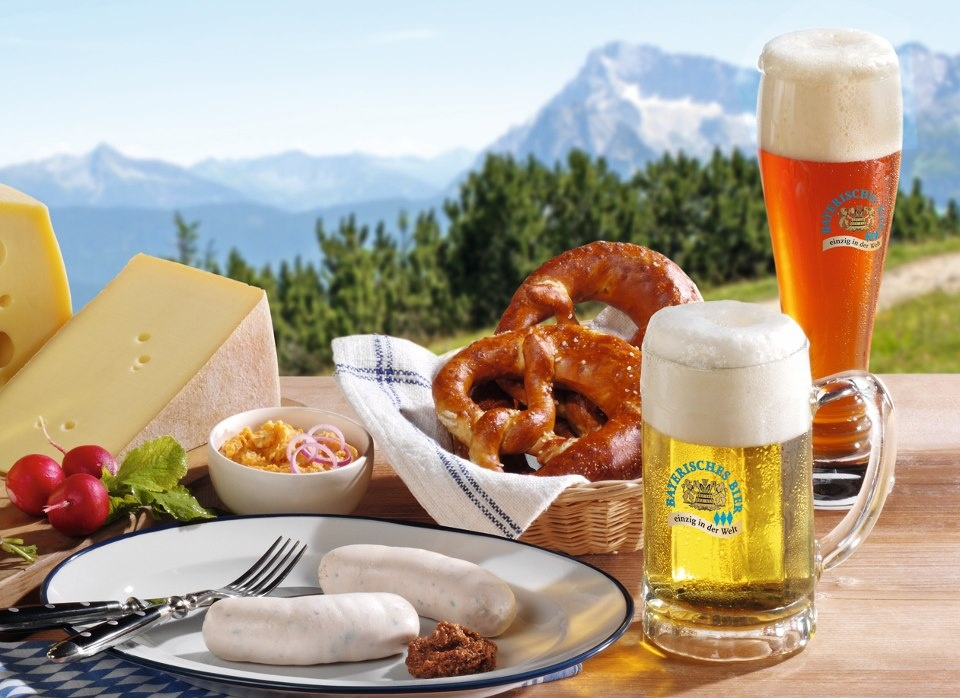
1. Sauerkraut: The Most Famous Fermented Food in Germany
Of all the dishes associated with German cooking outside Germany, none is more universally recognised and more widely misunderstood than sauerkraut. The word translates literally as sour cabbage, which tells you exactly what it is and nothing at all about what it tastes like when made properly in the region that has been producing it for centuries. In Baden-Württemberg, sauerkraut is not a garnish or an afterthought. It is a fundamental part of the culinary landscape, eaten throughout the year, made with care and knowledge, and served in ways that reveal an entirely different dimension from the sharp, vinegary product that most people outside Germany have encountered.
The preparation begins with finely shredded white cabbage, salted and then left to ferment in its own juices for several weeks. The fermentation is a natural process driven by the lactic acid bacteria present on the cabbage leaves, and it transforms the raw vegetable into something complex, mildly sour and deeply nutritious, with a flavour that is entirely its own. In Baden-Württemberg, the sauerkraut is typically enriched with julienned carrots and fennel fronds, which add colour, sweetness and an anise-like freshness that lifts the sourness of the fermented cabbage into something altogether more balanced and interesting.
When served as an accompaniment, the sauerkraut is slow-braised in a wide pan with lard or goose fat, a splash of white wine or apple juice, juniper berries, caraway seeds and a bay leaf, until it is silky, fragrant and has lost the raw edge of the fermentation. In this state it is one of the most versatile and satisfying accompaniments in German cooking: equally at home alongside smoked pork, roasted sausages, pork belly or the great roasted meats of the region. It is also, in its simplest form, simply forked cold from the barrel at the market or the deli counter and eaten with bread and mustard as a quick, bracing lunch, which is exactly how the locals have been eating it for generations and which is perhaps the best advertisement for its qualities.
Best time to visit Baden-Württemberg for food: Autumn from September to November is exceptional: the new wine season arrives with Federweisser, the lightly fermented young white wine drunk alongside zwiebelkuchen at outdoor festivals across the region. The markets fill with wild mushrooms, game, chestnuts and the first walnuts from the orchards of the Rhine plain. The Christmas markets of Freiburg and Stuttgart (late November to Christmas Eve) are among the most atmospheric in Germany, with mulled wine, wibele biscuits and roasted chestnuts filling the cold air. Spring from April to June brings white asparagus season, celebrated with near-religious fervour across the region.
2. Zwiebelkuchen: The Onion Tart That Belongs to the Black Forest
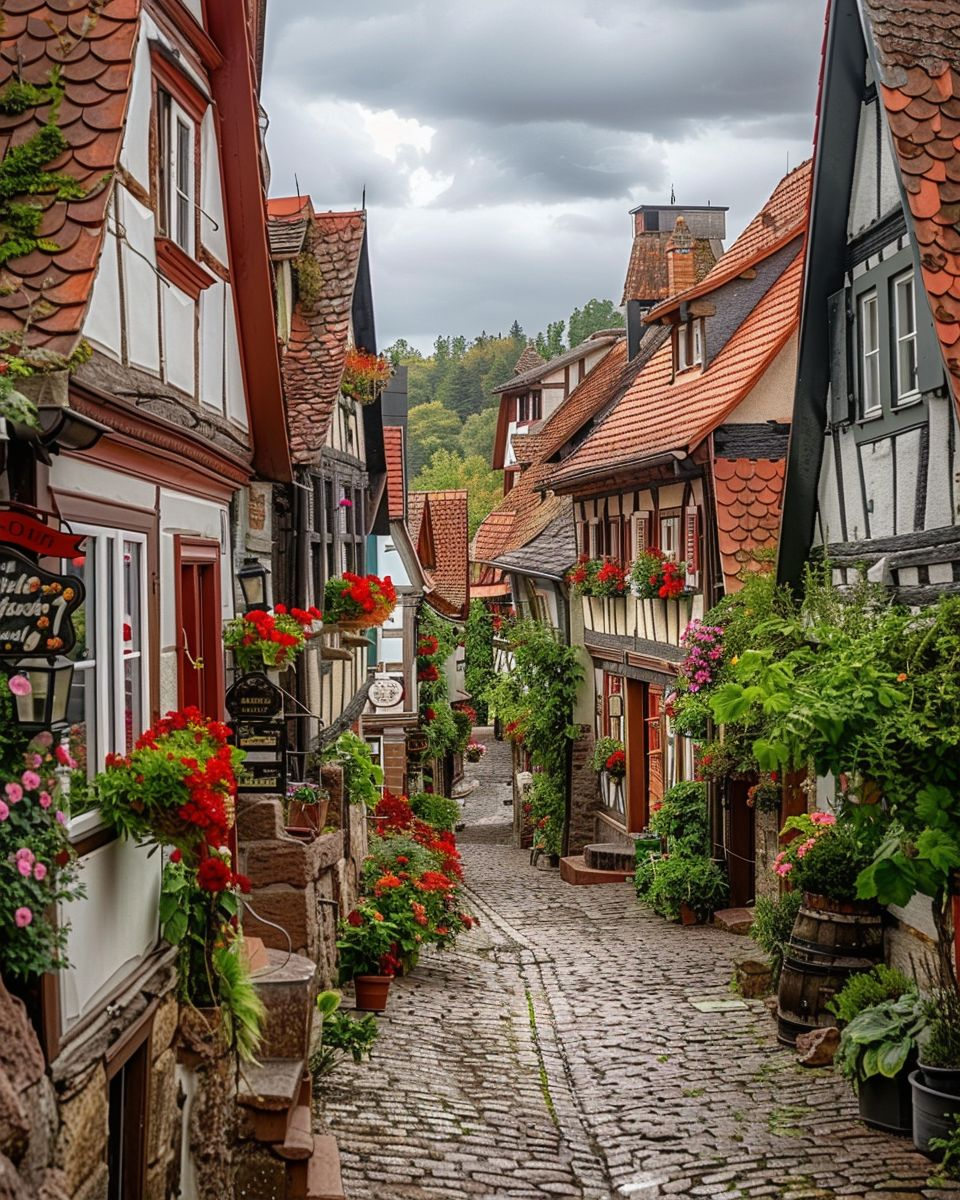
There are few things more authentically Baden-Württemberg than sitting down on a cool autumn morning in a market town somewhere in the Black Forest with a slice of freshly baked zwiebelkuchen on the plate in front of you and a glass of young Federweisser in your hand. The combination is so traditional, so deeply embedded in the seasonal rhythms of the region, that it has its own festival circuit: from late September to November, wine villages across Baden-Württemberg hold Federweisser and Zwiebelkuchen evenings that draw locals and visitors in equal measure, filling the air with the smell of caramelised onions and new wine and the sound of a region contentedly celebrating the harvest.
The zwiebelkuchen itself is a savoury onion tart or pie of considerable depth and character. The base is typically made either from a yeast dough, which gives a bread-like, slightly chewy foundation, or from a shortcrust pastry that provides a crisper, more delicate contrast to the filling. The filling is the heart of the dish: a generous layer of red or white onions, softened slowly in butter until they are completely tender and beginning to turn golden at the edges, combined with lardons of smoked bacon, a rich mixture of sour cream and eggs, and a scattering of caraway seeds whose warm, slightly anise-like flavour is the defining note of the dish. The tart is baked until the filling is just set, the surface lightly golden and the edges of the crust beginning to colour. The result is somewhere between a quiche and an onion soup in pastry form: savoury, warming, deeply satisfying and entirely unlike anything you will find outside this region.
It is traditionally eaten for breakfast or brunch, which is not as surprising as it sounds once you have eaten it: the combination of eggs, cream, bacon and caraway is filling and sustaining in a way that sets you up for a long day of walking in the forest or browsing the market stalls. In the autumn festival context it becomes an evening dish, eaten communally at long tables with the new wine, and the informality and warmth of those occasions is one of the most genuine expressions of Black Forest hospitality that a visitor is likely to encounter.
Food tip for zwiebelkuchen: Look for it at the weekly markets in Freiburg, Baden-Baden and Konstanz rather than in tourist restaurants. The market versions, baked fresh that morning and sold by the slice from wooden stalls, are almost always better than the restaurant versions and cost a fraction of the price. If you are visiting in October, ask your hotel or host about local Federweisser and Zwiebelkuchen festivals in the surrounding villages: these are the occasions when the dish is at its most flavourful and the atmosphere at its most convivial.
3. Spatzle and Knopfl: The Egg Noodles of Southwestern Germany
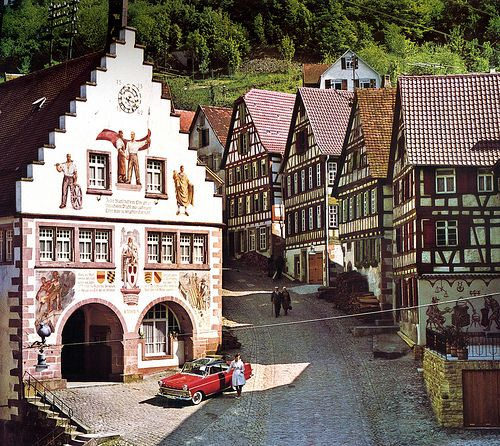
If sauerkraut is the most internationally recognised dish of German cooking, then spatzle is the most beloved within Germany itself, and nowhere more so than in the southwestern states of Baden-Württemberg and Bavaria, where it functions as the everyday alternative to potatoes and pasta, the default companion to any braised or roasted meat, the base of the region's most comforting dishes and a food of such fundamental importance that it has its own protected geographical status as a Swabian speciality.
Spatzle are made from a simple dough of flour, eggs, water and salt, mixed together until smooth and slightly elastic, then pressed or scraped through a special colander with large holes directly into a pot of boiling salted water. The pieces that emerge are small, irregular, slightly chewy and wonderfully absorbent, soaking up the juices of whatever they are served alongside with tremendous enthusiasm. They are cooked until they float to the surface, fished out with a slotted spoon and either dressed immediately with butter and served as they are, or transferred to a pan for further cooking with cheese, onions or other additions.
In Baden-Württemberg, the local name for the dish is Knopfl, and there is a subtle but meaningful difference in form: while spatzle are pressed into long, irregular noodle shapes, knopfl are formed or dropped into small round balls approximately the size of chickpeas. The dough is the same, the flavour and texture are virtually identical, but the ball shape gives knopfl a slightly denser, more compact character that works particularly well when tossed with melted butter and grated cheese, where they develop a light crust on the outside while remaining soft within. Both names are used interchangeably across the region, and the distinction between them is one of those gentle localised arguments that the Germans conduct with great seriousness and evident enjoyment.
The most celebrated preparation of spatzle in the region is Käsespätzle, which is to Baden-Württemberg what macaroni and cheese is to North America, but considerably more satisfying: the freshly cooked noodles are layered in a hot pan with generous quantities of grated Emmentaler or a local mountain cheese, tossed together until the cheese is completely melted and coating every surface, then topped with a pile of crispy fried onions and served immediately, before the cheese has a chance to set. It is simultaneously the simplest and the most comforting dish in the regional repertoire, the one that locals make at home when they need feeding quickly and well, and the one that visitors almost invariably order again before they leave.
Common tourist mistakes in Baden-Württemberg: Ordering spatzle as a side dish in a restaurant that clearly treats them as an afterthought. Look for restaurants where Käsespätzle appears as a main course on the menu and is made to order: these are the places that take the dish seriously. Another mistake: visiting the Black Forest in July and August without accommodation booked well in advance. The region is extremely popular with domestic German tourists during the summer months and the best guesthouses and small hotels fill quickly. May, June, September and October offer the best combination of weather, availability and seasonal produce.
4. Schwarzwälder Kirschtorte: The Cake That Made the Black Forest Famous
There is a strong argument to be made that the Schwarzwälder Kirschtorte, the Black Forest cherry cake, is the single most celebrated German dessert in the world. It has given its name to the region that created it, inspired countless imitations in bakeries from Tokyo to Toronto, and become so thoroughly associated with German baking in the international imagination that it functions almost as a cultural shorthand for the country itself. And yet the versions most people have encountered outside Germany are pale, spongy, oversweetened travesties that bear no meaningful resemblance to the real thing.
The authentic Schwarzwälder Kirschtorte begins with four layers of moist, deeply flavoured chocolate sponge cake, each layer soaked generously with Kirschwasser, the clear, intensely aromatic cherry schnapps distilled in the Black Forest from locally grown sour cherries and aged in oak barrels until it has developed the complex, slightly warming character that distinguishes it from the industrial cherry spirits sold elsewhere. Between each layer of sponge is a filling of thick, lightly sweetened whipped cream and macerated sour cherries, typically Morello cherries preserved in kirsch, their tartness and acidity providing the essential counterbalance to the richness of the cream and the sweetness of the chocolate.
The finished cake is covered entirely with more whipped cream, decorated with chocolate shavings, which are made by scraping a block of dark chocolate with a sharp knife and should be generous enough to cover the entire surface, and adorned with a small arrangement of fresh or maraschino cherries on the top. The proportions matter enormously: too little kirsch and the cake is cloying; too little cream and it is dry; too few cherries and it loses its identity. A properly made Schwarzwälder Kirschtorte is a construction of genuine complexity and considerable skill, and eating one in a good patisserie in Freiburg or Baden-Baden, where the recipe has been made with pride and precision, is an experience that will recalibrate your understanding of what a chocolate cake can be.
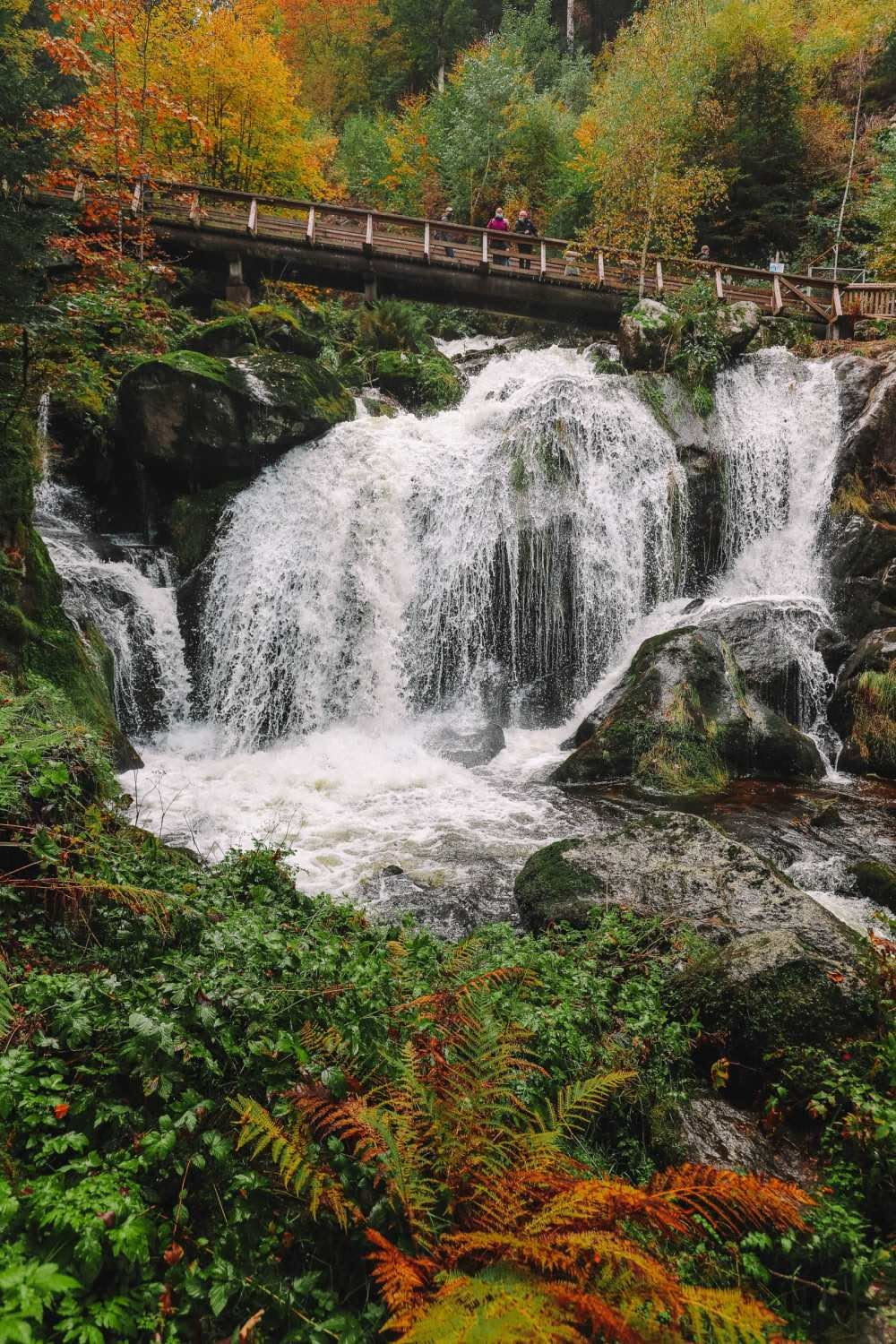
Where to find the best Schwarzwälder Kirschtorte: Seek out an artisan patisserie or Konditorei in Freiburg, Triberg or Baden-Baden rather than a tourist-oriented cafe near the main sights. In Triberg, which calls itself the home of the Black Forest cake, several family-run bakeries have been making the cake to traditional recipes for generations. Look for one where the Kirschwasser is from a local distillery and the cherries are Morello: both details will be mentioned with pride by any serious maker of the dish. Take a whole cake to go if you are travelling by car: properly wrapped, it keeps for two to three days and is one of the finest souvenirs the region produces.
5. Wibele: The Delicate Figure-of-Eight Biscuits of Langenburg
Not every great food tradition announces itself loudly. Some of the most interesting regional specialities in Germany are the quiet ones, the biscuits and small sweets that you find on the counter of an old-fashioned bakery in a small town, unremarked and unheralded, simply part of the fabric of everyday life. Wibele are one of those quiet specialities, and they are worth knowing about.
These small, sweet biscuits originated in the Franconian city of Langenburg, a beautifully preserved Renaissance town perched on a ridge above the valley of the Jagst river in the northeastern corner of Baden-Württemberg. They are made from a simple dough of whipped egg whites, icing sugar, flour and vanilla sugar: a light, airy mixture that, when baked, produces a biscuit of considerable delicacy, pale golden on the outside and slightly soft within, with a flavour that is clean, sweet and gently vanilla-scented without being cloying.
The traditional shape of the wibele is a figure of eight, formed by piping the dough in two overlapping loops onto a baking sheet, which gives the finished biscuit a distinctive silhouette that sets it apart from any other German biscuit. They are similar in some respects to another German sweet called Russisch Brot, or Russian Bread, which uses a comparable egg white and sugar base, but the wibele are baked for a shorter time, leaving them a light golden brown rather than the darker colour of the Russisch Brot, and their texture is more tender and less crisp.
Wibele are traditionally served as a dessert accompaniment with hot Glühwein, the spiced mulled wine that is the defining drink of the German Christmas market season, and the combination of the warm, spiced wine and the delicate, vanilla-scented biscuit is one of those pairings that seems almost too obvious once you encounter it. They are also excellent with coffee or tea, and they make exceptional gifts: their simple, elegant shape and their keeping quality of several weeks make them ideal for packing carefully in a tin and carrying home as a memory of the region.
Common tourist mistakes in Baden-Württemberg: Underestimating how much there is to eat and see outside of Freiburg. The region stretches from the Swiss border in the south to the Swabian highlands in the north, and some of the finest food and most beautiful scenery is found in the smaller towns and villages that most visitors never reach. Spend at least two nights outside Freiburg and Stuttgart: the towns of Baden-Baden, Konstanz on Lake Constance, Meersburg on the lake and Ulm in the northeast all repay serious attention and all have their own distinct culinary traditions. And never drive after a Kirschwasser tasting: the Black Forest distilleries produce some of the finest fruit spirits in Europe, and the roads between the villages are narrow and winding.
Baden-Württemberg teaches you something that the great, famous food regions of Europe rarely need to bother with: that the most honest and deeply satisfying food is often the quietest. A slice of zwiebelkuchen at a market stall, a bowl of Käsespätzle in a village inn, a wibele with a glass of mulled wine in the cold air of a Christmas market. These are not grand gestures. They are the everyday pleasures of a region that has always known exactly who it is.
Getting to Baden-Württemberg: Arriving and Starting the Right Way
The main gateway to Baden-Württemberg is Stuttgart Airport (STR), located approximately 14 kilometres south of Stuttgart city centre, with frequent connections across Germany and Europe. From the airport, a private airport transfer to Freiburg, the natural base for exploring the Black Forest, takes approximately one hour and to Baden-Baden approximately 45 minutes. It is the most comfortable way to arrive, particularly if you are carrying luggage or arriving late after a long journey.
The S-Bahn lines S2 and S3 connect Stuttgart Airport to Stuttgart Hauptbahnhof in approximately 27 minutes, and from there the high-speed ICE train reaches Freiburg in under two hours. Basel-Mulhouse Airport in neighbouring Switzerland is an alternative entry point for the southern Black Forest, offering low-cost connections from several European cities and a private transfer time to Freiburg of approximately 45 minutes.
Tips for avoiding queues and making the most of the region: The Freiburg Münstermarkt, held daily around the base of the magnificent Gothic cathedral, is one of the finest urban food markets in Germany and should be your first stop on any visit: the cheese stalls, the pretzel bakers, the sauerkraut sellers and the seasonal produce from the surrounding Rhine plain are all here, and the market is far less crowded in the morning than in the early afternoon. Book the best restaurants in Baden-Baden at least two weeks in advance: the spa town attracts a discerning clientele and the most serious kitchens fill quickly, particularly on weekends. And if you are visiting in November, check the schedule of local Federweisser festivals in the wine villages of the Kaiserstuhl and Ortenau: these are among the most authentically regional food and wine experiences that Baden-Württemberg has to offer.
Comments
No comments yet. Be the first to share your thoughts!
Leave a Comment
Your comment will appear after moderation.