 Michelle
 Verona surprises people. They arrive expecting Romeo and Juliet, a medieval balcony, a romantic backdrop for a photograph. What they find is something considerably more substantial: one of the most complete and most beautiful historic cities in Italy, a place where a Roman amphitheatre that still hosts some of the finest opera performances in the world stands a few minutes walk from a medieval town centre of extraordinary elegance, where the wine poured in the simplest osteria is Amarone or Valpolicella from vineyards you can see from the city's hilltops, and where the cooking is the kind of hearty, confident, deeply satisfying food that northern Italian winters and long Veronese traditions have produced over centuries. Verona is not a city that reveals itself in an afternoon. Give it two days at least, and it will reward you with something far more lasting than a photograph of a balcony.
Why Verona Deserves More Than a Day Trip
Verona is one of the most visited cities in northern Italy, and it is also one of the most consistently underestimated. Most visitors arrive as part of a broader itinerary that includes Venice, Lake Garda and perhaps Milan, and allocate Verona a single day: enough for the Arena, the balcony of Juliet's House, a walk through Piazza delle Erbe, and a rushed lunch. This is a perfectly agreeable way to spend an afternoon, and it will leave you with the impression of a beautiful and rather compact city that you have more or less seen.
It is not, however, the real Verona. The real Verona is a city of layers, where every street reveals another piece of its extraordinarily compressed history, from the Roman gates and the Arena to the Scaligeri tombs and the Renaissance palaces to the baroque churches and the nineteenth-century liberty buildings along the Adige. It is a city with one of the great wine landscapes in Italy on its immediate doorstep, where an afternoon drive through the Valpolicella hills takes you through some of the most beautiful vineyard country in Europe. And it is a city with a culinary tradition of considerable depth and genuine character, rooted in the agricultural wealth of the Po Valley and the livestock-rearing culture of the Veronese hills.
Arriving in Verona is straightforward. The city is served by Valerio Catullo Airport (VRN), approximately 12 kilometres from the historic centre, and a private airport transfer takes around 15 to 20 minutes to your hotel. From Verona Porta Nuova railway station, the historic centre is a 20-minute walk or a short bus ride.
The best time to visit: Spring (April through June) and early autumn (September through October) are the finest seasons for Verona. April brings mild weather and the city's chestnut and magnolia trees in flower. October coincides with the grape harvest in the surrounding hills, and the osterie fill with the new wine. The Arena Opera Festival (late June to early September) is one of the great musical events of the year, but hotel prices rise significantly and advance booking of both tickets and accommodation is essential.
Place 1: The Arena di Verona
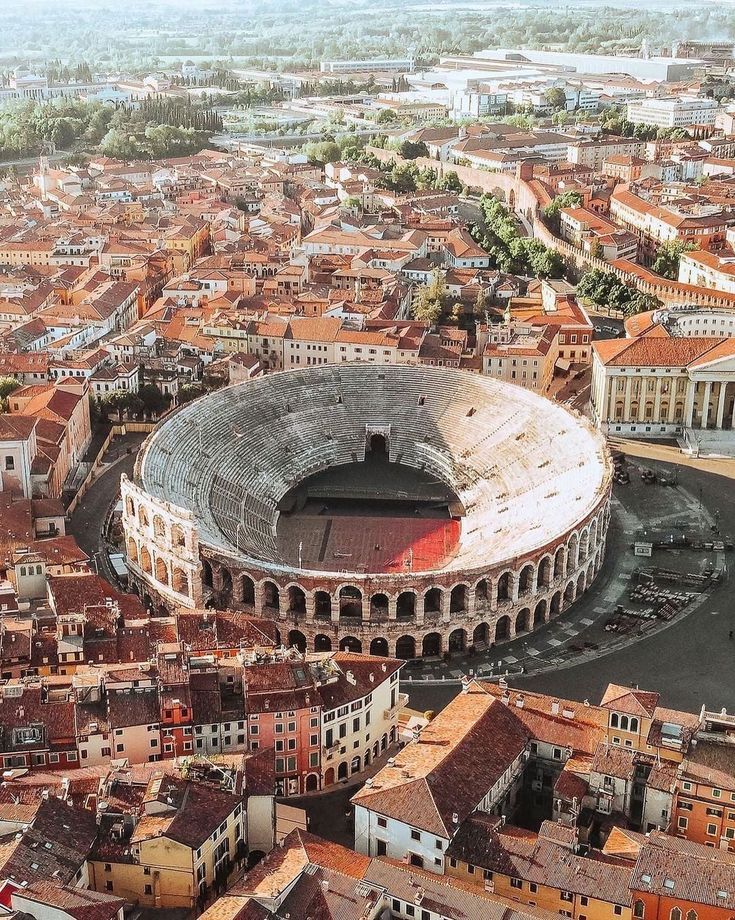
The Arena di Verona is one of the best-preserved Roman amphitheatres in the world, and it is the building that defines the city. Built in the first century AD, probably during the reign of the Emperor Augustus or shortly after, it originally held between 25,000 and 30,000 spectators and was used for gladiatorial combat and public spectacles in the Roman tradition. After the fall of Rome, it served as a quarry, a prison, a market and a tournament ground before being recognised in the nineteenth century as the cultural treasure it is, and converted to its current use as one of the most extraordinary open-air opera venues on the planet.
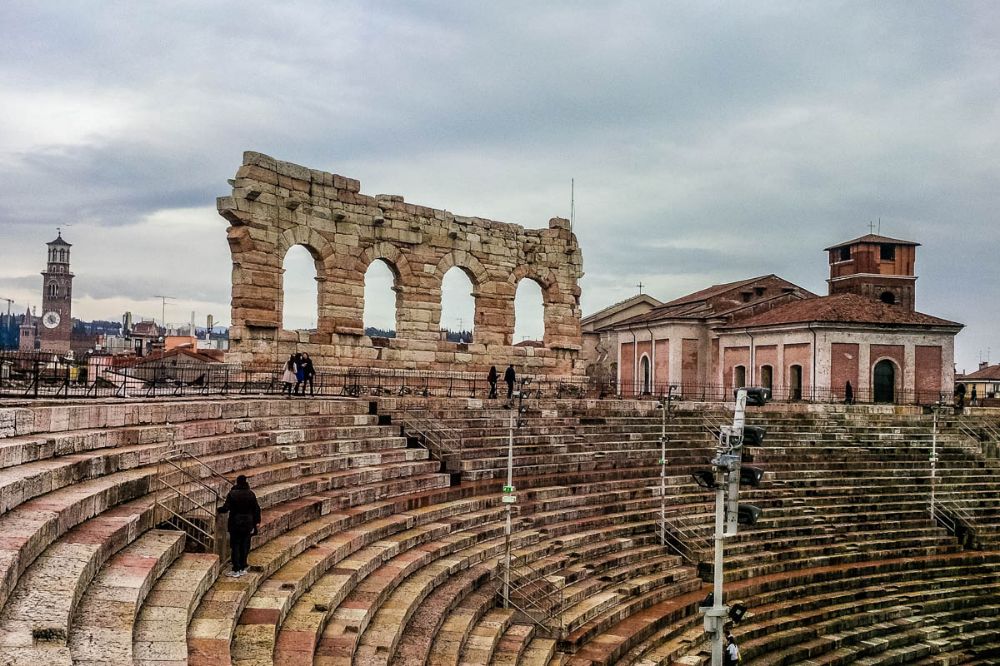
The outer ring of the Arena was largely destroyed by a series of earthquakes in the twelfth century, leaving a single fragment standing on the western side (the so-called ala, or wing, which you see in almost every photograph of the building). The inner structure, however, survived almost intact: 44 rows of pink and white limestone seating rising in tiers around an oval arena 73 metres long and 44 metres wide, with the capacity today of approximately 14,000 spectators. Walking into the Arena for the first time produces an effect of genuine, physical awe: the sheer mass of the building, the precision of its construction, the fact that it stands here, in the centre of a modern city, still in daily use after two thousand years, is one of those moments when the past becomes immediately and overwhelmingly present.
During the day, the Arena is open to visitors as a museum, and you can climb through the seating tiers to the upper levels for extraordinary views over the rooftops of Verona and, on clear days, toward the Valpolicella hills and the first slopes of the Alps beyond. In the evening, from late June to early September, it becomes the stage for the Arena Opera Festival, one of the greatest operatic events in the world. Productions of Verdi, Puccini and Bizet are staged on a scale that only a building of this size makes possible: sets that would fill an entire conventional opera house stage become intimate gestures in the vast space of the Arena, and the experience of watching opera under the open sky, with the first stars appearing above the top tier as the performance reaches its climax, is one that operagoers describe as among the defining experiences of their lives.
Opera at the Arena: practical advice. If you are visiting during the opera season, book tickets as far in advance as possible through the official Arena di Verona website. The least expensive seats are the unreserved stone steps at the top of the seating (bring a cushion, which can be rented at the venue, and arrive early for the best position). The most expensive are the numbered numbered chairs in the stalls. Performances begin at 9pm and last three to four hours: bring a light jacket even in summer, as the Arena cools considerably after dark.
Place 2: Piazza delle Erbe and the Historic Centre
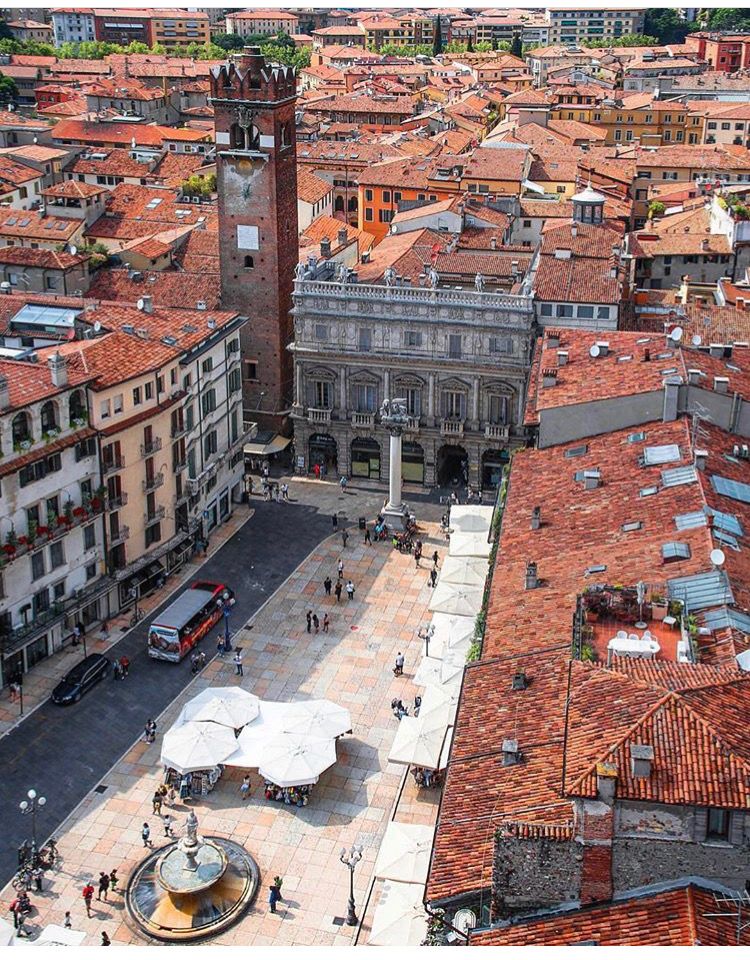
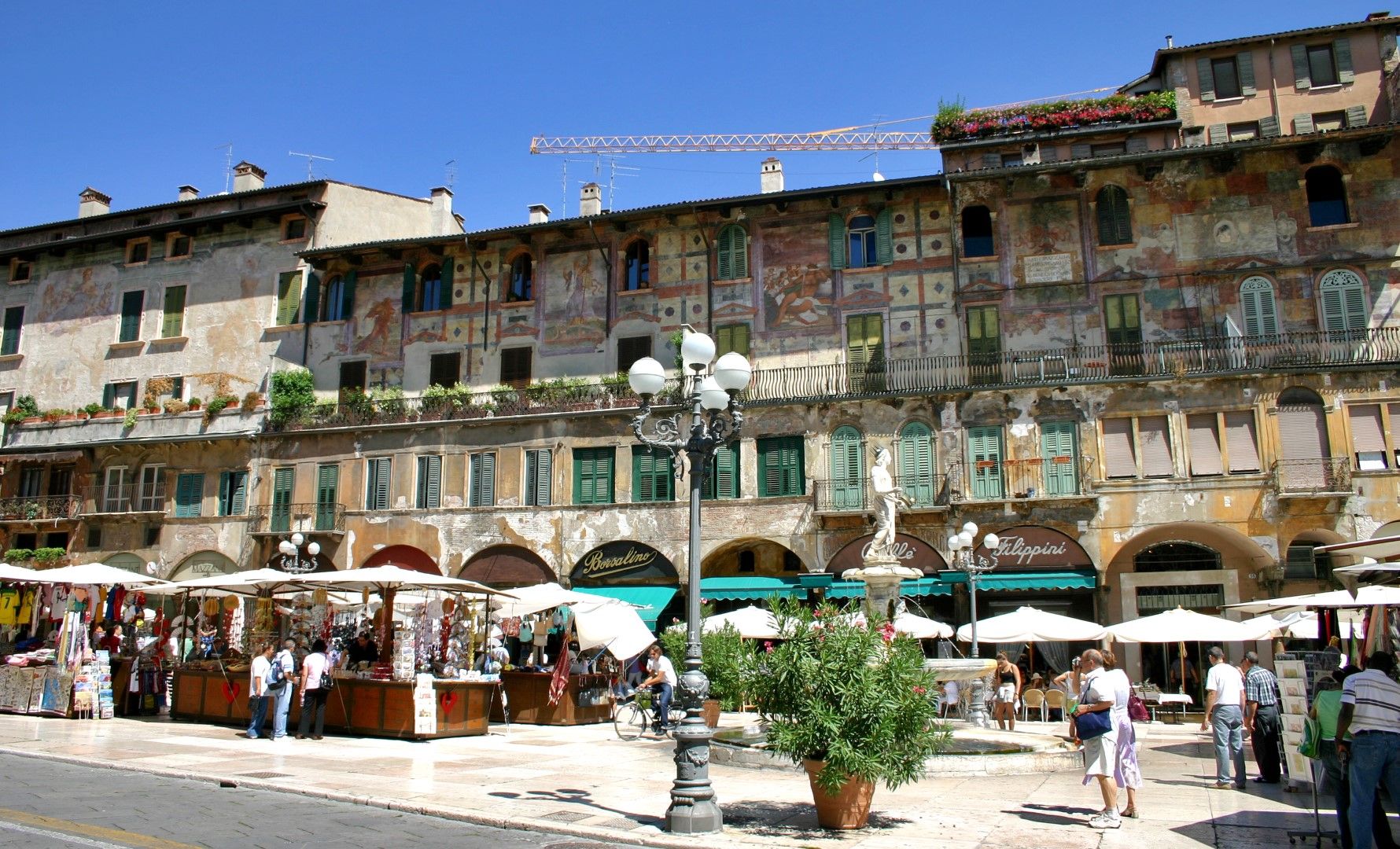
Piazza delle Erbe, the square of herbs (named for the market that occupied it for centuries), is the oldest public space in Verona and one of the most beautiful piazzas in Italy. It occupies the site of the original Roman forum, and the oval form of the square still reflects the shape of that ancient space beneath it. The buildings that surround it date from the medieval and Renaissance periods, an extraordinary gallery of different architectural styles and centuries compressed into a single coherent urban space: the Torre del Gardello, the Casa dei Mazzanti with its sixteenth-century frescoes, the baroque Palazzo Maffei with its guardian gods and goddesses along the roofline, the medieval Torre Lamberti rising 84 metres above the square. In the centre, the Colonna del Mercato (market column) and the Fontana Madonna still stand where they have stood since the fourteenth century. The market still operates every morning, its stalls selling fruit, vegetables, tourist souvenirs and local specialities in a tradition of almost unbroken continuity since the Middle Ages.
From Piazza delle Erbe, the Arco della Costa (so named for the whale rib bone that has hung beneath it for centuries, a traditional talisman of Veronese legend) leads through to the adjacent Piazza dei Signori, the more formal civic square of the Scaligeri family, the dynasty that ruled Verona at the height of its medieval power. Surrounded by the Palazzo della Ragione, the Loggia del Consiglio and the Prefettura, and presided over by a nineteenth-century statue of Dante (who spent several years in Verona as the guest of Cangrande della Scala, the greatest of the Scaligeri, and is said to have begun work on the Paradiso here), it is a space of considerable grandeur and relative quiet, shielded from the bustle of the herb market by the buildings that separate the two squares.
A short walk from the piazzas brings you to the Arche Scaligere, the extraordinary Gothic funerary monuments of the Scaligeri family. These outdoor tombs, built between 1277 and 1380, are among the most remarkable examples of Gothic sculpture in Italy: soaring stone canopies decorated with carved reliefs and surmounted by equestrian statues of the deceased lords, all protected by a decorative iron fence bearing the ladder emblem of the Scala family. They stand in the open air, directly adjacent to the small church of Santa Maria Antica, and can be viewed from the street without charge at any time of day.
And then, inevitably, there is Juliet's House. The Casa di Giulietta on Via Cappello is one of the most visited sites in Italy, a fourteenth-century house with a small stone balcony that has been associated with Shakespeare's Juliet since at least the nineteenth century, the historical foundations for this association being, to put it diplomatically, somewhat questionable. Shakespeare's Juliet was a fictional character, Romeo and Juliet was written in England by an author who almost certainly never visited Verona, and the balcony was added to the building in the twentieth century specifically to satisfy tourist expectations. None of this matters in the slightest to the millions of visitors who come to stand beneath it each year. The courtyard of the house is plastered, quite literally, with tens of thousands of love notes and chewing gum, and visitors queue to touch the bronze statue of Juliet for good luck. It is a spectacle of collective romanticism that is, despite its complete lack of historical authenticity, somehow entirely charming.
The view from Torre Lamberti. The Torre Lamberti in Piazza delle Erbe offers the finest panoramic view of Verona and its surroundings, with the Arena, the Adige river, the medieval towers and, on clear days, the Lessini hills and the first snow-covered peaks of the Alps visible on the horizon. You can reach the top by lift or by climbing the internal staircase. It is worth doing in both the morning light and the golden hour before sunset, and the view from the top will permanently alter your spatial understanding of the city.
Place 3: Castelvecchio and the Ponte Scaligero
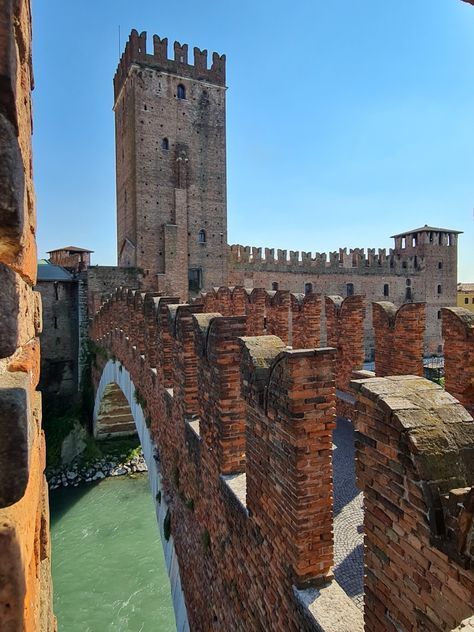
Castelvecchio, the old castle, is the finest medieval military architecture in Verona and one of the most beautiful fortified buildings in northern Italy. Built by Cangrande II della Scala between 1354 and 1376 as both a defensive stronghold and a residential palace, it was designed to give the ruling family a means of escape to the western bank of the Adige in case of popular revolt, connected to the city wall by its extraordinary bridge. After serving as barracks under Napoleon and then the Austrian occupation, the castle was restored in the 1960s by the great architect Carlo Scarpa in one of the most celebrated museum renovation projects of the twentieth century, transforming the medieval spaces into a series of galleries that display the city's art collections with a sensitivity and intelligence that has made the building itself as celebrated as the art it contains.
The Museo di Castelvecchio holds Verona's finest collection of medieval and Renaissance art, including works by Pisanello, Mantegna, Giovanni Bellini, Paolo Veronese and Tintoretto. The collection is displayed across the castle's towers, halls and courtyards in an arrangement that makes the movement through the spaces as rewarding as the individual works: Scarpa's interventions, from the concrete and steel walkways that float above the medieval floors to the carefully positioned apertures that frame views of the courtyard and the river, are a masterclass in the relationship between old and new architecture.
The Ponte Scaligero, the crenellated bridge that extends from the castle across the Adige, is one of the most beautiful medieval structures in Italy and, despite having been blown up by German forces retreating in 1945 and subsequently reconstructed stone by stone from the original materials, is absolutely authentic in its appearance and its atmosphere. Walking across it in the early morning or at sunset, with the Adige green and swift below and the towers of the castle at one end and the medieval walls of the city on the far bank, is one of those experiences that takes you unexpectedly somewhere deeper than a tourist attraction. It is a genuinely moving thing to stand on.
Cross the river and climb to San Pietro. From the Ponte Scaligero, cross to the right bank of the Adige and follow the steps up to the hill of San Pietro, where the ruins of the Roman theatre (the Teatro Romano, still used for summer performances) and the Castel San Pietro offer the most celebrated panoramic view of Verona: the city spread across its bend in the river, the Arena, the towers of the historic centre and the Valpolicella hills beyond. This is the view that appears in every painting and engraving of Verona for five centuries. It is best at sunset, when the pink Verona marble of the buildings glows in the evening light.
The Food of Verona: What to Eat and Where
Veronese cuisine is the cuisine of a prosperous agricultural region, rooted in the livestock farming of the Lessini hills, the rice fields of the Po Valley and the extraordinary vegetable gardens of the Veronese countryside. It is not a delicate or minimalist tradition: the food of Verona is robust, generous and deeply satisfying, the kind of cooking that makes complete sense in the context of cold winters, physical labour and cellars full of extraordinary wine.
Pastissada de Caval: The Signature Dish of Verona
Pastissada de caval is the dish that Veronese locals consider the most authentically their own, and it is one of those preparations that sounds, in description, considerably more challenging than it tastes. Horse meat (or occasionally donkey, which produces an even more tender result) is cut into large pieces and marinated for 24 to 48 hours in red wine, typically Valpolicella, with onion, carrot, celery, cloves, cinnamon, bay leaf and black pepper, then braised very slowly for three to four hours until the meat falls apart and the sauce becomes a rich, deeply coloured, intensely flavoured reduction of extraordinary depth. It is served on a mound of white polenta or with fresh pasta, and it is magnificent: the wine and spices transform the distinctive flavour of the meat into something nuanced, complex and entirely seductive. The recipe dates to the late Roman period and has been the centrepiece of Veronese festive cooking for over a thousand years.
Risotto all'Amarone: Wine as Ingredient
Risotto all'Amarone is the most celebrated and most extravagant dish in the Veronese repertoire, a risotto made not with white wine but with Amarone della Valpolicella, one of the most powerful and complex red wines in Italy. The result is a risotto of deep garnet colour, almost purple, with a flavour that combines the starchy richness of the Vialone Nano rice with the concentrated fruit, the tobacco and the bitter chocolate notes of the Amarone in a way that is simultaneously rich and surprisingly elegant. It is not a cheap dish to make at home (a proper version requires half a bottle of wine that costs considerably more than most cooking wines), but in a good Veronese restaurant it is served with the pride it deserves, and the version at Osteria del Duca, a few steps from Juliet's House, is the one that locals recommend to anyone willing to ask.
Bigoli con l'Arna: Pasta with Duck
Bigoli con l'arna, thick wholemeal spaghetti with a slow-cooked duck ragù, is one of the most satisfying pasta dishes in the Veneto, and Verona is one of the best places to eat it. The bigoli, made from wholemeal flour with a rough, porous surface that catches and holds every trace of the sauce, are dressed with a ragù of duck giblets and meat slow-cooked with sage, rosemary, white wine and a soffritto of onion, carrot and celery until the sauce is thick, fragrant and deeply savoury. It is a winter dish by temperament, ideal after a cold afternoon walking through the Roman ruins and the medieval streets, paired with a glass of Valpolicella that has been breathing in the glass long enough to open up its characteristic cherry and spice notes.
Lesso e Pearà: Boiled Meat with the Ancient Sauce
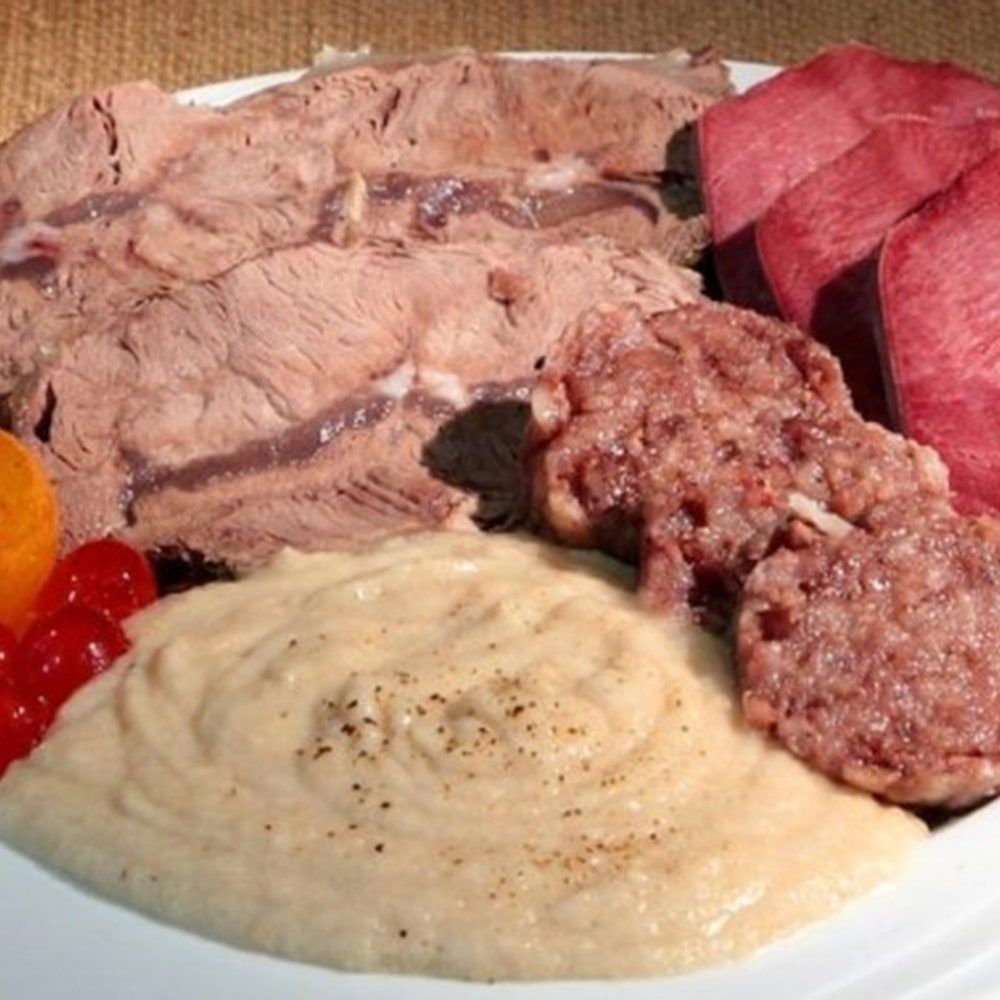
Lesso e pearà is the most ancient dish in the Veronese tradition, a preparation documented in cookbooks as far back as the medieval period. Lesso is boiled mixed meat (beef, chicken, tongue and sometimes pork), served with pearà, a sauce unlike anything else in Italian cooking: breadcrumbs toasted in beef marrow, then simmered very slowly for two to three hours with bone broth and an extraordinarily generous quantity of freshly ground black pepper (the name pearà is Veronese dialect for pepata, peppered). The result is a sauce of considerable body and intensity, simultaneously rich and sharp, that transforms the delicate boiled meats into something altogether more serious. It is served almost exclusively in winter in the best traditional osterie, and asking for it is a reliable way to signal to a Veronese restaurateur that you know what you are talking about.
Where to Eat in Verona
The best eating in Verona is concentrated in the historic centre, particularly in the streets between Piazza delle Erbe and Castelvecchio, and in the neighbourhood of Veronetta on the right bank of the Adige, which is the most local and least touristic part of the city. A few guidelines will serve you well. Avoid the restaurants with outside tables directly on Piazza Bra, directly adjacent to the Arena: they are expensive and tourist-oriented. Walk two or three streets away in any direction and the quality improves and the prices drop. Look for restaurants with handwritten daily specials, with wine lists weighted toward local producers, and with the kind of lunch menu (a fixed two or three course meal with wine included, in the range of twelve to eighteen euros) that is offered primarily for local workers and businesspeople rather than for tourists. This is where Verona actually eats, and it is where you should eat too.
Caffe Borsari and the Veronese coffee tradition. Verona has one of the finest coffee cultures in northern Italy, and the city's historic cafes are worth seeking out. Caffe Borsari, operating since 1825 in the Corso Porta Borsari, is the oldest and most elegant, with an interior of considerable nineteenth-century grandeur and an espresso that is consistently cited by local connoisseurs as the finest in the city. Standing at the bar for an espresso and a small pastry costs the standard Italian bar price. Sitting at a table carries a supplement, as it does in all historic Italian cafes. Choose accordingly.
Amarone, Valpolicella and Soave: The Wines of Verona
Verona is surrounded by some of the greatest wine-producing territory in Italy, and no visit to the city is complete without engaging seriously with at least one of the three great wine zones that begin almost at the city limits.
Amarone della Valpolicella DOCG
Amarone della Valpolicella is the wine that the world knows as the flagship of the Veronese tradition, and its production process is unlike that of any other great wine on Earth. The grapes, primarily Corvina (with additions of Corvinone, Rondinella and sometimes Molinara), are harvested in October and then laid on wooden racks in drying lofts for approximately 90 to 120 days, during which they lose between 30 and 40 percent of their weight through evaporation, concentrating their sugars, flavours and aromatic compounds to an extraordinary degree. The dried grapes are then pressed and fermented to complete dryness, producing a wine of 15 to 17 percent alcohol with a flavour profile of staggering complexity: dried cherry and plum, tobacco and leather, bitter chocolate and coffee, liquorice and spice, all underpinned by a structure of considerable tannic strength that allows the best wines to develop in bottle for twenty or thirty years.
The Valpolicella hills begin immediately west and northwest of Verona, and a half-day drive through the valley takes you through some of the most beautiful wine country in Italy: terraced hillsides planted with the dark-leaved Corvina vines, stone farmhouses converted into estate wineries, and views back toward Verona and Lake Garda that explain immediately why this particular valley produces wine of such character. Several of the leading estates, including Allegrini, Bertani, Masi, Quintarelli and Zenato, offer cellar visits and tastings by appointment, and an afternoon spent in the Valpolicella with a local guide and a small group is one of the finest wine experiences available anywhere in Italy.
Valpolicella Classico and Ripasso
Valpolicella Classico is the everyday wine of the Veronese table, a lighter, fresher expression of the same Corvina-based blend that produces Amarone, fermented conventionally rather than from dried grapes. At its best (and the best examples come from the Classico zone, the oldest part of the Valpolicella production area) it is a wine of genuine charm: light in colour, with a characteristic cherry and almond character, moderate tannins and a clean, slightly bitter finish that makes it an ideal partner for the meat-based cooking of the Veronese tradition. Valpolicella Ripasso occupies the middle ground between the two: conventional Valpolicella wine that is refermented on the dried grape skins left after pressing the Amarone, gaining additional body, concentration and complexity without losing the freshness that distinguishes Valpolicella from its more powerful sibling. It is the wine that offers the best of both worlds at a significantly more accessible price, and it is the one that most visitors to Verona end up drinking most of.
Soave Classico DOC
Soave Classico is the great white wine of the Veronese tradition, and one of the most underrated white wines in Italy. Made primarily from the Garganega grape on the volcanic basalt soils of the historic Classico zone east of Verona, the best Soave Classico wines have a mineral precision and a quietly complex flavour profile of white flowers, almonds, citrus zest and a characteristic bitter finish that sets them apart from almost every other white wine produced in the Veneto. The generic Soave sold internationally in large quantities is a pale and unrepresentative shadow of the Classico: seek out producers such as Pieropan, Inama, Gini and Prà, whose single-vineyard Classico wines represent everything the appellation is capable of at its best, and you will be drinking one of the finest Italian whites at a fraction of the price of a comparable Burgundy.
Common Tourist Mistakes in Verona
Visiting Juliet's House and calling that the cultural experience of the day. Juliet's House is a fourteenth-century building with a twentieth-century balcony associated with a fictional character created by a playwright who never visited Verona. It is entertaining and its atmosphere of collective romanticism is entirely genuine, but treating it as the primary cultural destination of a Verona visit while skipping the Arena, the Castelvecchio and the Arche Scaligere is a significant misallocation of your time. Go to Juliet's House by all means, spend twenty minutes there, and then spend the rest of the day with the real history of the city.
Eating on Piazza Bra. The restaurants lining the broad pavement of Piazza Bra, directly in front of the Arena, are aimed entirely at tourists and priced accordingly. They are not terrible, but they are significantly more expensive and significantly less interesting than the osterie two streets behind them. Walk away from the piazza and eat where the Veronese eat.
Ordering a generic Valpolicella when an Amarone is available. You are in Verona. The Amarone produced in the hills you can see from the city's highest points is one of the great wines of the world, and in the city where it is made, it is less expensive than it is anywhere else. Order a glass with your risotto all'Amarone and understand, for the first time, what all the fuss is about. Generic Valpolicella has its time and place, but that time is not dinner in Verona.
Spending only half a day. Verona is not Rome or Venice in terms of scale, and it is tempting to treat it as a half-day addition to a Lake Garda or Venice itinerary. Resist this temptation. The city reveals itself gradually and rewards time and unhurried attention. Two full days, with a half-day excursion to the Valpolicella on the second day, is the minimum that does justice to what the city has to offer.
Getting to and from Verona. Verona Valerio Catullo Airport (VRN) receives flights from across Europe and is 12 kilometres from the city centre. A private airport transfer to the historic centre takes 15 to 20 minutes with a fixed price and no queuing. Verona Porta Nuova station is a major hub on the Milan to Venice high-speed rail line, making the city easily accessible by train from both cities in under two hours.
Comments
No comments yet. Be the first to share your thoughts!
Leave a Comment
Your comment will appear after moderation.