 Michelle
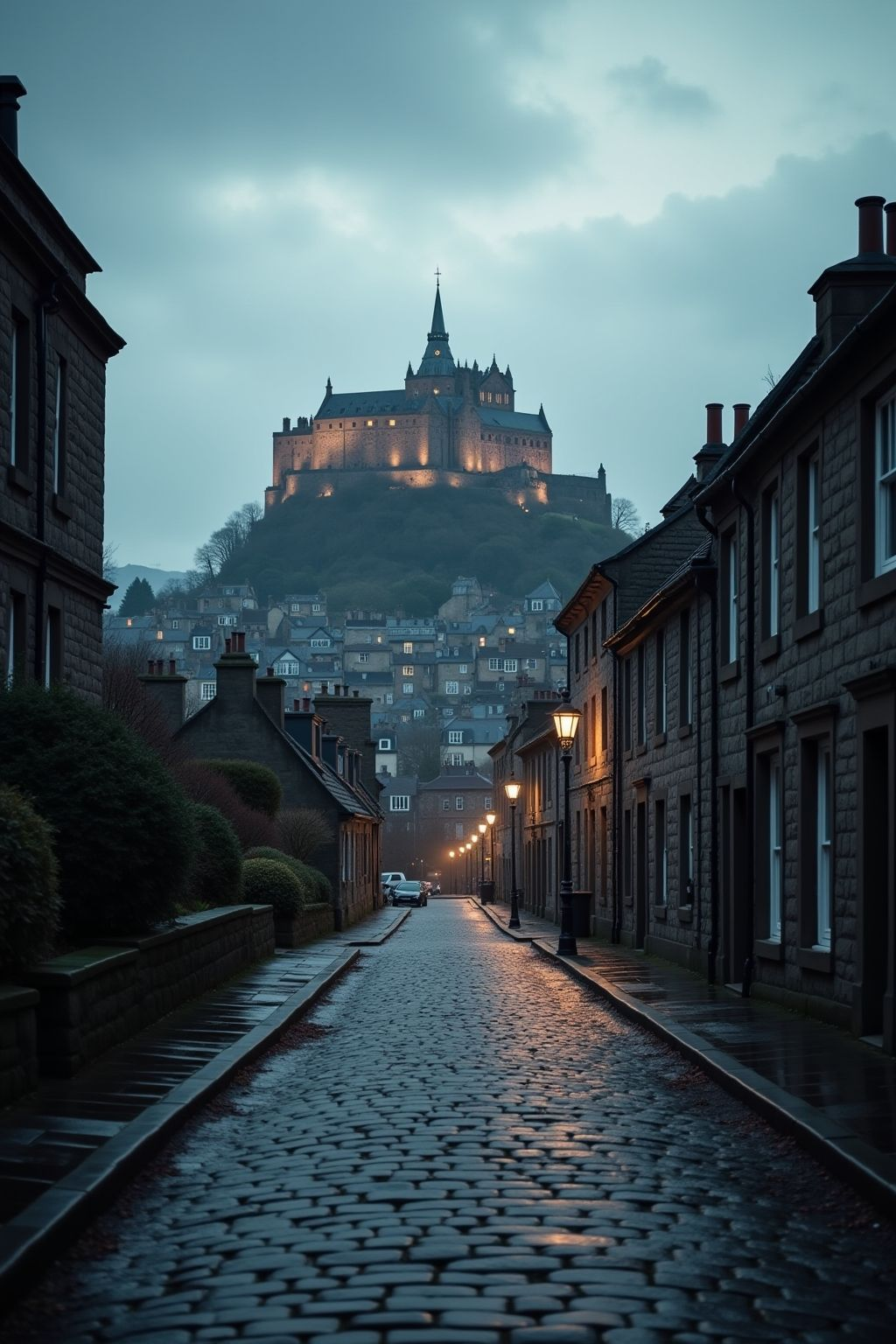
 There are cities whose beauty is gradual, revealing itself slowly over days of patient exploration. And then there is Edinburgh, which hits you immediately and comprehensively: the castle on its black volcanic rock against the sky, the spires and closes and tenements of the Old Town descending the ridge below it, the Georgian perfection of the New Town laid out in a grid of honey-coloured stone to the north, and everywhere the presence of a literary and philosophical tradition of such extraordinary fertility that this relatively small northern city has a reasonable claim to being the place where the modern Western mind was most decisively shaped. Edinburgh rewards every kind of traveller, and it never gives up all of itself at once.
Why Edinburgh Is Unlike Any Other British City
Edinburgh is the capital of Scotland, a country with its own legal system, its own educational tradition, its own church, its own Parliament restored in 1999 after nearly three centuries of union with England, and a cultural identity of such fierce and particular distinctiveness that the word Scottish applied to virtually anything immediately signals a specific set of qualities: directness, dark humour, a complicated relationship with sentiment, an extraordinary literary tradition, a landscape of dramatic and demanding beauty, and a food and drink culture that produces some of the finest whisky and game and seafood in the world. Edinburgh is the concentrated expression of all of this, and understanding the city at anything beyond a superficial level means understanding something of the Scotland that produced it.
The city's physical geography is inseparable from its character. Edinburgh is built on a series of volcanic plugs and ridges of ancient basalt that give it an almost theatrical urban topography: the castle on its sheer-sided rock, the Old Town descending the ridge along the Royal Mile, Calton Hill rising abruptly from the valley at the eastern end of the New Town, Arthur's Seat and the Salisbury Crags forming the dramatic backdrop of Holyrood Park to the southeast. The geology of Edinburgh is not merely scenery but the physical framework within which the city's history has been lived: the castle was built where it was because the rock was unassailable; the Royal Mile follows the ridge because the ridge was the most defensible high ground; the New Town was laid out in the valley to the north because the Old Town, by the mid-eighteenth century, had become so densely and appallingly inhabited that the city's wealthy and educated classes demanded somewhere new to live.
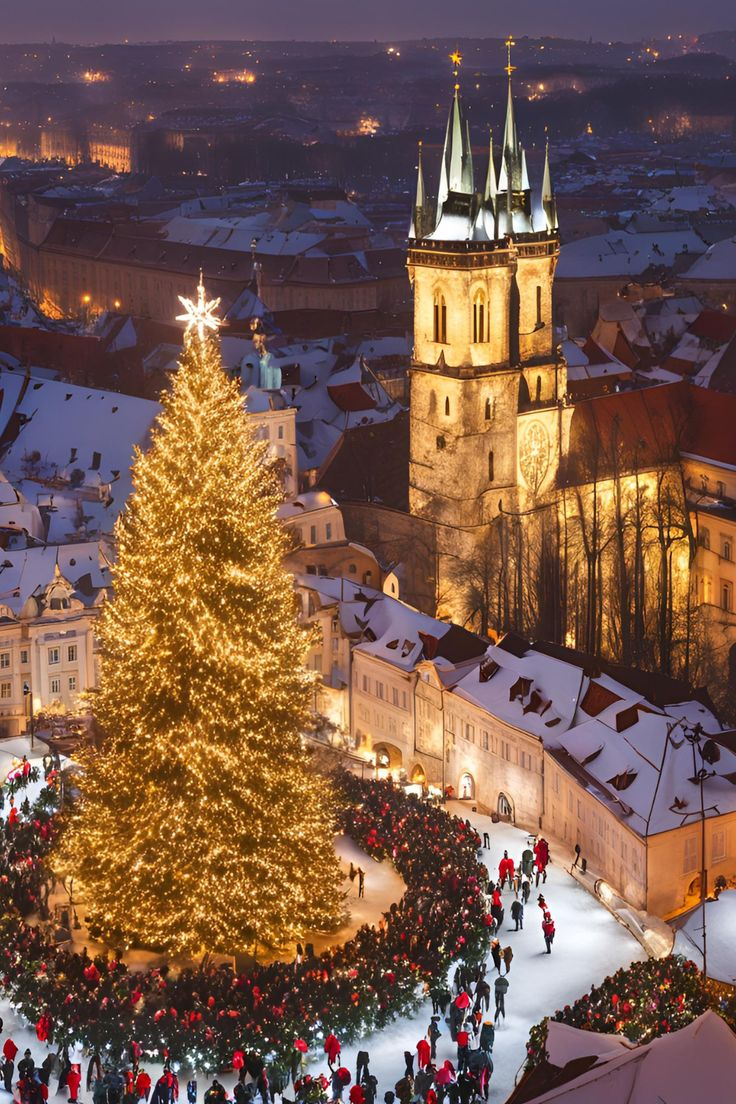
Best time to visit Edinburgh: May and June offer the finest balance of weather, day length and crowd levels. September and October are excellent, with the city at its most colourful and most intimate after the August festival frenzy. August itself, the month of the Edinburgh International Festival, the Fringe, the Book Festival and the Military Tattoo, is simultaneously the most culturally extraordinary and the most overwhelming time to visit: accommodation prices are at their highest, the city is full to capacity, and the sheer volume of events requires advance planning of considerable thoroughness to navigate well. Winter Edinburgh, from November to March, has a particular brooding beauty that the summer months cannot match, and the Christmas market in Princes Street Gardens is among the most atmospheric in Britain.
1. Edinburgh Castle and the Royal Mile: the Old Town at Its Most Dramatic
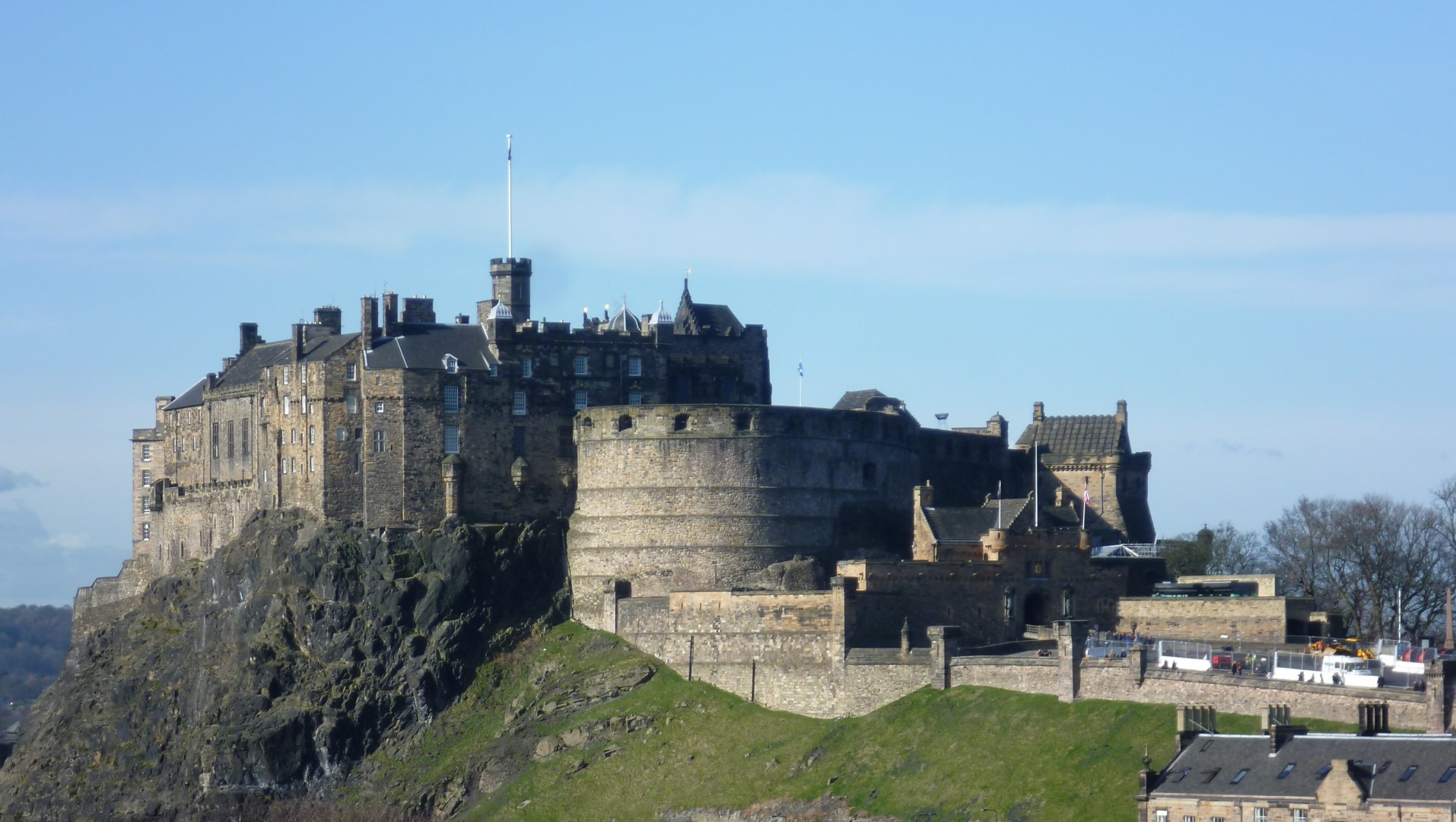
The Edinburgh Castle occupies the summit of Castle Rock, a 130-metre-high volcanic plug of basalt that has been a place of human habitation since at least the Iron Age and a fortification since the early medieval period. The castle as it stands today is a complex of buildings from various centuries, from the tiny St Margaret's Chapel, the oldest surviving building in Edinburgh dating from the twelfth century, to the Scottish National War Memorial and the Scottish Crown Room completed in the early twentieth century. Within it are the Scottish Honours, the crown jewels of Scotland, including the crown, the sceptre and the sword of state that are among the oldest regalia in the world, and the Stone of Destiny, the ancient coronation stone of the Scottish kings returned from Westminster Abbey in 1996 after an absence of seven hundred years.
The views from the castle esplanade and the ramparts are among the finest in the city, encompassing the full sweep of the Old Town below, the New Town beyond, and on clear days the Firth of Forth glittering in the distance and the hills of Fife on the far shore. The castle is open daily and tickets must be purchased in advance online, particularly during the summer months. The One O'Clock Gun, fired from the castle's Half-Moon Battery every day at precisely one in the afternoon except Sundays and certain public holidays, is one of Edinburgh's most reliable and most atmospheric daily events, heard throughout the Old Town and the lower reaches of the New Town and causing mild alarm to every first-time visitor who has not been warned about it.
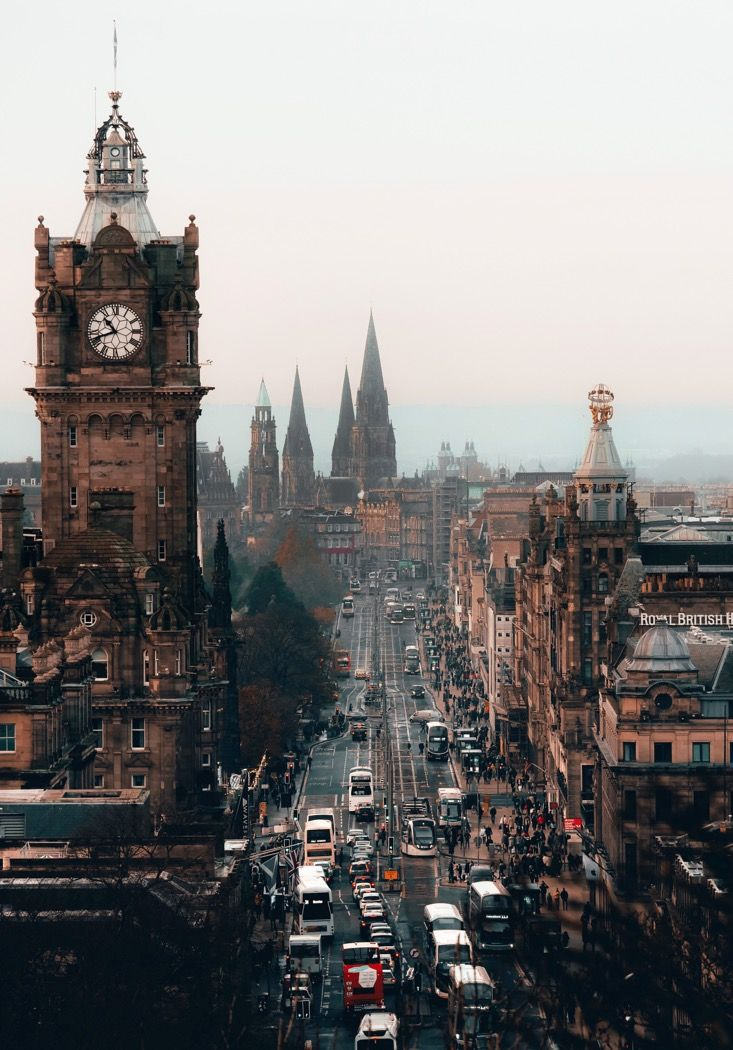
Below the castle, the Royal Mile descends the ridge of the Old Town in a sequence of connected streets (Castlehill, the Lawnmarket, the High Street and the Canongate) for approximately one mile from the castle esplanade to the gates of the Palace of Holyroodhouse. It is the spine of Edinburgh's Old Town and one of the most historically rich streets in Britain, lined on both sides with medieval tenements, Georgian townhouses, closes and wynds (narrow alleyways) that run off the main street to both north and south, churches of considerable architectural distinction, museums and visitor attractions of varying quality, and the full range of Scottish souvenir shops that are unavoidable but generally best treated as background scenery rather than primary destinations.
The closes that open off the Royal Mile, many of them accessible through low archways that give no indication of what lies within, are some of the finest and most atmospheric spaces in Edinburgh. Riddle's Court, in the Lawnmarket, is a beautifully preserved merchant's close with a courtyard dating from the sixteenth century. Brodie's Close, named for William Brodie, the respected city councillor and cabinet-maker who was also a burglar and who is thought to have inspired Robert Louis Stevenson's Dr Jekyll and Mr Hyde, descends steeply from the Lawnmarket into a sequence of lower closes. The Real Mary King's Close, beneath the Royal Mile, is a preserved series of streets and rooms from the seventeenth century that were buried when new buildings were constructed above them and can now be visited on guided tours that combine genuine historical interest with a certain theatrical relish for the more macabre aspects of Edinburgh's past.
2. Calton Hill, the Burns Monument and the City's Great Viewpoints
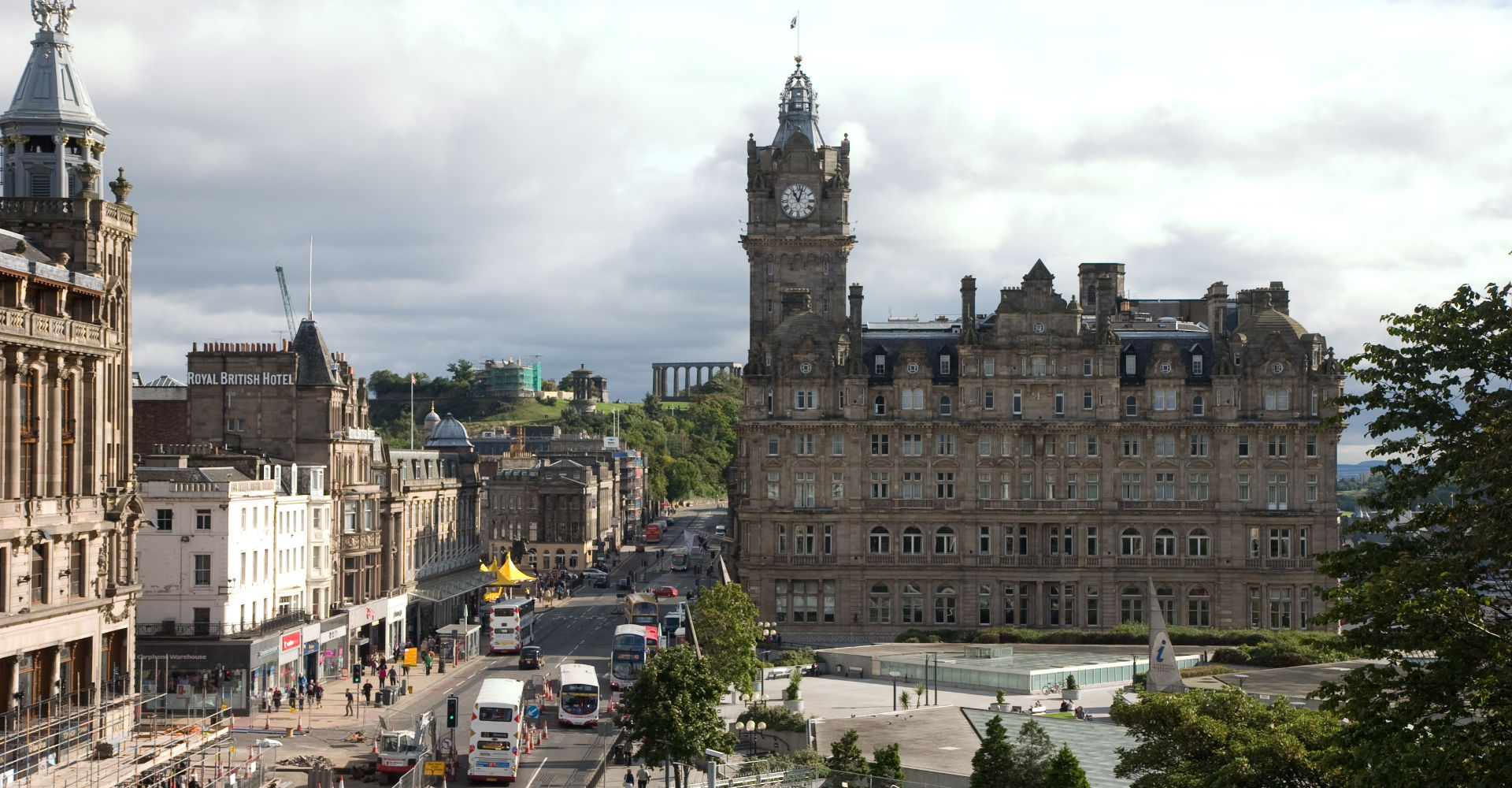
Calton Hill, the abrupt volcanic rise at the eastern end of Princes Street, is the most unusual and in many ways the most compelling hilltop in Edinburgh: a summit covered with monuments and public buildings of various styles and scales that together create one of the most extraordinary architectural landscapes in Britain, commanding a panoramic view over the Old Town, the New Town and the Firth of Forth that is simultaneously deeply familiar (it has been painted, photographed and described for two hundred years) and permanently surprising in its completeness and its beauty.
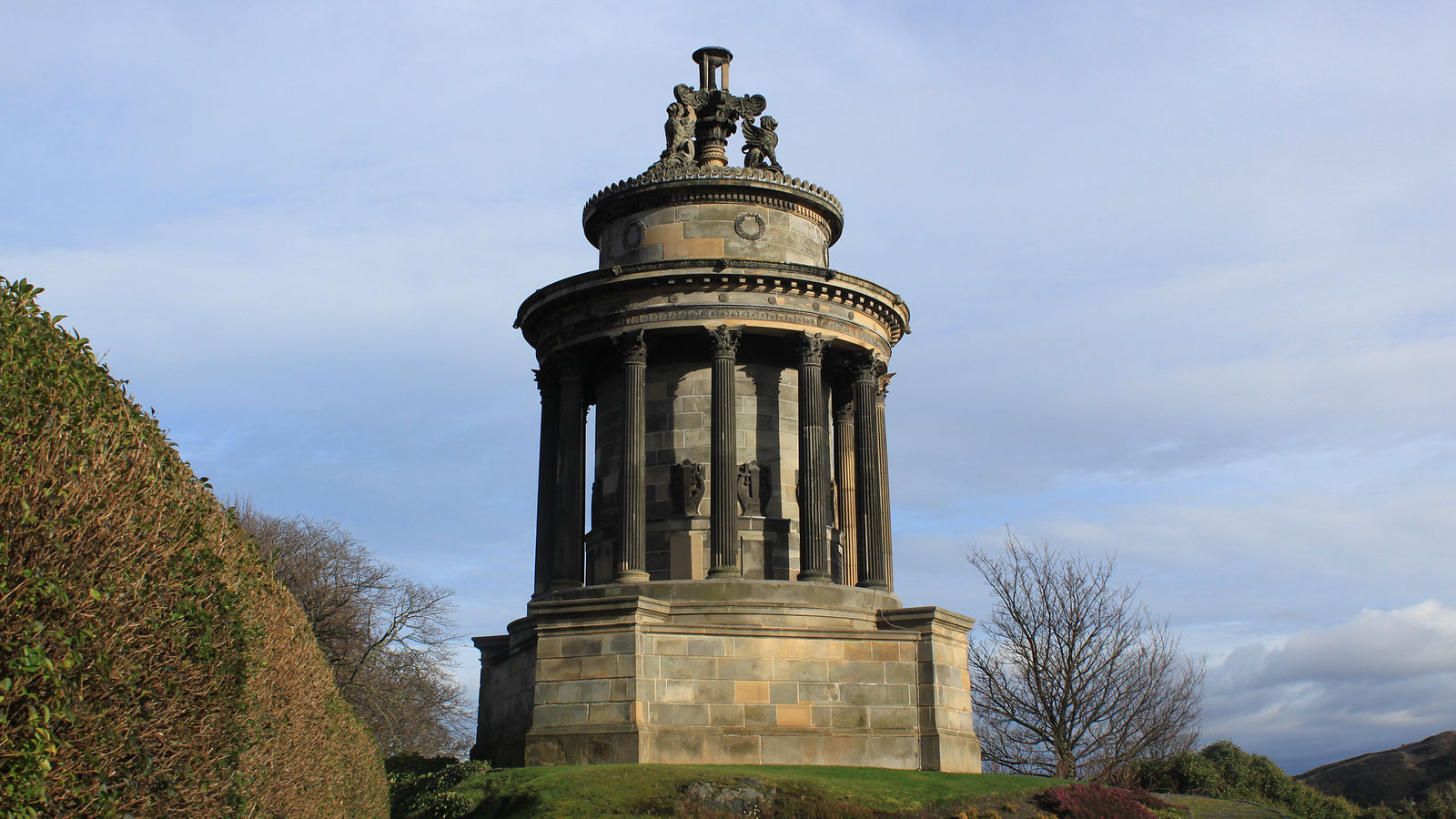
The Burns Monument, the circular Grecian temple designed by Thomas Hamilton and completed in 1830, is the most elegant of the hill's structures: a rotunda of twelve Corinthian columns on a stepped base, housing a marble bust of the poet by John Flaxman, positioned to face south towards the Firth of Forth. Robert Burns, Scotland's national poet, died in 1796 at the age of 37, and the outpouring of public grief and cultural identification that accompanied his death and the subsequent decades of his commemoration was one of the formative events in the definition of Scottish national consciousness. Burns Night, the celebration of his birthday on the 25th of January, remains one of the most widely observed national cultural events in the world, conducted in Scottish communities from Edinburgh to New Zealand with haggis and whisky and the recitation of his poetry in an atmosphere that manages to be simultaneously reverential and extremely convivial.
Also on Calton Hill, the National Monument is the most visually arresting structure on the summit: twelve columns of a Parthenon-scale classical temple that was begun in 1826 as a memorial to the Scottish dead of the Napoleonic Wars and abandoned in 1829 when the funds ran out after only twelve columns had been erected. The unfinished columns, standing against the Edinburgh sky with nothing connecting them, have been called Edinburgh's Disgrace and Edinburgh's Pride by various commentators in the two centuries since, and they have a quality of melancholy grandeur that is somehow more moving than a completed building would have been. The Nelson Monument, a telescope-shaped tower also on Calton Hill, can be climbed for a still higher vantage point over the city, and at the summit a time ball drops at precisely one o'clock every day to allow sailors in the Firth of Forth to set their chronometers, in a tradition maintained since 1853.
Below Calton Hill, on the slope facing the New Town, the Robert Burns Monument on Regent Road (a different and earlier monument, not to be confused with the one on the hill) is a small Grecian temple of 1830 by Thomas Hamilton that contains a marble statue of the poet. The hillside here, with its view over the New Town and the Firth of Forth, is particularly beautiful in the evening light when the stone of the city takes on a warm amber colour and the water in the distance turns to silver.
The finest viewpoints in Edinburgh: Calton Hill at sunset is the most celebrated, and for good reason: the combination of monuments, the 360-degree panorama and the quality of the evening light on the city below makes it genuinely special. Arthur's Seat in the early morning, before the walkers arrive and while the mist is still on the valley, is wilder and more solitary and in some ways more affecting. The Camera Obscura at the top of the Royal Mile, a Victorian optical instrument that projects a live moving image of the city onto a concave dish in a darkened room, offers a completely different and surprisingly enchanting perspective on Edinburgh's urban life. All three are worth your time.
3. Arthur's Seat: the Walk Above the City
Arthur's Seat, the 251-metre summit of an ancient volcano in Holyrood Park, is one of the most remarkable facts about Edinburgh: a genuine wild hill, complete with dramatic basalt cliffs, steep grassy slopes, boggy hollows and a summit that commands a 360-degree panorama of extraordinary scope, located within a mile of the Scottish Parliament and accessible on foot from the city centre in approximately thirty minutes. No other European capital has anything remotely comparable within its boundary, and the presence of Arthur's Seat is one of the most important contributors to Edinburgh's character: a permanent reminder that the city exists in a landscape of considerable geological drama, and that Scotland is never very far away even in the most urban contexts.
The ascent to the summit can be made by several routes of varying difficulty. The most commonly used approach starts at the St Margaret's Loch car park and follows a well-worn path up the southern flanks of the hill, a walk of approximately forty-five minutes to an hour depending on pace. A more interesting and slightly more demanding route ascends via the Radical Road, the path beneath the Salisbury Crags, the dramatic basalt cliff face that forms the western side of the hill, and then continues up the grassy slope to the summit. The Salisbury Crags themselves, a sheer basalt escarpment rising to about 45 metres, offer extraordinary views westward over the Old Town and are a significant destination in their own right: geologists come here because the Crags were the site of observations by the pioneering geologist James Hutton in the late eighteenth century that led directly to his formulation of the principles of uniformitarianism, the theory that the Earth's geological features were formed by the same slow processes observable today operating over an unimaginably long timescale. Hutton's Unconformity, the geological feature he identified at the base of the Crags, is one of the most important single locations in the history of science.
At the summit of Arthur's Seat, the view encompasses the full sweep of Edinburgh from the castle in the west to the Firth of Forth in the north, with the Bass Rock visible as a white dot in the distance on a clear day, the hills of Fife on the northern horizon and the Pentland Hills rising to the south. On a clear morning in spring or autumn, with the light sharp and the air cold and no one else on the summit, it is one of the finest urban walking experiences available anywhere in Britain. On a wet August Saturday it is crowded and slippery, and the midges that inhabit the boggy hollows below the summit are an experience that will recalibrate your understanding of the word pest. Time your ascent accordingly.
Common tourist mistakes in Edinburgh: Spending the entire visit on the Royal Mile and in Edinburgh Castle without venturing up Calton Hill, across to the Dean Village or up Arthur's Seat. Eating in the tourist-oriented establishments immediately adjacent to the castle or at the bottom of the Royal Mile, where the quality rarely justifies the prices. Missing the New Town entirely, which has some of the finest Georgian architecture in Britain and a street life of considerable quality in the area around Stockbridge and the Water of Leith walkway. And visiting without trying at least one properly made whisky in a bar that knows what it is doing, which in Edinburgh is genuinely not difficult to find.
4. The Literary City: Burns, Scott, Stevenson and the Scottish Enlightenment
Edinburgh has a literary tradition of extraordinary richness and longevity, and engaging with it is one of the most rewarding ways to understand the city. The Scottish Enlightenment of the eighteenth century, the intellectual movement centred on Edinburgh that produced David Hume, Adam Smith, James Hutton, Joseph Black and a generation of thinkers whose work reshaped economics, philosophy, geology and chemistry, was one of the most concentrated outpourings of intellectual energy in the history of Western civilisation. It was produced by a city that combined the economic benefits of the 1707 union with England with the educational infrastructure of Scotland's ancient universities and the social energy of a dense urban community of extraordinary intellectual ambition. The physical traces of this period are still present throughout Edinburgh: the New Town, designed by James Craig in 1766, was itself a product of Enlightenment urban thinking, a rational grid imposed on the north of the valley to provide the city's educated and professional classes with a living environment commensurate with their aspirations.
The Writers' Museum, tucked into Lady Stair's Close off the Lawnmarket on the Royal Mile, is a small but densely rewarding museum dedicated to three of Scotland's greatest writers: Robert Burns, Sir Walter Scott and Robert Louis Stevenson. Personal objects, manuscripts, portraits and exhibits related to each of the three tell the story of lives of remarkable productivity and in some cases remarkable drama. Scott's desk, the chair in which he wrote the Waverley novels that effectively invented historical fiction as a genre and made him the most widely read novelist in the world during his lifetime. Burns's handwritten manuscripts and the annotated copy of his poems that he sent to his friend Mrs Dunlop. Stevenson's travelling writing case and the chair he used when writing in Samoa in the last years of his life, when tuberculosis had driven him from Scotland to the South Pacific. The museum is free to enter and the collection is presented with quiet intelligence that does justice to its subjects.
The Scottish National Gallery, on the Mound between the Old Town and the New Town, houses one of the finest collections of European painting in Britain outside of London: works by Raphael, Titian, Rembrandt, Constable, Turner and the major figures of the Scottish painting tradition, including the extraordinary portraits of Henry Raeburn and the landscape paintings of the Edinburgh-born artist Alexander Nasmyth. Entry is free, and the gallery represents exceptional value in a city where many of the best things are entirely free. The Scottish National Museum on Chambers Street, also free, presents Scottish history and culture from the prehistoric period to the present with considerable intelligence and is worth at least half a day.
5. Whisky, Food and the Edinburgh Experience
No visit to Edinburgh is complete without a serious engagement with Scotch whisky, and Edinburgh is an excellent place to make that engagement. The Scotch Whisky Experience on the Royal Mile, while inevitably tourist-oriented, provides a solid introduction to the main whisky-producing regions of Scotland and the production process, and includes tasting of several expressions. More interesting, and more genuinely educational, are the specialist whisky bars of the city, where knowledgeable bar staff can guide a first-time single malt drinker through the extraordinary range of styles available: the maritime, peated whiskies of Islay; the lighter, floral Speyside expressions; the rich, sherried whiskies of the Highlands; and the distinctive island styles of Orkney and Skye.
The Bow Bar on the West Bow, just off the Grassmarket, is one of the finest whisky bars in Edinburgh, with a selection of several hundred bottles and staff who are genuinely knowledgeable and enthusiastic about their subject. It also serves excellent Scottish ales in a Victorian pub interior of considerable atmospheric quality. The Cadenhead's Whisky Shop on Canongate, the retail arm of the independent bottler of the same name, is the finest whisky shop in the city and an excellent place to buy a bottle to take home. Do not leave Edinburgh with a bottle of heavily marketed blended Scotch that is available at the same price in every airport in the world. Buy something specific, chosen with informed advice, and it will remind you of the city every time you open it.
Edinburgh's food culture has improved dramatically over the last two decades and now has several restaurants of genuine distinction, including multiple Michelin-starred establishments and an excellent informal dining scene in the areas around Leith, Stockbridge and the Grassmarket. Scottish produce at its finest, the Loch Fyne oysters, the Orkney beef, the Highland game, the North Sea fish and the cheeses of the Scottish dairy tradition, is available at its best in Edinburgh at prices that are typically more modest than equivalent quality in London. The Farmers' Market held on the Castle Terrace every Saturday is an excellent opportunity to encounter Scottish producers directly and to eat extremely well for a modest outlay.
Edinburgh is a city that gives you a great deal very quickly, and then, once you have processed what it gave you and returned to look more carefully, gives you considerably more. The Burns Monument on Calton Hill, with the city spread below and the Firth glittering beyond, is a good place to begin the second of those encounters. Stand there in the late afternoon, with the monument at your back and the whole extraordinary city in front of you, and ask yourself what it means that a country this size produced this much. The answer, whatever you conclude, will be worth the journey.
Getting to Edinburgh: Arriving and Getting Around
Edinburgh Airport (EDI) is located approximately 13 kilometres west of the city centre and receives direct flights from most major European cities and a growing number of intercontinental destinations. The Edinburgh Tram connects the airport to York Place in the New Town, passing through Haymarket and the West End, in approximately 35 minutes, with trams running every 8 to 10 minutes. The service is reliable, comfortable and covers the main hotel and attraction areas of the city at a flat fare that represents good value for the journey length.
For the most comfortable and direct arrival, particularly with luggage, late at night, or when travelling in a group, a private airport transfer to your hotel takes approximately 20 to 30 minutes at a fixed price and delivers you door to door without the need to navigate the tram system or handle luggage on public transport. Within the city, Edinburgh is a highly walkable capital for anyone reasonably fit: the Old Town, the New Town, Calton Hill and the Grassmarket are all accessible on foot, and the hills that define the city's topography are genuinely worth climbing for the views they provide rather than being merely obstacles. Lothian Buses provide comprehensive coverage of the wider city for anyone needing to reach areas beyond comfortable walking distance.
Comments
No comments yet. Be the first to share your thoughts!
Leave a Comment
Your comment will appear after moderation.