 Michelle
 There are cities that seduce you with their monuments, their art, their ancient stones. And then there are cities that seduce you through the stomach, that wrap you in the warm, intoxicating aroma of simmering ragù, of wine reducing in a pan, of freshly baked bread and aged cheese. Verona belongs to both categories, but for the travelling gourmand, it is the second that lingers longest in memory. The city of Romeo and Juliet is also a city of bigoli pasta thick as a finger and dressed with duck or donkey ragù, of horse meat stewed slowly in Amarone wine, of gnocchi flecked with mountain speck, of risotto perfumed with spiced pork, of a peppery bread sauce that has fed Veronese families for centuries, and of a wine so powerful and complex that it demands to be sipped in silence, with respect. This is a food and wine tour of Verona. Come hungry.
Bigoli, The Humble Noodle That Defines Verona
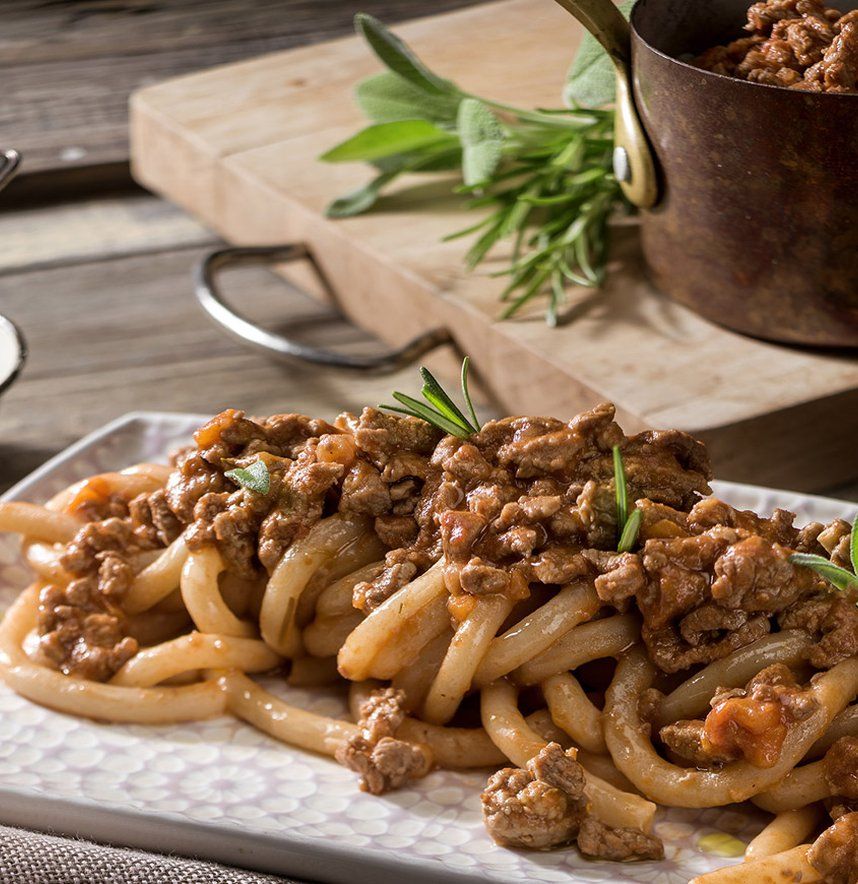
Bigoli is not a delicate pasta. It is not gossamer or refined or the sort of thing you might serve at a diplomatic banquet. Bigoli is the pasta of farmers, of coachmen, of people who worked the land and needed something substantial to sustain them through a long day in the fields. The dough is made from whole wheat flour, eggs, salt, and sometimes a dash of olive oil. It is forced through a special press called a bigolaro, a cylindrical tool with a die that produces thick, rough-textured strands with a slightly porous surface that eagerly absorbs sauce.
The classic condiment for bigoli in Verona is a ragù made from donkey meat, known as bigoli co la lengua d'aseno or bigoli con l'asino. Do not be alarmed. Donkey meat is lean, slightly sweet, and richly flavoured, closer to beef than to game but with a subtlety all its own. The meat is simmered for hours with soffritto of onion, carrot and celery, red wine, tomato passata, and a bouquet of bay leaves and rosemary. The result is a sauce that is dark, velvety, and deeply satisfying. A more common version uses duck or beef, and you will find these in most trattorias. But the donkey ragù is the authentic Veronese tradition, and the adventurous traveller should not miss it.
Where to find it. For an authentic bigoli con asino, head to Osteria Sottoriva near the Ponte Pietra or Trattoria al Pompiere in the historic centre. Both restaurants have been serving Veronese classics for generations and do not compromise on quality. Order a half-litre of the house Valpolicella to accompany it. Your meal will cost approximately 15 to 20 euros for the pasta course.
Pastissada de Caval, Horse Meat Stewed in Amarone
If bigoli is the everyday soul of Veronese cuisine, pastissada de caval is its ceremonial heart. This dish has ancient origins, with some food historians tracing it back to the 9th century and the invasion of the Hungarians, who are said to have introduced the technique of slow-cooking tough cuts of horse meat in wine. What is not disputed is that pastissada, from the verb pastissare meaning to knead or mix, is one of the most deeply flavoured dishes in the Italian repertoire.
The preparation is a lesson in patience. Horse meat, cut from the shoulder or thigh, is marinated overnight in Amarone della Valpolicella, the great red wine of the region. The next day, the meat is seared, then slowly braised for four to six hours with the Amarone marinade, onions, cloves, cinnamon, nutmeg, and sometimes a square of dark chocolate to enrich the sauce. The result is a stew of extraordinary depth, the meat so tender it falls apart at the touch of a fork, the sauce dark and glossy and fragrant with wine and spice.
Pastissada is traditionally served with soft polenta, the cornmeal porridge that is the peasant staple of northern Italy. The polenta acts as a sponge, soaking up the magnificent sauce. A glass of the same Amarone used in the cooking is the only appropriate wine pairing. Do not rush this dish. It demands to be appreciated slowly, with good company and a fire in the hearth.
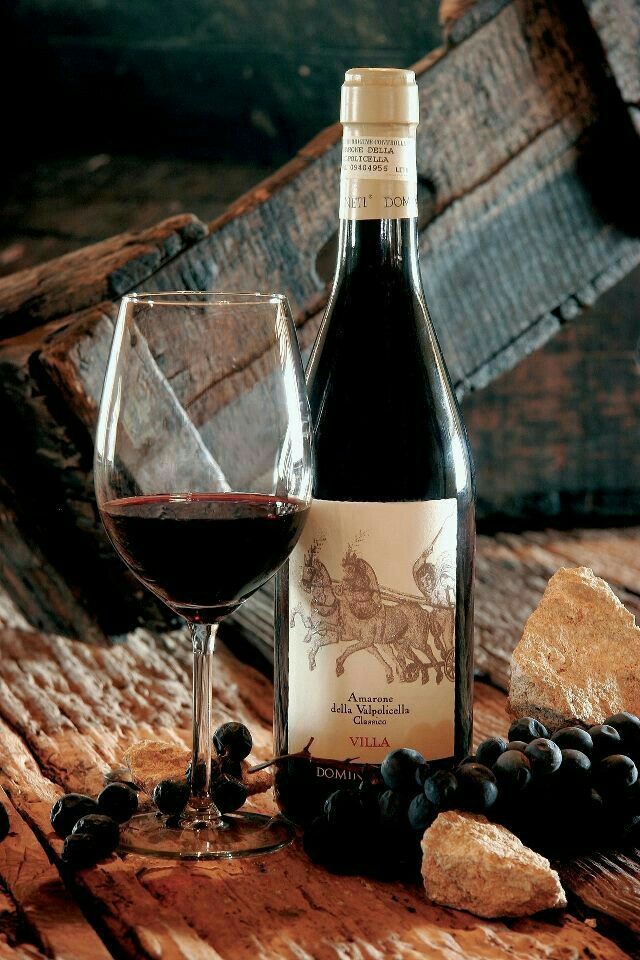
The wine note. Amarone della Valpolicella is a wine of formidable structure. It is made from Corvina, Rondinella, and Molinara grapes that are dried for three to four months after harvest, a process called appassimento which concentrates their sugars and flavours. The resulting wine is rich, full-bodied, and high in alcohol, often exceeding 15 per cent. Its flavours of dried cherry, chocolate, leather, and spice make it the perfect partner for pastissada's intensity. A bottle of good Amarone will cost you 30 to 50 euros in a restaurant. It is worth every cent.
Gnocchi, The Cloud-Like Dumplings of the Veneto
Veronese gnocchi are not the potato gnocchi of Rome or the ricotta gnocchi of Tuscany. They are made from stale bread, milk, and eggs, a recipe born of thrift that has become a beloved tradition. The bread is soaked in milk, squeezed dry, then mixed with eggs, grated Parmesan, parsley, and sometimes a little nutmeg. The mixture is formed into small quenelles, poached in salted water, and then baked in a buttered dish with more Parmesan and, in modern versions, with sheets of melted Monte Veronese cheese and slivers of smoked speck.
Speck is the smoked, juniper-flavoured prosciutto of the Alto Adige region, and its inclusion in this dish reflects the historical influence of the Austrian presence in the Veneto. The combination is sublime: the pillowy softness of the bread gnocchi, the smoky savour of the speck, the nutty richness of the melted cheese, and the crisp, golden crust that forms on top during baking. This is comfort food at its most sophisticated. It is a dish for a cold autumn evening, for a trattoria with checkered tablecloths and a bottle of Bardolino on the table.
Risotto, The Golden Grain of the Veneto
The Veneto region is the home of risotto. The Po Valley, with its network of irrigation canals and its humid, misty climate, produces some of the finest rice in Europe, including Carnaroli, Arborio, and Vialone Nano, each with its own starch content and cooking characteristics. Veronese risotto is distinguished by its use of tastasal, a preparation of minced pork seasoned with garlic, black pepper, white wine, and a pinch of salt. The name means taste-salt in Veronese dialect, referring to the practice of tasting the seasoning before proceeding.
The rice is toasted in butter or olive oil, then gradually moistened with hot broth while being stirred continuously, a process that releases the rice's starch and creates the creamy, flowing texture that defines a perfect risotto. The tastasal is added halfway through the cooking, infusing the rice with its savoury, porky flavour. At the very end, the risotto is mantecato, beaten vigorously with cold butter and grated Parmesan to create a final, glossy emulsion. The result is a dish that is simple in concept but demanding in execution. A great risotto should be all'onda, wavy, flowing, neither too dry nor too liquid, and should taste of the rice itself, the butter, the cheese, and the pork in perfect balance.
The secret to a perfect risotto is patience. Do not rush the broth. Do not stop stirring. And never, under any circumstances, use pre-grated Parmesan. The cheese must be grated fresh, just before the mantecatura, or the emulsion will fail. This is not snobbery. It is physics.
Lesso e Pearà, A Sauce Born of Poverty and Genius
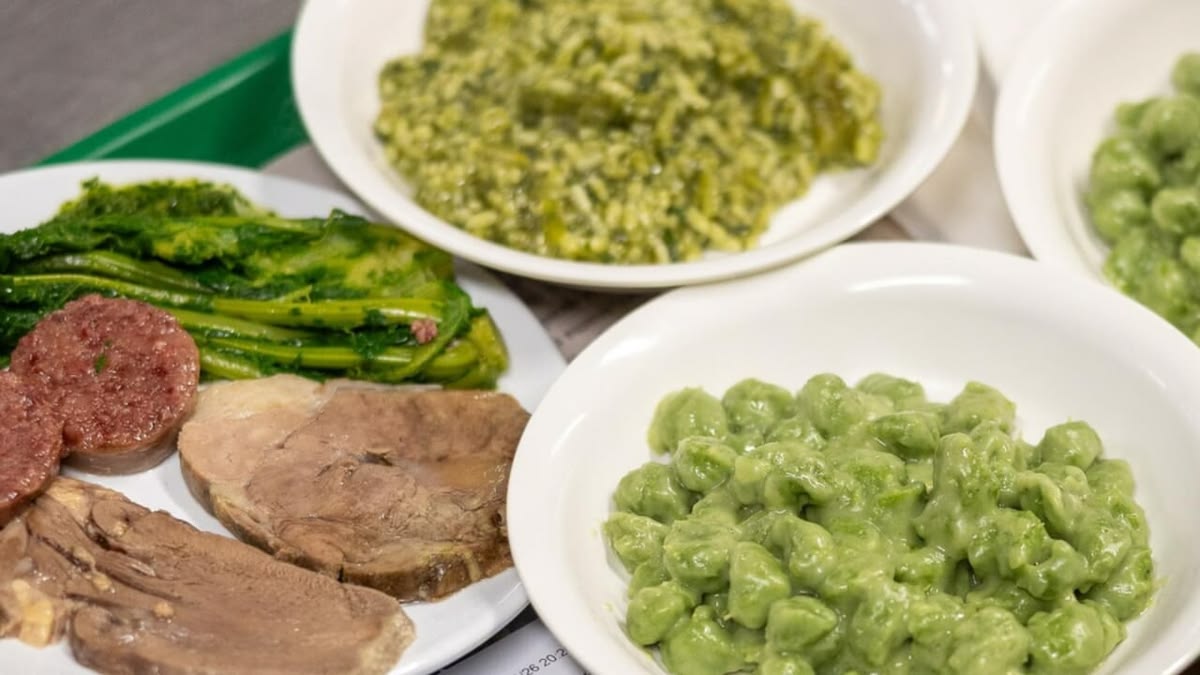
Lesso e pearà is one of those dishes that seems improbable on paper but becomes unforgettable on the tongue. Lesso is boiled meat, traditionally a selection of beef cuts, chicken, cotechino sausage, and sometimes tongue or capon, simmered for hours in a simple broth with carrot, celery and onion. The meat is tender, mild, and frankly not very exciting on its own. The magic lies in the pearà.
Pearà is a sauce made from beef broth, stale breadcrumbs, black pepper, and bone marrow. That is all. But when prepared correctly, it is a revelation. The breadcrumbs are toasted until golden, then simmered in the broth until they dissolve into a thick, porridge-like consistency. The bone marrow is added at the end, melting into the sauce and giving it an unctuous, velvety richness. And the pepper, generous, almost aggressive quantities of black pepper, provides a warming, sinus-clearing heat that cuts through the richness of the meat.
The ritual of eating lesso e pearà is simple. Slice a piece of boiled meat. Spoon a generous amount of pearà over it. Eat. Repeat. The dish is a survival from an era when nothing was wasted, when every part of the animal was used, when a sauce made from stale bread and broth could transform humble boiled meat into a feast. It is not glamorous. It is not the sort of dish you will see on Instagram. But it is authentic, it is delicious, and it is Veronese to the bone.
Where to order it. Lesso e pearà is increasingly rare on restaurant menus, as it requires time and skill to prepare properly. Seek it out at Trattoria Al Pompiere, Osteria da Ugo, or Ristorante Maffei. Most restaurants serve it only in the colder months, from October through March. Call ahead to confirm availability.
Torta Ratafià, The Fragrant Cake of Almonds and Chocolate
After the richness of the pasta, the stew, the risotto, and the pearà, you will need something light and fragrant to finish. Torta ratafià is that something. This traditional Veronese cake is made with almonds, dark chocolate, butter, sugar, eggs, and ratafià liqueur, a sweet, aromatic spirit produced from sour cherries, cloves, and cinnamon. The cake is dense but moist, intensely almond-flavoured, and perfumed with the spice and cherry notes of the liqueur.
The origins of the cake are uncertain, but it has been a Veronese specialty for centuries. Some stories connect it to the monastery of San Zeno, where the monks cultivated almonds and produced ratafià liqueur. Others trace it to the noble families of the city, who served it at weddings and banquets. What is certain is that torta ratafià is the perfect ending to a Veronese meal, not too sweet, not too heavy, fragrant without being cloying. It is traditionally accompanied by a glass of Recioto della Valpolicella, the sweet, dessert version of the region's great wine.
Recioto is the original wine of the Valpolicella zone, a sweet wine made from dried grapes that was known to the Romans and enjoyed throughout the Middle Ages. It is only in the past century that the dry version, Amarone, has surpassed it in popularity. Recioto is rich, luscious, and complex, with notes of dried fig, raisin, cherry jam, and dark chocolate. Paired with torta ratafià, it creates a harmony of almond, cherry, chocolate, and spice that will end your meal on a note of pure pleasure.
The Wines of Verona, A Liquid Tour of the Territory
No food tour of Verona is complete without a deep dive into the wines that have made this corner of the Veneto famous throughout the world. The Valpolicella zone, just north of the city, is one of Italy's most important wine regions, producing four distinct styles from the same grape varieties.
Valpolicella Classico
This is the everyday table wine of the region. Light, fresh, and ruby-red, with notes of sour cherry and violet. It is the perfect accompaniment to bigoli, gnocchi, and lesso. Do not expect complexity. Expect drinkability. A good Valpolicella Classico should be served slightly cool, at around 16 degrees Celsius, and should cost no more than 10 to 15 euros.
Valpolicella Ripasso
Ripasso is a fascinating wine. It is made by taking the young Valpolicella wine and passing it over the skins and lees of Amarone, a process that adds body, alcohol, and complexity. The result is a wine that sits between Valpolicella and Amarone in style, richer than the former, more approachable than the latter, with flavours of dried cherry, plum, and a hint of tannin. Ripasso is an excellent value, typically costing 15 to 25 euros per bottle.
Amarone della Valpolicella
Amarone is the king. As mentioned, the grapes are dried for months before fermentation, concentrating sugars and flavours. The wine is aged for at least two years in oak, often longer, and the result is a wine of immense power, complexity, and longevity. Notes of dried cherry, blackberry, chocolate, leather, tobacco, and spice. Amarone demands food of equal intensity: pastissada de caval, braised beef, aged cheeses. It also demands patience. A young Amarone can be tannic and closed; give it ten years in the cellar, and it will reward you.
Recioto della Valpolicella
The original sweet wine of the region. The fermentation of Recioto is stopped before all the sugar is converted to alcohol, leaving a wine that is rich, sweet, and low in alcohol compared to Amarone. It is the perfect dessert wine, especially paired with torta ratafià or aged blue cheese. Recioto is not widely exported; you will find it more easily in Verona than in London or New York. Take advantage of the opportunity.
Soave and Bardolino
Beyond the Valpolicella zone, Verona produces two other notable wines. Soave, from the hills east of the city, is Italy's most famous white wine, a crisp, mineral, almond-scented white made from Garganega grapes. It is perfect with fish, white meats, and as an aperitivo. Bardolino, on the shores of Lake Garda, produces a light, cherry-scented red that is the perfect summer wine, best served slightly chilled with a plate of salumi and cheese.
A Dedicated Day Tour, Eating and Drinking Through Verona
The following itinerary is designed for the serious gastronome. It is not a race. It is a leisurely, deliberate exploration of the city's best flavours, paced to allow digestion and appreciation. You will walk, you will eat, you will drink, and you will walk again. Wear comfortable shoes and come with an empty stomach.
Morning, Arrival and Coffee
Begin your day by arriving in Verona without stress. The most comfortable way to reach the city from Verona Valerio Catullo Airport (VRN) is by pre-booking a private transfer with Airport Connection. Your driver will meet you at arrivals and deliver you directly to your hotel in the city centre. Door to door, no waiting, no dragging luggage onto buses.
Start your food tour with a proper Italian breakfast: a cappuccino and a freshly baked cornetto at a historic cafe. The Caffè Borsari on Corso Porta Borsari has been serving Veronese since 1911. Stand at the bar, drink your coffee quickly, and watch the city wake up. This is not a meal to linger over; it is a ritual to be observed.
Late Morning, Mercato di Piazza delle Erbe
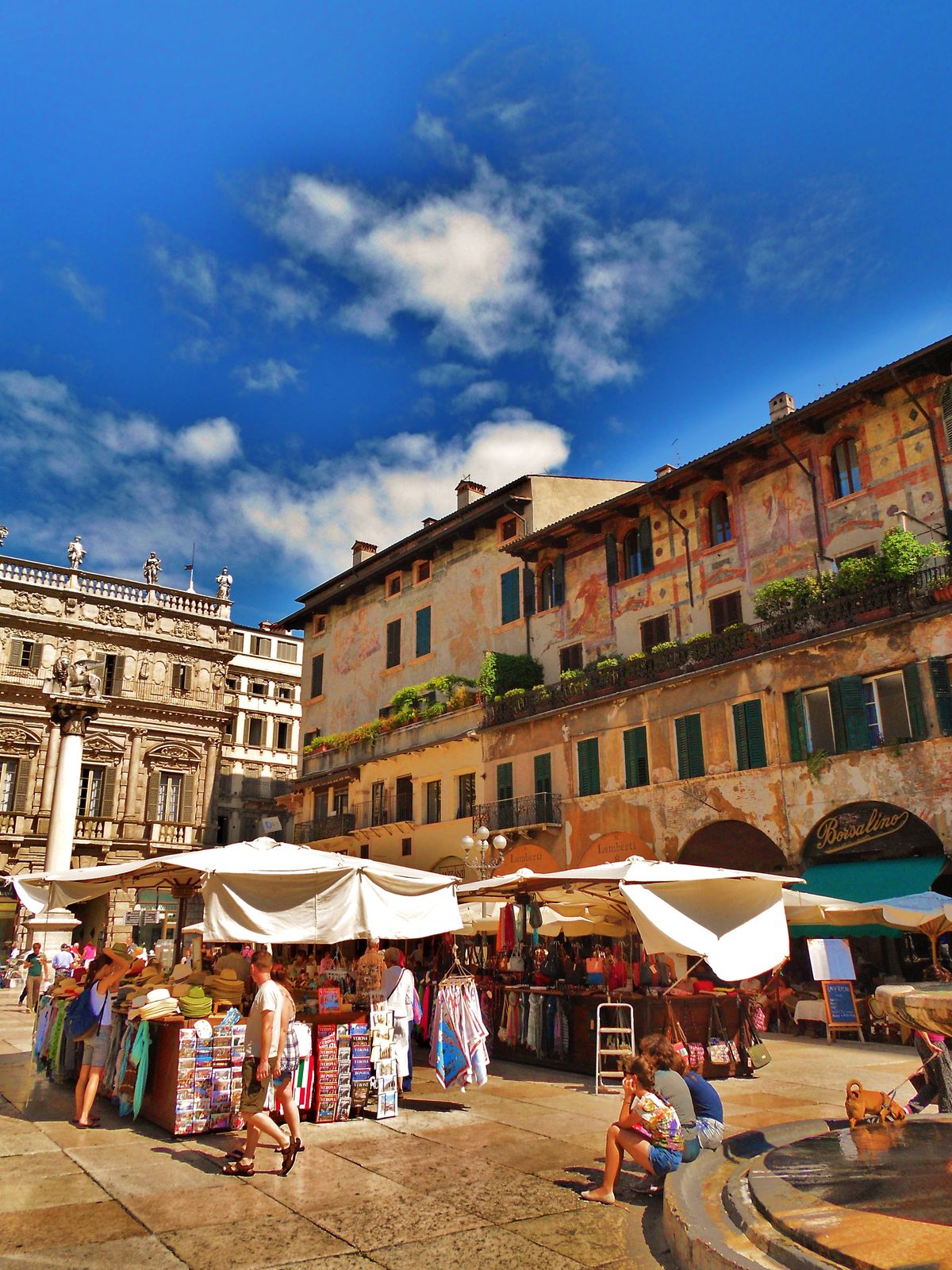
Walk to Piazza delle Erbe, the ancient forum of Roman Verona. The market here has operated continuously for over two thousand years. Today, you will find stalls selling everything from fresh vegetables and fruit to cheeses, salamis, olives, and honey. Sample Monte Veronese cheese, both fresh, soft and milky, and aged, hard and nutty. Taste Soppressa veronese, a slow-aged salami flavoured with black pepper and garlic. Buy a small piece of each and eat them standing in the piazza, surrounded by the medieval frescoes of the Mazzanti houses.
Lunch, A First Taste of Bigoli
For your first proper meal, seek out a trattoria that specialises in pasta. Osteria Sottoriva, tucked beneath the arches of the Ponte Pietra, is a good choice. Order bigoli con asino or, if you prefer, bigoli con anatra, duck. Drink a carafe of the house Valpolicella. Do not be shy. The wine is inexpensive and meant to be drunk with pleasure, not reverence. After the pasta, if you still have room, order a small portion of gnocchi with Monte Veronese cheese and speck. The two dishes together will give you a complete picture of Verona's pasta traditions.
Early Afternoon, A Wine Tasting in the City
Verona's historic centre contains several enotecas where you can taste the region's wines without travelling into the countryside. Enoteca Fontana del Vin on Via San Giovanni in Valle offers flights of Valpolicella, Ripasso, Amarone, and Recioto, served with small plates of cheese and salami. The staff are knowledgeable and happy to explain the differences between vintages and producers. Allow at least an hour for this tasting. Do not rush. Wine tasting is not a competition; it is an education.
Late Afternoon, Pastissada and Polenta
By late afternoon, you will be ready for the main event. Dinner in Verona is traditionally served from 7:30 PM onward, but many osterias begin serving earlier. Trattoria Al Pompiere, located near the Piazza dei Signori, is the classic destination for pastissada de caval. Order it with soft polenta and a glass of the restaurant's best Amarone. The stew will be dark, rich, and intensely satisfying. Take your time. This is a dish to be eaten slowly, with conversation and appreciation.
Evening, Dessert and a Digestif
After pastissada, you will need something light. Walk to the Ponte Pietra and cross the river. On the far side, near the Roman theatre, you will find gelaterie serving artisanal gelato. Seek out flavours that reflect the region: fico, fig, and mandorla, almond, or mascarpone with crumbled amaretti biscuits. Then, for a true Veronese digestive, order a glass of Recioto della Valpolicella or, if you prefer something stronger, a grappa of Amarone pomace. The grappa will be fierce, aromatic, and warming, a perfect end to a day of feasting.
A note on pacing. Do not attempt to eat everything in a single day. The itinerary above is designed for a full day of eating, but you can spread it over two or three days if you prefer. The quality of your experience will be higher if you do not force yourself to finish every course. Leave room for spontaneity. The best meals in Verona are often the ones you do not plan: a glass of wine at a random enoteca, a plate of salumi at a bar you stumbled into, a conversation with a local who recommends a restaurant not in any guidebook.
Transport Tips, Arriving in Verona for Your Food Tour
From Verona Valerio Catullo Airport (VRN)
Verona Airport is located approximately twelve kilometres from the city centre. A private transfer with Airport Connection takes approximately twenty minutes and delivers you directly to your hotel. This is the most comfortable option, especially if you are carrying luggage or arriving after a long flight. The fixed price is calculated instantly and includes meet-and-greet service at arrivals.
From Venice Marco Polo Airport (VCE)
If you are combining Verona with a visit to Venice, a private transfer from Marco Polo Airport to Verona takes approximately one hour and forty minutes. This is a convenient way to move between the two cities without navigating the train system. Your driver will handle your luggage and deliver you directly to your destination.
From Verona Porta Nuova Train Station
If you arrive by train, the station is located in the city centre. A taxi to most hotels in the historic centre takes approximately ten minutes. Alternatively, the city buses run frequently, but if you have luggage, a taxi or pre-booked car transfer is strongly recommended.
How to book your transfer with Airport Connection. Select your pickup location, Verona Airport, Venice Airport, or another starting point. Enter your destination in Verona. Specify passengers and luggage. The system calculates a fixed price instantly. Confirm your booking online, and you will receive a confirmation email with your driver details and meeting instructions. Book at least forty-eight hours in advance for the best availability.
Book Your Transfer →
Conclusion, A City to Be Eaten, Not Just Seen
Verona is beautiful. Its Roman arena, its medieval piazzas, its bridges over the slow-flowing Adige, these are reasons enough to visit. But the true Verona, the Verona that lingers in the memory long after the photographs have faded, is the Verona of the table. It is the Verona of bigoli, of pastissada, of pearà, of torta ratafià, of Amarone opened in good company. It is a city to be eaten, not just seen. And it is waiting for you, with its pots simmering and its wine glasses filled, to come and taste it for yourself.
Comments
No comments yet. Be the first to share your thoughts!
Leave a Comment
Your comment will appear after moderation.