 Michelle
 Every region of Germany has its own culinary identity, its own traditions, its own particular relationship with the land and the seasons. But Bavaria stands apart. It is louder, warmer, more theatrical and more emphatically itself than any other German state, and nowhere is that character more visible than at the table. Bavarian food is not subtle. It is generous, robust, deeply satisfying and firmly rooted in a culture that has always known how to celebrate being alive: with a long table, good company, a soft pretzel the size of a small wheel, and a litre of cold wheat beer in a garden full of chestnut trees. If you are visiting Bavaria for the first time, or returning for the fifth, this is your essential guide to eating and drinking the way the Bavarians do it.
1. Weisswurst: The Sacred Morning Sausage and the Rule of Noon
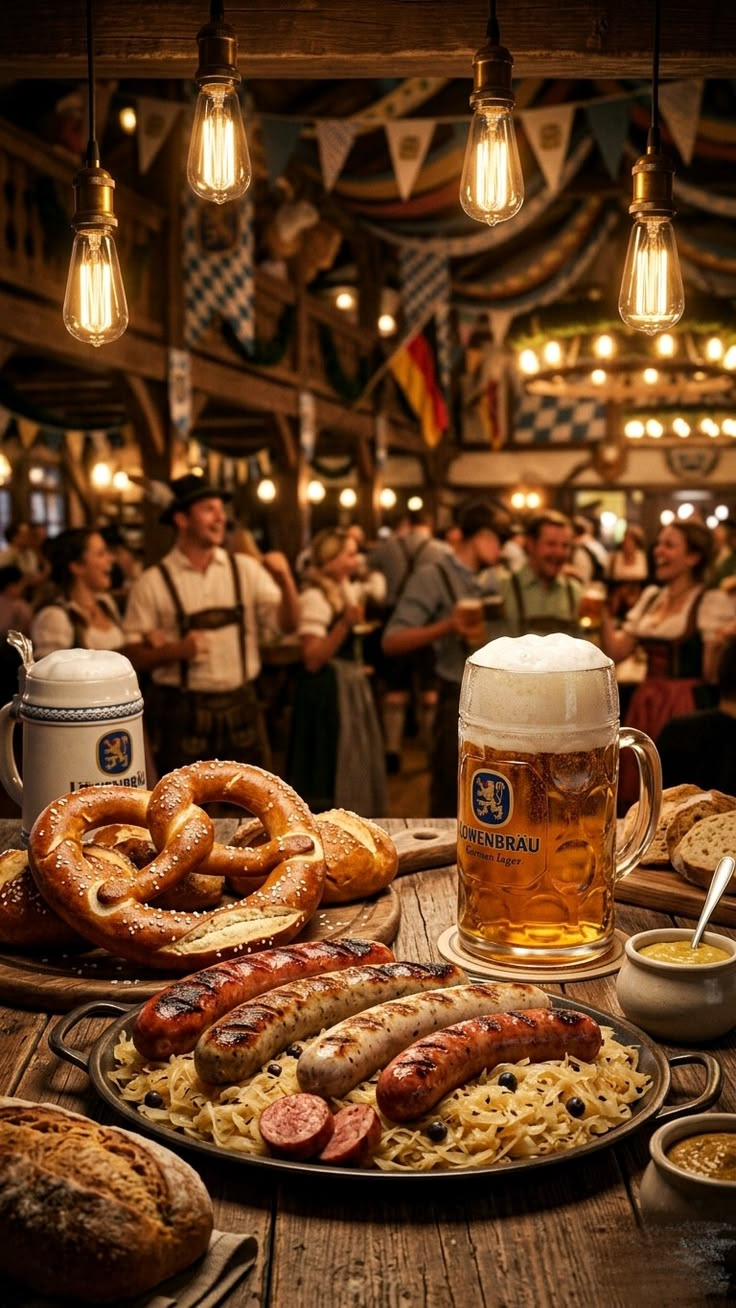
There is no more quintessentially Bavarian experience than sitting down in a Munich breakfast room at nine in the morning and ordering weisswurst. These pale, delicately flavoured white sausages are one of the great regional specialities of German cooking and one of the most distinctive breakfast dishes in Europe: a food so embedded in local identity that the Bavarians have an informal term for the boundary of their cultural world, the Weisswurstaquator, the Weisswurst Equator, beyond which the sausage is allegedly no longer made or understood properly.
The sausage itself is made from finely minced veal and fresh pork back bacon, seasoned with a blend of parsley, lemon, mace, onions, ginger and cardamom, and stuffed into a pork casing without being cured or smoked. The result is a pale, almost white sausage of remarkable delicacy and freshness, with a flavour that is light, herby and gently spiced rather than heavy or meaty. They are brought to the table in a bowl of hot water to keep them warm, typically two per serving, and they are eaten in a very specific way that visitors often get wrong: you do not peel the skin and eat it. You either cut the sausage lengthways and scoop out the filling with a spoon, or you use the Bavarian method known as zuzeln, holding one end of the sausage to your lips and sucking the filling out of the skin in a single, efficient motion. The zuzeln method is considered more traditional and is practised with great unselfconsciousness by Bavarians of all ages and social backgrounds.
The accompaniments are fixed and non-negotiable: a soft pretzel and a small pot of sweet mustard (susser Senf), a mild, slightly honeyed Munich mustard that is the only condiment permitted in the company of weisswurst. Never use spicy or coarse-grained mustard here. The Bavarians will notice, and they will judge.
And then there is the rule of noon. Weisswurst must be eaten before twelve o'clock midday. The tradition originated in the days before refrigeration, when the sausages were made fresh each morning and needed to be consumed before the heat of the day caused them to spoil. Refrigeration has long since made this concern irrelevant, but the tradition has persisted with a fervour that suggests it was never really about food safety at all, but about identity. Eating weisswurst after noon in Bavaria is a social transgression of meaningful proportions. Order them early, eat them properly and you will immediately understand something important about what it means to be Bavarian.
Where to eat the best weisswurst in Munich: The Weisses Brauhaus on the Tal, just a short walk from Marienplatz, is the most celebrated destination for weisswurst in Munich and has been serving them to an appreciative public since 1901. Arrive before 10am on a weekend to secure a table. Order a Weissbier with your sausages: the combination of the light, yeasty wheat beer with the delicate herby sausage is one of those pairings that seems almost too obvious until you try it and realise it is simply perfect.
2. Pretzels, Obatzda and the Art of the Bavarian Snack
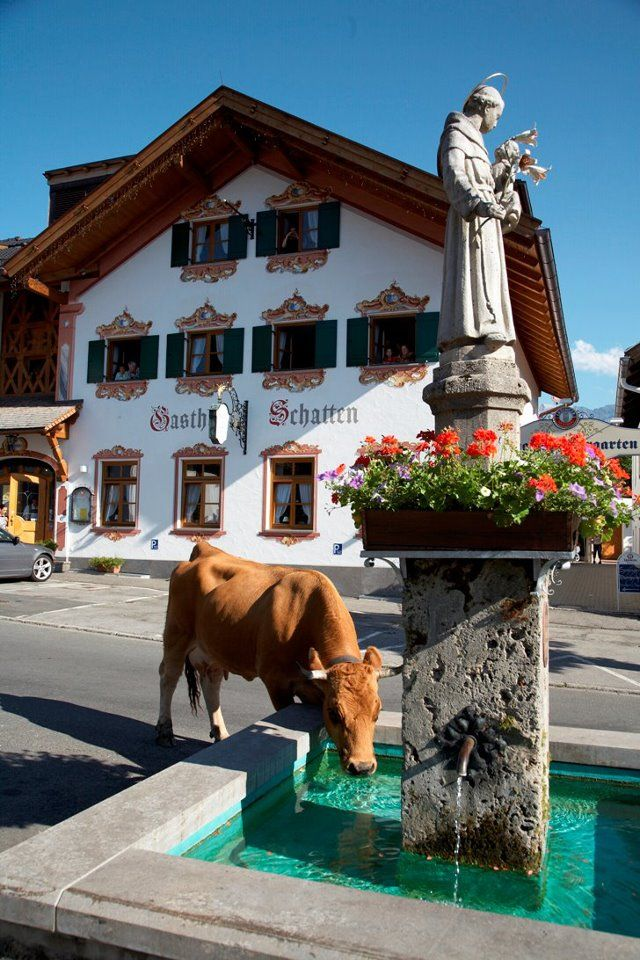
The Bavarian pretzel, or Brezel, is one of those foods that exists in pale imitations all over the world and in its authentic form only in Bavaria and a handful of neighbouring regions. The difference is significant. A genuine Bavarian pretzel is large, substantial and deeply satisfying: a thick, doughy loop of bread dough, dipped briefly in a lye solution before baking, which gives it the distinctive dark, shining crust and the uniquely chewy, slightly alkaline flavour that is impossible to replicate with baking soda or any other shortcut. The exterior is firm and glossy, scattered with coarse salt crystals; the interior is soft, yielding and warm. It should be eaten fresh, ideally still faintly warm from the bakery, and it should be eaten with butter or with obatzda.
Obatzda is perhaps the most beloved of all Bavarian snacks and one of the least known outside the region. It is a rich, creamy cheese spread made by combining ripe camembert or brie with softened butter, cream cheese, a generous amount of paprika, a splash of beer and finely diced onion, blended together until smooth and spreadable. The result is intensely flavoured, warmly spiced and deeply satisfying: something between a cheese and a dip, rustic and honest and extraordinarily good when piled generously onto a freshly baked pretzel and eaten in a beer garden with a cold Hefeweizen in front of you. Some versions add caraway seeds or a touch of chives. All versions are worth eating.
Pretzels are also the default accompaniment to beer in Bavaria, served in baskets at the centre of beer garden tables as readily as bread is placed on tables in Italy or France. You do not need to order them separately in many establishments: they arrive as a matter of course, and they disappear with equal speed. In Nuremberg, the pretzel tradition extends to a distinctive small, harder version that is sold from street stalls and bakeries throughout the old city and is perfect for eating while walking. The Bavarians are not precious about their pretzels. They eat them standing at the bakery counter, sitting at the beer garden table, on the train, at the Oktoberfest and at the breakfast table alongside weisswurst. They are the bread of Bavaria, as essential and as taken for granted as the beer itself.
Common tourist mistake: Accepting the small, hard, over-salted pretzel sticks served at bars and hotels as representative of what a Bavarian pretzel actually is. They are not. Make the short walk to a proper Bavarian bakery (Backerei) and buy a freshly baked large pretzel at the counter. The difference in quality is not small: it is the difference between an imitation and the real thing, and it costs almost nothing to get it right.
3. Schweinshaxe: The Great Roasted Pork Knuckle
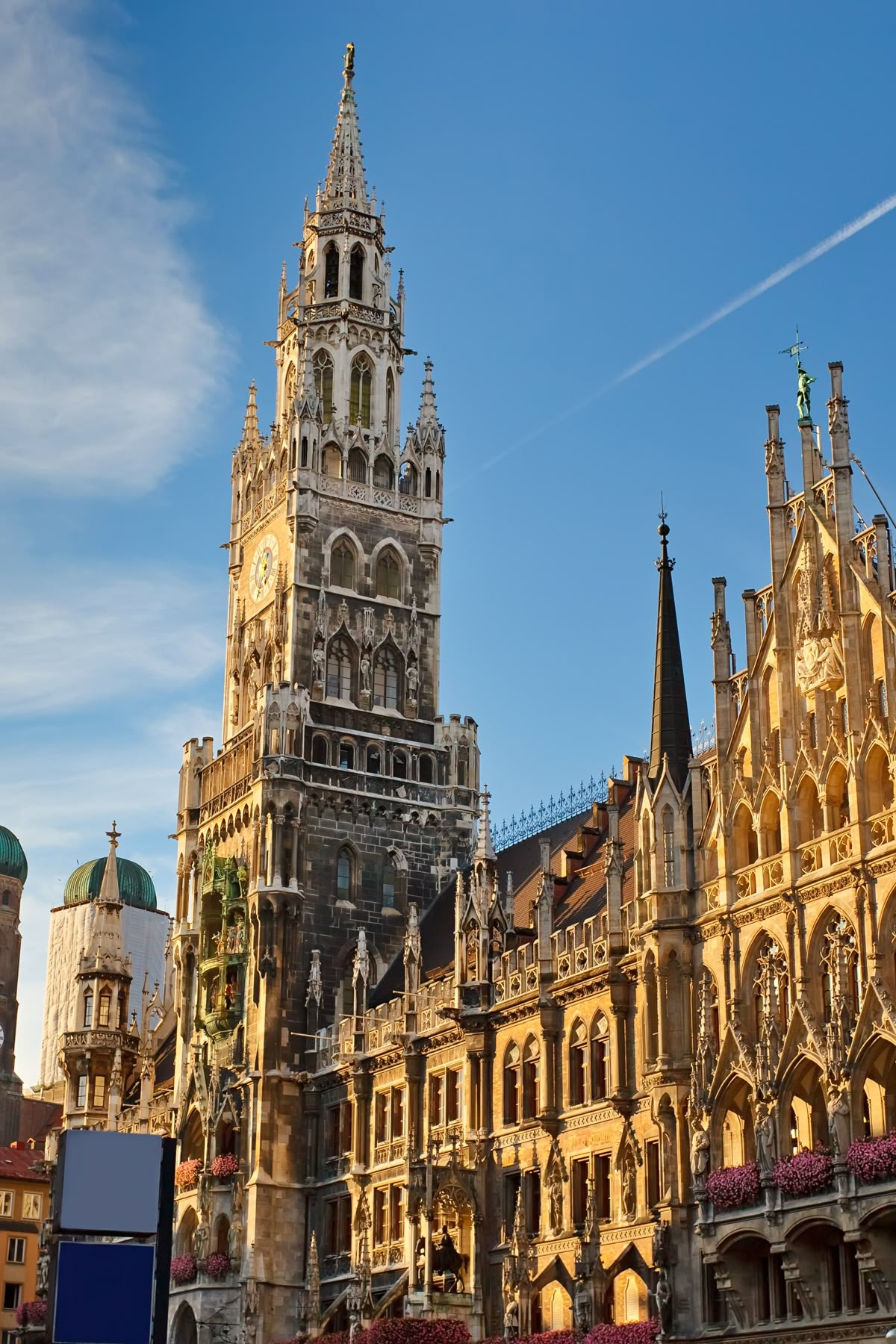
If there is a single dish that encapsulates the Bavarian approach to food, its generosity, its directness, its commitment to the pleasures of the table without apology or restraint, it is schweinshaxe: the slow-roasted pork knuckle that is the centrepiece of every serious Bavarian meal and one of the most satisfying things you can eat anywhere in Europe.
A schweinshaxe begins with the rear knuckle of the pig, a large, collagen-rich cut that rewards long, slow cooking with extraordinary tenderness and depth of flavour. It is typically marinated for several hours in a mixture of dark beer, garlic, caraway seeds, marjoram and other aromatics before being roasted in the oven for two to three hours at a moderate temperature, then blasted at high heat at the end to create the crackling: a shattering, deeply golden, intensely savoury layer of skin that is, for many people, the best part of the entire dish. The meat beneath the crackling should pull away from the bone in long, juicy pieces with almost no resistance, and the juices from the roasting pan, reduced with a little dark beer and perhaps a splash of the marinade, form a dark, sticky sauce of considerable intensity.
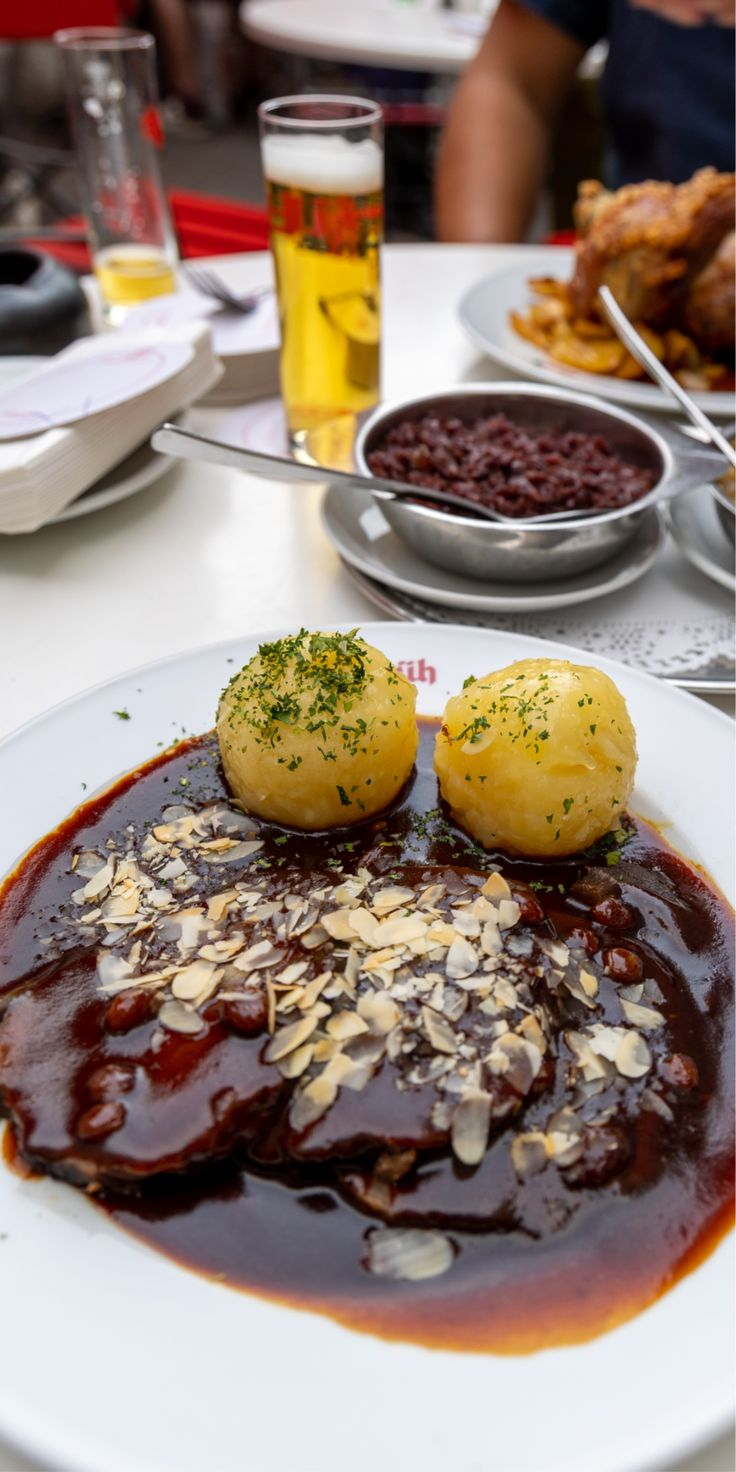
It is served with two accompaniments that are as fixed as the rule of noon for weisswurst: sauerkraut and a large bread dumpling, or Semmelknodel. The sauerkraut, slow-cooked with apple, caraway and a little bacon fat, provides acidity and freshness that cut through the richness of the pork. The Semmelknodel, a large sphere of bread soaked in milk, egg and herbs and poached until firm and yielding, soaks up the cooking juices with tremendous enthusiasm. It is a dish that requires a large appetite, an unhurried afternoon and, ideally, a second litre of dark Bavarian beer.
Best time to visit Bavaria for food and culture: The Oktoberfest in Munich (mid-September to the first weekend of October) is the most celebrated time to experience Bavarian food and beer culture, but it is also the busiest and most expensive period by a considerable margin. For a more intimate and equally authentic experience, late spring from May to June is ideal: the beer gardens open their doors, the weather is warm and sunny, and the white asparagus season brings one of Bavaria's most prized seasonal delicacies to every restaurant menu. The Christmas markets of Nuremberg and Munich (late November to Christmas Eve) are another exceptional time, with spiced wine, lebkuchen, roasted almonds and grilled sausages filling the air with warmth and fragrance.
4. Sauerkraut, Red Cabbage and the Soul of Bavarian Home Cooking
Sauerkraut is one of those foods that has been so thoroughly caricatured by its international reputation that many visitors arrive in Bavaria already convinced they know what it tastes like and whether they like it. They are usually wrong on both counts. The industrial sauerkraut sold in jars outside Germany, sharp, vinegary and one-dimensional, bears very little resemblance to the slow-braised, gently acidic, warmly flavoured sauerkraut that Bavarian cooks have been making for centuries.
Good Bavarian sauerkraut begins with finely shredded white cabbage that is fermented in its own juices with salt for several weeks, a process that transforms the raw vegetable into something complex, mildly sour and packed with beneficial bacteria. It is then cooked slowly with lard or goose fat, a little white wine or beer, juniper berries, caraway seeds, a bay leaf and sometimes apple, onion or a piece of smoked pork, until it is soft and fragrant and the fermented acidity has mellowed into something altogether more nuanced. It is the perfect accompaniment for pork in all its forms, from schweinshaxe to smoked ribs to pork belly, and it is one of those dishes that improves every time it is reheated, becoming more complex and more deeply flavoured with each iteration.
Red cabbage, or Blaukraut as it is known in Bavaria, is the sweeter, more complex cousin of sauerkraut. Slow-braised with apple, red wine vinegar, cloves, cinnamon, sugar and a little lard, it develops a deep, jewel-like colour and a flavour that balances sweetness, acidity and warmth in a way that makes it the ideal accompaniment for roast duck, venison, goose and the great roasted meats of the Bavarian Christmas table. If you are visiting Bavaria in the winter months, order whatever dish comes with Blaukraut without hesitation. It will be made with care and will be one of the most quietly satisfying things you eat.
Food tip: In traditional Bavarian restaurants, side dishes are often listed separately from the main course and need to be ordered individually. Do not assume that sauerkraut, red cabbage or Semmelknodel are included with your schweinshaxe or roast duck. Ask the server what the traditional accompaniments are for your chosen dish and order accordingly. A meal of schweinshaxe without sauerkraut and a dumpling is a meal only half lived.
5. Kaiserschmarrn, Apfelstrudel and the Bavarian Dessert Tradition
Bavaria shares its dessert tradition with neighbouring Austria to a degree that makes the distinction between the two almost academic at the table. The two great sweet dishes of the alpine south are both beloved in Bavaria, both made with skill in every serious restaurant, and both worth ordering at every available opportunity.
Kaiserschmarrn is perhaps the most theatrical dessert in the German-speaking world and certainly the most generous. It is a thick, fluffy pancake batter, made richer than the standard version with extra eggs, butter and sometimes a splash of rum, that is cooked in a large pan and then torn into irregular pieces, Schmarrn, meaning a mess or a trifle, before being dusted with icing sugar and finished in the pan until the edges are lightly caramelised. It is served with a warm plum compote, or Zwetschgenroester, which provides the necessary acidity and fruit to balance the richness of the pancake. The dish is named after Emperor Franz Joseph I of Austria, who was reportedly devoted to it, and it lives up to its imperial name: extravagant, deeply satisfying and impossible to finish alone without assistance. Order it to share, but be prepared to compete for the last piece.
Apfelstrudel, the paper-thin pastry rolled around a filling of spiced apple, raisins and breadcrumbs, is one of the great baked desserts of central Europe, and the Bavarian version is made with the same care and technical precision as its Viennese counterpart. The pastry dough must be stretched by hand until it is so thin that you can read a newspaper through it, a skill that takes years to develop and that separates an authentic strudel from the thick-pastry versions found in tourist restaurants. It is served warm, dusted with icing sugar and accompanied by a pouring of vanilla sauce or a scoop of vanilla ice cream. Eaten on a cold afternoon in a Bavarian cafe, with coffee and the warmth of a wood-fired stove nearby, it is close to perfect.
6. Lebkuchen: The Spiced Gingerbread That Nuremberg Gave the World
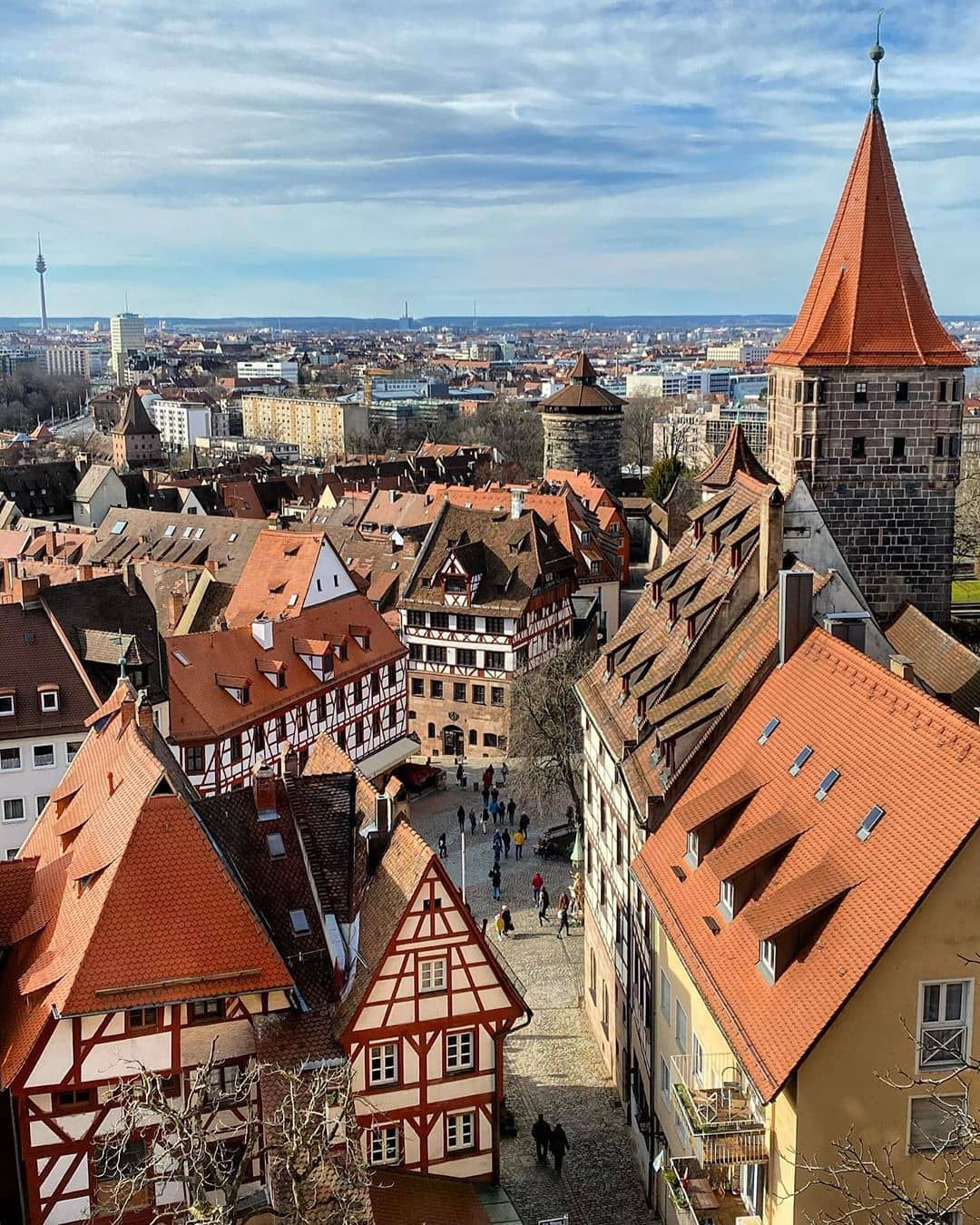
No account of Bavarian food is complete without lebkuchen, the spiced honey gingerbread that has been made in Nuremberg since the fourteenth century and that remains one of the most distinctive and deeply loved sweet specialities of the German-speaking world. Nuremberg lebkuchen is so firmly associated with the city that it holds a protected geographical indication, meaning that only lebkuchen made within the city limits of Nuremberg may legally be sold as Nurnberger Lebkuchen.
The biscuits are made from a dough of honey, nuts (hazelnuts, walnuts and almonds in varying proportions depending on the recipe), a complex blend of spices including cinnamon, cardamom, cloves, allspice, anise and ginger, and sometimes a little candied citrus peel. They are traditionally baked on a thin wafer base called an Oblate, which prevents them from sticking and gives the underside a distinctive texture. The finished biscuits are either left plain, glazed with sugar or chocolate-covered in dark, milk or white chocolate, and they range in texture from soft and almost cakey to harder and more biscuit-like depending on the recipe and the intended shelf life.
Lebkuchen are available year-round in Nuremberg, but they reach their apotheosis during the Christkindlesmarkt, Nuremberg's famous Christmas market, held annually from late November to Christmas Eve in the city's medieval Hauptmarkt. The market, which has been running in some form since the seventeenth century, is one of the most atmospheric Christmas markets in Europe: the smell of spiced wine, roasted almonds, cinnamon and fresh lebkuchen fills the cold air, and the rows of stalls with their pointed red-and-white striped roofs against the backdrop of the Gothic Church of Our Lady create a scene of extraordinary visual warmth. Buy your lebkuchen directly from one of the traditional Nuremberg producers at the market, where you can taste before you buy, and take a tin home: they keep well for several weeks and make exceptional gifts.
Common tourist mistakes in Bavaria: Visiting Munich during Oktoberfest without a hotel reservation made months in advance. The city is completely sold out and prices are three to four times the normal rate. If you want the Oktoberfest experience but have not planned ahead, consider staying in a nearby town such as Augsburg or Landsberg am Lech and commuting by train. Another mistake: ordering a Kolsch or any non-Bavarian beer in a traditional Munich beer hall. The locals will give you a look that requires no translation. Stick to the local Hefeweizen, Dunkel or Masskrug and you will fit in immediately.
7. Beer Gardens, Wheat Beer and the Bavarian Art de Vivre
It is impossible to talk about Bavarian food without talking about Bavarian beer, because the two are inseparable in a way that goes far beyond simple accompaniment. Beer in Bavaria is not a drink. It is a cultural institution, a social framework, a measure of the seasons and a daily practice so deeply embedded in local identity that the Bavarians have, at various points in their history, treated it as a basic food and petitioned to have it classified as such. The Reinheitsgebot, the German Beer Purity Law of 1516, which stipulated that Bavarian beer could be made only from water, barley and hops, remains one of the oldest food regulations still in effect anywhere in the world.
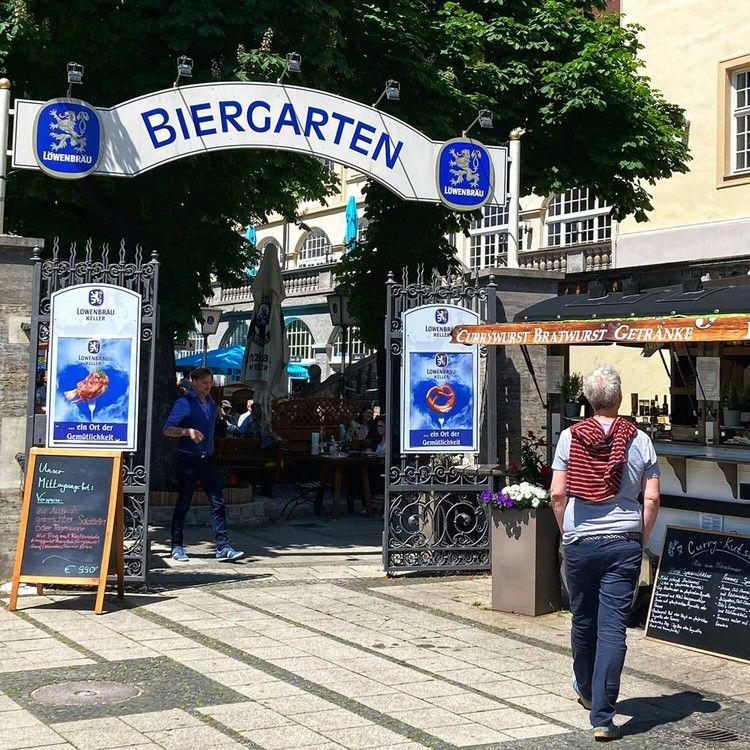
The beer garden is Bavaria's greatest contribution to the architecture of social life. Under the shade of old chestnut trees, on long wooden tables and benches that seat strangers side by side without a second thought, Bavarians of every age and background gather from late spring to early autumn to drink, eat, talk and be together in a manner that is at once completely informal and completely civilised. The etiquette is simple: you may bring your own food to a beer garden (though not your own drink), you order at the counter rather than waiting to be served, and you share the table with whoever sits down next to you without the need for introduction or conversation unless both parties wish it.
The beer of choice in a Bavarian beer garden is almost invariably a Hefeweizen, the cloudy, yeast-rich wheat beer that is served in a tall half-litre or one-litre glass called a Mass. It is made from a significant proportion of malted wheat and fermented with a specific yeast strain that produces the characteristic banana and clove aromas that make Bavarian wheat beer unlike any other beer in the world. It should be poured carefully, with the glass tilted at an angle, swirling the last centimetre of beer in the bottle to rouse the yeast sediment before adding it to the glass. It should be drunk cold, ideally in bright sunshine with a pretzel and obatzda on the table, and with no particular urgency. The beer garden is not the place for rushing anything.
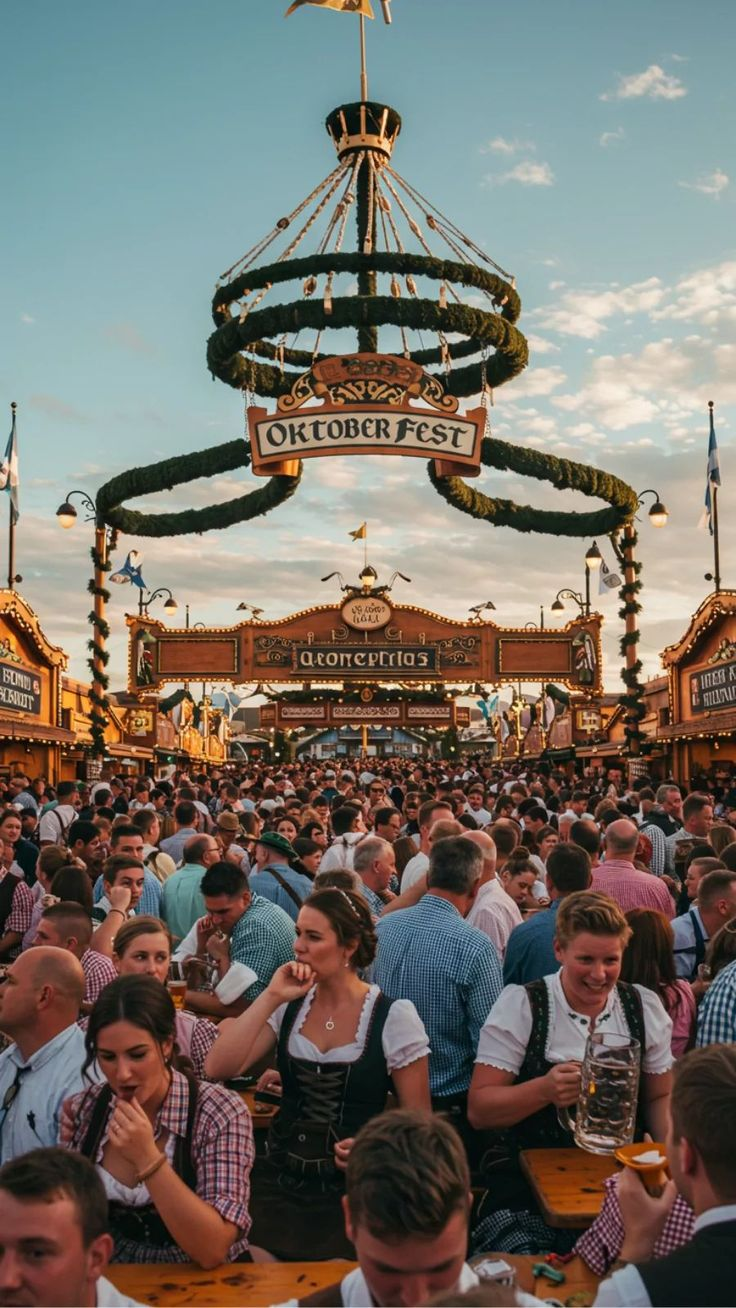
Bavaria teaches you that eating is not simply about nutrition or even about pleasure. It is about belonging. The long beer garden table, the shared pretzel, the Mass of cold wheat beer in the afternoon sun: these are not just customs. They are the visible expression of a culture that has always understood that life is best lived in common, at a table, with good food and good company and no particular hurry to be anywhere else.
Getting to Bavaria: Arriving in Munich and Starting Your Culinary Journey
The gateway to Bavaria is Munich Franz Josef Strauss Airport (MUC), one of the busiest and best-connected airports in Germany, located approximately 28 kilometres northeast of the city centre with excellent links to destinations across Europe, North America and beyond. From the airport, the most comfortable and direct way to reach your hotel is a private airport transfer, which takes between 35 and 45 minutes depending on traffic and delivers you door to door without the need for luggage on public transport.
The S-Bahn lines S1 and S8 connect Munich Airport to Munich Hauptbahnhof (central station) in approximately 45 minutes and run every 20 minutes throughout the day. From Hauptbahnhof, the centre of Munich, Marienplatz, the Viktualienmarkt and the first beer garden of your visit are all within easy walking distance or a short U-Bahn ride.
Tips for avoiding queues in Munich: The Viktualienmarkt, Munich's famous open-air daily market, is best visited on a Tuesday or Thursday morning when it is least crowded and the produce stalls are fully stocked. The most popular beer halls, including the Hofbrauhaus and the Augustinerkeller, are extremely busy on Friday and Saturday evenings: go at lunchtime on a weekday for a more relaxed experience and more attentive service. For Oktoberfest tent reservations, book a minimum of six months in advance: walk-in entry to the large tents is possible but involves queuing from early morning with no guarantee of a seat.
Comments
No comments yet. Be the first to share your thoughts!
Leave a Comment
Your comment will appear after moderation.