 Michelle
 Venice is a city of masks, both literal and figurative. It is a place where reflections shimmer on dark water and where the line between reality and illusion has always been deliberately blurred. Among its seven hundred palaces lining the hundred and seventy seven canals, one stands apart. It is not for its size, for it is slender and almost delicate beside the monumental grandeur of the Ca' d'Oro or the Palazzo Ducale, but for the weight of sorrow that seems to cling to its polychrome marble walls. Ca' Dario, at number 352 on the Campiello Barbaro in the Dorsoduro district, has been called the most beautiful palace in Venice. It has also been called the most cursed. For more than five centuries, a procession of death, ruin, and catastrophe has followed those who dared to call it home. Whether you believe in curses or dismiss them as coincidence, the roll call of the damned who have lived within these walls is enough to make even the most sceptical among us pause.
The Palace That Beauty and Tragedy Built
In 1478, a wealthy merchant and diplomat named Giovanni Dario commissioned the construction of a new palazzo on the Grand Canal. Dario was a man of considerable accomplishment. Of Dalmatian origin, he had risen through the ranks of the Venetian Republic to become Secretary to the Doge Giovanni Mocenigo and, most famously, the negotiator of a crucial peace treaty with the Ottoman Empire in 1479. The treaty, signed in Constantinople, earned him the honorific "Saviour of the Fatherland" and secured his place among the ruling elite of the Serenissima.
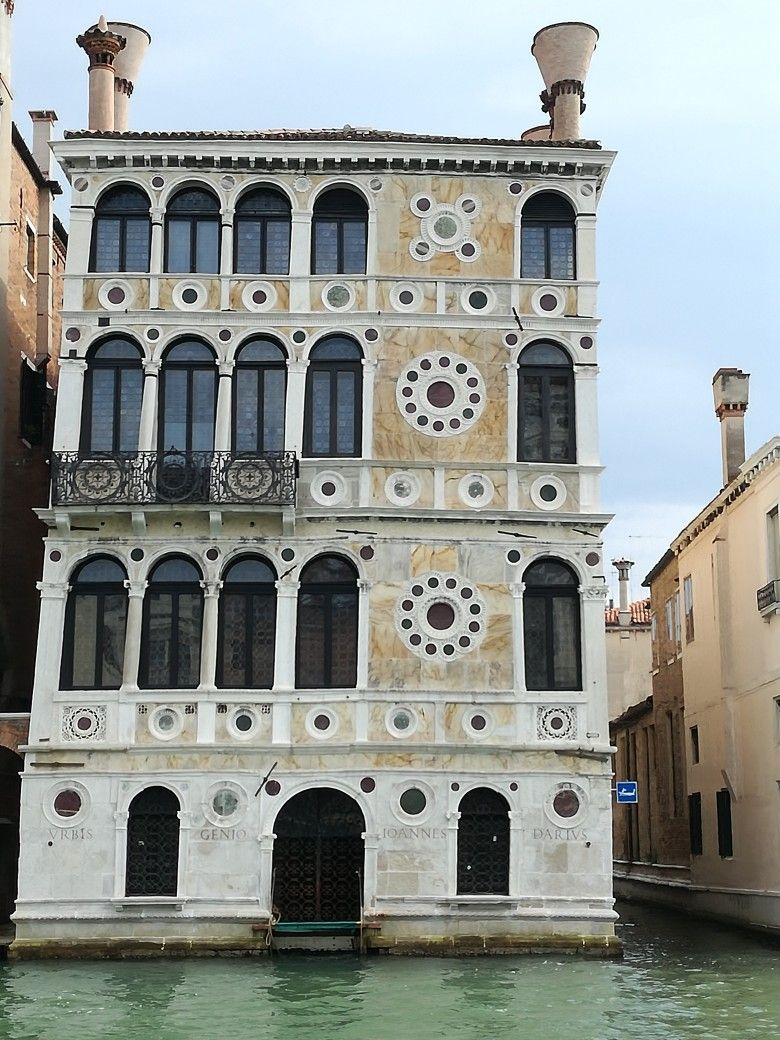
The architect he chose was Pietro Lombardo, one of the most innovative masters of the Venetian Renaissance, already at work on the exquisite Church of Santa Maria dei Miracoli. Together, they created something unprecedented: a palace that broke decisively with the Gothic traditions that still dominated Venetian architecture. The facade, rising four storeys above the water, is a symphony of Istrian stone and polychrome marble, its surface animated by more than eighty circular medallions. The effect is one of shimmering, almost Oriental richness, a tapestry in stone. The writer Gabriele d'Annunzio, never one for understatement, described it as "an old courtesan bent under the weight of her jewels." Claude Monet, who painted it repeatedly in 1908, was captivated by the way light played across its asymmetrical facade.
Artistic note: Monet's series of paintings of Palazzo Dario, created during his stay at the Grand Hotel Britannia, are among the most celebrated images of Venice ever produced. He wrote to his wife, Alice, that the palace was "the most magnificent thing" he had ever seen. Yet even he seemed to sense something strange about the place, describing its beauty as almost inhumanly perfect.
Giovanni Dario and the First Family of Misfortune
Giovanni Dario built his magnificent palace as a wedding gift for his only daughter, Marietta, who was betrothed to Vincenzo Barbaro, a wealthy spice merchant from an already established patrician family. The marriage was meant to secure the Dario legacy. Instead, it seems to have opened a door that should have remained forever shut.
Shortly after the couple took up residence, disaster struck. Vincenzo Barbaro's business collapsed spectacularly, plunging the family into ruin. Then, in what appears to have been a violent dispute, Vincenzo was stabbed to death. Marietta, overwhelmed by grief and perhaps by the sudden reversal of fortune that had made her the widow of a disgraced merchant, walked into the Grand Canal and drowned herself. As if these horrors were not enough, the couple's son, Vincenzo Junior, was murdered while travelling in Greece, the victim of what some sources describe as a vendetta style ambush. Within a single generation, the entire Dario family had been extinguished.
The palace passed to the Barbaro family, who owned it for the next three hundred years. But the sense of dread had already taken root. The Venetians, a superstitious people, noticed an ominous inscription carved into the base of the facade: VRBIS GENIO IOANNES DARIVS. "Giovanni Dario, in honour of the genius of the city." But anagrams were a popular pastime, and someone rearranged the letters to form a far more sinister phrase: SVB RVINA INSIDIOSA GENERO, which translates to "I generate under an insidious ruin." The seed of the legend had been planted.
A Gallery of the Damned: Five Centuries of Victims
If the misfortunes of the Dario and Barbaro families could be dismissed as the tragic but unexceptional fate of merchant dynasties in a turbulent age, what followed was anything but ordinary. Over the next two hundred years, the curse, if curse it was, claimed victim after victim, each death stranger and more unsettling than the last.
Arbit Abdoll and Rawdon Brown (early 19th century). After the last of the Barbaro heirs sold the palace, it passed into the hands of Arbit Abdoll, an Armenian gem merchant. He quickly went bankrupt and was forced to sell. In 1838, the palace was acquired by Rawdon Brown, a British historian and antiquary who had fallen in love with Venice. Brown lasted only four years. His relationship with another man was discovered, and the subsequent scandal destroyed him socially and financially. In 1842, he died by suicide in the palace's entrance hall. Some sources say with his partner, in what may have been a murder suicide.
The American Millionaire (late 19th century). Charles Briggs, an American tycoon, purchased the palace in the 1890s but almost immediately found himself hounded by rumours about his sexuality. He fled to Mexico with his lover, where the lover died by suicide. Briggs himself died soon after.
Henri de Régnier (1896). The French poet was a guest of the Countess Isabelle Gontran de la Baume-Pluvinel, who owned the palace at the turn of the century. De Régnier fell seriously ill during his stay, an illness so severe that he was forced to leave Venice and never fully recovered.
Count Filippo Giordano delle Lanze (1970). The Italian aristocrat purchased the palace in the 1960s. In 1970, he was brutally murdered inside Ca' Dario by his lover, a Yugoslav sailor named Raul Blasich. Blasich fled to London, where he was himself killed under mysterious circumstances.
The near miss of Mario del Monaco (1964): The world famous operatic tenor was so enchanted by Ca' Dario that he entered into negotiations to buy it. On his way to Venice to sign the final contract, he was involved in a serious car accident. Del Monaco survived, but he reconsidered his purchase and withdrew from the deal. The palace had claimed another victim, even without a sale.
Rock Stars, Financiers, and the Modern Era
In the 1970s, the palace found perhaps its most famous owner: Christopher "Kit" Lambert, the flamboyant manager of The Who, one of the most important rock bands in history. Lambert, whose father was the composer Constant Lambert, was drawn to the palace's beauty and its legend. But he soon discovered that living inside a legend was not easy.
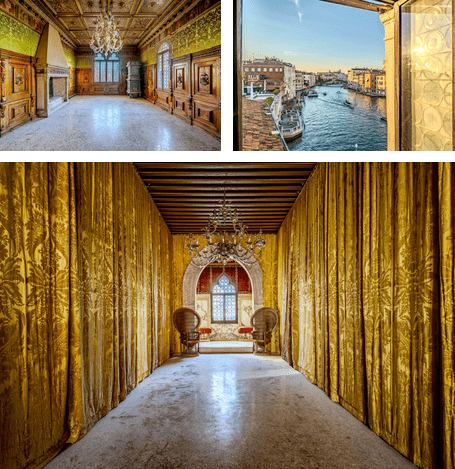
According to those who knew him, Lambert claimed that Ca' Dario was infested with ghosts. He became so frightened that he refused to sleep in the palace, preferring to stay in a small cabin used by gondoliers near the Hotel Gritti or in the hotel itself. His drug addiction worsened dramatically during this period, and his relationship with The Who deteriorated. He sold the palace in 1977, and died of a brain haemorrhage in 1981. But not before his addiction and the associated scandals had destroyed his career and his fortune.
The palace was then acquired by Fabrizio Ferrari, a Venetian businessman who moved in with his sister, Nicoletta. Within a short time, Ferrari faced a catastrophic financial collapse. His sister died in a mysterious car accident with no witnesses. Ferrari himself was arrested for assault.
In the late 1980s, the palace passed to Raul Gardini, one of Italy's most powerful financiers, the head of the Ferruzzi-Montedison group, and a man who seemed immune to ordinary misfortune. Gardini purchased Ca' Dario as a gift for his daughter, echoing Giovanni Dario's original intention. But the curse proved more powerful than any fortune. Gardini became embroiled in the Tangentopoli corruption scandal that devastated the Italian political establishment. In 1993, his empire in ruins, he died by suicide in circumstances that have never been fully explained.
The gondoliers of Venice, who know the city's currents and its silences better than any architect or historian, have long refused to moor their boats at the steps of Ca' Dario. They will tie up anywhere else along the Grand Canal, but not at number 352. When asked why, they simply cross themselves and look away.
Woody Allen, Wes Craven, and the Near Misses
By the turn of the millennium, the legend of Ca' Dario had become so entrenched that even the rich and famous thought twice, or three times, before signing a contract. Two stories in particular capture the palace's dark charisma.
The first involves Woody Allen. In the late 1990s, the celebrated film director expressed a strong interest in purchasing Ca' Dario. He was reportedly enchanted by its beauty and its history. But after researching the fate of its previous owners, Allen, a rationalist and a sceptic by reputation, is said to have changed his mind. Whether he was genuinely afraid of the curse or simply put off by the logistics, the deal did not proceed.
The second story is even stranger. Wes Craven, the master of horror who created the Nightmare on Elm Street and Scream franchises, came to Venice in the late 1990s scouting locations for a new film. He fell in love with Ca' Dario and planned to use it as the centrepiece of his movie. According to the Italian director Antonio Margheriti, who accompanied Craven during a walkthrough of the palace, the American director began to feel increasingly uneasy as he toured the rooms. "A thing is to make horror films," Craven reportedly said, "another is to actually deal with evil spirits." He abandoned the project and never returned to Venice. The film was never made.
In 2002, John Entwistle, The Who's legendary bassist, rented Ca' Dario for a holiday. One week later, he was dead of a heart attack at the age of fifty seven.
The Templar Cemetery Theory
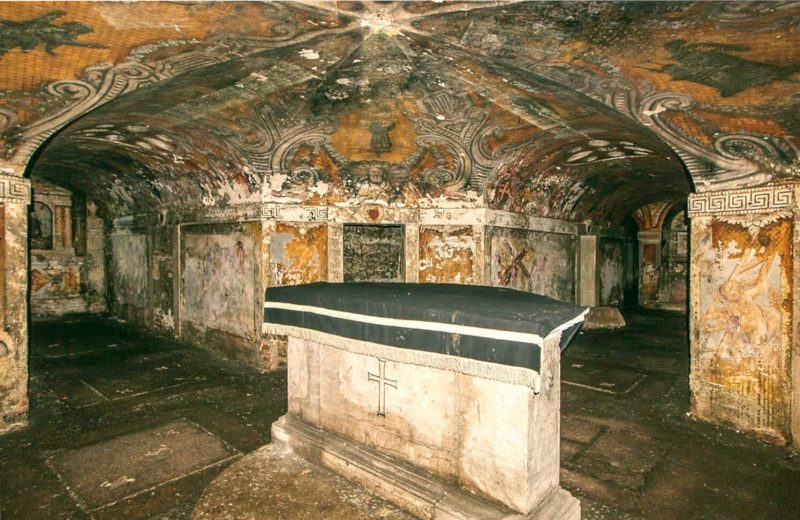
No legend is complete without an origin story, and the curse of Ca' Dario has one of the most evocative imaginable. According to a theory that has circulated among Venetians for centuries, the palace was built on the site of an ancient Templar cemetery. The Knights Templar, the warrior monks whose sudden and brutal suppression in the early 14th century gave rise to countless myths, were once present in Venice. Their cemetery, so the story goes, lay on the very ground where Pietro Lombardo laid his foundations.
There is a practical observation that lends some weight to the sense of unease: the palace is visibly tilted to one side. The foundations, built on the unstable mud of the Venetian lagoon, have settled unevenly over the centuries, giving the facade a subtle but perceptible lean. For the superstitious, this structural flaw is physical evidence of the curse, a building that itself seems to be recoiling from the dark forces beneath it. For the more rationally inclined, it is merely the predictable consequence of building a heavy stone structure on silt. But standing before it, watching the moonlight shift across its thousand surfaces, it is easy to feel the pull of the older explanation.
Seeking the truth: Sceptics point out that many of the deaths associated with Ca' Dario can be explained by ordinary factors: the fragility of aristocratic fortunes, the dangers of pre-modern travel, the prevalence of suicide among the wealthy and depressed. But even sceptics admit that the sheer number of tragedies concentrated in a single building over five centuries is statistically remarkable. The real estate agent Arnaldo Fusello, who has shown the palace to potential buyers more than a hundred times, told a journalist, "I have never felt a shiver down my back, unless the windows were open in the middle of winter."
Practical Tips for Viewing Ca' Dario
Best time to visit: Ca' Dario is a private residence and cannot be entered by the public. However, its facade on the Grand Canal is freely visible from the water. The best time to view it is in the late afternoon, when the setting sun illuminates the polychrome marble from the west, making the stones glow. Autumn light is particularly beautiful, but the palace is spectacular in any season.
Common tourist mistakes: Many visitors spend their entire time on the Grand Canal looking at Saint Mark's Basin and the Salute church, missing the smaller palaces of the Dorsoduro stretch entirely. Take a vaporetto (water bus) on Line 1 or Line 2 between the Accademia Bridge and the Salute stop. Ca' Dario is on the right-hand side of the canal as you travel from the Accademia towards Saint Mark's. Do not rely on land based viewing, as the palace is built directly on the water with no pedestrian path in front of it.
Food tips: The Dorsoduro district is less tourist-heavy than San Marco, which means better food at better prices. For a meal after your Ca' Dario sighting, try the area around the Campo Santa Margherita, a lively square filled with students from the nearby university. Look for cicchetti, Venice's answer to tapas, and a glass of local white wine, either a soave or a pinot grigio. Do not miss the fresh seafood. Sardines in saor, sweet and sour sardines with onions and pine nuts, is a Venetian classic.
Tips for avoiding crowds: The Grand Canal is always busy, but early morning (before 9:00 AM) and late evening (after 7:00 PM) offer the quietest and most atmospheric conditions for viewing the palace. The vaporettos are less crowded at these times, and the light is spectacular. Avoid August, when Venice is overwhelmed by tourists and the heat can be unpleasant. October and November are ideal.
Getting there: Take a vaporetto (water bus) from Santa Lucia train station or Piazzale Roma on Line 1 towards Lido. Disembark at the "Salute" stop. From there, Ca' Dario is a short walk along the waterfront toward the Accademia Bridge, though the best view remains from the water itself. A gondola ride past the palace, while expensive, is a memorable way to experience its facade up close.
What to bring: A camera with a zoom lens is essential, as the best angle on the palace is from a moving vaporetto on the Grand Canal. Polarising filters help cut through the water's reflections. Binoculars will allow you to see the details of the medallions, more than eighty of them, that make the facade so distinctive. And bring a good map or a reliable navigation app; the Dorsoduro district is charming but labyrinthine.
Comments
No comments yet. Be the first to share your thoughts!
Leave a Comment
Your comment will appear after moderation.