 Michelle
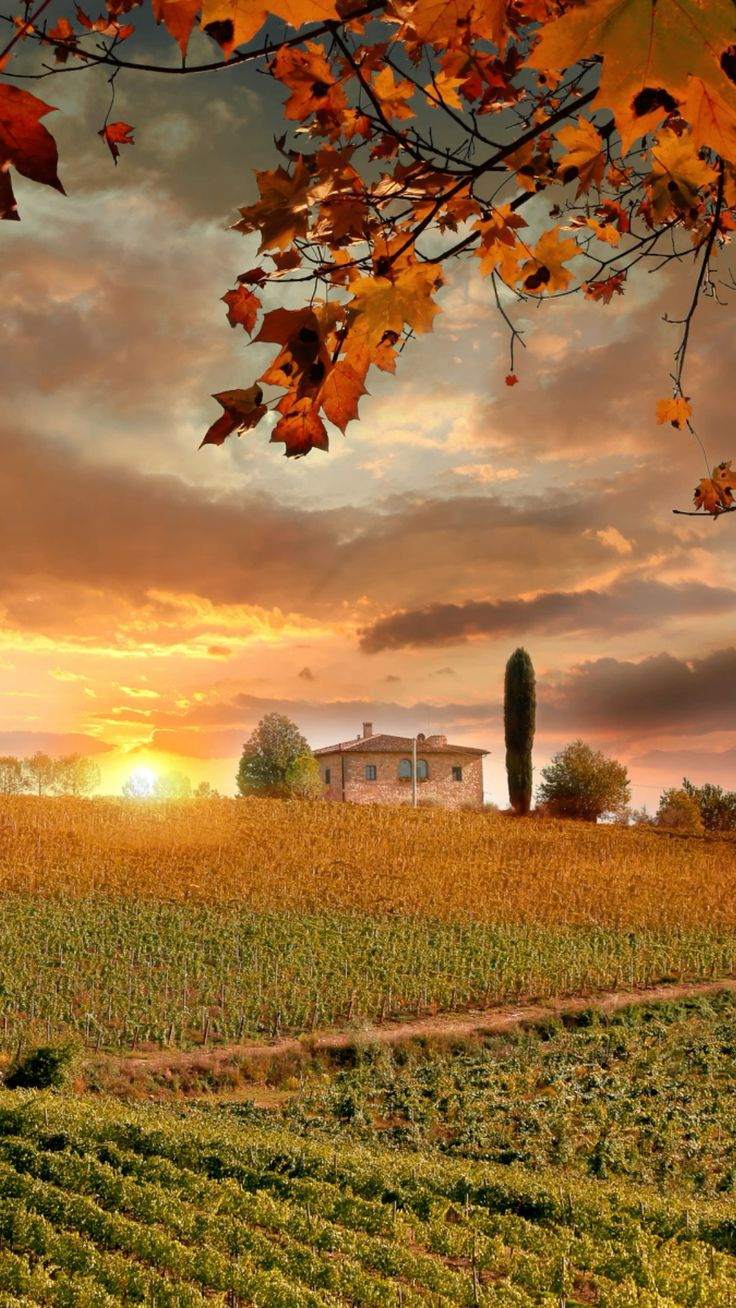
 There is a moment in late October, just before sunset, when the light over the Tuscan hills turns the colour of warm honey and the air smells of ripe grapes, damp earth, and wood smoke. The summer crowds have gone home. The harvest is in full swing. And the countryside, that famous landscape of cypress-lined roads and medieval hilltop towns, glows with shades of gold, amber, and burnt orange that no photograph can ever quite capture. Tuscany in autumn is not just beautiful. It is the season when the region reveals its deepest, most authentic soul. Here is everything you need to know to plan the perfect autumn escape to the heart of Italy.
Why Autumn Is the Secret Season in Tuscany
Everyone dreams of Tuscany in summer: the long sun-drenched days, the outdoor dinners, the feeling of endless light. But summer in Tuscany has a price. The roads are clogged, the famous towns are packed, and the heat can be uncomfortable, especially in Florence and Siena. Autumn changes everything. From mid-September through November, the atmosphere transforms completely. The temperatures become gentle: warm afternoons perfect for vineyard tours and cool evenings ideal for hearty Tuscan food. The light softens and deepens, casting long, dramatic shadows across the valleys. And the landscape itself becomes an artwork of changing colours. If you want to experience Tuscany without the stress of peak season, autumn is your moment.
Pro tip: The famous Tuscan cypress trees do not change colour: they stay green year round. But the vineyards and the forests of oak, chestnut, and beech put on an extraordinary show. The best colours usually peak between October 15 and November 10, depending on the altitude.
When Is the Best Time to Visit Tuscany in Autumn?
Tuscany in autumn is not a single experience: it is three distinct seasons in one. Understanding the differences will help you choose the perfect window for your trip.
September: The Harvest Month (Mid-September to Early October)
September is still warm and sunny, often with daytime temperatures reaching 22–26°C (72–79°F). This is the peak of the vendemmia (grape harvest): the most exciting time for wine lovers. Wineries across Montalcino, Montepulciano, and Chianti are buzzing with activity, and many offer special harvest experiences where you can participate in grape picking, visit the sorting tables, and taste the new wine directly from the barrels. September also sees the start of the olive harvest, though the best oil pressing events come later.
October: The Golden Month (Mid-October to Early November)
October is the heart of autumn. The colours are at their peak: the vineyards turn gold and red, the forests of the Casentino explode in orange and brown, and the light is simply magical. Temperatures are cooler but still pleasant (15–20°C or 59–68°F). This is truffle season, with the famous White Truffle Fair in San Miniato taking place throughout the month. The roads are quiet, the accommodation prices drop significantly, and the atmosphere is relaxed and unhurried.
November: The Food Lover's Month (Early to Late November)
November is cooler and sometimes rainy, but it offers a different kind of magic. The crowds have almost completely disappeared, and the region is entirely yours. This is the season for truffle hunting excursions, chestnut festivals, new olive oil tastings, and serious wine experiences. The weather is perfect for long lunches by a fireplace, exploring medieval towns without queues, and truly immersing yourself in the Tuscan pace of life. Pack a warm coat, an umbrella, and an appetite.
Value tip: Hotel and agriturismo prices in October and November can be up to 40% lower than in summer. You will also find far greater availability at top wineries, many of which book out months in advance for summer tastings.
Brunello di Montalcino: A Pilgrimage for Wine Lovers
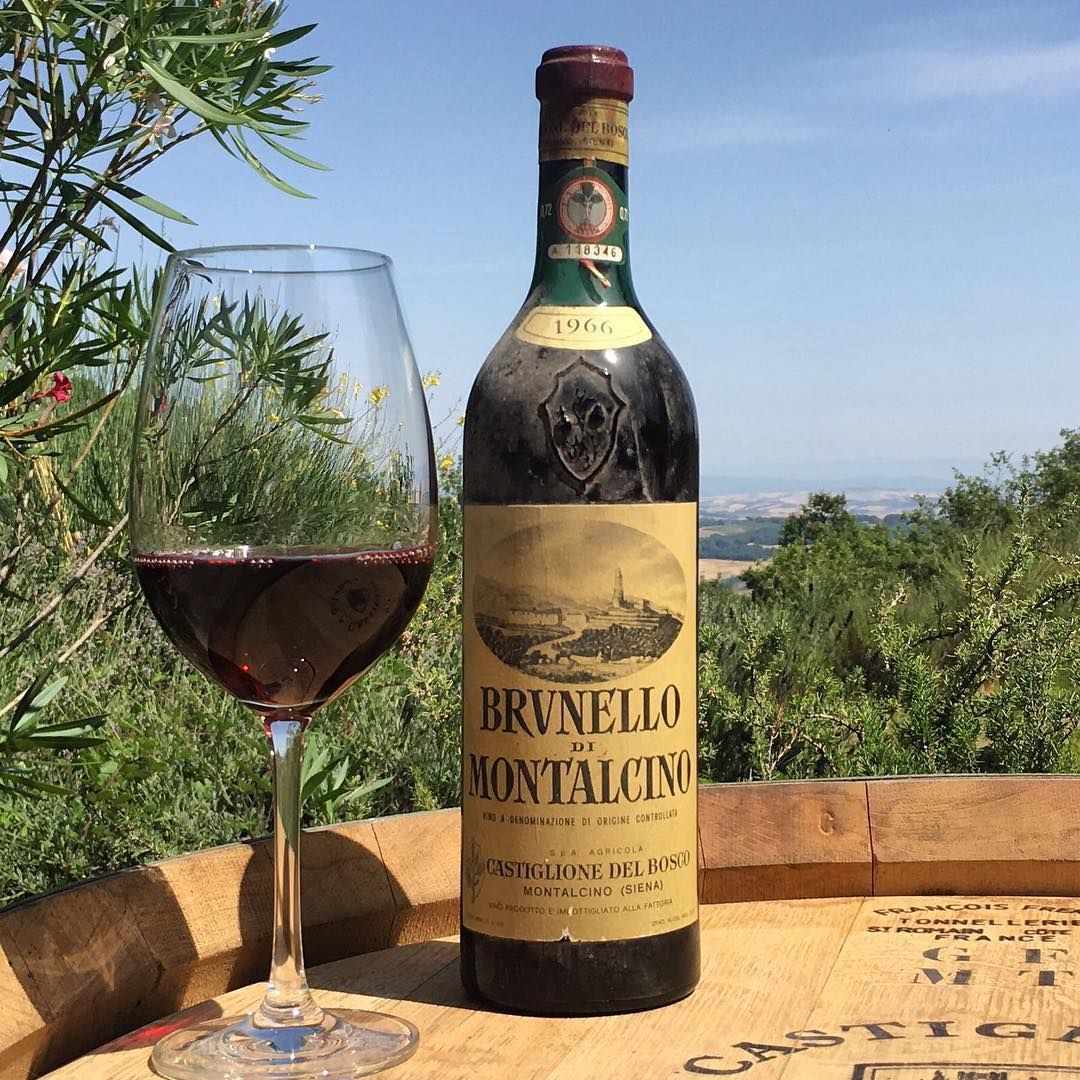
No autumn trip to Tuscany is complete without experiencing Brunello di Montalcino, one of Italy's most prestigious and powerful red wines. Produced exclusively from Sangiovese Grosso grapes grown on the slopes around the medieval hilltop town of Montalcino, Brunello is a wine of extraordinary depth, complexity, and longevity. And autumn is when the vineyards that produce it are at their most beautiful.
Montalcino itself is a jewel: a perfectly preserved town about 40 kilometres south of Siena, crowned by a 14th-century fortress with breathtaking views over the valley. The town is small: you can walk across it in ten minutes. But it contains dozens of enotecas (wine shops) where you can taste Brunello from different producers, often with knowledgeable staff who speak excellent English. Do not miss the Fortezza's own wine bar, where you can sip a glass of Rosso di Montalcino (the younger, more approachable sibling of Brunello) while watching the sun set over the Val d'Orcia.
To truly understand Brunello, you need to visit the wineries themselves. Here are three exceptional producers worth the journey:
Biondi-Santi: the inventor of Brunello. This is the historic home of Brunello: the winery where Ferruccio Biondi-Santi first produced the wine in the 1880s. A tour and tasting here is a pilgrimage for serious wine lovers. The vineyard views are spectacular, and older vintages are sometimes available for tasting by appointment.
Il Palazzone: small production, extraordinary quality. This boutique estate produces some of the most elegant Brunello in the region. Their underground cellars, carved into the tufa rock, are fascinating, and the tasting room overlooks the slopes where the grapes grow. The staff are warm, generous with their knowledge, and never rushed.
Castello Banfi: the grand estate. One of the largest and most impressive wineries in the region, Banfi offers a full experience: an excellent museum of glass and wine, a bistro for lunch, and structured tastings that walk you through their entire range. The castle itself is beautiful, and the views over the vineyards are postcard perfect.
Three Irresistible Tuscan Autumn Tours You Cannot Miss
To help you design your perfect autumn itinerary, here are three hand-picked tour experiences that showcase the very best of the season. Each is designed to be relaxing, immersive, and deeply rewarding.
Tour 1: The Brunello Treasure Hunt (Full Day)
What it is: A private full-day journey through the Brunello di Montalcino region, visiting two or three exceptional wineries with a dedicated driver and guide. You do not just taste wine: you walk the vineyards, explore the ancient cellars, and learn the difference between Brunello, Rosso, and the rare Riserva. Lunch is included at a family-run agriturismo overlooking the valley, where you taste local pecorino cheese, cured meats, and pasta with wild boar ragù.
Why you will love it in autumn: The vineyards are in full harvest or just past it. You might see grapes being sorted or watch the first fermentation begin. The golden light makes every photograph unforgettable. And the cool air keeps you fresh and alert between tastings. This tour eliminates the stress of driving on narrow winding roads: you simply relax, learn, and enjoy.
Perfect for: Wine enthusiasts, couples celebrating a special occasion, and anyone who wants to understand why Brunello is considered one of the world's great wines.
Tour 2: Truffle Hunter Experience (Half Day or Full Day)
What it is: A guided excursion into the forests of San Miniato or the Crete Senesi, where a professional truffle hunter (trifolao) and his trained dog lead you through oak and hazelnut groves in search of the precious white truffle. After the hunt, you return to a local farmhouse for a cooking demonstration and a lunch that puts the truffles you found (or helped find) at the centre of every dish: from scrambled eggs with shaved truffle to tajarin pasta and even truffle-infused honey over pecorino.
Why you will love it in autumn: The white truffle season runs from late September through December, with October being the peak month. The morning mist in the forests, the excitement when the dog stops and digs, and the earthy, intoxicating aroma of a freshly unearthed truffle: these are experiences that stay with you forever.
Perfect for: Food lovers, curious travellers, and anyone who wants an authentic, hands-on Italian experience far from the tourist crowds.
Tour 3: Val d'Orcia at Sunset Photography Tour (Afternoon to Evening)
What it is: A private guided tour of the Val d'Orcia's most spectacular viewpoints, timed to coincide with the golden hour. Your guide knows exactly where to stop for the most iconic photographs: the chapel of Vitaleta, the curved cypress road of Sante Marie, the panoramic terrace at Pienza, and the fortress of Radicofani in the distance. The tour includes a stop at a local farm for a tasting of pecorino cheese and a glass of Rosso di Montalcino as the sun sinks below the hills.
Why you will love it in autumn: The autumn light is the secret ingredient. Summer light is harsh and flat; autumn light is warm, soft, and directional, creating long shadows and glowing highlights that make the rolling hills look three-dimensional. The autumn colours add layers of red, orange, and gold that the green summer landscape simply does not have. Even with a smartphone, you will take photographs that look like paintings.
Perfect for: Photographers of all skill levels, romantics, and anyone who wants to understand why the Val d'Orcia is a UNESCO World Heritage landscape.
How to book these tours: All three tours are available through specialised local operators. For the Brunello tour, search for "Montalcino wine tour with driver". For truffle hunting, look for "San Miniato truffle experience" or "Crete Senesi truffle hunt". For the photography tour, "Val d'Orcia sunset tour" will point you in the right direction. Always book at least two weeks in advance for autumn, as these experiences are popular.
The White Truffles of San Miniato: The Diamond of the Kitchen
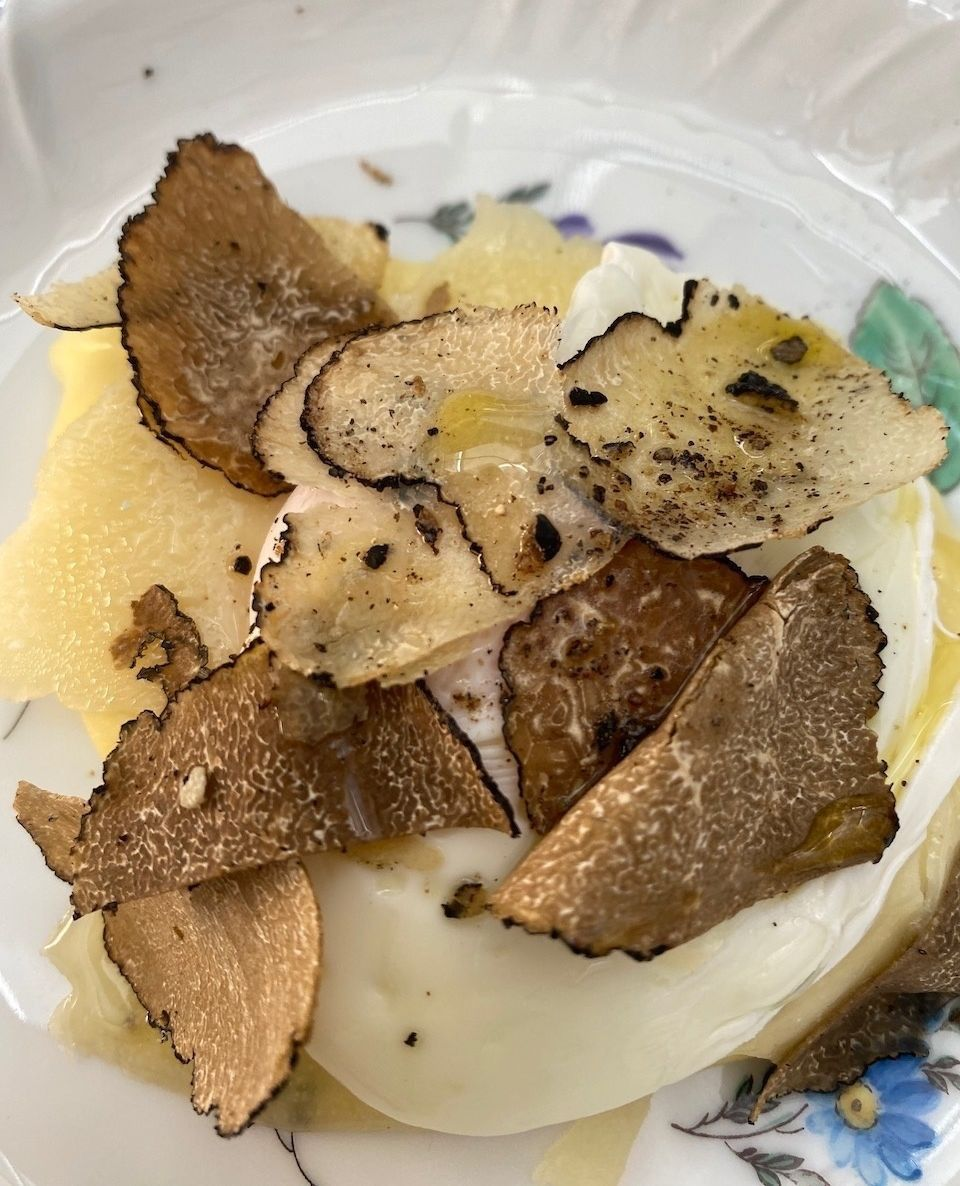
If you have never tasted a fresh white truffle, Tuber magnatum pico to use its formal name, you are in for a revelation. Unlike black truffles, which have a more robust, earthy flavour, the white truffle from San Miniato and the surrounding hills of the Pisa province is delicate, fragrant, and haunting. Italian writer Cesare Pavese once said that white truffles "smell like a beautiful woman's skin and the autumn earth all at once". He was not exaggerating.
The town of San Miniato, perched on a hill halfway between Florence and Pisa, is the undisputed capital of white truffles in Tuscany. Every weekend from mid-October to mid-November, the Mostra Mercato Nazionale del Tartufo Bianco takes over the historic centre. Truffle hunters (trifolai) bring their best specimens to market, restaurants serve special truffle menus, and the entire town smells intoxicatingly of the precious fungus. You can buy fresh truffles (bring euros: they are expensive) or countless truffle products: oils, butters, creams, honey, and even truffle-infused cheese and salami.
A truffle hunting excursion in the San Miniato hills is an unforgettable experience. You meet your trifolao and his dog, usually a Lagotto Romagnolo (the only breed specifically trained for truffle hunting), early in the morning when the ground is still damp from dew. The dog leads the way, sniffing excitedly, and when it stops and starts digging, your guide gently pushes it aside and unearths the truffle with a small spade. The first whiff is extraordinary. Many tours include a simple tasting of freshly shaved truffle over warm bread or eggs back at the guide's home. Book this well in advance: October weekends sell out completely.
Do not make the mistake of ordering truffle oil in restaurants. Real white truffles are shaved fresh over your dish at the table on a simple truffle slicer. The aroma is subtle but unmistakable. If the menu offers "tartufo bianco" at a suspiciously low price, it is not authentic. Expect to pay €60–€100 for a pasta dish generously covered in fresh white truffle in season. It is worth every euro.
Val d'Orcia: The Postcard Landscape at Its Peak
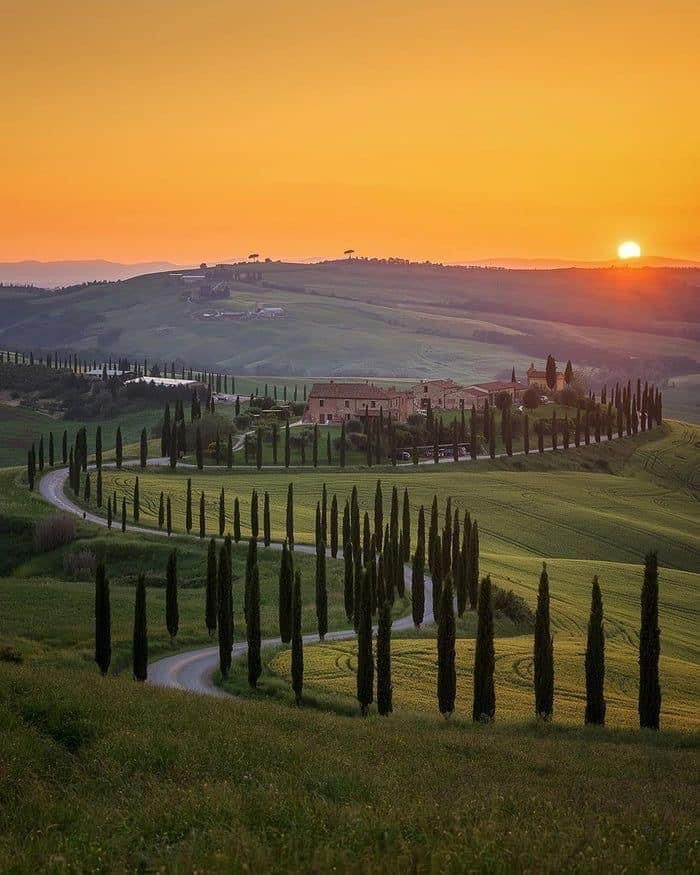
The Val d'Orcia is not just beautiful: it is the very landscape that has defined the image of Tuscany in the world's imagination. This valley, stretching from Siena south to Monte Amiata, is a UNESCO World Heritage site for a reason. Its gentle, perfectly proportioned hills, lined with pencil-straight cypress trees and crowned with medieval villages, create a composition so balanced that it feels almost designed. In autumn, this landscape becomes something almost supernatural.
The small towns of the Val d'Orcia are each worth a visit. Pienza, the "ideal city" built by Pope Pius II, is a Renaissance masterpiece with a view over the valley that will stop you in your tracks. The local pecorino cheese, aged in walnut leaves or with truffles, is famous across Italy. Montepulciano, another hilltop town, is known for its Vino Nobile, a wine that rivals Brunello in complexity. The main street climbs steeply to the central square, lined with wine cellars carved into the ancient tufa rock. San Quirico d'Orcia is quieter but stunning, with a beautiful collegiate church and the Horti Leonini, an Italian formal garden that looks perfect in autumn colours. And Bagno Vignoni, a tiny village built around a large rectangular pool of naturally hot spring water, is a surreal and deeply relaxing stop on a cool autumn afternoon.
Do not rush the Val d'Orcia. Give yourself at least three days to explore, take photographs, and simply sit. The most memorable moments in Tuscany are often not in the famous towns but on a quiet country road, pulled over by a row of cypress trees, watching the light change and feeling grateful to be alive in such a beautiful place.
Florence Without the Crowds
Florence in summer can be overwhelming: a river of humanity flowing through narrow medieval streets, hour-long queues for the Uffizi and Accademia, and a general atmosphere of exhausted tourism. Autumn transforms the city completely. The tourist tide recedes, the temperature drops to something comfortable, and Florence becomes the elegant, walkable Renaissance masterpiece it was always meant to be.
In October and November, you can walk into the Duomo without a queue, find a quiet corner in the Brancacci Chapel to study the Masaccio frescoes, and actually hear yourself think in the Boboli Gardens. The Uffizi and Accademia still require booking: they always will. But the crowds are far more manageable, and the experience is infinitely more pleasant. Autumn also means cultural season begins: the Maggio Musicale Fiorentino, Florence's famous classical music and opera festival, offers world-class performances in stunning historic venues.
Do not miss the Festa del Cioccolato (Chocolate Festival) in Piazza Santa Croce in late October or early November, where you can sample artisanal chocolate from across Italy. And make time for the Mercato Centrale: the ground floor is a traditional market, the upper floor a spectacular food hall with pasta, pizza, wine, gelato, and cooking classes. On a cool autumn day, a bowl of ribollita (Tuscan bread and vegetable soup) or pappa al pomodoro (tomato and bread soup) from one of the market stalls is pure comfort.
Practical Tips for Driving, Packing and Planning
Getting to Tuscany: The most comfortable way to reach Tuscany from Rome is by private transfer: door to door, no connections, no dragging luggage onto trains. The journey from Rome Fiumicino Airport to Montalcino takes approximately 2.5 hours. Alternatively, take a high-speed train from Rome Termini to Florence (1.5 hours) or Siena (1.5 hours with a change) and then rent a car or book a local transfer to your agriturismo.
Should you rent a car? For exploring the countryside (Montalcino, Val d'Orcia, Pienza), a car is essential. The famous roads are winding and narrow, and driving is part of the experience. Book an automatic car well in advance if you do not drive manual. However, if you plan to base yourself in Florence and take day tours, you do not need a car; organised tours will handle transport. Just be aware that driving in Florence is chaotic, parking is expensive and scarce, and the historic centre is restricted (ZTL zones with heavy fines for unauthorised entry).
What to pack: Layers are the key. A typical autumn day might start at 8°C (46°F) and reach 20°C (68°F) by afternoon. Pack: breathable long-sleeve shirts, a light sweater or fleece, a packable warm jacket or coat for evenings, comfortable walking shoes (cobblestones), a scarf that can double as a shawl for churches, and a compact umbrella. November requires a heavier coat and waterproof shoes. Do not forget a power bank for your phone: you will be taking many photographs.
Food mistakes to avoid: Do not eat anywhere with a multi-language menu and photos of food. Walk one street back from the main piazza and look for places with handwritten menus, locals inside, and no plastic signage. Order the regional specialities: pici pasta (thick hand-rolled spaghetti) with cacio e pepe or wild boar sauce, ribollita for lunch on a cold day, and for dessert, castagnaccio: a dense chestnut flour cake with rosemary and pine nuts that tastes intensely of autumn. And of course, finish every meal with a small glass of vin santo and a handful of cantucci biscuits for dipping.
Comments
No comments yet. Be the first to share your thoughts!
Leave a Comment
Your comment will appear after moderation.