 Michelle
 The most disturbing crimes are not the ones committed in darkness, far from any witness, in places that invite concealment. They are the ones committed in the middle of a city, in a well-appointed building on a frequented street, in full awareness that the victim would be looked for and that the looking would be intense. The murderer who buries his deed in such a setting is not merely confident of his ability to conceal it. He is confident of the complicity of those around him, the complicity of silence that a city under occupation learns to practise with a thoroughness that defeats the most determined investigation. In Turin, in the early years of the nineteenth century, a man entered a palazzo on one of the city's principal streets and was never seen again. The army that looked for him found nothing. The city that knew the answer said nothing. The walls, which keep all secrets equally, kept this one for decades. When they finally gave it up, what they contained was something that the forensic vocabulary of the time had no adequate term for and that the imagination, two centuries later, still resists.
Turin Under Napoleon: A City Remade by Force
To understand what happened inside Palazzo Feyles, it is necessary to understand what Turin was in the years when it happened: not the prosperous, cultured, somewhat self-contained Savoy capital of the pre-Napoleonic era, with its baroque grid of arcaded streets and its tradition of orderly administrative government, but a city that had been subjected, between 1798 and 1814, to an occupation of considerable violence and considerable complexity, whose effects on the social fabric of the community were not limited to the material disruptions of military presence but extended to a thorough reorganisation of the city's legal, administrative and property structures under French imperial law.
The French occupation of Piedmont began in 1798 with the invasion by the Army of Italy under General Joubert, which drove the Savoy king Carlo Emanuele IV into exile and established first a provisional government and subsequently, in 1802, the direct annexation of Piedmont to the French Republic. Turin became the chief town of the Department of the Po, one of the administrative units into which the occupied territories were divided, and its citizens were subjected to the full apparatus of Napoleonic administration: the prefectoral system, the Napoleonic Code replacing the Savoy legal tradition, conscription for the Grande Armée, taxation at rates calibrated to fund the imperial war machine, and the presence throughout the city of French military personnel whose authority over the civilian population was in practice absolute and whose accountability to any local grievance was in practice negligible.
The Turinese response to this occupation was, in its outward expression, the response that pragmatic and intelligent people generally adopt when faced with an irresistible power of uncertain duration: a surface compliance that concealed a subterranean resistance, conducted not through armed revolt, which the disproportion of forces made suicidal, but through the patient preservation of loyalties, networks and forms of life that the occupiers could not reach. The nobility and the professional classes of Turin maintained their social relationships, their devotional practices, their private opinions and their contempt for the occupiers through the familiar mechanisms of the drawing room and the private dinner, of the encrypted correspondence and the carefully indiscreet whisper among those who could be trusted. In this environment, the distinction between what was said publicly and what was understood privately was not merely a social convention but a survival strategy, and the wall of silence that met the French military when they came looking for Colonel Du Perril was not the silence of ignorance but the silence of a community that had decided, collectively and without a single formal meeting, that whatever had happened to him was not their concern.
The Palace and Its World
Palazzo Feyles stands at the corner of Corso Vittorio Emanuele II and Via San Massimo, in the part of Turin's historic centre that was developed in the later eighteenth and early nineteenth centuries as the city expanded beyond its original baroque nucleus. The building belongs to the Turinese palazzo tradition of its period: a structure of several storeys whose street facade is organised with the formal restraint characteristic of the Savoy architectural culture, its windows regularly spaced and carefully proportioned, its cornices and string courses providing the horizontal emphasis that the Piedmontese tradition preferred over the more exuberant vertical energy of other Italian regional schools. It is, in short, a building that presents to the world exactly the face that the world of its period expected a prosperous urban palazzo to present: composed, legible, entirely without drama.
The interior of the building, as it existed in the early nineteenth century, would have been organised in the fashion of its class and its time: a piano nobile of formal reception rooms on the first floor, family apartments on the floors above, service spaces and storage in the lower levels and the courtyard behind the street facade. The walls, which are the material element of the story that concerns us, were of the solid masonry construction standard in Turinese building of this period: thick internal partition walls of brick, rendered in plaster and in places decorated with the painted and stuccoed finishes appropriate to the importance of the rooms they enclosed. Within these walls, as within the walls of any building of comparable age and construction, there were cavities, irregularities, spaces that were the product of the building's history rather than its original design, the closed-off fireplaces, the sealed passages, the niches that a sequence of owners had adapted, modified and enclosed over the decades of the building's life. One of these spaces would prove sufficient for what the inhabitants of the palazzo required.
The family or families in residence at Palazzo Feyles during the years of the Napoleonic occupation were among the Turinese nobility or upper bourgeoisie who had managed, through a combination of caution and compliance, to maintain their position through the disruptive years of the French annexation without either suffering the confiscations that fell on the most conspicuously royalist families or attracting the suspicion that any overtly collaborationist stance would have engendered from their own community. They were, in other words, precisely the kind of people who understood the necessity of maintaining two entirely separate registers of behaviour: one for the occupiers and one for themselves. The secret appointment that brought Colonel Du Perril to their door that evening was, in all probability, a product of this double world.
A note on the sources: The story of Colonel Du Perril and the wall of Palazzo Feyles belongs to the historical oral tradition of Turin, a tradition that has been collected, annotated and published by Turinese historians and folklorists over the course of the nineteenth and twentieth centuries in a series of chronicles of local mysteries and notable crimes. The earliest written versions of the account date from the mid-nineteenth century, after the restoration of the Savoy monarchy, when the telling of stories unflattering to the French occupation had ceased to be politically dangerous. The discovery of the remains during renovation works is the material fact around which the tradition has organised itself, and it is this discovery, rather than any surviving legal or police record, that gives the story its historical foundation.
The Evening of the Disappearance
The account that the Turinese tradition has preserved is specific in its essential details and deliberately vague in the ones that would have been most incriminating. What it tells us is this. On an evening in the early years of the nineteenth century, a senior officer of the French imperial army, referred to in the tradition as Colonel Du Perril, arrived by carriage at the entrance of Palazzo Feyles on Corso Vittorio Emanuele II. He had an appointment inside the building, and the appointment was private, conducted without the knowledge of his military superiors and without the official character that would have required a formal record. He descended from the carriage, instructed his coachman to wait, and entered the palazzo through its principal entrance.
The tradition is careful not to specify who invited him or why. This reticence is itself informative. In a story that has been told and retold across two centuries with a consistency in its essential elements that speaks of genuine transmitted memory rather than confabulation, the deliberate omission of the host's identity is not a gap in the knowledge of those who preserved the account but a feature of it: a silence that the community that kept the story chose to maintain as scrupulously in their narration as the inhabitants of the palazzo had maintained it in the face of the French military investigators. Whom Du Perril had come to see is, in this tradition, simply not said, and the unsaid is as eloquent as anything that is.
What we can infer from the character of the appointment, private, nocturnal, unrecorded, is that it involved a transaction of some sensitivity: the kind of meeting that both parties had reason to keep from official knowledge. In the context of occupied Turin, this covers a very wide range of possibilities. Intelligence, financial negotiations involving confiscated property, the brokering of some personal or political arrangement that required the mediation of a man with access to the French military command, the pursuit of a private relationship of the kind that a French officer of ambition in a city full of beautiful women and dislocated social conventions might have been conducting outside any official framework: all of these are plausible interpretations of an appointment whose actual content the tradition has chosen not to illuminate.
What the tradition does illuminate, with a precision that suggests genuine memory, is the physical detail of the coachman outside. He waited. The account is specific about the cold, the darkness, the passage of hours during which the carriage stood at the kerb of the corso while its driver kept his position with the professional patience of a man who understood that officers' appointments frequently ran long and that a coachman who abandoned his post without permission was a coachman seeking other employment. He waited through the first hour and the second, and perhaps a third, and it was only when the appointed time for Du Perril's expected return had been exceeded beyond any reasonable interpretation of delay that the coachman made the decision to seek assistance. By then, everyone inside the palazzo had had ample time to complete whatever needed to be completed.
The French Investigation and the Wall of Silence
The French military response to the coachman's report was, by the standards of a police apparatus that had been honed by the particular demands of governing an occupied city, reasonably prompt and reasonably thorough. Officers were dispatched to Palazzo Feyles. The building was searched. The inhabitants were questioned, individually and collectively, in the manner of interrogations conducted by people who had both the authority and, when they judged it necessary, the willingness to move beyond the boundaries of conventional civilian policing. None of it produced the slightest material result.
The inhabitants of the palazzo, whoever they were, presented to the investigators a surface of impenetrable normality. No one had seen the colonel. No one had heard anything unusual. The appointment, if there had been one, was unknown to them. The building was available for search in whatever manner the French authorities required, and the search, however thorough, found nothing: no body, no blood, no signs of struggle or violence, no evidence of any kind that a senior officer of the imperial army had ever crossed the threshold. The walls, which were thick and solid and rendered in good Turinese plaster, gave nothing away.
The investigation, having produced nothing that it could prosecute and nothing that it could even formally record as probable cause for further action, reached the conclusion that the most determined investigators tend to reach when faced with a wall of this particular kind: that the evidence pointed toward an explanation that lay outside the building. Du Perril had not been killed in the palazzo. He had left it, by some route or at some moment that the coachman had missed, and whatever had happened to him subsequently was not the responsibility of the building's occupants. He had deserted. He had been politically abducted by enemies of the imperial regime. He had arranged his own disappearance for private reasons of sufficient urgency. The case was archived. The investigation was closed. The wall continued to hold its secret.
The efficiency of this concealment, viewed across the distance of two centuries, is in some ways the most disturbing element of the entire story. Not because it is surprising but because it is not. Occupied cities learn, with a rapidity that reflects both the pragmatic intelligence of the population and the particular quality of the moral universe that occupation creates, to construct and to maintain precisely this kind of impenetrability. The wall of silence that defeated the French investigators was not an improvised response to an emergency but the product of a social competence that had been developing, under precisely these pressures, for years. Everyone in the building almost certainly knew what had happened. No one, under any form of pressure that the French military chose to apply, was going to say so. The distinction between this and what is normally called complicity in murder is a philosophical question that the tradition, which is not a philosophical document, declines to address.
The Discovery Inside the Wall
The truth was revealed, as the most thoroughly buried truths eventually are, not by investigation but by accident, the particular kind of accident that renovation works provide in old buildings: the opening of walls that have been sealed for decades, the removal of plaster that has been undisturbed since it was applied, the encounter with what the building has been keeping quiet in the spaces between its surfaces. The precise date of the discovery is not established in the tradition with the clarity that would allow it to be confirmed in any contemporary record, and this is consistent with a disclosure that was made privately, managed by those with interests in its containment, and transmitted to the broader public only through the oral channels that the Turinese community used for information it had reasons to handle with discretion.
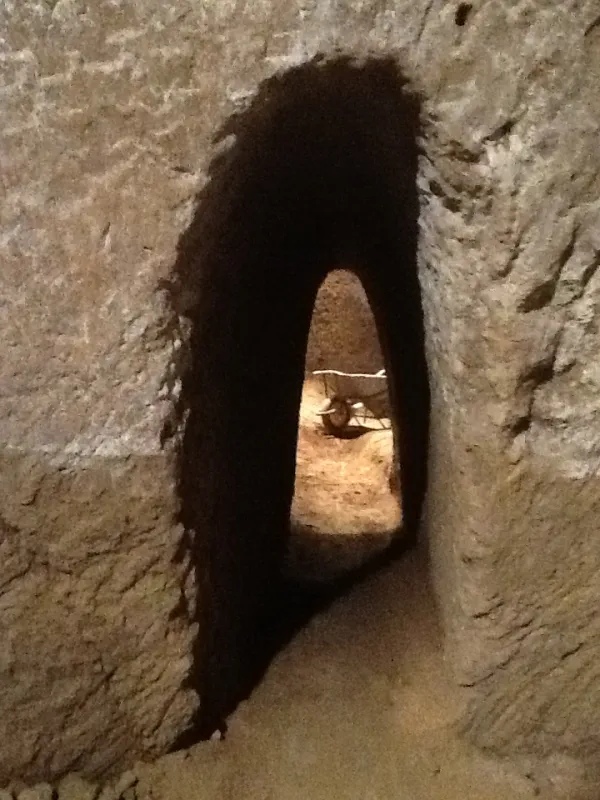
What the renovation workers found, when the plaster of a particular interior wall of Palazzo Feyles was broken open, was a cavity within the masonry, not a natural void or a structural defect but a space that had been deliberately created and then sealed. Within this space, in a condition that the decades of entombment had preserved with the thoroughness that enclosed spaces in masonry provide, were the remains of a man. He was standing upright. This is the detail around which the story has always turned, and it is the detail that demands a pause for consideration, not because upright interment within a wall is physically impossible, it is not, but because it is unusual enough to be significant, because the choice to stand a man vertically rather than lay him horizontally is a choice, and choices of this kind are made for reasons.
The physical reality of what had been done was this. A man, presumably alive or recently dead, had been placed in a vertical position within a cavity in the wall. The cavity had then been closed, sealed with mortar and plaster on both sides, and the finished surface presented to the world with enough skill that decades of occupancy and presumably repeated domestic scrutiny had found nothing to remark upon. The work was professional. It was the work of a building trade practised in the concealment of what walls contain, which is to say it was the work of builders who did this kind of thing as part of their ordinary professional activity and who could be trusted, for whatever mixture of payment and shared interest the situation required, to produce a result that would resist inspection.
Whether Du Perril was alive when the wall was closed around him is the question that the tradition handles most carefully, and most inconsistently. Some versions of the account specify that he was dead before the brickwork began, killed by means that are not described, and that the choice of concealment within the wall rather than removal of the body was dictated by circumstances that made any other form of disposal impossible or dangerous. Other versions, clearly the more dramatic and the more widely circulated, hold that he was not dead when the wall was sealed, that the choice of the upright position was made deliberately, and that what the renovation workers encountered was not a body that had been placed in a wall but a man who had died within one. The evidence, which is the physical fact of the discovery, is equally consistent with both interpretations. The tradition has preferred the more terrible reading, and the tradition is not necessarily wrong to do so: the choices made in the management of a secret this serious tend toward a finality that leaves no subsequent problem unsolved.
There is a category of violence that differs from ordinary murder not in its moral character but in its metaphysical ambition: the desire not merely to end a life but to erase the person entirely, to remove them from the world so completely that not even the body remains as evidence of their former existence. To wall a man into a building is the most literal possible expression of this ambition: the person becomes part of the structure, absorbed into the material of the house in a transformation as final as any the world provides. Colonel Du Perril entered Palazzo Feyles as a human being with a rank and a purpose and a coachman waiting outside. He was found there, decades later, as a feature of the architecture. The palazzo had consumed him as completely as it was possible to be consumed.
Who Ordered It and Why: The Question That Was Never Answered
The tradition has preserved the fact of the murder and the fact of the concealment with considerable fidelity. It has not preserved, and may never have known with the precision that definitive attribution requires, the answer to the question that any reasonable reading of the account immediately generates: who ordered it, and on what grounds? The possible motivations are numerous, and they are all plausible within the specific historical context of occupied Turin, which was a city where the intersection of personal, political and financial interest created the particular conditions in which extreme violence becomes, for the people it involves, not merely possible but rationally justified.
The most widely discussed interpretation within the Turinese tradition frames the killing as an act of political resistance: the elimination of a French officer who had obtained, or was about to obtain, information of sufficient sensitivity to endanger specific individuals or networks within the occupied city. This reading has the advantage of placing the crime within a recognisable moral framework, one in which the violence, however extreme, serves a purpose that the tradition of resistance to occupation has historically been willing to endorse. It also has the advantage of explaining the extreme care taken to ensure the permanent concealment of the body: a killing motivated by the need to suppress information requires not merely the death of the informant but the absence of any evidence that he was killed, since a French officer killed by Turinese resistance would have invited a military response of very considerable severity.
A second interpretation, less heroic in its implications, frames the killing as an act of private interest: the elimination of a man who had become dangerous to specific individuals not through his official role but through something he knew about them personally, a financial arrangement, a concealed loyalty, a private relationship whose exposure would have been catastrophic in the circumstances of the occupation. This reading is consistent with the specific character of the appointment, secret, nocturnal, unrecorded, which is more consistent with a private meeting than an official one, and with the particular completeness of the concealment, which exceeds what mere political necessity would have required and suggests the additional motivation of personal self-preservation.
A third possibility, darker than either of the others and therefore less frequently discussed in the tradition, is that the motive was neither political nor personal but material: that Du Perril arrived at Palazzo Feyles carrying something, money, documents, valuables of some kind, whose acquisition was sufficient justification for the risk entailed in his elimination. The Napoleonic period in occupied territories was not lacking in opportunities for the illegal transfer of wealth, and an officer of the imperial army with access to the resources of military administration in a city whose prosperous families had been substantially dispossessed would have been in a position to broker transactions of considerable value. What he carried into the palazzo on that final evening is, like the identity of his host, something that the tradition has chosen not to illuminate.
The Building Today and Its Place in Turin's Imagination
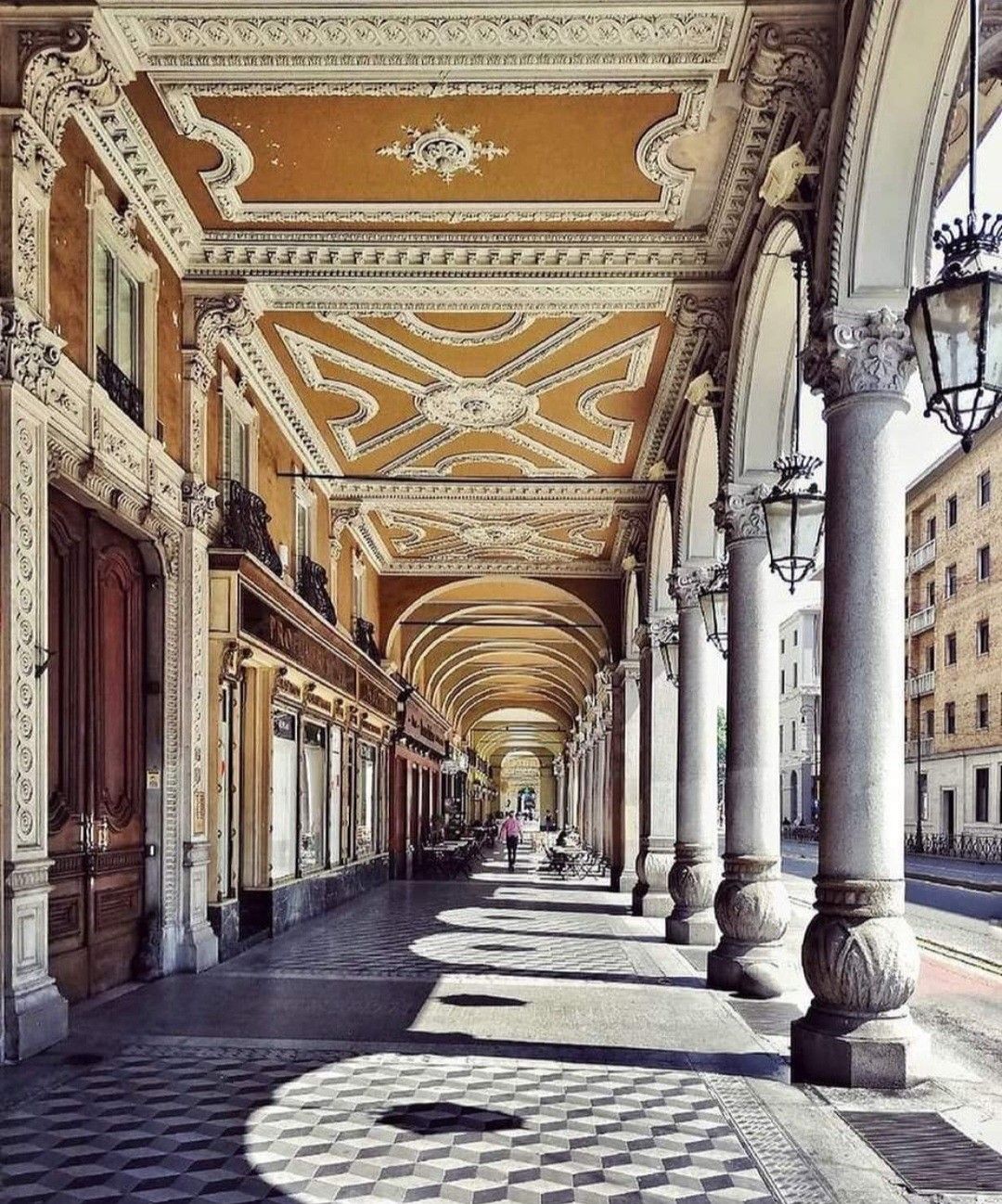
Palazzo Feyles continues to stand at the corner of Corso Vittorio Emanuele II and Via San Massimo, its nineteenth-century facade as formally composed as it has always been, its arcaded ground floor in the Turinese manner opening onto the pedestrian covered walkways that are among the most characteristic and most pleasurable features of the city's architecture. It is a private building, its apartments occupied by residents whose connection to the events of the early nineteenth century is architectural rather than personal, and it presents to the street, as it has always presented, a surface of composed civic normality that gives no indication of what it once contained.
The story of Colonel Du Perril and the wall belongs to that category of local history that the inhabitants of a place keep and transmit not because it reflects well on their community but because it speaks, with a directness that more officially sanctioned history cannot achieve, of the kind of city they actually live in, of the quality of its secrets and the depth of its capacity for concealment. Turin is a city that has always maintained this kind of self-knowledge alongside its public identity as the ordered, elegant, industrious capital of Piedmont and then of the young Italian state: it has always known that beneath its arcaded streets and its rational baroque grid there is another city, one whose history is written not in the official records of the state archives but in the walls of its buildings, and that the walls, when they are opened, are capable of considerable surprises.
The story circulates in Turin in the way that stories of this kind circulate in cities with long memories: mentioned by guides, included in collections of local histories and mysterious chronicles, referenced in the literature of the city's dark side that began to be produced in earnest in the latter half of the twentieth century when the appetite for Turin's occult and criminal past became, for reasons that the city's historians have various explanations for, a significant feature of its cultural self-presentation. Alongside the stories of the esoteric city, the magical Turin of white and black magic traditions whose coordinates the city's more romantically inclined narrators have mapped with great enthusiasm, the story of Palazzo Feyles occupies a different register: not the supernatural but the human, not the uncanny but the terrible, not the mysterious but the comprehensible. This is what makes it, in the end, more disturbing than any ghost story. We know what happened. We know how it was done. The only thing we do not know is who ordered it, and the people who knew the answer to that question had the foresight to take it with them.
Turin Beyond the Legend: What Else to See
Turin is the most underestimated major city in Italy, and the underestimation is partly self-inflicted: the city has historically presented itself to the world as the sober, pragmatic capital of Piedmontese industrial and administrative tradition, the city of Fiat and Juventus and the Savoy monarchy, and this presentation, while accurate in several of its elements, entirely fails to communicate the cultural density, the architectural quality and the sheer quantity of extraordinary things that the city contains and that most visitors to Italy never discover because they have been persuaded to go to Rome or Florence or Venice instead.
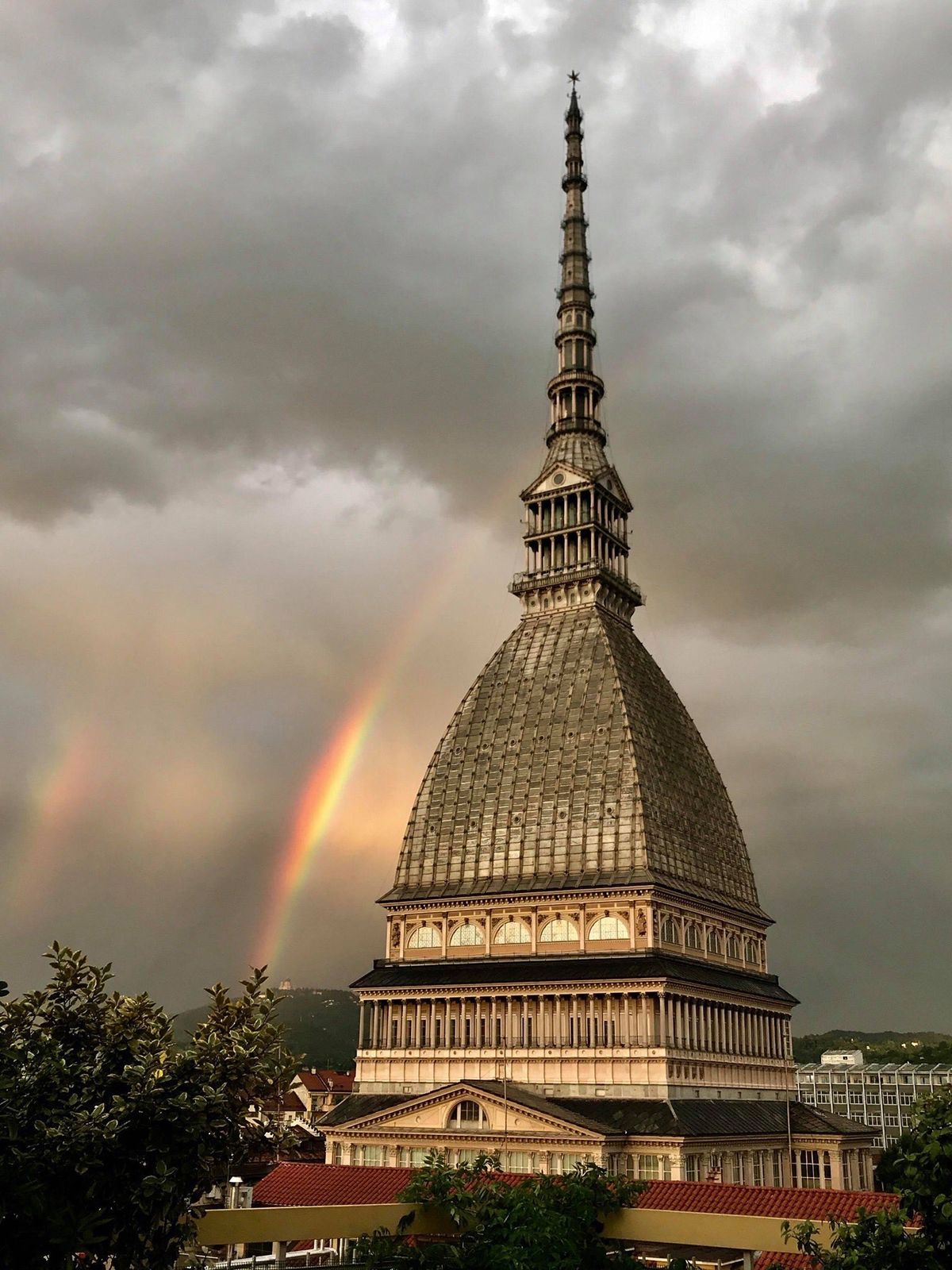
The Mole Antonelliana, the extraordinary spire-topped building that is Turin's most recognisable symbol, was originally designed as a synagogue and now houses the Museo Nazionale del Cinema, one of the finest film museums in the world and a building that rewards several hours of unhurried exploration regardless of one's feelings about the cinema. The Museo Egizio, the Egyptian Museum, contains the second largest collection of ancient Egyptian artefacts in the world after Cairo, accumulated over two centuries through the acquisitions of the Savoy court and the expeditions of the nineteenth century, and it is a collection of the very first rank whose quality consistently surprises visitors who arrive expecting a minor regional museum and encounter instead one of the great Egyptological institutions of Europe. The Palazzo Reale and the Palazzo Madama, the principal royal residences of the Savoy dynasty, contain interiors of extraordinary richness and collections of applied arts that rival anything in Italy outside the great national museums of Rome and Florence.
The Holy Shroud, the most famous and most debated religious relic in Christendom, is preserved in the Cathedral of San Giovanni Battista, where it is displayed only on rare occasions of particular significance. Even in its absence, the cathedral and the chapel of the Guarini, the extraordinary baroque structure designed by Guarino Guarini in the 1660s specifically to house the relic, constitute one of the most remarkable architectural spaces in Italy and one of the least visited by international tourists. Guarini's Chapel of the Holy Shroud, its interior organised around a sequence of interlocking stone arches that rise in a spiraling geometry toward the central lantern, is one of the most original and most intellectually demanding interiors in the entire European baroque tradition, and it deserves the attention of anyone who takes architecture seriously.
Turin's coffee and chocolate tradition: Turin is the historical capital of Italian chocolate, the city where the combination of cacao with hazelnut paste produced the gianduja that is still the defining flavour of Piedmontese confectionery, and the gianduiotto, the small foil-wrapped chocolate of characteristic trapezoidal shape that was invented here in 1865, is as specific to Turin as the gondola is to Venice. The coffee culture of the city is equally serious: the Caffè Baratti and Milano in the Galleria Subalpina, the Caffè Fiorio on Via Po and the Caffè San Carlo on Piazza San Carlo are among the finest historic coffee houses in Italy, their interiors untouched by the renovations that have reduced many comparable establishments to pleasant facsimiles of their former selves.
Getting to Turin: Practical Information
Turin is served by Turin Caselle Airport (TRN), approximately 16 kilometres north of the city centre, with connections to the principal Italian airports and a growing range of European destinations. A private airport transfer from Caselle to the historic centre takes approximately 25 to 35 minutes with a fixed price agreed in advance and door-to-door service. The Sadem airport bus provides a regular service to Turin Porta Nuova railway station in approximately 45 minutes.
By high-speed rail, Turin is connected to Milan in approximately 45 minutes and is accessible from Rome in approximately four hours. The city's two principal railway stations, Porta Nuova and Porta Susa, are both within easy reach of the historic centre on foot or by the efficient metro system whose Line 1 connects the major destinations of the inner city with a reliability that makes surface transport largely unnecessary for visitors staying in the central districts.
Comments
No comments yet. Be the first to share your thoughts!
Leave a Comment
Your comment will appear after moderation.