 Michelle
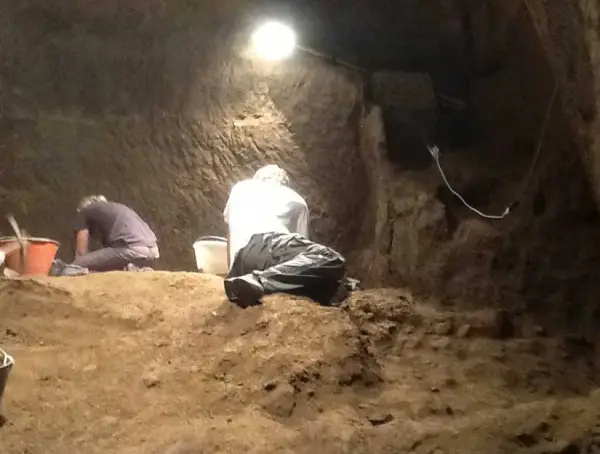
 There is a moment, in the deepest chambers of any serious archaeological excavation, when the hand-held light illuminates something that nobody has seen for two thousand years, and the silence that follows is not merely the absence of sound but a more absolute kind of stillness: the stillness of time suspended, of the present and the ancient becoming briefly, vertiginously contemporaneous. That moment arrived in Orvieto in 2012, when two archaeologists broke through the floor of a medieval wine cellar and found themselves looking down into a shaft of perfectly cut stone that descended, in the form of an inverted pyramid, into a darkness that their torches could not fully penetrate. They did not know what it was. Three years of subsequent excavation have clarified some questions and deepened others. The fundamental mystery remains intact.
Orvieto: A City Built on Three Thousand Years of Stone
To understand the pyramids, you must first understand the rock. Orvieto sits on a dramatic mesa of volcanic tufa approximately 200 metres above the valley of the Paglia river in southern Umbria, a flat-topped cliff of grey-brown stone whose sheer sides have provided the city's inhabitants with natural fortification since at least the Bronze Age. The tufa itself, the material from which the plateau is composed, is a volcanic tuff deposited by the ancient eruptions of the Bolsena volcanic system to the south, soft enough to be cut with iron tools, hard enough to support the weight of multi-storey buildings, and possessed of a natural humidity that makes it ideal for the storage of wine, oil and food. These properties were recognised by every civilisation that has occupied the rock: the Umbrians who lived here before recorded history, the Etruscans who transformed the settlement into one of the great cities of their civilisation, the Romans who conquered it, the medieval communes that built the cathedral and the palaces and the towers that still define the city's extraordinary skyline.
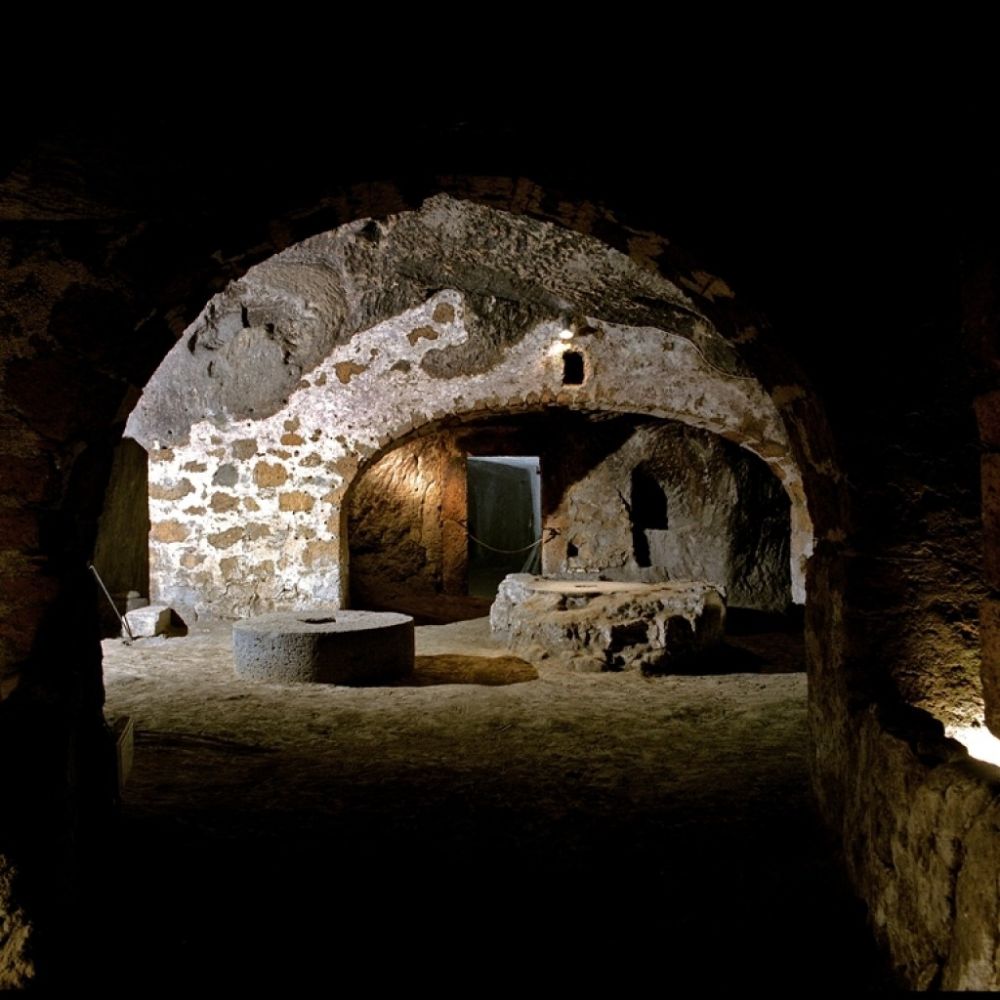
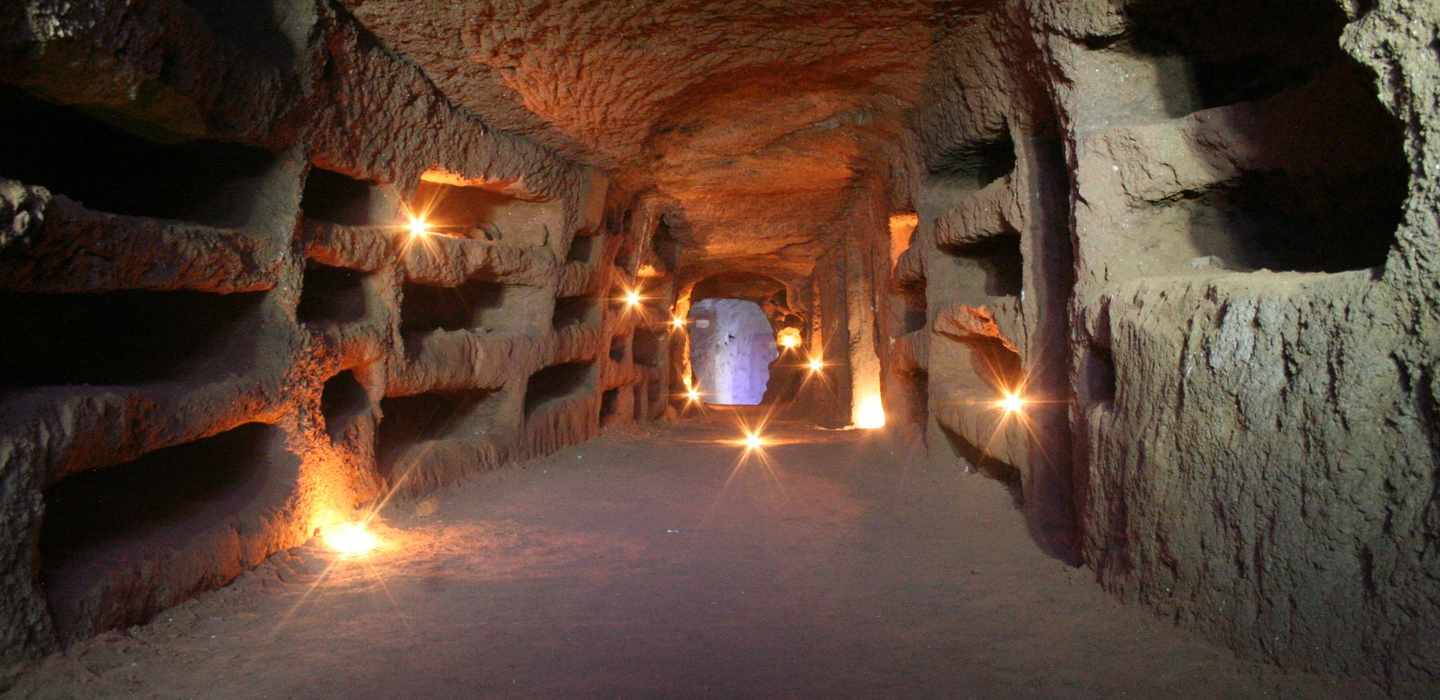
Each of these civilisations dug into the rock. Each left its chambers, its tunnels, its cisterns, its storage rooms and its tombs in the tufa beneath the city, layering their interventions one on top of another over three millennia until the volume of underground space beneath Orvieto became, in the estimation of archaeologists who have spent decades mapping it, as large as the city above. The Orvieto Underground, the complex of tunnels and chambers accessible to the public through guided tours, encompasses over 1,200 documented spaces carved into the tufa over thirty centuries of continuous occupation: a parallel city beneath the city, dark and silent and extraordinarily well preserved by the stable temperature and humidity of the volcanic rock.
The pyramids discovered in 2012 are the most dramatic and most mysterious addition to this underground world. They are also, in terms of their implications for the understanding of Etruscan religious and civic culture, potentially the most significant.
Orvieto's geology: The tufa plateau on which Orvieto stands is approximately 2.5 kilometres long and 1 kilometre wide, rising steeply on all sides to a height of between 150 and 200 metres above the surrounding valleys. The rock itself is composed of alternating layers of volcanic ash deposits of different densities, and this layered structure has shaped the way in which different periods have excavated it: harder layers at the surface provide structural support for buildings, while softer layers below are more easily hollowed into the chambers and tunnels that form the underground city.
The Discovery of 2012: What the Archaeologists Found
The excavation that led to the discovery was initiated by Claudio Bizzarri, director of the Archaeological Area of Orvieto, and David B. George, professor of classics at Saint Anselm College in New Hampshire and one of the leading American specialists in Etruscan archaeology. The two had been collaborating on investigations of the underground city for several years when, in the summer of 2012, they turned their attention to a medieval wine cellar beneath a building in the historic centre. The cellar was a known space, documented and unremarkable by the standards of a city where underground chambers are as common as attics. What was not known was what lay below it.
The floor of the cellar, when examined closely, proved to contain infill of a particular kind: material that had been deposited deliberately rather than accumulated naturally, suggesting that the space beneath had been intentionally sealed at some point in the past. Bizzarri and George began to excavate through this layer, working carefully in the confined space of the cellar. What their tools encountered, several metres below the floor, was not the solid tufa they expected but the worked surface of a larger chamber: a space whose walls, when the infill was removed, proved to descend not horizontally but at a sharp inward angle, narrowing as they went deeper, in the unmistakable form of an inverted pyramid.
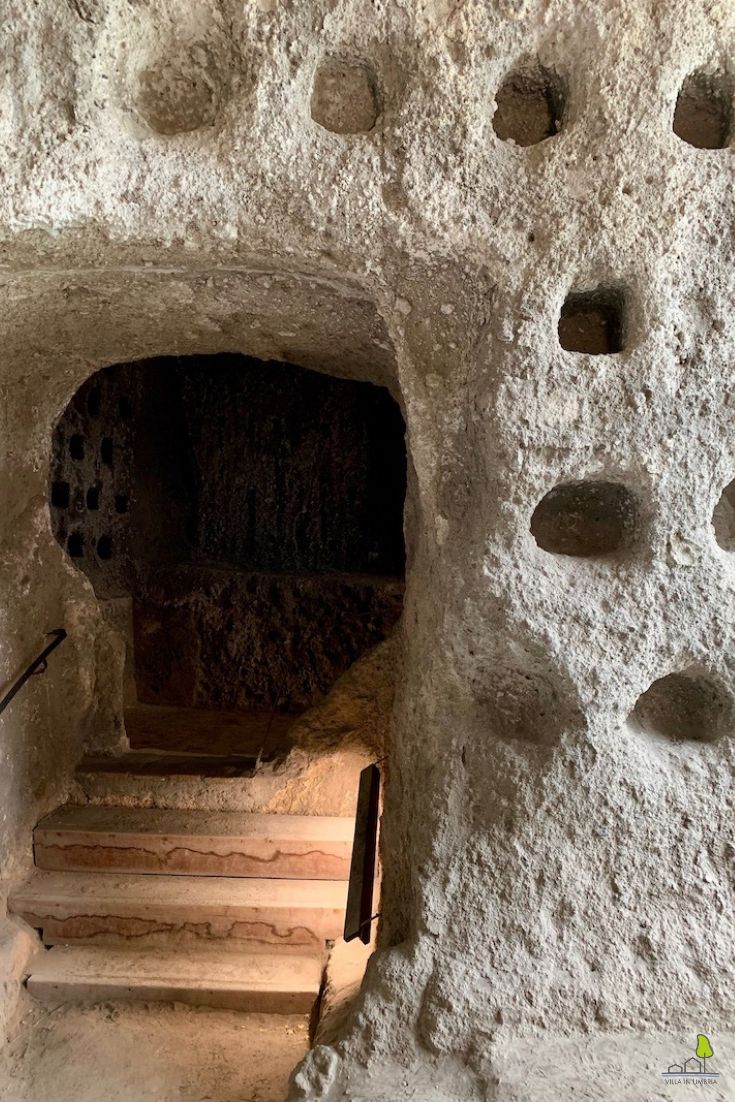
As excavation continued over the following weeks and months, the dimensions of the structure became clearer. The pyramid-shaped shaft was approximately four metres wide at the top, where it met the cellar floor, and narrowed progressively as it descended. A staircase had been cut into one of the walls, its steps spiralling downward around the interior of the pyramid with a precision that spoke of considerable technical skill and deliberate intent. The walls themselves were smooth, cut with tools rather than broken, and bore in places the characteristic marks of Etruscan iron implements working against volcanic rock. On certain sections of the wall, inscriptions had been carved, in the Etruscan alphabet but so far imperfectly deciphered, their meaning adding another layer of uncertainty to a structure that already offered far more questions than answers.
Subsequent investigation revealed that the pyramid beneath the wine cellar was not unique. Further excavation in adjacent properties identified at least two additional pyramid-shaped shafts in the immediate vicinity, their presence masked by centuries of medieval and early modern construction above them. The pattern of distribution suggested that the structures were not isolated anomalies but elements of a coherent system, a designed relationship between multiple shafts whose spatial logic, if it exists, has not yet been deciphered.
The excavation is ongoing: As of the most recent published reports, the full depth of the main pyramid shaft has not been reached. The excavation has been interrupted repeatedly by the practical difficulties of working in a confined underground space beneath an occupied building, by the need to stabilise the walls against collapse during removal of the infill material, and by the careful documentation requirements of a site of this archaeological significance. The bottom of the structure, and whatever it may contain, remains unexplored.
The Pyramids: Shape, Depth and What Lies Inside
The defining characteristic of the Orvieto structures, the feature that separates them from every other underground space previously documented in the city, is their shape. Every other chamber in the Orvieto Underground is essentially rectilinear or cylindrical: rooms with vertical walls and horizontal floors, tunnels of consistent width, wells that descend straight down. The pyramid-shaped shafts are entirely different. Their walls descend at an inward angle, creating a cross-section that is wide at the top and narrows progressively toward the bottom, in the precise geometric form of an inverted pyramid or, in purely architectural terms, a funnel of squared stone.
This form is not accidental and it is not the result of structural compromise or geological constraint. It required considerably more work to create than a simple vertical shaft: the converging walls demanded precise measurement and consistent angling across the entire circumference of the shaft, a feat of three-dimensional planning in stone that implies a high level of technical competence and, more importantly, a very specific intention. Whoever cut these shafts wanted them to be this shape. The question of why has not been answered.
The contents of the shafts, as recovered by the excavation, include pottery fragments spanning a long chronological range, from material consistent with Etruscan production of the sixth and fifth centuries BC to medieval ceramics suggesting that the spaces were used, or at least accessed, well into the medieval period. Animal bones have been found, as have fragments of what may be ritual vessels. On the walls, in addition to the Etruscan inscriptions mentioned above, there are tool marks of different types suggesting that the surfaces were worked at different periods and possibly with different intentions: some sections smooth and carefully finished, others more roughly cut, as if reopened or extended at a later date. The staircase carved into the wall of the primary shaft is a particularly significant feature. It is not a ladder or a series of toe-holds: it is a proper spiral staircase, wide enough for a single person to descend comfortably, its steps regular and carefully finished. Something happened at the bottom of these shafts that required repeated access by living persons. What that something was remains the central question of the entire investigation.
The shape is deliberate. The staircase is deliberate. The inscriptions are deliberate. Everything about these structures communicates intention of the most serious kind. What we do not yet know is what that intention was. And in archaeology, as in life, the gap between the evidence of intention and the knowledge of purpose can be the widest gap of all.
The Etruscan Question: Who Built Them and Why
The Etruscans are the most mysterious of the ancient Italian peoples, and their mystery is the peculiar, frustrating kind that comes not from total silence but from partial speech. They left behind an enormous quantity of material evidence: painted tombs of extraordinary beauty, bronze sculptures of great sophistication, temple foundations, city walls, drainage systems and agricultural terracing across large swathes of central Italy. They also left behind a written language, with over ten thousand inscriptions surviving, almost all of them short, formulaic and uninformative about anything except names, relationships and the most basic ritual acts. The one book-length Etruscan text known to have existed, the Liber Linteus, survives only in fragments used as mummy wrappings in Egypt, and its religious content, though partially translatable, is far from fully understood. We can read Etruscan. We cannot, in any meaningful sense, understand it.
Orvieto, known to the Etruscans as Velzna (rendered in Latin as Volsinii), was one of the twelve cities of the Etruscan League, the loose confederation of city-states that constituted the Etruscan political world from roughly the eighth century to the third century BC. It was also, according to ancient literary sources, the site of the most important pan-Etruscan religious sanctuary, the Fanum Voltumnae, the sanctuary of Voltumna, the supreme deity of the Etruscan federation, where delegates from all twelve cities gathered annually for religious ceremonies and political deliberation. The location of the Fanum Voltumnae has been debated by scholars for centuries: it has been proposed variously as lying on the plateau of Orvieto itself, in the valley below, or at the nearby site of Campo della Fiera, where excavations since 2000 have uncovered temples and votive deposits of extraordinary richness and variety.
The religious significance of Orvieto in the Etruscan world is therefore not in question. What is in question is whether the pyramid-shaped shafts are connected to that religious significance, and if so, how. The shape of the pyramids has prompted several hypotheses, none of them yet confirmed by the available evidence. Some scholars have proposed that the shafts functioned as mundus, the ritual pit that Roman religious tradition associated with the underworld, opened on three days of the year when the boundary between the living and the dead was considered permeable. Others have suggested connections to Etruscan funerary cult, though the absence of human remains in the excavated portions of the shafts argues against a straightforwardly sepulchral function. A third line of interpretation focuses on the staircase and the repeated access it implies, proposing that the shafts served as access points to a deeper level of the underground system whose nature and extent are not yet known.
What all serious scholars agree on is the significance of the find. The pyramid-shaped shafts of Orvieto are unlike anything previously documented in Etruscan archaeology, and their discovery in one of the most important Etruscan cities in Italy, at a site with known connections to the highest levels of Etruscan religious life, is not coincidental. Whatever these structures were for, they were for something important.
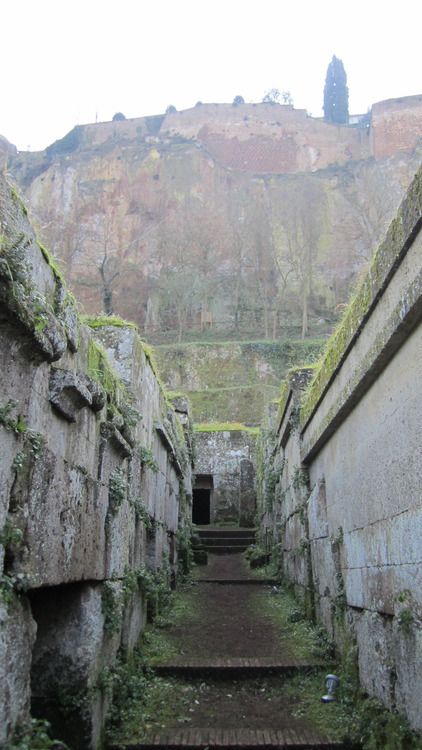
The Etruscan legacy in Orvieto: The evidence of Etruscan Velzna is visible throughout the city, not only underground. The Necropoli del Crocifisso del Tufo, the Etruscan cemetery on the northern slopes of the plateau, is one of the best-preserved Etruscan burial grounds in Italy, its regular grid of family tombs inscribed with the names of their occupants in the Etruscan alphabet. The Museo Nazionale Etrusco di Villa Giulia in Rome holds the greatest single collection of objects from the Orvieto area, including the extraordinary terracotta temple sculptures from the sanctuary at Cannicella. A visit to the city today is, in no small part, a conversation with the civilisation that built it.
What Archaeologists Currently Believe
The most careful and most recent published assessments of the Orvieto pyramids converge on a set of propositions that are stated with appropriate scholarly caution but are, collectively, more than merely speculative. The structures were cut by Etruscan hands, almost certainly between the sixth and the fourth century BC, a period that coincides with the greatest flourishing of Etruscan Velzna as a political and religious centre. The pyramid shape was chosen deliberately, for reasons that were meaningful within the Etruscan cultural and religious framework even if those reasons are not yet recoverable from the available evidence. The staircase implies repeated use by living persons over an extended period, ruling out any interpretation of the shafts as one-time ritual deposits or purely symbolic structures. The presence of infill material, deliberately introduced to seal the shafts at some point in the late antique or early medieval period, suggests that access to the structures was at some point considered dangerous, undesirable or simply unnecessary, and that a conscious decision was made to close them.
Beyond these points of relative consensus, the field remains genuinely open. The most intellectually honest summary of the current state of knowledge is that the pyramids of Orvieto represent a type of structure previously unknown to Etruscan archaeology, discovered in a city whose religious importance to the Etruscan world was without parallel, at a moment when the excavation has barely begun and the most significant parts of the structure, those below the current limit of excavation, remain untouched and unexplored. Whatever lies at the bottom of these shafts, it has not yet been seen by any human eye in over two thousand years. That fact alone is sufficient to make Orvieto one of the most compelling archaeological destinations in Italy.
The Broader Underground City: Orvieto Underground
The pyramids are the newest and most mysterious element of an underground world that has been accumulating beneath Orvieto for three thousand years. The Orvieto Underground, accessible through guided tours departing from the Piazza del Duomo, offers the most comprehensive available experience of this world, leading visitors through a network of tunnels, chambers and shafts that represents only a small portion of the total documented underground space but is sufficient to convey the extraordinary density and variety of what lies beneath the city's streets.
The tour typically covers approximately 500 metres of underground passages, moving through spaces that span the full chronological range of the city's underground history. Etruscan wells of extraordinary depth, their circular shafts dropping twenty and thirty metres through the rock to water sources far below the plateau, alternate with medieval olive presses and dovecotes: the latter an unexpected feature, whole chambers hollowed from the tufa and fitted with rows of nesting niches in which pigeons were kept for food and for the production of fertiliser, a practical exploitation of the underground environment that continued until relatively recently. Roman cisterns, their hydraulic mortar still waterproof after two millennia, stand beside medieval wine cellars and Renaissance storage rooms, each period using the rock for the purposes its own technology and economy required.
The underground is also, in several places, literally the foundation of the structures above. The cathedral of Orvieto, one of the most beautiful Gothic buildings in Italy and the defining monument of the city's medieval period, rests on tufa foundations that extend deep into the rock, and the space immediately beneath it has been partially explored and found to contain materials suggesting use as a sacred space considerably older than the cathedral itself: a continuity of sacred geography, the impulse to locate the holiest site of each successive civilisation at the same point in the landscape, that is characteristic of the most deeply inhabited places in the ancient Mediterranean world.
Visiting Orvieto Underground: Tours are led by expert local guides and depart from the tourist information office in Piazza del Duomo several times daily. The duration is approximately one hour. The temperature underground is a constant 14 degrees Celsius regardless of the season above: bring a light layer even in summer. The passages are generally dry and well-lit, but some sections require ducking through low doorways, and the route is not suitable for those with severe claustrophobia. Booking in advance, particularly in spring and summer, is strongly recommended.
What to See Above Ground: Orvieto's Surface Treasures
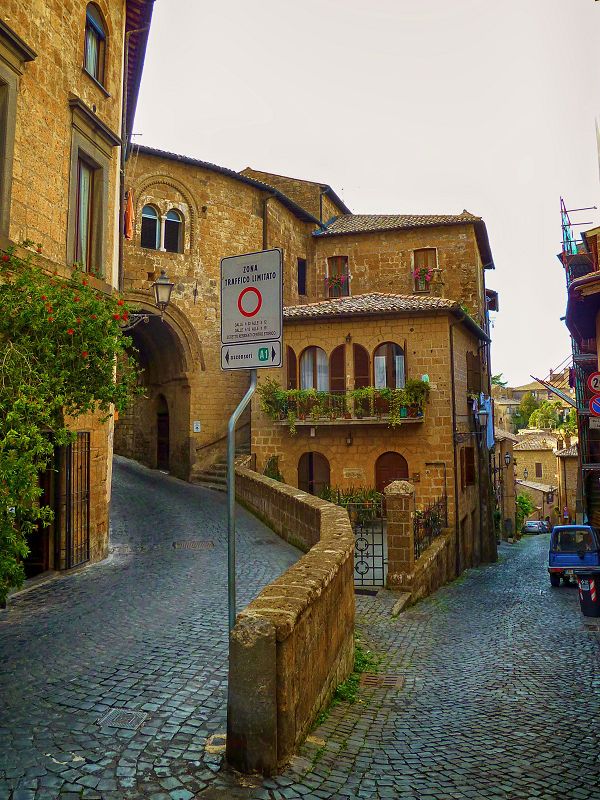
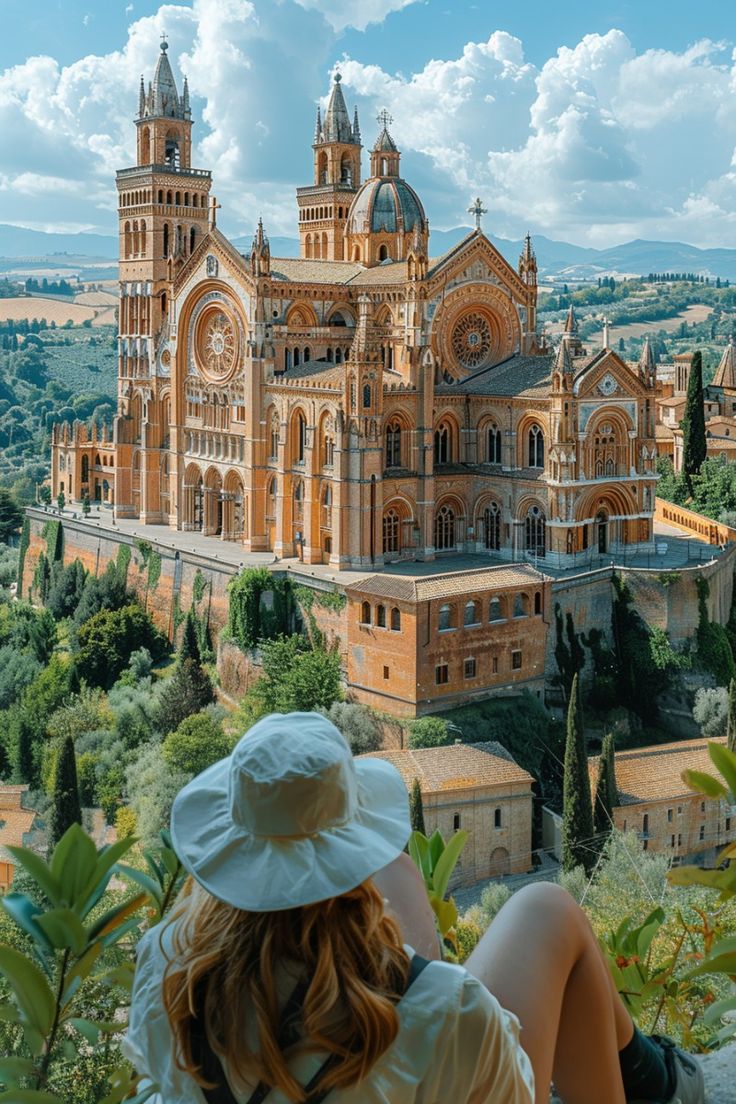
The underground city is the most extraordinary thing about Orvieto, but it would be a serious error to visit the underground and ignore what stands above it. Orvieto's surface is one of the most beautiful and best-preserved historic towns in central Italy, its medieval streetscape intact in ways that the more famous Umbrian cities of Perugia and Assisi, each subjected to more intensive modern development, are not. The Duomo di Orvieto, the cathedral begun in 1290 and worked on by the greatest architects and sculptors of the fourteenth and fifteenth centuries, is one of the supreme achievements of Italian Gothic architecture: its facade a blaze of gold mosaic and carved marble, its interior holding in the Cappella di San Brizio a cycle of frescoes by Luca Signorelli that Michelangelo studied in preparation for the Sistine Chapel ceiling and that remain among the most powerful and least-visited masterworks of Italian Renaissance painting.
The Palazzo del Popolo and the Torre del Moro, the twelfth-century civic tower that offers the finest panoramic view of the plateau and the surrounding valleys, anchor the civic centre of the medieval town. The streets between the cathedral and the tower, particularly the Via del Duomo and the Corso Cavour, are lined with medieval and Renaissance buildings of considerable beauty, their ground floors occupied by shops selling the local Orvieto Classico white wine (one of the most historic wine appellations in Italy, produced from Grechetto and Trebbiano grapes in the volcanic soil of the hills surrounding the plateau) and the distinctive local ceramics whose bold geometric patterns in cobalt blue, orange and cream have been produced in the city's workshops since the medieval period.
How to Get to Orvieto and Practical Tips
Orvieto is one of the most accessible of Italy's lesser-known historic towns, its position on the main Rome-Florence rail corridor making it reachable from either city in well under two hours. From Rome Termini, frequent Intercity and high-speed services reach Orvieto station in approximately one hour and fifteen minutes. From Florence Santa Maria Novella, the journey takes around one hour and forty minutes. The station sits at the foot of the plateau, in the valley below the city, and from it the Funicolare connects the valley floor to the Piazza Cahen at the top of the cliff in approximately three minutes: a short, steep ascent in a cable-driven car that has been in operation since 1888 and remains the most atmospheric arrival in central Italy.
By road, Orvieto is on the A1 Autostrada del Sole, approximately 100 kilometres north of Rome and 160 kilometres south of Florence, making it a natural stopping point on the drive between the two cities. From Rome Fiumicino Airport, a private transfer to Orvieto takes approximately one hour and fifteen minutes, depending on traffic, with a fixed price agreed in advance and door-to-door service to any address in the historic centre. This is particularly convenient for travellers who wish to begin their Italian journey not in Rome but in the quieter, more intimate atmosphere of one of Umbria's most extraordinary cities.
The best time to visit Orvieto is in the spring and autumn, when the mild temperatures and the lower number of visitors allow the city to be experienced at its most peaceful. Summer is hot and can be crowded on weekends, when day-trippers arrive from Rome and Florence in numbers that strain the narrow streets of the historic centre. Winter, particularly January and February, offers the quietest conditions of all: the underground is at a constant temperature regardless of season, and the cathedral, stripped of summer tour groups, reveals itself as the meditative space it was designed to be.
Orvieto Classico: The wine produced in the volcanic soil around Orvieto has been celebrated since antiquity, when the Etruscans used the natural coolness of their underground chambers to store it. Orvieto Classico DOC, made primarily from Grechetto and Trebbiano grapes, is a crisp, mineral, subtly aromatic white with a characteristic dry finish and a long history. The best versions come from the Classico zone immediately surrounding the plateau, where the volcanic soil imparts a mineral complexity that the wines produced further from the plateau do not share. Ask in any restaurant in the city for the local Classico and you will drink, in the most literal sense, from a tradition that predates the cathedral above you by two thousand years.
Comments
No comments yet. Be the first to share your thoughts!
Leave a Comment
Your comment will appear after moderation.