
 Michelle
 You have booked the ticket. The dates are set. The destination is chosen. Now comes the part that separates the travellers who arrive refreshed, organised and ready to enjoy themselves from those who land exhausted, stressed and already halfway through a holiday they have barely begun. Flying is one of the great modern conveniences, but it rewards preparation in a way that almost no other form of travel does. The difference between a smooth journey and a chaotic one is almost always made before you leave home. Here are nine things you should always do, always know and always remember before you get on a plane.
When Is the Best Time to Book Your Flight?
Before we reach the nine tips, it is worth addressing the question that precedes them all: when should you book? The science of airline pricing is genuinely complex and the algorithms that airlines use to set fares change constantly, but a few broadly reliable principles have emerged from years of research and traveller experience.
For short-haul European routes, the sweet spot for booking is generally six to eight weeks before departure. Earlier than this and you are often paying a premium for availability; later and prices climb sharply as the flight fills. For long-haul intercontinental flights, the window extends to three to four months in advance, particularly for travel during peak periods such as Christmas, Easter and the main summer holiday months.
Day of the week matters too. Tuesdays and Wednesdays are consistently the cheapest days to fly on most routes, for the simple reason that business travel peaks on Mondays and Fridays and leisure travel peaks at weekends. If your schedule is flexible, an early Tuesday morning departure on a budget carrier can cost a fraction of the equivalent Saturday afternoon flight. Similarly, early morning departures (the first flight of the day from any airport) are almost always the cheapest option and also the least likely to be delayed, since the aircraft has had the entire night to be serviced and positioned.
Booking tip: Use price alert tools such as Google Flights, Skyscanner or Kayak to track fares on your desired route over time. Set an alert for your destination and check it weekly. Most routes show a clear pattern of price movement, and understanding that pattern gives you a significant advantage over buying impulsively. Also remember to clear your browser cookies or use an incognito window when searching for flights: some booking sites show slightly higher prices to repeat visitors.

1. Travel Light and Save More Than You Think
Every airline has its own baggage policy, and the variations are genuinely bewildering. Budget carriers in particular have turned luggage fees into a significant revenue stream, and the charges for checking a bag, for oversized bags, or for bags that exceed the weight limit have become substantial. A return journey with a bag that is even two kilograms over the limit can cost you as much as the base price of the ticket itself on some carriers.
The solution is not simply to pack less, but to pack smarter. Make a list before you start packing, not as you pack. A list made in advance reflects what you actually need; a list made in the moment of packing reflects everything you are worried you might possibly need. These are very different things. Then pack the list, not the anxiety.
The key discipline is the three-outfit principle: for most trips of up to ten days, three versatile outfits that can be combined and layered in different ways, supplemented by what you can wash at the hotel or in a launderette, is genuinely sufficient. The items that make luggage heavy are rarely the ones that prove essential during the trip. Shoes are the biggest culprit: most travellers bring too many pairs. One comfortable walking shoe and one smarter option covers almost every situation.
Travelling with only carry-on luggage, where your itinerary allows, transforms the airport experience entirely. You walk off the plane and straight out of the airport. No waiting at baggage reclaim. No risk of the airline losing your bag. No extra fees. No queueing at the check-in desk. It requires discipline, but the freedom it delivers at both ends of the journey is extraordinary.
Weight tip: Weigh your bag at home before you leave, using bathroom scales, so there are no unpleasant surprises at the check-in desk. If you are right at the limit, wear your heaviest items on the plane rather than packing them. A heavy jacket, boots and jeans worn on the body do not count towards your luggage allowance. Experienced travellers use this technique routinely.
2. Always Label Your Bag from the Inside
External luggage tags are essential, but they have a well-documented problem: they catch on conveyor systems, on other bags and on baggage handling equipment, and they are torn off with remarkable frequency. Airlines lose or misroute hundreds of thousands of bags every year, and a significant proportion of those bags become difficult to reunite with their owners simply because all identifying information was on the external tag that is now gone.
The solution is entirely simple and takes approximately thirty seconds. Place a card or piece of paper inside your bag, clearly visible as soon as the bag is opened, with your full name, phone number, email address, and your outbound and return destinations. If your bag is opened by airline staff trying to identify it, they will find your information immediately and contact you. Without it, the bag may sit in a lost luggage office for weeks while the airline attempts to match it to a passenger record.
For additional protection, consider attaching a small Bluetooth tracker (such as an Apple AirTag or a Tile) inside your checked bag. These devices allow you to track your bag's location in real time using your smartphone, which means that if the airline routes your bag to the wrong airport, you know immediately rather than discovering it when you reach the baggage carousel. This knowledge gives you a significant advantage when filing a missing bag report, since you can tell the airline exactly where the bag is rather than simply that it has not appeared.
Smart labelling tip: Do not put your home address on your external luggage tag, particularly if you are flying from your home city. A clearly visible home address on a suitcase at the airport tells any observant thief that your home is currently empty. Use your email address and phone number instead: these allow an airline to reach you without exposing your location.
3. Triple-Check Your Travel Documents
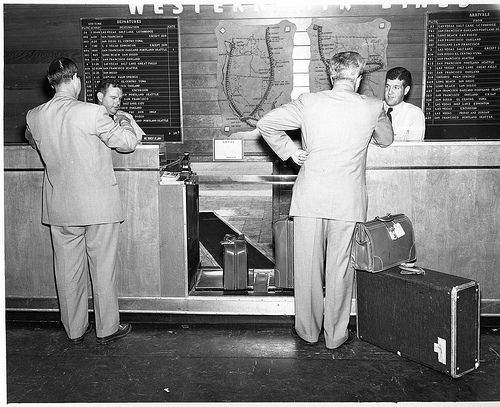
This is the tip that people always nod at and then occasionally forget in practice, sometimes with catastrophic consequences for their holiday. The rules around travel documentation are not uniform, they are not always obvious, and they change more often than most travellers realise. It is entirely your responsibility to arrive at the border with the correct documents. Airlines are responsible for getting you from one airport to another; they are not responsible for getting you through immigration at the other end.
The most important check is visa requirements. Some countries require a visa in advance, some require a visa on arrival, some offer an electronic travel authorisation (ETA or eVisa) that must be purchased online before travel, and some require nothing at all. The rules differ depending on your nationality, the length of your stay, the purpose of your visit and, increasingly, on very recent bilateral agreements between governments that may not yet have filtered into the travel agent's knowledge. Always check the official government website of your destination country, not a third-party summary, and check it within two weeks of travel.
Passport validity is another area where travellers are caught out more often than you might expect. Many countries require that your passport is valid for at least six months beyond the date of your planned departure from their territory. A passport that is technically still valid on the day you fly may not meet this requirement, and you will be denied boarding. Check your passport's expiry date against this rule, not simply against the date of your return flight.
If you are travelling with children, make sure you have the correct documentation for them, including any required parental consent letters if only one parent is travelling, and that their passports are both valid and within the six-month rule. Children's passports expire more quickly than adult passports, and this is a detail that parents travelling with young children sometimes discover too late at the check-in desk.
Document backup tip: Photograph every important document, including your passport, visa, travel insurance policy, hotel bookings, car hire confirmation and boarding passes, and store the photographs in a cloud service you can access from any device. If your phone is lost or stolen, you can access these from any computer or borrowed phone. Also email the photos to yourself as an additional backup. This two-minute precaution has rescued countless holidays from disaster.
4. Book Your Ticket in Exactly the Name on Your Passport
This sounds like advice so obvious it barely needs stating. But the number of passengers who are refused boarding or subjected to lengthy and stressful additional checks because the name on their ticket does not precisely match the name on their passport runs into the thousands every year. It is a mistake that is entirely avoidable and entirely costly to make.
The issue arises in several ways. Some passengers book using a nickname or shortened version of their name rather than their full legal name as it appears on their passport. Some make spelling errors in their booking that seem trivial but create a mismatch that the system flags. Some passengers have middle names on their passport that they routinely omit from other documents and do not think to include in a flight booking, but which the airline's security protocols require to match exactly.
The rule is absolute: the name on your ticket must match the name on your passport exactly. Every word, every space, every hyphen. When booking, open your passport before you begin and type the name as it appears, character by character. Do not rely on memory, autocomplete or the way you habitually write your name on everyday documents. If you have a compound first name, a double-barrelled surname or a name with diacritics (accents, umlauts and so on), pay particular attention to ensuring these are reproduced correctly.
If you discover an error after booking, contact the airline immediately. Most carriers allow name corrections of minor errors for a fee, but the earlier you request the correction, the lower the cost and the simpler the process. Attempting to correct a name discrepancy at the check-in desk on the day of travel is not a situation you want to be in.

5. Choose a Brightly Coloured Suitcase
This tip sounds almost frivolous compared to the others, but the practical value of it is real and is underestimated by travellers who have not yet experienced the particular frustration of standing at a baggage carousel after a six-hour overnight flight, trying to identify their standard-issue black roller bag among forty other identical standard-issue black roller bags, each disappearing around the carousel at precisely the moment you think you recognise it.
The answer is simple: do not buy a black suitcase. Or if you already own one, personalise it in a way that makes it unmistakable. A bright luggage strap, a piece of distinctive ribbon tied to the handle, a large sticker in a contrasting colour, or the deliberate purchase of a bag in a vivid and unusual colour such as orange, yellow, red or lime green. The goal is to be able to identify your bag from twenty metres away, from any angle, even when you are tired and the lighting is poor and the carousel is crowded.
Beyond identification, a distinctive bag is also significantly less likely to be accidentally or deliberately taken by another passenger. The vast majority of bags that go missing from carousels do so because another passenger, equally tired and confused, picks them up in error. A bag that looks unlike every other bag in the arrivals hall is almost immune to this problem.
Luggage identification tip: Photograph your bag before you check it in. If the airline loses it, a clear photograph of the bag, including distinctive features, handles, wheels and any personalisation, is the single most useful piece of information you can give to the lost luggage team. It dramatically accelerates the identification and recovery process.
6. Dress for Comfort, Not Appearance
The aircraft cabin is a physically demanding environment. The air is dry, the pressure is lower than at sea level, temperatures fluctuate between the air-conditioned chill of the boarding gate and the close warmth of a full cabin, and you are going to be sitting in the same position for anything from one to sixteen hours. What you wear makes a significant difference to how you feel when you land.
The single most versatile garment for air travel is the hoodie. This is not a new discovery: experienced long-haul travellers have known it for years. A good quality hoodie provides warmth when the cabin is cold, can be rolled into a pillow when the cabin is warm, has pockets for your phone and boarding pass, and the hood provides a remarkable degree of sensory isolation when you want to sleep. Pulled forward around the face, it blocks peripheral light and signals to neighbouring passengers that you are not available for conversation. It is, in short, a multi-function travel tool disguised as casual clothing.
Beyond the hoodie, the principles for flight clothing are: natural fabrics over synthetics (they breathe better in a dry cabin and feel less uncomfortable after several hours), layers over a single thick garment (so you can adjust as the temperature changes), and comfortable shoes that slip on and off easily (for security checks and, on long flights, for walking the aisle to prevent deep vein thrombosis without bending down to re-lace trainers).
Avoid tight waistbands, tight sleeves and anything that restricts circulation. The mild bloating that most passengers experience during flight, caused by the expansion of gas in the body at lower cabin pressure, makes tight clothing increasingly uncomfortable as the flight progresses. Loose, stretchy trousers and a relaxed top are the correct choice, regardless of what they look like.
Compression socks: If you are on a flight of four hours or more, compression socks are worth considering, particularly if you are over fifty, pregnant, have had recent surgery, or have any history of circulatory issues. They reduce swelling and the risk of deep vein thrombosis significantly. They are available cheaply online or in most pharmacies, and experienced long-haul travellers wear them routinely. They are not glamorous. They work.

7. Carry Your Money in Multiple Places
Travel in 2026 relies heavily on cards, and in most of the world's major airports and tourist destinations you can manage perfectly well without cash. But relying entirely on a single card and a single device for all your financial needs during a trip is a vulnerability that experienced travellers do not accept.
The principle is simple: distribute your financial resources across multiple locations, so that the loss, theft or failure of any one component does not leave you stranded. This means: some cash in your main wallet, some cash in a separate location (an interior jacket pocket, a money belt worn under clothing, or a zipped inner compartment of your bag), and at least two different payment cards from different card networks or banks. Visa and Mastercard are both widely accepted, but some terminals occasionally have issues with one or the other. Having both eliminates the risk of being unable to pay in a restaurant or hotel because of a network issue.
A travel money belt worn under your clothing is the classic solution for carrying cash and a backup card in destinations where pickpocketing is a known risk. They are slightly uncomfortable but entirely effective, and the inconvenience of accessing them is exactly what makes them secure: a pickpocket who cannot see or feel the belt cannot target it. In lower-risk destinations, a simple zipped interior pocket achieves much the same result.
Inform your bank and card providers of your travel plans before you depart. Many banks automatically flag and block transactions from unfamiliar foreign locations as potential fraud, which can leave you without access to funds at exactly the moment you need them most. A two-minute call or an update via your banking app before you travel prevents this entirely.
8. Charge Everything Before You Leave
This tip seems trivial until the moment you are sitting in a departure lounge, your flight has been delayed by two hours, and your phone is at fourteen percent battery. At that point, everything about this advice suddenly seems entirely wise.
The night before travel, charge every device you are taking with you: smartphone, laptop, tablet, e-reader, noise-cancelling headphones, camera, smartwatch, Bluetooth tracker, electric toothbrush. Do not rely on doing this the morning of travel when you are stressed and rushing. Make it the last thing you do before bed the night before, so that every device leaves the house at one hundred percent.
A portable power bank is one of the most consistently valuable travel accessories you can own. Modern power banks are compact, light and capable of fully recharging a smartphone two or three times from a single charge. Check airline regulations before packing one in checked luggage: most power banks must travel in carry-on baggage due to their lithium battery content, and there are capacity limits that vary by airline. Keep this in your carry-on bag, not your hold luggage.
A universal travel adapter is equally essential if you are travelling internationally. Plug types differ across countries and regions, and discovering that your charger is incompatible with the sockets in your hotel room on the first evening is a minor but entirely avoidable frustration. Buy an adapter that covers the major world regions rather than a single country-specific version, and it will serve you on every international trip you ever take.
Connectivity tip: Download everything you might need offline before you board: maps of your destination for offline use in Google Maps or Maps.me, any series or films you want to watch, your boarding passes, hotel confirmation PDFs and any travel documents. Aircraft wifi is unreliable, expensive and frequently inadequate for streaming. A device that is fully loaded before boarding makes a long flight entirely self-sufficient.
9. Book Your Airport Transfer in Advance
This is the tip that most travellers save for last, treat as an afterthought, and then wish they had taken more seriously. The final stage of any journey, the transfer from the arrival airport to your hotel or home, deserves as much careful planning as any other part of the trip. It is the moment when you are most tired, most disoriented, most laden with luggage, and least equipped to make good decisions under pressure.
Arriving at an unfamiliar airport, stepping out of arrivals into the general chaos of taxis, touts, buses and confusion, negotiating with a driver whose meter may or may not be working correctly, loading bags into a vehicle whose legality you are not entirely sure of: this is not a good ending to what may have been a very long journey. And yet this is exactly the experience that millions of travellers accept as inevitable every day, simply because they did not take ten minutes to sort out their transfer in advance.
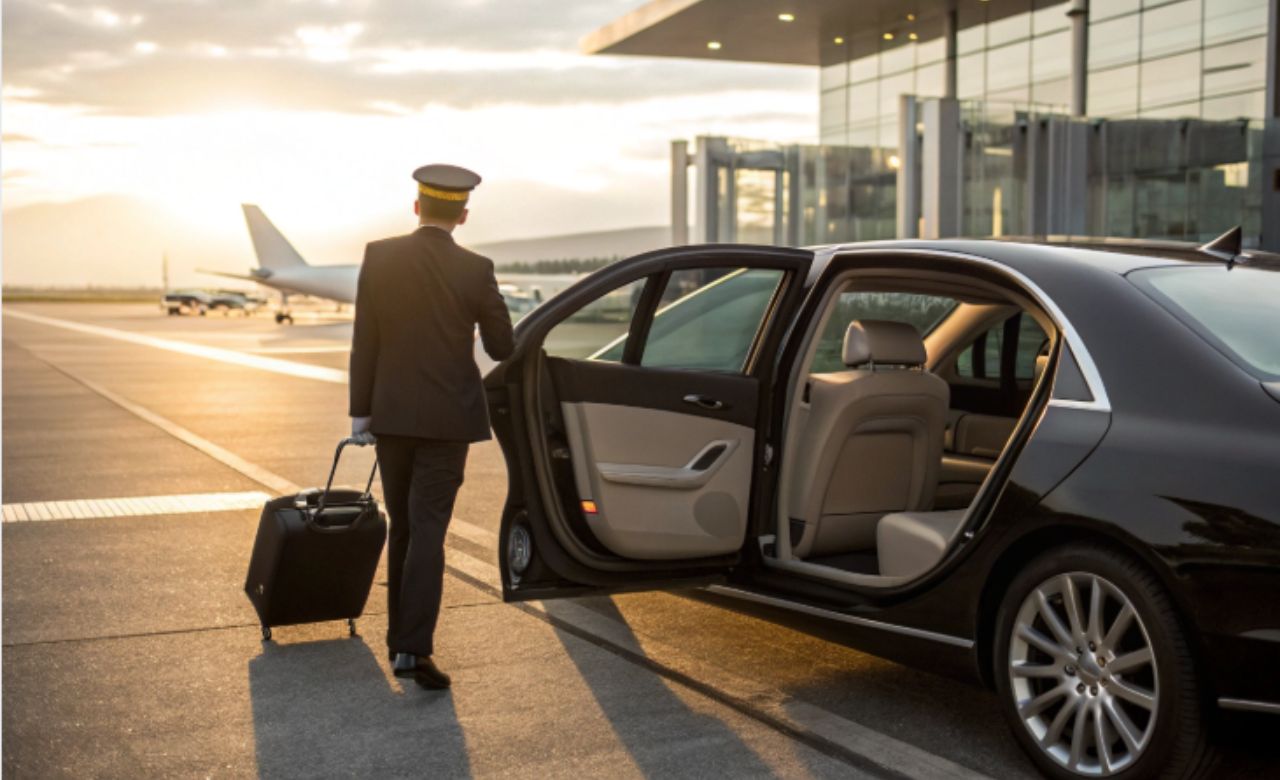
The solution is straightforward. Book a private transfer before you leave home. A reputable private transfer service gives you a fixed price agreed in advance, a named driver waiting in the arrivals hall with your name on a board, a vehicle that is licensed, insured and appropriate for your group size, and a direct journey to your destination with no detours, no meter disputes and no uncertainty. After a long flight, this is not a luxury. It is a very sensible investment in the quality of your own experience.
Airport Connection operates in over 600 airports across more than 100 countries, with fixed prices, no hidden costs and door-to-door service that begins the moment you walk out of arrivals. You book online in advance, your confirmation email contains everything you need, and the driver is already there when you arrive. The only decision you need to make is where you would like to go.
Transfer tip: When booking, always include your flight number. A good transfer service monitors flight arrivals in real time and automatically adjusts your driver's arrival time if your flight is delayed. This means that even if your flight lands an hour late, your driver is still there when you walk out of arrivals. This feature alone is worth the price of a private transfer over a pre-booked taxi that will not wait.
Common Mistakes Travellers Make at the Airport
Arriving too late. The single most avoidable cause of missed flights is simply not allowing enough time. Security queues are unpredictable, particularly at major hubs during peak periods. Passport control at international terminals adds time. Walking between terminals in large airports can take twenty minutes. And at many airports, gates close fifteen to twenty minutes before departure, not at departure time. For short-haul flights, two hours is the minimum. For long-haul, three hours. If you have a checked bag, add another fifteen minutes.
Packing prohibited items in carry-on luggage. Liquids over 100ml (in most jurisdictions still), lighters, certain tools, certain food items: the list of things that will be confiscated at security is long and varies by country. Check the restrictions for both your departure country and your destination country before you pack. Losing a favourite bottle of perfume or a quality multitool to the security tray is entirely avoidable with five minutes of research.
Not checking in online. Online check-in opens typically twenty-four to forty-eight hours before departure and closes a few hours before the flight. Checking in online gives you advance seat selection (on most carriers), eliminates the check-in desk queue, and allows you to go straight to bag drop if you are checking luggage, or straight to security if you are travelling carry-on only. There is almost no situation in which not checking in online is the better choice.
Forgetting to eat and drink properly during travel. Cabin air is extremely dry, with humidity levels typically around ten to twenty percent (compared to forty to sixty percent in a comfortable home environment). This accelerates dehydration significantly. Drink water consistently throughout any flight, particularly long-haul. Avoid excess alcohol, which dehydrates further and disrupts sleep quality. Bring your own snacks if you are particular about what you eat: airline food has improved considerably but remains unpredictable, and the timing of meal service does not always align with when you are actually hungry.



Comments
No comments yet. Be the first to share your thoughts!
Leave a Comment
Your comment will appear after moderation.