 Michelle
 Barcelona has a well-earned reputation for being one of the most expensive cities in southern Europe for visitors, and that reputation is not entirely undeserved. Hotels in the Eixample and the Gothic Quarter command prices that would not be out of place in Paris or Amsterdam. Dinner at a good restaurant on the Passeig de Gracia can be a serious investment. Entry to the Sagrada Familia, the most visited monument in Spain, is not inexpensive and must be booked well in advance. But Barcelona also has another side: a city of extraordinary public spaces, magnificent free architecture, beaches, hilltop viewpoints and covered markets that belong to everyone, cost nothing to enjoy and contain some of the most memorable experiences the city offers. You just need to know where to look.
Why Barcelona Rewards the Budget-Conscious Traveller
Barcelona was designed, more than any other European city, to be experienced on foot and in public. The great urban planning projects that transformed the city in the late nineteenth and early twentieth centuries, from Ildefons Cerdà's rational grid of the Eixample to the sequence of public spaces that connect the Gothic Quarter to the sea via the Ramblas, created a city whose finest qualities are fundamentally open and accessible. The architecture of Gaudí that defines Barcelona's visual identity, from the Park Guell to the facade of the Casa Batlló to the towers of the Sagrada Familia, is largely visible from the street at no cost. The beach that runs along the city's eastern flank for four and a half kilometres is public. The hilltops that offer the finest views over the city and the Mediterranean are freely accessible on foot. The covered markets that are among the most beautiful in Europe charge nothing to enter.
This does not mean that Barcelona is a cheap city overall. But it does mean that the traveller who plans carefully and makes use of what the city gives freely will have an experience that is in many respects richer and more authentic than one spent primarily in paid attractions. The free Barcelona is, in many ways, the real Barcelona: the city as its residents experience it, in its streets and markets and beaches and public spaces, rather than the curated version seen from behind a ticket barrier.
The secret free hours at paid museums: Several of Barcelona's major museums, including the Museu Nacional d'Art de Catalunya (MNAC) on Montjuic and the Museu Picasso in the Gothic Quarter, offer free entry during specific hours on the first Sunday of each month and on certain other designated days. Check the individual museum websites before your visit and plan your schedule around these opportunities. The savings are significant and the experience of the Picasso Museum in particular, housed in a magnificent Gothic palace in El Born, is not to be missed.
1. The Gothic Quarter: Medieval Streets, Free and Extraordinary
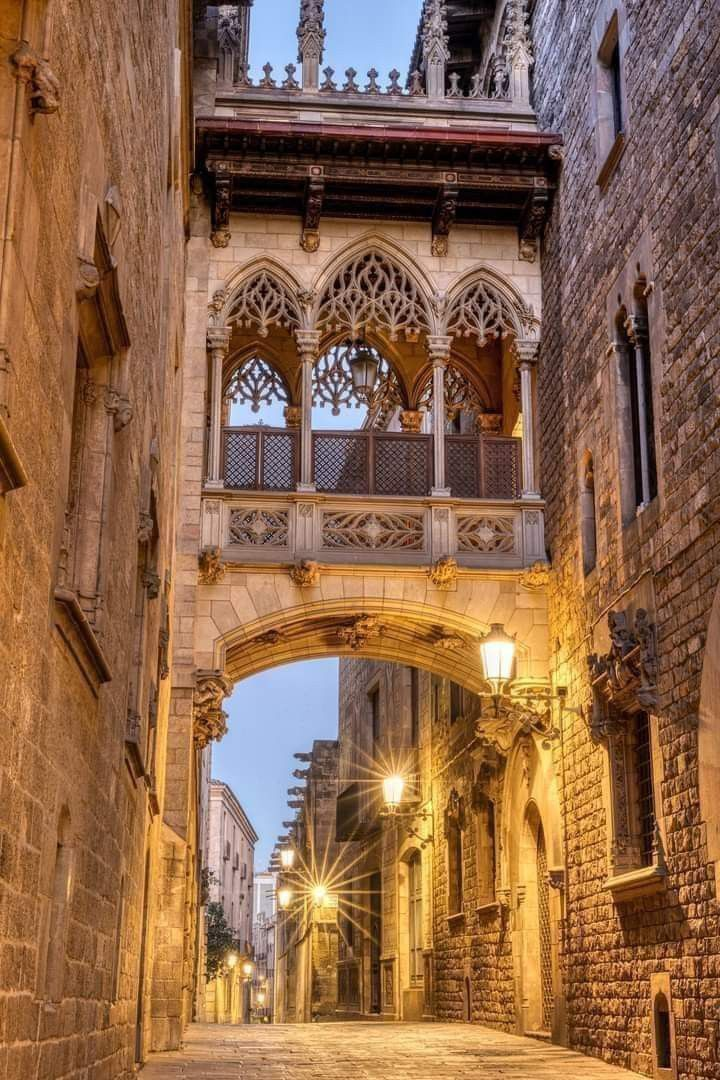
The Barri Gòtic, the Gothic Quarter, is the oldest continuously inhabited part of Barcelona and one of the finest medieval urban ensembles in Europe. It is entirely free to walk through, and walking through it is one of the best things you can do in the city. The quarter sits at the heart of the old city, between the Ramblas and the Via Laietana, and it contains layer upon layer of urban history: Roman walls and columns, a cathedral of extraordinary presence, medieval palaces, Baroque churches, tiny squares shaded by orange trees, and a maze of narrow streets that seem specifically designed to make you lose your bearings in the most pleasurable possible way.
The Barcelona Cathedral, the Catedral de la Santa Creu i Santa Eulàlia, is the spiritual heart of the Gothic Quarter and one of the most magnificent Gothic cathedrals in Spain. Entry to the cathedral itself is free during the morning visiting hours (specific times vary seasonally and on Sundays). The nave, with its soaring columns and elaborate choir enclosure, contains some of the finest Gothic stonework in Catalonia. The cloister, one of the most beautiful in Spain, houses a flock of thirteen white geese that have been kept there for centuries, according to tradition in memory of Saint Eulalia who was martyred at the age of thirteen: a detail that has charmed visitors for as long as anyone can remember.
Beyond the cathedral, the Gothic Quarter rewards slow exploration without a fixed itinerary. The Plaça Sant Felip Neri, a small, quiet square shaded by trees and marked on its walls by the pockmarks of Civil War shelling, is one of the most atmospheric corners of old Barcelona. The Plaça Reial, a grand nineteenth-century square just off the Ramblas with palm trees, lanterns designed by the young Gaudí and a ring of arcaded buildings, is free to walk through and one of the finest examples of the Neoclassical urban design that characterised Barcelona's nineteenth-century expansion. The Pont del Bisbe, the neo-Gothic bridge that spans the narrow Carrer del Bisbe connecting two government buildings, is one of Barcelona's most photographed architectural details and costs nothing to look at.
The Temple d'August, four ancient Roman columns standing inside a medieval courtyard at the centre of the Gothic Quarter, can be visited free of charge during specific hours and represents one of the most striking moments of direct contact with Barcelona's ancient Roman past. The Plaça del Rei, the magnificent square that formed the ceremonial heart of medieval Barcelona, and where according to tradition Christopher Columbus was received by Ferdinand and Isabella after his return from the Americas, is a public space that requires no ticket and provides one of the finest architectural tableaux in the city.
When to visit the Gothic Quarter: Go early in the morning, before 9, when the streets are quiet and the light is low and golden. The Gothic Quarter becomes genuinely crowded by mid-morning, particularly along the Carrer del Bisbe and around the cathedral. An early start gives you the old city essentially to yourself, and the quality of the experience, the sounds of the city waking up, the smell of fresh bread from the bakeries, the pigeons on the empty squares, is entirely different from the midday version.
2. La Barceloneta and the Waterfront: the Sea Belongs to Everyone
One of Barcelona's greatest gifts to its visitors is the fact that it is a major European capital with a genuine beach. The beaches that run along the city's eastern flank from the Barceloneta neighbourhood to the Diagonal Mar, a continuous stretch of approximately four and a half kilometres, are entirely public, entirely free and entirely magnificent on a warm day. They were created, or in the case of Barceloneta substantially rebuilt, in preparation for the 1992 Olympic Games, and the urban renewal project that accompanied the Games transformed a formerly neglected and industrial waterfront into one of the finest urban seaside environments in Europe.
La Barceloneta beach, the closest to the old city and the most popular, is a wide, well-maintained stretch of sand with lifeguards, outdoor showers, beach volleyball nets, cycle paths and a lively, democratic atmosphere that mixes Barcelona residents of every age and background with visitors from around the world. The beach is at its best in the early morning and the late afternoon: at midday in July and August it becomes genuinely crowded, but at either end of the day it has a quality of Mediterranean ease that is deeply enjoyable. The promenade behind the beach, the passeig marítim, is lined with bars and restaurants but the beach itself costs nothing.
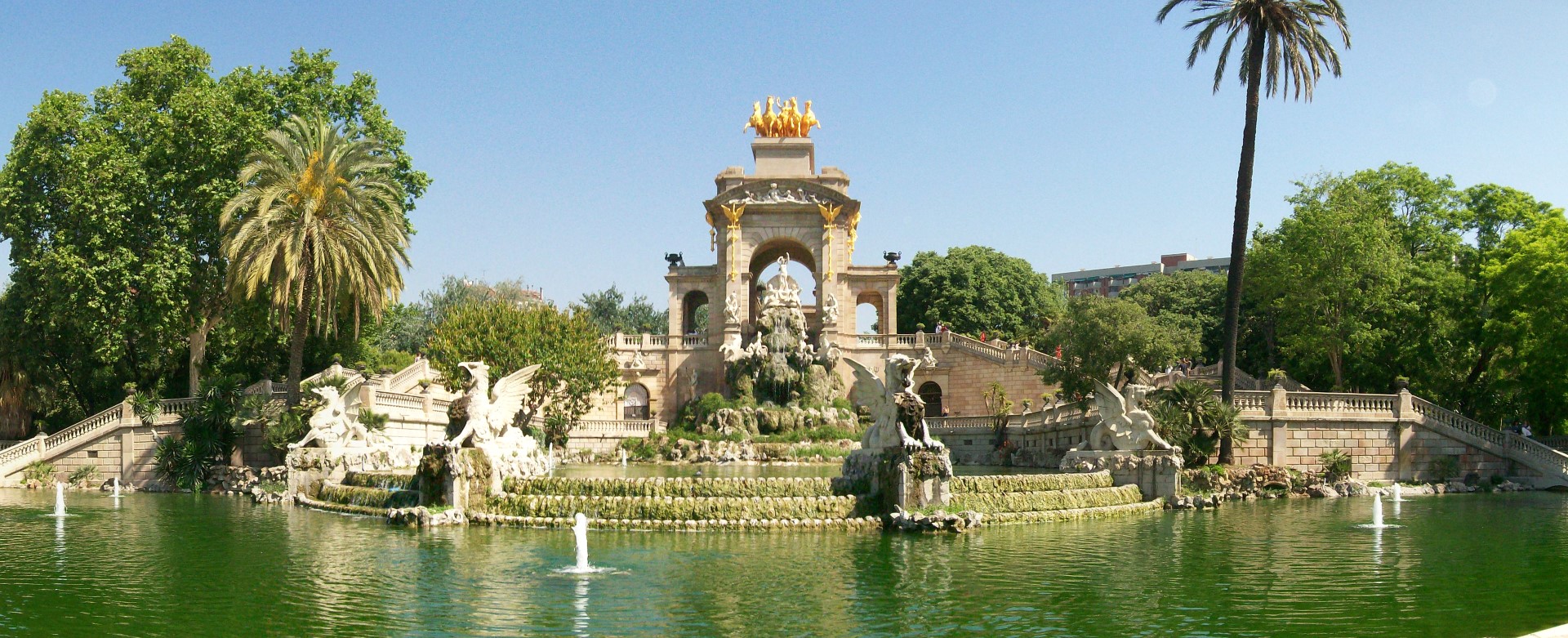
Walking north along the waterfront from Barceloneta, past the Olympic Port and its cluster of towers and marina, and continuing through the newer districts of the 22@ technology quarter to the Parc de la Ciutadella, which provides a large, leafy free park with a boating lake and the ornate Cascade fountain at its centre, constitutes a full half-day of free exploration that takes you through several different phases of Barcelona's architectural and urban history.
The Port Vell, the old harbour at the foot of the Ramblas, is entirely free to walk around and offers excellent views of the waterfront, the cruise terminal and the Montjuic hill behind. The Columbus Monument at the point where the Ramblas meets the sea is another of those Barcelona details that costs nothing to look at and provides an excellent focal point for understanding the city's relationship with the sea that has defined so much of its history. A short distance further along the waterfront, the Barceloneta neighbourhood itself, the eighteenth-century grid of narrow streets behind the beach that was originally built to house fishermen and sailors, is one of the most characterful and genuinely local areas of the city and is entirely free to explore on foot.
3. Park Guell: the Free Areas of Gaudi's Extraordinary Garden
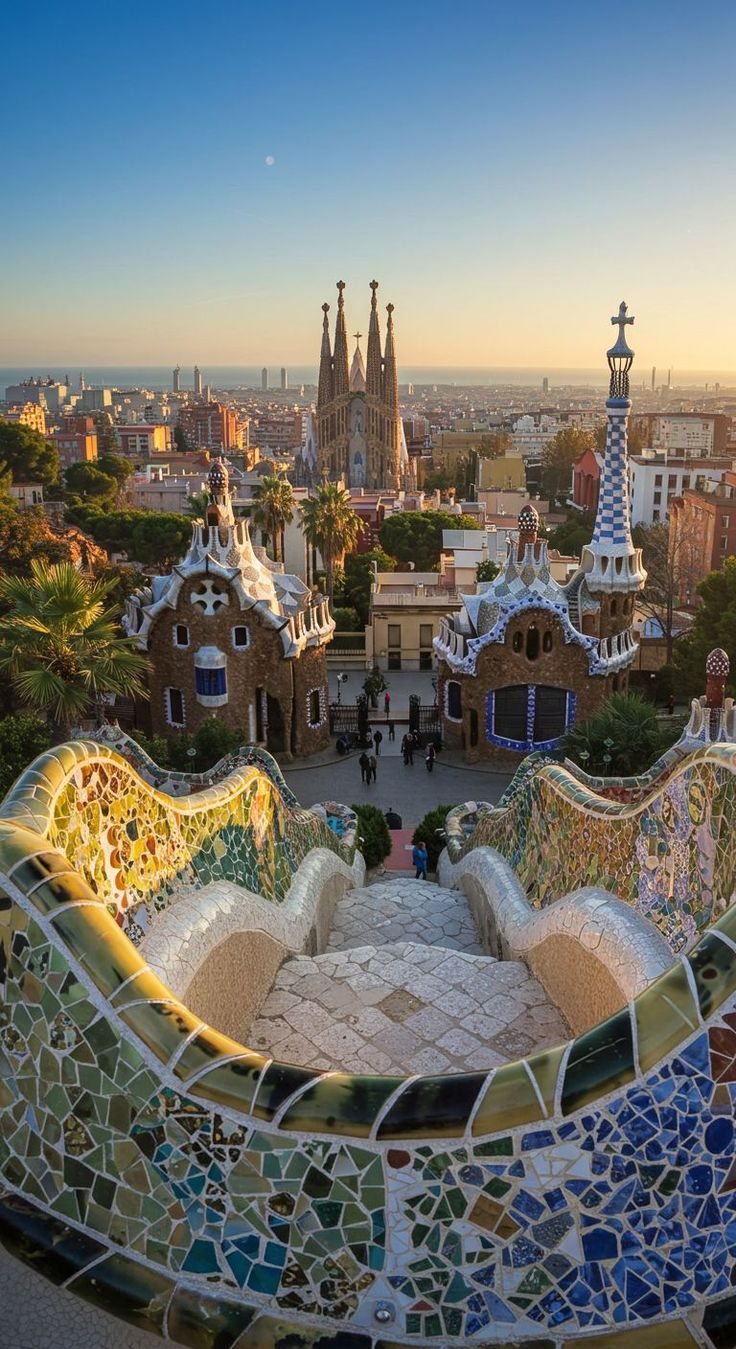
Park Guell is one of the most visited places in Barcelona, and entry to its most famous area, the so-called Monumental Zone containing the dragon stairway, the mosaic terrace and the Hypostyle Room, requires a timed-entry ticket that must be booked well in advance and is not cheap. But the Monumental Zone represents only a small fraction of the park's total area, and the remainder of Park Guell, the extensive forested hillside with its winding viaducts and elevated walkways, the pine woods that cover the upper slopes, and the extraordinary views over Barcelona and the Mediterranean, is entirely free and accessible to all visitors at all times of day.
Park Guell was designed by Antoni Gaudí and his collaborator Josep Maria Jujol between 1900 and 1914 as a planned garden city commissioned by the Catalan entrepreneur Eusebi Güell. The project was never completed as a residential development, as only two houses were ever built, but the infrastructure that Gaudí created, the viaducts, the pathways, the naturalistic stone columns that support the elevated walkways above the hillside, is one of the most extraordinary pieces of landscape architecture in the world. Gaudí used local stone and allowed the terrain to dictate the form of the structures to a degree that is still radical by the standards of contemporary architecture, and the result is a park that seems to have grown organically from the hillside rather than been imposed upon it.
Walking the free areas of Park Guell is most rewarding in the early morning, before the tour groups arrive and before the heat of the day makes the uphill approach from the Gracia neighbourhood genuinely tiring. The main free entrance on the Carrer de Larrard gives access to the upper section of the park, from which you can walk through the forested paths and along the elevated viaducts to several viewpoints that offer superb panoramic views over Barcelona. The light in the first hours after dawn on the city below, with the sea glittering in the distance and the towers of the Sagrada Familia visible above the rooftops of the Eixample, is one of those experiences that justifies the early start entirely.
The neighbourhood immediately below Park Guell, the Gracia district, is one of the most characterful and genuinely local neighbourhoods in Barcelona, and a visit to the park combines naturally with a morning spent exploring its small squares, its independent shops and cafes, and its unhurried residential atmosphere. The Plaça del Sol and the Plaça de la Virreina are particularly good examples of the kind of neighbourhood square that Barcelona does better than almost any other city in Europe: shaded, sociable, full of people drinking coffee and talking at the outdoor tables, and entirely free to sit in.
Common tourist mistakes in Barcelona: Assuming that a walk along the Ramblas constitutes an experience of authentic Barcelona, when the Ramblas is in fact one of the most tourist-saturated streets in Europe and almost entirely disconnected from the way Barcelonins actually live. Eating in the restaurants immediately visible from the Ramblas or the Gothic Quarter's main tourist circuit, where quality is typically low and prices high. Attempting to visit Park Guell's Monumental Zone without a pre-booked ticket and being turned away. Missing the Gracia neighbourhood entirely, which is one of the most rewarding parts of the city for anyone interested in local life. And visiting La Boqueria market on a Saturday morning, when it is so crowded that the experience of shopping there is lost entirely.
4. Bunkers del Carmel: the Finest Free View in the City
There are viewpoints in Barcelona that charge an admission fee, most notably the Montjuic castle and the Tibidabo hill with its amusement park. And then there is the Bunkers del Carmel, the ruins of a Spanish Civil War anti-aircraft battery on the summit of the Turó de la Rovira in the Carmel neighbourhood, which charges nothing, requires no ticket, and offers arguably the finest 360-degree panoramic view over Barcelona and the Mediterranean available anywhere in the city.
The bunkers were built in 1937 during the Spanish Civil War and used to defend Barcelona from aerial bombardment during the conflict. After the war, the site was occupied by an informal settlement of poor families who lived there until the early 1990s, when the area was cleared and the ruins of the battery were preserved as a heritage site. The concrete gun emplacements and the surrounding earthworks have been stabilised and are freely accessible to visitors, who gather here in considerable numbers, particularly in the late afternoon and at sunset, to enjoy what many Barcelonins consider the definitive view of their city.
From the summit, which sits at 262 metres above sea level, the view encompasses the full expanse of Barcelona from the Tibidabo hill and the television tower in the northwest to the Sagrada Familia in the centre, the old city and the Gothic Quarter below, the Olympic Port and the beach districts to the east, and the Mediterranean stretching to the horizon. On clear days the outline of Montserrat is visible to the northwest, and the Sierra del Montseny rises in the distance to the north. It is, by any measure, one of the finest urban panoramas in southern Europe, and the fact that it costs nothing is one of those pleasant surprises that makes Barcelona a more generous city than its prices sometimes suggest.
The Bunkers del Carmel is most beautiful in the hour before sunset, when the light turns gold and the city below seems to glow. Locals bring wine, cheese and cold cuts and sit on the concrete gun emplacements watching the sun go down over the Mediterranean, and the atmosphere is one of entirely relaxed, inclusive communal pleasure that is among the most characteristic expressions of Barcelona's outdoor social culture. To get there, take the Metro to Alfons X on Line 4 and walk approximately 20 minutes uphill through the Carmel neighbourhood, following the signs. A taxi or rideshare from the city centre takes about 15 minutes and costs a few euros.
5. La Boqueria and Barcelona's Covered Markets: Free Architectural and Culinary Spectacles
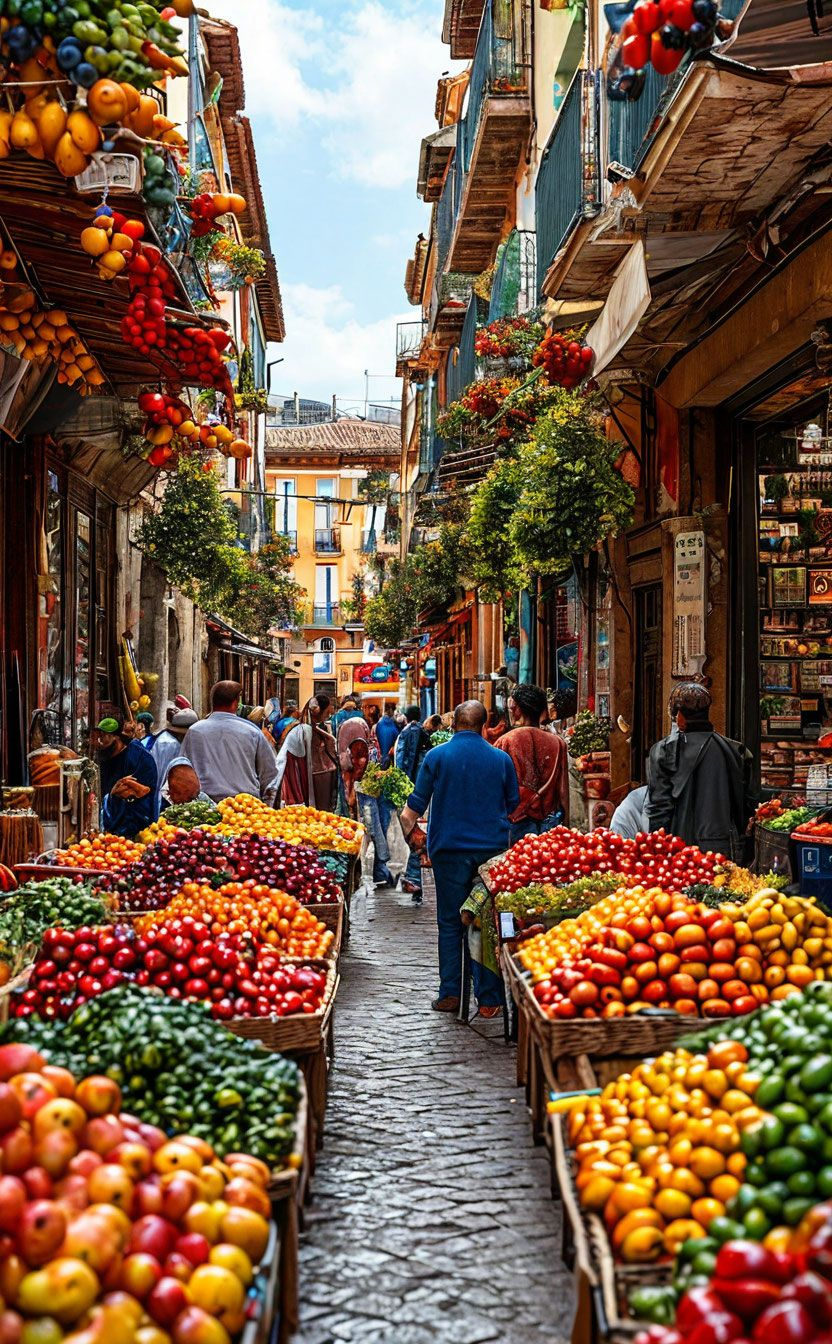
The Mercat de Sant Josep de la Boqueria, universally known simply as La Boqueria, is one of the most famous food markets in the world. It is also, in a narrow technical sense, entirely free to enter: no ticket is required to walk through the wrought-iron gateway off the Ramblas and into the extraordinary interior, with its soaring iron and glass roof, its stalls piled high with Iberian ham and charcuterie, freshly squeezed fruit juices, seafood on ice, spices, nuts and chocolates, and its series of small bars serving tapas and market food at counter-height stools.
La Boqueria is at its finest on weekday mornings when it serves its primary purpose as a working market for Barcelona's chefs and home cooks. The best approach is to arrive between 8 and 10 in the morning, walk the full circuit of the market to understand its layout and appreciate the sheer quality and variety of the produce, then stop at one of the interior counters for a coffee and a small tapa. The squid and seafood bars near the back of the market are particularly excellent, and the fruit juices squeezed to order at several of the stalls are among the finest things a visitor can consume in Barcelona for under three euros.
But La Boqueria is not Barcelona's only remarkable covered market, and in many respects it is not even its best. The Mercat de Santa Caterina in the El Born neighbourhood, designed by the architects Enric Miralles and Benedetta Tagliabue and completed in 2005, has a spectacular undulating mosaic roof of more than 300,000 ceramic tiles in a mosaic of vivid colours that represents a uniquely Barcelona combination of architectural ambition and artisanal craft. The market is less visited by tourists than La Boqueria and functions more completely as a local food market, with excellent produce, a fishmonger of extraordinary quality and several good market bars. Entry is free.
The Mercat de l'Abaceria in the Gracia neighbourhood and the Mercat del Clot in the Sant Martí district are further excellent examples of Barcelona's covered market culture, both freely accessible and both providing an experience of the city's food life that is entirely authentic and entirely removed from the tourist circuit. In any of these markets, you can assemble a market lunch of cold cuts, cheese, olives, bread and fruit for a few euros and eat it on a bench in the nearest park or square, which is both one of the cheapest and one of the most enjoyable meals Barcelona offers.
Barcelona gives generously to those who pay attention. Its best experiences are not always behind a ticket barrier. They are in the streets of the Gothic Quarter at dawn, on the beach at golden hour, on the hilltop above Carmel as the city lights up below you, and in the covered markets where the real food culture of Catalonia is on full, magnificent, entirely free display.
Getting to Barcelona: Arriving and Getting Around
Barcelona El Prat Airport (BCN), the main international gateway to Catalonia, is located approximately 14 kilometres southwest of the city centre. For the most comfortable arrival, particularly with luggage or when travelling with family, a private airport transfer is the ideal choice: a fixed price, door-to-door service that takes between 20 and 30 minutes depending on your destination in the city. For those who prefer public transport, the Aerobus service connects both airport terminals to the Plaça Catalunya in approximately 35 minutes, and the Rodalies R2 Nord train serves the airport and connects to Barcelona Sants station in approximately 19 minutes.
Within Barcelona, the best way to experience the city is on foot, supplemented by the metro for longer distances. The city centre, including the Gothic Quarter, the Born neighbourhood, the Eixample and the waterfront, is comfortably walkable, and Barcelona's well-maintained pavements, pedestrianised zones and density of interesting streets make walking the natural choice. The metro network covers the wider city comprehensively, with tickets and day passes available from machines at every station. A T-Casual card of ten journeys represents good value for those planning to use the metro and bus network regularly during their stay.
Comments
No comments yet. Be the first to share your thoughts!
Leave a Comment
Your comment will appear after moderation.