 Michelle
 The school year is nearly over. The children are restless, the bags are almost packed and the great annual question has once again arrived: where are we going this summer? If you are travelling with young children, the answer to that question matters more than almost any other logistical decision you will make. A destination that is genuinely child-friendly, that offers real things to do rather than simply a hotel pool and a beach, that feeds them well and keeps them engaged and astonished, is worth its weight in gold. Holland, and The Hague in particular, is one of those destinations. I know this partly because I grew up there, and partly because I took my own sons there and watched their faces when they walked into Madurodam for the first time. That expression is reason enough.
When Is the Best Time to Visit Holland With Children?
Holland is a destination that genuinely functions in every season, but for families with young children, the sweet spot is late spring through early autumn, broadly from May through September. During these months the weather in the Netherlands is at its most cooperative: warm enough for the beach at Scheveningen, dry enough for outdoor attractions and cycling, and long enough in daylight that you can fit an enormous amount into each day without rushing.
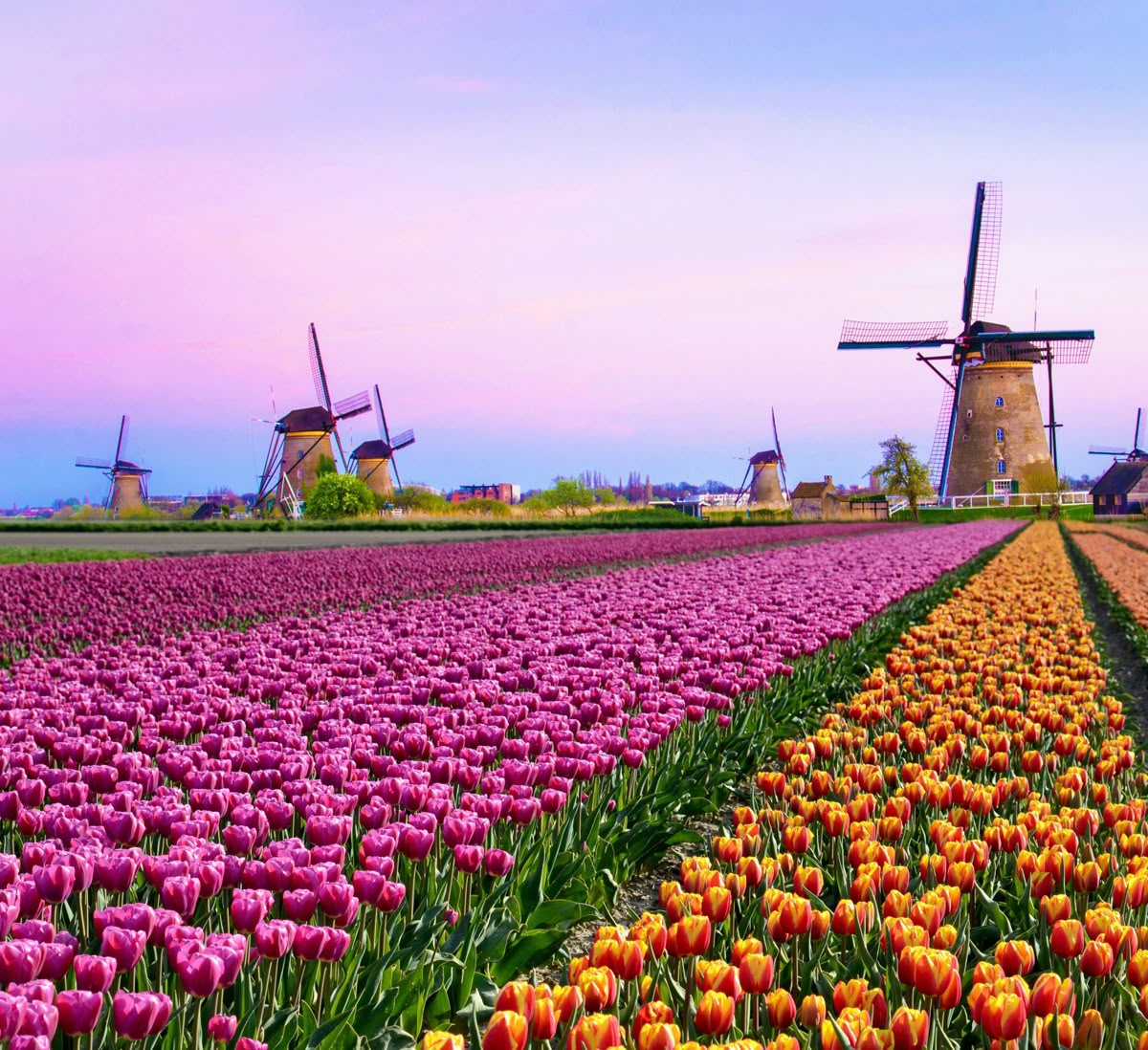
April and May deserve a special mention, and not only because of the tulips, although the sight of the bulb fields in full bloom between Leiden and Haarlem is one of the most spectacular things you can show a child anywhere in Europe. Spring in Holland is also the season when the outdoor cafes re-open, when the parks fill with life and when Madurodam is at its least crowded. If your school schedule allows a mid-May visit rather than a peak-summer one, you will find shorter queues, more relaxed restaurants and a Holland that feels a little more like itself and a little less like a tourist attraction.
Summer, particularly July and August, is perfectly enjoyable but considerably busier. The beach at Scheveningen draws large crowds on warm weekends, Madurodam has its longest queues of the year, and accommodation in The Hague and Amsterdam prices itself accordingly. If summer is your window, book everything well in advance and plan your visits to the most popular attractions for weekday mornings rather than weekend afternoons.
Family travel tip: The Netherlands is one of the easiest countries in Europe to navigate with young children. It is extraordinarily flat, which means pushchairs and bicycles are effortless. It is extraordinarily clean, which means the inevitable moments when small children put things in their mouths are less alarming than in many other destinations. And it is extraordinarily safe, with a culture of public life that is genuinely welcoming to families. All of these things matter more than most parents realise until they are on the ground.
1. Getting to Holland: Planning Your Arrival With Children
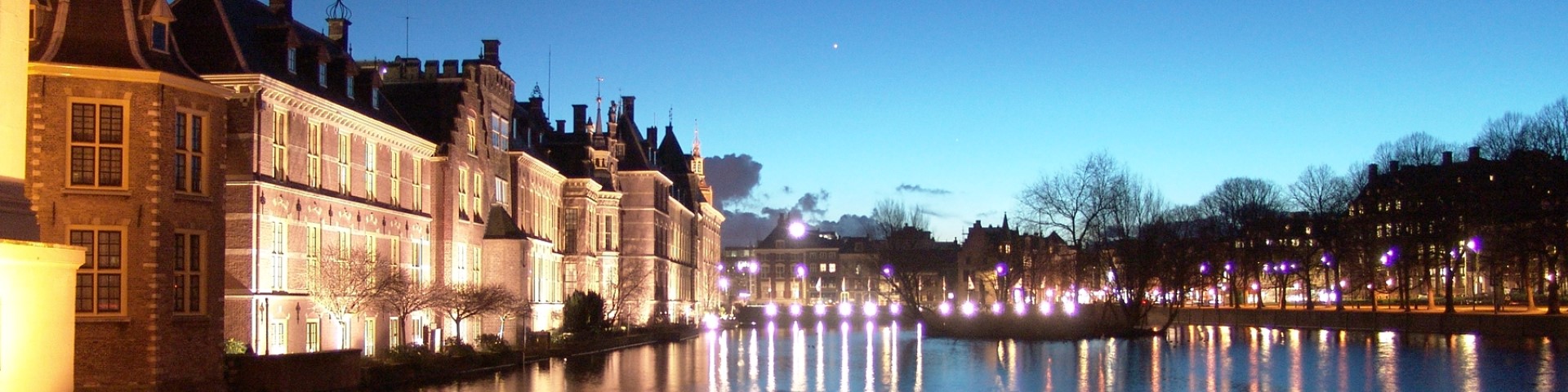
The main international gateway to the Netherlands is Amsterdam Airport Schiphol (AMS), one of the busiest and best-organised airports in Europe, located approximately 45 kilometres north of The Hague. Schiphol is, helpfully, one of the most family-friendly airports on the continent: it is well signposted, has a dedicated children's play area in the main terminal, and its transit infrastructure is among the clearest and most logical you will encounter anywhere.
When travelling with young children, the question of how to get from the airport to your destination deserves careful thought. Managing luggage, a pushchair, overtired children and the logistics of an unfamiliar public transport system at the end of a long flight is precisely the kind of experience that colours your memory of a holiday. The most stress-free option, and the one we consistently recommend for families, is a private transfer from Schiphol Airport to The Hague. Your driver is waiting at arrivals, the bags go in the boot, the children go in their seats, and your hotel is the next stop. The journey takes approximately 45 to 55 minutes depending on traffic.
The public transport alternative is the direct train from Schiphol to Den Haag Centraal, which takes approximately 50 minutes and runs frequently throughout the day. It is efficient and comfortable, but managing a pushchair and luggage on a Dutch intercity train at peak hours requires a level of patience and physical dexterity that not every family will find enjoyable immediately after a long flight. For the return journey, when the children are rested and you know the system, the train is an excellent option.
2. Scheveningen: The Beach Resort That Delivers for Every Age
The first thing most people discover when they begin planning a trip to The Hague is that the city has its own beach resort, just a few kilometres from the city centre, connected by tram in approximately fifteen minutes. Scheveningen is one of the most popular seaside destinations in Northern Europe, and it earns its reputation not through glamour or exclusivity but through something more valuable: it simply works, for every age, in every weather condition, with a consistency that is thoroughly Dutch in character.
The beach itself is wide, clean and long enough that even on a busy summer Saturday there is room to breathe. The North Sea water is bracing rather than warm, but Dutch children are remarkably unsentimental about sea temperature and you will see them charging into the waves in conditions that would give a Mediterranean-raised child pause. The beach is flat and accessible, the sand is fine enough to build properly with, and there are beach clubs and lifeguard posts at regular intervals along the shore.
The pier at Scheveningen is a particular delight for families. Extended and renovated in recent years, it stretches 380 metres out over the North Sea and houses a range of activities including a bungee jump for the more adventurous adults, a large observation tower, a range of cafes and restaurants, and at its tip, a glass floor section that gives you a direct view of the churning sea below. Children are fascinated by the pier in the way that children are fascinated by anything that combines scale, engineering and the spectacle of the sea.
The promenade behind the beach, the Boulevard, is lined with restaurants, ice cream parlours, souvenir shops and the kinds of amusements that children consider essential components of any seaside visit. It is lively, unpretentious and completely suited to a family afternoon. On warm summer evenings, the entire Boulevard fills with a festive energy that is genuinely infectious.
Scheveningen tip: The beach faces west, which means that the light on summer evenings is extraordinary. Plan to be at the pier or on the Boulevard around 7 pm in summer for the sunset. The North Sea turns gold, the pier is silhouetted against the sky, and the children will remember it. Bring a light jacket: even on warm evenings the sea breeze on the Dutch coast has a habit of arriving without warning.
3. Dutch Food That Children Will Love
One of the less discussed but very real pleasures of taking children to Holland is the food. Dutch cuisine is not internationally celebrated in the way that French or Italian food is, but for a family with young children it has qualities that matter enormously in practice: it is hearty, unfussy, universally available, good quality and, perhaps most importantly, it contains several dishes that children greet with an enthusiasm that is entirely unforced.
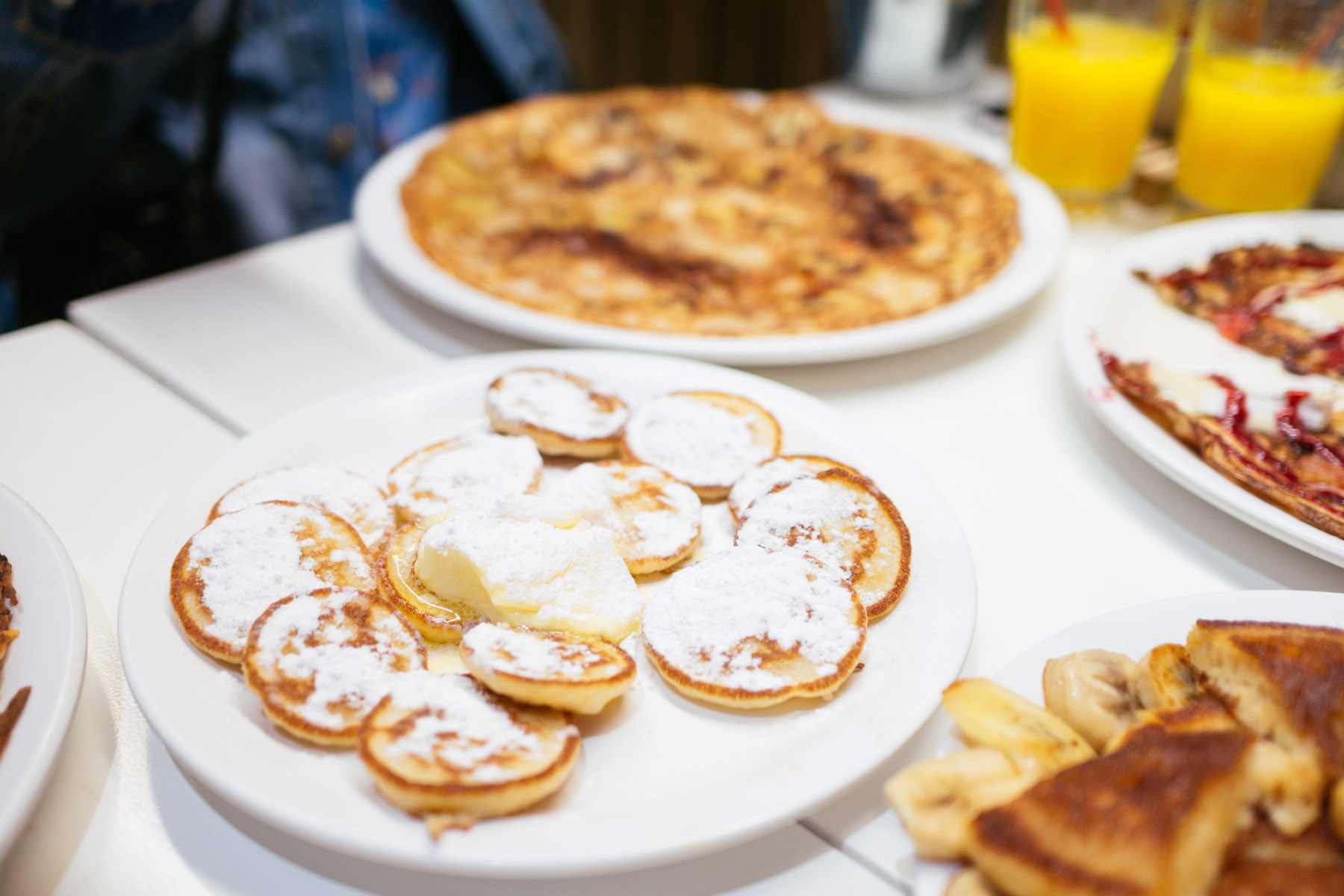
The two dishes that you must seek out for the children are poffertjes and pannenkoeken. Poffertjes are small, fluffy mini-pancakes, cooked in a special cast-iron pan with rows of round indentations, and served in a pile with a generous amount of butter melting over the top and a snowstorm of icing sugar. They are warm, soft and sweet, and the spectacle of watching the cook work the batter into the pan with practiced precision is entertainment in itself. Every child who encounters poffertjes for the first time has the same reaction: wide eyes followed by immediate and total devotion.
Pannenkoeken are the larger Dutch pancakes, considerably thinner and wider than the French crepe and served with a remarkable range of toppings both sweet and savoury. The classic version for children is with stroop (Dutch syrup) or apple and cinnamon, but you will also find them with bacon and cheese, with mushrooms and cream, or with banana and chocolate. There are dedicated pannenkoeken restaurants all over Holland, usually identified by the cheerful image of a large pancake on the sign outside, and they are invariably family-friendly places where children are welcomed and accommodated without fuss.
The other dish to introduce your children to is the chicken or pork satay. Holland's long historical connection with Indonesia means that Indonesian cuisine is woven deeply into everyday Dutch food culture, and satay, grilled meat skewers served with a thick, rich peanut sauce, is one of the most beloved dishes in the country. It is available in almost every Dutch restaurant and the peanut sauce, slightly sweet, slightly spicy, incredibly complex in flavour, has a way of converting even the most conservative young eaters into enthusiastic fans.
And then, of course, there is Dutch cheese. Holland is one of the great cheese-producing nations of the world, and the quality of the dairy produce is exceptional. A visit to a local market and a tasting of young Gouda, aged Gouda and the various flavoured varieties (with cumin, with herbs, with mustard) is a genuine food education for children and adults alike.
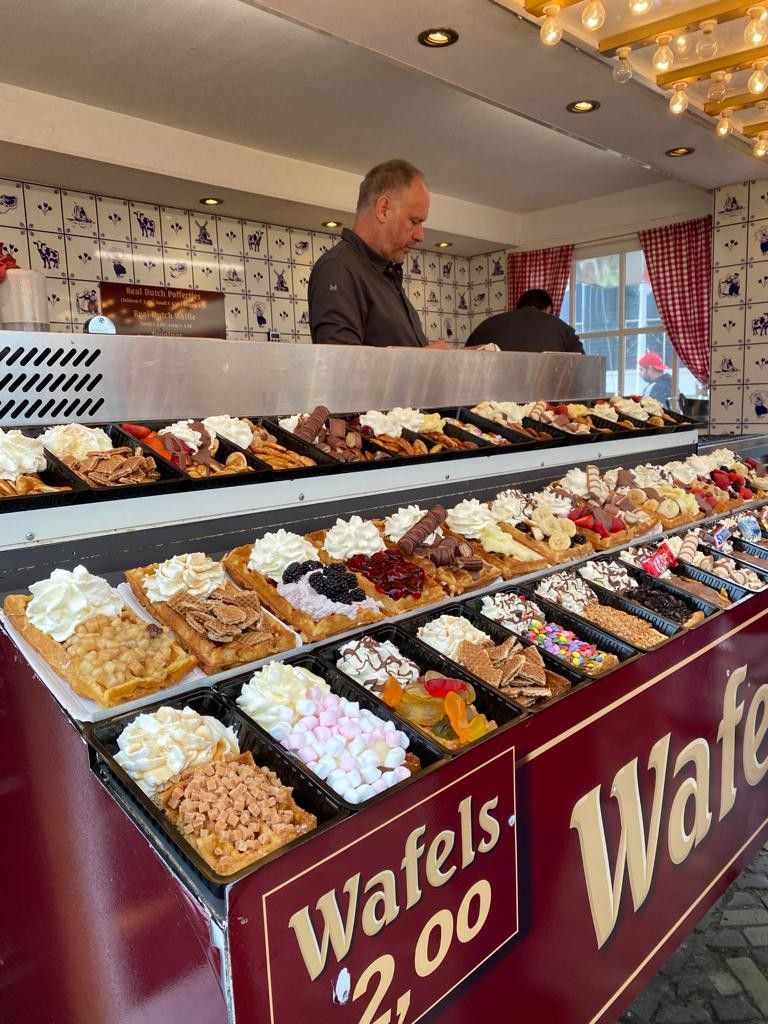
Food tip for families: Look for a dedicated poffertjes stall or restaurant rather than settling for the ones sold at tourist kiosks. The difference in quality is significant. In Scheveningen and in the markets of The Hague city centre, you will find stalls where the poffertjes are made fresh in large batches, with proper buckwheat batter and real butter. Also try the Dutch stroopwafels: thin waffle biscuits with a layer of caramel syrup in the middle, sold warm at market stalls. Children are almost universally overwhelmed by their first stroopwafel.
4. Madurodam: The Most Magical Miniature City in Europe
If there is a single experience in Holland that justifies bringing a young child here, it is Madurodam. I say this having grown up visiting it as a child, having brought my own sons here as adults, and having watched the expression on their faces the moment they walked through the entrance and the scale of what lay before them became apparent. That expression, a kind of luminous astonishment that has no precise adult equivalent, is something you will not forget.
Madurodam opened in July 1952, named in memory of George Maduro, a Dutch-Jewish war hero who died in Dachau concentration camp in 1945. It was conceived as both a memorial and a celebration of Dutch culture and identity, and it remains one of the most visited attractions in the Netherlands, having welcomed tens of millions of visitors over its seven decades of operation. The park closed for extensive renovations and reopened its doors on 7th April 2012 with a modernised layout and significantly expanded interactive elements that bring the miniature world to life in ways the original designers could not have imagined.
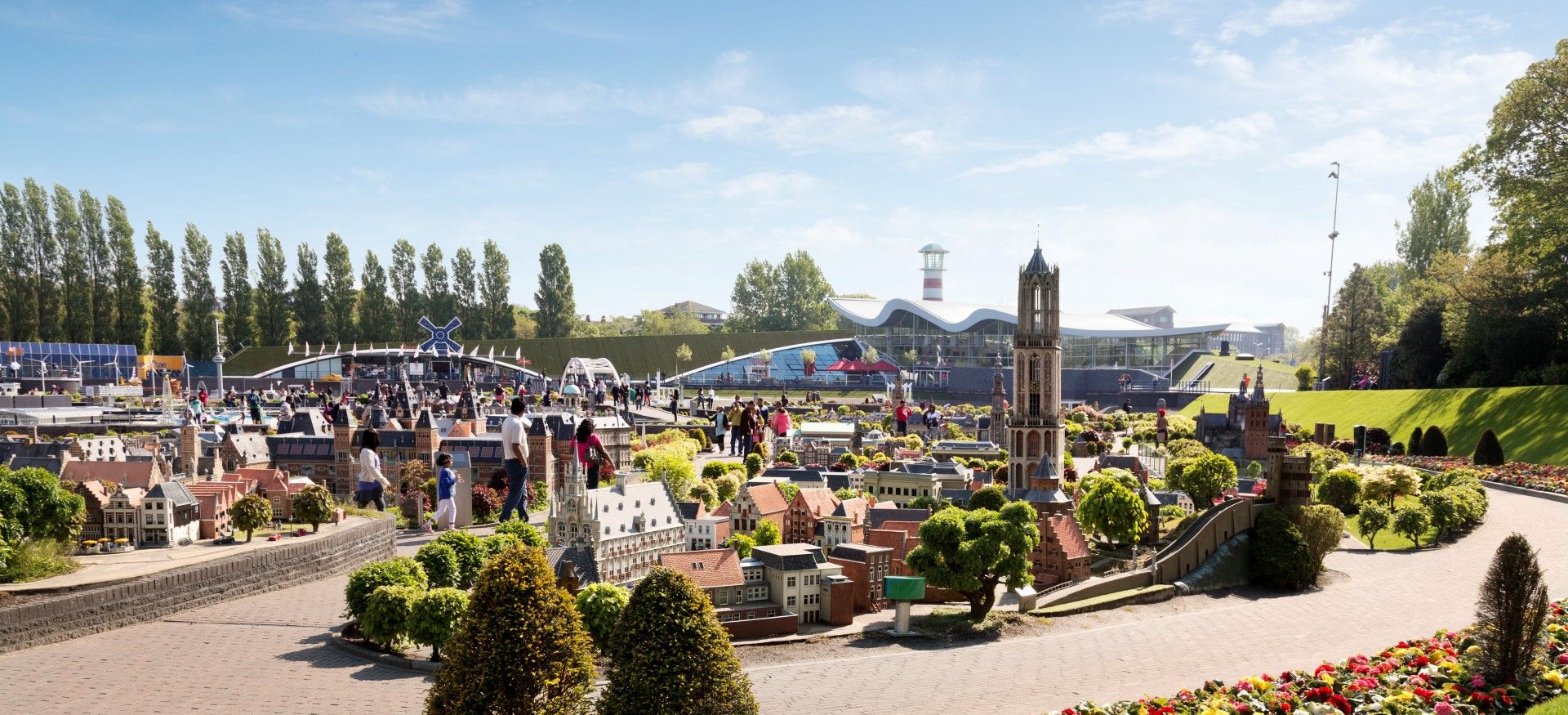
The concept is deceptively simple: an outdoor park containing extraordinarily detailed scale reproductions, built at 1:25 of actual size, of virtually every iconic Dutch building, landscape and infrastructure element. The Amsterdam canal houses, the Rotterdam port, the Kinderdijk windmills, the flower auction at Aalsmeer, a working international airport complete with tiny planes taxiing between terminals, a complete North Sea oil platform, medieval castles, a cheese market, a tulip farm, a football stadium. Every building is constructed to meticulous accuracy, with functioning windows, correct architectural details and a level of craft that rewards close inspection from children and adults equally.
But what makes Madurodam genuinely extraordinary rather than merely impressive is the interactive dimension. Throughout the park, coin-operated mechanisms trigger events in the miniature world. Soldiers begin to march in formation. Canal bridges open and close to allow tiny boats to pass. A tug boat rushes to extinguish a fire in a canal-side warehouse (complete with miniature smoke and flashing lights). Trains run through tunnels, buses navigate roundabouts, and a complete miniature air traffic control tower directs aircraft across a functioning miniature runway. Young children do not simply look at Madurodam. They participate in it, moving from mechanism to mechanism with an energy and focus that is remarkable to witness.
There is something about being large in a miniature world that speaks directly to the imagination of a child. Madurodam does not simply show children a scaled-down Netherlands. It gives them, for an afternoon, the feeling of being giants in a world they can comprehend entirely. That is a rare and genuinely precious gift.
Allow a minimum of three to four hours for Madurodam, more if your children are the kind who want to explore every corner and trigger every mechanism. The park has a good restaurant and several snack points, so a full half-day visit is comfortable. Arrive when it opens at 9 am to get the best of it before the school groups arrive mid-morning. Book your tickets online in advance during peak summer months to avoid the queue at the entrance.
Madurodam tips to avoid queues: Book online at least 48 hours in advance during July and August. Arrive at opening time (9 am in peak season) and begin at the far end of the park, working your way back towards the entrance as the crowds build from the other direction. Bring coins for the interactive mechanisms: the pay-per-use slots add up surprisingly quickly with enthusiastic young children, so a small supply of euro coins will save considerable negotiation at crucial moments.
More Things to Do in The Hague and Holland With Children
Madurodam and Scheveningen are the centrepieces of a family visit to The Hague, but the city and its surroundings offer considerably more for young visitors.
The Sea Life Scheveningen aquarium, located right on the Scheveningen promenade, is one of the finest family attractions in the region. Its walk-through underwater tunnel, surrounded on all sides by sharks, rays and enormous schools of fish, produces a silence in even the most energetic children that is remarkable. The jellyfish display alone is worth the entrance price.
The Museon in The Hague city centre is a science and natural history museum specifically designed to engage children through interactive exhibits. It covers everything from dinosaurs and evolution to astronomy and climate change, and the approach is consistently hands-on and participatory. It is the kind of museum where children genuinely learn without noticing they are learning, which is as good a definition of an excellent children's museum as any.
For a slightly older family audience, the Mauritshuis royal art museum in The Hague is one of the great small art museums in the world, housing Vermeer's Girl with a Pearl Earring and Rembrandt's The Anatomy Lesson among its treasures. Even children who consider themselves entirely uninterested in art tend to be stopped cold by the Girl with a Pearl Earring: there is something in that gaze that reaches across four centuries and holds everyone equally. Family audio guides are available and make the visit genuinely accessible for younger visitors.
Beyond The Hague, Keukenhof Gardens near Lisse (open April to May only) is one of the most spectacular horticultural sights in the world: over seven million bulbs in bloom across 32 hectares of landscaped gardens, with colour combinations that seem impossible until you see them. Children who are old enough to appreciate visual spectacle are consistently overwhelmed. And for the journey there, the route through the bulb fields by bicycle is an experience that belongs specifically and completely to Holland.
Cycling with children in Holland: Holland is the finest cycling country in the world, and cycling with children here is a completely different experience from cycling with children almost anywhere else. The infrastructure is extraordinary: dedicated cycle paths everywhere, completely separated from traffic, well-maintained and clearly signposted. Child bike seats, tagalong bicycles and cargo bikes are available for hire in every town. Even young children who have never cycled in a city environment take to it immediately and safely. A morning cycling from The Hague through the dunes to Scheveningen beach is one of the finest things you can do with a family in Northern Europe.
Common Mistakes When Travelling With Young Children
Trying to pack too much into each day. The single most reliable way to transform a family holiday from a pleasure into an ordeal is to overschedule. Young children operate on a different temporal logic from adults: they need time, they need meals at predictable intervals, they need rest in the afternoon, and they need the freedom to become genuinely absorbed in something rather than being hurried along to the next item on the itinerary. Build in gaps. Allow for slow mornings. Accept that the best moments of a family holiday are almost never the planned ones.
Underestimating Dutch weather. Holland is beautiful in summer but the weather is variable in a way that no amount of advance planning entirely accounts for. A warm morning can become a grey, windy afternoon with startling speed, particularly near the coast. Always pack a waterproof layer for each child, regardless of the forecast. This is not pessimism: it is the single most useful piece of practical advice for any family visiting the Netherlands.
Arriving at Madurodam without booking online. During school holidays and summer weekends, the queue at the Madurodam ticket office can be significant. Booking online costs exactly the same as buying on the day and eliminates the queue entirely. There is no reason not to do it, and a young child who has been promised Madurodam and is then made to stand in a long queue for forty-five minutes before entering is a less happy travelling companion than one who walks straight in.
Ignoring the local markets. Holland's covered and street markets are genuinely wonderful places to spend a family morning, and they are completely free to visit. The Markt in The Hague city centre, the Albert Cuyp market in Amsterdam, and the coastal market at Scheveningen all offer fresh stroopwafels, herring stalls, cheese samples, flower displays and the kind of vivid everyday Dutch life that no museum or attraction can replicate. Young children love markets in a primal, sensory way that bypasses the need for any explanation.
Practical Information for Families
Getting around: The Hague has an excellent tram and bus network that connects the city centre, Scheveningen beach, Madurodam and all the major attractions. The OV-chipkaart, the Dutch public transport card, can be loaded with credit and used on all trains, trams and buses in the country. Taxis and rideshare services are plentiful. Cycling, as mentioned above, is the most pleasurable and practical option for families with children old enough to ride independently or in a child seat.
Accommodation: The Hague has a good range of family-friendly hotels, apartment hotels and holiday rentals. For a family of four with young children, a self-catering apartment is worth considering: the ability to make breakfast in your own kitchen, to arrive back in the afternoon without the pressure of a restaurant booking, and to give children the freedom of a living space rather than a single hotel room makes an enormous practical difference to the quality of the holiday.
Currency and costs: The Netherlands uses the euro. Credit and debit cards are accepted almost universally, including at market stalls, which is more unusual and more convenient than in many European countries. The Dutch are efficient about money in a way that eliminates much of the cash-management anxiety that accompanies family travel in other parts of Europe.
Language: Dutch is the national language, but English is spoken at an extraordinarily high level throughout the Netherlands. Holland consistently tops European rankings for English proficiency among non-native speakers, and you will rarely encounter a situation in which English is insufficient, even in smaller towns and local restaurants. This makes it one of the most accessible European destinations for English-speaking families.

Comments
No comments yet. Be the first to share your thoughts!
Leave a Comment
Your comment will appear after moderation.