 Michelle
 There is a particular quality of light that belongs exclusively to the Italian countryside in October — a gold that is softer and more complex than summer's blaze, a light that turns every stone wall and vineyard and tree-lined road into something that seems to have been carefully composed. Nowhere does this October light fall more beautifully than on the volcanic tufa of the Lazio hills, and nowhere in Lazio does it illuminate a more extraordinary concentration of things worth seeing than in and around Viterbo. Just 80 kilometres north of Rome, this is one of Italy's most overlooked cities — and in autumn, one of its most quietly magnificent.
Why October Is Viterbo's Finest Month
Every destination has a season that suits it best — a time when the climate, the crowds, the food and the atmosphere align in the most favourable way. For Viterbo and the surrounding Lazio countryside, that season is undeniably October. The reasons are numerous and they reinforce each other in a way that makes the argument almost irresistible.
The summer tourists are gone. Viterbo receives a steady flow of visitors from Rome throughout the warmer months — day-trippers and weekenders who fill the medieval streets and queue at the thermal baths on summer Sundays. By October, all of this has settled. The city returns to itself. The restaurants are less crowded, the service is more attentive, the locals are more relaxed, and the whole place has the particular unhurried quality that only comes when a destination is operating at its own pace rather than at the pace of its visitors.
The temperature in October is close to ideal for walking and exploring: typically between 15°C and 22°C during the day, cooler in the evenings, with comfortable overnight lows that make sleeping with the windows open a genuine pleasure. The autumn rains have not yet settled in — October in Viterbo enjoys a high proportion of clear, bright days — and when they do arrive, usually in brief afternoon showers, they only intensify the already extraordinary colours of the countryside.
And then there is the food. October in Lazio is the month of the castagna — the chestnut — roasted on street corners and in market squares, served warm in paper cones that you eat while walking, their smoke drifting through the autumn air. It is the month of new olive oil, pressed from the groves of Canino and Tuscania, so green and peppery and alive that it bears no resemblance to anything that has been sitting on a supermarket shelf. It is truffle season. It is the wine harvest. There is quite simply no better time to eat in this part of Italy.
Best time to visit: The ideal window is mid-October to early November — after the school half-term rush but before the weather turns consistently wet. Book accommodation in Viterbo itself rather than staying in Rome; the city changes character entirely in the evening when the day-trippers leave, and the medieval streets at night, lit by old stone lanterns, are one of the great pleasures of a Lazio autumn.
1. The Monster Park of Bomarzo — Italy's Most Enigmatic Garden
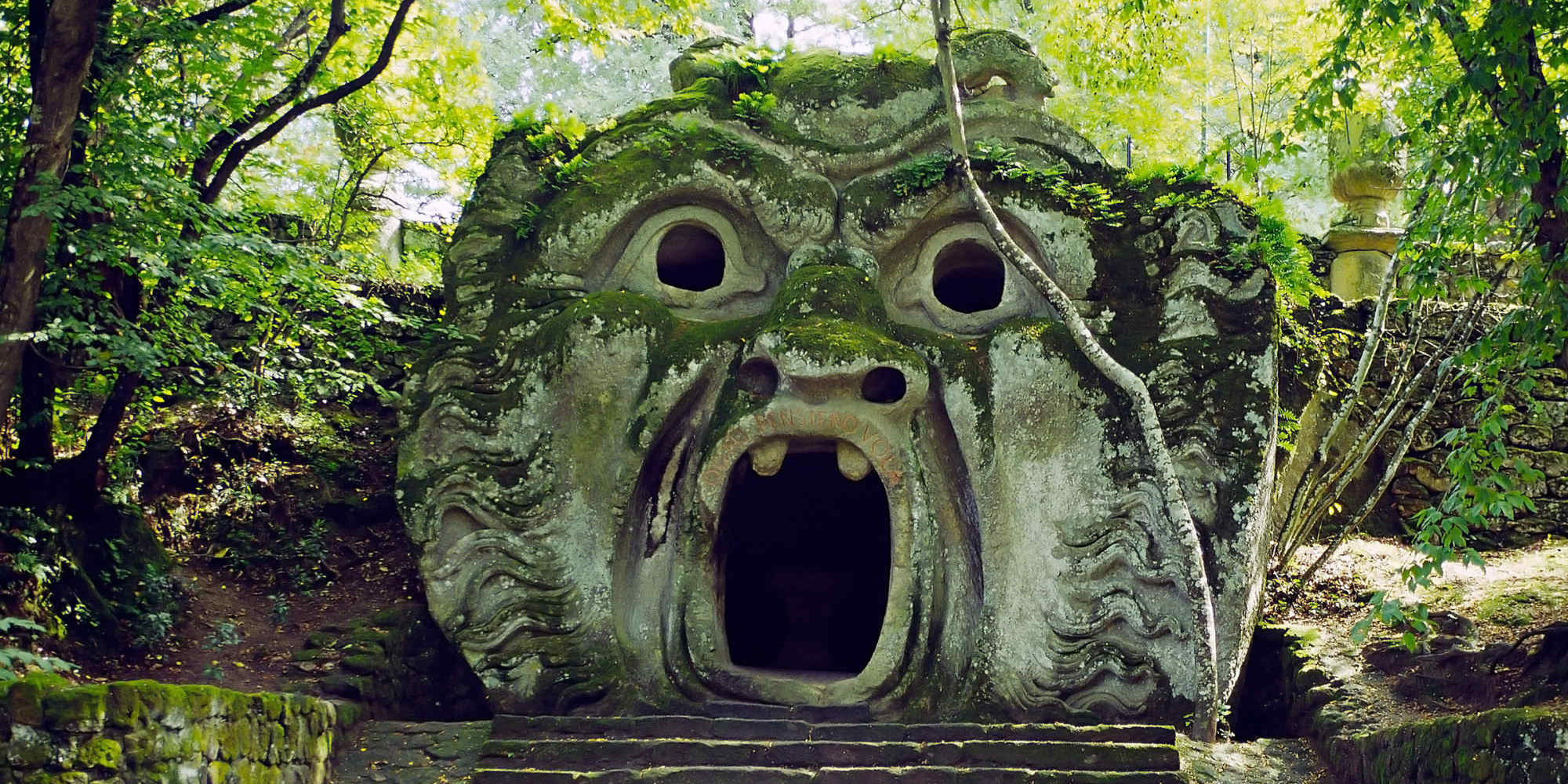
Fifteen kilometres southeast of Viterbo, on a wooded hillside above the village of Bomarzo, sits one of the strangest and most extraordinary gardens in the world. The Sacro Bosco — the Sacred Grove, universally known as the Parco dei Mostri, the Monster Park — was commissioned in the mid-16th century by Pier Francesco Orsini, a nobleman and condottiere who had spent years as a prisoner of war and emerged from the experience profoundly changed. He employed Pirro Ligorio, one of the great architects of the Italian Mannerist period, to create something that had never existed before: a garden not of flowers and ordered geometry, but of meraviglia — wonder, astonishment, deliberate disorientation.
What Orsini and Ligorio created was a series of colossal sculptures carved directly from the living volcanic rock of the hillside — a technique made possible by the particular softness of the local peperino tufa. The figures that emerged from the rock are unlike anything else in Italian art: an enormous mouth of hell, open wide enough for a group of people to step inside, with the inscription "Ogni pensiero vola" — every thought takes flight; a tilted house that makes visitors immediately nauseous and disoriented; a giant ripping a man in two; a dragon fighting a lion and a wolf simultaneously; a serene Sleeping Nymph in a grotto surrounded by carved inscriptions; a tortoise bearing an obelisk on its back; a leaning tower; an elephant carrying a howdah with a Roman soldier inside.
The garden was abandoned after Orsini's death in 1583 and left to the forest for nearly four centuries. Trees grew through the sculptures. Moss colonised every surface. The figures half-disappeared into the undergrowth, which gave them an additional layer of mystery and melancholy. Salvador Dalí visited in the 1940s and was transfixed — he described it as the only garden in the world that seemed to have been made by an unconscious mind. Jean Cocteau filmed part of a documentary here. The garden was eventually restored in the 20th century, but it retains its fundamental strangeness: a place where the Renaissance idea of wonder and the Mannerist taste for the grotesque combine to produce something that has no parallel anywhere in Italy, or indeed in the world.
Why October is perfect for Bomarzo: The park is set in a woodland of ancient oaks, holm oaks and chestnuts. In October, the canopy turns gold and amber and rust, and the light filtering through the autumn leaves onto the mossy stone monsters creates an atmosphere of almost supernatural beauty. Visit in the morning for the best light and the fewest other visitors. The park opens at 9:00 AM — arrive then. Wear comfortable walking shoes as the paths are uneven and the hillside is steep in places.
2. Viterbo's Medieval City — A Perfectly Preserved Masterpiece
Viterbo is not a famous city in the way that Rome or Florence or Venice are famous. It does not appear prominently in most Italian itineraries, it does not have a brand that precedes it, and the majority of international travellers who visit Lazio never make it here at all. This is, from the point of view of anyone who does come, an enormous advantage. Viterbo is perhaps the best-preserved medieval city in central Italy — and the fact that it receives a fraction of the visitors that comparable cities attract means that you can experience it at something approaching its own pace.
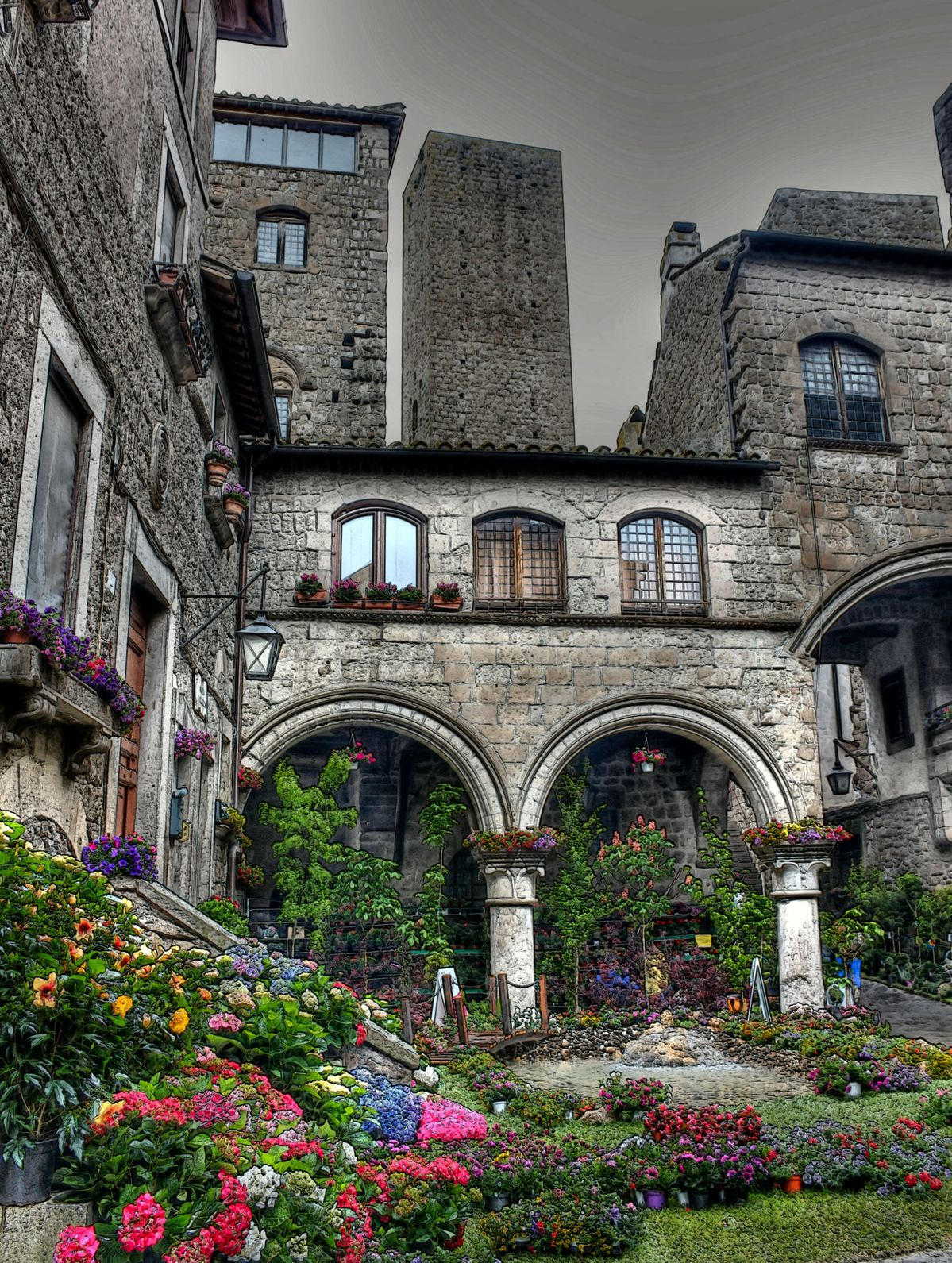
The historic centre of Viterbo is enclosed by its original medieval walls — two kilometres of 12th and 13th-century fortifications that remain largely intact — and within them is a concentrated world of dark stone towers, Romanesque churches, medieval fountains and narrow alleys that have barely changed in 700 years. The Quartiere San Pellegrino, in the southwestern corner of the old city, is the finest medieval neighbourhood in Lazio: a labyrinth of external staircases, loggia, stone archways and tiny squares that has been declared a national monument. Walking through it in October, with the afternoon light low and golden on the ancient stone, is one of those travel experiences that silences the internal monologue and demands your full, undivided attention.
The Palazzo dei Papi — the Palace of the Popes — is Viterbo's most important historical monument. Between 1257 and 1281, during a long period of conflict and instability in Rome, Viterbo served as the seat of the Papacy, and seven popes lived and died here. The palace, built in the Gothic style with an extraordinary open loggia overlooking the Piazza San Lorenzo, is both an architectural masterpiece and the site of one of the most dramatic episodes in Church history: the papal conclave of 1268–1271, the longest in history, during which the cardinals locked themselves inside to elect a new pope and the citizens of Viterbo, losing patience after three years of deliberation, removed the roof of the building and reduced the cardinals' food to bread and water until they made a decision. The practice of locking the cardinal-electors in isolation — cum clave, with a key — gave the modern word conclave to the English language.
The Cathedral of San Lorenzo, adjacent to the palace, is a superb example of Romanesque-Gothic architecture, its austere stone interior housing a remarkable collection of medieval art. The Piazza del Plebiscito — the civic centre of Viterbo — is dominated by the Palazzo dei Priori, the 13th-century seat of city government, with a Renaissance courtyard decorated with frescoes depicting scenes from the city's history. And throughout the historic centre, the city's famous medieval fountains — the Fontana Grande, one of the oldest and most beautiful Gothic fountains in Italy, and dozens of smaller neighbourhood examples — provide the sound of running water as a constant, cooling accompaniment to an afternoon's exploration.
3. The Thermal Baths — Where the Popes Came to Rest
Viterbo sits on one of the most geothermally active areas in Italy. Beneath the volcanic hills of Lazio, the earth's interior heat forces sulphurous mineral water up through the rock at temperatures of up to 58°C, and this natural resource has been exploited for therapeutic purposes since at least Roman times. The Romans built baths here. The medieval Popes — in residence in the city for much of the 13th century — came here to take the waters. And today, the thermal baths of Viterbo remain among the finest in central Italy, a genuinely therapeutic experience with a history of more than two thousand years behind them.
The most complete facility is the Terme dei Papi — the Baths of the Popes — located two kilometres west of the city on the Via Cassia. This is a full thermal spa complex with outdoor and indoor pools fed by natural mineral springs, mud treatments, beauty and wellness facilities, and a restaurant. The outdoor pools are particularly magnificent: enormous basins of gently steaming mineral water surrounded by gardens, at a comfortable bathing temperature of around 38 to 40°C. In October, as the air temperature drops and the steam rises more visibly from the heated water against the cold morning air, the experience of floating in an outdoor thermal pool at the Terme dei Papi is something close to perfect. Book treatments in advance — the facility is popular with Romans on weekend breaks and slots fill quickly in autumn.
For those who prefer a more spontaneous and completely free alternative, the natural thermal pools of Bagnaccio, located along the Via Cassia just outside the city walls, offer an unmediated encounter with the same mineral waters. These are free, open-air pools — rough, natural, unmanicured, surrounded by reeds and visited by a local crowd that comes here as a matter of weekly routine rather than as a tourist activity. The contrast with the Terme dei Papi could not be more complete, and both experiences are entirely worth having.
4. What to Eat in Viterbo in Autumn
The cuisine of northern Lazio — the area around Viterbo, the Cimini hills, the shores of Lake Bolsena — is one of the most underrated regional food traditions in Italy. It is robust, honest, deeply seasonal, and rooted in an agricultural landscape that has barely changed for centuries. October brings the best of it to the table simultaneously, and the result is a few days of eating that will stay with you long after you have returned home.
Chestnuts are the defining flavour of October in this part of Lazio. The chestnut groves of the Monti Cimini — the volcanic hills above Viterbo — produce a variety of exceptional quality, and throughout the month the towns of the hills celebrate with sagre (food festivals) dedicated to the castagna: roasted on the street, ground into flour for pasta and bread, combined with game in slow-cooked stews, or simply eaten warm from the paper bag as you walk through a medieval village at dusk.
The black truffle of Lazio — less celebrated than the Umbrian or Piedmontese varieties but excellent in its own right — reaches its autumn peak in October. You will find it shaved over pasta, stirred into scrambled eggs, folded into crostini, or grated over a simple plate of tagliolini with butter. In the restaurants of Viterbo's old city, the truffle dishes of October are among the finest things on any menu in the region.
Porchetta — the slow-roasted whole pig, seasoned with wild fennel, rosemary, garlic and black pepper, carved into thick slices and eaten in a crusty bread roll — is the defining street food of northern Lazio and has been for centuries. The town of Viterbo claims to have invented it (a claim disputed by several other Lazio towns, none of which are entirely wrong). Order it at the market, at a roadside van, or at one of the specialist porchettari in the city centre. Eat it standing up, outside, with both hands.
Food and wine tips: The wines of the Lazio hills — particularly the whites of the Colli Etruschi Viterbesi DOC, made from local Greco and Malvasia grapes — are at their best in autumn when the new vintage is just arriving. Ask for the vino novello (new wine) in any local osteria. For a complete Viterbo food experience: breakfast with a fresh cornetto and espresso at a bar in the Piazza del Plebiscito; lunch at a trattoria in San Pellegrino (no photographs on the menu, paper tablecloths, hand-written specials board); an afternoon chestnut from a street vendor; dinner wherever you smell wood smoke coming through a door.
Common Tourist Mistakes — and How to Avoid Them
Do not come just for the day. The most common mistake that visitors to Viterbo make is treating it as a day trip from Rome. It is entirely possible as a day trip — the distance is manageable — but a single day is not enough. The city genuinely changes after 6:00 PM, when the day-trippers leave and the medieval streets become quiet and intimate, lit by stone lanterns, entirely given back to the locals. If you can stay for at least one night, do. The following morning, when you have the city largely to yourself before 9:00 AM, will be among the most memorable of any Italian journey.
Do not skip the Etruscan sites. The Viterbo province is Etruscan territory — the Etruscans settled these volcanic hills long before Rome existed, and they left behind an extraordinary legacy that most visitors to the area entirely ignore. The Etruscan necropolis of Norchia — rock-cut tombs carved into the walls of a forested gorge, largely unvisited and completely free — is one of the most atmospheric and moving archaeological sites in Italy. The town of Tuscania, 25 kilometres west of Viterbo, has two Romanesque churches of extraordinary beauty — San Pietro and Santa Maria Maggiore — that would be among the most visited monuments in Tuscany if they happened to be on the other side of the regional border.
Do not assume all thermal facilities are the same. The Terme dei Papi and the free natural pools of Bagnaccio offer completely different experiences. If you visit only one, you will miss the other entirely. The Terme dei Papi requires booking and a modest entrance fee; Bagnaccio requires nothing. Both are worth visiting, ideally on consecutive days. The Terme dei Papi is better for a long morning of relaxation and treatments; Bagnaccio is better for an authentic local experience at the end of an afternoon of sightseeing.
Tips for getting around: Viterbo and its surroundings are best explored by car — the Etruscan sites, Bomarzo, Lake Bolsena and the hill towns of the Cimini are all within 30 to 40 minutes of the city but are poorly served by public transport. If you are arriving from Rome by train, consider booking a private transfer directly from Fiumicino Airport or Rome city centre to Viterbo — the driver can stop at Bomarzo on the way in, allowing you to arrive at your hotel having already visited one of the day's highlights, luggage safely stowed in the vehicle. This is by far the most time-efficient way to structure the journey.
How to Get to Viterbo from Rome
Viterbo has no direct rail connection to Rome's main stations in the conventional sense — the regional Ferrovia Roma Nord line connects it to Roma Ostiense, but the journey takes approximately two hours with changes, making it best suited to travellers with time and patience rather than efficiency as a priority. For most visitors, the most practical options are by car or by private transfer.
By car, Viterbo is approximately 90 minutes from central Rome via the A1 motorway (exit Attigliano, then the Via Cassia) or directly on the Via Cassia — a slower but more scenic route that passes through the Lazio countryside and offers views of Lake Bracciano along the way. If you are flying into Rome Fiumicino Airport (FCO), a private airport transfer directly to Viterbo is the most seamless option: your driver picks you up at the arrivals hall and takes you directly to your hotel, with the option to stop at Bomarzo on the way — turning the transfer itself into the first experience of your trip rather than dead travel time.
Comments
No comments yet. Be the first to share your thoughts!
Leave a Comment
Your comment will appear after moderation.