 Michelle
 Every visitor to Rome knows the Colosseum, the Vatican, the Trevi Fountain, the Pantheon. These monuments are sublime, and they deserve their fame. But there is another Rome, a city of alchemical symbols, optical illusions, monster faces, water clocks and magical keyholes, that lies just beneath the surface of the tourist itinerary. It is a Rome that does not appear in the postcards, a Rome that even some Romans do not know. I have lived in this city for thirty years, and I have spent that time discovering its hidden corners, the places where the ordinary rules of space and time seem to bend. Let me take you there. You will see a Rome that you will not find in any guidebook.
Day 1, The Quartiere Coppedè, The Enchanted Quarter of the Frogs
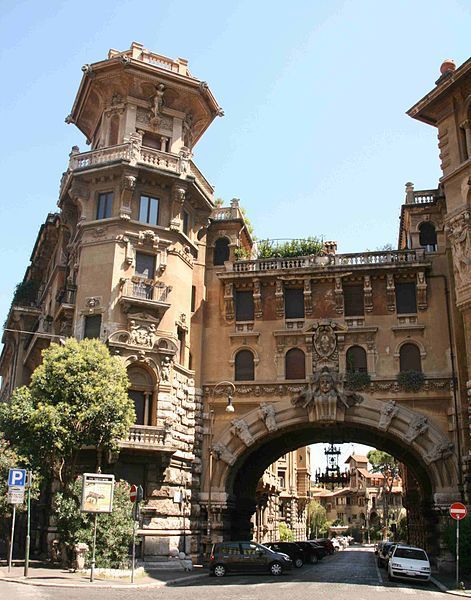
Our journey begins not in the historic centre but in the Parioli district, a quiet residential neighbourhood north of the Villa Borghese. Hidden among the ordinary apartment buildings and the tree lined streets lies the Quartiere Coppedè, a small, surreal quarter that feels like a stage set for a fairy tale or a dream. The quarter was designed by the architect Gino Coppedè between 1915 and 1927, and it is one of the most extraordinary examples of eclectic architecture in Europe. Coppedè drew freely from Liberty, Art Deco, Baroque, Gothic, medieval and even ancient Greek styles, mixing them together in a playful, exuberant, utterly unique ensemble.
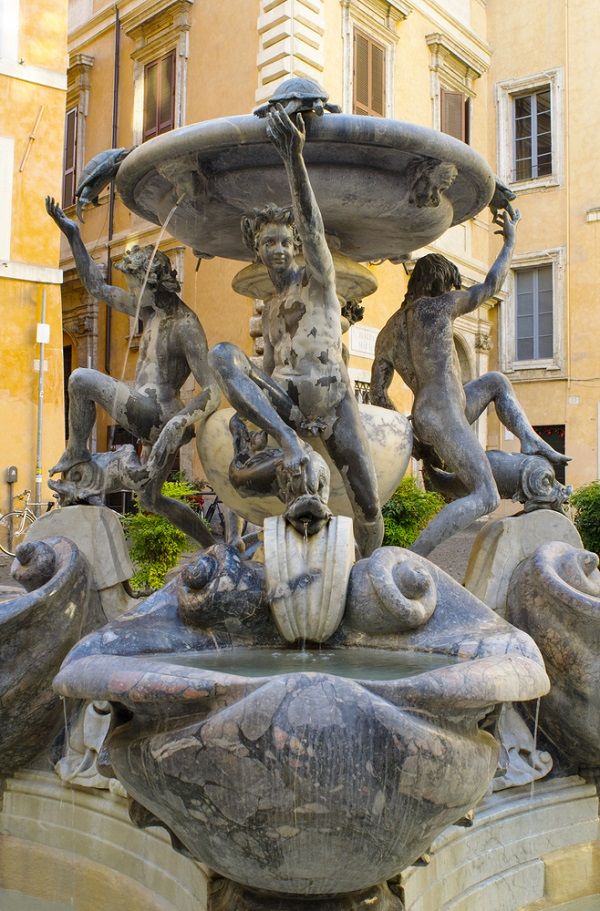
The heart of the quarter is the Piazza Mincio, a small square dominated by the Fontana delle Rane, the Fountain of the Frogs. The fountain is a perfect circle of travertine, surrounded by bronze frogs that spout water into the basin. The frogs are not merely decorative; they are a homage to the ancient Roman custom of using frogs as weather predictors. According to tradition, when the frogs croak loudly, rain is coming. The fountain was commissioned by the city of Rome in the 1920s to celebrate the reclamation of the area, which had been a swampy, mosquito ridden marsh until the end of the 19th century. The frogs, inhabitants of the marsh, were transformed into a playful symbol of the transformation of the land.
Surrounding the square are the palaces of the quarter, each one more fantastical than the last. The Palazzo del Ragno, the Palace of the Spider, takes its name from the enormous bronze spider that decorates the entrance gate. The spider, in Coppedè's symbolic language, represents industriousness and patience, the virtues of the artisan. The Palazzo degli Ambasciatori, the Palace of the Ambassadors, is decorated with chandeliers, coats of arms and the faces of the Kings of Italy, all carved in stone. The Villini delle Favole, the Little Villas of the Fables, are covered with frescoes depicting scenes from classical mythology and medieval romance, with knights, dragons, nymphs and satyrs rendered in vivid colours.
The most celebrated building in the quarter is the Palazzina del Ragno, the Little Palace of the Spider, which stands at the entrance to the quarter on Via Tagliamento. The building is crowned by an iron torch and a bronze eagle, and its facade is decorated with mosaics, wrought iron balconies and a series of stone masks that stare out at the passerby with expressions of serene indifference. The effect is disorienting, magical, entirely unlike anything else in Rome. You will walk through the quarter in a state of delighted confusion, not quite believing that you are still in the same city that contains the Colosseum and the Vatican. But you are. This is Rome, too.
The legend of the frogs. The residents of the Quartiere Coppedè tell a story about the Fountain of the Frogs. They say that at night, when the square is empty and the streetlights cast long shadows on the travertine, the frogs come to life. They leap from the fountain, they hop across the cobblestones, and they croak to each other in a language that only the oldest Romans can understand. When a visitor asks what the frogs are saying, the residents smile and answer: they are saying welcome to the enchanted quarter. It is a story, of course. But in a place like Coppedè, it is easy to believe.
Day 2, The Porta Magica, The Door of Alchemy and the Philosopher's Stone
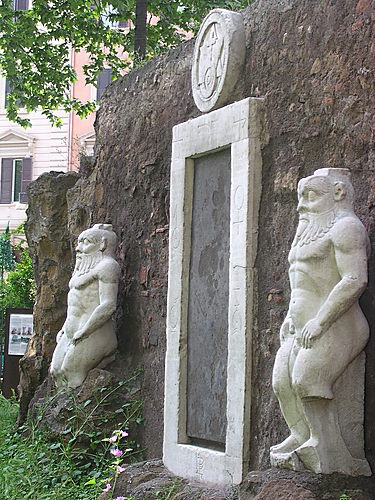
On our second day, we travel to the Esquiline Hill, to a small garden hidden behind the ruins of the Baths of Diocletian. In the corner of the Giardini di Piazza Vittorio Emanuele II, a park that was once the garden of the Villa Palombara, stands the Porta Magica, the Magic Door. It is the only surviving portal of the villa, a building that was demolished in the 19th century, and it is one of the most mysterious monuments in Rome.
The door was commissioned in 1680 by the marchese Massimiliano Palombara, a nobleman with a passionate interest in alchemy. According to the legend, Palombara once hosted a mysterious pilgrim in his villa, a traveller who claimed to possess the secret of the philosopher's stone, the legendary substance that could transmute base metals into gold. The pilgrim, whose name was not recorded, conducted an experiment in the garden of the villa. He succeeded. A quantity of gold was produced. But before he could reveal the formula, he fled, leaving behind a set of papers containing alchemical symbols and instructions in Hebrew, Latin and Italian. Palombara, unable to decipher the writings himself, decided to carve them into the stone of the door of his villa, hoping that a future visitor might understand what he could not.
The door is covered with symbols, some of which have been identified, others of which remain a mystery. The inscription on the lintel reads: "HORTI MAGICI INGRESSUM HESPERIUS CUSTODIT DRACO ET SINE AQUA ALCHEMIA NULLA", which translates roughly as "The dragon of the Hesperides guards the entrance to the magic garden, and without water there is no alchemy." The symbols on the door include the signs of the planets, the zodiac, the four elements, and a series of cabalistic inscriptions in Hebrew. One of the inscriptions, when translated, reads: "When the water of the Tiber turns to gold, the philosopher's stone will be found." The water of the Tiber has not turned to gold, and the stone has not been found. But the door remains, and the alchemists still come to study it, to touch it, to hope.
The gate to the garden is locked in the evening, but during the day the park is open, and you can approach the door freely, walk around it, examine its symbols and try to imagine what the marchese Palombara was thinking when he ordered its construction. Was he a genuine seeker of the stone, or a wealthy eccentric with too much time and money? The answer is not recorded. But the door itself is a testament to a moment in European history when alchemy was not a joke or a fraud but a serious intellectual pursuit, a precursor to chemistry, a search for the hidden laws of nature. The Porta Magica is the last remaining monument of that search, and it is waiting for you.
The symbols of the door. The inscription on the door includes the phrase "AQUILA VOLAT NON SINE AQUA", the eagle does not fly without water, which is believed to refer to the volatile substances used in alchemical operations. Another inscription, in Hebrew, is a cabalistic formula for the transformation of lead into gold. The door is not merely a curiosity; it is a document, a fragment of a lost science, a stone book that no one has fully learned to read.
Day 3, The Galleria Sciarra and the Palazzetto Zuccari, Liberty and Monsters
Our third day is dedicated to two hidden gems of the historic centre, both within walking distance of the Trevi Fountain, both invisible to the crowds that pass within metres of them. The first is the Galleria Sciarra, a covered pedestrian courtyard on Via dell'Umiltà, tucked behind the grand facade of a 19th century office building. The Galleria was built in the 1880s as a passageway connecting the offices of the Sciarra family, and its interior is a masterpiece of Liberty style, the Italian version of Art Nouveau.
The walls of the Galleria are covered with frescoes painted by the artist Giuseppe Cellini between 1885 and 1887. The frescoes depict allegorical figures representing the Virtues, the Arts, and the Seasons, all rendered in soft, muted colours with sinuous, flowing lines. The central theme of the decoration is the celebration of women, their beauty, their grace, their strength. The figures are dressed in the fashions of the late 19th century, with bustles, corsets, parasols and elaborate hairstyles, and they seem to float across the walls in a dream of elegance and refinement. The Galleria is covered by a glass and iron roof, and the light that filters through it gives the frescoes a luminous, ethereal quality. The space is small, it is free, and it is almost always empty. You will stand in the centre of the courtyard, turn slowly in a circle, and wonder how such a treasure can exist so close to the chaos of the Trevi Fountain and remain unknown.
From the Galleria Sciarra, walk toward the Spanish Steps, but stop before you reach them. On Via Gregoriana, a narrow street that climbs the slope of the Pincian Hill, you will find the Palazzetto Zuccari, also known as the Casa dei Mostri, the House of the Monsters. The building was designed in 1593 by the artist Federico Zuccari, who intended it to be his studio and his residence. Zuccari was a Mannerist painter, a follower of Michelangelo, and he brought to the architecture of his home the same playful, grotesque sensibility that characterised his paintings. The entrance door and the windows of the ground floor are framed by enormous stone mouths, gaping, grimacing, monstrous faces that seem to swallow the glass and the stone around them. The mouths are not merely decorative; they are portals, thresholds between the ordinary world and the world of the imagination, where the rules of proportion and decorum do not apply.
The building was later expanded and modified, and the upper floors were added in the 17th century. But the ground floor retains Zuccari's original vision, and the monsters still guard the entrance as they have for more than four centuries. The building is now part of the Bibliotheca Hertziana, a research institute for art history, and it is not generally open to the public. But the exterior, the door and the windows, are visible from the street, and you can stand before them, look into the gaping mouths, and feel the presence of an artist who refused to take architecture seriously, who understood that buildings could be playful, that stone could smile, that a house could be a monster and a monster could be a home.
Day 4, The Orologio ad Acqua and the Arco degli Acetari, Time and Silence
Our fourth day takes us to the green heart of Rome, the Villa Borghese, the largest public park in the city. Hidden in a secluded corner of the park, on a small artificial island in the middle of a pond, stands the Orologio ad Acqua del Pincio, the Water Clock of the Pincian Hill. The clock was built in 1867 by the Dominican friar Giovanni Battista Embriaco, a professor of mathematics and physics at the College of Saint Thomas. Embriaco was fascinated by the ancient water clocks of the Greeks and the Romans, and he spent years perfecting a mechanism that would keep accurate time using nothing but the force of flowing water.
The clock is housed in a small, charming pavilion of wood and cast iron, built in a Gothic Revival style, with pointed arches, trefoil windows and a steeply pitched roof. The mechanism is visible through a glass door, and it is a marvel of 19th century engineering. Water from the adjacent aqueduct flows into a series of reservoirs and siphons, creating a constant, regulated pressure that drives a system of gears and levers connected to the clock face. The clock is still accurate, and it still functions, more than 150 years after it was built. The park authorities wind it once a week, clean the filters, and ensure that the flow of water is uninterrupted. It is the only public water clock in Rome, and it is one of the few in the world that is still in operation.
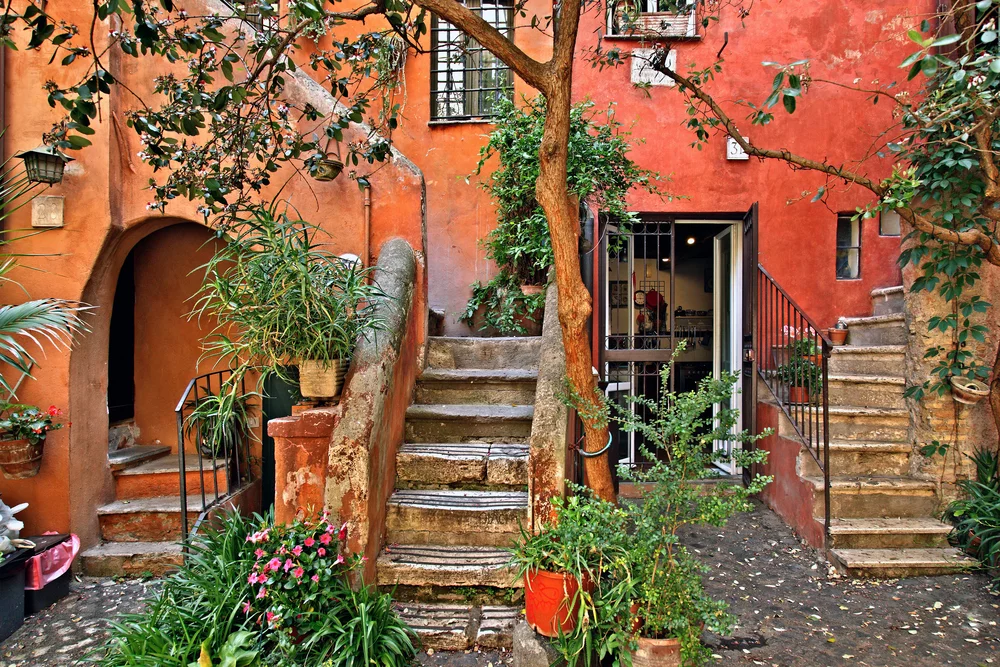
From the Villa Borghese, we descend into the historic centre, to the neighbourhood of Campo de' Fiori. Hidden behind the market stalls and the evening crowds, on a small street off the main square, lies the Arco degli Acetari, the Arch of the Vinegar Makers. The arch is a medieval passageway that leads into a small, unexpected courtyard, a pocket of silence in the heart of the noisy city. The courtyard is surrounded by ochre coloured houses, some of them dating to the 14th century, with external staircases, wooden balconies, potted plants and laundry hanging from the windows. The atmosphere is that of a medieval village, of a Rome that has disappeared everywhere else but survives in this hidden corner.
The name of the arch, Acetari, means vinegar makers, and it refers to the guild of the acetari, the producers of vinegar, who once had their workshops in this area. The vinegar was made from the wine of the Roman hills, aged in wooden barrels, flavoured with herbs and spices, and sold to the taverns and the kitchens of the city. The guild is gone, the workshops are silent, and the vinegar is now made in factories. But the arch remains, and the courtyard remains, and the silence remains. You can sit on the low wall of a well in the centre of the courtyard, listen to the sound of the water dripping from a forgotten fountain, and feel that you have stepped back into a Rome that no longer exists except in places like this.
The water clock in the cinema. The Orologio ad Acqua appears in several Italian films of the 1950s and 1960s, most famously in the comedy "Il Vigile" starring Alberto Sordi. In the film, the clock is a meeting place for lovers, a symbol of the timelessness of Rome. It is still a meeting place today, especially on Sunday afternoons, when the park fills with families and children and the sound of laughter.
Day 5, The Aventine Keyhole and the Borromini Perspective, Illusions of Space
Our final day is devoted to two of the most extraordinary optical illusions in Rome, one on the Aventine Hill, one in the historic centre. Begin your morning on the Aventine Hill, one of the seven hills of Rome, famous for its gardens, its churches and its sweeping views of the city. Walk to the Piazza dei Cavalieri di Malta, a small square designed by the 18th century architect Giovan Battista Piranesi. The square is decorated with obelisks, trophies and friezes that celebrate the Knights of Malta, the military order that still owns the Priory that overlooks the square.
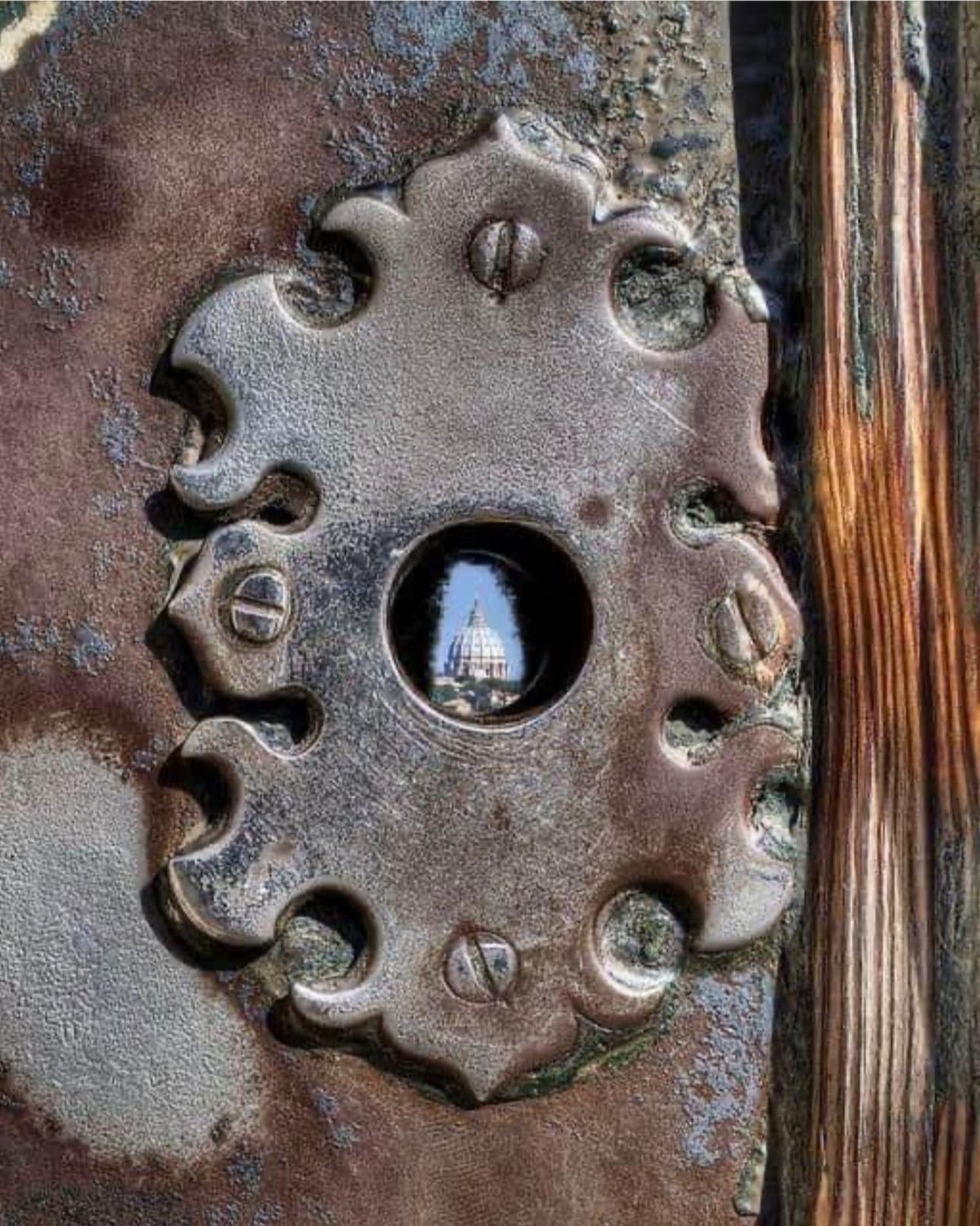
Approach the green door of the Priory. It is an ordinary door, painted green, with a brass handle and a brass keyhole. Look through the keyhole. What you see is one of the most famous views in Rome, a view that no photograph can quite capture. The keyhole frames a perfectly aligned perspective: an avenue of trimmed cypress trees, a walkway lined with hedges, and at the end of the avenue, framed by the leaves, the dome of Saint Peter's Basilica. The dome appears to be floating, suspended, resting on the foliage of the trees. The effect is not accidental. Piranesi designed the square and the garden of the Priory to create this precise alignment. He was an engraver, a master of perspective, and he understood that a keyhole could be a viewpoint, that a door could be a frame, that a garden could be a painting. There is often a queue at the keyhole. The wait is worth it. When your turn comes, place your eye against the brass, hold your breath, and look.
In the afternoon, walk to the Galleria Spada in the historic centre, a palace that houses a museum of Baroque art and one of the most brilliant architectural illusions ever conceived. The Prospettiva del Borromini, the Perspective of Borromini, was designed by the architect Francesco Borromini in 1653 for the cardinal Bernardino Spada. The gallery, which connects the entrance of the palace to the garden, appears to be 37 metres long, with a life size statue of a soldier at the far end. But it is not. The gallery is only 8 metres long, and the statue is less than one metre high. The illusion is achieved by a converging floor, a rising ceiling and a series of columns that diminish in height and thickness as they approach the end of the gallery. The perspective is so convincing that your brain will refuse to believe your eyes, even after you have been told the truth.
The gallery is open to the public as part of the museum. You can walk the length of it, see the trick revealed, and then return to the entrance and see it again, your eyes still deceived. It is a monument to the power of illusion, to the idea that architecture is not only about building but also about seeing, not only about space but also about the perception of space. Borromini was a master of the invisible, a magician of stone, and the Perspective of the Spada Gallery is his finest trick.
The secret of the perspective. The floor of the Borromini Perspective rises approximately one metre from the entrance to the statue, while the ceiling drops by the same amount. The side walls converge by nearly two metres. The columns are carved at different scales, and the statue is carved in two parts, its legs shorter than its torso, so that it appears in correct proportion only from the entrance. It is a masterpiece of mathematical calculation, executed with a precision that anticipates modern theories of visual perception. Borromini understood, three centuries before cognitive science, that the brain corrects for distortion, that it assumes a consistency that the world does not always provide.
Where to Eat, Trattorias and Osterie Near the Hidden Rome
After a day of searching for hidden doors and alchemical symbols, you will be hungry. The following restaurants are within walking distance of the secret places described above, and they offer authentic Roman cooking at reasonable prices.
Trattoria Da Enzo al 29, near the Arco degli Acetari in the Campo de' Fiori neighbourhood, is a small, crowded, noisy institution. The cacio e pepe is perfect, the carciofi alla giudia are crisp and salty, and the wine is served in a carafe of unknown origin. It is not a secret, it is famous, and the queue is long. Arrive early, put your name on the list, and wait. It is worth it.
Osteria del Sostegno, near the Aventine Hill, is a quiet, elegant restaurant that specialises in the cuisine of the Roman countryside. The pasta e ceci is a revelation, the abbacchio alla cacciatora is tender and fragrant, and the tiramisù is the best on the Aventine. The dining room is small, the service is professional, and the wine list features producers from the Castelli Romani, the hills south of Rome.
Pizzeria La Montecarlo, near the Galleria Sciarra and the Trevi Fountain, is a classic Roman pizzeria with tile floors, paper tablecloths and a wood fired oven that produces some of the finest pizza al taglio in the historic centre. Order a slice of pizza bianca with rosemary, a slice of pizza rossa with tomato and oregano, and a cold beer. Eat standing at the counter, watching the pizzaiolo slide the pies into the oven. It is cheap, it is fast, and it is delicious.
Common Tourist Mistakes in the Secret Rome
Assuming that the Quartiere Coppedè is easy to find. The quarter is located in the Parioli district, a twenty minute taxi ride from the historic centre. It is not on any bus tour, and most taxi drivers do not know it. Program the address, Piazza Mincio, into your phone, and be prepared to insist.
Visiting the Porta Magica when the garden is closed. The Giardini di Piazza Vittorio are open during the day, but the gates are locked at dusk. Plan your visit for the morning or early afternoon. The door is visible from the outside, but to approach it, to touch it, you need to be inside the garden.
Thinking that the Palazzetto Zuccari is open to the public. The building is now a research institute, and the interior is not accessible. The exterior, the door and the windows, are visible from the street. Do not ring the bell. The scholars inside will not appreciate the interruption.
Forgetting to check the queue at the Aventine keyhole. The keyhole is famous, and the queue can be long, especially on weekends and holidays. Bring patience, or visit early in the morning when the square is empty. The view is worth the wait.
Not reserving at the Galleria Spada. The museum is small, and the number of visitors is limited. Book your ticket online in advance, especially if you want to see the Borromini Perspective without a crowd. The perspective is visible from the entrance, but to walk the gallery, you need to enter the museum.
The Best Time to Visit the Secret Rome
The hidden places of Rome are less sensitive to the seasons than the outdoor monuments, but the experience of visiting them varies with the weather and the crowds. Spring from March to May is ideal for the Aventine Hill, the Villa Borghese and the Arco degli Acetari, when the gardens are in bloom and the light is soft. Autumn from September to November offers similar conditions, with the added advantage of shorter queues at the keyhole and the Galleria Spada. Summer, July and August, is hot and crowded, but the Galleria Sciarra, the Porta Magica and the Borromini Perspective are indoors, and the heat does not affect them. Winter, from December to February, is cold and sometimes rainy, but the secret places are almost empty, and the experience of standing alone before the Porta Magica or the Quartiere Coppedè is worth the chill. The best months, in my opinion, are May and October.
Essential Practical Information
Getting to Rome. Rome is served by two main airports, Fiumicino Leonardo da Vinci Airport (FCO) and Ciampino Airport (CIA). A private transfer with Airport Connection from either airport to your hotel in the historic centre takes approximately 45 minutes from Fiumicino and 30 minutes from Ciampino. The price is fixed, no hidden costs, and the driver will meet you at arrivals with a nameplate. Book at least 48 hours in advance for the best availability.
Getting around Rome for the secret places. The secret places are scattered across the city, and they are not all accessible by Metro. The Quartiere Coppedè is best reached by taxi or bus. The Porta Magica is a short walk from the Vittorio Emanuele Metro station. The Galleria Sciarra and the Palazzetto Zuccari are within walking distance of the Trevi Fountain and the Spanish Steps. The Orologio ad Acqua is inside the Villa Borghese, accessible by walking or by bus. The Aventine keyhole is a twenty minute walk from the Circo Massimo Metro station. The Borromini Perspective is a short walk from the Piazza Farnese. A combination of walking, bus and Metro is the most efficient way to see them all.
Safety. Rome is a safe city, but the usual precautions apply. Keep your bag closed in crowded areas, keep your phone in your pocket, and be aware of your surroundings. The Aventine Hill is quiet and safe, even at night. The area around the Termini station, near the Porta Magica, is less safe after dark. Plan your visits accordingly.
Language. English is spoken in the museums and the larger restaurants, but less so in the trattorias and the neighbourhoods. Learn a few words of Italian. It will make your experience richer, and the Romans will appreciate the effort.
Comments
No comments yet. Be the first to share your thoughts!
Leave a Comment
Your comment will appear after moderation.