 Michelle
 Rome is not a city of monuments. It is a city of flavours. The taste of pecorino romano melting into black pepper, the crackle of guanciale rendered crisp in its own fat, the perfume of artichokes fried in olive oil until their leaves curl like golden flowers. These are the tastes that have fed Romans for two thousand years. They did not originate in the kitchens of the Vatican or the palaces of the nobility. They were born in the trattorias of Trastevere, in the markets of Campo de' Fiori, in the homes of the grandmothers who understood that cooking was not a craft but a devotion. I have lived in this city for thirty years, and I have eaten my way through every neighbourhood. Let me take you with me. You will not leave hungry.
The Great Pasta Quartet, Carbonara, Cacio e Pepe, Amatriciana and Gricia
The pasta of Rome is not a single dish but a family of four siblings, each one distinct, each one beloved, each one the subject of fierce debate among the Romans who claim to know the only true recipe. The oldest of the four is cacio e pepe. Its origin is the Roman countryside, the hills where the shepherds spent months away from their homes with nothing but sheep's milk cheese, black pepper and dried pasta. The shepherds had no eggs, no guanciale, no tomato. They had only the cheese they made from their flocks and the pepper they could carry. The dish they created is a miracle of minimalism: pasta water, pecorino romano, black pepper, nothing else. The starch in the water emulsifies the cheese into a creamy sauce that coats each strand of pasta. It is the taste of poverty transformed by patience and skill.
Second in age is gricia, named for the town of Grisciano, where the shepherds stopped to rest and eat. Gricia adds guanciale, cured pork cheek, to the cacio e pepe. The guanciale is rendered in a pan until it is crisp on the outside and melting on the inside. The fat that renders out becomes the foundation of the sauce. The pecorino and pepper are added as before. No egg, no tomato. The result is richer, deeper, more savoury than its simpler cousin. Gricia is the dish that Romans eat when they want to taste the countryside without leaving the city.
Amatriciana comes from the town of Amatrice, high in the Apennines, though it is now considered a Roman specialty. The recipe adds tomato to the guanciale and pecorino. The bright acidity of the tomato cuts through the richness of the pork fat, and the pecorino provides the salt and the tang. Amatriciana is often made with bucatini, a thick, hollow spaghetti that catches the sauce in its central hole. The dish is named for its town of origin, and the citizens of Amatrice have been known to wage culinary war on anyone who adulterates their recipe with garlic or onion or, the unforgivable sin, bacon instead of guanciale [citation:1].
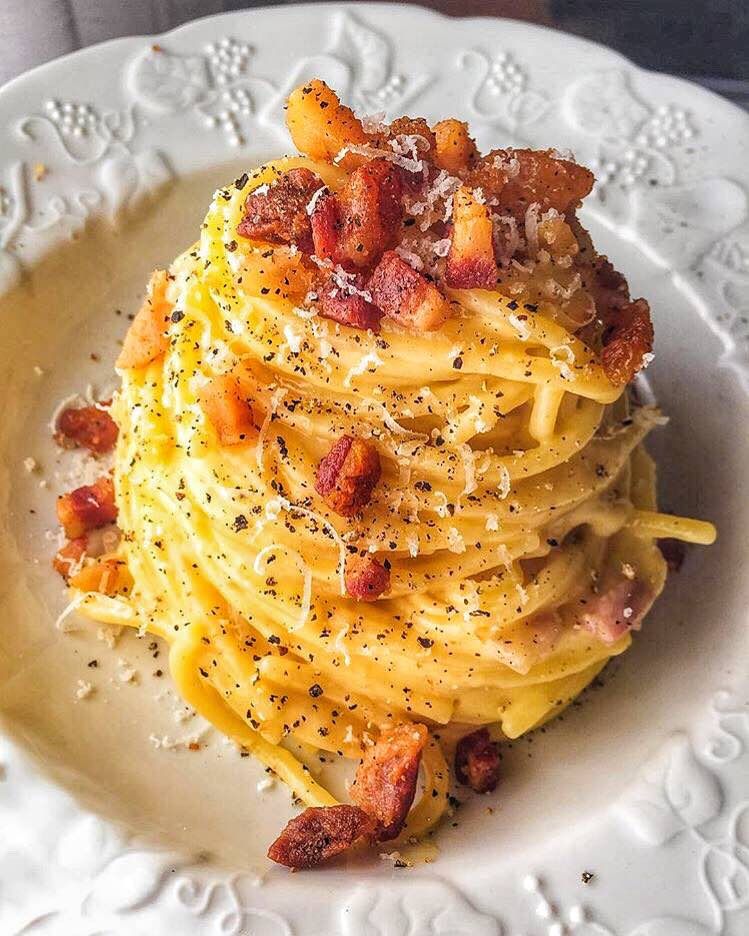
The youngest of the four is carbonara, and its origin is the subject of a story that Romans love to tell. In the years immediately after the Second World War, American soldiers stationed in Rome brought with them their K rations of freeze dried eggs and bacon. These unfamiliar ingredients somehow made their way into the kitchens of the city, where they encountered the local guanciale and pecorino. The result was carbonara: egg, pecorino, guanciale and black pepper. No cream. No garlic. No onion. The egg is not cooked over heat but by the residual warmth of the pasta itself, creating a sauce that is silky, rich and intensely savoury. The Romans are so protective of this recipe that when a foreign chef proposed adding cream or parsley or mushrooms, the outcry was so great that the city established an official National Carbonara Day, celebrated each year on April 6, as a declaration of culinary war on all who would dare to alter the sacred formula [citation:1].
The secret of a perfect carbonara. The eggs must be at room temperature. The pecorino must be grated fresh, not pre grated. The guanciale must be rendered slowly over low heat until it is crisp outside and tender within. And the pasta water, starchy and opaque, must be added to the egg and cheese mixture a tablespoon at a time, creating an emulsion that will coat the pasta without scrambling the egg. The heat of the pasta is sufficient. The pan should not be on the fire when the egg is added. The dish is finished with a generous grinding of black pepper, not a dusting but a blanket. This is the Roman way.
The Jewish Ghetto and the Carciofo alla Giudia
The Jewish Ghetto of Rome, established in 1555 by Pope Paul IV, is the oldest Jewish enclave in Europe outside of Venice. For more than three centuries, the Jewish population of Rome was confined to this small, flood prone area along the Tiber, forced to live in conditions of poverty and isolation. From this history of restriction came a cuisine of remarkable creativity and resilience. The most famous dish of the Roman Ghetto is the carciofo alla giudia, Jewish style fried artichoke.
The artichokes used for this dish are the Romanesco variety, a large, round, thornless artichoke with purple tinged leaves and a tender, almost nutty flavour. The preparation is a ritual. The artichoke is trimmed of its outer leaves, the stem is cut flush with the base, and the leaves are spread open like a flower. The artichoke is then plunged into hot oil, where it fries until the leaves are crisp and golden, curling outward like the petals of a sunflower. The result is a dish that is crunchy, salty, earthy and entirely addictive. It is served hot, with a wedge of lemon, and it is eaten with the fingers, leaf by leaf, until you reach the heart, which is the sweetest part [citation:2].
The carciofo alla giudia is a symbol of survival. It was created in the Ghetto at a time when the Jewish population had limited access to meat and dairy, and they made do with the vegetables they could grow and the oil they could afford. The dish is now served in restaurants throughout Rome, but the best versions are still found in the trattorias of the Ghetto itself, where the artichokes are fried to order and the oil is changed daily. To eat one is to taste the history of a community that refused to disappear.
The Street Food of Rome, Supplì, Pizza al Taglio and the Maritozzo
The street food of Rome is not a trend. It is a tradition, a livelihood, a way of eating that requires no table, no cutlery, no reservation. The king of Roman street food is the supplì, a fried rice ball filled with tomato ragù and a cube of mozzarella. The name comes from the French word surprise, because when you bite into the supplì, the mozzarella stretches in a long, stringy thread, a surprise indeed. The rice is cooked risotto style, mixed with ragù and, sometimes, with peas or chicken livers. It is formed into a ball, breaded and fried until golden. The exterior is crisp, the interior is soft and savoury, and the mozzarella is molten [citation:6].
Pizza al taglio, pizza by the slice, is the lunch of the Roman worker. The dough is rolled into a large rectangular pan, topped with tomato, mozzarella, and any number of additional ingredients, then baked in an electric oven. The pizza is sold by weight, cut with scissors, and folded into a wallet of paper. The crust is thick but light, crisp on the bottom, airy inside. The most traditional topping is pizza rossa, simply tomato sauce, oregano and olive oil. Pizza bianca, topped with olive oil and salt, is eaten plain or stuffed with mortadella, prosciutto or arugula [citation:1].
For a sweet snack, the maritozzo is the Roman choice. This is a soft, slightly sweet bun made with eggs, sugar and butter, flavoured with orange zest, split open and filled with mountains of whipped cream. The cream is not sweetened pastry cream but fresh panna montata, light as air and cold as a refrigerator. The maritozzo was traditionally given by young men to their sweethearts as a token of affection, the name meaning little husband. Today, it is the breakfast of Romans who do not believe in breakfast, the mid afternoon snack of those who have earned it, and the late night dessert of those who cannot resist [citation:6].
The Second Courses, Saltimbocca, Trippa and the Roman Offal Tradition
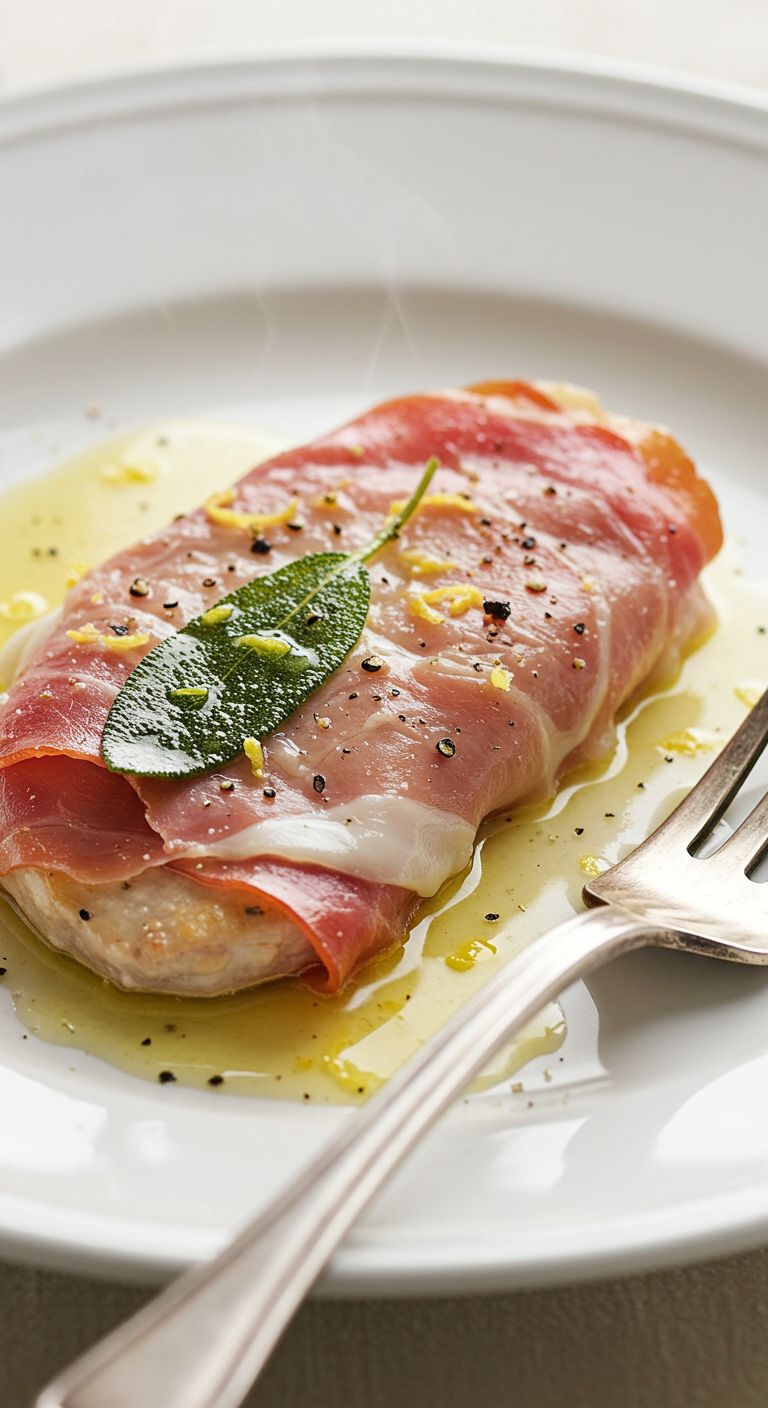
The pasta may be the glory of Roman cuisine, but the second courses are its soul. The Romans have never been squeamish about meat. They eat what the land and the animal provide, and they waste nothing. The most elegant of the Roman second courses is saltimbocca alla romana. The name means jump in the mouth, and the dish delivers on its promise. Thin veal cutlets are topped with a slice of prosciutto and a fresh sage leaf, then secured with a toothpick and cooked in a pan with white wine and butter until the wine has reduced to a fragrant sauce. The veal is tender, the prosciutto is salty, the sage is aromatic, and the sauce is buttery and bright. It is a dish of balance and restraint, and it is the exception to the Roman rule of bold flavours [citation:6].
Much more challenging to the foreign palate is trippa alla romana, Roman style tripe. The tripe, which is the stomach lining of the cow, is cleaned, boiled, then simmered for hours with tomato, onion, carrot, celery, mint and pecorino cheese. The mint is the surprising ingredient, the one that lifts the dish from the ordinary to the extraordinary. The tripe itself becomes tender, almost creamy, and the tomato sauce is rich and savoury. It is served with a generous dusting of pecorino. This is not a dish for the faint of heart or the conservative of palate. But for those who dare, it is a revelation [citation:6].
The most famous offal dish of Rome is rigatoni con la pajata. Pajata is the small intestine of a suckling veal, still containing the milk the calf consumed before slaughter. The intestine is cleaned, tied into rings, and cooked in tomato sauce until the milk curdles and thickens the sauce into a creamy, savoury ragù. The pasta, usually rigatoni, is tossed with this sauce, and the result is a dish of extraordinary richness and depth. It is seasonal, available only in spring when the veal is young, and it is the dish that Romans order when they want to taste the countryside at its most intense [citation:1].
The Wines of Rome, Cesanese, Frascati and the Roma DOC
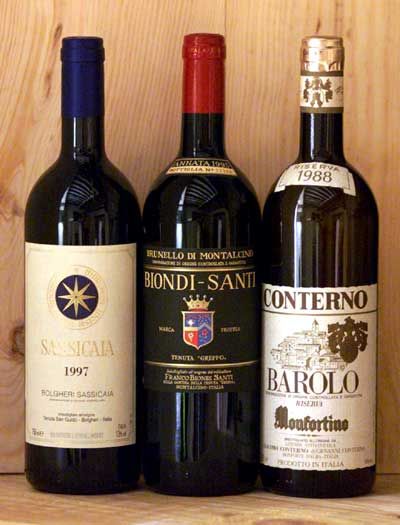
The territory around Rome is not as famous as Chianti or Barolo, but it produces wines of extraordinary character and value. The most important red grape of the region is Cesanese. There are two varieties, Cesanese Comune and Cesanese d'Affile, and they are grown in the hills east of Rome, in the provinces of Rome and Frosinone. The wines are ruby red, with aromas of black pepper, wild berries, violets and a distinctive earthy, almost leathery note. The tannins are firm but not harsh, the acidity is bright, and the finish is long and savoury. Cesanese is the wine for Roman food, the wine that can stand up to the guanciale and the pecorino, the wine that cuts through the richness of the offal dishes and refreshes the palate [citation:5].
The most celebrated white wine of the Roman region is Frascati Superiore DOCG. Frascati is a town in the Castelli Romani, the volcanic hills south of Rome, and its white wine has been praised since the time of the ancient Romans. The wine is made primarily from Malvasia del Lazio grapes, with smaller amounts of Bellone, Bombino and Trebbiano. The best examples are crisp, floral and mineral, with notes of white flowers, citrus zest and a characteristic hint of almond on the finish. Frascati is the wine for fish, for vegetables, for the lighter Roman pastas like cacio e pepe [citation:5].
The Roma DOC appellation, established in 2011, covers a broad range of styles from the countryside around the city. The white wines are made from Malvasia del Lazio and Bellone, the latter an ancient grape that produces wines of considerable texture and depth. The reds are based on Montepulciano and Cesanese, with Sangiovese playing a supporting role. The Roma DOC is not a single style but a family of wines, and the best producers, such as Marco Carpineti, Damiano Ciolli and Casale della Ioria, are worth seeking out [citation:5].
For the adventurous drinker, I recommend a visit to the wineries of the Castelli Romani, the cluster of hill towns south of Rome that includes Frascati, Marino, Grottaferrata and Castel Gandolfo. The landscape is volcanic, the soil is rich in minerals, and the wines produced here have a distinct, smoky character that comes from the ancient lava flows. Many of the wineries offer tastings and cellar tours, and a day trip to the Castelli Romani is the perfect complement to a week in Rome.
A Traditional Roman Recipe, Pasta alla Carbonara
Before I send you to the restaurants of Rome, I will share with you the recipe that every Roman grandmother knows by heart. This is the authentic carbonara, the one that will earn you the respect of any Roman who tastes it. No cream. No garlic. No parsley. No mushrooms. Just five ingredients and the patience to execute them correctly.
Ingredients
- 180 grams (6.3 ounces) of spaghetti or tonnarelli
- 60 grams (2 ounces) of guanciale, cut into 1 centimetre strips
- 2 large egg yolks, at room temperature
- 40 grams (1.4 ounces) of pecorino romano cheese, finely grated
- 20 grams (0.7 ounces) of Parmigiano Reggiano, finely grated
- Black pepper, freshly ground
- Salt for the pasta water
Preparation
Step 1. Bring a large pot of salted water to a rolling boil. The water should taste like the sea. Add the pasta and cook according to the package instructions until al dente.
Step 2. While the pasta cooks, place the guanciale in a cold pan. Turn the heat to medium low. The fat will render slowly, and the guanciale will become crisp on the outside and tender within. This takes approximately 6 to 8 minutes. Do not rush it. Do not add oil. The guanciale provides its own fat.
Step 3. In a mixing bowl, combine the egg yolks, the grated pecorino romano, the grated Parmigiano Reggiano and a generous amount of freshly ground black pepper. Whisk until the mixture is pale and creamy.
Step 4. When the pasta is al dente, reserve a cup of the starchy pasta water. Drain the pasta and transfer it to the pan with the rendered guanciale. Toss to coat the pasta in the rendered fat.
Step 5. Remove the pan from the heat. Let it cool for thirty seconds. You do not want the pan to be so hot that it scrambles the eggs.
Step 6. Add the egg and cheese mixture to the pasta. Add a splash of the reserved pasta water. Toss vigorously. The heat of the pasta will cook the eggs gently, and the starch in the water will emulsify the sauce. If the sauce seems too thick, add another splash of pasta water. If it seems too thin, add more grated cheese.
Step 7. Serve immediately, in warm bowls, with another generous grating of pecorino romano and a final grinding of black pepper. The dish should be eaten the moment it is plated. It does not wait.
Wine pairing for this recipe. The perfect wine for carbonara is a young, unoaked Cesanese. Look for a Cesanese di Olevano Romano DOC, which has the acidity to cut through the richness of the guanciale and the pecorino, and the black pepper notes that echo the pepper in the dish. A Frascati Superiore also works, especially if you prefer white wine. Avoid big, tannic reds. They will overpower the delicate emulsion of the egg and cheese.
A Dedicated Food and Wine Day Tour in Rome
The following itinerary is designed for the serious eater, the traveller who wants to taste the city rather than just see it. It is a full day of walking, eating, drinking and walking again. Wear comfortable shoes. Come hungry.
Morning, The Market of Campo de' Fiori
Begin your day at the Mercato di Campo de' Fiori, the most famous market in Rome. The square transforms every morning into a riot of colours and smells: stalls of fresh vegetables, hanging salamis, wheels of pecorino, pyramids of ripe figs, crates of artichokes still dusty from the fields. Buy a piece of pizza bianca from the Forno Campo de' Fiori, a bakery that has been operating on the square since the 18th century. Eat it warm, torn with the fingers, as you walk among the stalls. Then find a stall selling olives and sample the different varieties: the small, black Gaeta olives, the large, green Cerignola olives, the cracked Castelvetrano olives, sweet and buttery. This is your breakfast. It is not a conventional breakfast. It is a Roman breakfast.
Late Morning, The Jewish Ghetto and the Carciofo
Walk from Campo de' Fiori to the Jewish Ghetto, a five minute stroll through the narrow streets of the historic centre. Find a trattoria that serves carciofo alla giudia, and order it even if it is only 10:30 in the morning. The artichoke will be fried to order, and you will eat it standing at a counter or sitting on a low wall. The leaves will be crisp, the heart will be tender, and you will understand why the Jews of Rome have preserved this dish for four centuries. After the artichoke, find a kosher bakery and buy a piece of pizza ebraica, a sweet, dense cake of dried fruit, nuts, wine and pepper. It is the dessert you did not know you needed.
Lunch, A Roman Trattoria
For lunch, choose a trattoria in the Ghetto or in nearby Trastevere. Order a pasta, either cacio e pepe or carbonara, and a glass of Frascati Superiore. The wine should be cold, pale gold, and mineral. The pasta should be served in a warm bowl, and the sauce should coat each strand without pooling on the bottom. Do not order a salad. Do not order a pizza. Order a second pasta. You are in Rome. This is what you do.
Early Afternoon, A Wine Tasting
After lunch, walk to the Enoteca Regionale del Lazio in the Palazzo delle Esposizioni, near the Via Nazionale. This wine bar specialises in the wines of the Lazio region, including Cesanese, Frascati, Bellone and the rare Grechetto of the Tuscia. The staff are knowledgeable and generous with their tastings. Order a flight of three wines, and ask the sommelier to explain the differences between the Cesanese d'Affile and the Cesanese Comune. Allow an hour for this tasting. Do not rush. Wine is not a beverage; it is a conversation.
Late Afternoon, Supplì and Pizza al Taglio
By late afternoon, you will be hungry again. Find a friggitoria, a fried food shop, that sells supplì. The supplì should be made to order, the rice still warm, the mozzarella still molten. Eat it from a paper cone as you walk. Then find a pizzeria al taglio and buy a rectangle of pizza rossa and a rectangle of pizza bianca. Eat them side by side, the one savoury, the other plain, the contrast between them a lesson in Roman simplicity.
Evening, The Maritozzo and a Digestif
For your final taste of Roman sweetness, find a pasticceria that serves maritozzo con panna. The bun should be soft, the cream cold and billowing, and the whole thing should be impossible to eat without covering your face in whipped cream. Order it with a glass of vin santo, the sweet wine of Tuscany, or with a small glass of Sambuca, the anise flavoured liqueur of Rome. The Sambuca should be served with three coffee beans floating on top, representing health, wealth and happiness. Drink it slowly. Let it warm you. This is the Roman way of saying goodbye to the day.
A note on pacing. Do not attempt to eat everything in a single day. The itinerary above is designed for a full day of eating, but you can spread it over two or three days if you prefer. The quality of your experience will be higher if you do not force yourself to finish every course. Leave room for spontaneity. The best meals in Rome are often the ones you do not plan: a glass of wine at a random enoteca, a plate of salumi at a bar you stumbled into, a conversation with a local who recommends a dish not in any guidebook.
Transport Tips, Arriving in Rome for Your Food Tour
Rome is served by two main airports, Fiumicino Leonardo da Vinci Airport (FCO) and Ciampino Airport (CIA). The most comfortable way to reach your hotel is by private transfer with Airport Connection. Your driver will meet you at arrivals, assist with luggage, and deliver you directly to your hotel in the historic centre. The journey from Fiumicino takes approximately 45 minutes; from Ciampino, approximately 30 minutes. The price is fixed, with no hidden costs. Book at least 48 hours in advance for the best availability.
Once you are in Rome, the best way to explore the food scene is on foot. The distances between the markets, the bakeries and the trattorias are short, and the city is best experienced at walking pace. Wear comfortable shoes. The pavement in the historic centre is uneven, and you will walk more than you expect. Bring a bag for your purchases. The bread, the cheese, the wine, the olive oil, the jars of artichokes preserved in oil, the packages of dried pasta, the bags of coffee beans: you will accumulate them, and you will need to carry them home.
How to book your transfer with Airport Connection. Select your pickup location, either Rome Fiumicino Airport (FCO) or Rome Ciampino Airport (CIA). Enter your destination in Rome, either your hotel address or a landmark such as Campo de' Fiori or Trastevere. Specify the number of passengers and the amount of luggage. The system calculates a fixed price instantly. Confirm your booking online, and you will receive a confirmation email with your driver details and meeting instructions. Book at least forty-eight hours in advance for the best availability.
Book Your Transfer →
Conclusion, A City to Be Eaten
Rome is not a city of monuments. It is a city of flavours. The taste of pecorino melted into black pepper, the crunch of guanciale rendered crisp in its own fat, the perfume of artichokes fried in olive oil until their leaves curl like golden flowers, the sweetness of a maritozzo filled with cold whipped cream, the mineral tang of Frascati on a warm afternoon. These are the tastes that have fed Romans for two thousand years. They are the tastes that will stay with you when the photographs have faded and the souvenirs have been lost. Rome is a city to be eaten, not just seen. And it is waiting for you, with its pots simmering and its wine glasses filled, to come and taste it for yourself.
Comments
No comments yet. Be the first to share your thoughts!
Leave a Comment
Your comment will appear after moderation.