 Michelle
 You have saved for months. You have booked the restaurant with the Michelin star, the one with the white tablecloths and the sommelier who speaks in hushed tones about tannins and terroir. The dinner will be magnificent, a memory you will carry for the rest of your life. But the meals you will remember most vividly, the ones that will make you smile when you think of Paris, will not be those grand affairs. They will be the moments you stole between monuments: the croissant eaten on a bench in the Jardin du Luxembourg, the crêpe folded into a paper cone and devoured while crossing the Pont des Arts, the falafel consumed standing on a cobblestone street in the Marais. Paris is not only a city of gastronomy. It is a city of snacking. And snacking, done well, is an art form. Let me show you how the Parisians do it.
The Philosophy of Parisian Snacking
The French have a complicated relationship with eating on the street. The official culture insists on seated meals, on the ritual of the table, on the sacredness of lunch hour. But the unofficial culture, the one you will see if you watch carefully, is different. At lunchtime, the office workers of Paris pour out of their buildings and gather around the food trucks that have appeared on the boulevards. They buy sandwiches wrapped in paper, falafel in pita, crêpes in cones. They eat standing up, leaning against walls, sitting on the steps of monuments. They are snacking, and they are snacking with joy.
You should adopt this habit. A full restaurant lunch in Paris costs time and money. A snack costs neither. It allows you to eat five times a day instead of three, to taste a wider range of flavours, to eat exactly when you are hungry rather than when the restaurant says you should be. The French call this 'grignotage', nibbling, and it is the secret to a happy Parisian day. You will walk more, sit less, and experience the city through your stomach. It is a beautiful thing.
The Croissant: A Symphony in Butter and Dough
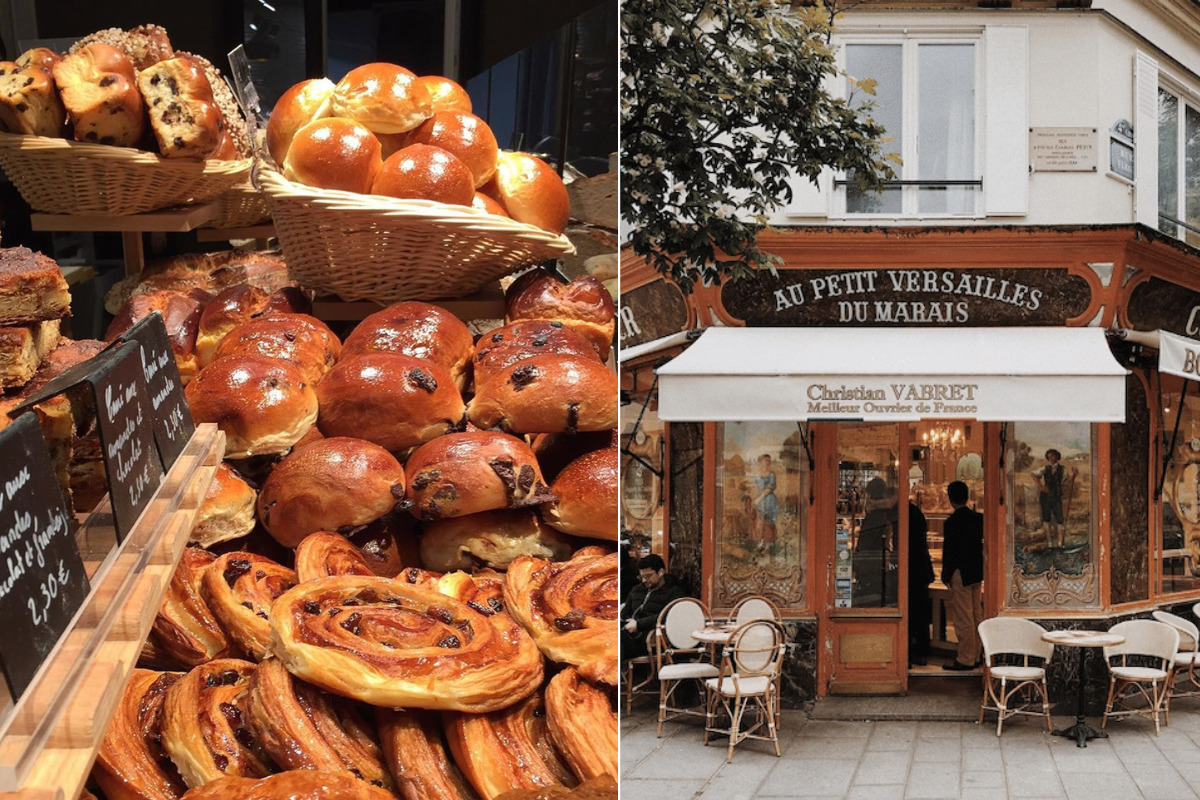
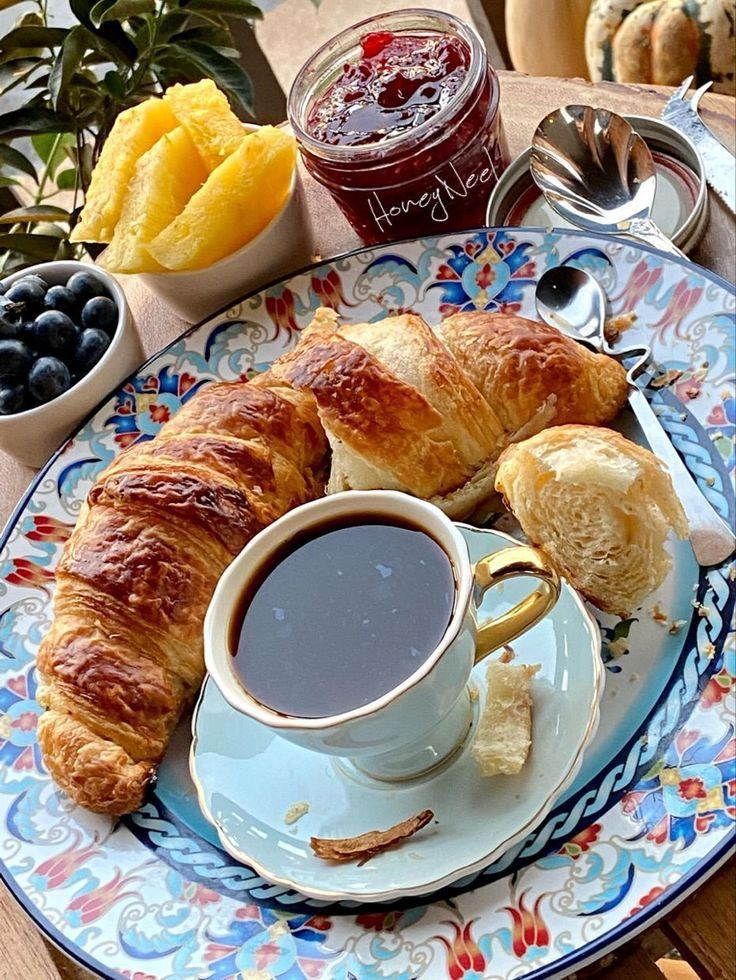
The croissant is not a snack. It is a religious experience. A perfect croissant should be golden brown, almost the colour of autumn leaves. When you pick it up, it should feel light, almost weightless, a contradiction given the quantity of butter inside. When you bite into it, it should shatter into a thousand flaky fragments, each one dissolving on your tongue into pure, buttery richness. The interior should be honeycombed with air pockets, the layers distinct but delicate. A bad croissant is a tragedy. A good croissant is a pleasure. A great croissant is a moment of grace.
Where to find the great croissant? Not near the Eiffel Tower, not near the Louvre, not on the Champs-Élysées. Those croissants are made for tourists, and they are acceptable but not transcendent. The best croissants are in the neighbourhood bakeries of the 9th, 10th and 11th arrondissements, where the bakers are baking for their neighbours, not for the busloads of visitors. Look for the 'Boulangerie de France' sign, which certifies that the bread and pastries are made on the premises. Look for a queue. If the queue is full of Parisians carrying cloth bags, you have found the right place. My favourite croissant in Paris is from Du Pain et des Idées in the 10th (34 Rue Yves Toudic). Their croissant is made with organic flour and Charentes-Poitou butter, and it is the best I have ever eaten. The queue is long. The wait is worth it.
The Code of the Croissant: The best croissants are eaten in the morning, before 10:00 AM. By noon, the croissants from most bakeries have been sitting for hours. They are still good, but they are not what they were at 7:00 AM. The bakers bake in batches throughout the day, but the morning batch is the one that benefits from the overnight rise. Be early. Eat a croissant for breakfast. Eat another for elevenses. You are on holiday. No one is counting.
The Crêpe: Street Food Poetry
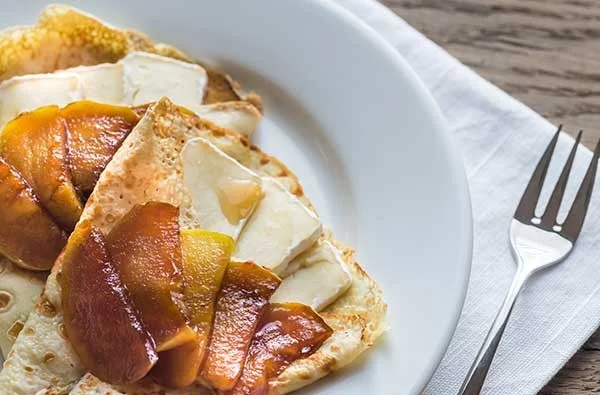
The crêpe is the quintessential Parisian street snack. It is humble, versatile, and perfect for eating while walking. The best crêpes are sold from the small green carts that appear on street corners, in front of the Pompidou Centre, along the Seine. A proper crêpe is made fresh, the batter poured onto a hot circular griddle, spread thin with a wooden tool called a 'rozell'. The crêpe cooks in seconds. The vendor flips it with a spatula, adds your toppings, folds it into a triangle, and hands it to you in a paper cone. You walk away, steam rising from the paper, and you eat.
The classic Parisian crêpe is the 'crêpe au sucre': butter, sugar and a squeeze of lemon. It is simple and perfect. The 'crêpe au chocolat' (chocolate syrup) is beloved by children and the young at heart. The 'crêpe au Nutella' (Nutella and banana) is the most decadent. The 'crêpe complète' (ham, cheese and egg) is a meal in itself, a savoury crêpe that will keep you going until dinner. The best crêpe cart in Paris is at the Place de la Sorbonne, in the Latin Quarter, where the students of the university line up for the same cart that has been there for thirty years. The vendor knows everyone's name. He will know yours by your second visit.
The Falafel of the Marais
The Marais district, in the 4th arrondissement, is the historic Jewish quarter of Paris. On the Rue des Rosiers, a narrow street that has been the heart of Jewish Paris for centuries, you will find L'As du Fallafel. The queue snakes down the street. You will wait twenty minutes, thirty minutes, sometimes forty-five minutes. You will wonder if it is worth it. Then you will bite into the falafel, and you will understand.
The falafel at L'As du Fallafel is unlike any falafel you have eaten. The pita is fresh and soft. The falafel balls are crisp on the outside, fluffy on the inside, flavoured with parsley and cumin. The tahini is creamy and sharp. The eggplant is fried until it is almost jammy. The cabbage is pickled. The hot sauce is optional but essential. The sandwich is enormous, too big to eat neatly, and you will stand on the street corner, hummus dripping down your chin, not caring at all. The restaurant also serves shawarma, grilled meats, and a selection of salads. But the falafel is the reason you came. Order it 'complet' with everything. Do not ask for modifications. The chef knows what he is doing.
L'As du Fallafel is at 34 Rue des Rosiers. It is closed on Saturdays (Shabbat). It is open until midnight on other days. The queue is shortest at 11:30 AM, before the lunch rush, and at 4:00 PM, between lunch and dinner. Do not be put off by the line. It is part of the experience.
The Argument You Will Hear: Across the street from L'As du Fallafel is another falafel shop, Mi-Va-Mi, which claims to be better. The feud between the two establishments is legendary in Paris. Mi-Va-Mi has its own queue, its own loyalists, its own arguments for superiority. The truth is that both are excellent. Try both if you have time and appetite. But if you can only choose one, go to L'As. It is the original, and it is the best.
The Macaron: Bite-Sized Perfection
The macaron is not a meal. It is not even a snack, really. It is a punctuation mark, an exclamation point at the end of a sentence, a small, colourful, perfect bite that contains more pleasure than any food of its size has a right to contain. The macaron is made of almond flour, egg whites and sugar, sandwiching a filling of ganache, buttercream or jam. The shell should be crisp and smooth, with a 'foot', the ruffled edge at the bottom, that is the mark of a properly made macaron. The inside should be slightly chewy, slightly moist, yielding to the tooth.
The most famous macarons in Paris are from Ladurée (multiple locations, including 75 Avenue des Champs-Élysées) and Pierre Hermé (multiple locations, including 72 Rue Bonaparte). These are the macarons of luxury, presented in elegant boxes tied with ribbon, costing nearly three euros each. They are perfect. They are also touristy. The best macarons in Paris, the ones that Parisians eat, are from the smaller patisseries that do not have international brand recognition. Try the macarons at La Pâtisserie des Rêves on Rue du Bac, or at Sadaharu Aoki on Boulevard de la Madeleine, which makes extraordinary macarons flavoured with matcha and sesame. A box of macarons, eaten in a park, shared with a friend, is one of the great pleasures of Paris.
The Baguette Sandwich: Lunch in Your Hand
The baguette sandwich is the working lunch of Paris. It is simple, fast, and surprisingly delicious. A fresh baguette, still warm from the oven, is sliced lengthwise and filled with butter and ham (jambon-beurre), or chicken and mayonnaise (poulet-crudités), or tuna and hard-boiled egg (thon-crudités). That is it. No lettuce, no tomato, no fancy sauces. The quality of the baguette and the quality of the fillings are the only things that matter.
The best baguette sandwich in Paris is from the boulangerie near your hotel. Every neighbourhood has a good one. The secret is to buy the sandwich in the morning, before the baguette has had time to stale. The baguette should be crisp on the outside, soft on the inside, with a creamy crumb that smells of wheat and yeast. The butter should be salted, and it should be spread generously. The ham should be sliced thin, not too salty, not too fatty. The sandwich should be wrapped in paper, not plastic. And you should eat it in a park, on a bench, watching the world go by. It will cost you four or five euros. It will be the best lunch you have in Paris.
Markets: Rue Mouffetard, Rue Cler and Beyond
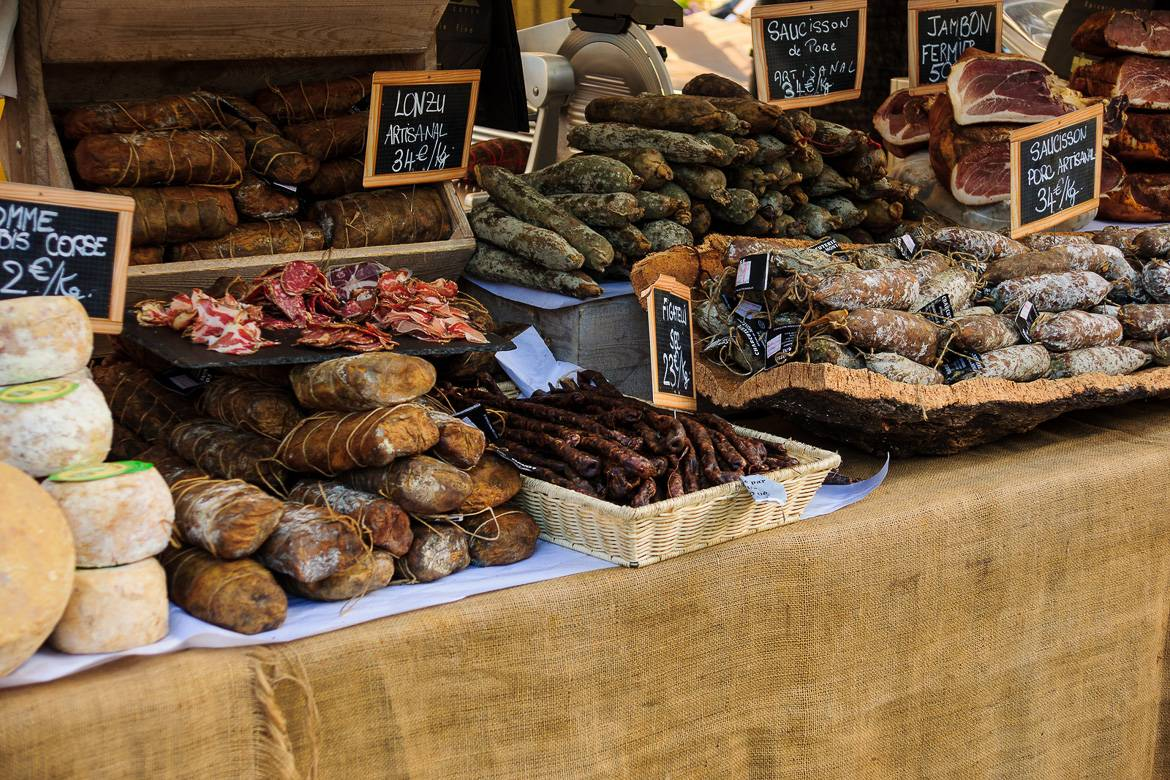
The street markets of Paris are the original snacking destinations. The Rue Mouffetard, in the 5th arrondissement, is the most famous. It has been a market street since the 14th century, and it still operates daily, with stalls selling cheese, charcuterie, fruit, vegetables, fish, meat, bread and pastries. You can buy a baguette at one stall, a wedge of Camembert at another, a bunch of grapes at a third, and assemble a picnic in twenty minutes. The food is fresh, local, and inexpensive. The atmosphere is joyful, noisy, and thoroughly Parisian.
The Rue Cler, in the 7th arrondissement near the Eiffel Tower, is more polished, more tourist-friendly. The stalls are beautifully arranged, the vendors speak English, and the prices are higher. But the quality is excellent, and the location is convenient. You can buy a sandwich, a salad, a pastry and a bottle of wine, and walk to the Champ de Mars for a picnic with a view of the Eiffel Tower. It is a cliché, but clichés exist for a reason. They work.
The Marché des Enfants Rouges, in the 3rd arrondissement, is the oldest covered market in Paris, dating to 1615. It is a food hall before food halls were fashionable, with stalls selling everything from Moroccan tagine to Italian pasta to Japanese ramen. You can eat standing at a counter or sitting on a stool. The market is open Tuesday to Sunday, closed Monday. The lunch rush is busy; come early or late. The food is excellent, the prices are reasonable, and the history is palpable.
'In Paris, everyone eats on the street. The banker, the baker, the student, the artist, the tourist. We are all equal before the crêpe cart. That is the secret democracy of French snacking.' — Anonymous Parisian street food vendor
Hidden Bakeries and Where to Find Them
The best bakeries in Paris are the ones that do not appear in guidebooks. They are the ones where the queue is composed of neighbourhood grandmothers with shopping trolleys, not tourists with cameras. Here are a few to seek out:
Pain Pain (88 Rue des Martyrs, 9th). The name means 'bread bread', and the bread is exceptional. The croissants are buttery and flaky. The pain au chocolat is studded with two bars of dark chocolate. The sandwiches are simple and perfect.
Le Grenier à Pain** (38 Rue des Abbesses, 18th). This bakery won the award for the best baguette in Paris in 2015 and again in 2018. The baguette tradition is crusty, chewy and fragrant. The croissants are excellent. The queue is long. The wait is worth it.
Boulangerie Utopie** (20 Rue Jean-Pierre Timbaud, 11th). This bakery is famous for its experimental breads and pastries. The croissant paysan is made with rye flour and has a nutty, earthy flavour. The pain au sarrasin (buckwheat bread) is dark, dense and deeply satisfying. The bakery is small and often sells out by mid-afternoon. Arrive early.
La Bague de Kenza** (multiple locations). This is a chain, but it is a chain with standards. The croissants are consistently good. The pain d'épice (spice bread) is a specialty. The service is fast, the locations are convenient, and the quality is reliable when you are in a hurry.
Practical Tips for the Edible Stroll
Getting to Paris: Paris is served by three major airports. Charles de Gaulle (CDG) is the largest, located 25 kilometres northeast. Orly (ORY) is 13 kilometres south. Beauvais (BVA) is 85 kilometres north, used by low-cost carriers. A private transfer is the most comfortable way to reach the city centre, especially with luggage or after a long flight. The RER B train from CDG or Orly is faster and cheaper but less convenient with suitcases.
Getting Around Paris: The metro is your best friend. A single ticket costs 2.10 euros, and a carnet of ten tickets costs 16.90 euros. The metro runs from about 5:30 AM to 1:00 AM (2:00 AM on weekends). Walking is the most rewarding way to explore the neighbourhoods where the best snacks are found. Wear comfortable shoes.
Best Time for a Snacking Tour: Spring (April, May) and autumn (September, October) are ideal. The weather is mild, the markets are full, and the long days allow for leisurely strolling. Summer is hot and crowded, but the crêpe carts are out late, and the atmosphere is festive. Winter is cold, but the croissants are warm, and the queues are shorter.
What to Bring: A small bag for your purchases (the French frown on plastic bags). A reusable water bottle (the tap water in Paris is excellent and free). Cash (many street food vendors do not accept credit cards). And an empty stomach. The snacking tour you are about to undertake will fill it many times over.
Comments
No comments yet. Be the first to share your thoughts!
Leave a Comment
Your comment will appear after moderation.