 Michelle
 Beneath the streets of Rome — beneath the traffic, the noise, the tourists and the espresso bars — there is another city entirely. It has no piazzas, no fountains, no ochre-coloured facades catching the afternoon light. It has only tunnels: narrow, low-ceilinged passageways carved by hand from the volcanic tufa rock, stretching for more than 1,000 kilometres beneath the surface of the Eternal City. In these tunnels, the early Christians buried their dead, celebrated their faith in secret, and left behind one of the most remarkable records of human belief and artistry in the ancient world. To descend into the Roman Catacombs is to step not merely underground, but backwards through seventeen centuries of history — into a world of extraordinary silence, shadow and meaning.
What Does "Catacumbas" Actually Mean?
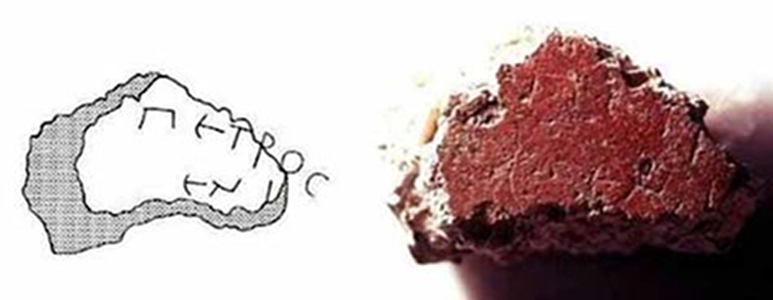
The word catacumbas has a long and slightly mysterious etymology. It was originally the name of a specific place — a low-lying area along the Via Appia Antica, between the second and third milestone from the ancient city walls, where the church of San Sebastiano stands today. According to early Christian tradition, this was where the remains of the Apostles Peter and Paul were temporarily transferred in 258 AD, during the persecution of the Emperor Valerian, to protect them from desecration.
The name itself may derive from the Greek κύμβη (kýmbē), meaning a hollow or basin, or from the Latin kata tumbas — literally "among the tombs." Whatever its precise origin, the word gradually extended its meaning from this one specific site to describe any underground Christian cemetery, a usage documented from at least the ninth century, though certainly much older in practice.
A fundamental misconception: Despite what many films and novels suggest, the Roman Catacombs were never used as hiding places during persecution — they were known to the Roman authorities and legally protected as burial sites. The early Christians sheltered in private homes and the estates of wealthy patrons, not underground. The Catacombs were places of burial and remembrance, not refuge.
1. How the Catacombs Were Built — A World Carved by Hand
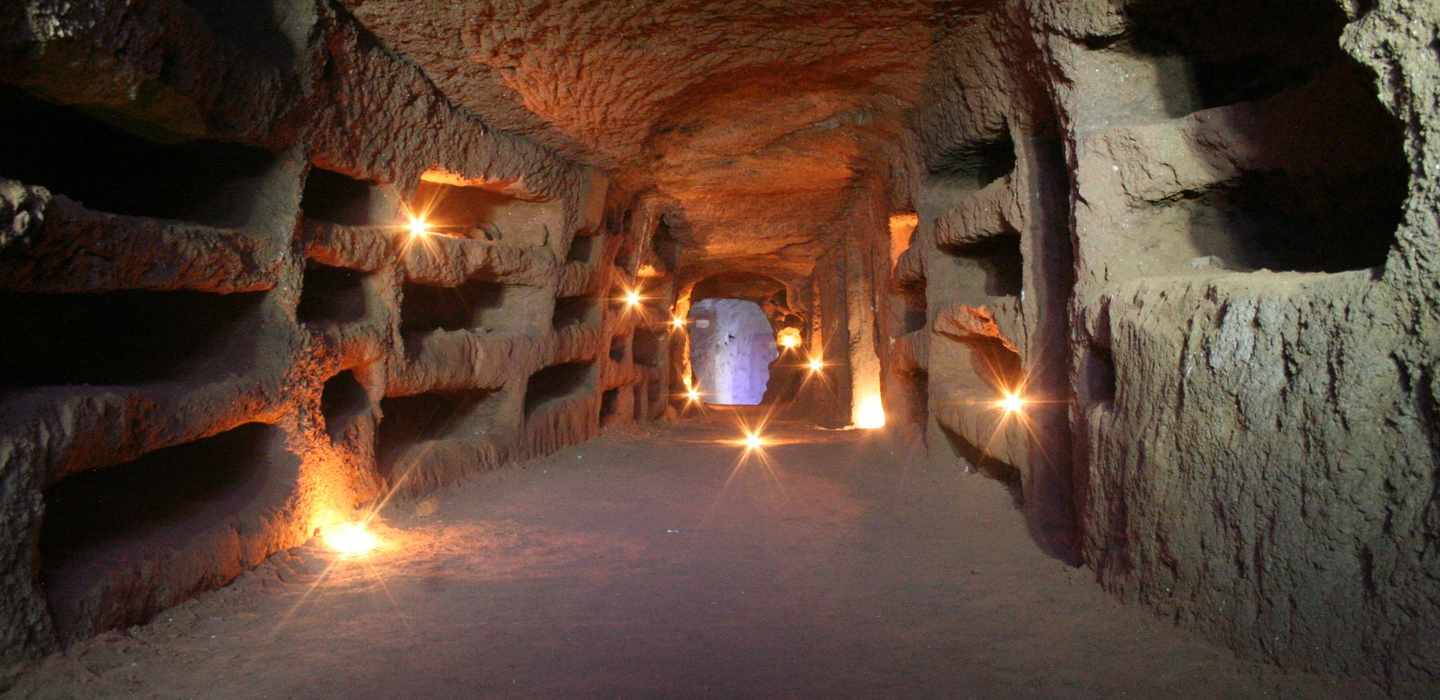
The construction of the Roman Catacombs is a feat of human labour that still astonishes engineers today. The tunnels were excavated almost entirely by hand, by specialised workers known as fossores — literally "diggers" — who were employed by the early Christian community and appear frequently in catacomb art, depicted with their picks and oil lamps. They worked in the tufa rock that underlies much of Rome's suburban landscape: a soft, porous volcanic stone that is relatively easy to cut but hardens on exposure to air, making it an ideal material for underground construction.
The galleries — typically between 80 centimetres and 1 metre wide, and between 2 and 3 metres high — were arranged in complex networks on multiple levels, some extending to four or even five floors below the surface. Along the walls of the galleries, the fossores cut rectangular niches called loculi, stacked two to five high, each large enough to contain a single body wrapped in linen. Once a body was placed inside, the niche was sealed with a marble slab or terracotta tiles, often bearing an inscription — a name, a date, a prayer, sometimes nothing more than a Christian symbol scratched into the stone by a grieving hand.
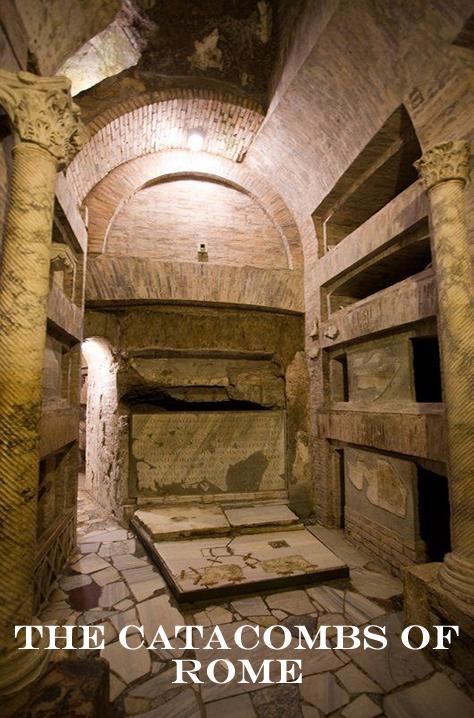
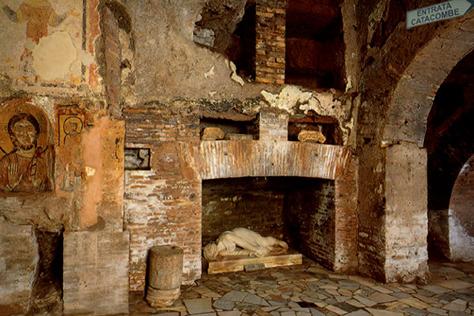
For the wealthier or more prominent members of the community, more elaborate burial arrangements were available. Arcosolia — arched recesses carved into the gallery walls — provided space for decorated tomb chambers. Cubicula were small rooms opening off the main corridors, family burial chapels decorated with frescoes and used for memorial gatherings. These are among the most visually stunning spaces in the entire underground complex, their painted walls preserving some of the earliest known examples of Christian pictorial art.
2. The Early Christians — Faith in the Age of Persecution
To understand the Catacombs, you need to understand the world in which they were built. For the first three centuries of the Christian era, followers of the new faith existed in a state of intermittent and sometimes severe persecution. They could not build churches, could not worship openly, could not hold public office or gather in large numbers without risk. What they could do — protected by Roman law, which declared burial sites inviolable and sacred — was bury their dead.
The first Christian catacombs emerged in the second century AD, often on land donated by wealthy patrician families who had converted to the new faith. The great family of the Caecilii Metelli, for example, owned the land on which the Catacombs of San Callisto were later developed; the cemetery of Domitilla takes its name from Flavia Domitilla, a member of the imperial Flavian dynasty who is believed to have been a Christian. As the community grew, these private burial grounds expanded into vast public cemeteries managed by the Church itself — Pope Callistus I, in the early third century, is credited with reorganising the main Christian cemetery on the Via Appia into the complex that now bears his name.
The legal protection afforded to burial sites did not always shield the living from persecution. In 257 AD, the Emperor Valerian issued an edict explicitly forbidding Christians from visiting their cemeteries — a direct attack on the community's most important gathering places. Pope Sixtus II was arrested and executed for holding a liturgical meeting in the cemetery of Praetextatus. His deacon, Lawrence, was martyred three days later. These figures are buried in the catacombs they served, and their tombs became among the most revered pilgrimage sites in the early Christian world.
Walking through the galleries, you pass niches that held real people — men, women and children who lived in ancient Rome, who worshipped in secret, who faced death for their beliefs. The inscriptions they left are heartbreaking in their simplicity: a name, sometimes an age, sometimes only a fish or a dove scratched into the stone. They are among the most intimate human documents in existence.
3. Art in the Underground — The Birth of Christian Imagery
The Catacombs are not merely tombs — they are one of the most important archives of early Christian art in the world. The frescoes that decorate the cubicula and arcosolia represent the first systematic attempt to develop a specifically Christian visual language, drawing on classical Roman painting traditions but transforming them to express the new faith's theology and eschatology.
The iconography is rich and often surprising. The Good Shepherd — a young man carrying a lamb on his shoulders — is one of the most recurring images, adapting the classical figure of Hermes Kriophoros (the ram-bearer) to represent Christ. The Fish (ichthys) appears constantly, its Greek letters forming an acrostic for "Jesus Christ, Son of God, Saviour." The Orante — a female figure with arms raised in prayer — represents the soul of the deceased at peace. Biblical scenes appear in abundance: Jonah and the whale, Daniel in the lions' den, Noah's ark, the raising of Lazarus, the multiplication of the loaves — all chosen not merely as narrative illustrations but as typological references to death, resurrection and salvation.
Particularly remarkable is the evidence of coexistence between pagan and Christian burial traditions. In some sections of the catacombs, pagan and Christian tombs stand side by side, separated by nothing more than a change in iconography. Rome in the second and third centuries was a city of extraordinary religious pluralism, and the catacombs reflect this with a directness that no official historical record quite captures.
A remarkable discovery: The Hypogeum of the Via Latina, discovered in 1956 and still largely closed to the public, contains some of the most extraordinary paintings in any catacomb — an unusual and sophisticated blend of pagan mythological scenes (Hercules, Alcestis, Persephone) alongside Christian imagery, suggesting a family of mixed beliefs buried together in the fourth century. It challenges almost every assumption we make about the separation of Roman and Christian culture.
4. The Most Important Catacombs to Visit in Rome
Rome has more than sixty known catacomb systems, but only a handful are open to the public. Each has its own character, its own history and its own particular atmosphere. Here are the ones that deserve your attention most.
The Catacombs of San Callisto (Callixtus)
The largest and most historically significant of the Roman catacombs, San Callisto extends across roughly 15 kilometres of galleries on four levels, containing an estimated 500,000 burials. The site includes the Crypt of the Popes — a chamber where nine popes of the third century were buried — and the Cubiculum of Saint Cecilia, where the martyred Roman noblewoman was interred before her remains were transferred to the Trastevere church that bears her name. The frescoes here are among the finest in any Roman catacomb. Managed by the Salesians, the site is open every day except Wednesday.
The Catacombs of Domitilla
The most extensive catacomb network in Rome, Domitilla stretches for approximately 17 kilometres. Named after Flavia Domitilla, a Christian member of the imperial Flavian family, it is the only catacomb in Rome that contains an intact underground basilica — built in the fourth century above the tomb of the martyrs Nereus and Achilleus and later buried by a landslide, only to be rediscovered in the nineteenth century. The network includes some of the oldest Christian imagery known, including a remarkably moving depiction of Christ as the Good Shepherd in the entrance hall.
The Catacombs of San Sebastiano
The only catacomb whose name derives from the original ad catacumbas — the place that gave all catacombs their name — San Sebastiano holds an especially important place in Christian history. It is traditionally identified as the site where the remains of Peter and Paul were sheltered during the Valerian persecution, and the church above it (rebuilt several times, most recently in the seventeenth century by Cardinal Scipione Borghese) has been a major pilgrimage destination since the fourth century. The underground complex includes pagan mausoleums predating the Christian period — a vivid illustration of how the catacomb tradition developed from existing Roman burial practices.
The Catacombs of Priscilla
Located on the Via Salaria in northern Rome rather than along the Via Appia, Priscilla is often called the Regina Catacumbarum — the Queen of the Catacombs — for its exceptional concentration of early Christian frescoes. It contains what is believed to be the oldest known image of the Virgin Mary (dated to the late second or early third century) and a remarkable cubiculum known as the Greek Chapel, decorated with an unusual programme of both Old and New Testament scenes executed with considerable artistic sophistication.
5. How to Visit the Catacombs Today — Everything You Need to Know
Visiting the Roman Catacombs is one of the most genuinely moving experiences Rome has to offer — and one of the most dramatically different from anything else you will do in the city. Here is everything you need to plan your visit well.
Getting There
Most of the major catacombs are located along the Via Appia Antica, approximately 3 to 5 kilometres south of the Aurelian Walls. The most practical public transport option is bus 118, which runs from Piramide metro station (Line B) along the Via Appia. Many visitors choose to combine a catacomb visit with a walk or cycle along the Appian Way itself — one of the most atmospheric ancient roads in the world, lined with umbrella pines, ruined tombs and the remains of aqueducts stretching to the horizon. If you are staying in central Rome, a private transfer is the most comfortable option, particularly if you are combining the catacombs with other sites along the Appia or in the EUR district.
Tours and Tickets
All catacomb visits are guided — independent exploration is not permitted, both for safety and for conservation reasons. Tours depart regularly in multiple languages and last approximately 30 to 45 minutes. Most catacombs close one day per week (San Callisto closes on Wednesdays; Domitilla closes on Tuesdays) and have limited opening hours — check the official websites before you go. Tickets are modestly priced and can usually be purchased on arrival, though booking in advance is advisable during peak season.
What to Wear and Bring
The underground temperature in the catacombs is a constant 12 to 15°C year round — a welcome relief in the heat of a Roman summer, but unexpectedly chilly if you arrive in a sleeveless dress. Always bring a light layer. The passages are narrow and sometimes low; comfortable, flat shoes are essential. Photography is permitted in most sections but flash is often prohibited to protect the frescoes.
Insider tip: If you visit during a Roman summer, the Catacombs offer a remarkable combination of cultural experience and natural air conditioning. The 13°C underground galleries feel extraordinary after a morning in the 35°C heat above ground — and the contrast makes the experience even more vivid and memorable. Plan your visit for late morning and you will emerge just in time for lunch along the Appian Way.
When planning your time in Rome, the Catacombs pair naturally with a visit to the Baths of Caracalla (a 10-minute drive), the Circus Maximus, or an afternoon walk along the Via Appia Antica itself — renting a bicycle from one of the hire shops near Piramide and cycling south through the ancient landscape is one of the great, slightly secret pleasures of a Roman visit. And if you are arriving in Rome for the first time, arriving by private airport transfer from Fiumicino or Ciampino means you can drop your luggage at the hotel and head straight to the Appia — no queues, no connections, no stress.
Comments
No comments yet. Be the first to share your thoughts!
Leave a Comment
Your comment will appear after moderation.