 Michelle
 There are places in this world where the distance between the present and the ancient past collapses entirely, where a single step takes you across seventeen centuries in the space of a breath. Beneath the floor of Saint Peter's Basilica, one of those places exists. Hidden from most visitors, accessible only by advance reservation and guided tour, the Vatican Necropolis is one of the most extraordinary archaeological and spiritual sites in the world. It is a journey not just through stone and time, but through the very origins of one of the great faiths of human civilisation.
Constantine and the First Basilica
The story begins in the early fourth century. Between 320 and 350 AD, the Emperor Constantine, the first Roman Emperor to convert to Christianity and legalise the faith throughout the Empire, decided to build a great basilica on the Vatican hill, on the west bank of the Tiber River.
The choice of location was not random. It was not even particularly convenient: the Vatican hill lay outside the city walls, the terrain was difficult, and construction required demolishing an existing, functioning necropolis. Constantine chose this site for one reason alone: this was where the first Christians had buried the Apostle Peter. After Peter's martyrdom in the nearby Circus of Nero, tradition holds he was crucified upside-down, at his own request, feeling unworthy to die in the same manner as Christ; the early Christian community retrieved his body and placed it here, on the edge of the hill, in a simple grave.
For the Emperor, no other location was conceivable. The Basilica rose directly above the tomb, its high altar positioned precisely over the spot where the Christians had buried their Apostle. And so it remained for over a thousand years, until Pope Julius II ordered the construction of the new Basilica in 1506: the building you see today, designed by Bramante, Michelangelo and Maderno, and completed more than a century later.
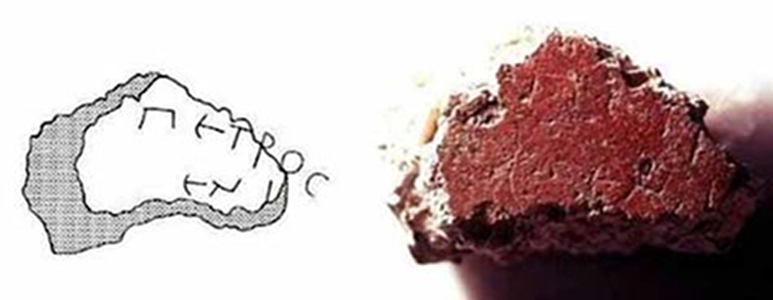
The name "Petrus Eni": scratched in ancient Greek on a wall in the necropolis, translates as "Peter is within" or "Peter is here." It is one of the most extraordinary pieces of graffiti in history: a declaration, made by an early Christian pilgrim, that the Apostle lay just beyond that wall. When researchers deciphered it in the 1950s, it sent a shiver through the archaeological world.
1. Descending Into the Necropolis: 1,600 Years in a Single Step
Today, through a small entrance to the left of Saint Peter's facade, the Arch of the Bells, authorised visitors can begin the descent that Constantine's original builders sealed away for centuries. It is a moment that no amount of preparation fully readies you for.
As you walk down the stairwell, the sounds of the modern world: the murmur of the crowd in the piazza, the distant traffic, the noise of twenty-first century Rome, fade away. The air changes. The light changes. And then, quite suddenly, you are standing in an ancient Roman street.
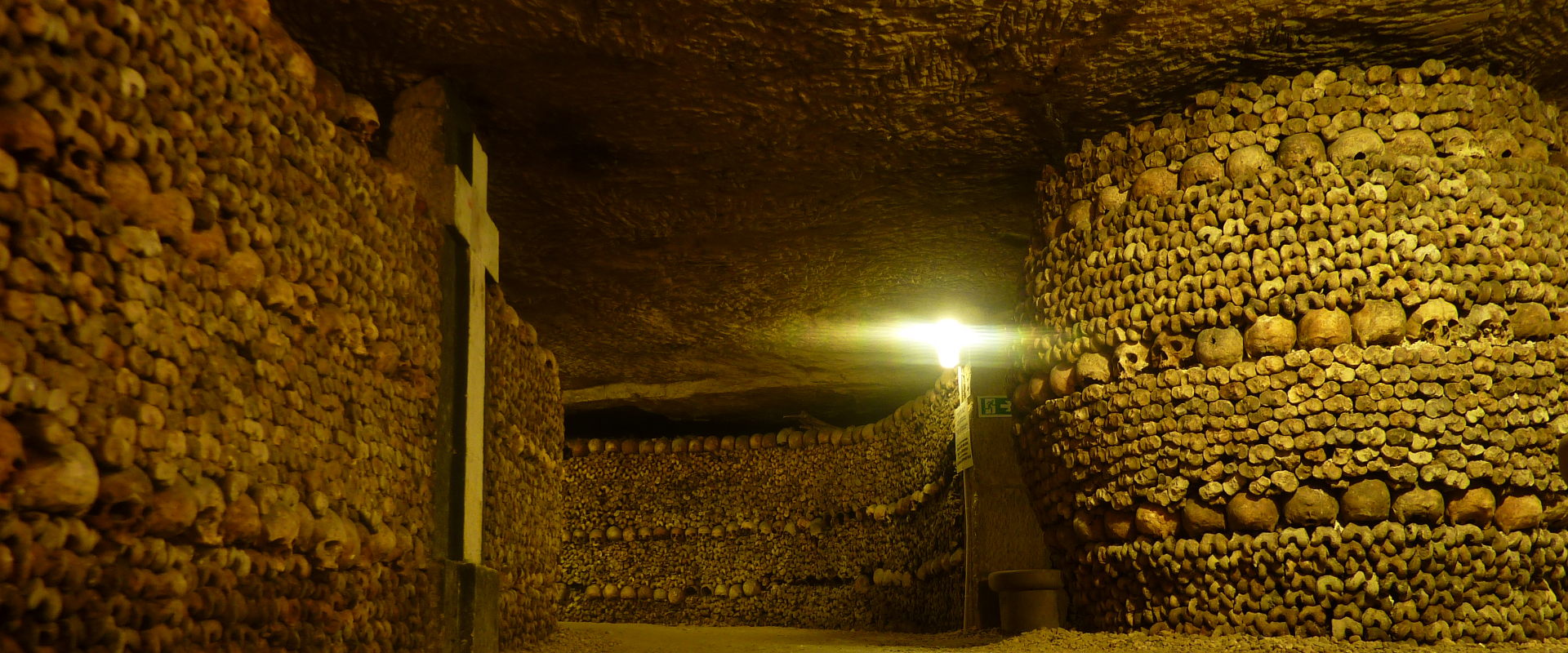
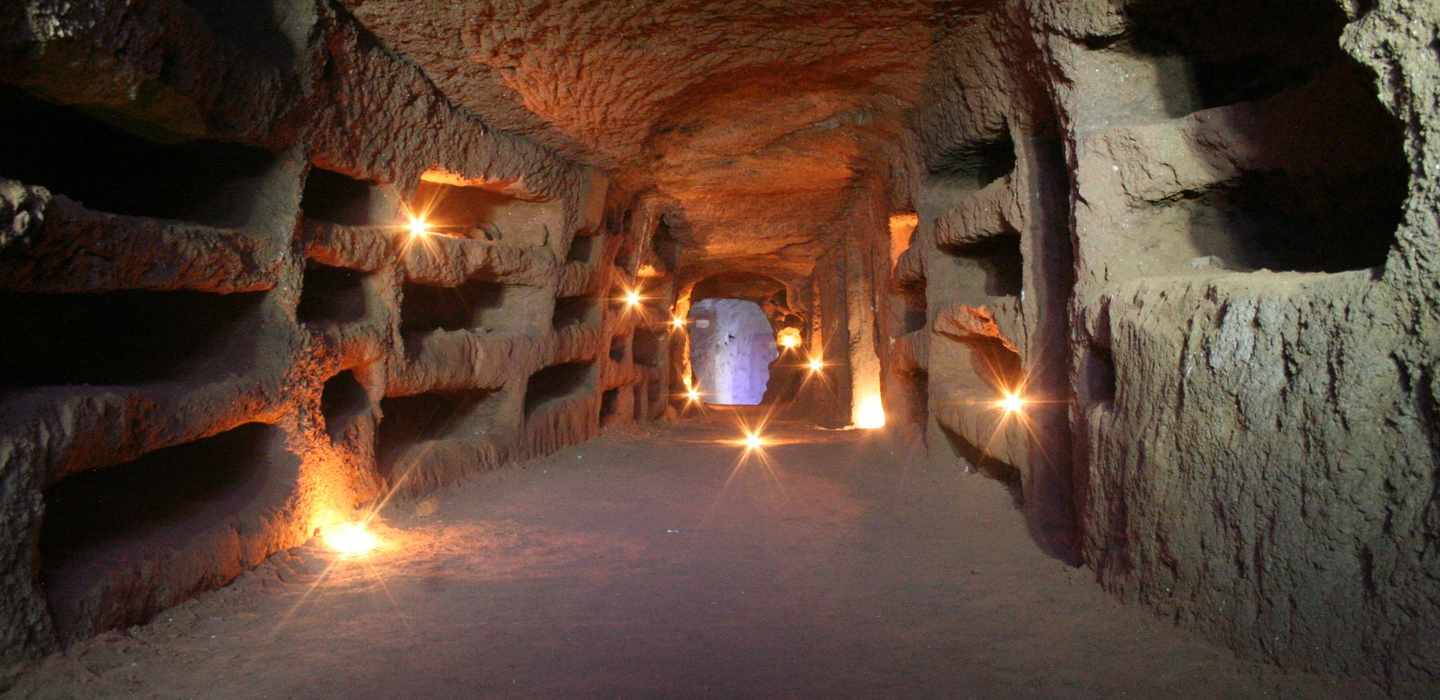
The Vatican Necropolis, preserved almost intact beneath the successive layers of basilica construction, is a remarkably complete Roman burial site. Family mausoleums line a narrow central alley: elaborate structures in brick and stone, decorated with frescoes and mosaics, some pagan, some showing the early synthesis of Roman religious traditions with the new Christian faith. You walk past the tombs of wealthy Roman families from the second and third centuries, merchants, freedmen, people whose names are still legible on inscriptions above their doors, and the effect is deeply intimate. These are not anonymous ruins. These are the homes of the dead, and they are extraordinarily well preserved.
Walking through the necropolis, you pass through the third century, then the second, and finally arrive at the earliest Christian burial ground, where a simple earth grave marked by a small monument was, for the first Christians who came here on pilgrimage, the most sacred spot on Earth.
2. The Excavations of 1939: A Discovery Kept Secret for Decades
For centuries, the location of Peter's tomb had been a matter of faith rather than archaeology. The Church had always maintained that the Apostle was buried beneath the high altar of the Basilica, but no one had looked. Then, in 1939, Pope Pius XII authorised the first systematic excavations beneath the Basilica floor, excavations that would continue for eleven years, conducted in extraordinary secrecy, and that would produce results far beyond anything the researchers had expected.
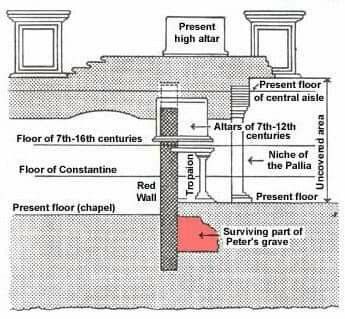
What they found was the necropolis itself: an ancient Roman cemetery that Constantine's builders had filled in with earth and rubble to create the foundation for their Basilica, preserving it unintentionally but almost perfectly. And at the centre of the necropolis, directly beneath the high altar, they found a structure that matched exactly what ancient sources had described: a simple monument, a small niche in a wall, known to scholars as the tropaion or "trophy" of Peter, built around 160 AD to mark the burial place of the Apostle.
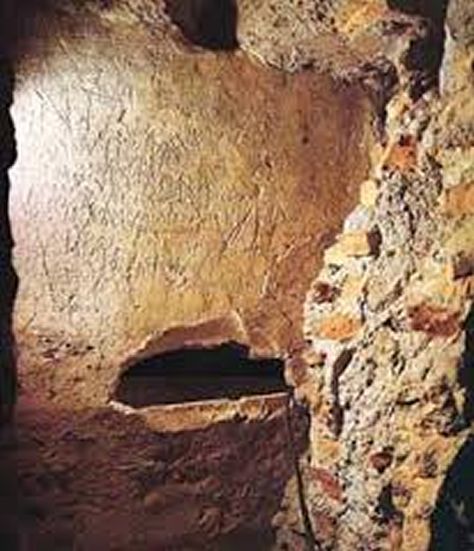
But the question of the relics themselves remained open. During the excavations, a niche in the wall surrounding the monument was found to be empty: it had clearly been disturbed at some point in antiquity. However, nearby, a careful search of the debris inside surrounding niches had yielded small bone fragments. These had been collected quietly by Monsignor Ludwig Kaas, the German prelate who administered the Basilica, placed in a wooden box, and set aside in the Vatican storerooms, where they were largely forgotten for over a decade.
3. Professor Guarducci and the Recognition of the Relics
The story took a decisive turn in the early 1960s, when Professor Margherita Guarducci, an eminent Italian classicist and epigraphist who had been working on the graffiti inscriptions of the necropolis for years, became aware of the forgotten box of bone fragments in the Vatican storeroom. Working from 1962 onwards in collaboration with Professor Venerando Correnti, Chair of Anthropology at the University of Palermo, she subjected the fragments to exhaustive analysis.
The results were remarkable. The bone fragments belonged to a single male individual, aged approximately 60 to 70 years old, of robust physical build. The estimated age and physical characteristics matched what historical tradition attributed to the Apostle Peter. Moreover, the fragments were wrapped in purple-and-gold cloth, fabrics associated with imperial honour, consistent with an account suggesting that the Emperor Constantine himself had reinterred Peter's bones in a place of honour during the construction of the original Basilica.
The complications were real and acknowledged honestly. Medieval coins had been found in the same location, though Guarducci argued these could easily have slipped through cracks in the wall over centuries of pilgrimage. Animal bones were also present, possibly remnants from the earlier use of the site as part of the Horti of Nero, the imperial gardens in which the Circus stood. And the absence of the skull was a puzzle, though the centuries-old tradition of the skull being venerated separately at the Lateran Basilica, alongside that of Saint Paul, offered a partial explanation, as the trade and separation of relics was common practice in the early medieval Church.
The graffiti wall adjacent to the monument is one of the most compelling features of the entire necropolis. Covered in scratched inscriptions left by early Christian pilgrims, prayers, names, invocations, it is a deeply human document of faith. Among them, the phrase Petros eni: "Peter is here", stands out as perhaps the most resonant piece of ancient writing in Christian history.
4. How to Visit the Vatican Necropolis Today
On June 26, 1968, Pope Paul VI made the official announcement: the relics of Saint Peter had been identified. They are now displayed in a glass case set into the wall of the area below the papal altar, visible to visitors on the Scavi tour, preserved in the same purple-and-gold cloth in which they were found.
The Scavi Vaticani, the official tour of the Vatican Necropolis, is one of the most extraordinary and exclusive experiences available to visitors in Rome. It must be booked well in advance directly through the Ufficio Scavi (the Vatican Excavations Office), as groups are strictly limited to a maximum of 12 people. The tour lasts approximately 90 minutes and is conducted in multiple languages.
How to book: Email scavi@fsp.va with your preferred dates, group size, and preferred language. Reservations fill up months in advance, particularly from March through October. Book as early as possible, ideally as soon as your travel dates are confirmed.
What to Expect on the Tour
You will enter through the Arch of the Bells, to the left of the Basilica's main facade, and descend to the necropolis level. Your guide will lead you along the ancient road between the mausoleums, explaining the history of each family tomb and the gradual transition from pagan to Christian burial practices visible in the decorations. The climax of the tour, and it genuinely is a climax, is the approach to the Tropaion itself and the glass case containing the relics. Whatever your personal faith or lack of it, standing in that space, understanding what surrounds you and what it represents for hundreds of millions of people over two millennia, is an experience of rare and lasting power.
Practical Tips for Your Visit
Dress appropriately: covered shoulders and knees are required, as in all Vatican sites. The necropolis is cool even in summer (bring a light layer), poorly lit in some sections (take care on uneven ground), and not accessible for visitors with limited mobility due to narrow passages and steps. Photography is permitted in most areas. Arrive at least 10 minutes before your reserved time at the designated entrance: late arrivals may not be admitted, and the tour cannot be delayed for individual groups.
When planning your Vatican visit more broadly, make sure you also book the Vatican Museums and Sistine Chapel well in advance: they are among the most visited sites in the world and queues without pre-booking can be several hours long. Many visitors choose to spend a full day in the Vatican complex: the Museums in the morning, lunch near Piazza del Risorgimento, and the Necropolis tour in the afternoon. And when it comes to getting there, if you are arriving in Rome for the first time and flying into Fiumicino or Ciampino Airport, a private airport transfer will bring you directly to your hotel, from where the Vatican is just a short taxi or metro ride away.
Comments
No comments yet. Be the first to share your thoughts!
Leave a Comment
Your comment will appear after moderation.