 Michelle
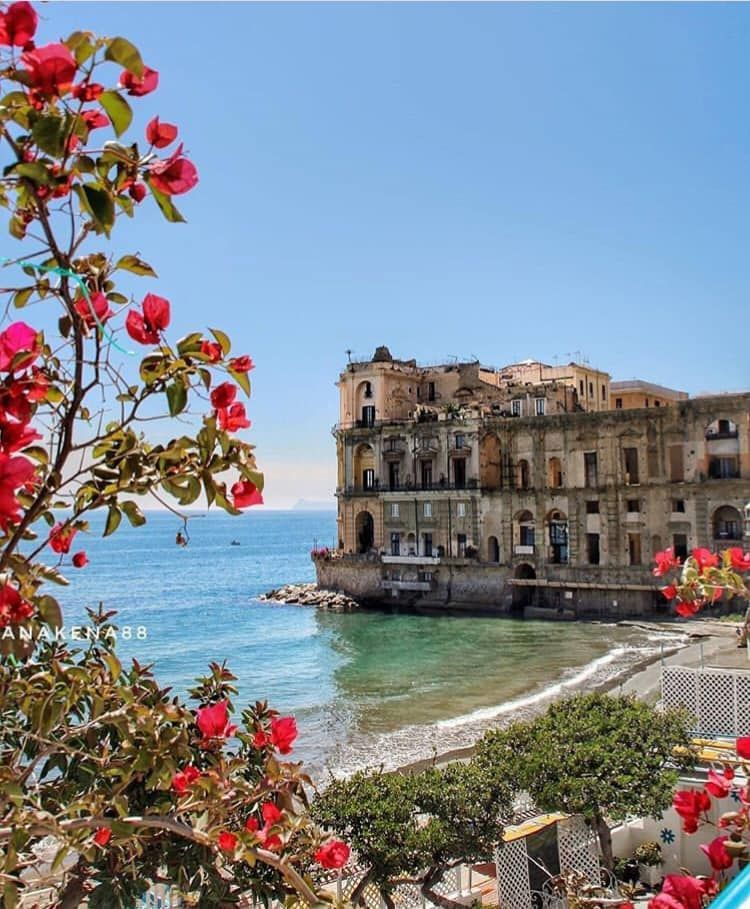
 There is a building on the Posillipo coast of Naples that rises directly from the sea, its massive walls of yellow tuff stone darkened by centuries of salt air and spray, its empty windows staring out over the Gulf of Naples like the eyes of something not entirely of the human world. It is not in ruins. It does not fall. It was never finished, and it will never be finished, and in that permanent state of magnificent incompletion it has accumulated more history, more legend, more literature and more mystery than most palaces accumulate across a lifetime of occupation and grandeur. The Palazzo Donna Anna is one of the most extraordinary buildings in southern Italy, and one of the least visited by travellers who do not yet know to look for it. This is its story.
1. A Palace Frozen in Incompletion: The Building That Never Stopped
The Palazzo Donna Anna occupies a position of extraordinary physical drama at the very beginning of the Posillipo coast, a few hundred metres west of the Mergellina harbour, where the road from Naples proper rounds the headland and the first great sweep of the Gulf opens before you. The building sits directly at the water's edge, its foundations on the actual rock of the shoreline, so that at certain tides and in rough weather the sea enters the lower chambers and the arches of the ground floor are framed by the moving water of the gulf. From the road above, it appears as a vast bulk of stone pressing down toward the sea. From the sea, approached by boat from Mergellina, it appears as something between a cliff and a castle: immense, yellowish, encrusted with the patina of centuries, its blind windows and open arches suggesting a face that has forgotten how to speak.
What makes the Palazzo Donna Anna unique among the great baroque buildings of Naples is precisely this quality of incompletion. The building was begun in 1642 and construction stopped, definitively, within a few years. The exterior was never fully rendered. Several of the interior floors were never finished. The grand theatrical staircase that Cosimo Fanzago had designed was partially constructed but never completed. The double entrance that was to connect the road-level access with the sea-level water gate was achieved in structural terms but never decorated. And yet none of this gives the building the desolate quality of an ordinary ruin. It does not fall down. The combination of the quality of its construction, the thickness of its walls, and the particular quality of the sea air at Posillipo, which the writer Matilde Serao described as solidifying and darkening the walls rather than corroding them, has preserved the building in a state that is neither intact nor ruined but something entirely its own: a permanent work in progress that progress abandoned three and a half centuries ago.
The palace today is partially inhabited: a number of private apartments occupy portions of the upper floors, and the interior contains a theatre open toward the sea, now the seat of a cultural foundation, where the gulf is the backdrop and the sound of the water is a constant acoustic presence in any performance. The building is not open to the public, but its exterior is freely accessible from the road above and from the sea below, and the experience of standing in front of it, feeling the scale of the enterprise and the weight of the history and the legend it carries, is one of the most distinctive encounters with the past available in Naples or in any other Italian city.
Best way to see the Palazzo Donna Anna: The most spectacular view of the palazzo is from the sea. Take a boat excursion from the Mergellina harbour, which is served by several operators running tours along the Posillipo coast, and approach the building from the water at low level. From this angle the full drama of the architecture becomes apparent: the arches of the ground floor opening directly onto the sea, the sheer scale of the facade, the quality of the tuff stone in the changing light. The road-level view from Via Posillipo is excellent but gives only the upper portion of the building. Allow at least an hour for the boat trip, which also passes the Roman ruins of the Villa di Pollione and the Gaiola island further along the Posillipo coast.

2. The History: Anna Carafa, the Viceroy and Cosimo Fanzago
The history of the Palazzo Donna Anna begins, as so many Neapolitan histories do, with the Spanish viceroyalty that governed the Kingdom of Naples for over two centuries and left the city with some of its most extraordinary architectural heritage alongside a tradition of political mismanagement and popular resentment that fuelled the rebellions and the legends of the seventeenth century in equal measure. The central figure is Don Ramiro Nunez de Guzman, Duke of Medina de las Torres, who was appointed Viceroy of Naples by King Philip IV of Spain and arrived in the city in 1637 already accompanied by his Neapolitan wife, Anna Carafa, Princess of Stigliano and one of the greatest noblewomen in the Kingdom of Naples, whose family connections, personal wealth and aristocratic authority made her a figure of considerable independent power in the city.
It was Anna Carafa, not the Viceroy, who commissioned the palace. The site she chose was the rocky promontory at the beginning of the Posillipo coast, on the foundations of an earlier fifteenth-century villa known as La Serena, the Siren, owned originally by the noble Dragonetto Bonifacio. The name La Serena was not accidental: the rocks of this promontory were known in Neapolitan tradition as the Rocks of the Siren, after the mythological figure whose song lured sailors to their destruction, and the site had accumulated an association with beauty, danger and the transgression of natural limits long before any building stood on it. Anna Carafa was buying not merely a prestigious location but a place already saturated with meaning.
The architect she chose for the project was Cosimo Fanzago, the Bergamo-born sculptor and architect who had become, by the 1640s, the dominant creative force in Neapolitan baroque architecture: the designer of the Guglia di San Gennaro, the Chiostro Grande of the Certosa di San Martino, the decoration of multiple churches and palaces across the city, a figure of prodigious talent and almost equally prodigious controversy whose personal ambition and professional disagreements were a constant source of legal and civic conflict. Fanzago's design for the Palazzo Donna Anna was conceived in the full language of Neapolitan baroque: a complex plan organised around a central courtyard, with a double entrance connecting the road above with the sea level below, a grand theatrical staircase, multiple loggias opening toward the gulf, and the entire ensemble scaled to the ambitions of one of the wealthiest noblewomen in the kingdom.
Construction began in 1642 and proceeded rapidly at first, driven by the urgency of Anna Carafa's ambition and the resources of her considerable fortune. But in 1644 the Viceroy was recalled to Spain, and when he left Naples he did not return. The reasons for his departure and for his failure to bring Anna with him, or to send for her, remain somewhat obscure in the historical record. What is clear is that Anna Carafa was left in Naples, the palace unfinished, and the momentum of the project dissipated. Fanzago moved on to other commissions. Work slowed and then stopped. The Masaniello revolt of 1647, which shook the Spanish viceroyalty to its foundations, further disrupted the city's normal aristocratic and architectural life. And when Anna Carafa died, sometime in the late 1640s, the project died with her, permanently and irrevocably.
Best time to visit Naples and the Posillipo coast: April to June is ideal: the light on the Gulf is extraordinary, the sea is clearing and the city has not yet reached the intensity of the summer heat. September and October are equally rewarding, with the water still warm from summer and the evening light on the palazzo and the coast producing a quality of beauty that makes the Neapolitan landscape look like a seventeenth-century painting come to life. The palazzo is particularly atmospheric in the early morning, when the low light from the east catches the yellow tuff of the walls and the sea below is at its most still and transparent.
3. The Legend: Queen Joan, the Fishermen and the Trapdoor at Dawn
Naples has always been a city in which history and legend are woven together so tightly that it is sometimes genuinely difficult to separate them, and the Palazzo Donna Anna is a place where this interweaving is at its most elaborate, its most persistent and its most characteristically Neapolitan. The legend that has attached itself to the building over three centuries is simultaneously preposterous and irresistible, and the fact that historians have definitively disproved it has done absolutely nothing to diminish its popularity or its imaginative grip on the city.
The legend confuses Anna Carafa, for whom the palace was actually built in the seventeenth century, with Queen Joan I of Anjou, who ruled Naples in the fourteenth century and whose personal life was the subject of scandal, accusation and popular mythology during and after her reign. The confusion arises simply from the similarity of their names and from the particular genius of the Neapolitan popular imagination for compressing historical time and conflating historical figures into single legendary personas of maximum dramatic intensity.
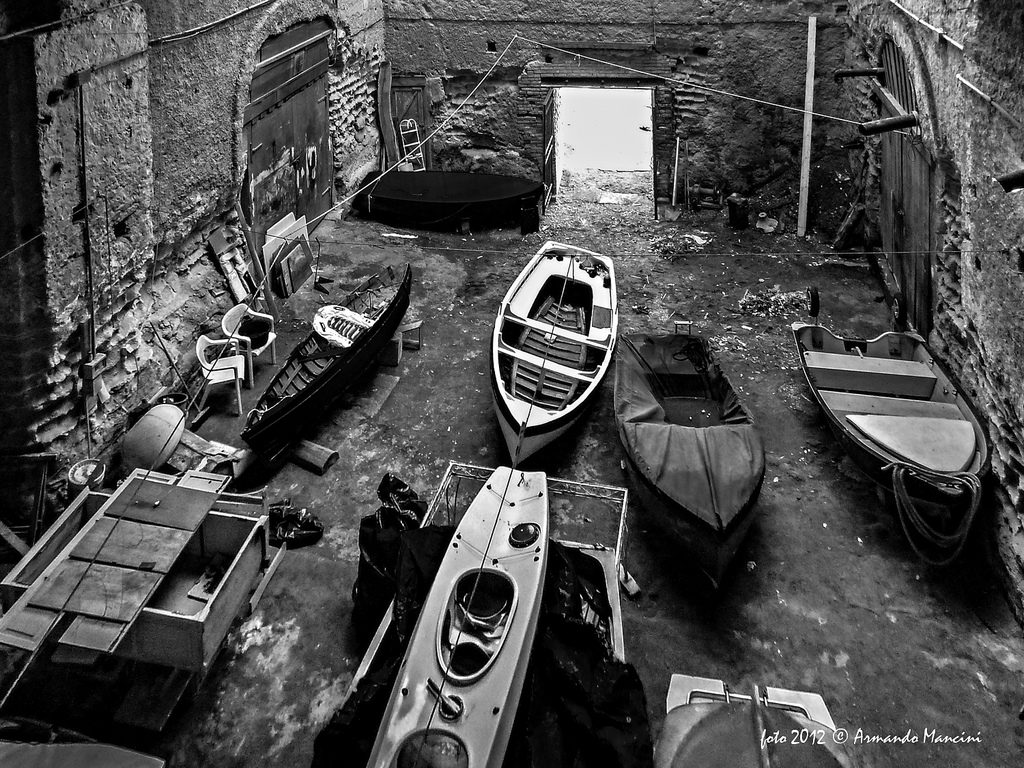
In the legend as it circulates in Naples, Queen Joan used the palace, or an earlier building on the same site, as the setting for a series of nocturnal assignations of the most macabre kind. She would select the most handsome and most vigorous fishermen from the Santa Lucia quarter, the ancient fishing district at the foot of the Castel dell'Ovo, and invite them to spend the night with her in the palace. They arrived by boat through the sea-level entrance, which gave direct access from the water to the interior of the building, ensuring anonymity and discretion in both directions. The nights, the legend insists, were of a passion and intensity appropriate to a queen of the south. But at dawn, when the light began to come through the unglazed windows of the upper floors, the passion turned to murder: the fishermen were killed, their bodies thrown into the sea through a trapdoor in the floor that opened directly above the water, or dropped from the sea-facing windows into the gulf below. And their souls, the legend continues, still haunt the underground chambers of the palazzo, their laments audible on certain nights when the sea is rough and the wind comes from the south.
The historical impossibility of this legend is absolute: Joan I died in 1382, more than two and a half centuries before the Palazzo Donna Anna was begun, and the building on the site in her time was a completely different structure of considerably more modest proportions. But in Naples, and particularly in the popular tradition of the city's neighbourhood culture, the legend has been maintained with great tenacity precisely because it is the kind of story that Naples tells about itself: a story of pleasure and death, of aristocratic transgression and popular vengeance, of the sea as both escape route and grave. Matilde Serao, the great Neapolitan journalist and novelist, included the story in her celebrated collection of Leggende Napoletane, and its inclusion in that canonical text gave it a kind of literary permanence that no amount of historical correction has been able to dislodge.
Common tourist mistake in Naples: Visiting Posillipo only as a backdrop for a photograph of the bay and missing the extraordinary concentration of history along the coast. The Posillipo peninsula contains, within a short distance of the Palazzo Donna Anna, the ruins of the ancient Roman villa of Vedius Pollio (the Villa di Pollione), the submerged archaeological site of the Gaiola, the Parco Vergiliano where the tomb attributed to Virgil is located, and the extraordinary views from the Parco di Posillipo over the entire Gulf of Naples. Allow an afternoon for a proper exploration of the coast rather than a quick drive-through on the way to somewhere else.
4. The Architecture: Neapolitan Baroque Between Sea and Sky
To understand what Cosimo Fanzago was attempting at the Palazzo Donna Anna, you need to understand the particular genius of Neapolitan baroque architecture, which differs from its Roman and Florentine counterparts not merely in stylistic detail but in its fundamental relationship to its physical context. Naples in the seventeenth century was one of the largest cities in Europe and one of the most densely built, a city that had grown organically for centuries along and above the gulf, piling one layer of construction on top of another until the available flat ground was exhausted and the architecture began to climb the hills and to press down toward the water. In this context, the baroque designers of the city developed an approach to architecture that was fundamentally theatrical: buildings designed not merely to be functional or beautiful in isolation but to perform in their settings, to use the light of the gulf and the drama of the topography as materials as much as stone and marble.
Fanzago's design for the Palazzo Donna Anna is one of the most extreme expressions of this theatrical sensibility. The double entrance, with its road-level gate connecting via a ramp to the interior courtyard and its sea-level gate opening directly onto the water, was not merely a practical arrangement but a dramatic one: the palace was conceived as a building that the sea itself could enter, that could be approached by land or by water with equal ease, that stood at the intersection of the city's two dominant physical realities. The open loggias on the upper floors, their arches unglazed and facing directly out over the gulf, were designed to frame the view of the water and the islands and the distant coast of Sorrento in the way that a proscenium arch frames a stage. The building was intended to be, in a very precise sense, a machine for experiencing the Gulf of Naples.
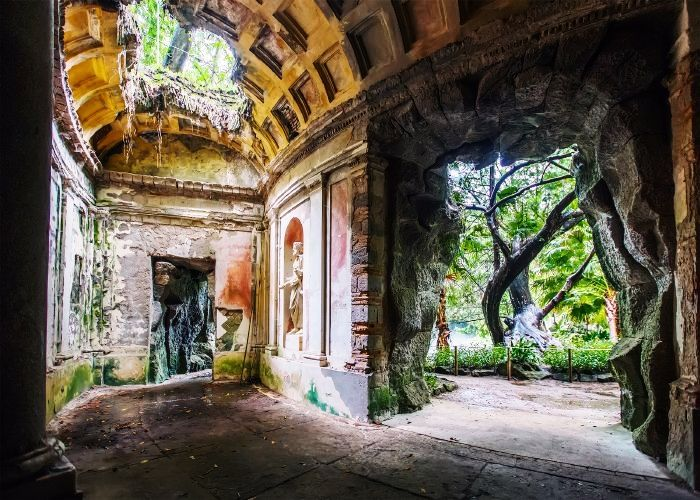
The material from which it is built, the yellow tuff stone quarried from the volcanic deposits beneath the Neapolitan hills, gives the building its characteristic colour and its particular quality of surface. Tuff is a relatively soft stone that absorbs the salt air and the rain and the lichen of centuries, becoming over time not eroded but encrusted, acquiring a patina of extraordinary richness that changes colour through the day as the light changes: pale and almost ivory in the morning, warm amber in the afternoon, dark golden brown in the late evening light. The corroded, pitted surfaces of the Palazzo Donna Anna, its empty niches and blocked windows and open arches, all in this slowly darkening yellow tuff, give the building a quality of geological inevitability, as if it had not been built on the rock but had grown from it, as if Cosimo Fanzago had simply revealed what was already there.
Inside the palace, where access is occasionally possible during cultural events, the most extraordinary element is the open-air theatre, a space that looks south directly over the sea, using the gulf as its backdrop and the sound of the water as its permanent score. The theatre is now the seat of the Ezio De Felice cultural foundation and hosts occasional performances and events that make the relationship between architecture and nature explicit in a way that no indoor theatre can replicate.
5. Writers, Painters and the Palace as Literary Subject
From the eighteenth century onward, the Palazzo Donna Anna began to attract the attention of painters and writers who found in its combination of architectural grandeur, physical drama and romantic incompletion exactly the qualities that the Romantic movement prized above all others. The building appeared in paintings by the great Neapolitan view painters of the late eighteenth and early nineteenth centuries, who used it as a dramatic anchor for their panoramic representations of the Gulf of Naples. It appeared in the travel literature of the Grand Tour, in which the ruins of antiquity and the architectural follies of the baroque were both signs of the same fundamental condition of beautiful decay that the northern traveller came south to find.
Matilde Serao, the greatest Neapolitan writer of the late nineteenth century, included the legend of the palazzo in her Leggende Napoletane, her collection of the popular myths and tales of the city, and her account of the building is among the most celebrated descriptions of it in the literary record. Serao wrote with a novelist's precision about the physical presence of the palace, its relationship to the sea and the city, and the way in which the incompletion of the building had come to represent something essential about Naples itself: the city's habitual failure to complete what it begins, its preference for the possibility of grandeur over the reality of it, its genius for making the unfinished more compelling than the finished could ever have been.
The most intimate literary relationship with the palace belongs to Raffaele La Capria, the great Neapolitan novelist who was born and grew up in the building itself, in one of the private apartments that occupy the upper floors. La Capria used the palazzo as the setting and the symbolic framework for his celebrated novel Ferito a Morte (Mortal Wound), published in 1961 and generally considered one of the finest Italian novels of the postwar period, and his descriptions of the building and its relationship to the sea and to the city are among the most precise and most emotionally resonant evocations of Naples in twentieth-century Italian literature. His account of approaching the palazzo from the sea as a child, watching the tuff walls change colour in the changing light, and understanding gradually that the building and the city and the gulf were all part of a single continuous reality, is one of the great passages of Neapolitan prose.
It is not in ruins, but it was never finished. It does not fall, it will not fall, because the strong sea breeze solidifies and darkens the walls, because the sea wave at Posillipo is not perfidious like those of lakes and rivers: it assaults but does not corrode. The high, wide windows without glass resemble eyes without thought. Through the gates where the threshold steps have disappeared, the blue wave enters playfully and laughing, encrusting its shells on the stone, bringing sand into the courtyards, leaving behind the green and shining plantation of algae.
Matilde Serao, Leggende Napoletane
6. How to See It, How to Get There and What Surrounds It
The Palazzo Donna Anna is not a conventional tourist attraction. It does not have opening hours or an admission ticket. It is a private building on a private street in one of Naples' most beautiful residential districts, and approaching it requires a degree of purposefulness that the casual visitor to the city rarely summons. But the effort is entirely, emphatically worth it, and the following notes should help you make the most of a visit.
The building stands at Largo Donn'Anna 9, at the beginning of Via Posillipo. The simplest approach by public transport is bus 140 from Piazza Vittoria in the Chiaia district, which follows the Posillipo coast and stops a short walk from the palazzo. The road-level view from the bus stop and the pavement along Via Posillipo gives a clear impression of the upper portion of the building and its relationship to the surrounding architecture of the neighbourhood. For the full drama of the building, however, the sea-level approach is essential, and this requires a boat.
The Mergellina harbour, approximately 500 metres east of the palazzo along the coast, is the departure point for numerous boat excursions along the Posillipo coast and out to the islands of the bay. Several operators run daily tours that pass directly beneath the palazzo, allowing you to see the sea-level arches, the foundation rocks, the lower courses of the tuff walls and the full height of the facade from the perspective that Cosimo Fanzago himself would have considered the primary one. The excursion typically continues along the coast to the Gaiola island and the submerged archaeological site, and round to the Parco di Posillipo, making it one of the most rewarding half-day itineraries available from Naples.
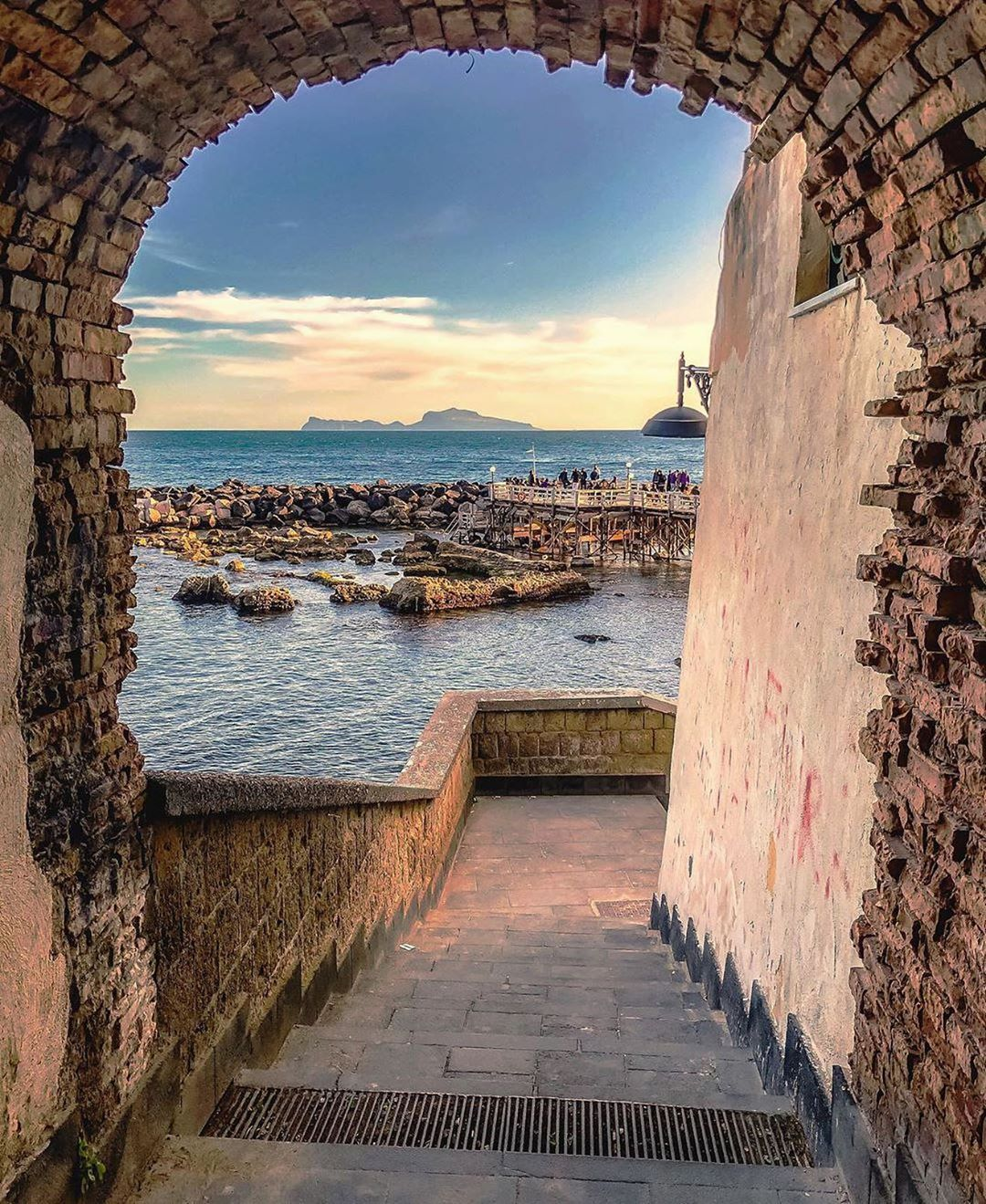
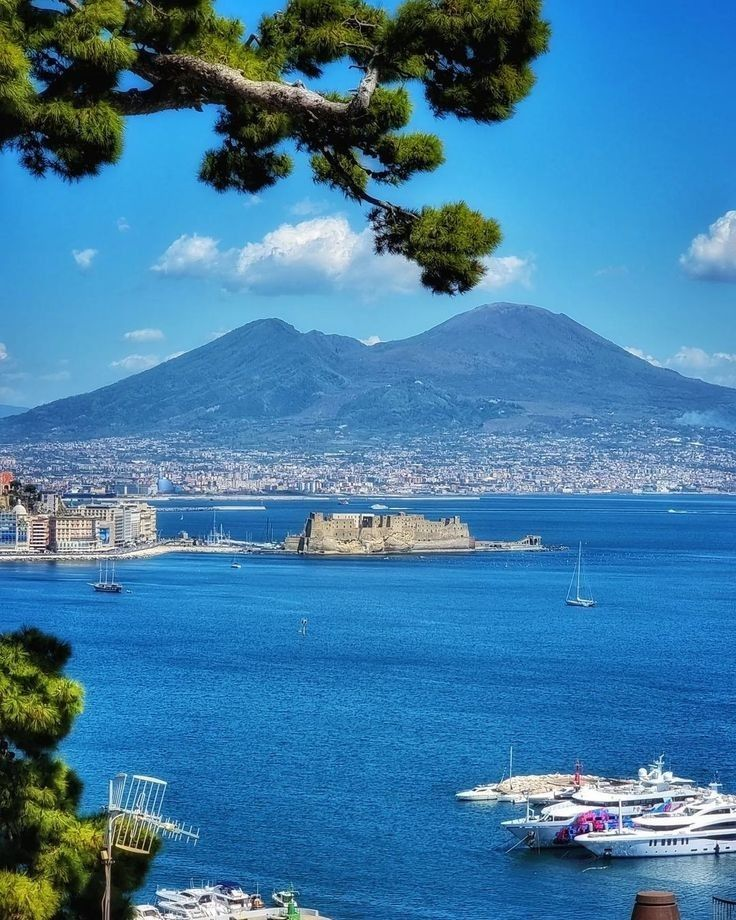
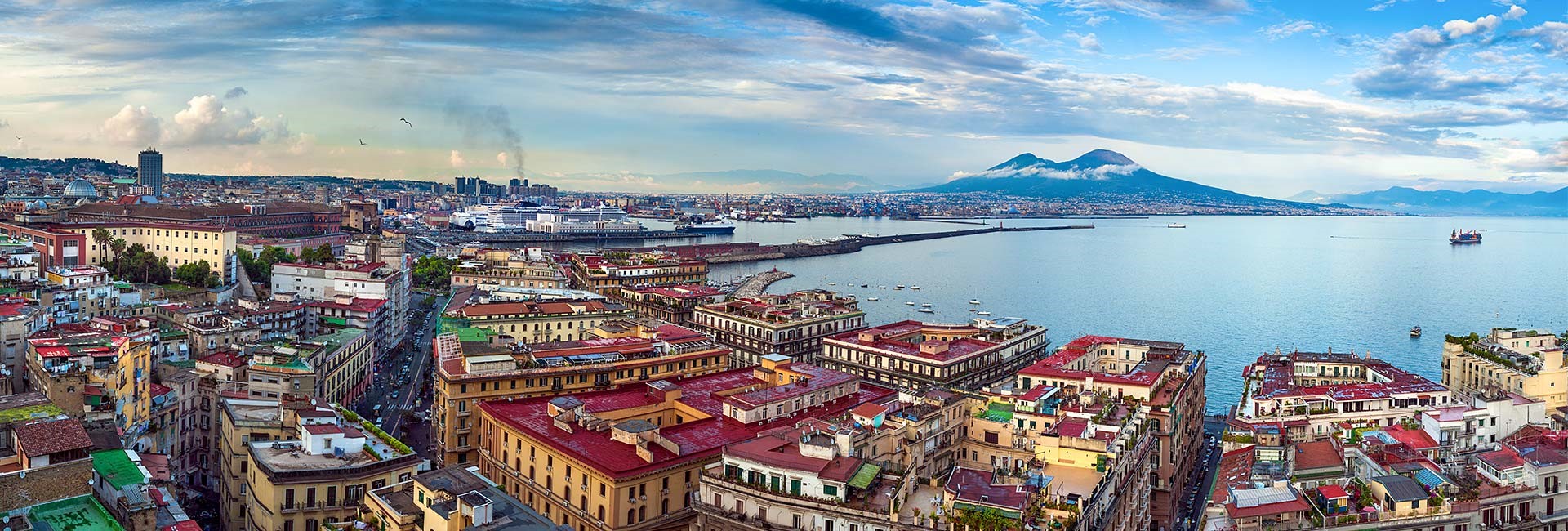
The surrounding neighbourhood of Posillipo rewards an afternoon of slow walking. The Villa di Pollione, the ruins of a vast ancient Roman villa complex that descends from the clifftop to the sea level in a series of terraces, is a short walk along the coast and gives an extraordinary sense of the continuity of human settlement on this coastline from Roman times to the present. The Parco Virgiliano, at the far end of the Posillipo peninsula, provides the finest panoramic viewpoint over the entire Gulf of Naples: from this point you see the city, the bay, Vesuvius, Capri, the Sorrento peninsula and the islands of Ischia and Procida simultaneously, in a panorama of such completeness that it renders the conventional photograph almost futile.
Getting to Naples: Arriving and Exploring the City
Naples is served by Capodichino Airport (NAP), approximately 7 kilometres north of the city centre and well connected to most European cities and to several intercontinental destinations. The most comfortable and direct way to reach your hotel from the airport is a private airport transfer, which takes approximately 15 to 25 minutes to the city centre depending on traffic. From the airport, the Alibus shuttle bus connects to Piazza Garibaldi (the central station) and Piazza Municipio (the port area) in approximately 20 minutes and is an economical alternative for those travelling light.
For the Posillipo district specifically, the most practical options from the city centre are bus 140 from Piazza Vittoria or the Cumana railway from Montesanto station, which runs along the northern flank of the Posillipo hill with several stops convenient for the upper part of the neighbourhood. A taxi from the historic centre to the palazzo takes approximately 20 minutes, and the drivers of Naples are generally willing to wait while you photograph and walk.
Naples rewards a minimum of three to four days for a serious visit: enough time to explore the historic centre, the Museo Nazionale with its extraordinary collection of Roman and Greek antiquities, the Certosa di San Martino on the Vomero hill above the city, the Castel dell'Ovo and the waterfront, and at least one excursion along the Posillipo coast to see the Palazzo Donna Anna from the sea. It is a city that gives more the longer you stay and look and listen, and the Palazzo Donna Anna is one of its finest and most characteristic gifts to the patient traveller.
Tips for visiting Posillipo and the Palazzo Donna Anna: Go on a weekday morning when Via Posillipo is at its quietest and the light on the palace is at its most golden. Take bus 140 from Piazza Vittoria rather than driving: parking along the coast road is difficult and the bus gives you the freedom to stop and look without worrying about traffic. Book a boat tour from Mergellina in advance during the summer months: the popular operators fill quickly on weekend mornings. And combine the visit with a seafood lunch at one of the simple restaurants on the Posillipo coast, where the fish is caught locally and the view of the gulf is provided free of charge with every meal.

Comments
No comments yet. Be the first to share your thoughts!
Leave a Comment
Your comment will appear after moderation.