 Michelle
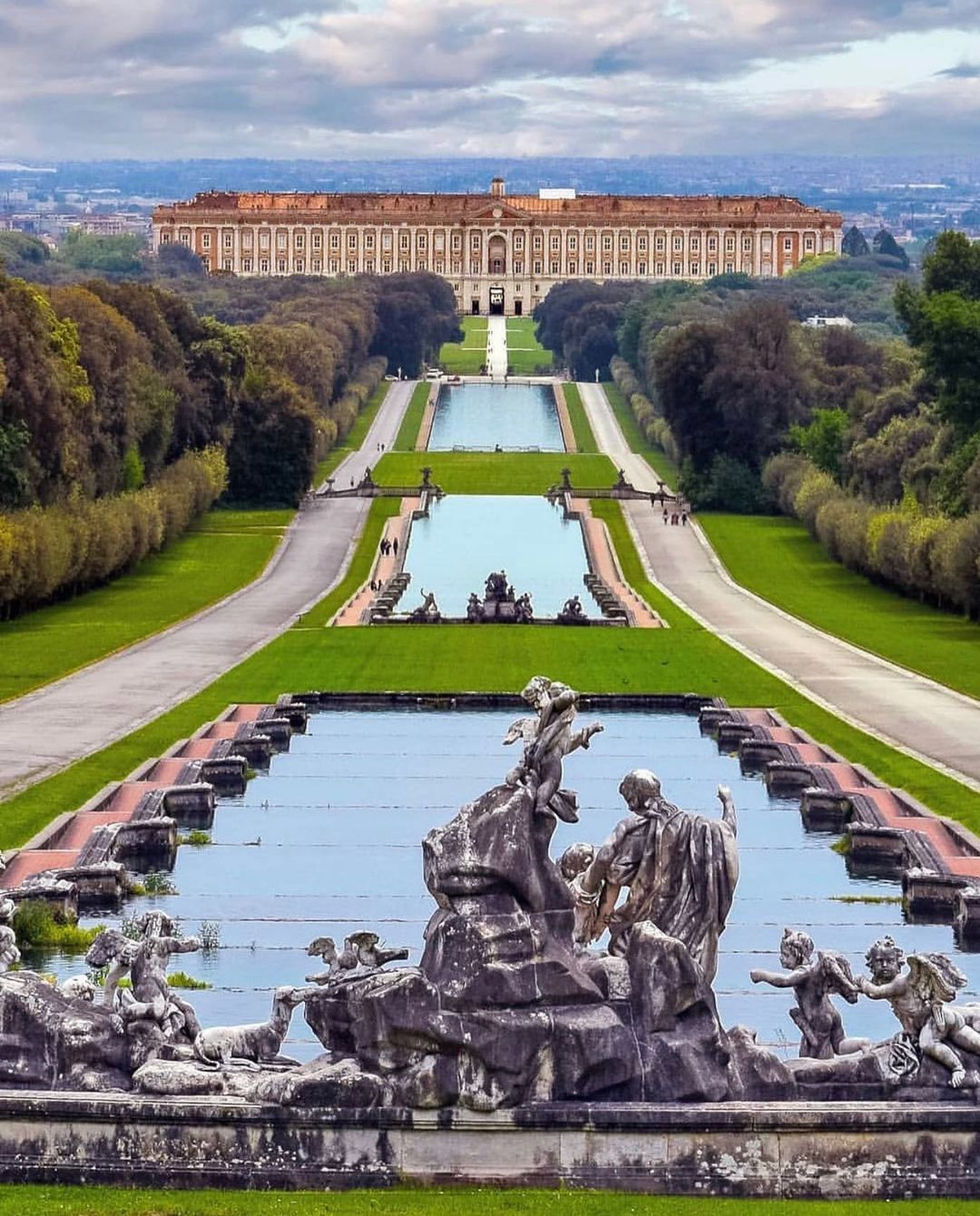
 You think you know Versailles. You have seen the photographs of the Hall of Mirrors, the manicured hedges, the gilded fountains. But have you ever stood in a room that stretches so far in every direction that your eyes cannot find the walls? Have you ever walked a garden path that goes on for three kilometres, past waterfalls that cascade down a man-made mountain, past statues of Greek gods frozen in eternal pursuit, into a forest garden so wild and romantic that it feels like stepping into a painting by Watteau? The Royal Palace of Caserta is not a copy of Versailles. It is Versailles on ambition steroids, built by a king who wanted not just to match the Sun King but to surpass him. And because it lies in the shadow of Naples, far from the tourist crowds of Paris, it remains one of Italy's greatest overlooked treasures. You should go before the world discovers it.
Why Caserta? The King's Strategic Vision
King Charles of Bourbon, the ruler of Naples and Sicily, had a problem. His palace in Naples, the Palazzo Reale, was magnificent but vulnerable. It sat on the waterfront, exposed to the sea. African pirates had been raiding the Italian coast for centuries. The memory of an attack on the port of Naples in 1742 was still fresh. Charles needed a new seat of power, one that could not be reached from the sea, one that could be defended, and one that would project an image of absolute royal authority into the countryside. He chose Caserta.
The choice of Caserta was not random. The landscape reminded the king of his beloved plains of Campania, and the location was strategically perfect: twenty-six kilometres north of Naples, far enough from the coast to be safe, close enough to the capital for the court to travel easily. The king also wanted a palace that would rival Versailles, the masterpiece of his Bourbon cousin, Louis XV's great-grandfather, Louis XIV. Versailles was the symbol of absolute monarchy in Europe. Charles wanted his own symbol, a declaration that the Kingdom of Naples was not a backwater but a power to be reckoned with. He found his architect in Luigi Vanvitelli, a man who would devote the rest of his life to this single, colossal project.
Luigi Vanvitelli: The Architect of Ambition
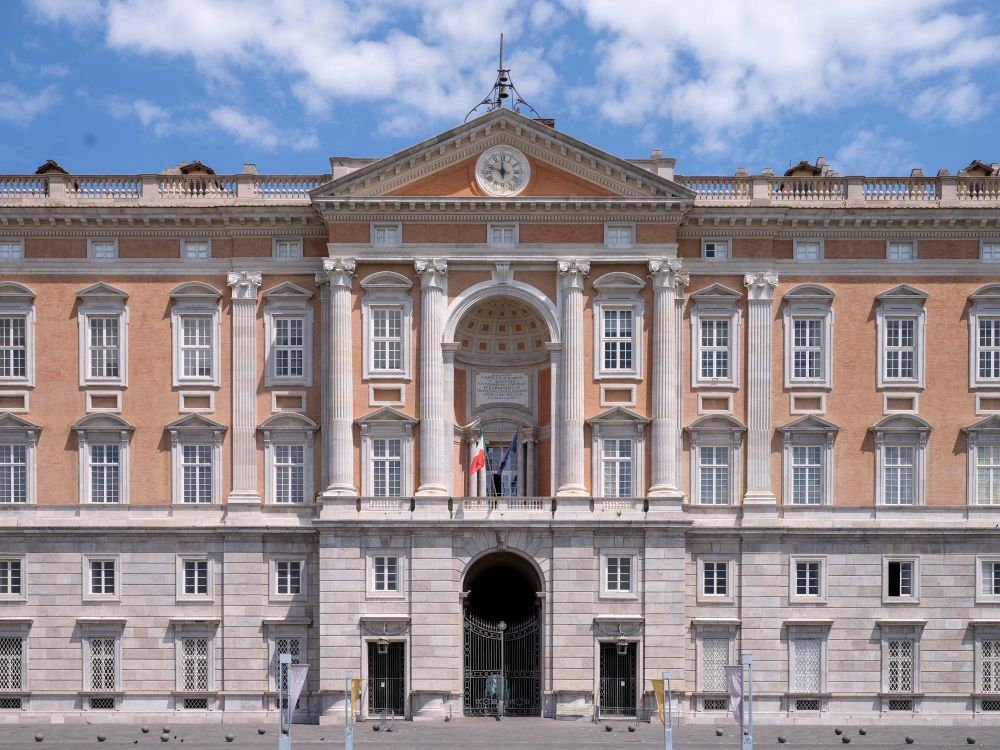
Luigi Vanvitelli was the son of a Dutch landscape painter who had settled in Naples. He had trained under some of the finest architects of his generation, and he brought to Caserta a vision that was both classical and innovative. His design for the palace was a perfect square, 247 metres wide and 190 metres deep, with four internal courtyards and a grand octagonal vestibule at its centre. The facade is a symphony of columns, pilasters and rusticated stone. It is severe and majestic, deliberately plain compared to the riot of decoration inside. Vanvitelli understood that the exterior needed to be a foil for the interior, a promise of the wonders that lay beyond.
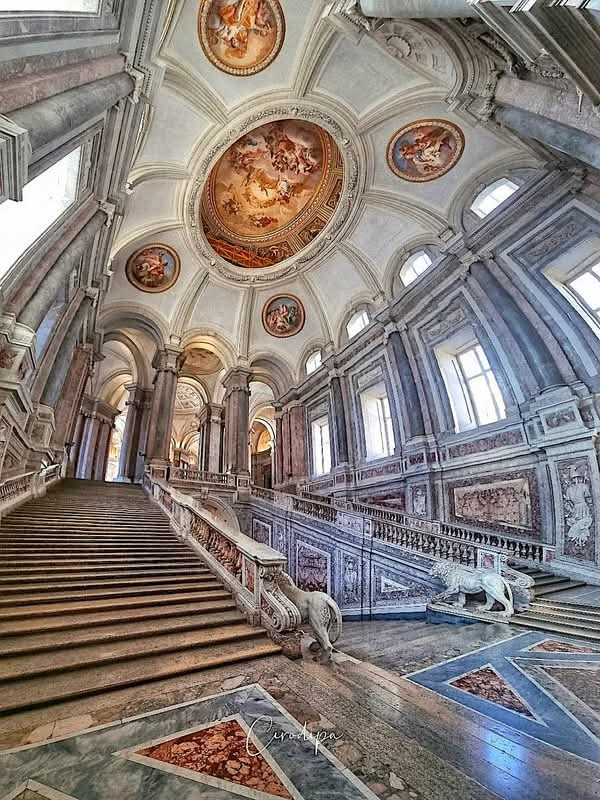
The most astonishing feature of Vanvitelli's design is the grand staircase, the so-called 'Scalone Reale'. It is a masterpiece of theatrical architecture. Five flights of white marble stairs rise in two parallel arms, framing a central void that opens to a coffered ceiling painted with frescoes of the Bourbon court. Statues of lions flank the base. An equestrian statue of King Charles presides from the first landing. As you climb, the staircase seems to expand, to unfold before you like a fan. By the time you reach the top, you have been transformed. You are no longer a visitor. You have been inducted into the court. That was the intention. Vanvitelli was not just building a staircase. He was building an experience.
Architectural Secret: Look closely at the staircase's balustrade. The carvings are not random. They depict the four seasons, the four continents, and the virtues of the Bourbon king. Winter is a hooded figure shivering in the cold. America is a woman with a feathered headdress, a bow and arrow. These allegories were meant to flatter the king, to present him as a ruler whose influence spanned the globe. The propaganda is literal, carved in marble for all to see.
The Unfinished Dome: A Royal Abdication
As you approach the palace from the Piazza Carlo di Borbone, you may notice something missing. The central tower, the dome that was meant to crown the entire composition, is not there. The palace has a flat roof where a dome should be. The reason is at once simple and tragic. In 1759, King Charles of Bourbon inherited the throne of Spain from his half-brother. He left Naples for Madrid, taking with him a significant portion of the court's funds. Vanvitelli continued the work, but without the king's full financial backing, the dome was never built. The palace has never had a proper dome, a fact that gives it a distinctive, almost haunted silhouette.
Some say the unfinished dome is a metaphor for the Bourbon kingdom itself: a grand ambition that was never fully realised. Others see it as a reminder that even kings cannot control their own destinies. Charles III of Spain became one of the most effective monarchs of the Enlightenment, reforming the economy, the military and the arts. But he left behind a palace that would never be finished. When you stand in the octagonal vestibule and look up at the empty space where the dome should be, you are standing at the intersection of ego and circumstance. It is a humbling thought.
The Royal Apartments: A Walk Through Bourbon Splendor
The royal apartments stretch along the first floor of the palace, a sequence of rooms that grows increasingly lavish as you approach the king's bedroom. Each room was dedicated to a specific function: the antechamber for waiting courtiers, the guard room for soldiers, the throne room for official audiences, the drawing rooms for conversation and games. The ceilings are frescoed with scenes from Bourbon history, painted by some of the finest artists of the 18th century. The furniture is original, much of it commissioned from the royal workshops in Naples. The chandeliers are Bohemian crystal, the floors are intricate parquet, the tapestries are woven with gold thread.
Do not rush through these rooms. Pause in the Hall of the Swiss Guards, where soldiers once slept on cots by the fireplace. Look up at the fresco in the Hall of Alexander the Great, which shows the conqueror being welcomed into Babylon. The parallel is deliberate: Charles of Bourbon, like Alexander, was a young king who conquered new territories and brought civilisation to distant lands. The propaganda is relentless, but the art is magnificent. The room that will stop you in your tracks is the Hall of the Muses, with its ceiling painted by Pompeo Batoni. The nine muses float above you in a sky of gold and blue. You will feel, for a moment, that you have stepped into a world where beauty was not a luxury but a political necessity.
The Gardens: Fountains, Waterfalls and the English Garden
If the palace is a symphony of stone, the gardens are its exuberant final movement. From the rear facade, two long parallel avenues stretch northwards for three kilometres, climbing gradually toward the Great Waterfall. The design was inspired by the gardens of Versailles, but Vanvitelli improved on his French models. The fountains are not merely decorative; they are engineering marvels, fed by an aqueduct that runs for thirty-eight kilometres, bringing water from the mountains to the palace. The water flows under the garden paths, through hidden channels, and erupts in spectacular displays at each fountain.
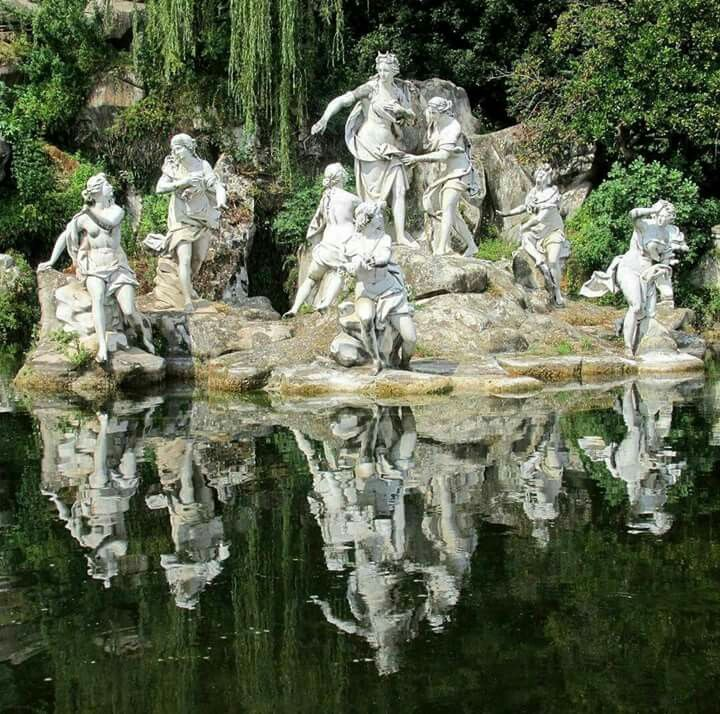
The most famous fountain is the Fountain of Diana and Actaeon, named for the myth from Ovid's Metamorphoses. At its centre, the goddess Diana stands with her nymphs, caught in the moment of bathing. The hunter Actaeon, transformed into a stag, has already grown antlers. His dogs attack him. The water that pours from the fountain represents the myth's climax: the hunter torn apart by his own hounds. It is a violent, beautiful, unforgettable sculpture. Above it, the Great Waterfall cascades down from the Italian Garden, a man-made mountain of water that drops thirty metres into a semicircular basin. Standing at the base, feeling the spray on your face, you understand that the Bourbons did not merely imitate nature. They subdued it.
Beyond the Italian Garden, hidden in the trees, lies the English Garden, the Giardino Inglese. This is the part of the park that most tourists miss, and it is the most extraordinary. While the main gardens are formal and geometric, the English Garden is wild and romantic. It was designed in the 1780s by the German-born artist Peter Jacob Wüst, who created a landscape of winding paths, artificial ruins, a lake with a tiny island, and a 'Palazzina' (a small palace) used for private royal parties. The garden contains rare plants brought from all over the world: cedars from Lebanon, cypresses from Greece, magnolias from America. In spring, the flowers are breathtaking. In autumn, the colours are spectacular. Take the time to walk its paths. You will feel that you have wandered out of the 18th century and into a fairy tale.
The Code to Enjoying the Gardens: The walk from the palace to the Great Waterfall is three kilometres uphill. You can do it, but you should plan ahead. Bring water. Wear comfortable shoes. The palace offers a small shuttle bus that can take you to the waterfall and back, which is a good option for elderly visitors or families. If you walk, take the left path going up and the right path coming down; you will see different fountains each way.
Where to Eat Near the Royal Palace of Caserta
A visit to Caserta is hungry work. The palace offers a small cafeteria, but you will find better food in the city of Caserta itself, just a short walk from the palace gates. The area is famous for its buffalo mozzarella, which is produced in the nearby plains of the Sele River. You should not leave without tasting it.
Osteria al 22 (Via Mazzini, 22) is a favourite among locals, serving traditional dishes from the Terra di Lavoro region: pasta e fagioli, salsiccia e friarielli, and a memorable parmigiana di melanzane. Il Posto (Via San Carlo, 12) offers a modern take on Campanian cuisine, with a wine list that features the region's best producers: Galardi, Mustilli, and Di Meo. For a picnic in the gardens of the palace, stop at the Antica Salumeria (Via Roma, 45) and buy fresh bread, mozzarella, prosciutto and a bottle of Falanghina. The palace allows food to be eaten in the gardens, and there is no more pleasant lunch than sitting under a plane tree with a glass of white wine, watching the fountains sparkle in the sun.
The most famous dish in Caserta is 'zuppa di pesce alla casertana', a fish soup that uses the bounty of the nearby coast. You will also find 'pasta patate e provola', a humble but delicious dish of pasta, potatoes and smoked provola cheese. And for dessert, do not miss the 'struffoli', small honey-soaked dough balls that are traditionally made for Christmas but available year-round in Caserta's best pastry shops.
'The palace of Caserta is not merely a building. It is a declaration of power, a poem in stone, a challenge to the kings of France and Austria. It says: look at what we can build. Look at what we can imagine. Look at what we will leave behind.' — Anonymous 18th century courtier
Practical Information for Your Visit
The Royal Palace of Caserta is open every day except Tuesdays. Opening hours are 8:30 AM to 7:30 PM (last entry at 6:30 PM) from April to October, and 8:30 AM to 5:00 PM from November to March. The gardens close one hour before the palace. The ticket office closes one hour before the palace.
Tickets can be purchased online in advance, which is highly recommended during the summer months. A combined ticket includes the palace, the gardens and the English Garden. Allow at least four to six hours for your visit. A full day is better. The palace is enormous, and the gardens are even more so. You will not see everything in one visit. Accept this. Choose what interests you most and focus on that.
How to reach Caserta from Naples: the easiest way is by train. From Napoli Centrale station, regional trains toward Rome take 35 to 45 minutes. The palace is a ten-minute walk from Caserta train station, straight down Via Mazzini. If you are travelling from Naples with luggage or in a group, a private transfer is the most comfortable option. The journey takes approximately 40 minutes by car, and you will be dropped directly at the palace entrance.
Comments
No comments yet. Be the first to share your thoughts!
Leave a Comment
Your comment will appear after moderation.