 Michelle
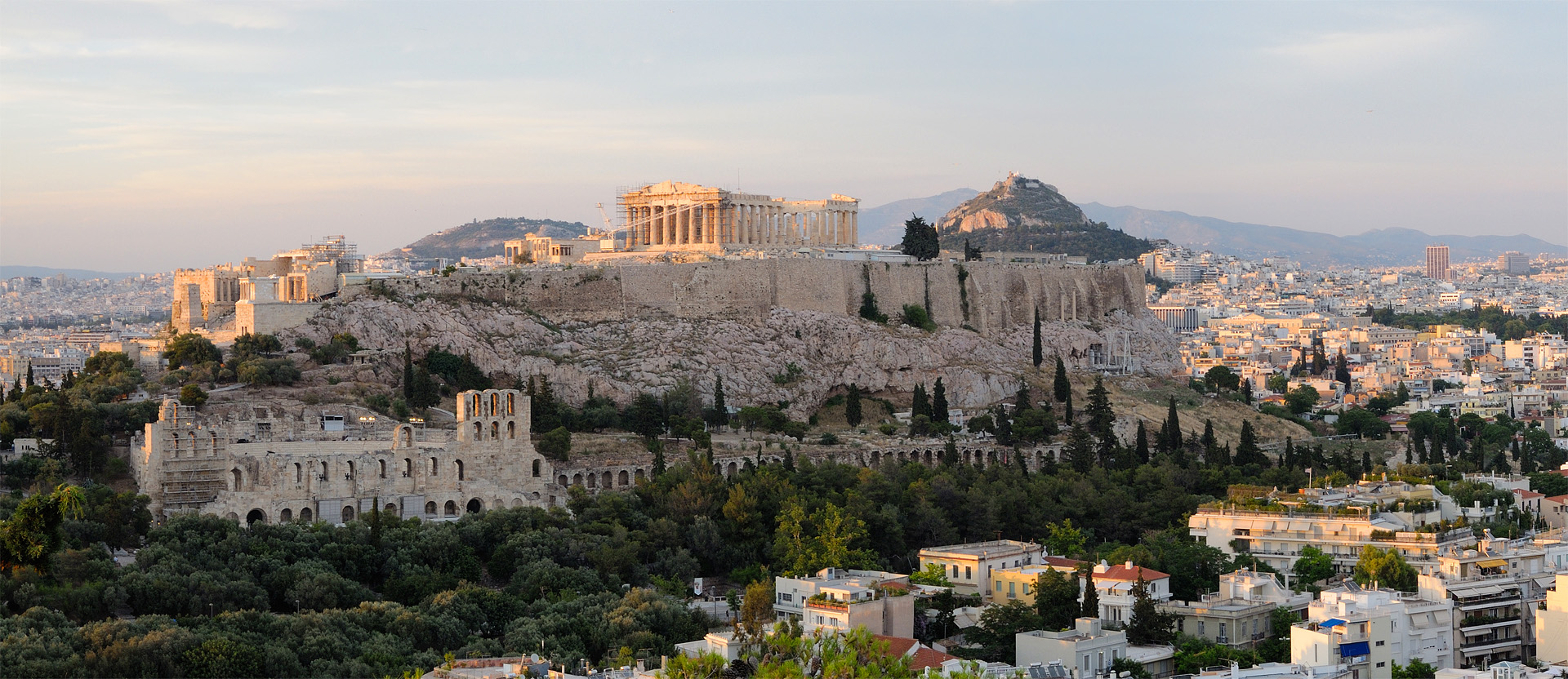
 There are cities that are old. And then there is Athens: a city where the word "old" loses all useful meaning, where a Byzantine church from the eleventh century is considered almost modern because it sits in the shadow of monuments built fifteen hundred years before it, where the street you are walking on follows the same line as a street walked by Socrates and Pericles and the architects of the Parthenon. Athens is not simply ancient. It is the place where the Western tradition of democracy, philosophy, theatre, mathematics and science was first most completely articulated, and where that tradition is still most physically present. Standing on the Acropolis, looking out over a city of nearly four million people with the Aegean glittering in the distance, you feel the full weight of that history in a way that nothing else quite prepares you for.
Why Athens Is Unlike Any Other European Capital
Every European capital has its history, its monuments, its layers of civilisation laid one upon another over the centuries. But Athens operates on a different timescale entirely. The Parthenon was completed in 432 BC, more than four hundred years before the birth of Christ and more than two thousand four hundred years before the present day. The philosophical tradition established by Socrates, Plato and Aristotle in this city is still the foundational framework within which the Western world thinks about ethics, politics, knowledge and beauty. The democratic experiment attempted by the Athenians in the fifth century BC is still the model, however imperfectly realised, for every democratic government on the planet. Athens is not merely old. It is the beginning of something that is still happening.
It is also, and this surprises many first-time visitors, a genuinely alive and energetic modern city. Athens is noisy, chaotic, architecturally inconsistent in its lower districts, and full of a vitality and dark humour that are specifically Greek and that express themselves most fully in the tavernas and coffee shops and street markets that occupy the neighbourhoods around and below the Acropolis. The contrast between the ancient monuments on the hill and the warm, argumentative, intensely social modern city that has grown up around them is one of the things that makes Athens uniquely compelling. This is not a city that has been packaged and preserved for tourism. It is a city that has simply continued to live, for two and a half thousand years, around its extraordinary inheritance.
Best time to visit the Acropolis: Arrive when the gates open at 8 in the morning, before the tour groups arrive and before the midday heat becomes punishing. The light in the first two hours after dawn on the Parthenon marble is extraordinary. In July and August, visiting after 4 in the afternoon, when the worst of the heat has passed, is the only other viable option. Wear a hat, carry water and wear comfortable shoes with good grip: the marble surfaces of the Acropolis are polished by millions of feet and become extremely slippery when wet.
1. The Acropolis and the Parthenon: the Summit of Ancient Greece
The Acropolis is not merely the most important archaeological site in Greece. It is one of the most important places on the surface of the Earth: a limestone outcrop rising 156 metres above the surrounding plain, crowned with a complex of monuments that represent the peak of ancient Greek architectural and artistic achievement, and that have never, in any subsequent period of human history, been surpassed in their combination of structural intelligence, aesthetic perfection and symbolic power.
The ascent to the Acropolis begins at the Beule Gate, the Roman entrance arch built in the third century AD, and continues up the ancient processional way to the Propylaea, the monumental gateway to the sacred precinct, completed in 432 BC. The Propylaea is itself an architectural masterpiece: a building that manages to create a dramatic sense of transition between the ordinary world below and the sacred world above while simultaneously functioning as a perfectly proportioned composition of marble columns and coffered ceilings. To the right as you pass through, perched on its own smaller outcrop, stands the Temple of Athena Nike, the smallest of the Acropolis monuments and one of the most elegant: a tiny Ionic temple dedicated to the goddess of victory, its surviving sculptural frieze depicting the decisive battles of the Persian Wars.
The Parthenon
And then, as you emerge from the Propylaea onto the plateau of the Acropolis, the Parthenon is simply there. Nothing you have seen in photographs, nothing you have read in books, entirely prepares you for the physical presence of the building. The Parthenon, dedicated to Athena Parthenos and completed in 432 BC under the supervision of the sculptor Phidias and the architects Ictinus and Callicrates, is the most perfectly realised building in the classical tradition: 46 outer columns of Pentelic marble, each subtly tapered and very slightly curved inward so that the eye perceives them as perfectly straight, supporting an entablature and pediments that once carried sculptural decoration of extraordinary quality. The optical refinements built into the structure, the slight curvature of the stylobate, the entasis of the columns, the tiny variations in spacing and proportion that correct for the natural distortions of human perception, represent a level of architectural sophistication that still generates scholarly debate and genuine wonder two and a half millennia after the building was completed.
The Parthenon has been, in its long history, a temple, a Byzantine church, a Catholic cathedral and a Ottoman mosque. In 1687, a Venetian mortar shell detonated an Ottoman ammunition store inside the building and destroyed the central section of the structure. The sculptures that survived this catastrophe were mostly removed by the British diplomat Lord Elgin between 1801 and 1812 and are now in the British Museum in London, a situation that the Greek government has sought to rectify through diplomatic channels for decades. The marble currently visible on the building is a combination of original material and reconstruction. The missing sculptures, the Elgin Marbles, are the subject of one of the most significant ongoing debates in the international museum world.
The Erechtheion and the Caryatids
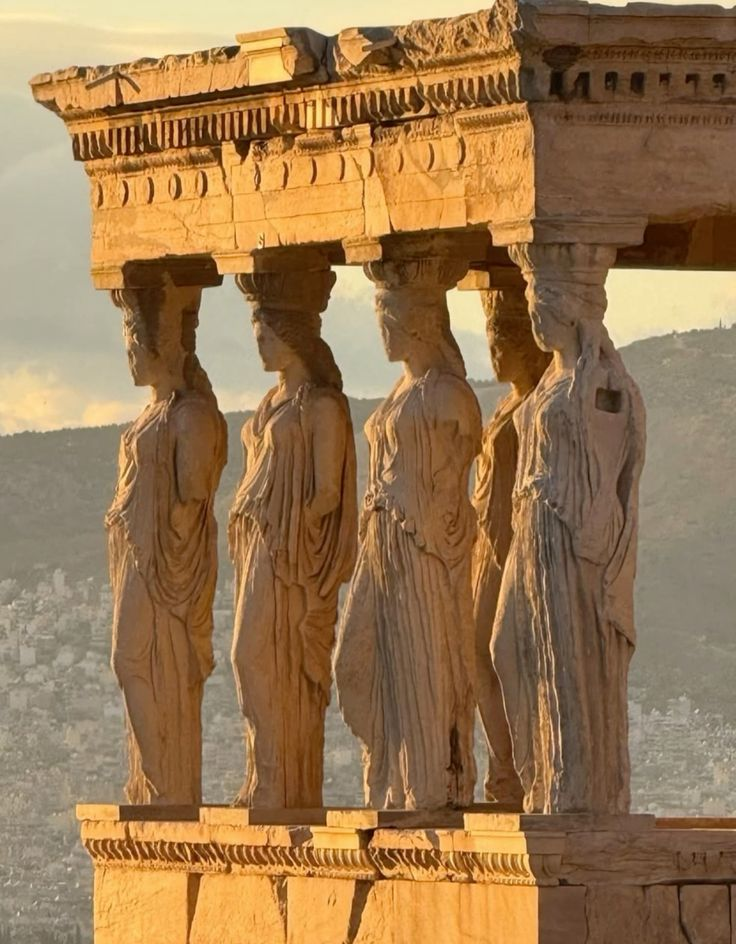
To the north of the Parthenon, the Erechtheion is the other great monument of the Acropolis, a temple of unusual complexity built over one of the most sacred spots on the hill, where according to myth Athena and Poseidon contested the patronage of the city. Its most famous feature is the Porch of the Caryatids, the south porch whose roof is supported not by conventional columns but by six female figures carved in marble, standing with preternatural composure beneath the immense weight of the entablature above them. The caryatids visible on the building today are marble copies; the originals, with the exception of one removed by Elgin and now in the British Museum, are in the Acropolis Museum below.
2. The Acropolis Museum and the National Archaeological Museum
Athens has two museums that are, individually, among the finest in the world, and that together represent a concentration of ancient Greek art and artefact without parallel anywhere on Earth. Both deserve a full half-day each, and neither should be rushed.
The Acropolis Museum
The Acropolis Museum, opened in 2009 and designed by the Swiss architect Bernard Tschumi, is built directly at the foot of the sacred rock on the site of an ancient Athenian neighbourhood whose remains are visible through the glass floor of the entrance level. The museum was conceived to house the surviving sculptures and artefacts from the Acropolis in a purpose-built, climate-controlled environment that provides optimal conditions for their preservation and display, and to make the strongest possible visual argument for the reunification of the Parthenon sculptures currently in London.
The building's masterstroke is its top floor, the Parthenon Gallery: a glass hall oriented at exactly the same angle as the Parthenon itself, visible on the hill above through the enormous windows, in which the surviving sections of the sculptural frieze are displayed in their original sequence, interspersed with plaster casts of the sections currently in London shown in grey to distinguish them from the original marble. The effect is both intellectually devastating in its clarity about what is missing and aesthetically extraordinary in its presentation of what remains. The 160-metre continuous frieze depicting the Panathenaic procession, the goddess Athena, the gods of Olympus and the Athenian citizens who made the offering, is one of the greatest achievements in the history of sculptural relief, and seeing it here, at close range and in full sequence, is an experience that no reproduction has ever come close to conveying.
The lower floors of the museum trace the full history of the Acropolis from the Archaic period through the Classical and Hellenistic eras: the extraordinary Archaic kouroi and korai figures with their faint traces of original paint, the metopes, the pediment sculptures depicting the birth of Athena and the contest between Athena and Poseidon, the original caryatids from the Erechtheion porch, five of the six surviving figures presented in a single gallery at human scale. Allow at least two to three hours and resist the temptation to rush the ground and first floors in your eagerness to reach the Parthenon Gallery. The journey matters.
The National Archaeological Museum
The National Archaeological Museum, located in the Exarchia neighbourhood north of the historic centre, is one of the great museums of the world: a vast, somewhat undervisited institution that contains one of the most comprehensive collections of ancient Greek art in existence, spanning the prehistoric, Cycladic, Minoan, Mycenaean and Classical periods and covering every medium from monumental bronze sculpture to tiny gold jewellery, painted pottery, carved ivory and bronze weapons.
The highlights of the collection are numerous. The Mask of Agamemnon, a gold funeral mask from the shaft graves at Mycenae dating to approximately 1550 BC, is one of the most iconic objects in the ancient world, even though it almost certainly does not depict Agamemnon himself. The bronze statue of the god Zeus or Poseidon, recovered from the sea off Cape Artemision and dating to approximately 460 BC, is widely considered one of the finest ancient bronzes in existence: a figure of extraordinary physical power and divine authority, the arm raised to hurl a thunderbolt or a trident, that has an impact in person that photographs consistently fail to prepare you for. The Antikythera Youth, another bronze recovered from the sea, and the collection of Cycladic marble figurines from the third millennium BC, whose abstract, geometrically simplified forms look startlingly modern, are also essential. Plan a minimum of three hours and consider this museum, which sees far fewer visitors than its importance warrants, one of the great surprises of Athens for anyone coming to it for the first time.
Common tourist mistakes in Athens: Attempting to visit the Acropolis in the middle of the day in summer, when temperatures on the exposed marble plateau can reach 40 degrees Celsius and the site is at maximum capacity. Skipping the National Archaeological Museum because it is slightly away from the main tourist circuit: this is the most significant mistake most visitors to Athens make. Eating in the tourist restaurants immediately adjacent to the Acropolis or in the most exposed streets of the Monastiraki area, where quality is often poor and prices high. Assuming that three hours is enough for the Acropolis and the Acropolis Museum combined, when in reality each deserves that time individually.
3. Plaka, Monastiraki and the Living City Beneath the Ancient One
The ancient monuments are the reason most visitors come to Athens, but the city beneath them, the neighbourhoods of Plaka, Monastiraki, Psirri and Kolonaki, is where Athens actually lives, and spending time in these areas is as essential to understanding the city as any museum or archaeological site.
Plaka: the old neighbourhood
Plaka, the oldest continuously inhabited neighbourhood in Athens, spreads across the northern and eastern slopes of the Acropolis in a maze of narrow stepped streets, neoclassical mansions, Byzantine churches, outdoor cafe terraces and small shops selling ceramics, leather goods, silver jewellery and the inevitable tourist souvenirs. Despite its role as Athens's principal tourist neighbourhood, Plaka retains a genuine character: people live here, in the apartments above the shops, and in the early morning and late evening, when the tour groups have retired and the neighbourhood reverts to something closer to itself, it has an atmosphere of quiet, whitewashed Mediterranean intimacy that is entirely its own.
The Roman Agora, at the western edge of Plaka, is a first-century BC market complex built by Julius Caesar and Augustus to supplement the older Greek Agora. Its most famous surviving structure is the Tower of the Winds, an octagonal marble clocktower built around 50 BC that served simultaneously as a sundial, water clock, weather vane and compass, with carved reliefs on each of its eight faces depicting the wind deity associated with that direction. It is one of the best-preserved ancient monuments in Athens and one of the most structurally impressive in its ingenuity. Also within the Roman Agora complex is the Gate of Athena Archegetis, a first-century BC propylon whose columns still stand to nearly their full height.
Monastiraki and the Ancient Agora
Monastiraki, the neighbourhood immediately west of Plaka, is Athens at its most energetically commercial: a district of flea markets, secondhand dealers, antique shops, kebab stalls, coffee shops and street vendors that operates at a pace and density that can feel overwhelming and exhilarating in equal measure. The Monastiraki Flea Market, concentrated on the Avyssinia Square and the surrounding streets, is at its liveliest on Sunday mornings when the regular dealers are supplemented by dozens of informal sellers spreading their goods on blankets and tarpaulins. Everything is for sale: old coins, vintage clothing, Communist-era memorabilia, religious icons, broken electrical equipment, hand-woven rugs, old books and a quantity of genuine antiques buried among the junk for those willing to look carefully enough.
On the southern edge of Monastiraki, the Ancient Agora was the civic heart of ancient Athens: the public space where the Athenians gathered to conduct business, to debate politics, to listen to philosophers and to worship. It was here that Socrates walked and argued, here that the laws of Cleisthenes, the foundations of Athenian democracy, were publicly displayed on stone stelai, here that Saint Paul preached during his visit to Athens in approximately 50 AD. The site contains the best-preserved ancient Greek temple in existence, the Temple of Hephaestus, a Doric temple completed in 415 BC whose structural integrity was preserved by its conversion into a Christian church in the seventh century. Walking through the Ancient Agora in the early morning, before the tour groups arrive, with the Acropolis rising above and the Stoa of Attalos casting long shadows across the ancient paving, is one of the finest experiences Athens offers.
Athens does not give itself up easily. It is a city that requires patience, an early start and a willingness to tolerate the gap between the extraordinary ancient world visible on the hill above and the sometimes chaotic modern city below. In return for that patience, it offers something that very few cities on Earth can match: the direct, physical sense of standing where civilisation as we understand it was first most clearly imagined and most fully expressed.
4. What to Eat in Athens: Greek Food at Its Source
Greek food is, at its best, one of the finest cuisines of the Mediterranean: honest, generous, ingredient-driven, deeply rooted in the rhythms of the seasons and the produce of sea and land. Athens is where you eat it at its source, and the difference between an excellent Athenian meal and the internationalised version of Greek food served in tourist restaurants elsewhere in Europe is significant enough to justify a dedicated section in any honest guide to the city.
The foundation of the Athenian food experience is the mezedes culture: the tradition of ordering multiple small dishes to be shared at the table rather than individual portions. A proper Athenian lunch or dinner begins with a spread of cold mezedes: taramasalata (fish roe dip), tzatziki (yoghurt, cucumber and garlic), melitzanosalata (smoky aubergine dip), tirokafteri (spicy feta spread), dolmades (vine leaves stuffed with rice and herbs) and htipiti (roasted red pepper and feta). These arrive with warm bread and are followed by hot dishes: saganaki (fried halloumi or kefalotiri cheese, flamed with ouzo), gigantes plaki (giant baked beans in tomato and herb sauce), grilled octopus, stuffed tomatoes and peppers, and the various lamb and pork dishes that form the backbone of traditional Greek cookery.
For the best mezedes culture in the most authentic setting, eat in the neighbourhood of Psirri, immediately west of Monastiraki, which has a concentration of good tavernas and ouzeries that cater primarily to locals. The Varvakios Agora, the central meat and fish market on the Athinas Street, is one of the most theatrical and authentic food experiences in the city: a covered Victorian market hall where the full spectrum of Greek seafood, including fresh squid, sea urchins, red mullet, sea bass and the extraordinary variety of fish available in the Aegean, is displayed on ice with a proud showmanship that makes even the act of looking around an aesthetic pleasure. The surrounding streets are full of small tavernas serving the freshest possible fish at prices significantly lower than the tourist restaurants near the Acropolis.
Street food in Athens is excellent and inexpensive. Souvlaki and gyros, the grilled meat skewers and slow-roasted pork or chicken wraps served with tomato, onion, tzatziki and chips in a warm pitta, are the definitive Athenian fast food, and the best versions, found at small dedicated shops rather than the tourist-oriented establishments in Monastiraki Square, cost between two and four euros and are among the most satisfying meals in the city at any price. Spanakopita (spinach and feta in crisp filo pastry) and tiropita (cheese pie) are sold from bakeries throughout the city for a euro or two and make an excellent breakfast or mid-morning snack.
Greek coffee culture: Athens runs on coffee. The traditional Greek coffee (also called Turkish coffee), brewed in a small copper pot called a briki and served unfiltered in a tiny cup, is intensely strong and aromatic and should be drunk slowly, stopping before you reach the grounds at the bottom. Frappé, the iced instant coffee that the Greeks invented in 1957 and have consumed in vast quantities ever since, and the more recent freddo espresso and freddo cappuccino, chilled espresso drinks served over ice in a glass, are the standard daytime alternatives. Order any of these at a pavement cafe in Plaka or Kolonaki and you will find that the refill culture does not apply: your coffee is brought once, and it is enough to occupy a table for as long as you want. This is not laziness but genuine Greek hospitality.
Getting to Athens: Arriving and Getting Around
Athens International Airport Eleftherios Venizelos (ATH) is located approximately 35 kilometres east of the city centre, in the coastal plain between the city and the Aegean. The airport is modern, well-organised and efficiently connected to the city by multiple transport options.
The most comfortable and direct way to reach your hotel is a private airport transfer, which takes approximately 40 to 50 minutes depending on traffic and your specific destination in the city, and delivers you to your door without the need to handle luggage on public transport or navigate an unfamiliar metro system after a long flight. A fixed price confirmed in advance means no surprises on arrival.
Public transport alternatives include Metro Line 3, which connects the airport to Syntagma Square in the city centre in approximately 40 minutes with trains running every 30 minutes. The Express Bus X95 also connects the airport to Syntagma Square and takes between 60 and 90 minutes depending on traffic. Official metered taxis from the rank immediately outside the arrivals hall are regulated and reliable: a fixed daytime rate applies for journeys between the airport and the city centre. Always use the official taxi rank and never accept rides from individuals who approach you inside the terminal.
Within Athens, the most practical ways to get around are on foot, by metro and by taxi. The historic centre, including the Acropolis, the Ancient Agora, the Roman Agora, Plaka, Monastiraki and the Acropolis Museum, is compact enough to cover entirely on foot, and walking is by far the most rewarding way to experience these neighbourhoods. The metro is clean, efficient and inexpensive, with three lines covering the main areas of the city. The National Archaeological Museum is most easily reached by metro to the Victoria or Omonia stations.
Comments
No comments yet. Be the first to share your thoughts!
Leave a Comment
Your comment will appear after moderation.