 Michelle
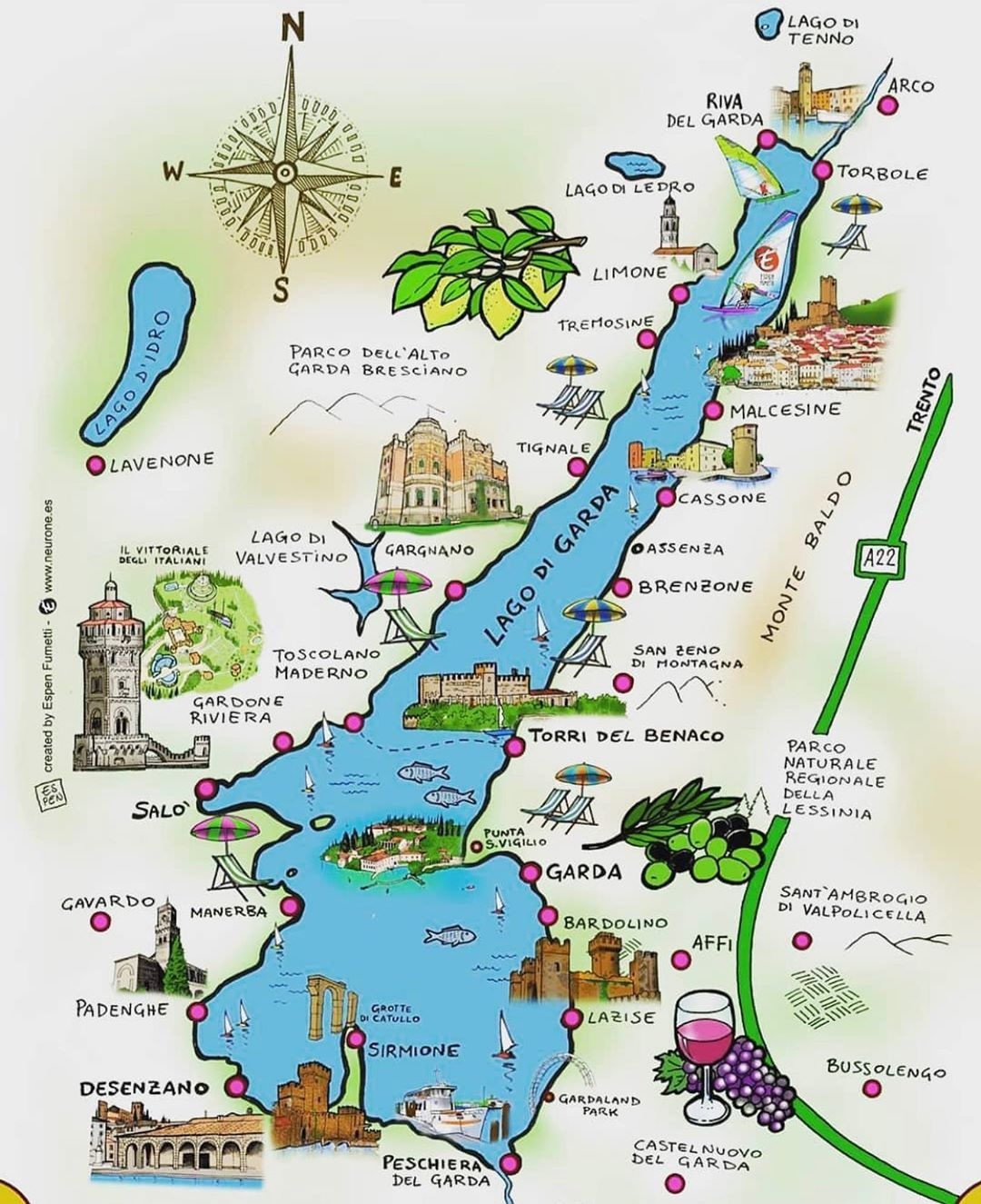
 There are lakes in Italy, and then there is Lake Garda. The largest lake in the country, situated at the precise point where the pre-Alpine mountains of Trentino and Veneto give way to the fertile plains of Lombardy, Lago di Garda occupies a natural setting of such dramatic beauty that Romans built their villas here two thousand years ago and have been succeeded, generation after generation, by travellers who arrive intending to stay a day and remain for a week. The views are outstanding. The water is an improbable shade of blue-green. The medieval villages on the shores, Sirmione, Malcesine, Limone, Riva del Garda, each have a character entirely their own. And the lake sits in an ideal location: between Brescia and Verona, between Milan and Venice, accessible from three international airports within an hour's drive. Come once and you will understand why Garda has been drawing the world to northern Italy for two thousand years.
1. Why Lake Garda Is Unlike Any Other Italian Lake
Italy has many lakes, and several of them are extraordinarily beautiful. Lake Como, with its aristocratic villas and its famous celebrity residents, has perhaps the most celebrated international reputation. Lake Maggiore has the Borromean Islands and a grandeur that Como's narrower valley cannot match. Lake Orta, the smallest and least visited, has a quality of intimate enchantment that the larger lakes sacrifice to their fame. But Lake Garda is different from all of them, and the difference is not simply one of scale, though the scale is significant: at 370 square kilometres it is the largest lake in Italy, 52 kilometres from north to south and up to 17 kilometres wide.
The difference is in the geography, and geography is destiny at Lake Garda. The northern portion of the lake, which narrows between towering Alpine walls of rock that rise almost vertically from the water's edge, is a fjord landscape of dramatic, almost Scandinavian severity. The winds that funnel through this narrow northern corridor, the Ora from the south in the afternoon and the Pelèr from the north in the morning, have made the northern lake the finest inland sailing and windsurfing water in Europe and drawn an international community of watersports enthusiasts to Riva del Garda and Torbole that gives the northern shore a cosmopolitan energy unlike anywhere else on the Italian lakes. As the lake opens southward it changes character completely: the mountains recede, the shores broaden, the hills soften into the morainic landscape of drumlins and vineyards that characterise the southern lake, and the whole scene becomes warmer, more Mediterranean, more Italian in the familiar sense.
The climate of Lake Garda is also exceptional and contributes importantly to its particular appeal. The combination of the lake's thermal mass, which moderates temperatures throughout the year, and the sheltering effect of the mountains to the north, which block the cold air from the Alps, creates a microclimate of unusual mildness: palm trees, olive trees, lemon trees and oleanders grow along the western and southern shores in conditions that feel more like the Ligurian coast than the Po Valley, and the growing season for vines is long enough to produce wines of real complexity and concentration from grapes that would struggle in the colder valley vineyards to the north.
Best time to visit Lake Garda: May and June are the finest months: the oleanders and lemon trees are in flower, the lake is at its calmest and most transparent, and the villages have not yet reached the congestion of July and August. September and October bring the grape harvest, the best sailing conditions of the year and a golden autumn light that makes the landscape extraordinary. July and August are beautiful but extremely busy: if you visit in summer, book accommodation and ferries well in advance and avoid driving around the lake at weekends when the lakeside road becomes a slow-moving queue.
2. Sirmione: Roman Ruins, Thermal Springs and a Perfect Peninsula
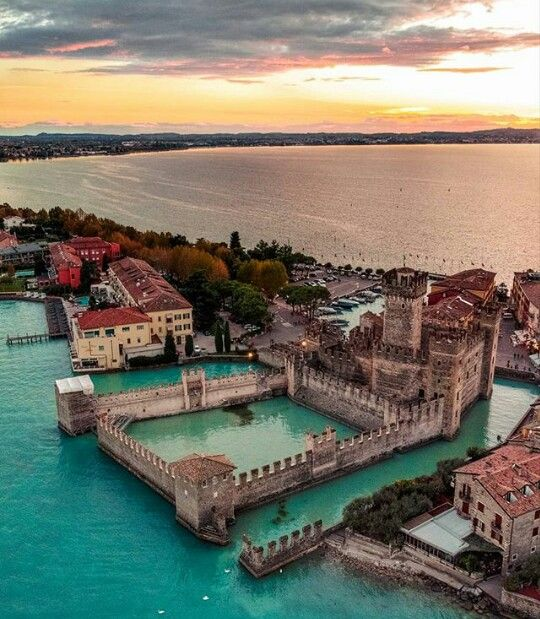
Sirmione is the most visited town on Lake Garda and, on the strength of its setting alone, one of the most spectacular small towns in Italy. It occupies a long, narrow peninsula that extends nearly four kilometres into the southern lake, its old town enclosed within medieval walls and accessible only through the drawbridge gate of the Rocca Scaligera, the magnificent thirteenth-century castle of the Scaliger lords of Verona that guards the entrance to the peninsula with a seriousness that the centuries have only intensified. To arrive at Sirmione from the lake by ferry, rounding the point of the peninsula and seeing the castle and the old town and the water in every direction simultaneously, is one of those moments of Italian travel that embed themselves permanently in the memory.
At the northern tip of the peninsula, beyond the medieval town and the modern spa hotels that have grown up around the town's natural thermal springs, stand the Grotte di Catullo: the ruins of a vast Roman villa dating from the first century BC and traditionally, though probably incorrectly, associated with the poet Catullus, who was born in nearby Verona and who wrote several poems that appear to reference a property on Lake Garda. Whatever the truth of the attribution, the ruins themselves are extraordinary: the largest Roman private residential complex in northern Italy, occupying the entire northern tip of the peninsula and giving views across the lake in three directions that help explain why whoever built this place chose it. The archaeological museum on the site houses finds from the excavation and provides context for what you are seeing.
The thermal springs of Sirmione, known since Roman times, feed a number of spa establishments in the town that remain one of its most distinctive attractions. The waters, which emerge from the lake bed at a temperature of approximately 69 degrees Celsius and have a high sulphur and bicarbonate content, are used therapeutically for respiratory and dermatological conditions as well as in wellness contexts, and the town has developed a significant medical tourism industry alongside its conventional hospitality offer. For the casual visitor, a thermal bathing experience in one of the public facilities near the tip of the peninsula, with the open lake visible from the water, is one of the more memorably unusual pleasures that Lake Garda has to offer.
Common tourist mistakes at Sirmione: Arriving by car on a summer weekend without having booked a parking space. The peninsula is closed to non-resident vehicles and the car parks at the base of the peninsula fill quickly on summer mornings. The easiest and most pleasurable way to arrive is by ferry from Desenzano del Garda or Peschiera del Garda, both reachable by train from Verona, Milan and Venice. The ferry journey itself, approaching the peninsula by water, is far more beautiful than any road approach could be.
3. The Western Shore: Limone, Lemon Terraces and the Brescian Riviera
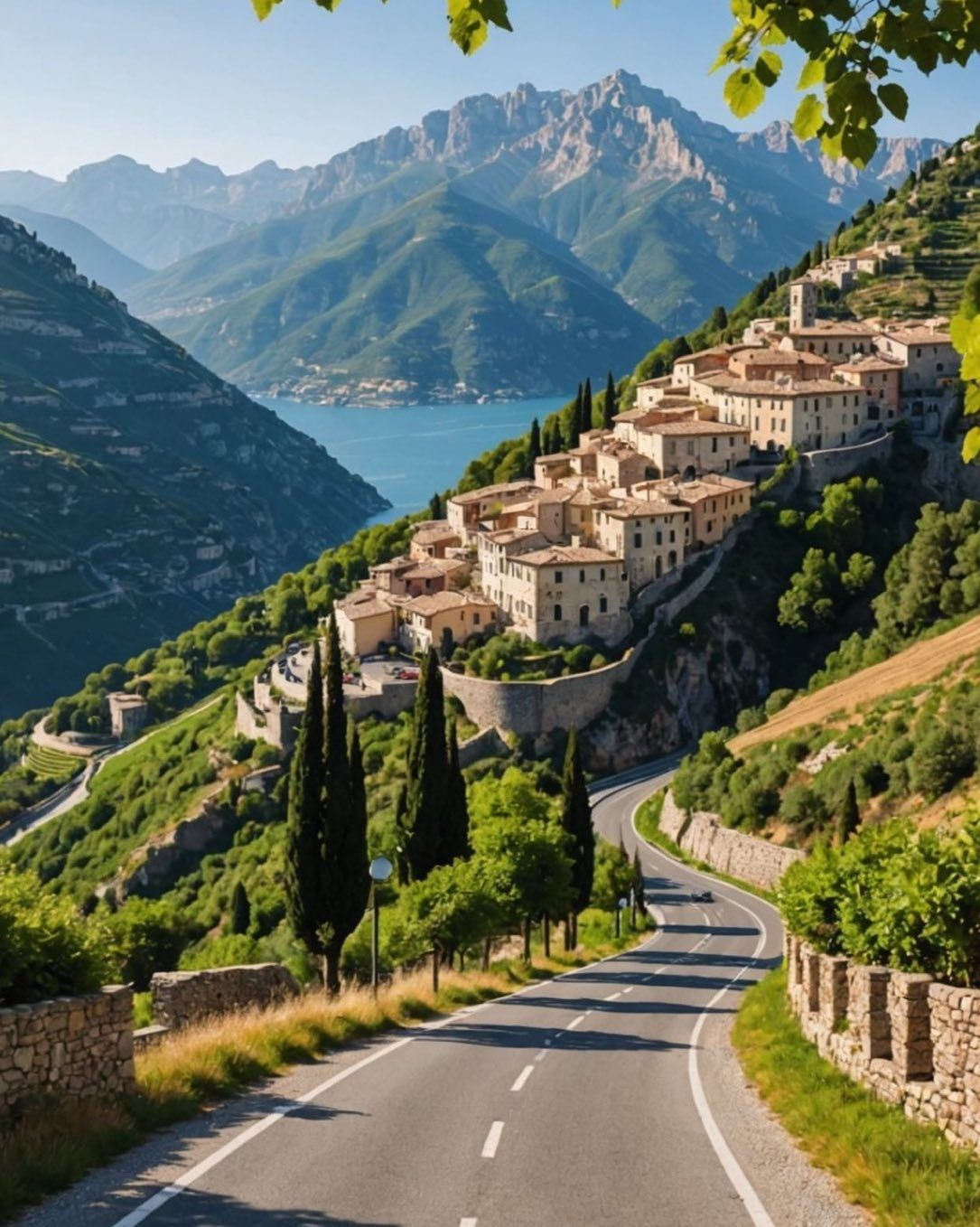
The western shore of Lake Garda, also known as the Brescian Riviera after the province that administers it, is the most dramatic and in many ways the most beautiful stretch of the entire lake. The road that connects the towns of this shore, the famous Gardesana Occidentale, is an engineering feat of the 1930s that winds along the cliff face above the lake, passing through dozens of tunnels carved through the rock and offering views of the water far below that are among the most spectacular in the region. The western shore is also the most sheltered from the cold northern winds, and it is here that the microclimate of the lake is at its most Mediterranean and most surprising.
Limone sul Garda, perhaps the most photographed town on the western shore, takes its name from the lemon cultivation that once dominated the local economy and that is still commemorated in the historic limonaie: the stone-pillared lemon houses, built from the seventeenth century onward, that protected the lemon trees from frost during the winter months and that line the terraced hillsides above the town in a pattern that is utterly unlike anything else in the Italian lake district. The lemons of Limone were once exported across northern Europe and were a significant part of the regional economy; the local tradition holds, with perhaps slightly more local pride than scientific rigour, that the population of Limone has for centuries enjoyed exceptional longevity due to a genetic mutation that leads to unusually high levels of a protective protein called ApoA-1 Milano, discovered in the 1970s and now the subject of ongoing pharmaceutical research.
Further north along the western shore, the small harbour town of Gargnano is a favourite among those who know the lake well: less visited than Limone or Salo, with a beautiful historic centre, a working fishing harbour and the extraordinary Villa Feltrinelli, the Art Nouveau masterpiece that served as Mussolini's last official residence during the Republic of Salo in 1943 and 1944 and is now one of the finest hotels in Italy. The village of Tignale, high on the cliff above Gargnano, offers one of the greatest viewpoints over the entire lake, a panorama that on clear days extends from the mountains of the northern shore to the wide southern basin, with the lake stretching in every direction below like a vast inland sea.
4. Malcesine and the Eastern Shore: Castles, Monte Baldo and the Wind
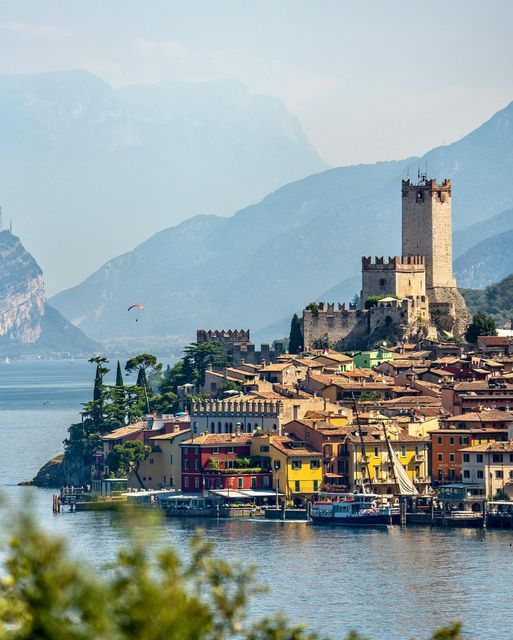
The eastern shore of Lake Garda, administered by the province of Verona in the Veneto region, has a slightly different character from the Brescian western shore: less dramatically cliffy, more accessible, with a string of attractive lakeside towns that have a well-developed tourist infrastructure without having lost their essential Italian character. Malcesine, the most beautiful of these towns, is dominated by the Castello Scaligero, the medieval castle of the Scaliger lords that rises from a rocky promontory directly above the harbour and has been watching over this stretch of the lake since the early thirteenth century. Goethe visited Malcesine in 1786 during his first journey to Italy, was briefly arrested by the local authorities who suspected him of sketching the castle for hostile military purposes, and wrote about the incident with characteristic philosophical good humour in his Italian Journey.
Above Malcesine rises Monte Baldo, the ridge that runs for approximately 35 kilometres along the eastern shore and separates the lake basin from the valley of the Adige to the east. The cable car from Malcesine ascends to the summit ridge in approximately ten minutes, delivering you to a world of high Alpine meadows, extraordinary botanical diversity (Monte Baldo is known as the garden of Europe for the richness of its endemic flora), and views that on clear days encompass the entire lake, the Dolomites to the northeast, the Alps to the north and the Po plain stretching south to the horizon. In winter, the summit carries snow and operates as a modest ski area. In summer, it is the starting point for paragliding flights that launch from the ridge and soar out over the lake in conditions of extraordinary freedom and beauty.
Further south along the eastern shore, the towns of Garda, which gives the lake its name, and Bardolino sit at the heart of the Veneto wine country, surrounded by vineyards that produce the light, fresh red wines of the Bardolino DOC and the celebrated rosato Chiaretto di Bardolino, one of the finest rosé wines in Italy. The town of Bardolino is a cheerful, unpretentious place with a good market, several excellent wine bars and the annual Bardolino wine festival in October that draws visitors from across northern Italy for a weekend of tastings, music and the particular pleasure of drinking good wine in a beautiful lakeside setting as the harvest season ends.
For watersports on Lake Garda: The northern lake around Riva del Garda and Torbole is the finest inland sailing and windsurfing venue in Europe, with the thermal winds providing reliable conditions for most of the year. The Ora wind builds from the south each afternoon, typically reaching Force 3 to 4 by early afternoon, making it ideal for beginner and intermediate windsurfers. The Pelèr, the morning wind from the north, is stronger and more challenging and is the preferred wind of the more experienced sailors. Several well-established schools in Riva and Torbole offer tuition at all levels, and equipment hire is widely available.
5. Riva del Garda: Where the Alps Meet the Lake
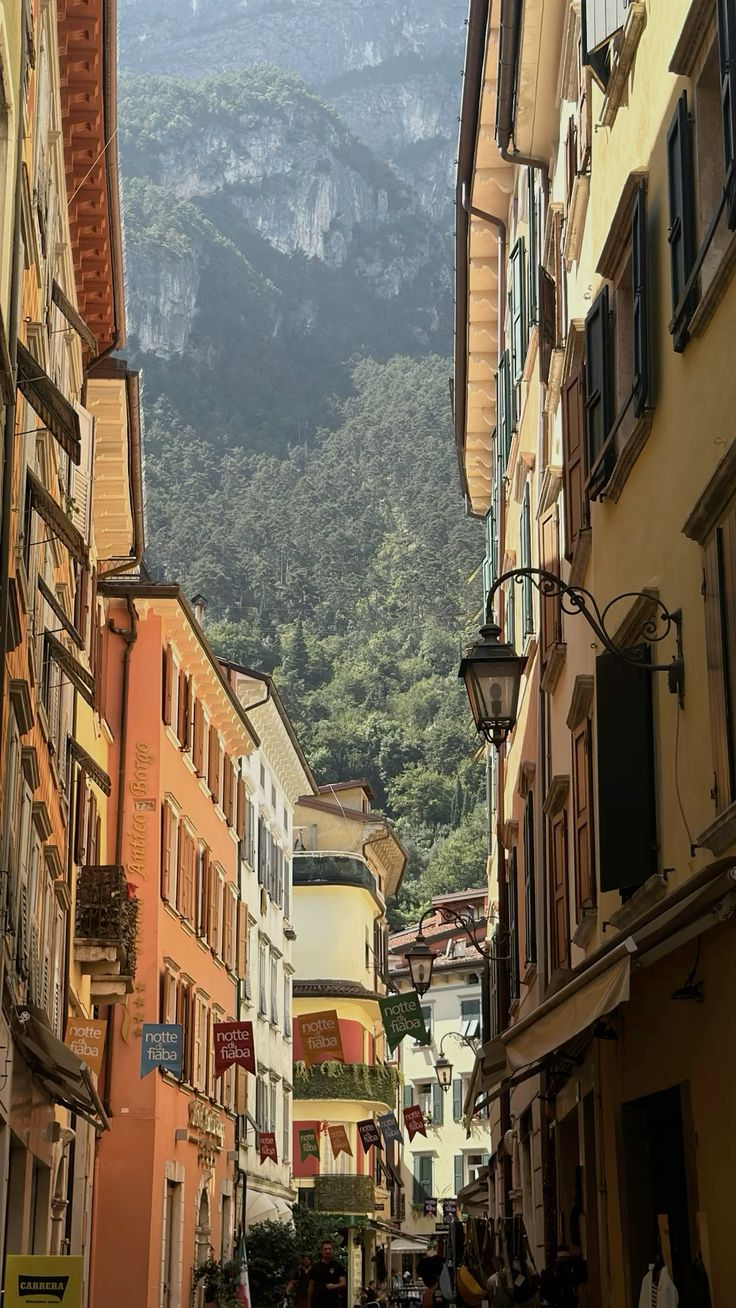
Riva del Garda, the principal town of the Trentino shore at the extreme northern tip of the lake, is one of those places whose combination of natural grandeur and human scale creates an atmosphere of extraordinary pleasantness: the great rock faces of Monte Rocchetta and Monte Brione rise almost vertically from the water's edge on either side of the town, the lake stretches south between them as far as the eye can see on clear days, and the town itself, with its medieval tower and its wide lakefront promenade, is handsome, comfortable and completely at ease with itself.
Riva has always attracted a cosmopolitan crowd, drawn by the watersports in summer and by the combination of Alpine hiking and lake culture that makes the northern Garda a particularly versatile destination. Franz Kafka spent time here in 1909 and 1913, seeking a cure for his fragile health in the lake air, and the town's slightly Germanic character, a legacy of its long years as part of the Austro-Hungarian Empire before 1918, gives it a quality of order and cleanliness that distinguishes it from the more exuberant towns of the southern lake.
The hinterland above Riva is exceptional for hiking: the Cascata del Varone, a dramatic waterfall that plunges through a narrow gorge carved into the limestone plateau above the town, is easily accessible and genuinely impressive. The plateau above, the Altopiano di Brentonico, offers high-altitude walking trails through Alpine meadows with extraordinary views over both the lake and the surrounding mountain ranges. And the Ponale Trail, a historic mule path cut into the cliff above the western shore that connected Riva with the towns of the western lake before the modern road was built, has been restored as a cycling and walking route of exceptional scenic quality that provides the finest of all possible perspectives on the northern lake from its dramatic position high above the water.
6. The Wines, the Beaches and the Food of Lake Garda
The Lake Garda region is one of the most productive and most varied wine areas of northern Italy, with a ring of DOC and DOCG appellations encircling the lake that between them cover an extraordinary range of styles and varieties. The most celebrated is Lugana, produced from the Turbiana grape (a local variant of Trebbiano) on the white clay soils of the southern morainic hills between Sirmione and Peschiera. Lugana is one of the finest white wines of Lombardy: aromatic, mineral and with a textural richness that gives it an ageing potential rare in Italian whites. A well-made Lugana from a serious producer can age beautifully for five to eight years, developing a depth and complexity that makes it a worthy accompaniment to the freshwater fish dishes of the lake.
The red wines of Bardolino and the Valtenesi Garda Classico offer a lighter counterpoint: the Corvina-based reds of Bardolino are typically fresh, cherry-scented and relatively low in tannin, designed for early drinking and for the lake fish and lake views that make them irresistible. The rosato Chiaretto di Bardolino and the Valtenesi Chiaretto from the western shore are among the finest rosé wines in Italy, pale in colour, deeply aromatic and with a structure and acidity that make them versatile companions for everything from grilled lake fish to simple pasta dishes and the excellent local olive oil.
Speaking of olive oil: the olive groves of the western and southern Garda shores produce oil of excellent quality, with a relatively mild, fruity character that reflects the Mediterranean nature of the local microclimate. The Garda DOP designation covers oils produced across the lake region and is worth looking for at the local producers and markets. The combination of good oil, good wine and the freshwater fish of the lake, particularly lavarello (whitefish), trota (trout), tinca (tench) and the small sardine di lago that are preserved in salt and olive oil and eaten on polenta, forms the basis of a genuinely distinctive regional kitchen that rewards exploration at the smaller, less tourist-oriented restaurants of the lakeside villages.
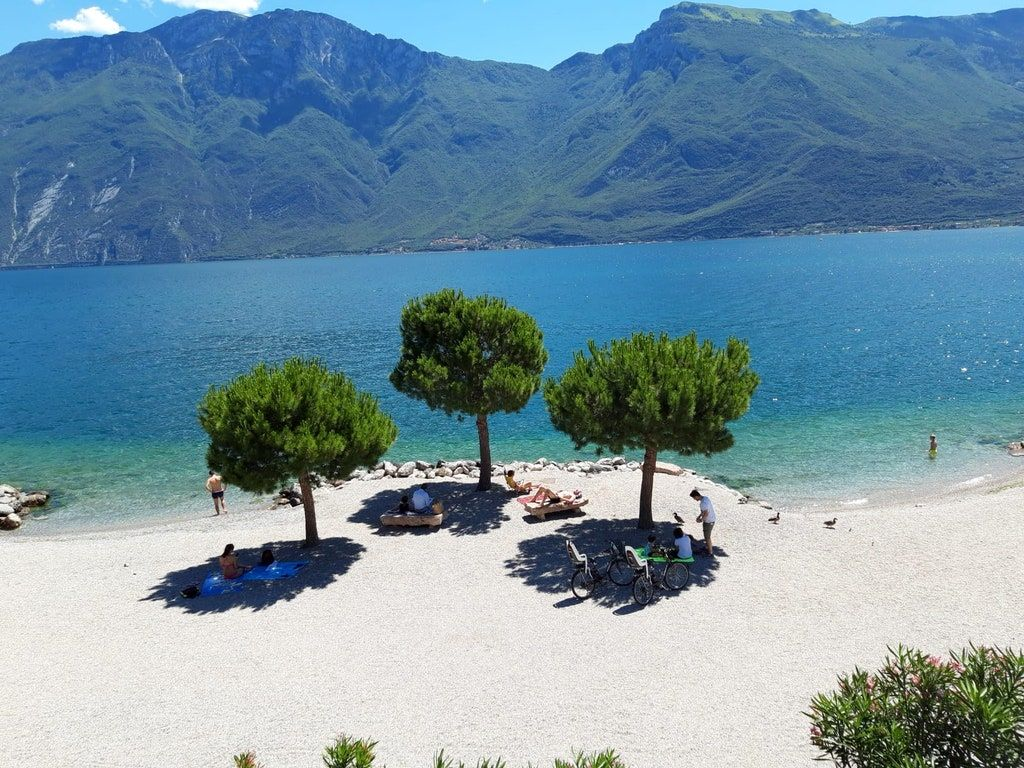
The beaches of Lake Garda are varied in character and quality. The southern lake has sandy and mixed sand-and-shingle beaches that are accessible and family-friendly, though they can be crowded in summer. The eastern shore has pebbly and rocky shores with excellent water clarity and good access to deep water. The northern lake has dramatic rocky shores with wild swimming accessible only by boat or a scramble, and the water here, fed directly by Alpine streams, is notably colder and clearer than the south. The finest bathing experience on the entire lake is arguably the early morning swim from one of the small boat jetties of Malcesine or Limone, before the tourist boats arrive, when the water is perfectly still and cold and extraordinarily transparent and you can look down through ten metres of it to the pale stones below.
Lake Garda teaches you that Italy is not simply a collection of cities. It is a landscape with a soul: the silver olive groves in the morning light, the lemon trees on their stone terraces, the castle reflected in water so clear it seems not to be water at all. The Romans understood this. The travellers of the Grand Tour understood it. You will understand it the moment you arrive.
Getting to Lake Garda: Airports, Transfers and the Best Way to Arrive
Lake Garda is blessed with exceptional accessibility for an Italian destination. The nearest airport is Verona-Villafranca Airport (VRN), approximately 15 kilometres from the southern shore and around 20 kilometres from Sirmione, making it the most convenient arrival point for travellers heading to the southern or eastern lake. A private airport transfer from Verona Airport to Sirmione takes approximately 20 minutes and is the most comfortable and stress-free way to begin a lake holiday. Brescia-Montichiari Airport (VBS), approximately 30 kilometres from the western shore, offers additional connections, particularly on budget airlines from European destinations.
For travellers arriving from further afield, Milan Bergamo Airport (BGY) and Milan Malpensa Airport (MXP), both approximately 60 to 80 kilometres from the western shore of the lake, offer a much wider range of international connections and are excellent arrival points for those who wish to combine a Lake Garda stay with a visit to Milan. Private transfers from both Milan airports to the lake are available and take between 50 minutes and 90 minutes depending on the destination on the lake.
Once on the lake, the Navigarda ferry service connects all the major towns on both shores with regular services throughout the day and into the evening, and using the ferry rather than the car to move between towns is not only more enjoyable but considerably more practical in the summer months when the lakeside roads can be significantly congested. The ferry service operates year-round, though with reduced frequency outside the main tourist season.
Tips for making the most of Lake Garda: Base yourself in a smaller town rather than in Sirmione or Riva if you want to experience a more local atmosphere: Malcesine, Gargnano, Garda and Bardolino all offer excellent accommodation and good restaurants without the tourist density of the most famous destinations. Take the ferry rather than driving whenever possible. Visit the Grotte di Catullo in Sirmione early in the morning before the day-trippers arrive. Hire a bicycle for a day on the southern lake, where the flat morainic hills between Desenzano and Peschiera offer some of the finest cycling in northern Italy. And do not leave without visiting at least one of the Lugana wine producers south of Sirmione, where a direct purchase from the estate is almost invariably better value than anything you will find in the lakeside shops.
Comments
No comments yet. Be the first to share your thoughts!
Leave a Comment
Your comment will appear after moderation.