 Michelle
 There are landscapes in this world that exceed the capacity of language to describe them. Places where the visual experience is so overwhelming, so simultaneously beautiful and improbable, that the traveller falls silent and simply looks. The Amalfi Coast is one of those places. Fifty kilometres of sheer limestone cliffs plunging into a sea of extraordinary blue, of whitewashed villages pressed into the rock at impossible angles, of lemon groves terraced by hand over centuries, of Baroque churches and Norman towers and ancient harbours in impossible small bays. It is one of the most densely beautiful stretches of coastline on the surface of the planet, and it has been recognised as such since the Roman emperors chose it as the location of their private villas. Three experiences define it above all others. Make sure you do not leave without all three.
Why the Amalfi Coast Is Unlike Anywhere Else in Italy
The Amalfi Coast, or Costiera Amalfitana, stretches along the southern edge of the Sorrentine Peninsula in the Campania region of southern Italy, between the towns of Vietri sul Mare in the east and Positano in the west. In 1997 it was inscribed as a UNESCO World Heritage Site, recognised not only for its extraordinary natural beauty but for the remarkable human achievement of making this near-vertical coastline habitable, productive and, over the course of a millennium, genuinely prosperous.
The Republic of Amalfi was, in the ninth and tenth centuries, one of the great maritime powers of the Mediterranean. At its peak, Amalfi had a population of seventy thousand people and its merchants traded across the known world, from Byzantium to North Africa to the Crusader kingdoms of the Middle East. The city gave the world the compass rose, the Tavole Amalfitane, the first maritime code of law in European history, and a tradition of paper-making that survived for centuries in the Valle dei Mulini, the Valley of the Mills, behind the town. The grandeur of those centuries is still visible in the cathedral, in the palaces, in the logic of a town built vertically up a hillside because there was simply no other direction left to go.
The coast today is a place of extraordinary contrasts. The villages are intimate and ancient; the summer crowds are enormous. The scenery is overwhelming in its beauty; the roads are some of the most challenging and congested in Italy. The food is superb; the tourist restaurants near the main harbours can be costly and mediocre. Navigating these contrasts is what this guide is for. Go at the right time, know what to do when you get there, and the Amalfi Coast will give you some of the most extraordinary days of your travelling life.
Best time to visit: May, early June and September are the ideal months. The weather is warm and the sea swimmable, the hillside lemon groves and gardens are at their most beautiful, and the villages have not yet reached the saturation point of July and August. If summer is your only option, go early in the morning and late in the afternoon, when the light is better and the roads are marginally less congested. Avoid driving the coast road in mid-August if at all possible.
1. Drive the SS163: the Most Beautiful Coastal Road in the World
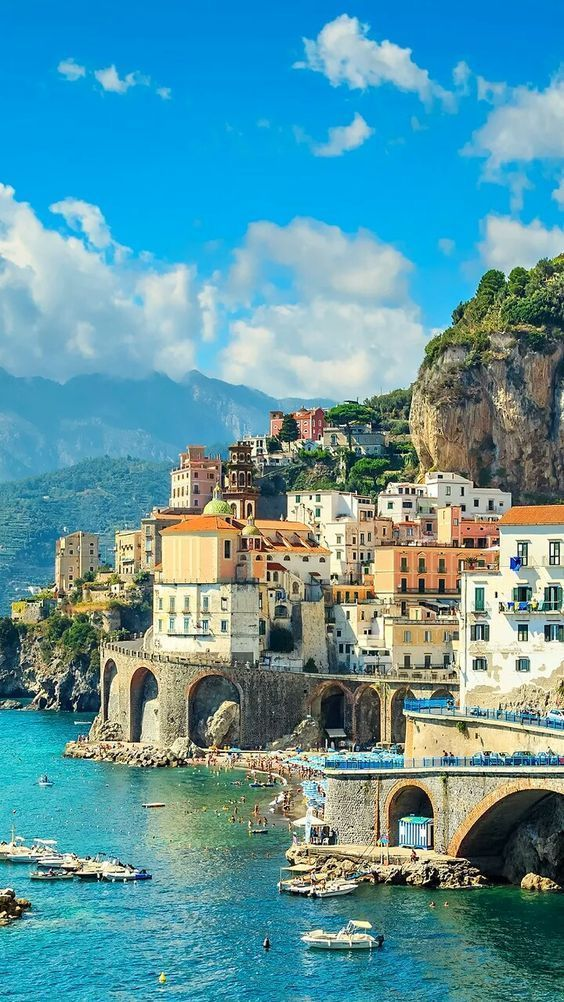
The SS163 Amalfitana is not merely a road. It is one of the great feats of Italian engineering, one of the most photographed routes in Europe, and one of those experiences that, once had, becomes a permanent reference point for everything you subsequently call beautiful. Completed in 1853 under the Bourbon King Ferdinand II, the road was carved from the sheer limestone face of the Sorrentine Peninsula at a height that varies between sea level and several hundred metres, cutting through tunnels, crossing narrow bridges over river valleys, clinging to the cliff face with retaining walls that in places seem to defy physics. It is 40 kilometres long from Vietri sul Mare to Positano, and driving it in its entirety, preferably from east to west in the morning when you have the light on the sea rather than in your eyes, is an experience you will not forget.
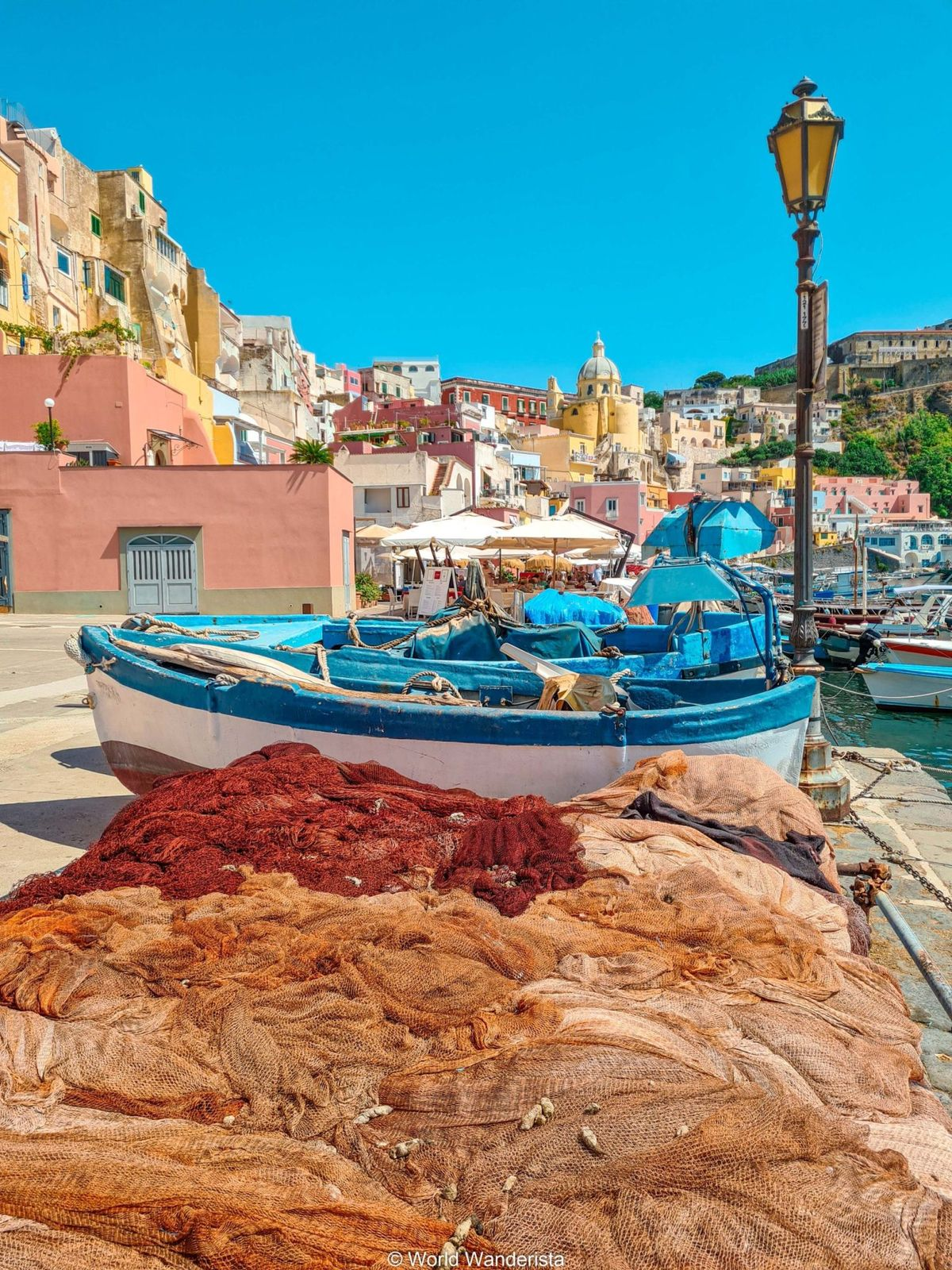
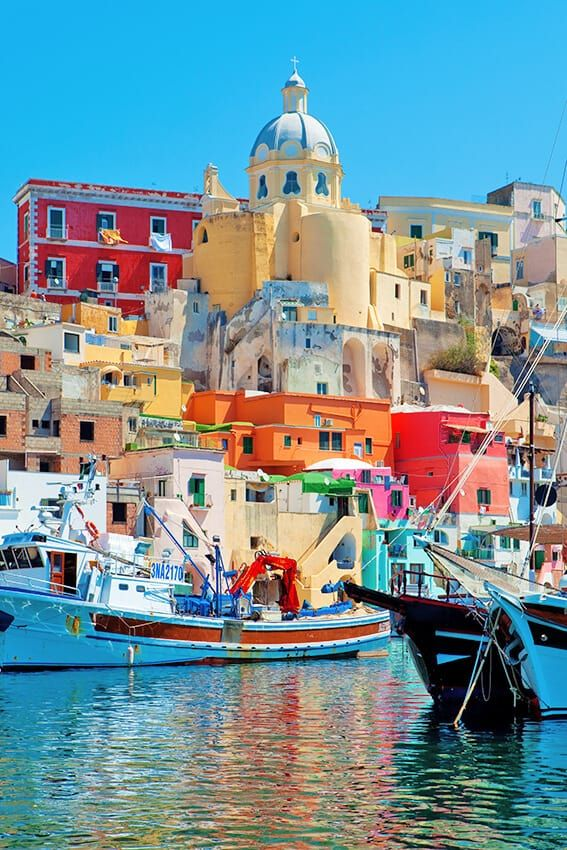
The route passes through or near all of the coast's principal towns. Vietri sul Mare, at the eastern end, is famous for its majolica ceramic tradition and its colourful tiled dome visible from the road. Cetara, a tiny fishing village clinging to the hillside, produces the finest tuna and the most extraordinary colatura di alici, the intensely flavoured anchovy extract that is the Amalfi Coast's answer to ancient Roman garum. Maiori and Minori, in the broad central valley behind the coast, are the most residential and least touristic of the coast towns and offer excellent trattorie at local prices. Atrani, tucked into a narrow gorge just east of Amalfi, is the smallest municipality in southern Italy and one of the most perfectly preserved medieval villages in the country. Amalfi itself, the historical capital of the coast, commands the largest bay and has the grandest architecture. Praiano, perched on a spur of the cliff between Amalfi and Positano, offers superb views in both directions and is significantly calmer than its more famous neighbours. And Positano, at the western end, with its stacked houses in shades of pink and terracotta tumbling down to a small beach, is the image that has come to represent the entire coast in the world's imagination.
Should you drive or take a transfer?
This is a question that deserves an honest answer. Driving the SS163 yourself is a genuinely wonderful experience if you are a confident driver comfortable with narrow roads, oncoming coaches that require one of you to reverse to a passing point, and the occasional moment of genuine vertigo as the road curves around a headland with nothing between you and the sea several hundred metres below. If this sounds appealing rather than alarming, hire a car and drive it. If it sounds alarming, book a private transfer. A professional driver who knows the road can give you the full experience of the coastal route without any of the stress, and allows you to look at the scenery rather than the road.
Another option, and one that many experienced visitors prefer, is the ferry. During summer months, hydrofoils and ferries connect Positano, Amalfi, Salerno and the islands of Capri and Ischia, and the view of the coast from the sea is, if anything, even more spectacular than the view from the road. Approaching Positano by boat, watching the coloured village emerge from the cliff face as you draw closer across the blue water, is one of the defining visual experiences of the Italian south.
Common tourist mistakes on the Amalfi Coast: Attempting to drive the SS163 in a large hire car during August. Eating at restaurants directly on the harbour front in Positano or Amalfi without checking the prices, which in the most exposed tourist locations can be extraordinarily high for food that is not always proportionally good. Underestimating journey times: the 40 kilometres of the coastal road can take two hours in high season traffic. Not booking accommodation well in advance: the coast's best hotels sell out months ahead for summer and early autumn.
2. Ravello: the City of Music Above the Clouds
Of all the places on the Amalfi Coast, the one that most consistently produces the response of silent, slightly disbelieving wonder in first-time visitors is not Positano, with its photogenic cascade of coloured houses, nor Amalfi itself, with its magnificent cathedral and medieval warren of streets. It is Ravello: the small hilltop town situated 350 metres above the sea on a ridge between two deep valleys, reached by a winding road from Amalfi that climbs in a series of tight switchbacks through terraced lemon groves and chestnut woods before emerging, suddenly and unforgettably, into a landscape of extraordinary quiet and beauty.
Ravello has been called, by writers and composers and painters who have stayed here over the centuries, the finest view in the world. Richard Wagner composed parts of Parsifal here, and the terrace gardens of the Villa Rufolo became his model for the magical garden of Klingsor. D.H. Lawrence wrote portions of Lady Chatterley's Lover here. Gore Vidal lived here for decades. The novelist and travel writer E.M. Forster, having visited at the turn of the twentieth century, described the view from the Belvedere of Infinity at the Villa Cimbrone as the finest in the world. Greta Garbo, Jacqueline Kennedy, Winston Churchill: the list of those who have made the ascent to Ravello and been overcome by what they found there is long and distinguished.
The Villa Rufolo
The Villa Rufolo, built by the Rufolo family of Ravello in the thirteenth century, occupies the highest point of the town directly adjacent to the cathedral. Its gardens, restructured in the nineteenth century in the Romantic style, cascade down the hillside in a series of terraced levels planted with palms, roses, rhododendrons and subtropical species, with the Tyrrhenian Sea glittering 350 metres below and the village of Minori visible at the foot of the valley. The belvedere at the garden's edge is one of those viewpoints that makes the person standing at it feel simultaneously very small and very fortunate to be alive. The Villa Rufolo also serves as the setting for the annual Ravello Festival, one of Italy's finest classical music events, which holds open-air concerts on the terrace overlooking the sea every summer from June to September. If your visit coincides with the festival, attending a concert here, with the music rising into the warm southern evening and the sea disappearing into darkness below, is one of those experiences that no subsequent concert hall performance will ever quite match.
The Villa Cimbrone and the Belvedere of Infinity
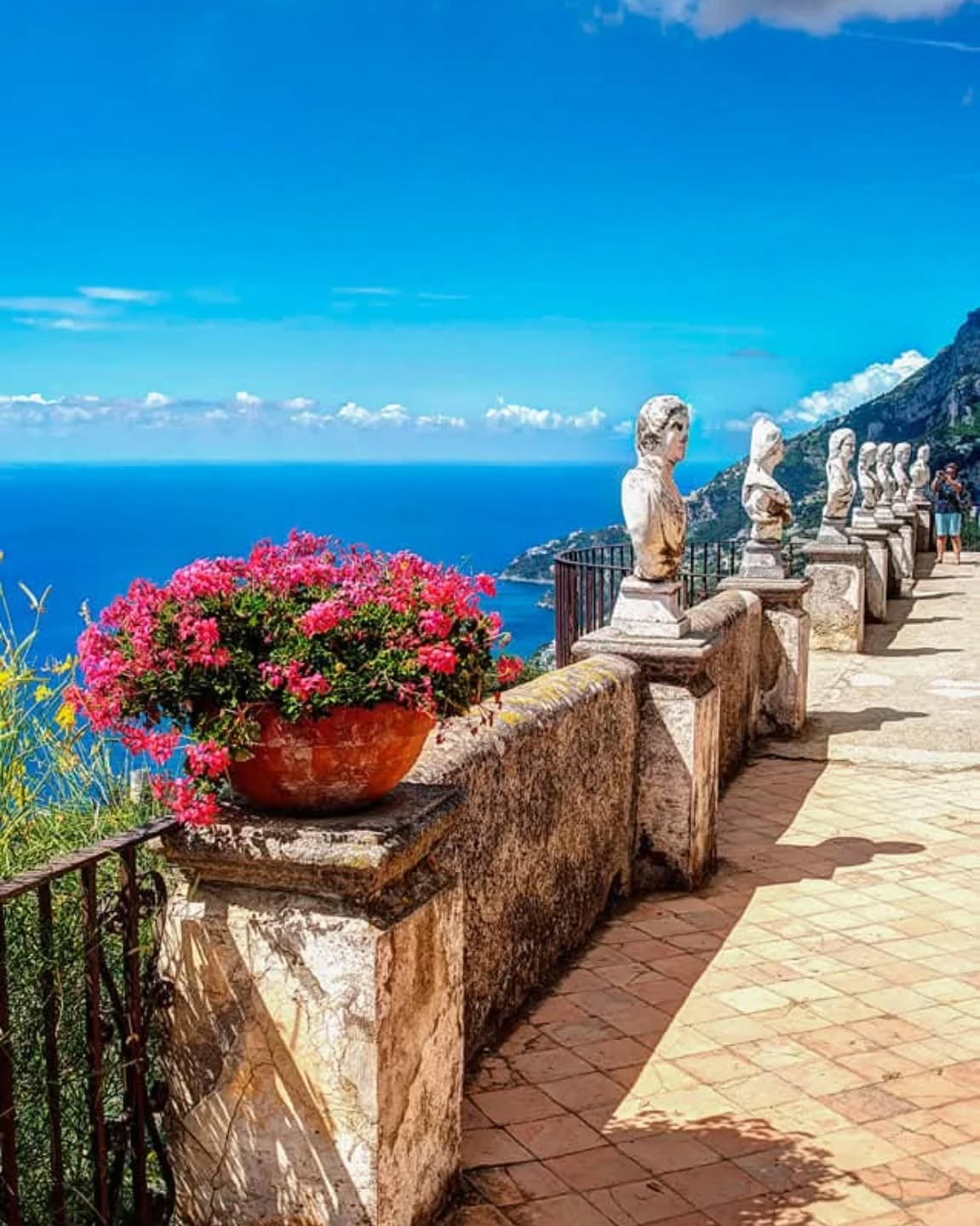
The Villa Cimbrone, a short walk from the Piazza del Duomo along a path through the medieval town and into the gardens, is privately owned and operated as a luxury hotel, but its gardens and the legendary Belvedere of Infinity are open to paying visitors during the day. The belvedere, a long terrace at the very edge of the cliff decorated with a row of marble busts, looks out over a panorama of such extraordinary scale and beauty that photographs consistently fail to do it justice. You stand at the railing and the cliff falls away for 350 metres to the sea below, and the coastline curves away to the east and west in both directions, and the islands of Li Galli are visible in the distance, and the sky is very blue and very large, and you understand immediately and viscerally why this place has been drawing artists and writers and lovers here for a very long time.
Ravello exists slightly outside of ordinary time. The sounds of the coast do not reach it. The frenzy of the harbour towns below it does not arrive. There is wind, and the smell of lemon blossom in spring, and views that have made serious people weep without embarrassment. Go there and you will understand.
Getting to Ravello: From Amalfi, take the local bus (SITA) which departs from the main square approximately every 30 minutes, or hire a taxi from the harbour. The journey takes around 25 minutes. Alternatively, the walk from Amalfi to Ravello via the ancient stepped path through the lemon groves takes approximately one hour and is one of the finest short walks on the coast. Comfortable shoes are essential. Ravello has very few tourist facilities and several excellent restaurants in the town itself; book ahead for dinner during the festival period.
3. The Sea: Grottos, Coves and the Colour of the Tyrrhenian
Everything on the Amalfi Coast eventually leads back to the sea. The road follows it. The towns cling to the cliffs above it. The food comes from it. The light that makes the landscape so extraordinary is the light reflecting off it. And the sea itself, the Tyrrhenian at this latitude in this season, is one of the finest swimming and boating waters in the Mediterranean: clear, warm, brilliantly coloured in shades of turquoise and deep blue, and full of coves and caves and small beaches accessible only by water.
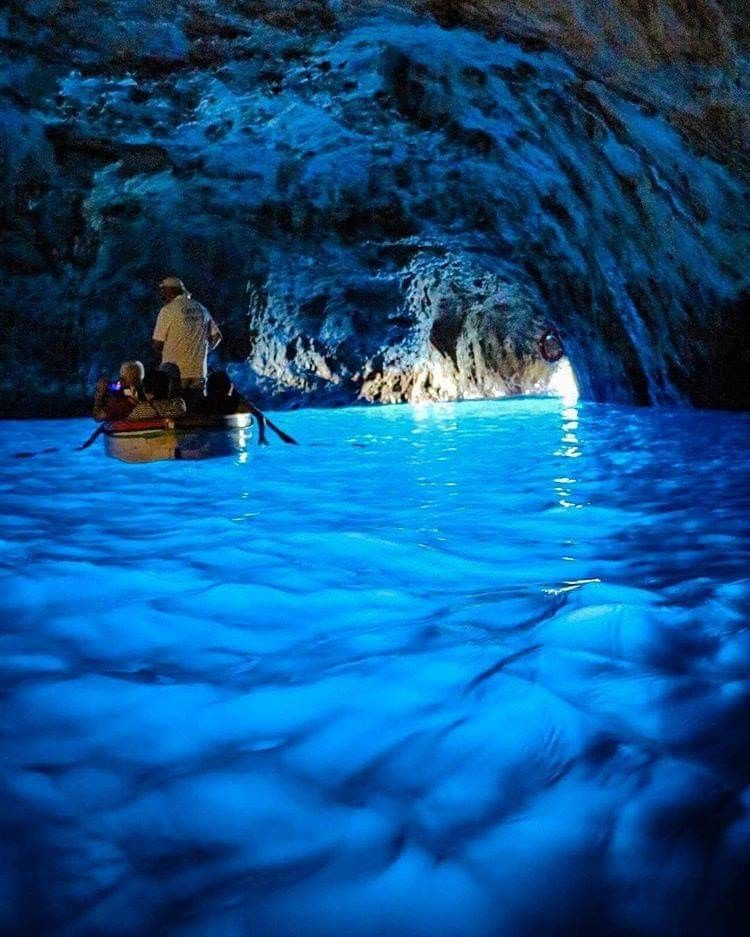
The most famous marine attraction on the entire coast is the Grotta dello Smeraldo, the Emerald Grotto, near the village of Conca dei Marini between Amalfi and Positano. Unlike the more famous Blue Grotto of Capri, which requires visitors to lie flat in a rowing boat to pass through a tiny entrance, the Emerald Grotto is entered by boat or by a lift cut directly through the cliff from the road above, and once inside it is possible to stand and move around comfortably. The grotto takes its name from the extraordinary colour of the light that filters through the submerged openings in the rock and illuminates the cave from below: an intense, luminous emerald green that has nothing to do with paint or trick lighting and everything to do with the way sunlight behaves when refracted through deep, clear Mediterranean water. The effect is genuinely otherworldly. Stalactites hang from the ceiling. Below the surface of the water, visible through its extraordinary transparency, are stalagmites and a ceramic Nativity scene placed there by local fishermen in 1956. Visit in the late morning when the sun is at the right angle to produce the finest light, and arrive by boat from Amalfi rather than descending by lift from the road above: the approach from the sea is far more atmospheric.
Swimming in the coves
The Amalfi Coast has very few sandy beaches in the traditional sense: the geography simply does not allow for them. Most of the swimming is done from small pebble beaches, from the rocks below the villages, from platforms built into the cliff face, or from boats anchored in the sheltered coves that occur at intervals along the coast. This is, in practice, no hardship at all. The water is so clear and so warm in summer that swimming from a boat in a secluded cove between Positano and Praiano, with no one else around and the cliff rising vertically from the sea above you, is infinitely preferable to fighting for space on a crowded sandy beach.
Li Galli, the three small islands visible from Positano, known in antiquity as the Sirenuse and believed by the ancient Greeks to be the home of the Sirens who tempted Odysseus, can be reached by private boat hire from Positano. No public access is permitted as the islands are privately owned, but circling them by boat and anchoring in the crystalline water in their lee is one of the finest half-days the coast has to offer. Praiano, smaller and less visited than its neighbours, has a small beach and a network of underwater rocks that produce excellent snorkelling. The waters around Furore, a fjord-like inlet between steep cliffs that appears on the coast between Positano and Amalfi, are famously clear and are the site of a high-diving competition held every summer.
For those who want to experience the coast entirely from the water, a boat tour departing from Amalfi or Positano and covering the full length of the coast, including entry to the Emerald Grotto, a stop at a swimming cove, and the approach to the Li Galli islands, takes a full day and is one of the finest possible ways to understand what the Amalfi Coast truly is. The view from the sea looking back at the cliffs, at the villages pressed into the rock above you, at the road that seems to defy gravity as it winds along the cliff face, gives you a perspective that no amount of time spent on land can replicate.
What to eat on the Amalfi Coast: The cuisine of the coast is one of the finest expressions of southern Italian cooking. Fresh grilled fish and seafood, particularly the local anchovies and the excellent tuna from Cetara. Scialatielli ai frutti di mare, thick handmade pasta with mixed seafood, invented in Amalfi in the 1970s and now the signature dish of the coast. Delizia al limone, the sponge and cream dessert perfumed with the extraordinary lemons grown on the terraced hillsides. And the lemons themselves, the sfusato amalfitano, a variety unique to this coast, larger and less acidic than ordinary lemons and used to make the finest limoncello in Italy. Buy a bottle directly from a producer on the hillside road above Amalfi and carry it home as the finest possible edible souvenir of the coast.
Getting to the Amalfi Coast: Arriving the Right Way
The nearest major airport to the Amalfi Coast is Naples International Airport (Capodichino, NAP), located in the city of Naples approximately 60 kilometres from Positano and 70 kilometres from Amalfi. From the airport, the most comfortable and practical way to reach the coast is a private transfer, which takes you directly to your hotel with your luggage handled and no need to navigate bus connections or train schedules after a long journey. Depending on traffic and your destination on the coast, the journey takes between 90 minutes and two hours.
It is important to understand that the last section of every journey to the Amalfi Coast involves the SS163 coastal road, and that this road, while extraordinary to travel, is genuinely narrow and in summer genuinely congested. A professional driver who knows the road well, the timings of the tourist coaches and the quieter alternative routes where they exist, will always get you to your destination faster and with less stress than a self-driving visitor navigating the coast for the first time. This is one of the clearest cases in Italian travel where a private transfer is not merely a luxury but a genuine practical advantage.
Alternative connections include the Circumvesuviana train from Naples to Sorrento (approximately one hour) followed by a SITA bus or taxi along the coast, or direct ferry services in summer from Naples Beverello to Positano and Amalfi. The ferry option, when sea conditions allow, offers the additional pleasure of seeing the coast from the water as you approach it for the first time: an arrival that does full justice to the extraordinary spectacle that awaits.
Comments
No comments yet. Be the first to share your thoughts!
Leave a Comment
Your comment will appear after moderation.