 Michelle
 There is a city that seduces you first with its art, its architecture, its Renaissance genius, and then, when you are already conquered, it seduces you again through the stomach. Florence is that city. The cradle of the Renaissance, the home of Dante, Leonardo and Michelangelo, is also the home of ribollita, the twice boiled soup that contains in its humble ingredients the entire history of Tuscan peasant cooking. It is the home of bistecca alla fiorentina, the legendary T bone steak cut from the white Chianina cow and grilled over charcoal until the outside is blackened and the interior is barely warm, red as the tiles of the Duomo. It is the home of lampredotto, the fourth stomach of the cow, slow cooked in broth and served in a soft roll with green sauce and chilli, the street food that has sustained Florentine workers for centuries. And it is the home of wines that have been celebrated since the Etruscans first planted vines on the slopes of the Chianti hills. This is a food and wine tour of Florence. Come hungry. Come thirsty. And come prepared to learn why poverty, in Tuscany, has always been the mother of invention.
Ribollita: The Soup That Defines Tuscan Thrift and Flavour
Ribollita is not a soup that you eat the day you make it. The name means reboiled, and the preparation, which is the central ritual of the Tuscan peasant kitchen, requires that the soup be cooked, allowed to rest overnight, and then reheated the following day. The process is not an affectation. It is a necessity born of poverty, and it produces a result that no single day cooking can replicate.
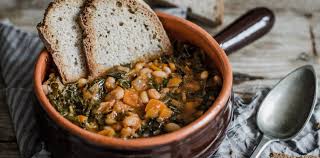
The ingredients of ribollita are the ingredients that a Tuscan farmer would have had available in the dead of winter: cavolo nero, the dark, crinkled Tuscan kale that sweetens with frost; cannellini beans, dried and soaked overnight; day old bread, too stale to eat fresh but perfect for absorbing liquid and providing substance; carrots, celery, onion, a handful of tomato, and a generous quantity of the greenest olive oil from the hills of the Chianti region. The vegetables are sautéed in olive oil until soft, the beans are added with their cooking water, the bread is torn into rough chunks, and the kale is stirred through at the last moment so that it retains some of its texture. The soup is then left to rest. Overnight, the bread absorbs the liquid and swells, the flavours meld and deepen, and the soup transforms from a vegetable stew into something closer to a bread pudding, thick enough to stand a spoon in.
The following day, the ribollita is reheated gently, never boiled, and served in deep bowls with a final drizzle of raw olive oil and a grinding of black pepper. It is the taste of the Tuscan winter, of poverty transformed by patience into abundance, of a cuisine that has never needed luxury ingredients because it has always understood how to extract the maximum from the humblest of materials. Every Florentine has a memory of ribollita, usually connected to a grandmother, a rainy afternoon, a kitchen that smelled of garlic and sage and woodsmoke. The soup is not a restaurant dish, or not only a restaurant dish. It is a domestic dish, a family dish, a dish that says home as clearly as any word in the Italian language.
The cavolo nero of Tuscany. The dark, crinkled kale that is the essential green of ribollita is called cavolo nero, black cabbage, and it is a variety of kale that has been cultivated in Tuscany for centuries. It sweetens with frost, which is why ribollita is a winter dish, and its flavour is more mineral, more savoury, less sweet than the curly kale common in northern Europe and North America. If you cannot find cavolo nero, substitute the darkest, flattest kale you can find, but understand that the flavour will not be the same.
Bistecca alla Fiorentina: The Chianina Beef Grilled Over Charcoal
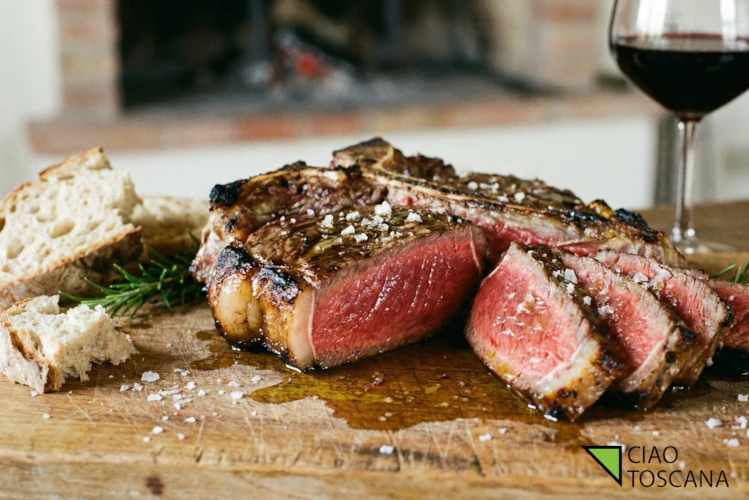
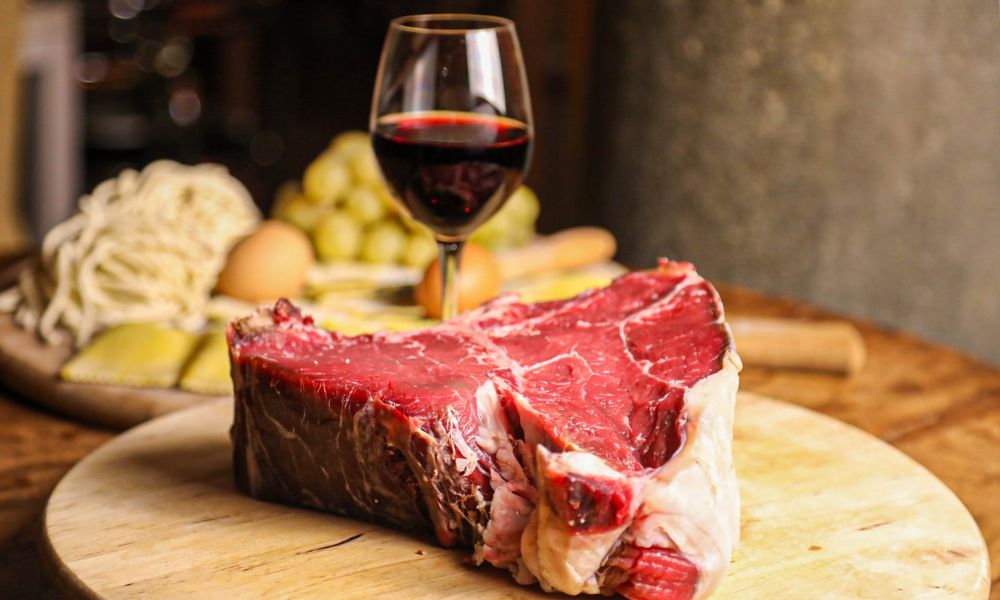
Bistecca alla fiorentina is not a dish for the timid. It is not a dish for those who prefer their meat cooked beyond medium rare. It is not a dish for vegetarians, for the diet conscious, or for anyone who believes that a steak should be trimmed of its fat before it reaches the plate. The bistecca is a T bone steak, cut from the loin of the Chianina cow, a breed of white cattle that has been raised in the Val di Chiana and the Valdarno since Etruscan times. The steak is cut thick, between three and five centimetres, and it weighs, in a proper restaurant portion, between one and one and a half kilograms. It is intended to be shared, ideally by two people, and it is cooked over a charcoal fire that is so hot that the outside of the steak blackens and chars while the interior barely warms.
The cooking of the bistecca is a ritual of considerable precision. The fire must be of hardwood charcoal, not briquettes, and it must be burning at a temperature that would make most grills melt. The steak is placed on the grill and turned only twice, once to sear the first side, once to sear the second. It is never pierced with a fork, which would release the juices, but turned with tongs. The cooking time is measured in minutes, not in the tens of minutes, and the result is a steak that is black and charred on the outside, red and cool on the inside, with a texture that is tender, juicy, and intensely beefy. The only seasonings are salt, applied after the steak comes off the fire, and a generous quantity of freshly ground black pepper. There is no sauce. There is no marinade. There is nothing but fire, meat, salt, and the confidence that the ingredients are of sufficient quality to require no additional assistance.
The Chianina cow is the largest breed of cattle in the world, and its meat is lean, tender, and surprisingly delicate in flavour for an animal of such size. The fat is not marbled through the meat but concentrated around the edges, which makes the bistecca forgiving on the grill: the fat renders and flares, and the steak does not require the intramuscular fat that gives a Wagyu or Angus steak its richness. The flavour is pure beef, clean and mineral, with a sweetness that comes from the grass and hay of the Tuscan pastures. A bistecca alla fiorentina is not a meal. It is a celebration, and the Florentines reserve it for Sundays, for holidays, for the days when the family gathers and the wine flows freely.
Ordering the bistecca. When you order a bistecca alla fiorentina in a Florentine trattoria, the waiter will bring you to the counter or the grill to select your steak. The price is by weight, typically 50 to 70 euros per kilogram, and a steak for two will cost between 50 and 90 euros. This is not inexpensive, but it is not overpriced for the quality of the meat and the skill of the cooking. Do not ask for the steak to be cooked beyond medium rare. The waiter will refuse. If the waiter does not refuse, leave the restaurant. You are not in the right place.
Lampredotto: The Humble Street Food of Renaissance Florence
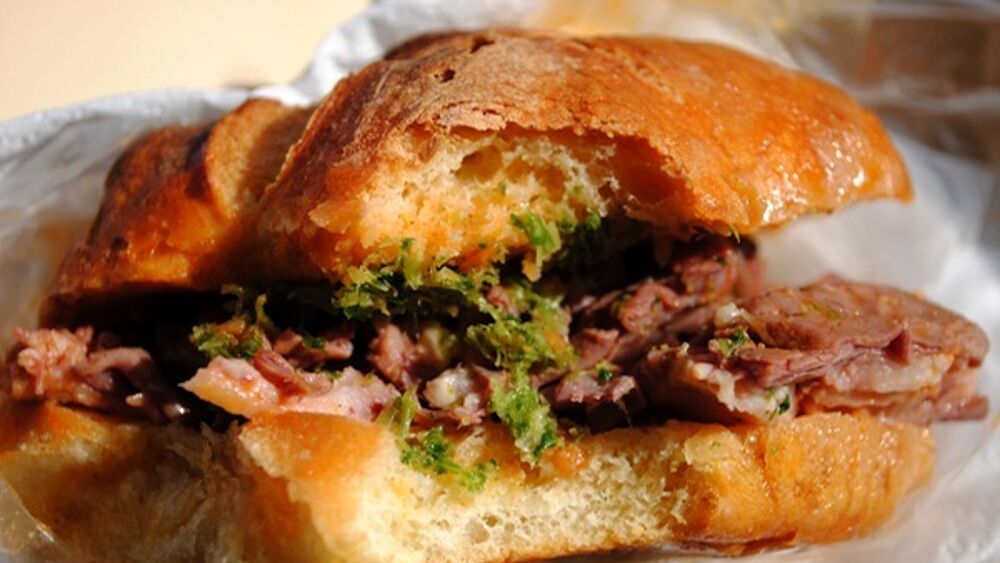
Lampredotto is the most Florentine of all Florentine dishes, and it is also the most misunderstood. The name refers to the fourth stomach of the cow, the abomasum, which is the final chamber of the ruminant digestive system and the site where the actual digestion takes place. In English, it is called the reed tripe, and it has a texture and appearance that is unlike the honeycomb tripe that is more familiar in other culinary traditions. The lampredotto is slow cooked in a broth of tomato, onion, celery, carrot and herbs until it becomes tender enough to cut with a spoon, then sliced thinly and served on a soft, floury roll called a semelle, with the cooking broth spooned over it to keep it moist.
The sandwich is traditionally dressed with one of two sauces: salsa verde, a bright green emulsion of parsley, capers, anchovy, garlic, vinegar and olive oil, or a spicy red sauce made from chilli peppers, tomato and garlic. The classic order is a mezzo con tutto, half a sandwich with everything, which means both sauces, a sprinkling of salt, and a generous soak of the cooking broth. The bread is soft and absorbent, the meat is tender and savoury, the sauces are bright and pungent, and the combination is one of the great street food experiences of Italy.
The name lampredotto derives from the Italian word for lamprey, the eel like fish that the Romans considered a delicacy, because the cooked stomach, with its central tube and its radiating folds, was thought to resemble the lamprey's body. The dish was the food of the workers of Florence, the labourers and artisans who could not afford the bistecca but who needed a hot, satisfying meal in the middle of a long day. Today, the lampredotto carts are scattered throughout the historic centre, and the queue for a sandwich at the most famous cart, the Lampredotto di Sergio on the Piazza del Mercato Nuovo, is a Florentine institution. The customers are a cross section of the city: students, office workers, tourists who have been properly advised, and the occasional celebrity who has heard of the dish and wants to see what the fuss is about. The fuss is justified.
Finding a lampredotto cart. The lampredotto carts are usually found near the markets: the Mercato Centrale, the Mercato di Sant'Ambrogio, and the Piazza del Mercato Nuovo are the most reliable locations. The carts are open for lunch, from approximately 11 AM until the meat runs out, which is usually around 2 or 3 PM. They close on Sundays and on rainy days. Bring cash, as few carts accept cards. The price is modest, approximately 5 euros for a whole sandwich, 4 euros for a half. Eat it standing at the cart, leaning against a wall, or walking through the streets. There are no seats. There are no plates. There is only the sandwich, the sauce, the broth, and you.
Pappa al Pomodoro: Tomato and Bread Soup
Pappa al pomodoro is the summer cousin of ribollita, a thick soup of tomatoes, bread, garlic, basil and olive oil that is the taste of the Tuscan garden in August. The ingredients are even simpler than those of ribollita: ripe tomatoes, preferably the full flavoured San Marzano or the delicate datterini, stale bread, garlic, fresh basil, and the greenest olive oil you can find. The bread is soaked in water and squeezed dry, then cooked with the tomatoes and the garlic until it dissolves into a thick, porridge like consistency. The basil is stirred in at the end, and the soup is served lukewarm or at room temperature, never hot, with a drizzle of raw olive oil and a scattering of fresh basil leaves.
The pappa al pomodoro is a dish of the contadino, the peasant farmer, who would have had tomatoes and basil growing in the garden, bread left over from the previous week's baking, and olive oil pressed from the olives of the hills. It is not a dish that appears on the menus of the tourist restaurants on the Piazza della Signoria, which is to say that it is not a dish that most visitors to Florence ever taste. This is a loss. The pappa al pomodoro is one of the great soups of Italy, and the best versions are found in the home kitchens of Florentine families and in the trattorias of the Oltrarno, the district south of the Arno that remains the most authentic residential neighbourhood in the historic centre.
Cantucci and Vin Santo: The Almond Biscuit and the Sweet Wine
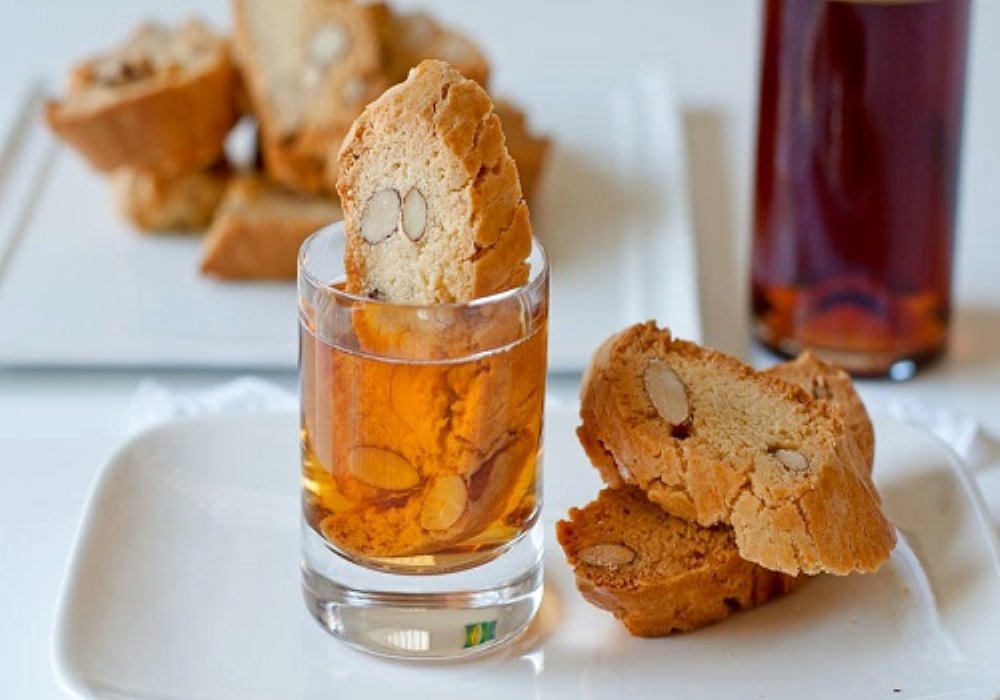
The meal is not finished until the cantucci have been dipped in the Vin Santo. Cantucci are almond biscuits, twice baked in the manner of the Tuscan tradition, dry and crunchy and intensely flavoured with toasted almonds and a hint of anise or orange zest. They are not sweet in the manner of a cake or a pastry, and they are not intended to be eaten alone. They are intended to be dipped in Vin Santo, the sweet dessert wine of Tuscany, a wine made from dried Trebbiano and Malvasia grapes that are left to dry on straw mats for months before pressing, concentrating their sugars and flavours. The wine is aged for years in small wooden barrels called caratelli, and it emerges amber coloured, honeyed, and fragrant with notes of dried apricot, nut and vanilla.
The ritual is simple: pour a glass of Vin Santo. Take a cantuccio. Dip it into the wine for a few seconds, just long enough for the biscuit to absorb some of the liquid but not long enough to become soggy. Eat. The combination of the dry, crunchy almond biscuit and the sweet, viscous wine is one of the great pairings of the Italian table, and it is the traditional conclusion to a Florentine meal. The cantucci are sometimes served with a bowl of Vin Santo on the side, and the guests dip their biscuits directly into the bowl, which is the informal, family style. In a restaurant, the wine is poured into individual glasses, and the dipping is more decorous. Either way, the effect is the same: a taste of Tuscany that lingers on the palate long after the meal has ended.
The origin of Vin Santo. The name Vin Santo, holy wine, is said to derive from the fact that the wine was traditionally drunk with the cantucci on All Saints' Day, November 1, a holiday of considerable importance in the Catholic calendar. Another story, perhaps more plausible, attributes the name to the use of the wine in the celebration of the Mass, for which it was preferred because of its sweetness and its golden colour, which symbolised the glory of the resurrected Christ. Whatever the origin, the wine is holy in the secular sense as well: it is one of the great dessert wines of Italy, and it has been produced in Tuscany for more than five centuries.
The Wines of Florence: Chianti Classico, Vino Nobile and Brunello
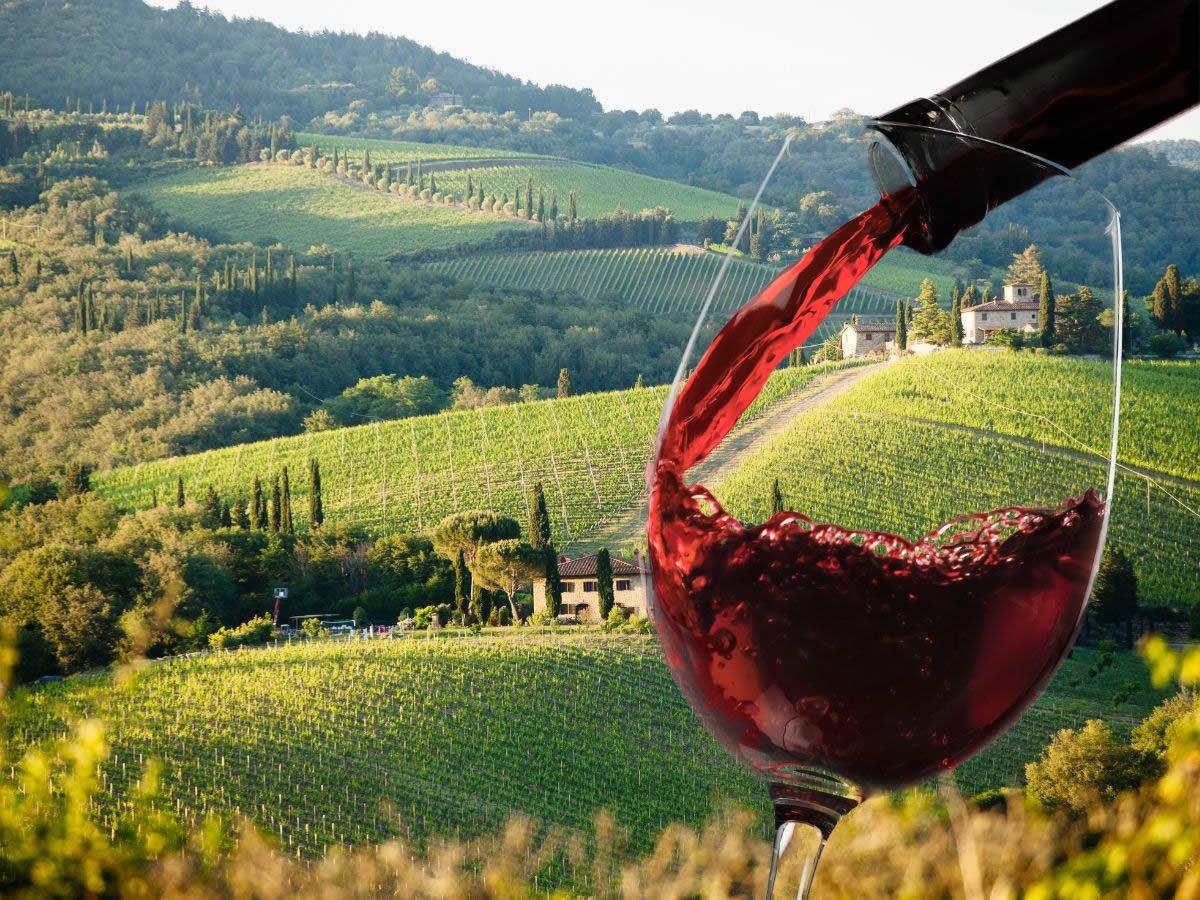
No food tour of Florence is complete without a deep dive into the wines that have made Tuscany one of the great wine regions of the world. The hills surrounding Florence are covered with vineyards, and the wines produced from the Sangiovese grape, in its various clones and expressions, are among the most distinctive in Italy.
Chianti Classico DOCG
Chianti Classico is the classic Tuscan red, the wine that has been associated with Florence since the Renaissance. The production zone is the area between Florence and Siena, a landscape of rolling hills, cypress trees and medieval villages that is the image of Tuscany that the world carries in its imagination. The wine is made primarily from Sangiovese, with small additions of other local varieties permitted. The character of Chianti Classico is medium bodied, with bright acidity, moderate tannins, and flavours of sour cherry, violet, earth and a distinctive note of dried herbs. The black rooster, the Gallo Nero, is the symbol of the Consorzio del Chianti Classico, and the seal on the neck of the bottle is a guarantee of authenticity. A good Chianti Classico is the ideal partner for the bistecca, the ribollita, and the lampredotto, and it is the wine that the Florentines drink with their daily meals.
Vino Nobile di Montepulciano DOCG
Vino Nobile di Montepulciano is produced in the hilltop town of Montepulciano, southeast of Siena, and it is one of the most prestigious wines of Tuscany. The wine is made from Sangiovese, known locally as Prugnolo Gentile, and it is aged for at least two years, with a minimum of one year in oak. The result is a wine of greater body, deeper colour and more powerful tannins than Chianti Classico, with flavours of black cherry, plum, leather, tobacco, and a characteristic note of bitter chocolate. Vino Nobile is the wine for the bistecca, for roasted meats, for the game birds of the Tuscan hills, and for a winter evening by the fire.
Brunello di Montalcino DOCG
Brunello di Montalcino is the king of Tuscan wines, the most powerful, the most age worthy, and the most expensive. The wine is produced from a clone of Sangiovese called Brunello, which is grown exclusively in the hills around the town of Montalcino, south of Siena. The wine is aged for a minimum of four years, with at least two of those years in oak, and the best examples can age for decades. The flavour is intense: blackberry, black cherry, leather, tar, tobacco, liquorice, and a minerality that speaks of the limestone soils of the Montalcino hills. Brunello demands food of equal intensity: a bistecca, a roasted leg of lamb, a aged pecorino cheese, or, in the quiet of the evening, nothing at all.
Rosso di Montalcino and Rosso di Montepulciano
The younger, less expensive versions of Brunello and Vino Nobile are the Rossos, DOC wines that are aged for a shorter period and released earlier. They are not lesser wines but different wines: fresher, more approachable, and more affordable. A Rosso di Montalcino or a Rosso di Montepulciano is the perfect wine for a Tuesday evening, for a plate of pasta, for a sandwich of lampredotto. The Florentines drink them without ceremony, and you should too.
A Dedicated Day Tour — Eating and Drinking Through Florence
The following itinerary is designed for the serious gastronome. It is not a race. It is a leisurely, deliberate exploration of the city's best flavours, paced to allow digestion and appreciation. You will walk, you will eat, you will drink, and you will walk again. Wear comfortable shoes and come with an empty stomach.
Morning — Arrival and Coffee
Begin your day by arriving in Florence without stress. The most comfortable way to reach the city from Florence Amerigo Vespucci Airport (FLR) or Pisa International Airport (PSA) is by pre-booking a private transfer with Airport Connection. Your driver will meet you at arrivals and deliver you directly to your hotel in the historic centre. Door to door, no waiting, no dragging luggage onto buses or trains.
Start your food tour with a proper Italian breakfast: a cappuccino and a freshly baked cornetto at a historic cafe. The Caffè Gilli in the Piazza della Repubblica has been serving Florentines since 1733, and its art nouveau interior is one of the most beautiful cafe rooms in Italy. Stand at the bar for a faster and cheaper experience. The coffee is excellent. The pastries are fresh. The atmosphere is pure Florence.
Late Morning — Mercato Centrale
Walk to the Mercato Centrale, the central market of Florence, housed in a magnificent iron and glass building designed by Giuseppe Mengoni, the architect of the Galleria Vittorio Emanuele in Milan. The ground floor is a traditional Italian market, with stalls selling fresh meat, fish, cheese, bread, pasta, fruit and vegetables. The upper floor is a modern food hall, opened in 2014, with a dozen different counters serving pizza, pasta, porchetta, lampredotto, gelato, and wine. Take a few hours to wander, to taste, to buy. Sample the pecorino toscano, both young and aged; the finocchiona, the fennel scented salami of the region; the prosciutto toscano, which is saltier and darker than the prosciutto of Parma; the porchetta, the roasted pork stuffed with garlic, rosemary and wild fennel. Do not try to eat everything. Try to taste everything. There is a difference.
Lunch — A First Taste of Ribollita
For your first proper meal, seek out a trattoria that specialises in traditional Florentine cooking. Trattoria Mario on the Via Rosina, just behind the Mercato Centrale, has been serving the same menu since 1953. The queue forms before the doors open at noon, and the room is so crowded that you will share a table with strangers. This is part of the experience. Order the ribollita, which is served on the days it is available, and the bistecca alla fiorentina, which is grilled to order and shared between two. Drink a carafe of the house Chianti Classico, which is inexpensive and perfectly adequate. The wine is not the star of this meal. The steak is the star of this meal. The wine is the supporting actor.
Early Afternoon — A Wine Tasting in the City
Florence's historic centre contains several enotecas where you can taste the region's wines without travelling into the countryside. Enoteca Pitti Gola e Cantina, on the Via dei Coverelli near the Palazzo Pitti, offers flights of Chianti Classico, Vino Nobile, Brunello, and Vin Santo, served with small plates of cheese, salami and cantucci. The staff are knowledgeable and happy to explain the differences between vintages and producers. Allow at least an hour for this tasting. Do not rush. Wine tasting is not a competition. It is an education.
Late Afternoon — Lampredotto from a Cart
By late afternoon, you will be ready for a second lunch. Find the lampredotto cart of your choice. The most famous is Il Lampredotto di Sergio on the Piazza del Mercato Nuovo, the same square where the Porcellino, the bronze boar statue, draws crowds of tourists. The queue will be long, but it moves quickly. Order a mezzo con tutto, half a sandwich with both green and red sauce, and a soak of the cooking broth. Eat it standing on the square, leaning against the column of the Loggia del Mercato Nuovo, watching the tourists throw coins into the Porcellino's mouth. The sandwich will cost you four or five euros. It will be the best four or five euros you spend in Florence.
Evening — Cantucci and Vin Santo
After the lampredotto, you will need something sweet and light to finish the day. Walk to the Pasticceria Nencioni on the Borgo degli Albizi, a historic bakery that has been making cantucci to the same family recipe since 1937. Buy a bag of cantucci, then walk to the nearby Enoteca Alessi on the Via delle Oche, which pours Vin Santo by the glass. Dip the cantucci in the wine, one by one, until the bag is empty. This is not a meal. It is a ritual, and it is the traditional conclusion to a Florentine day of eating. The Florentines have been doing it for centuries. Follow their example.
A note on pacing. Do not attempt to eat everything in a single day. The itinerary above is designed for a full day of eating, but you can spread it over two or three days if you prefer. The quality of your experience will be higher if you do not force yourself to finish every course. Leave room for spontaneity. The best meals in Florence are often the ones you do not plan: a glass of Chianti at a wine bar you stumbled into, a plate of crostini at a trattoria recommended by a local, a conversation with a butcher at the Mercato Centrale who tells you where his family eats on Sundays.
The Authentic Historical Recipe for Ribollita
This recipe has been passed down through generations of Tuscan families. It is not a restaurant recipe, which is to say it is not a recipe that has been adapted for speed, for consistency, or for the limitations of a professional kitchen. It is a domestic recipe, and it requires patience, a willingness to wait, and the understanding that the best ribollita is the ribollita that you make the day before you intend to eat it.
Ingredients
- 200 grams of dried cannellini beans, soaked overnight in cold water
- 500 grams of cavolo nero, Tuscan black kale, washed and roughly chopped
- 300 grams of stale bread, preferably Tuscan sourdough, crusts removed, torn into chunks
- 1 large onion, finely chopped
- 2 carrots, finely chopped
- 2 celery stalks, finely chopped
- 3 cloves of garlic, thinly sliced
- 400 grams of canned San Marzano tomatoes, crushed by hand
- Extra virgin olive oil from Tuscany, for cooking and for finishing
- Sea salt, to taste
- Freshly ground black pepper, to taste
- Water, to cover
Preparation
Drain the soaked cannellini beans and place them in a large pot with enough fresh water to cover them by several centimetres. Bring to a boil, reduce to a simmer, and cook until the beans are tender, approximately one and a half to two hours. The cooking time will depend on the age of the beans; older beans take longer. Do not salt the water until the beans are tender, as salt can toughen the skins. Reserve the bean cooking water separately.
In a large, heavy bottomed pot, heat a generous quantity of olive oil over medium heat. Add the chopped onion, carrot and celery, the soffritto of Tuscan cooking, and cook until the vegetables are soft and translucent but not browned, approximately ten minutes. Add the sliced garlic and cook for another two minutes, until fragrant.
Add the crushed tomatoes to the pot, stir to combine, and cook for five minutes. Add the cooked cannellini beans, the cavolo nero, and the torn pieces of stale bread. Stir to incorporate.
Pour enough of the reserved bean cooking water into the pot to cover all the ingredients. The soup should be thick but not dry. Bring to a boil, reduce to a simmer, and cook for thirty minutes, stirring occasionally to prevent the bread from sticking to the bottom of the pot. Season with salt and pepper to taste.
Remove the pot from the heat and allow the ribollita to cool completely. Refrigerate overnight, or for a minimum of twelve hours. The resting period is essential: it allows the bread to absorb the liquid and swell, and it allows the flavours of the vegetables, the beans and the kale to meld and deepen.
The following day, reheat the ribollita gently over low heat, stirring occasionally. Do not boil. The soup should be thick enough to stand a spoon in; if it is too thick, add a little water or additional bean cooking water. Serve in deep bowls, with a generous drizzle of raw extra virgin olive oil and a grinding of black pepper.
What not to do. Do not use fresh bread. The bread must be stale, at least two or three days old, so that it absorbs the liquid of the soup without disintegrating into mush. Do not skip the overnight rest. The ribollita that you eat on the day it is made is not ribollita. It is a vegetable soup. Ribollita is the soup that has been reboiled, and the reboiling requires the passage of time. Do not add meat. Ribollita is a meatless soup, a dish of the contadino, a dish of poverty. Adding meat changes its character entirely. Do not serve it hot. Ribollita should be warm, not hot, so that the flavours are not obscured by steam. And do not, under any circumstances, serve it with grated cheese on top. The cheese is offered on the side, for those who want it, but the traditional way is without. The Florentines know. The Florentines are not wrong.
Transport Tips — Arriving in Florence for Your Food Tour
From Florence Amerigo Vespucci Airport (FLR)
Florence Airport is located approximately 6 kilometres from the city centre. A private transfer with Airport Connection takes approximately 15 to 20 minutes and delivers you directly to your hotel. This is the most comfortable option, especially if you are carrying luggage or arriving after a long flight. The fixed price is calculated instantly and includes meet-and-greet service at arrivals.
From Pisa International Airport (PSA)
Pisa Airport offers a wider range of international connections, particularly from North America and Asia. A private transfer from Pisa to Florence takes approximately 75 to 90 minutes, depending on traffic. This is a convenient way to move between the two cities without navigating the train system. Your driver will handle your luggage and deliver you directly to your destination.
From Florence Santa Maria Novella Station
If you arrive by train, the station is located in the city centre, a ten to fifteen minute walk from the Duomo and the historic centre. A taxi to most hotels in the centre takes approximately five to ten minutes. If you have luggage, a taxi or pre-booked car transfer is strongly recommended, as the streets of the historic centre are paved with cobblestones that are difficult to roll suitcases over.
How to book your transfer with Airport Connection. Select your pickup location, Florence Airport, Pisa Airport, or another starting point. Enter your destination in Florence. Specify passengers and luggage. The system calculates a fixed price instantly. Confirm your booking online, and you will receive a confirmation email with your driver details and meeting instructions. Book at least forty-eight hours in advance for the best availability.
Book Your Transfer →
Conclusion — A City to Be Eaten, Not Just Seen
Florence is beautiful. Its Duomo, its Uffizi, its Ponte Vecchio, its Palazzo Vecchio: these are reasons enough to visit, and they are the reasons that most visitors come. But the true Florence, the Florence that lingers in the memory long after the photographs have faded, is the Florence of the table. It is the Florence of ribollita, reheated and transformed by patience; of bistecca alla fiorentina, grilled over charcoal and served rare; of lampredotto, eaten from a cart on a busy square; of pappa al pomodoro, the taste of the summer garden; of cantucci dipped in Vin Santo, the ritual of the evening. It is a city to be eaten, not just seen. And it is waiting for you, with its trattoria ovens firing, its wine glasses filled, its carts steaming, and its bread, always its bread, ready to be dipped.
Comments
No comments yet. Be the first to share your thoughts!
Leave a Comment
Your comment will appear after moderation.