 Michelle
 There is a particular kind of European city that makes you feel, the moment you arrive, that the rest of the world has been going about its business too quickly. Luxembourg City is one of those cities. Small enough to walk across in an afternoon, ancient enough to carry ten centuries of continuous history in its stones, and dramatic enough in its physical setting, those vertiginous gorges, those improbable ramparts, that view from the Chemin de la Corniche that has been called the most beautiful balcony in Europe, to stop you in your tracks repeatedly. Luxembourg is one of the most underrated capitals in Europe, and the traveller who discovers it for the first time almost invariably leaves wondering why it took them so long.
1. The Bock Casemates: 23 Kilometres of Underground Military History
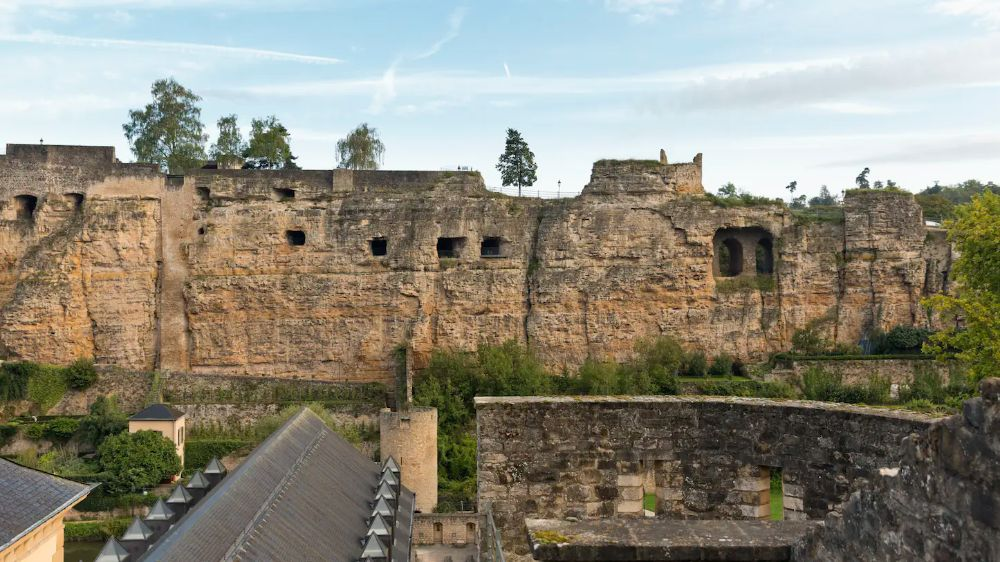
The Bock Casemates are the most extraordinary single attraction in Luxembourg City and one of the most remarkable underground military structures in Europe. They begin, as so much of Luxembourg's history does, with the rock: the Bock promontory, a dramatic finger of sandstone jutting out above the confluence of the Alzette and the Pétrusse rivers, which was chosen in 963 by Count Siegfried of Ardennes as the site for a fortified castle. It was this castle, Lucilinburhuc in the Latin of the medieval chronicles, that gave Luxembourg its name, and it is from this rock that the entire subsequent history of the city and the country grew.
The castle itself was demolished in 1875, when the Treaty of London required the complete demilitarisation of the fortress city. But what could not be demolished was what lay beneath it: a vast network of tunnels, galleries, storerooms, barracks and artillery emplacements carved directly into the sandstone rock over more than two centuries of military engineering, beginning in 1644 under Spanish rule and extended continuously by every subsequent occupying power including the French, the Austrians and the Prussians. At the peak of the fortress's military function in the eighteenth and nineteenth centuries, the casemates extended for approximately 23 kilometres beneath the city and surrounding promontories, with a capacity to shelter up to 35,000 soldiers and their horses, artillery, workshops and food stores in complete security below ground.
Today, approximately one kilometre of the Bock Casemates is open to the public, and the experience of walking through them is genuinely unlike anything else in Luxembourg. You descend through a series of narrow, low-ceilinged galleries cut directly through the sandstone, the rock still showing the marks of the tools that shaped it, passing chambers that served as bakeries, weapons stores, field hospitals and soldiers' quarters over the centuries. At intervals, openings in the rock face give sudden, dramatic views over the Alzette gorge far below: the red rooftops of the Grund district, the church tower of Saint-Jean-du-Grund, the green of the valley floor and the sheer rock faces rising on either side. These views alone are worth the modest admission price many times over.
The casemates are open from March to October and can be explored independently with a printed guide or with an audio guide available at the entrance. Allow at least an hour for the visit, and wear comfortable shoes: the surfaces are uneven and some sections are quite low. The exit delivers you to a viewpoint on the edge of the Bock promontory with one of the finest panoramas of the lower city available from anywhere in Luxembourg.
Best time to visit the Bock Casemates: Arrive early in the morning, when the casemates are at their least crowded and the light in the gorge below is at its most dramatic. In July and August, queues can develop by mid-morning. The casemates maintain a constant temperature of approximately 10 to 14 degrees Celsius year-round regardless of the outdoor temperature, so bring a light jacket even on warm days.
2. The UNESCO Old Town and the Chemin de la Corniche
The Old Town of Luxembourg City was inscribed on the UNESCO World Heritage List in 1994 in recognition of its outstanding universal value as a historic fortified city, specifically for the remarkable integration of its natural landscape, its medieval urban fabric and its extraordinary system of fortifications. The designation covers the city quarters of the old fortress and the deep river valleys that surround it, and walking through it is an experience that combines urban history, military architecture and natural drama in a way that few places in Europe can match.
At the heart of the Old Town is the Place de la Constitution, a wide terrace at the edge of the Pétrusse valley that offers one of the most arresting views in the city: the gilded Gëlle Fra monument, the Golden Lady, a memorial to Luxembourg's fallen of the First and Second World Wars, stands at the edge of the terrace against a backdrop of the deep green valley below, the railway viaduct spanning the gorge in the middle distance, and the spires of the lower city beyond. The view from here at dusk, when the light is low and the valley is filled with shadow, is one that stays with you.
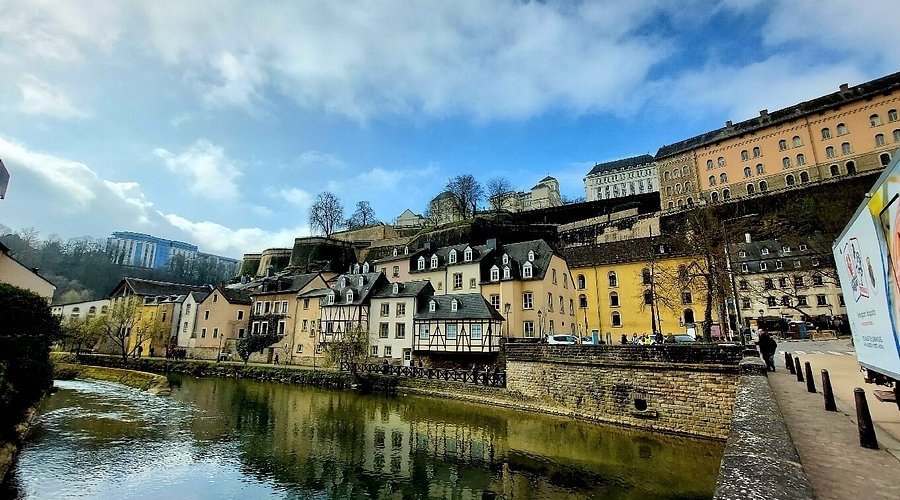
From the Place de la Constitution, the Chemin de la Corniche runs eastward along the top of the ancient ramparts, a narrow pedestrian walkway that winds between the old fortification walls and the edge of the cliff above the Alzette gorge. This is the viewpoint that has earned its reputation as the most beautiful balcony in Europe, and it is not an exaggeration: for the entire length of the walk, you look down into the Grund district far below, with its cluster of medieval buildings, its church, its gardens and its narrow streets crowded between the sheer rock faces of the gorge, and across to the opposite cliffs where the towers of the Pfaffenthal district cling to the hillside. The walk takes approximately twenty minutes at a leisurely pace and is free.
The Old Town also contains the Place Guillaume II, the main square of the city, named after the King of the Netherlands and Grand Duke of Luxembourg who ruled in the nineteenth century. The square is the venue for the city's twice-weekly market, held on Wednesday and Saturday mornings, where local producers sell vegetables, cheese, flowers, bread and seasonal produce from the surrounding Luxembourg countryside. Around the square are the city's best cafes and restaurants, and the Hotel de Ville, the nineteenth-century town hall that provides an elegant backdrop to the daily life of the square.
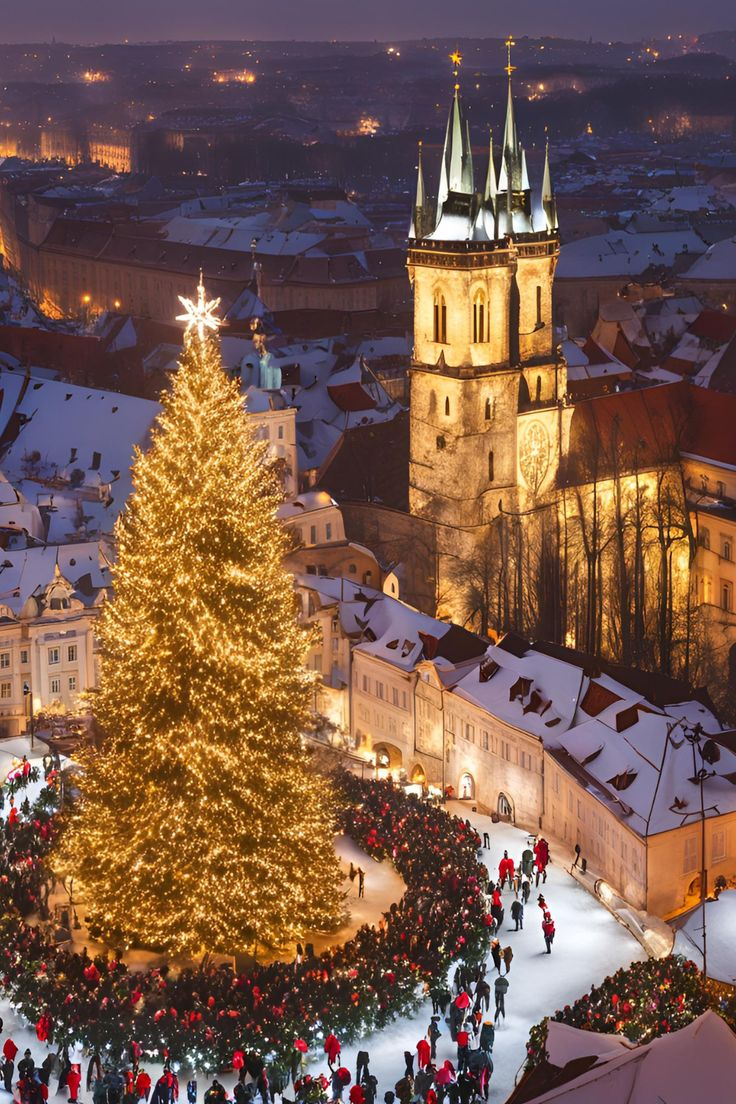
Best time to visit Luxembourg: May and June are ideal: the weather is warm and clear, the city is not yet at its summer peak, and the surrounding countryside, the Moselle valley, the Ardennes and the Mullerthal region, is at its most beautiful. September and October are equally fine, with the added attraction of the Luxembourg Moselle wine harvest. December is exceptional for the Christmas market in the Place d'Armes, one of the finest in the Benelux region, with traditional crafts, mulled wine and a genuinely festive atmosphere in a setting of great historic beauty.
3. The Grand Ducal Palace and Notre-Dame Cathedral
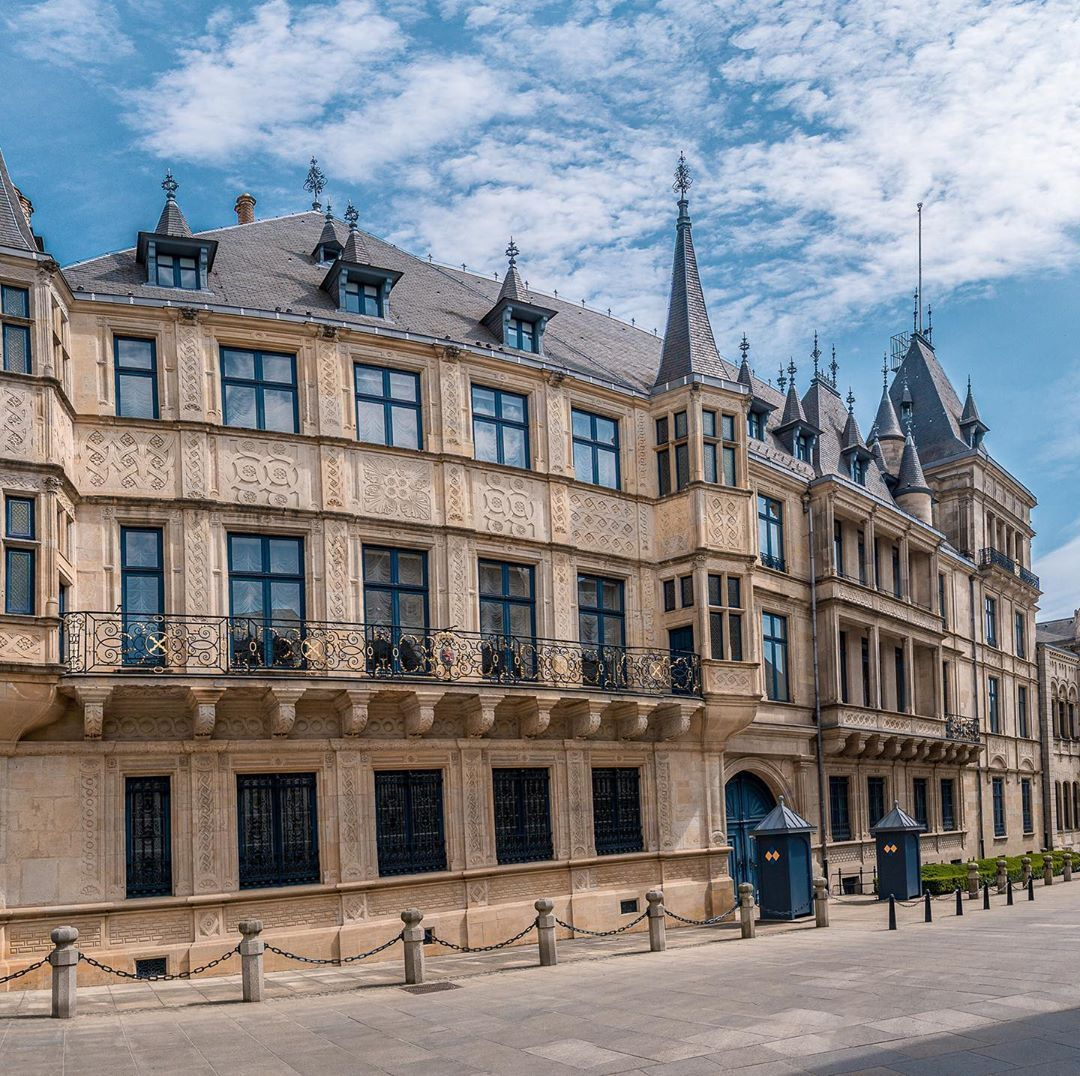
Two buildings in the Old Town stand out as the most historically and architecturally significant of the many fine structures that line its streets, and both are within easy walking distance of the central squares. The Grand Ducal Palace, the official city residence of the Grand Duke of Luxembourg, occupies a prominent position in the Rue du Marché-aux-Herbes, its distinctive facade a striking combination of Gothic windows, Renaissance ornamentation and Moorish-influenced decorative tilework. The palace was built on the site of the medieval town hall in the sixteenth century and has served as the seat of the ruling house of Luxembourg ever since, accumulating extensions and renovations across four centuries without ever losing its character of intimate grandeur.
The palace is open for guided tours during the summer months when the Grand Ducal family is not in residence, and the tours offer access to a series of state rooms of considerable splendour, including the Throne Room, the State Dining Room and the Chamber of Deputies, the historic seat of the Luxembourg parliament that occupied the building until the construction of a dedicated parliamentary complex in 1994. Outside the palace, a changing of the guard ceremony takes place regularly, smaller in scale than its London counterpart but no less formally precise.
The Notre-Dame Cathedral, a short walk away, is Luxembourg City's only cathedral and one of the finest examples of Gothic architecture in the Benelux region. Built by the Jesuits between 1613 and 1621 and consecrated as a cathedral in 1870, it combines the structural language of late Gothic with early Renaissance decorative details in a combination that is more harmonious than it might sound, and the interior, with its soaring nave, its remarkable stained glass and its crypt containing the tombs of several members of the Grand Ducal family, is genuinely impressive. The organ, one of the finest in Luxembourg, is heard to best advantage during the occasional free concerts held in the cathedral.
Common tourist mistakes in Luxembourg: Spending only a few hours in the city on the way between Brussels and Strasbourg without allowing a full day for proper exploration. Luxembourg City is small but it is not thin: it has layers of history, architecture and experience that a rushed visit entirely misses. Another mistake: overlooking the lower city and the Grund district entirely in favour of the upper Old Town. The view from the Chemin de la Corniche is magnificent, but the experience of being in the gorge below, looking up at the ramparts from street level, is entirely different and equally memorable. Make time for both.
4. The Grund: Life in the Gorge Beneath the Ramparts
To understand Luxembourg City fully, you need to descend from the heights of the Old Town into the Grund, the ancient district that occupies the floor of the Alzette gorge beneath the fortifications. The descent itself is part of the experience: a steep path or a series of steps that wind down from the level of the upper city through layers of rock and ancient masonry, dropping perhaps thirty metres in the space of a few hundred steps, until you arrive at street level in a neighbourhood that feels entirely disconnected from the modern city above.
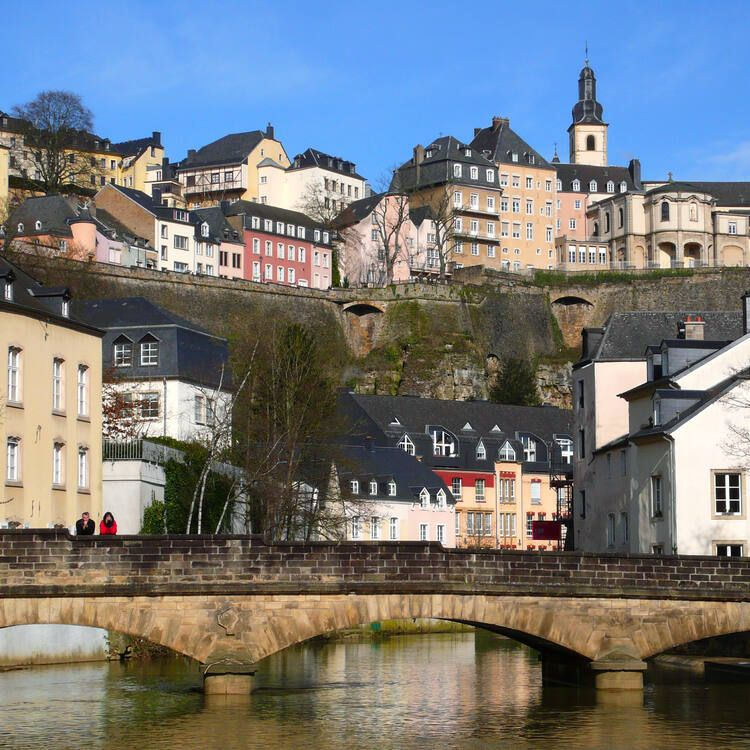
The Grund is one of the oldest continuously inhabited neighbourhoods in Luxembourg, its narrow streets and medieval buildings pressed between the sheer sandstone cliffs on one side and the clear waters of the Alzette on the other. The Alzette here is a small, pretty river, nothing like the scale that the dramatic gorge walls suggest, and it flows past the old mill buildings and the weeping willows of the valley floor with an unhurried serenity that is completely at odds with the traffic and the bureaucratic energy of the European capital twenty metres above. The Grund is now one of the city's most fashionable neighbourhoods, with excellent restaurants, wine bars and cafe terraces that fill with a young, multilingual crowd on warm evenings.
The church of Saint-Jean-du-Grund, a seventeenth-century Baroque building whose tower is one of the most recognisable silhouettes in the lower city, stands at the heart of the district and is worth visiting for its interior, which retains original wooden furnishings and a Black Madonna venerated by Luxembourg Catholics for centuries. The Abbey of Neumünster, a former Benedictine abbey whose long cloister is one of the most beautiful enclosed spaces in the city, now functions as a cultural centre hosting concerts, exhibitions and events of every kind, and its courtyard cafe is one of the most pleasant places to sit in Luxembourg on a warm day.
From the Grund, a lift and a series of panoramic elevators connect the lower city to the upper levels, and the short walk along the valley floor before returning to the heights gives the most complete possible appreciation of the extraordinary physical geography that makes Luxembourg City unlike any other European capital.
5. Vianden Castle: A Fairy-Tale Day Trip from the Capital
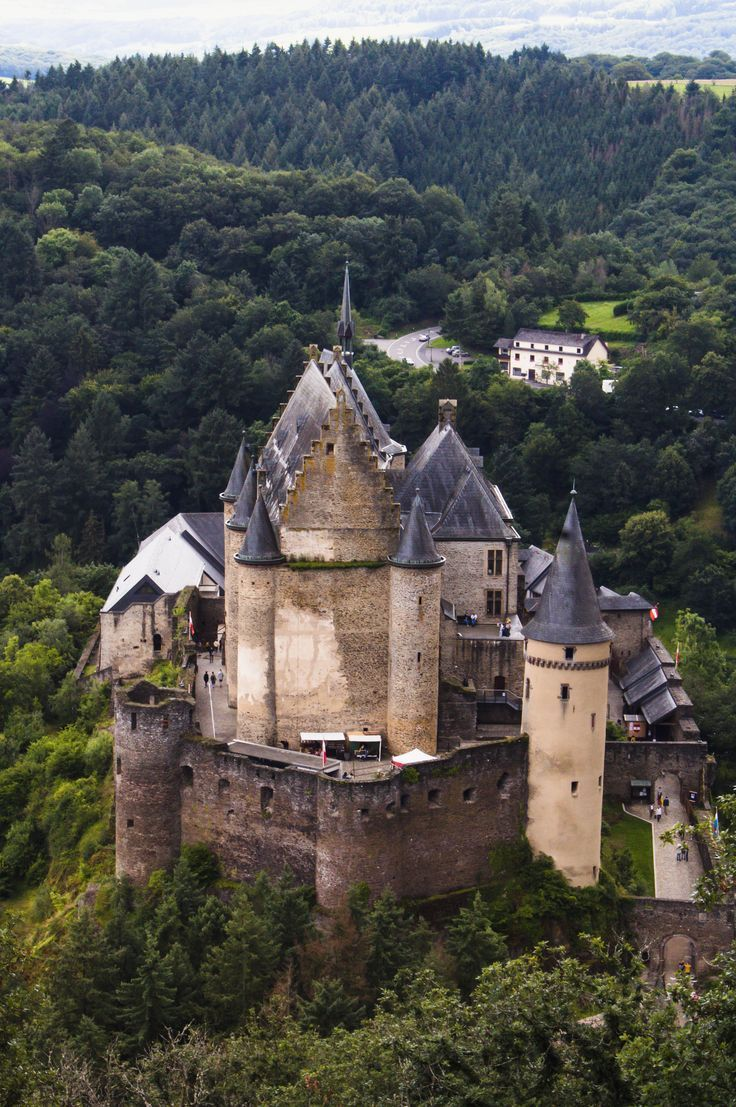
If Luxembourg City is the jewel of the Grand Duchy, then Vianden is its fairy tale. The small town of Vianden, approximately 40 kilometres north of Luxembourg City in the forested valley of the Our river, is dominated by one of the most beautiful and best-preserved medieval castles in the whole of western Europe: a vast complex of towers, great halls and fortified walls that rises from a rocky outcrop above the town with an authority and a visual drama that makes it immediately clear why this was one of the most powerful noble houses in the medieval Low Countries.
The Vianden Castle dates in its earliest parts to the eleventh century, though the building we see today is largely the result of construction and expansion between the eleventh and fourteenth centuries, when the Counts of Vianden were among the most powerful and most wealthy nobles in the region. The castle fell into disrepair in the eighteenth and nineteenth centuries and was in a state of significant ruin by the time serious restoration work began in 1977. Today, after decades of careful and meticulous restoration, it has been returned to a state that gives an extraordinary impression of what a great medieval nobleman's residence actually looked like and felt like: the vast banqueting hall, the Byzantine gallery, the Romanesque chapel and the connecting towers and galleries all restored with a sensitivity and a scholarly rigour that makes Vianden one of the finest medieval castle visits in the Benelux region.
The town below the castle is equally charming: a perfectly preserved medieval small town with a main street of slate-roofed houses, a Trinitarians' church, a small local history museum and a series of cafes and restaurants that serve the regional cuisine of the Our valley, including the Vianden ham, a locally smoked and cured specialty that has been produced in this area for centuries. A chairlift runs from the lower town to a viewpoint above the castle from which the panorama of the Our valley, the castle, the town and the surrounding forest hills is one of the finest in the Grand Duchy.
Victor Hugo, whose connections with Luxembourg were significant, spent several months in Vianden in 1871 during his exile from France. The house where he stayed, the Victor Hugo Museum, is open to visitors and provides an interesting counterpoint to the medieval architecture of the castle: the nineteenth-century writer's relationship with this medieval landscape, which he described with eloquence in his journals, adds a literary dimension to a town that is already rich in historical resonance.
How to get from Luxembourg City to Vianden: The most comfortable option for a day trip is a private transfer or a hired car, which takes approximately 50 minutes from Luxembourg City and allows you the freedom to arrive at your own time and explore the surrounding countryside. Public buses connect Luxembourg City to Vianden with a change at Diekirch, and the total journey time is approximately 1 hour 45 minutes. Allow at least half a day for the castle visit and the town, and plan to have lunch in one of the riverside restaurants before returning to the capital.
6. Luxembourg Food, Wine and the Art of Eating Well in a Small Country
Luxembourg has a culinary tradition that is both deeply rooted in its position between France, Germany and Belgium and genuinely its own, producing a distinctive range of dishes, wines and specialities that reward the curious visitor considerably more than the country's modest international profile in the food world might suggest. The cuisine reflects the confluence of cultural influences that has shaped Luxembourg throughout its history: French refinement in the sauces and the presentation, German heartiness in the portions and the preference for pork and game, Belgian creativity in the patisserie and the chocolate, and a local sensibility expressed in the particular use of the Moselle river's wines and the seasonal produce of the surrounding countryside.
The most emblematic of all Luxembourgish dishes is Judd mat Gaardebounen, smoked collar of pork with broad beans: a simple, deeply satisfying preparation of smoked, cured pork neck cooked slowly with broad beans, potatoes, onions and herbs until the meat is yielding and the beans have absorbed the smoky richness of the cooking liquid. It is considered the national dish of Luxembourg and appears on the menu of almost every traditional restaurant in the country, particularly in the spring and early summer when the broad beans are at their best. Alongside it, the standard accompaniment is a glass of Moselle Riesling or a Rivaner, the light, off-dry white wine made from the Muller-Thurgau grape that is the most widely consumed wine in Luxembourg and pairs naturally with the smoked pork flavours of the dish.
The Luxembourg Moselle, the short stretch of the Moselle river that forms the border between Luxembourg and Germany between Schengen and Wasserbillig, produces wines of genuine quality that are much less known internationally than their German neighbours across the river, and consequently much better value. The Rieslings in particular can be excellent: mineral and precise, with the characteristic slate-and-citrus character of Moselle Riesling at its best. The wine route along the Luxembourg Moselle, with its small family domaines and its riverside villages, makes an excellent half-day excursion from Luxembourg City and the wines can be bought directly from the producers at prices that are considerably lower than comparable German bottlings.
For food shopping and the full picture of Luxembourg's gastronomic culture, the Marché de la Place Guillaume II on Wednesday and Saturday mornings is the essential stop: local cheesemakers, artisan bakers, charcuterie producers, flower growers and seasonal vegetable farmers from across the Grand Duchy gather here in a market that is genuinely local in character rather than tourist-oriented, and the quality and the variety of what is on offer consistently surprises visitors who arrive expecting a small country's market to be proportionally limited.
Luxembourg teaches you something that the great European capitals with their overwhelming scale and their relentless pace rarely allow time for: that sometimes the finest version of a thing is also the smallest version. A country of 660,000 people, a city that you can walk across in forty minutes, an Old Town that UNESCO thought worthy of the same designation as Venice and Rome. Luxembourg does not ask you to be impressed. It simply is what it is, completely and without apology, and that turns out to be rather more than enough.
Getting to Luxembourg: Arriving and Starting the Right Way
Luxembourg Airport (LUX), also known as Luxembourg Findel Airport, is located approximately 6 kilometres east of the city centre, making it one of the closest major airports to a European capital city. The most comfortable and direct way to reach your hotel is a private airport transfer, which takes between 10 and 15 minutes depending on traffic and delivers you door to door without the need for any luggage management on public transport.
One fact that surprises almost every first-time visitor to Luxembourg: since March 2020, all public transport in Luxembourg has been completely free, making it the first country in the world to abolish fares on its entire national public transport network. Buses, trams and trains across the Grand Duchy cost nothing to use, which makes exploring the country independently an extremely economical proposition once you have reached the city centre. Bus line 16 connects the airport to the central train station (Gare) in approximately 30 minutes and is free of charge.
Luxembourg is well positioned as a base for exploring the surrounding region: Brussels is approximately two hours by direct train, Paris is approximately two and a half hours, and the German cities of Trier and Cologne are reachable within one hour and two and a half hours respectively. The Grand Duchy itself is small enough to explore comprehensively in three to four days, with a rental car providing the greatest flexibility for reaching the Ardennes, the Moselle valley and the Mullerthal hiking region.
Tips for making the most of Luxembourg: Begin your visit with the Chemin de la Corniche in the early morning before the tour groups arrive, when the light on the Grund below and the ramparts above is at its most atmospheric. Descend to the Grund for breakfast or a coffee at one of the valley-floor cafes. Spend the middle of the day at the Bock Casemates and the Old Town. In the late afternoon, take the lift down to the Pétrusse valley for a walk along the river beneath the old viaduct. In the evening, return to the Grund for dinner: the riverside restaurants here offer some of the best food and most pleasant settings in the city, and the lack of tourist pressure on this neighbourhood means the quality is consistently high and the prices are considerably lower than the Old Town equivalents.
Comments
No comments yet. Be the first to share your thoughts!
Leave a Comment
Your comment will appear after moderation.