
 Michelle
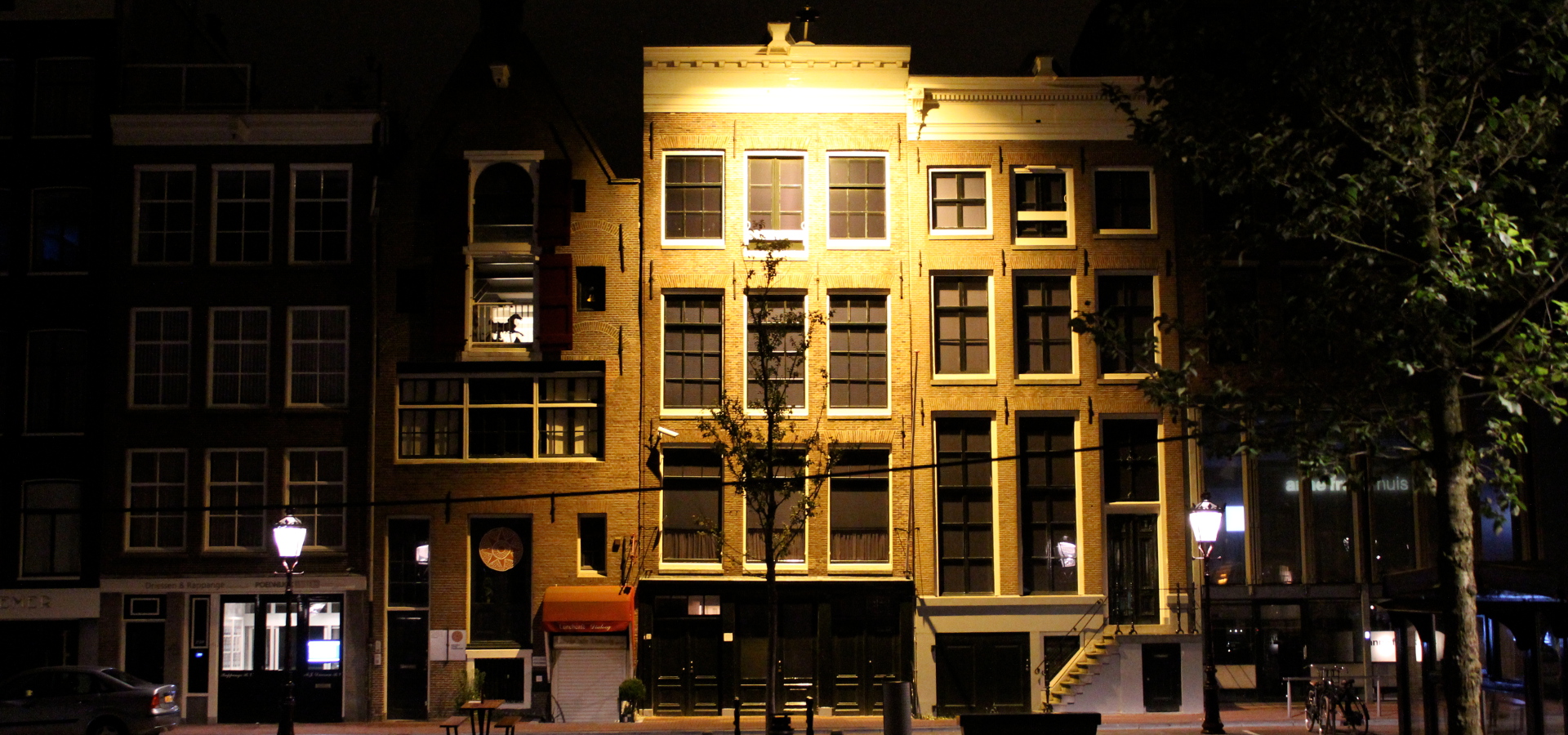
 There are places that require no justification, no context, no travel writer to explain why you should go there. Places where the weight of what happened within those walls speaks so clearly and so directly to every human being who enters that the ordinary vocabulary of tourism simply falls away. The Anne Frank House in Amsterdam is one of those places. At number 263 on the Prinsengracht canal, in the narrow brick building that from the outside looks like any other seventeenth-century Amsterdam merchant's house, a thirteen-year-old girl began writing a diary in July 1942. Two years and one month later, she was arrested. She died in Bergen-Belsen concentration camp in February or March of 1945, weeks before the liberation. She was fifteen years old. Her diary survived. The house survived. You should go there.
Why the Anne Frank House Is Unlike Any Other Museum in the World
The Anne Frank House is not, in the conventional sense, a museum. There are no reconstructed period interiors. There are no theatrical displays or dramatic lighting effects designed to evoke an emotional response. What there is, is the actual place: the actual rooms, the actual floors, the actual walls. The rooms of the Achterhuis, the secret annex behind the main house where Anne Frank, her parents Otto and Edith, her sister Margot, the van Pels family and the dentist Fritz Pfeffer hid for two years and twenty-five days, are presented essentially as they were found after the war. The furniture was removed when the eight people in hiding were arrested in August 1944 and was never returned. What remains is empty space, bare floorboards, walls that still bear the pencil marks where Otto Frank recorded his daughters' heights. And that emptiness is more eloquent than any reconstruction could ever be.
More than one and a half million people visit the Anne Frank House every year, making it one of the most visited museums in the Netherlands and one of the most visited places of remembrance in Europe. And yet, inside, there is an atmosphere of concentrated quiet that is remarkable given the numbers. People lower their voices without being asked. They move slowly. They stand for a long time in front of things: in front of the bookcase that swung open on a hinge to reveal the entrance to the annex, in front of the window through which Anne Frank looked at the chestnut tree she wrote about in her diary, in front of the photographs of film stars she cut from magazines and stuck to the wall of her room, which are still there. The combination of the ordinary and the extraordinary, the teenage girl's enthusiasm for Greta Garbo and the knowledge of what awaited her, is almost unbearable in its force.
Read the diary before you visit. This is the single most important piece of advice for anyone planning a visit to the Anne Frank House. The diary, officially titled The Diary of a Young Girl, is one of the most widely read books in the world, and reading it before you go transforms the visit entirely. Instead of moving through rooms that housed anonymous victims, you walk through the world of a person you know: her voice, her humour, her frustrations, her fears, her extraordinary capacity for hope. The visit becomes a different kind of encounter altogether.
1. The Story: Who Was Anne Frank and What Happened in This House
Annelies Marie Frank was born in Frankfurt, Germany, on 12 June 1929. Her family was Jewish and her father, Otto Frank, a businessman, moved the family to Amsterdam in 1933 as the Nazi party tightened its grip on Germany and Jewish life became increasingly dangerous. In Amsterdam, Otto established a spice and pectin trading company, and the family settled into a comfortable middle-class life in the Merwedeplein neighbourhood. Anne attended the Montessori school. She was, by all accounts, a spirited, sociable and intellectually precocious child with a gift for writing and a sharp, ironic wit that surfaces throughout her diary.
In May 1940, Germany invaded and occupied the Netherlands. The Nuremberg Laws, already applied in Germany, were extended to the occupied territories. Jewish children were barred from attending school with non-Jewish children. Jews were required to wear the yellow Star of David at all times. Jewish businesses were confiscated. The restrictions multiplied throughout 1941 and into 1942 until, in July 1942, the Frank family received a call-up notice for Margot, Anne's older sister, to report for so-called labour in Germany. Otto Frank had spent months quietly preparing a hiding place in the annex above the warehouse of his business premises at 263 Prinsengracht. Within days of the notice, the family moved in. Four of Otto's most trusted employees, Johannes Kleiman, Victor Kugler, Miep Gies and Bep Voskuijl, knew about the hiding place and supplied the eight people in hiding with food, books, news from the outside world, and the daily human contact that kept them sane.
For two years and twenty-five days, eight people lived in the rooms behind the swinging bookcase: Otto and Edith Frank, their daughters Margot and Anne, Hermann and Auguste van Pels and their son Peter, and Fritz Pfeffer, a dentist. They could not make noise during business hours. They could not look out of the windows that faced the street. They could not go outside. They listened to the radio for news of the Allied advance and prayed it would come in time. On 4 August 1944, the Gestapo raided the annex. All eight people in hiding were arrested. The helpers who had sustained them were also arrested: Kleiman and Kugler were sent to forced labour camps; Miep Gies and Bep Voskuijl were released. After the arrest, Miep Gies returned to the annex and found Anne's diary and papers scattered on the floor. She kept them without reading them, intending to return them to Anne after the war. She did not know, then, that Anne would not survive.
Anne Frank died of typhus in Bergen-Belsen in late February or early March 1945. The camp was liberated by British forces on 15 April 1945. Anne was fifteen years old. Otto Frank was the only one of the eight people who had hidden in the annex to survive the war. Miep Gies gave him Anne's diary and papers when he returned to Amsterdam. He spent several years trying to decide what to do with them. The diary was first published in the Netherlands in 1947 under the title Het Achterhuis, or The Secret Annex. It has since been translated into more than 70 languages and has sold more than thirty million copies worldwide.
2. What You See Inside: the Hidden Annex and the Exhibition
The visit to the Anne Frank House follows a fixed route through the building, beginning in the front house and moving gradually towards and then through the hidden annex at the rear. The route is self-guided and takes approximately one to one and a half hours. An audio guide is available in multiple languages and is narrated in part by Otto Frank himself, using recordings made before his death in 1980. The visit is also supported by the museum's official app, which can be downloaded before arrival and provides additional depth on each space.
The front house and the business premises
You enter through the former warehouse and ground-floor offices of Otto Frank's business on the Prinsengracht. The exhibition begins here with historical context about the rise of Nazism in Germany, the German occupation of the Netherlands, and the escalating persecution of Jewish people in Amsterdam between 1940 and 1942. Original documents, photographs and film footage are presented with careful, unflinching attention to the historical record. By the time you reach the swinging bookcase, you understand with full clarity the world in which the decision to go into hiding was made, and why it was the only option left.
The bookcase and the entrance to the annex
The swinging bookcase that concealed the entrance to the hidden annex is one of the most famous objects in the world. Built by the carpenter Johan Voskuijl, Bep's father, it was hinged so that the entire unit swung open on a pivot, revealing a low doorway and a steep staircase beyond. The bookcase is preserved exactly as it was. You stoop slightly to pass through the doorway, just as the eight people in hiding did every day for more than two years, and then you are in the annex.
The rooms of the annex
The rooms of the Achterhuis are presented empty, in accordance with the wishes of Otto Frank, who felt that no reconstruction could convey what the space meant and that the emptiness itself was more honest and more powerful than any furnished version. The rooms are small: a kitchen and living room on the second floor, the private room of Otto and Edith Frank and later the room shared by Anne and Fritz Pfeffer on the floor above, and the attic space where Peter van Pels had his room and where Anne often went to look out at the sky through the skylight. The floor plan is exactly as Anne described it in her diary, and reading those passages before you visit and then standing in the actual rooms is one of those experiences that makes time collapse in a way that very few things in travel can manage.
On the wall of Anne's room, the photographs she cut from film magazines and stuck to the wallpaper are still there: Greta Garbo, Ginger Rogers, Ray Milland, Heinz Rühmann. She wrote in her diary that she wanted to be a writer and a journalist. The photographs, the pencil height marks on the wall of Otto's room, the map with the pins that Otto used to track the Allied advance: these small physical details, the traces of ordinary life lived in extraordinary circumstances, are what transforms the visit from an exercise in historical learning into something closer to an encounter with the people themselves.
Common mistakes visitors make: Trying to visit without a pre-booked ticket, which almost always results in not being able to enter at all. Rushing the visit: the Anne Frank House is not a place to move through quickly. Visiting with young children who are not yet ready to engage with this subject matter. Not using the audio guide, which provides essential context that the rooms alone cannot give. And perhaps most significantly, not allowing time to simply stand in the rooms and absorb the silence, which is where the real force of the experience lies.
3. How to Book Tickets and When to Visit
Booking tickets for the Anne Frank House is not merely advisable: it is effectively mandatory. The museum has limited capacity and timed-entry slots, and the demand far exceeds the supply throughout the year. Tickets are sold exclusively through the official website at annefrank.org and are released approximately two months in advance. They sell out very quickly, particularly for weekend slots and for all dates between March and October. If you are planning a visit to Amsterdam, booking your Anne Frank House ticket should be the very first thing you do after booking your accommodation.
A very small number of walk-in tickets are released on the day of the visit, but these are extremely limited and are typically claimed within the first few minutes of availability early in the morning. Travelling to Amsterdam with the intention of simply turning up at the Anne Frank House and joining the queue is a gamble that regularly does not pay off, particularly during the tourist season. Do not take the risk. Book online, book early, and confirm your booking as soon as it is made.
The best times to visit, in terms of crowd levels within the museum, are early in the morning when the museum opens, or in the evening during the extended opening hours that operate on certain days of the week. Even at busier times, however, the atmosphere inside the building tends to be quiet and contemplative: the nature of the visit seems to impose its own discipline on almost everyone who enters.
In terms of season, the Anne Frank House is open year-round, and winter visits have a particular quality: Amsterdam in November, December and January is quieter, grayer and more intimate than in summer, and there is something fitting about approaching this story in cold, grey weather, the light low over the canals, the city reflective and unhurried. That said, the experience is profound at any time of year and in any weather, and should not be deferred on seasonal grounds.
4. The Jordaan: What to Do Before and After Your Visit
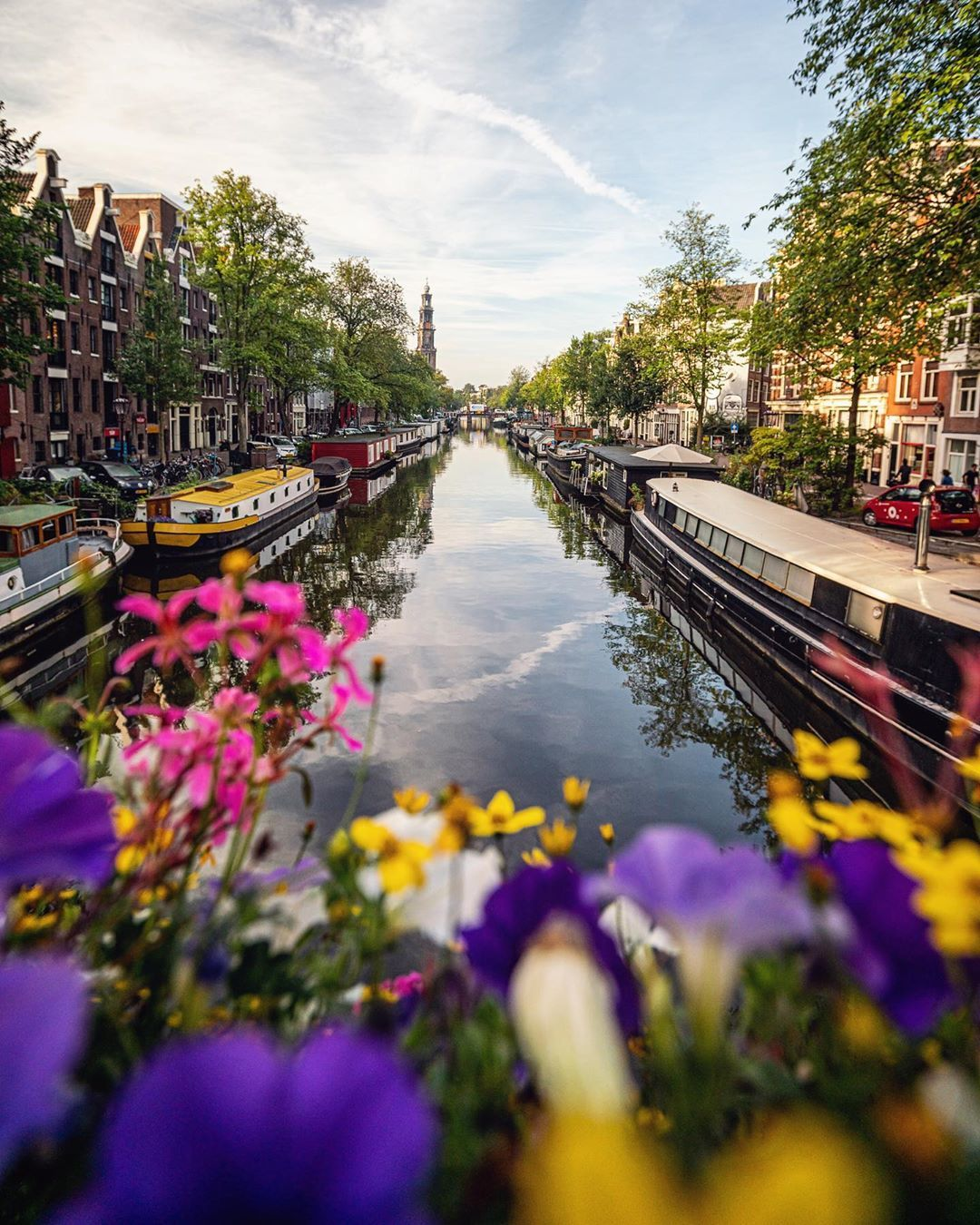
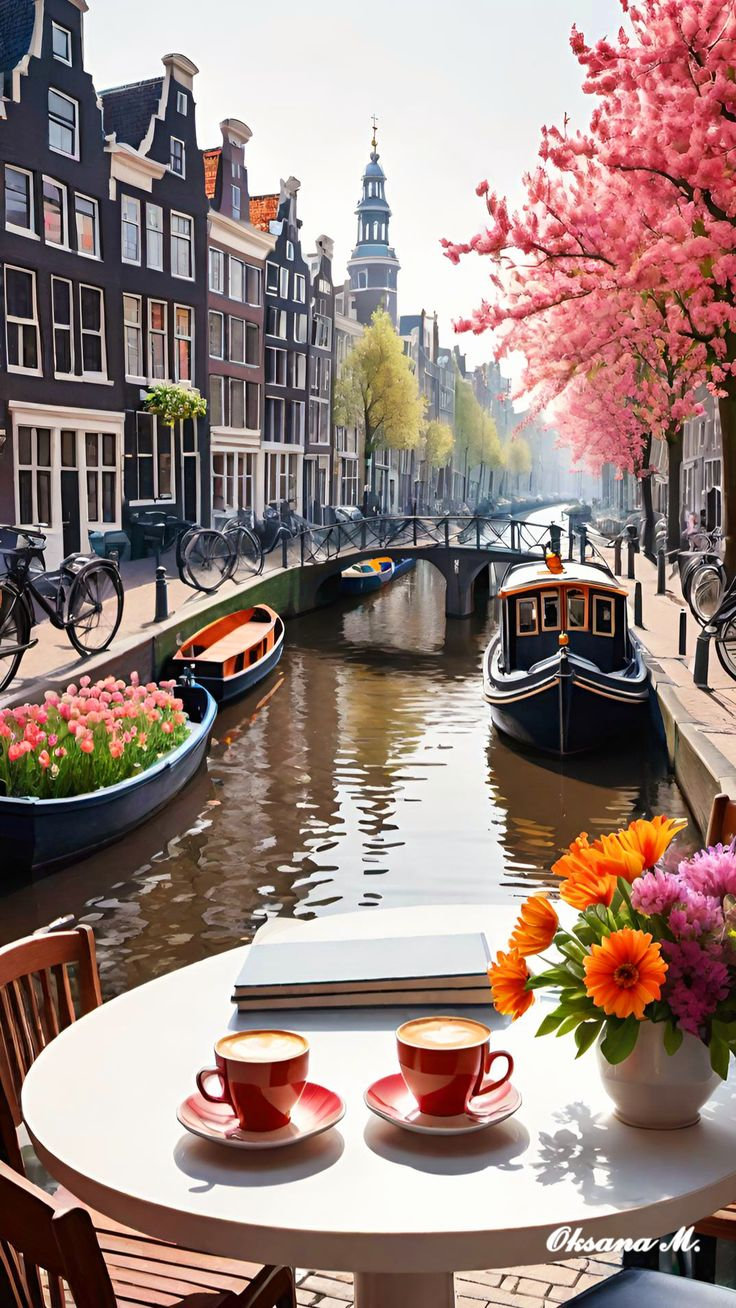
The Anne Frank House is located in the Jordaan, Amsterdam's most beautiful and historically resonant neighbourhood, and a visit to the museum should ideally be framed by several hours of walking in this extraordinary area. The Jordaan was built in the early seventeenth century as a working-class district on the edge of the city's famous canal belt, and over the centuries it has evolved into one of the most desirable and characterful urban neighbourhoods in northern Europe: a dense grid of narrow streets and small canals lined with seventeenth-century canal houses, independent shops, galleries, brown cafes and some of the finest small restaurants in the city.
Walking the streets of the Jordaan before your visit to the Anne Frank House gives you the full, living context of the neighbourhood as it was and as it still is. The house at 263 Prinsengracht is not a monument in isolation: it is a house on a canal, indistinguishable from its neighbours in its outward appearance, in the same street where people cycled and walked and bought bread in the summer of 1942 while eight people lived invisible and terrified behind a bookcase fifteen metres from the street. Walking those streets makes the hiding place feel more real, not less.
After your visit, the neighbourhood rewards slow, unstructured wandering. The Westerkerk, the great Protestant church directly behind the Anne Frank House, has a tower that can be climbed for fine views over the canal belt and is open during summer months. Anne Frank could hear its bells from the annex and wrote about them in her diary. The Noordermarkt, a short walk north, hosts an excellent organic food and antiques market on Saturdays and a farmers market on Mondays. The Nine Streets (De Negen Straatjes), the cross streets connecting the Prinsengracht, Keizersgracht and Herengracht canals just south of the Jordaan, contain the finest concentration of independent boutiques, vintage shops, bookshops and small cafes in the city.
Where to eat near the Anne Frank House
The Jordaan and the Nine Streets offer genuinely excellent food at a range of price points. For a traditional Dutch brown cafe experience, look for an old-fashioned bruin cafe with dark wood panelling, Heineken on tap and stamppot on the menu: these are the pubs of Amsterdam, warm and unhurried, and they are one of the most characterful institutions in Dutch city life. For something more contemporary, the neighbourhood has a growing number of excellent small restaurants serving modern European food at reasonable prices, particularly on the side streets away from the main canal fronts where tourist traffic is lower and local trade is higher.
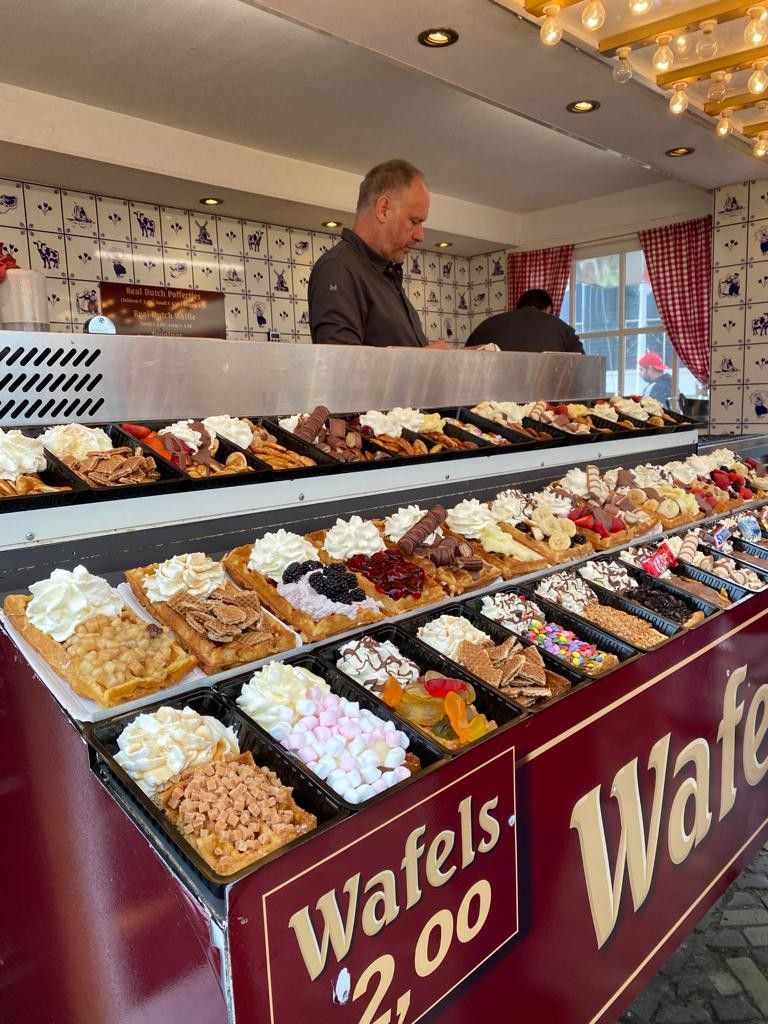
The Dutch food culture around the canal belt also offers some excellent street food: raw herring with onions and pickles from a harbour stall, stroopwafels (the thin caramel waffle sandwiches) still warm from the market, and bitterballen, the crispy fried meat-ragout balls that are the definitive Dutch bar snack, served with mustard and beer in every brown cafe in the city. None of these cost much. All of them are worth trying.
Getting around Amsterdam: Amsterdam is one of the world's great cycling cities, and renting a bicycle for a day or two is one of the most enjoyable ways to navigate the canal belt and the surrounding neighbourhoods. Rental shops are plentiful and prices are reasonable. Trams cover most of the central city and are the quickest public transport alternative. Walking is also entirely practical for the Jordaan, the Nine Streets and the main museum district, all of which are within comfortable distance of one another. Whatever you do, watch carefully for cyclists when crossing streets and never walk in the dedicated cycling lanes, which are a source of genuine frustration for Amsterdam's residents when visitors fail to respect them.
Getting to Amsterdam: Arriving and Getting to Your Hotel
Amsterdam Airport Schiphol (AMS) is one of Europe's busiest and best-connected international airports, located approximately 18 kilometres southwest of the city centre. The direct train service from Schiphol to Amsterdam Centraal station runs every few minutes throughout the day and night and takes approximately 17 minutes, making it one of the most efficient airport-to-city connections in Europe. A single ticket costs around five euros and the train stops at Amsterdam Centraal, from which the entire city is easily accessible by tram, metro, bicycle or on foot.
For the most comfortable arrival, particularly with luggage, late at night or early in the morning, or when travelling with children or in a group, a private airport transfer directly from Schiphol to your hotel is the most stress-free option. A private transfer takes between 25 and 40 minutes depending on traffic and your specific destination within the city, and the fixed price means there are no surprises on arrival. Amsterdam's canal belt and Jordaan neighbourhood have some restrictions on larger vehicles due to the narrow streets, so it is worth specifying your exact hotel address when booking to ensure your driver can get as close as possible.
The Anne Frank House is not a comfortable experience. It is not meant to be. It is a place that asks something of you: attention, humility, and a willingness to sit with difficulty. In return, it offers something that very few travel experiences can match: the sense that history is not abstract, that it happened to real people in real rooms, and that those people deserve to be remembered with the full particularity of their humanity rather than reduced to a statistic or a symbol. Go there. Take your time. Carry it with you.

Comments
No comments yet. Be the first to share your thoughts!
Leave a Comment
Your comment will appear after moderation.