 Michelle
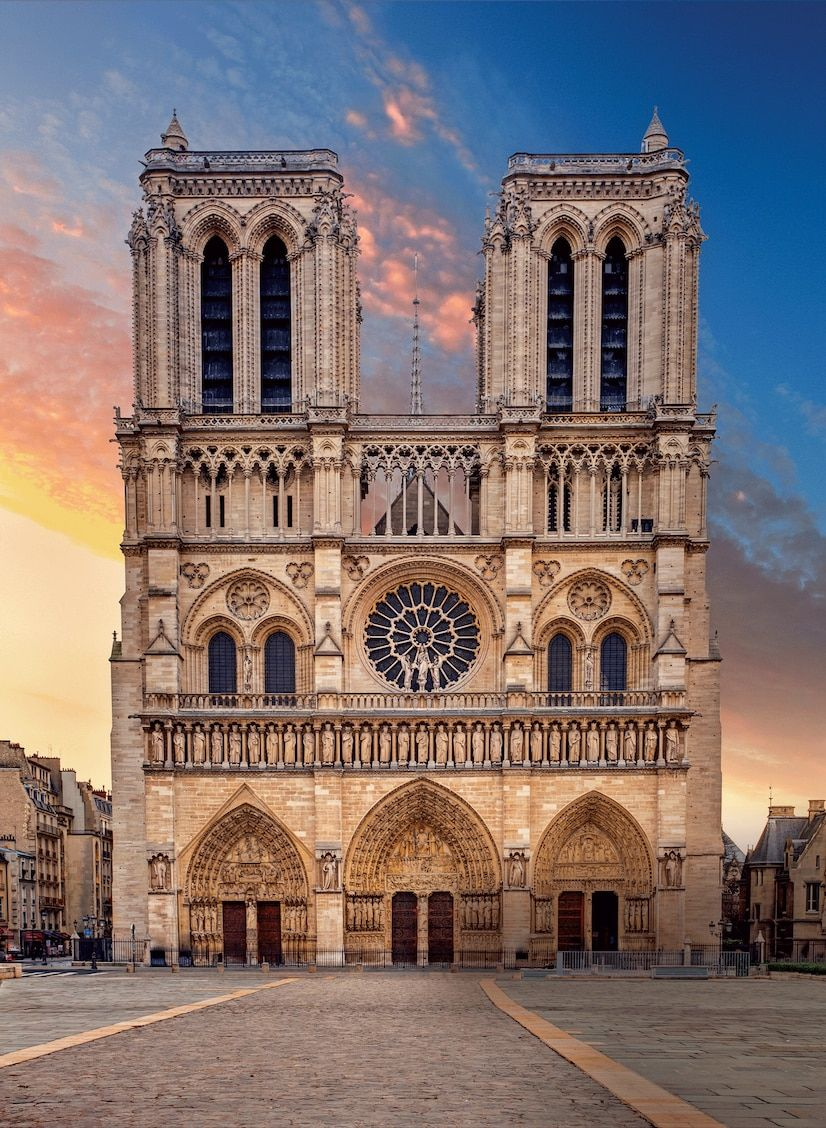
 You have seen the photographs a thousand times. The Eiffel Tower at twilight. The Mona Lisa behind her bulletproof glass. The rose windows of Notre-Dame catching the afternoon sun. The clock face of the Musée d'Orsay framing the Sacré-Cœur in the distance. The Arc de Triomphe standing at the centre of its star of avenues. Paris is the most photographed city in the world, and for good reason. But no photograph can prepare you for the experience of being there, of standing in the shadow of these monuments, of feeling the weight of history and the joy of the present simultaneously. This is not a checklist. It is an invitation. Here are five places where the heart of Paris beats loudest, and the secrets that most tourists never discover.
1. The Eiffel Tower: Iron Lady and the Rodin Museum
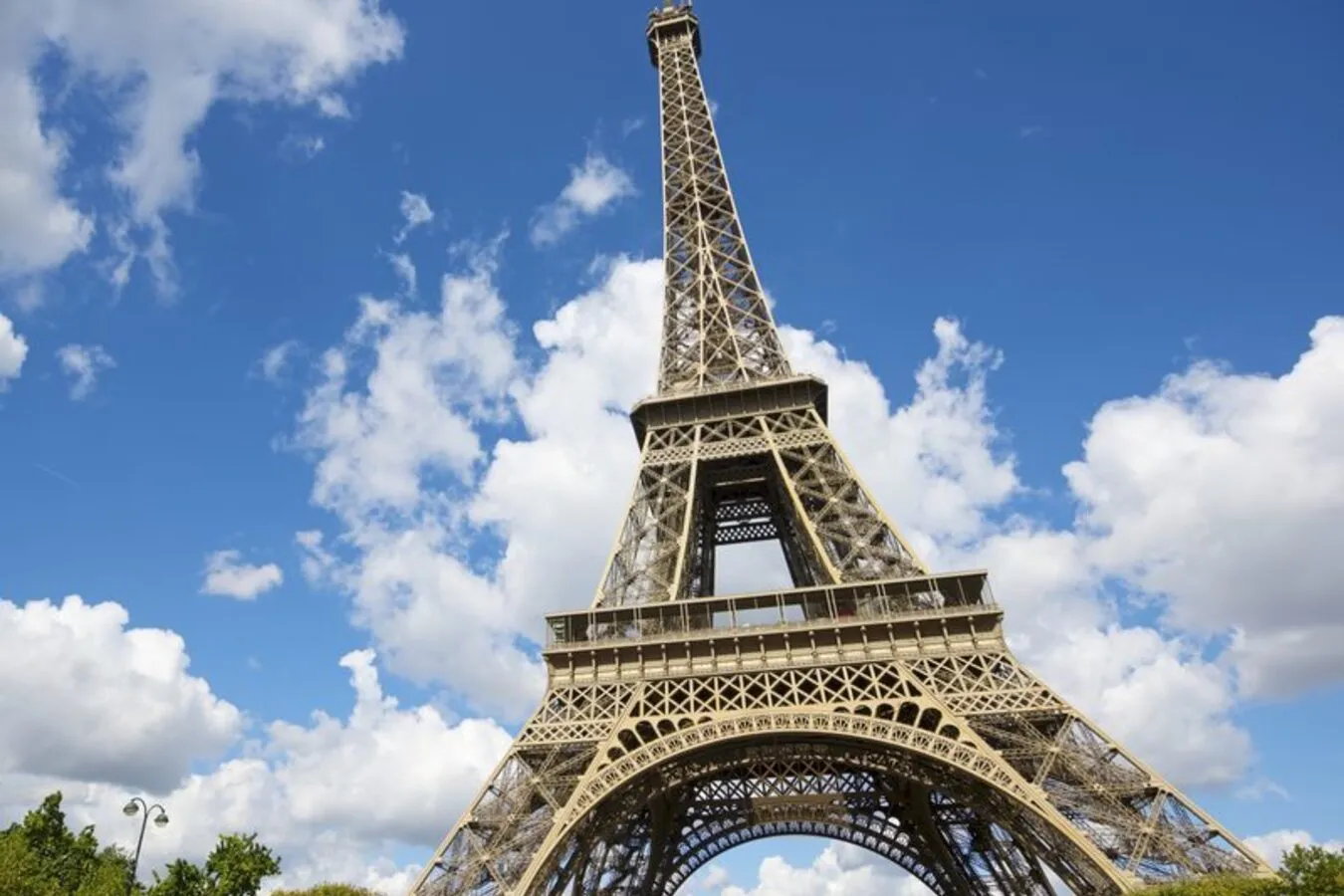
The Eiffel Tower was never meant to be permanent. It was built for the 1889 World's Fair, a temporary structure that was supposed to be dismantled after twenty years. Gustave Eiffel, the engineer who designed it, saved his tower by turning it into a scientific laboratory. He installed a meteorological station, a radio antenna, and a wind tunnel. The tower became useful, and usefulness, in the end, proved more persuasive than beauty. Today, it is the most visited paid monument in the world, and it is anything but temporary.
You should climb it, of course. The queues are legendary, but the experience is unforgettable. The best time to ascend is just before sunset. You watch the city darken from the second floor, the lights flickering on one by one. You reach the top as the sky turns from gold to violet to black, and the Eiffel Tower itself begins to sparkle. The sparkle lasts for five minutes at the start of every hour, a cascade of twenty thousand flashing lights that turns the Iron Lady into a constellation. It is a moment of pure, uncomplicated joy. Do not miss it.
But do not leave the area immediately. A fifteen-minute walk from the tower, at 77 Rue de Varenne, lies the Rodin Museum. Auguste Rodin, the father of modern sculpture, lived and worked in this hôtel particulier from 1908 until his death in 1917. The museum contains his greatest works: 'The Thinker', 'The Kiss', 'The Gates of Hell', 'The Burghers of Calais'. The garden is as beautiful as the interior, with sculptures placed among the roses and the trees as Rodin himself arranged them. The museum is smaller than the Louvre, quieter than the Orsay, and infinitely more intimate. You can see 'The Thinker' without a crowd. You can stand before 'The Kiss' and feel the marble warm in the afternoon light. The Rodin Museum is the secret that every Parisian knows and every tourist should discover. It is free on the first Sunday of each month, but the admission fee is modest even on other days.
The Secret of the Eiffel Tower Queue: The queues at the Eiffel Tower can be two hours long or more. The secret is to book your ticket online as far in advance as possible. Tickets are released approximately sixty days before the visit date. If you cannot get a ticket, the quietest times are the first elevator at 9:00 AM and the last elevator at 10:30 PM. The second floor is less crowded than the top floor, and the view from the second floor is arguably better, because you can still see the tower itself in the skyline.
2. The Louvre: A Palace of 35,000 Masterpieces
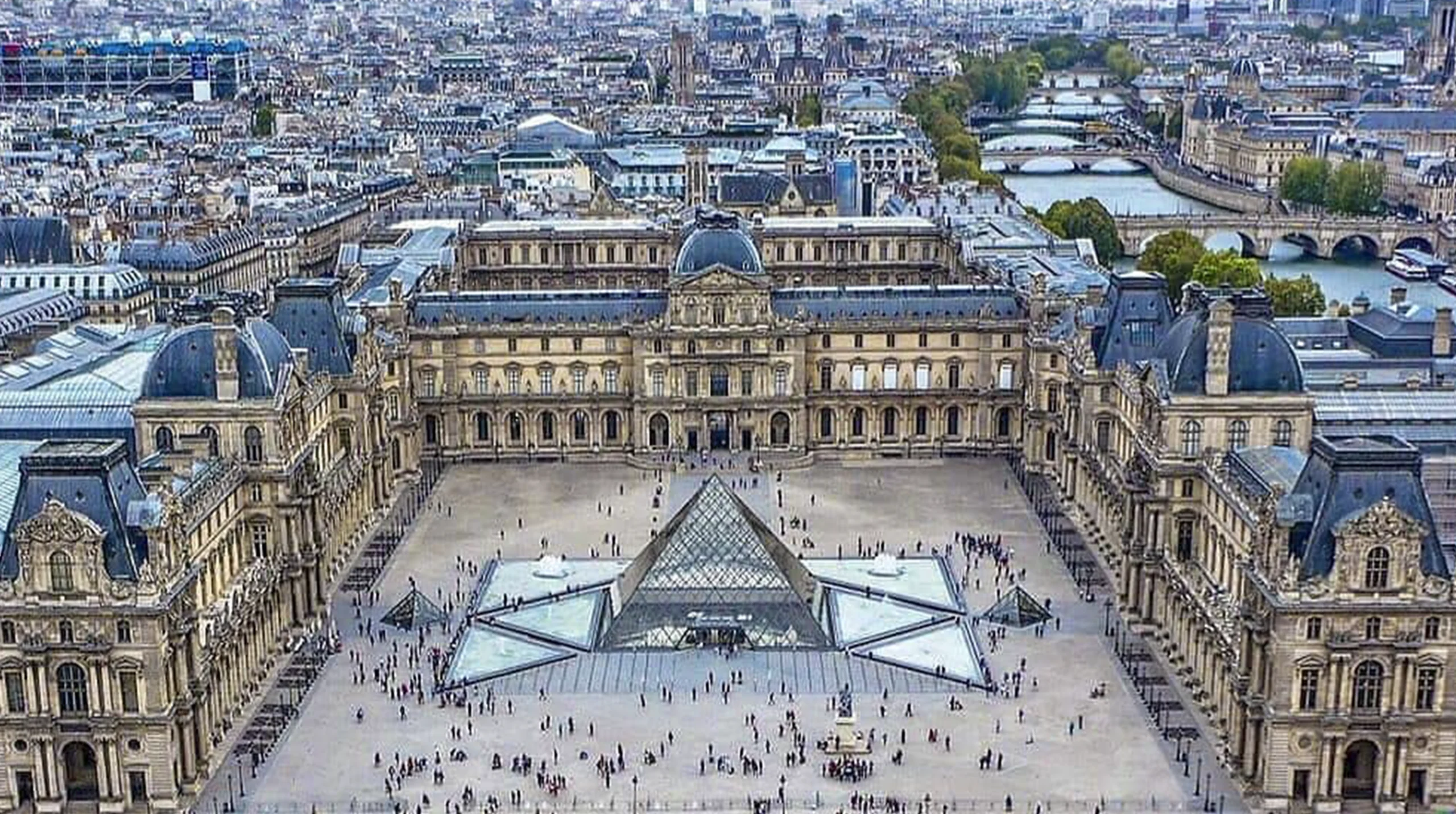
The Louvre is not a museum. It is a city within a city, a former royal palace that has been accumulating art and artefacts for more than five centuries. The collection is impossibly vast: 35,000 works on display, from the winged bulls of Assyria to the coronation robes of Napoleon, from the enigmatic smile of the Mona Lisa to the serene gaze of the Venus de Milo. You cannot see it all. No one can. The secret to enjoying the Louvre is to accept this limitation and choose a strategy.
The standard tourist strategy is to rush through the galleries in search of the three most famous works: the Mona Lisa, the Venus de Milo and the Winged Victory of Samothrace. This strategy takes about two hours and leaves you exhausted and unsatisfied. The better strategy is to choose one section of the museum and explore it in depth. The Egyptian antiquities collection is among the finest in the world, with mummies, sarcophagi and the stunning Seated Scribe. The Greek and Roman antiquities include the Venus de Milo and the Winged Victory, as well as countless other treasures. The French paintings gallery includes masterpieces by Delacroix, Géricault and David, including the monumental 'Coronation of Napoleon'. The Dutch and Flemish paintings gallery includes Vermeer's 'The Lacemaker' and Rembrandt's self-portraits. Choose one. Spend three hours there. Leave the rest for another visit.
The Louvre is open late on Wednesdays and Fridays, until 9:45 PM. The crowds thin out after 6:00 PM, and the evening light through the glass pyramid is magical. The museum also has an excellent café in the Richelieu wing, with outdoor seating overlooking the Cour Marly. The coffee is not cheap, but the view is free, and you will need a break.
The Code of the Mona Lisa: The Mona Lisa is smaller than you expect. It is also more crowded than you expect. The painting is behind bulletproof glass, and the queue to see it can stretch for a hundred metres. The secret is to visit the Louvre on a Wednesday or Friday evening, after 7:00 PM. The crowds are thinner, and you can approach the painting more closely. The other secret is to turn around. The wall opposite the Mona Lisa contains Veronese's 'The Wedding at Cana', a painting that is twenty times larger and equally magnificent. Most tourists never see it because they are facing the wrong direction.
3. Notre-Dame de Paris: The Phoenix Cathedral
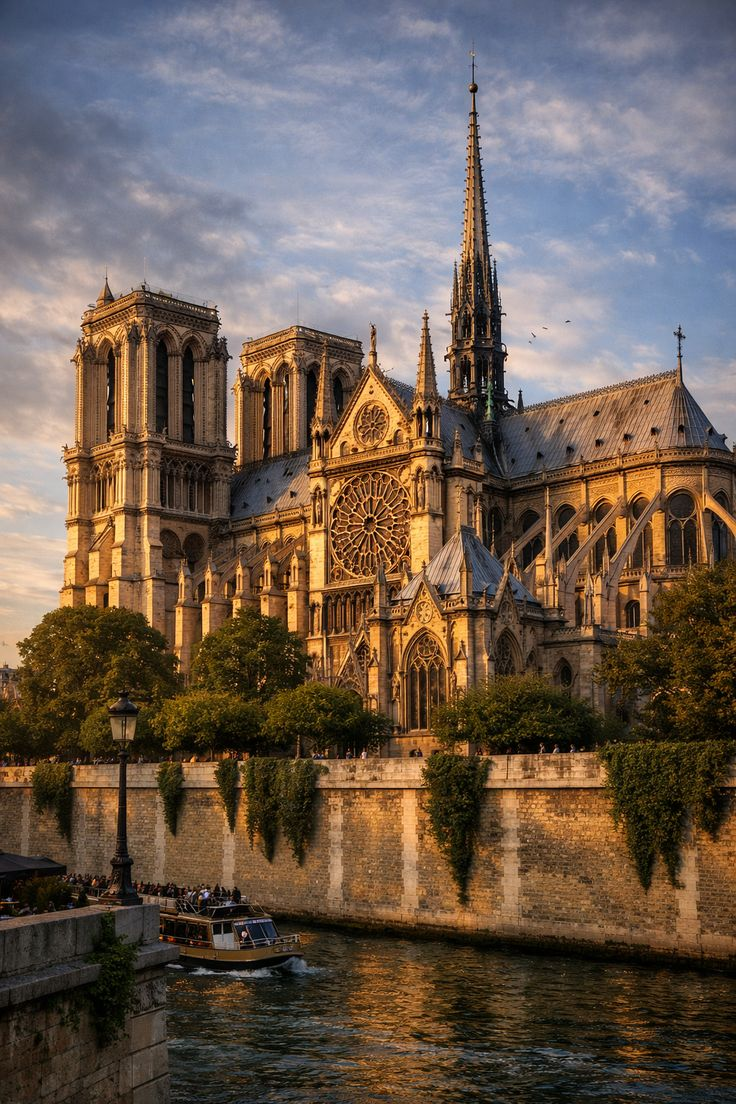
The world watched in horror on April 15, 2019, as flames consumed the roof of Notre-Dame Cathedral and the spire collapsed into the inferno. The Gothic masterpiece, which had stood at the centre of Paris for more than eight centuries, nearly burned to the ground. The firefighters saved the stone structure, the towers, the great rose windows and many of the treasures inside. But the damage was catastrophic.
Five years later, Notre-Dame reopened its doors on December 8, 2024. The restoration was a miracle of French craftsmanship and international generosity. More than 1,000 artisans worked for years to rebuild the spire exactly as it was, to restore the lead roof, to clean the blackened stone. The interior, once dark and soot-stained, is now luminous, the stone white and gold, the stained glass brilliant, the organ fully restored. The cathedral is not just repaired. It is reborn.
You should visit Notre-Dame, but you should not rush. The exterior is as magnificent as the interior. Walk around the outside, past the flying buttresses that support the eastern wall, past the portals with their carved saints and sinners. The south rose window, installed in the 13th century, is a masterpiece of medieval engineering: twelve metres in diameter, made of more than eighty panels of stained glass, depicting scenes from the Old and New Testaments. The treasury, in the southeastern transept, contains the Holy Crown, the wreath of thorns believed to have been placed on Christ's head before the crucifixion. The crown is displayed on the first Friday of each month and during Lent. The climb to the towers is 422 winding steps, but the view of Paris is worth every one. You will also see the gargoyles up close, the strange, grinning creatures that have watched over the city for centuries. They are not medieval. They were added in the 19th-century restoration by Eugène Viollet-le-Duc, but they have become as iconic as the cathedral itself.
Reservations for Notre-Dame: Since the reopening, demand to see Notre-Dame has been extraordinary. Advance reservations are strongly recommended and can be made through the official Notre-Dame website. The cathedral is free to enter for Mass and individual visits, but the queue for those without reservations can be two hours or more. The towers require a separate ticket. The treasury requires a separate ticket. Plan your visit carefully.
4. Musée d'Orsay: The Railway Station of Dreams
The Musée d'Orsay is not a museum. It is a cathedral of light, a Beaux-Arts railway station that was transformed into one of the most beautiful art galleries in the world. The building itself is the first masterpiece you encounter: a soaring glass vault, a giant clock face that frames the Sacré-Cœur in the distance, a sense of space and openness that no other museum can match. The Gare d'Orsay was built for the 1900 World's Fair and operated as a train station until 1939. It fell into disuse and was nearly demolished. In 1986, it reopened as a museum dedicated to art from 1848 to 1914, the period that gave the world Impressionism, Post-Impressionism and Art Nouveau.
The collection is concentrated but extraordinary. You will see the largest collection of Impressionist and Post-Impressionist masterpieces in the world: Monet's water lilies and poplars, Renoir's 'Bal du Moulin de la Galette', Degas's 'Little Dancer of Fourteen Years' and his pastels of bathers, Cézanne's apples and mountains, Van Gogh's irises and his haunting self-portrait, Gauguin's Tahitian women, Toulouse-Lautrec's dancers and prostitutes. The museum is smaller than the Louvre, and you can see the highlights in two to three hours. But you will want to linger. The light through the great clock is addictive, and the café on the upper level, under the original station clock, is the most beautiful place in Paris to drink coffee.
The museum is closed on Mondays. It is open late on Thursdays, until 9:45 PM. The evening hours are quieter, and the light through the glass vault at sunset is unforgettable.
5. The Champs-Élysées and the Arc de Triomphe
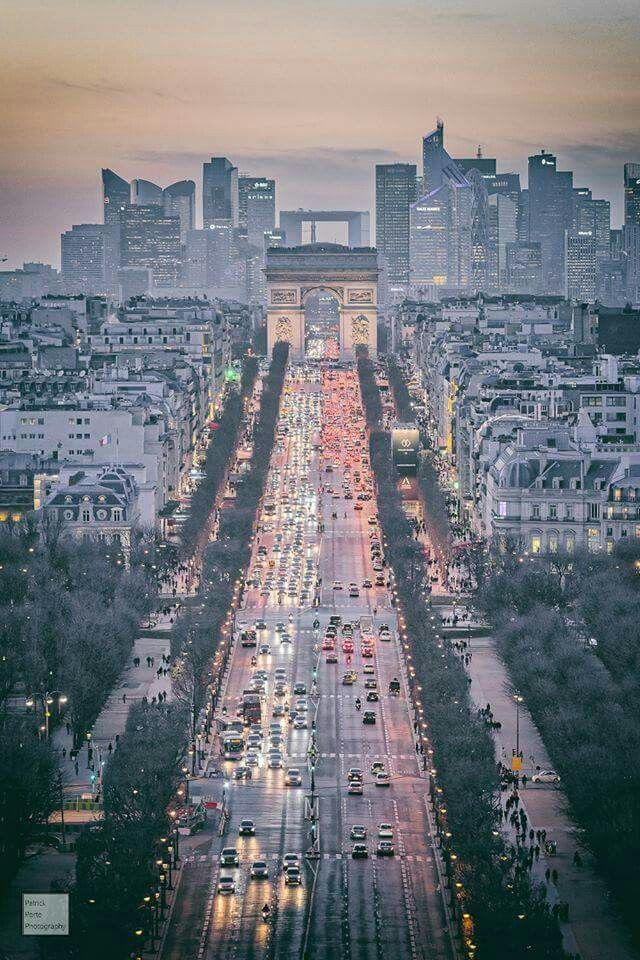
The Champs-Élysées is not the most authentic street in Paris. It is the most famous, and fame has a price. The avenue is lined with international brands, chain stores and restaurants that cater to tourists. The sidewalks are crowded, the cars are loud, and the atmosphere is more commercial than romantic. But at the western end of the avenue, at the centre of the Place Charles de Gaulle, stands the Arc de Triomphe. And the Arc is magnificent.
Napoleon commissioned the arch in 1806 to commemorate his military victories. It was completed in 1836, long after Napoleon's death, and it has stood at the centre of Paris ever since. The arch is 50 metres high and 45 metres wide. The reliefs on the facade depict scenes from the French Revolution and the Napoleonic Wars. The interior of the arch contains a museum and a staircase that leads to the rooftop. The view from the top is extraordinary. The Avenue de la Grande Armée stretches to the west, the Champs-Élysées to the east. The twelve avenues that radiate from the arch create a star shape, hence the name of the square, the Star Square. The Tomb of the Unknown Soldier lies beneath the arch, with an eternal flame that has burned continuously since 1921.
Do not approach the arch through the underpass. There is a pedestrian tunnel that leads directly to the arch, accessible from the Champs-Élysées side. The traffic around the arch is famously chaotic, and the roundabout has no lanes. Crossing the street is dangerous and illegal. Use the tunnel. The queue for the arch is shorter than the queue for the Eiffel Tower, and the view is arguably better, because you can see the Eiffel Tower from the arch.
'Paris is not a city. It is a world. The Eiffel Tower is not a spire. It is a point of reference. The Louvre is not a museum. It is a history of the human imagination. Notre-Dame is not a church. It is a prayer in stone. The Musée d'Orsay is not a gallery. It is a hymn to light. And the Arc de Triomphe is not a monument. It is a promise, made in stone, that glory can be built.'
Where to Eat Near Each Monument
Near the Eiffel Tower: The area immediately around the tower is overpriced and mediocre. Walk ten minutes to the Rue Cler market street, where you can buy a baguette, cheese and wine for a picnic on the Champ de Mars. For a sit-down meal, Café du Marché (38 Rue Cler) serves classic French bistro dishes at reasonable prices.
Near the Louvre: The Louvre's own cafés are convenient but expensive. A better option is Le Fumoir (6 Rue de l'Amiral Coligny), a literary café just across the Seine from the museum. The food is simple and good, the atmosphere is warm, and the bookshop next door is worth a visit. For a quick bite, the Rue Saint-Honoré has excellent boulangeries and sandwich shops.
Near Notre-Dame: The Latin Quarter, behind the cathedral, is full of affordable restaurants. Le Petit Pontoise (9 Rue de Pontoise) serves traditional French cuisine in a charming setting. For a quick crêpe, the stalls on the Rue de la Huchette are touristy but acceptable. For the best ice cream in Paris, visit Berthillon (31 Rue Saint-Louis-en-l'Île) on the Île Saint-Louis, just behind Notre-Dame.
Near the Musée d'Orsay: The museum's café is famously beautiful, if you can get a seat. For a meal, walk to the Rue de Bourgogne, where Café des Ministères (83 Rue de l'Université) serves excellent food at reasonable prices. The restaurant is popular with government workers from the nearby ministries, a sign of good quality.
Near the Arc de Triomphe: The Champs-Élysées is not where you want to eat. Walk a few blocks north to the Rue de Courcelles, where you will find Le Hide (10 Rue du Général Lanrezac), a Michelin-recommended bistro that serves excellent French food at prices that are a fraction of what you will pay on the avenue.
Common Tourist Mistakes and How to Avoid Them
Mistake 1: Trying to see everything. Paris is vast. You cannot see the Louvre, Notre-Dame, the Eiffel Tower, the Musée d'Orsay and the Arc de Triomphe in one day. Choose two or three attractions per day. Walk between them. Sit in a café. Watch the people. That is how you experience Paris.
Mistake 2: Eating near the big monuments. The restaurants on the Champs-Élysées, in the shadow of the Eiffel Tower, and across from the Louvre are overpriced and mediocre. Walk ten minutes in any direction, and the prices will drop and the quality will rise.
Mistake 3: Not booking tickets in advance. The queues at the Eiffel Tower, the Louvre and Notre-Dame can kill an afternoon. Book your tickets online as far in advance as possible. If you cannot book, arrive before opening time or during the last hour before closing.
Mistake 4: Ignoring Notre-Dame's treasury and towers. Most visitors walk into Notre-Dame, look up at the vault, and leave. The treasury contains the Holy Crown and other relics. The towers offer one of the best views of Paris and bring you face to face with the gargoyles. Both require separate tickets, but both are worth the extra cost and time.
Mistake 5: Forgetting that Paris is walkable. The metro is efficient, but walking is the best way to see the city. The walk from the Eiffel Tower to the Louvre takes forty minutes along the Seine. The views are spectacular, and you will discover things you cannot see from a train.
Practical Information for Your Paris Visit
Getting to Paris: Paris is served by three major airports. Charles de Gaulle (CDG) is the largest, located 25 kilometres northeast of the city. Orly (ORY) is 13 kilometres south. Beauvais (BVA) is 85 kilometres north, used primarily by low-cost carriers. The most comfortable way to reach the city centre is by private airport transfer, especially if you have luggage. Public transport options include the RER B train from CDG and Orly to central stations, and shuttle buses from Beauvais to Porte Maillot.
Getting Around Paris: The metro is your best friend. A single ticket costs 2.10 euros, and a carnet of ten tickets costs 16.90 euros. The metro runs from about 5:30 AM to 1:00 AM (2:00 AM on weekends). The RER trains serve destinations further from the centre, including Versailles and Disneyland Paris. Buses are slower but offer a view of the city. Walking is the most rewarding way to explore central Paris.
Best Time to Visit Paris: Spring (April, May) and autumn (September, October) are ideal. The weather is mild, the crowds are smaller than in summer, and the light on the Seine is extraordinary. December is magical for the Christmas markets, but the weather is cold and the days are short. August is hot and crowded, and many Parisians leave the city, so some shops and restaurants may close. July is crowded but festive.
What to Bring: Comfortable walking shoes. A reusable water bottle (the tap water in Paris is excellent, and public fountains are everywhere). A portable phone charger. A small umbrella (Paris weather is unpredictable). And a willingness to wander. The best experiences in Paris are the ones you cannot plan.
Comments
No comments yet. Be the first to share your thoughts!
Leave a Comment
Your comment will appear after moderation.