 Michelle
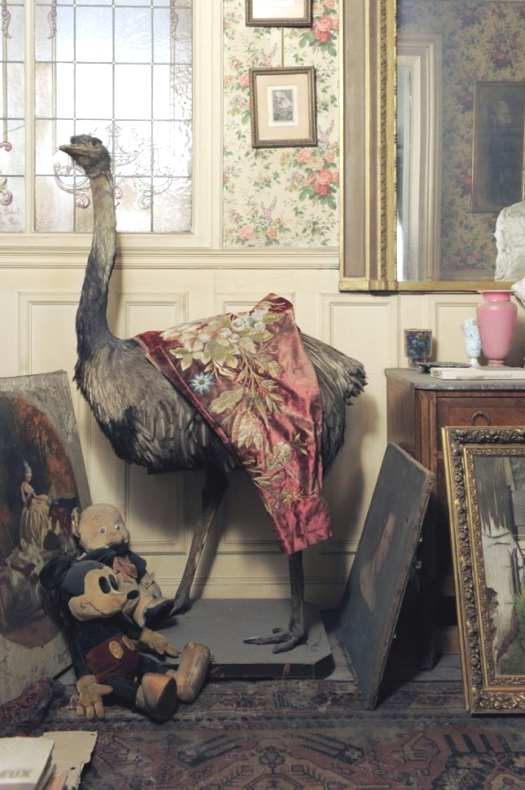
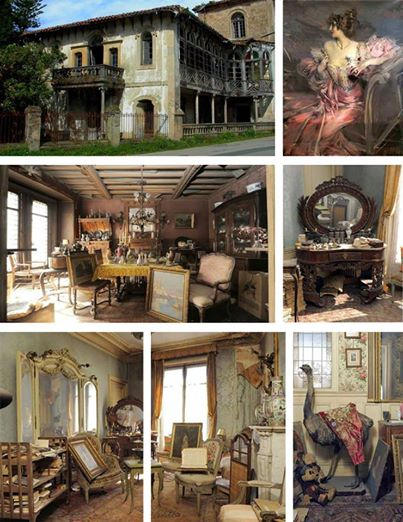
 There is a specific smell that old Parisian apartments have. It is not unpleasant. It is a complex mixture of aged floor wax, decaying paper from books left unopened, the ghost of cigar smoke from a century ago, and the peculiar, inescapable dust that drifts up from the cobblestones of the streets below. In 2010, when the auctioneer Olivier Choppin-Janvry inserted a key into the lock of a neglected property at the corner of Square La Bruyère and Rue de la Tour d'Auvergne in the 9th arrondissement, that smell hit him like a wave. What he found behind that door was not merely an abandoned real estate asset. It was a petrified forest of the Belle Époque, a Sleeping Beauty palace where time had abruptly stopped in 1942 and never thought to start again. This is the story of the forgotten apartment of the de Florian family.
The Actress Who Captivated an Era: Marthe de Florian
Her full name was Mathilde Héloïse Beaugiron, but the world knew her as Marthe de Florian. Born around 1870, she was a celebrated actress of the late 19th and early 20th centuries. But acting was merely the stage for her true role. Marthe was a star of the Parisian demimonde, a 'demi-mondaine', a high-class courtesan whose beauty, wit, and charm granted her access to the highest echelons of power and society. She was a fixture of the Belle Époque, the 'Beautiful Era', a time of cultural flourishing, artistic revolution, and extravagant living that ended in the blood and mud of the First World War. Her grandmother, also named Marthe, had been a famous courtesan as well. The talent for captivating powerful men ran in the family.
Marthe's lovers were not ordinary men. She was the mistress of some of the most influential politicians of the Third French Republic, including the formidable Georges Clemenceau, who would become Prime Minister and lead France to victory in the Great War. Her circle also included President Paul Deschanel, President Gaston Doumergue, and Prime Minister Pierre Waldeck-Rousseau. When she walked into a room, she commanded the attention of the men who ran France. And when she was painted by the great Giovanni Boldini, the 'Master of Swish' known for his dazzling, impressionistic portraits of high society, she became immortal.
The Heiress Who Fled: Solange Beaugiron and the War
Marthe de Florian died in 1939 in the seaside town of Trouville. The Belle Époque was long gone, and the world was on the brink of another devastating war. She left behind a granddaughter, Solange Beaugiron, who inherited the family apartment on Square La Bruyère. Solange had no idea that she was about to become the custodian of a legend.
In 1942, the war was at its darkest. France was divided, Paris was under the iron fist of the Nazi occupation, and the ghosts of the Belle Époque were a distant, painful memory. As the German grip tightened, Solange made a fateful decision. She locked the heavy wooden door of the apartment near the Opéra Garnier, slipped the key into her purse, and travelled south to the relative safety of the French Riviera. She left everything behind. The silver, the embroidered sheets, the evening gowns still hanging in the armoire, the paintings on the walls, the letters on the desk; she abandoned it all as if she were stepping out for a day trip to the countryside. She intended to return, of course. One always intends to return.
But she never did. Even after the Liberation of Paris in 1944, even when the world moved into the post-war boom of the 1950s and the revolutionary spirit of the 1960s, Solange stayed away. Yet, in a gesture that is hauntingly mysterious, she never forgot her home. She never sold it. She never rented it out. Month after month, year after year, decade after decade, she paid the rent. The money continued to flow from her exile to the landlord in Paris, a silent promise that the place was still hers, still waiting, still alive. She died in 2010 at the age of 91. With no one to continue the payments, a real estate agent was finally authorized to enter the apartment and assess the property. The key turned, the door swung open, and the 1940s breathed its dusty air into the 21st century.
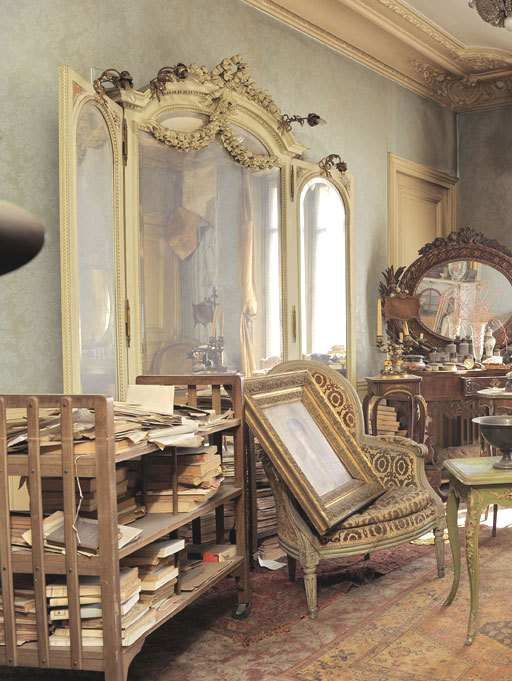
The Time Travel Factor: When the door was opened, the sheer force of time was palpable. The experts described the scene as stepping into a Sleeping Beauty castle. There were no ghosts, but the silence was heavy. The air was thick with the dust of nearly seven decades, and every surface was a museum of a single, specific moment in the early 1940s. Some sources state the apartment was sealed for 69 years; others say 70 or 72. The most accurate count, from 1942 to 2010, is 68 years.
The Treasures of the Belle Époque: From Ostrich to Mickey
What exactly do you find in a tomb sealed for nearly seventy years? You find the remnants of a lavish existence, frozen in the act of being lived. The rooms were crammed with the eclectic, beautiful, and sometimes bizarre possessions of a family that had once moved among the elite of Paris. Heavy, ornate furniture from the Louis Philippe period sat draped in ghostly sheets. There was a bronze bathtub, an incredible luxury for its time, suggesting a lifestyle of immense comfort and vanity. Dozens of hats, carefully stored, waited for parties that would never be attended.
In one corner, an unexpected juxtaposition: an embalmed ostrich stood silent guard. In the Belle Époque, owning exotic taxidermy was a sign of wealth and worldliness, a conversation piece for lavish parties. Alongside these antiques, there were personal items that gave a face to the ghosts. Theatre programmes from Marthe's acting days, music sheets for the piano, and bundles of love letters, their ink faded, still tied with silk ribbons. Perhaps most delightfully, the apartment contained a collection of antique toys, including a rare 1930s Mickey Mouse doll. It was a small, poignant reminder that even in the midst of such opulence and tragedy, there was room for simple joy.
The Crown Jewel: Boldini's Pink Portrait
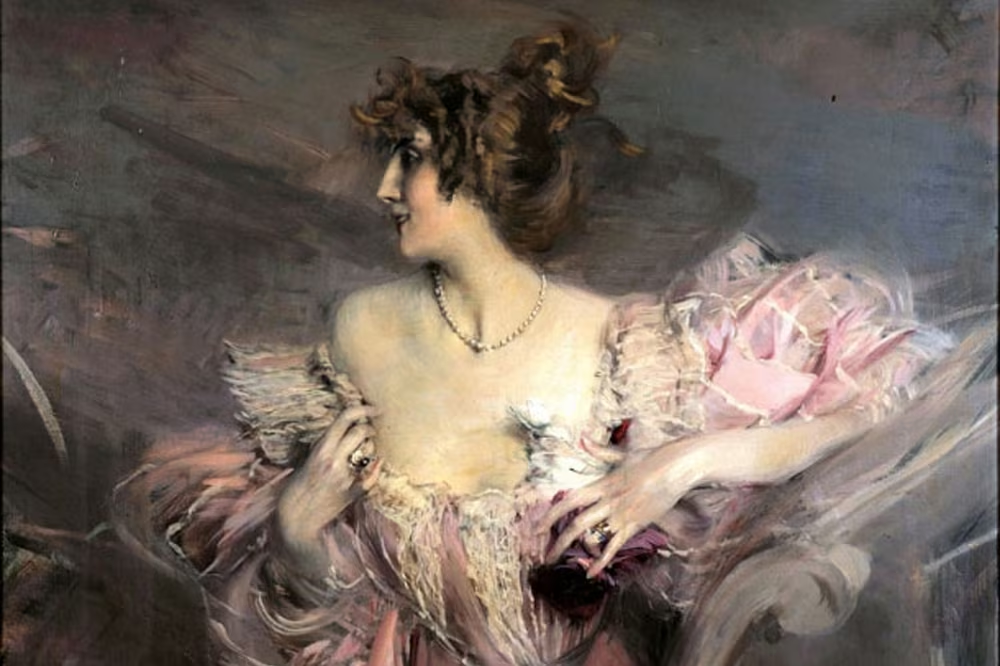
But the true masterpiece, the treasure that made headlines around the world, was hanging on the wall, perhaps slightly askew, covered in a thin patina of dust. It was a portrait of a young woman in a pink muslin evening dress, looking over her shoulder with a smile that was equal parts innocence and cleverness. This was no ordinary painting. The auctioneer, Olivier Choppin-Janvry, quickly identified the hand of Giovanni Boldini, the legendary Italian portraitist known as the 'Master of Swish' for his dazzling, impressionistic brushwork that captured the energy and elegance of high society.
The painting depicted Marthe de Florian herself, when she was just twenty-four years old, in the full bloom of her beauty. A love letter was found tucked behind the frame, a note from the artist to his muse, confirming its authenticity. The painting had never been exhibited to the public. It had been locked away in this private sanctuary since it was painted in 1898, a secret joy for the eyes of the owner alone. It was unsigned. Without the letter, no one would have known it was a Boldini. When the apartment was opened, the portrait was estimated to be worth a significant sum, but the bidding war it inspired was ferocious. In the end, the painting sold for an astounding 2.1 million euros (approximately 2.35 million dollars). A hidden masterpiece, finally allowed to speak after a century of silence, and a world record for the artist.
The Passion Behind the Paint: The letter found behind the frame confirmed that Boldini was not just a painter to Marthe, but a lover. The passion in the brushstrokes, the intimacy of the private collection, and the personal note all hint at a romance deeper than the professional. The words on the note were simple but unmistakably intimate: 'My dearest Marthe.' If walls could talk, these walls would whisper of candlelit dinners and artistic secrets.
The Illustrious Lovers: Clemenceau and the Presidents
No portrait of Marthe de Florian would be complete without acknowledging the remarkable circle of powerful men who adored her. The discovery of her personal effects and letters confirmed what historians had long suspected: she was one of the most sought-after courtesans of her generation.
Her lovers included Georges Clemenceau, the fiery politician known as 'The Tiger', who led France through the darkest days of World War I and was a dominant figure in the Third Republic. She shared evenings with Paul Deschanel, who served as President of France in 1920. Another president, Gaston Doumergue, was also counted among her admirers, as was the influential Prime Minister Pierre Waldeck-Rousseau. The apartment on Square La Bruyère, with its dusty letters and preserved memories, was a testament to a time when the lines between art, politics, and the pleasures of the flesh were exquisitely blurred.
'Other than a thick layer of dust covering the furniture, the room looked exactly as it would have done 70 years ago... like stumbling into the castle of Sleeping Beauty.' — Olivier Choppin-Janvry, Auctioneer
The Unanswered Question: Why Did She Never Return?
This is the mystery that hangs over the story like the dust in the apartment. Why did Solange Beaugiron, a woman wealthy enough to maintain a residence for nearly seven decades without living in it, choose to stay away? She was not imprisoned, though the war had been. She was not financially destitute. She simply chose to live out her long life on the French Riviera, far from the streets of her grandmother's youth and the memories of a golden age that had crumbled.
Some say she left behind a lover in the north, and the pain of separation was too great. Others speculate that the horror of the war so shattered her illusion of safety that she could not bear to sleep where the Nazis had marched. Perhaps the apartment represented a life of decadence that she wished to leave in the past. Or perhaps there is a simpler, more romantic theory: she was protecting the portrait and the secret of her grandmother's affair. By keeping the apartment sealed, she kept the memory of Marthe and her illustrious lovers intact. By never returning, she ensured the time capsule would only be opened after she was gone. She took that secret to her grave in 2010, leaving us to wonder if the apartment was a prison of memories or a shrine to lost love.
Visiting Square La Bruyère and the 9th Arrondissement Today
You cannot visit the apartment. After the discovery, the contents were auctioned off at Drouot, the painting was sold to an international collector, and the property was eventually cleared and returned to private hands. The door at 2 Square La Bruyère is once again locked to the public. However, the spirit of the Belle Époque still lingers in the streets of this vibrant neighbourhood. The 9th Arrondissement is one of the most exciting and authentic areas of Paris today.
You can stand on the pavement outside the building, look up at the windows, and imagine the silhouette of Marthe de Florian closing her shutters for the last time. From there, it is a short walk to the magnificent Opéra Garnier, the opera house that inspired the Phantom of the Phantom. You can explore the Grand Foyer, a hall of mirrors and chandeliers that rivals Versailles. Just around the corner is the Galeries Lafayette, with its stunning Art Nouveau dome, perfect for a spot of window shopping.
For food lovers, the Rue des Martyrs is a paradise. This famous market street slopes down through the heart of the 9th, past fromageries (cheese shops), boulangeries, and bistros. You can buy a warm croissant from a bakery that has been there for generations, or sit in a café where the ghosts of the Belle Époque might still be holding court at the next table. The Church of the Trinity, a beautiful neo-Renaissance church, watches over the square, as it has for over a century.
Comments
No comments yet. Be the first to share your thoughts!
Leave a Comment
Your comment will appear after moderation.