 Michelle
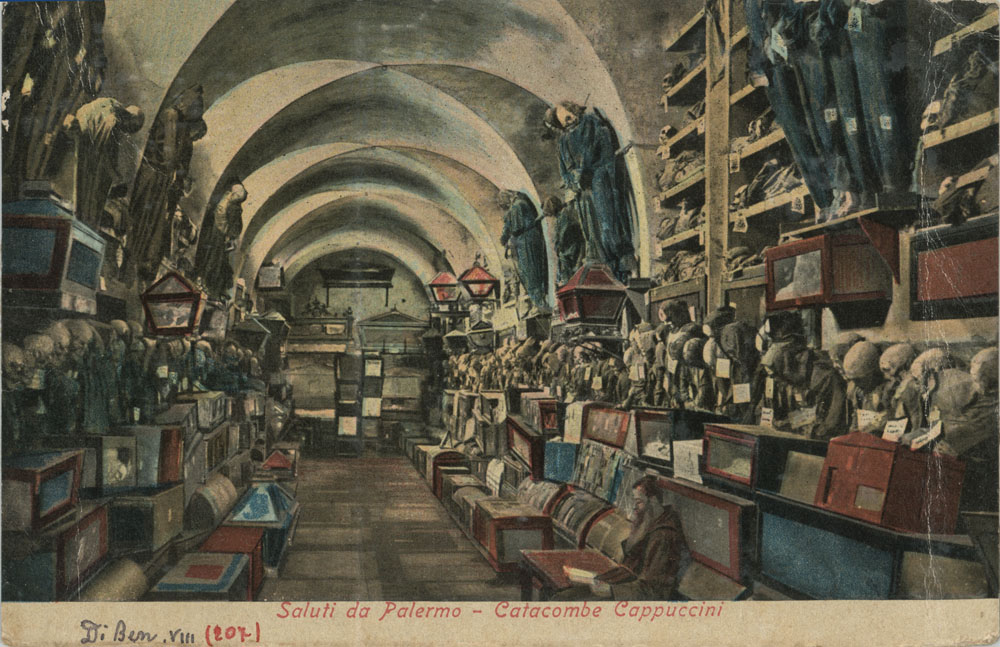
 There are places that remind you of your mortality in gentle, abstract ways: a sunset over calm water, the turning of autumn leaves, the closing pages of a novel. And then there is the Capuchin Catacombs of Palermo. This is a place that confronts you with death in its most literal and unflinching form. Eight thousand bodies, more than a thousand of them mummified, line the walls of a subterranean monastery corridor. They are dressed in their finest clothes. Some stand, some lie on shelves, and some hang from hooks on the ancient walls. They are men and women, priests and nobles, soldiers and children. At the heart of this vast procession of the dead, in a small glass coffin, lies a two-year-old girl named Rosalia Lombardo. Her face is so perfectly preserved that she appears to be sleeping. She has been called the most beautiful mummy in the world. To stand before her is to feel the boundary between life and death dissolve into something you cannot quite name.
A Silent Procession Beneath the Streets of Palermo
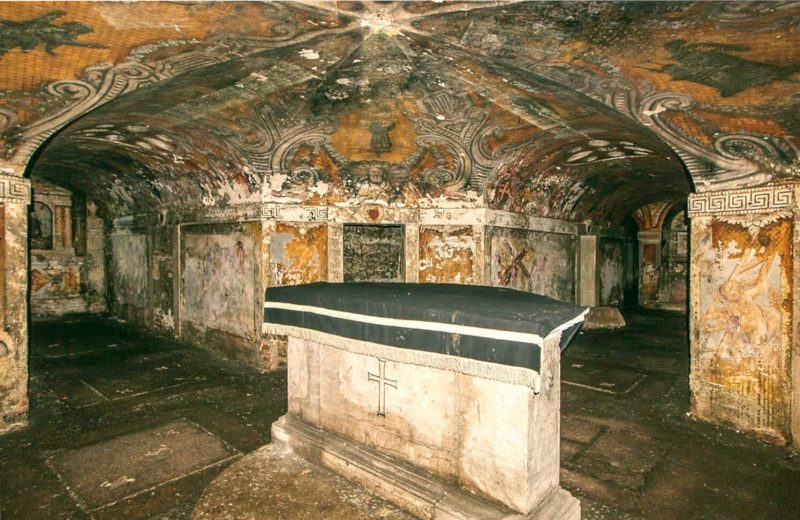
The Capuchin monks first arrived in Palermo in 1534. They settled at the church of Santa Maria della Pace. Their order was one of the most austere in the Catholic Church, committed to absolute poverty, silent prayer, and a life stripped of worldly comforts. For nearly sixty years, they buried their dead in a mass grave beneath the altar of Saint Anne, following the custom of the time. But by 1597, the community had grown too large. The existing space could accommodate no more bodies. The friars decided to excavate a proper cemetery beneath the monastery itself.
What happened next would change everything. When the friars exhumed the bodies of their departed brothers to transfer them to the new crypt, they were astonished to discover that forty-five of the corpses had not decomposed. The flesh had dried. The skin had darkened. But the bodies remained intact. The bodies had mummified naturally, preserved by a unique combination of the dry Sicilian air, the porous stone of the catacombs, and the constant ventilation that flowed through the corridors. The Capuchins saw this not as a quirk of geology but as an act of divine will. They decided that these bodies would not be buried. They would be displayed. They would be venerated as relics, propped in niches along the walls of the new cemetery. The Catacombs of the Capuchins had been born.
Historical note: The first friar to be interred in the new catacombs was Fra Silvestro da Gubbio on October 16, 1599. His mummy, among the oldest in the collection, still hangs in its original habit. He has witnessed more than four centuries of Sicilian history from his niche in the wall.
The Art of Mummification: Natural and Artificial Techniques
Over the centuries, the Capuchins perfected a method of mummification that combined natural processes with careful human intervention. When a body arrived at the monastery, it was placed in a special room known as the colatoio, which translates literally as "the draining room". Here, the internal organs were removed. The body was then laid horizontally on a grill made of terracotta pipes. The room was sealed. For approximately eight months to a year, the body was left to dry as its fluids slowly drained away through the pipes.
After this period, the body was washed with vinegar. Occasionally, it was exposed to the open air for several days. Straw or laurel leaves were sometimes inserted into the abdominal cavity to help maintain the body's shape. The skin, by this stage, had taken on the consistency of leather and a dark, brownish hue. The body was then dressed in its finest clothing and placed in the niche or coffin that had been reserved for it. The entire process was expensive. As a result, the catacombs contain a disproportionate number of nobles, aristocrats, and wealthy professionals. To be displayed here was not merely to be buried. It was to achieve a form of immortality, a permanent place in the social order that even death could not erase.
The Social Hierarchy of Death: Corridors of Men, Women, and Children
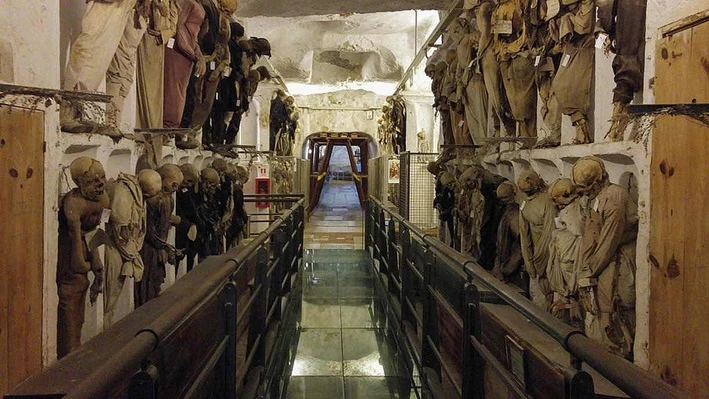
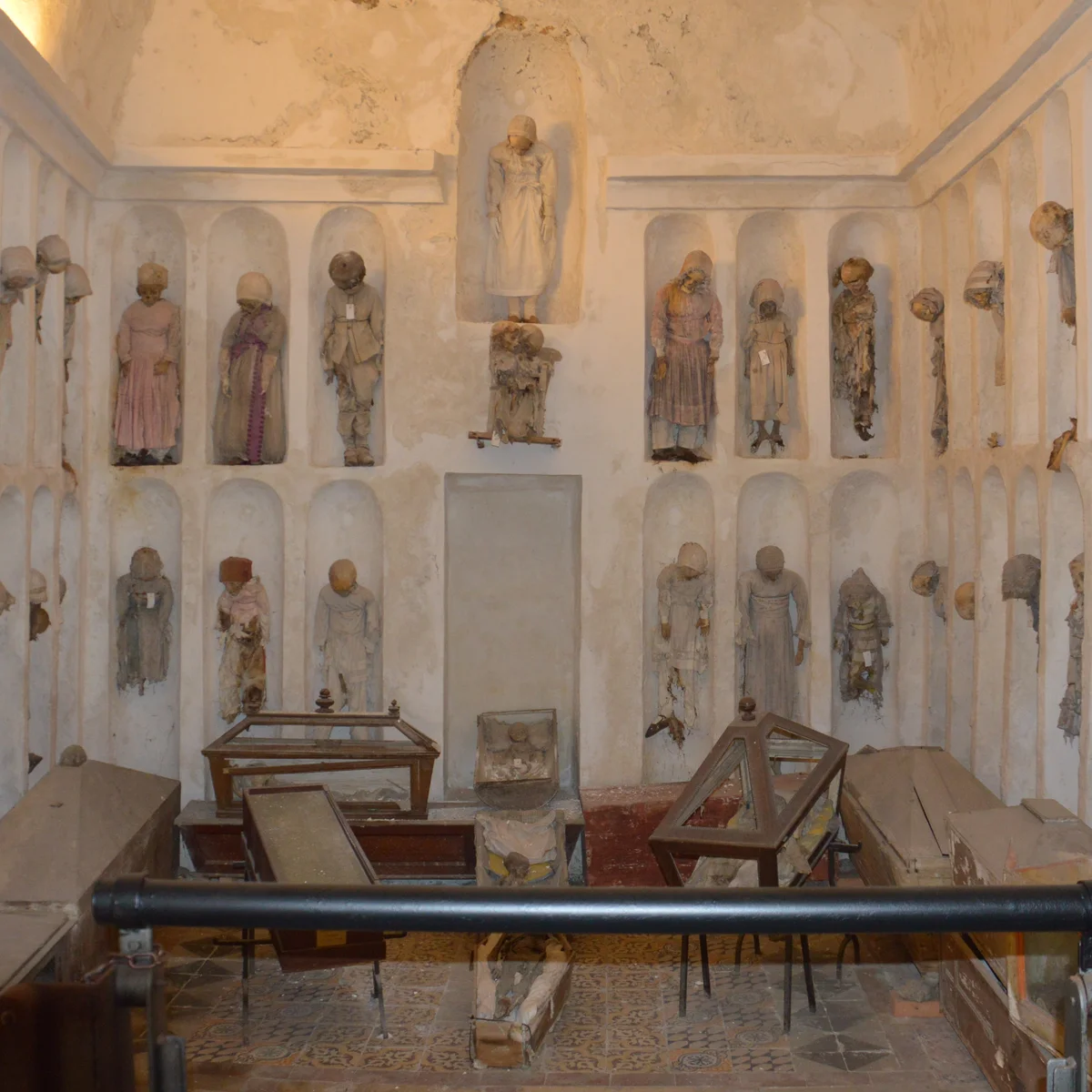
The catacombs are not a chaotic jumble of bodies. They are a meticulously organised museum of Sicilian society, a physical record of how the city understood status, gender, and virtue in the afterlife. The corridors are divided by profession, gender, and social status. There is a corridor for men, a separate corridor for women, and a smaller section for virgins, who are distinguished by their white dresses and metal crowns. There is a priests' corridor, a monks' corridor, and a corridor for professionals: doctors, lawyers, soldiers, and professors. And then there is the children's corridor.
The men, many of them standing upright, are suspended on iron hooks from the walls. Their clothes have been replaced many times over the centuries by devoted relatives. The women are generally laid horizontally in niches, but there are notable exceptions. Some female mummies are displayed upright, their clothing having been carefully preserved by grieving families who paid the monks for the privilege of a more prominent position. The children's corridor is the most difficult to witness. The mummies of infants and toddlers, some no more than a few months old, are displayed in small glass coffins. Their clothes are faded now. Their faces are shrunken. But the detail of their tiny hands and feet remains heartbreakingly intact. They were loved, these children. And their families could not bear to let them go.
Cultural context: The practice of displaying mummified bodies was not considered macabre by the people of Palermo. It was an act of devotion. It was a way of keeping the dead present in the daily life of the community. The bodies were often dressed in the latest fashions. Some were even posed with objects from their lives: a doctor with a stethoscope, a soldier in full uniform, a noblewoman with her favourite jewellery displayed beside her.
Rosalia Lombardo: The Sleeping Beauty of Palermo
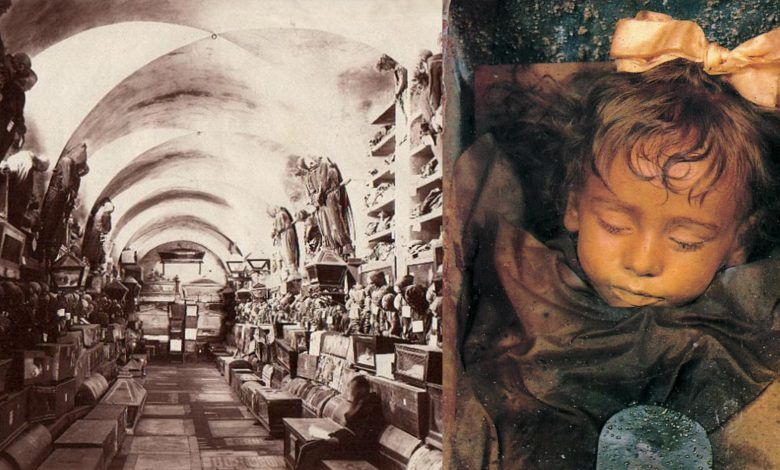
Rosalia Lombardo was born in Palermo in 1918. She died on December 6, 1920, at the age of two. The cause was pneumonia, a common killer of children in the era before antibiotics. Her father, Mario Lombardo, was a distinguished official in the Italian merchant navy. He was also a man utterly devastated by grief. Unable to bear the thought of consigning his daughter's body to the cold Sicilian earth, he commissioned a local embalmer to preserve her. The man he chose was Alfredo Salafia.
The result of that commission defies explanation. Rosalia rests in a small, glass-topped coffin in the children's corridor. Her golden hair is held in place by a white satin ribbon. Her body is dressed in a delicate christening gown. Her hands rest gently at her sides. But it is her face that captivates every visitor. The skin is smooth and pale. The eyes, though closed, seem to flutter at the edge of sleep. Her expression is one of absolute peace. Gabriel García Márquez, who visited the catacombs in the 1950s and later wrote a short story inspired by her presence, described her as looking as if she had died "of a life that was too intense." The people of Palermo call her the Bella Addormentata. The Sleeping Beauty.
For decades, visitors asked the same question: how was this possible? The body was more than a hundred years old, yet it showed almost no signs of decay. X-ray studies revealed that Rosalia's internal organs remained perfectly intact, a phenomenon that had never been observed in any other mummy from the catacombs. The answer, when it came, was found in an old memoir, hidden for nearly a century in the archives of a Sicilian family.
Alfredo Salafia and the Rediscovered Formula
Alfredo Salafia was a master embalmer. He was a chemist by training, and he had perfected his techniques in the early decades of the 20th century. He was known throughout Palermo and beyond for his ability to preserve bodies with an almost supernatural fidelity. Yet by the late 20th century, his formula for Rosalia's preservation had been lost to history. How had he achieved this miracle? What secret chemistry had kept a two-year-old girl looking as if she had just fallen asleep?
The answer came in 2009. A paleopathologist named Dario Piombino-Mascali, a researcher at the Eurac Institute for Mummy Studies in Bolzano, discovered a handwritten memoir among Salafia's surviving documents. The formula was remarkably simple. Salafia had injected Rosalia's body with a mixture of formalin, alcohol, glycerin, salicylic acid, and zinc salts. He had also taken care of the coffin: he had sealed the glass with a special adhesive and filled the container with nitrogen to prevent any further oxidation.
Formalin killed the bacteria that would have caused decomposition. Alcohol dehydrated the tissues, removing the moisture that decay requires. Glycerin prevented the body from becoming too brittle, preserving the supple appearance of living skin. Salicylic acid inhibited fungal growth. And the zinc salts, the crucial ingredient, petrified the body, giving Rosalia's skin its characteristic waxy, translucent appearance. "Zinc gave her rigidity," Piombino-Mascali explained in an interview. "It preserved her features with a precision that is almost sculptural."
The discovery of the formula allowed conservators to understand how to protect Rosalia for future generations. Environmental monitoring systems were installed in her glass coffin to control humidity and prevent the slow deterioration that had begun to affect her features. The Sleeping Beauty, it was decided, would remain asleep for centuries to come. Piombino-Mascali later published a book about Rosalia, titled Il Maestro del Sonno Eterno, The Master of Eternal Sleep, in which he reconstructed not only the scientific details of her preservation but also the emotional context of her father's grief. "The reader will experience the pain of loss," he wrote, "the lacerating sorrow of a departure."
The Catacombs in Literature and Popular Culture
The Capuchin Catacombs have exerted a powerful fascination on writers, artists, and filmmakers for more than a century. The Nobel laureate Gabriel García Márquez visited Palermo in the 1950s. He was so struck by the sight of Rosalia Lombardo that he later wrote a short story inspired by her. The story is called "La Santa", and it appears in his collection Strange Pilgrims. In the story, a character travels across the ocean to identify the body of a miraculous saint, only to find that it has been replaced by another. The melancholy of the story mirrors the melancholy of the catacombs themselves: the longing for permanence in a world of constant change, the desperate desire to hold onto what has been irrevocably lost.
The catacombs have also appeared in documentary films, including several episodes of the History Channel's Ancient X-Files. They have been the subject of numerous travelogues and photographic essays. The German photographer Robert Lebeck published a celebrated series of images of the catacombs in the 1960s. More recently, the Italian photographer Francesco Maimone has documented the ongoing conservation of the mummies. For each artist, the challenge is the same. How does one capture the strangeness of a place where the dead look almost alive, and where time itself seems to have stopped altogether?
Practical Tips for Visiting the Capuchin Catacombs
Best time to visit: The catacombs are an indoor site and can be visited year round. However, the months of October through April offer the most comfortable temperatures for exploring the rest of Palermo. Summer in Sicily can be intensely hot, but the catacombs remain cool and dry even in August. To avoid the largest crowds, visit on a weekday morning. Arrive just after opening time at 9:00 AM. The catacombs are particularly quiet between December and February, when the tourist season is at its lowest ebb.
Common tourist mistakes: The most common mistake is not allowing enough time for reflection. Many visitors rush through the corridors in thirty minutes, ticking boxes on a checklist. But the catacombs deserve at least an hour to be experienced properly. A second mistake is forgetting to dress appropriately. The catacombs are a sacred Catholic site, and respectful attire is expected. Your shoulders should be covered. Your knees should be covered. A third mistake is attempting to touch the mummies or their clothing. This is strictly forbidden, and for good reason. The oils from human hands accelerate the deterioration of these fragile remains.
Food tips: After your visit, take a short walk to the nearby neighbourhood of Capo. This is one of Palermo's most authentic street food districts. You are in Sicily, so you must try the local specialities. Look for arancine, golden fried rice balls stuffed with ragù, peas, and mozzarella. Sample panelle, chickpea fritters served in a soft sesame bun. For the adventurous, pane con la milza, a spleen sandwich, is a Palermitan classic. Finish with a cannolo, its ricotta filling so fresh that it tastes of the Sicilian hills. The street food of Palermo is among the best in Italy, and it costs very little.
Tips for avoiding queues: The catacombs are a popular attraction, but queues are rarely extreme outside the peak summer months. In July and August, however, waits of forty-five minutes or more are common. Book your tickets online in advance if possible. If not, arrive at least thirty minutes before opening time to secure a place in the first group of the day. The catacombs are busiest between 10:30 AM and 12:30 PM, when tour groups arrive from the cruise port. The afternoon session, from 3:00 PM to 5:30 PM, is often significantly quieter.
Getting there: The catacombs are located at Piazza Cappuccini 1, Palermo. The entrance is a short walk from the Cuba Gate, one of the remaining medieval gates of the city. Take a local bus to the Cuba stop, or walk from the city centre. The walk takes approximately twenty minutes from Politeama Theatre. A taxi from the centre costs approximately €8 to €10. If you are arriving from Rome or Naples, the most comfortable option is a private transfer directly to your accommodation in Palermo. The journey from Rome to Palermo is considerable, so plan accordingly. A good driver will make the long road feel shorter.
What to bring: Bring a camera without flash. Flash photography is prohibited because the light accelerates the deterioration of the bodies. Bring a sweater or light jacket, as the catacombs are cool even in summer. Bring a small notebook. You may find yourself wanting to record your thoughts. And bring a handkerchief. The catacombs are not a place for everyone. Some visitors find themselves unexpectedly moved to tears.
Comments
No comments yet. Be the first to share your thoughts!
Leave a Comment
Your comment will appear after moderation.