 Michelle
 Moscow has a well-deserved reputation as one of the more expensive capitals in Europe: hotel prices, restaurant bills and the admissions fees to some of the major attractions can add up with considerable speed. But the Russian capital is also, for the visitor who knows where to look, a city of extraordinary generosity. Its greatest public space is free. Its most famous monument is free on most days of the week. Its parks are free. Its legendary Metro, the most beautiful urban railway system in the world, costs a few roubles per journey. And its finest panoramic viewpoint costs nothing at all. You do not need to be an oligarch to enjoy Moscow. You simply need to know what to do and where to go.
1. Red Square: The Greatest Free Public Space in Russia
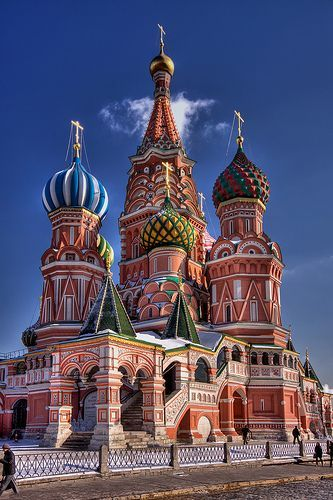
Red Square is one of those places that exists so completely in the imagination of anyone who has absorbed any quantity of twentieth-century history that the experience of actually standing in it carries a quality of unreality: the sense that you have walked into a photograph, or into the opening frames of a news broadcast, and that the buildings around you cannot quite be real because you have seen them so many times in reproduction. And then the unreality passes and you realise, with a jolt of genuine surprise, that Red Square is in fact more impressive than any photograph has ever conveyed. The scale of it, the grandeur of it, the sheer visual weight of the ensemble of buildings arranged around three of its sides, is something that has to be experienced in person to be properly understood.
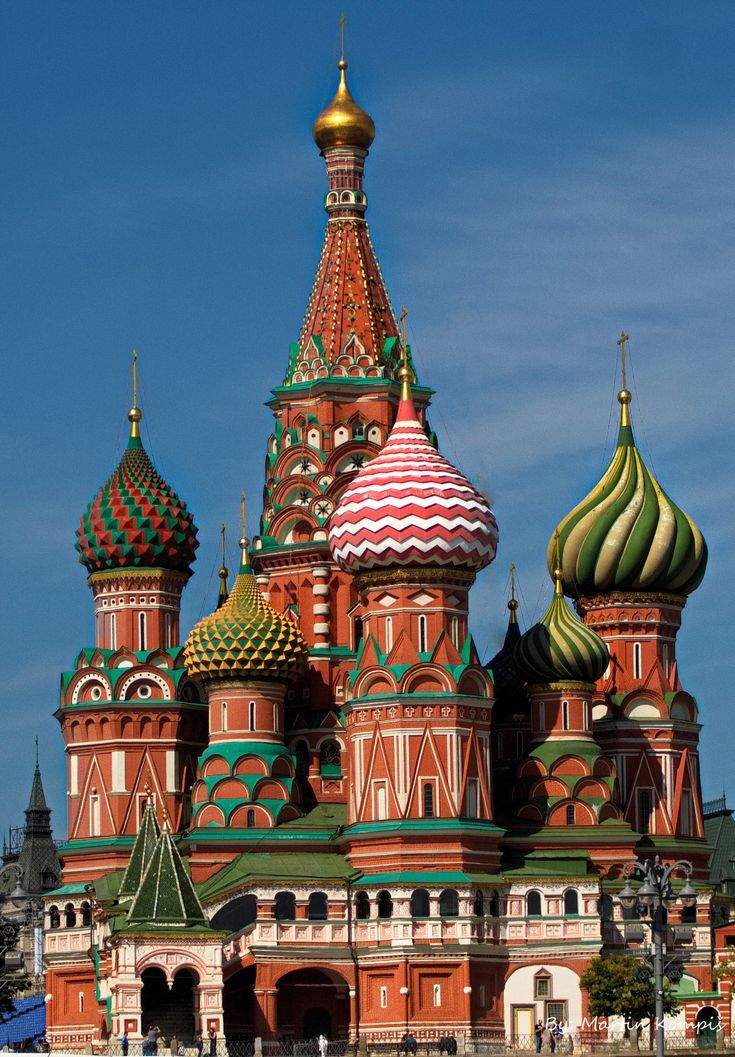
The square takes its name not from the colour of its brick walls, which are indeed red, but from the Old Russian word krasnaya, which meant beautiful before it came to mean red, and beautiful is precisely what it is. The Kremlin walls and towers run along the entire western side, their crenellated brick battlements stretching for more than two kilometres from the Vodovzvodnaya Tower in the south to the Uglovaya Arsenalnaya Tower in the north. To the south, the Cathedral of Saint Basil the Blessed anchors the square with its extraordinary cluster of nine differently designed and differently coloured onion domes, each one individually shaped and decorated, the whole assemblage commissioned by Ivan the Terrible in 1555 to commemorate the conquest of Kazan and completed in 1561. To the east, the long facade of GUM, the State Universal Store, provides an elegant counterpoint to the Kremlin's severity: a nineteenth-century arcade of glass and cast iron that is now one of the most expensive shopping destinations in Russia but whose architecture is genuinely magnificent from the exterior and can be admired without spending a rouble.
Red Square is free to enter and walk through at essentially all times. There are occasional closures for state events and military parades, particularly around major national holidays, but for the vast majority of the year the square is simply open: walk in from Manezhnaya Square or from the side streets off Tverskaya and you are there, in one of the most extraordinary urban spaces in the world, at no cost whatsoever. The square is beautiful at all times of day, but it is most atmospheric in the early morning before the tour groups arrive and after dark when the buildings are illuminated and the paving stones of the square reflect the light in ways that seem almost theatrical. The famous nightly changing of the Kremlin guard, which takes place at the gate to the Alexander Garden beside the Kremlin wall, is also free to watch.
Best time to visit Red Square: Arrive before 9am on a weekday to experience the square without the tourist crowds. In summer the square fills quickly from mid-morning. In winter, Red Square is transformed by the Kremlin Christmas market and ice rink, one of the most spectacular Christmas settings in Europe. The square at night, when the Cathedral of Saint Basil's and the Kremlin towers are illuminated against the dark sky, is one of the most visually extraordinary urban experiences available anywhere in the world and it costs nothing.
2. The Lenin Mausoleum: Free Entry on Most Days of the Week
Of all the free experiences Moscow has to offer, the Lenin Mausoleum is perhaps the most historically charged and the most genuinely unusual. The low, stepped granite structure that stands at the centre of the Kremlin wall on Red Square, designed by the architect Alexei Shchusev and completed in its present form in 1930, contains the embalmed body of Vladimir Ilyich Lenin, the founding leader of Soviet Russia, who died in January 1924. He has lain here ever since, in a refrigerated glass sarcophagus, preserved by a team of scientists who continue to maintain his body in the same condition in which he was first embalmed more than a hundred years ago. It is one of the most extraordinary and most debated acts of posthumous veneration in the history of the modern world.
The mausoleum is open to visitors on Tuesdays, Wednesdays, Thursdays and Saturdays from 10am to 1pm, and entry is free. The queue on busy days can be substantial, particularly on summer weekends when Russian school groups and domestic tourists form long lines along the Kremlin wall. Arriving shortly before 10am gives the best chance of reaching the entrance before the main queues develop. The visit itself takes approximately ten to fifteen minutes: you descend into the mausoleum through a narrow passage, pass through an anteroom lined with guards standing at rigid attention, and then move slowly around the glass case in which Lenin lies in the dim red light, his hands at his sides, his face waxy and perfectly preserved, before ascending the other side and emerging blinking into the daylight of Red Square.
The experience is genuinely difficult to describe to anyone who has not had it. It is solemn, strange, oddly intimate and deeply historically resonant: whatever your political views on Lenin and on the Soviet experiment he launched, the fact of being in the physical presence of a man who changed the course of world history in ways still being felt a century later is not something that leaves you untouched. The guards who flank the sarcophagus are among the most rigid and most professionally motionless in the world: do not attempt to photograph them or to linger, as the guards in the mausoleum corridor will move you on with quiet but unmistakable firmness.
The area immediately outside the mausoleum, along the Kremlin wall, is also free to visit and contains the Kremlin wall necropolis: the graves of Soviet leaders including Stalin, Brezhnev and Andropov, as well as the ashes of figures including Yuri Gagarin, the first human in space, Maxim Gorky, the writer, and John Reed, the American journalist whose book Ten Days That Shook the World remains the most vivid eyewitness account of the October Revolution.
Common tourist mistakes at the Lenin Mausoleum: Arriving with large bags or backpacks, which are not permitted inside and must be left at the cloakroom near the Alexander Garden. Photography is strictly prohibited inside the mausoleum, and the guards enforce this rule without exception. Dress appropriately: this is treated as a place of significant historical dignity and visitors in shorts and sleeveless tops may be asked to leave. Do not speak inside the mausoleum itself: the silence is maintained absolutely by both visitors and guards.
3. Gorky Park: The Most Beautiful Park in Moscow, Free Year-Round
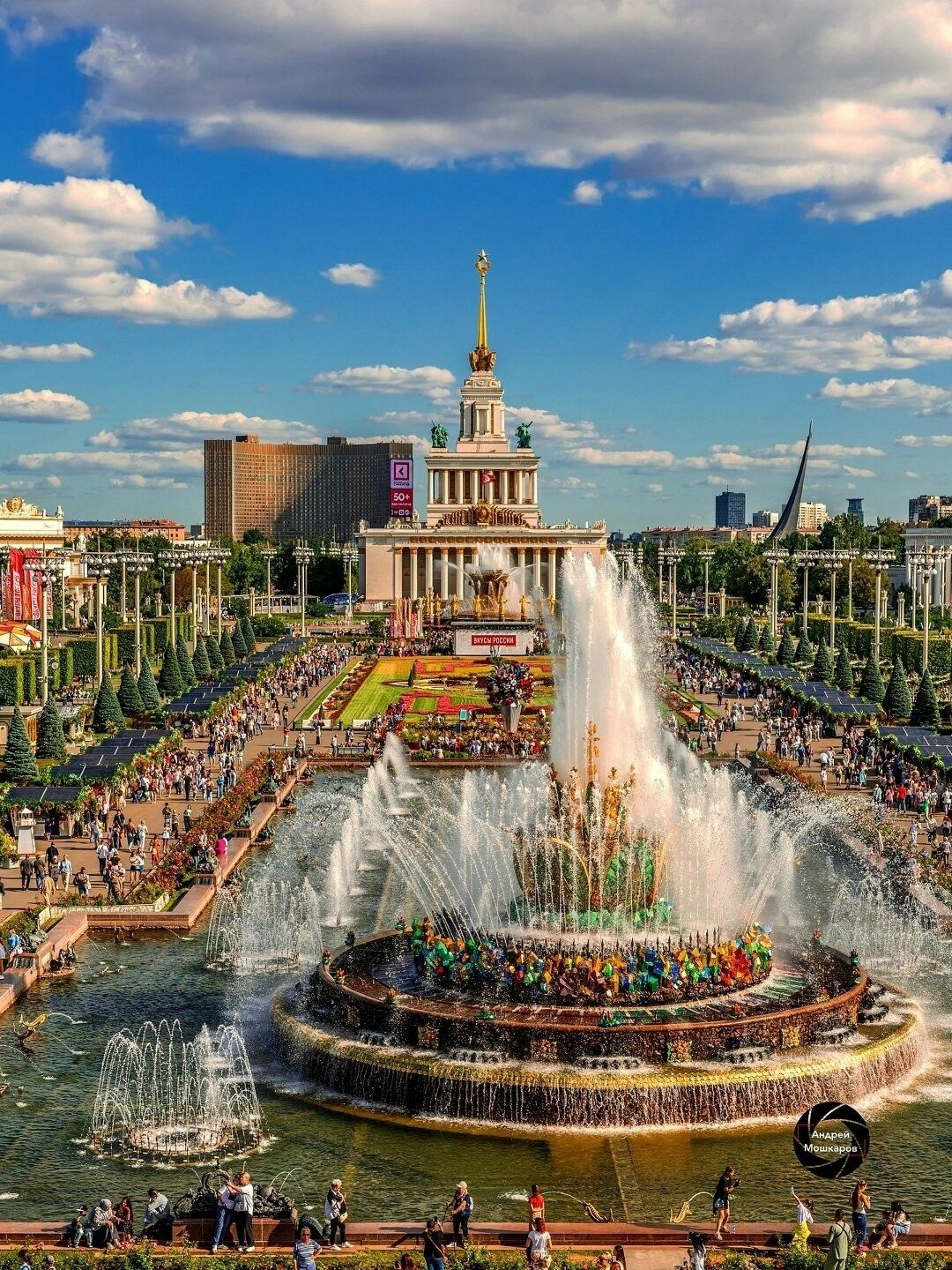
Gorky Park, officially named after the writer Maxim Gorky, stretches along the north bank of the Moscow River for approximately 3 kilometres west of the city centre and is one of the most remarkable public parks in Europe. Originally opened in 1928 as the Central Park of Culture and Rest, it underwent a radical transformation beginning in 2011 under the direction of the park's new management, led by Sergei Kapkov, who removed the amusement rides and the catering concessions that had cluttered the space for decades and replaced them with a beautifully designed modern park of wide lawns, redesigned promenades, outdoor exercise areas, beach volleyball courts, a skating rink in winter, a summer beach on the Moscow River and a series of cultural pavilions and galleries that have made Gorky Park the most fashionable outdoor destination in the Russian capital.
Entry to Gorky Park is completely free. The park is open around the clock, and the experience of visiting at different times of day reveals quite different aspects of its character. In the morning, the park fills with joggers, cyclists and dog walkers from the surrounding residential areas. In the afternoon, it becomes a family destination, with children on the wide lawns and the outdoor playgrounds and parents on the terraces of the park's excellent cafe. In the evening and on summer weekends, it transforms into one of the liveliest public spaces in Moscow, with young Muscovites filling the benches and the grass, open-air concerts in the main amphitheatre and the general atmosphere of a city enjoying itself in public in a way that can still surprise visitors who arrive with outdated expectations of Russian social culture.
The Muzeon Art Park, adjacent to Gorky Park on the riverside, is equally free and contains an extraordinary outdoor museum of Soviet-era sculpture: hundreds of bronze and stone statues of Lenin, Stalin, Dzerzhinsky, Brezhnev and other Soviet leaders and heroes, removed from public squares across Moscow after 1991 and assembled here in a melancholy open-air graveyard of fallen ideology that is one of the most thought-provoking and most photogenic public spaces in the city. The juxtaposition of the monumental Stalin, toppled from his plinth on Lubyanka Square in 1991, with the playful contemporary art installations that surround him, makes for one of the more complex and satisfying visual experiences Moscow has to offer.
Best time to visit Moscow: May and June offer the finest conditions for outdoor Moscow: the parks are at their most beautiful, the days are long and the temperature is warm without being oppressive. September and October are excellent for walking the city and visiting the major museums. Moscow in winter from December to February is extraordinarily beautiful but requires serious warm clothing: temperatures regularly drop to minus 15 or minus 20 degrees Celsius, and the wind from the Russian steppes makes it feel considerably colder. The reward for winter visiting is a dramatically reduced tourist presence and the extraordinary sight of the golden domes of the Kremlin churches and the coloured domes of Saint Basil's under a covering of snow.
4. The Moscow Metro: The World's Most Beautiful Underground Railway
The Moscow Metro is not merely a means of transport. It is one of the most extraordinary architectural achievements of the twentieth century and one of the great free (or almost free: a single journey costs just a few roubles) attractions of any visit to the Russian capital. Built from 1935 onward under Stalin's direct supervision, with the explicit intention of demonstrating the cultural ambition and the artistic confidence of the Soviet state, the Moscow Metro was designed from the beginning not as a functional utility but as what Stalin called a palace for the people: a place where the ordinary Soviet citizen could experience surroundings of palatial grandeur at no additional cost and as a daily matter of course.
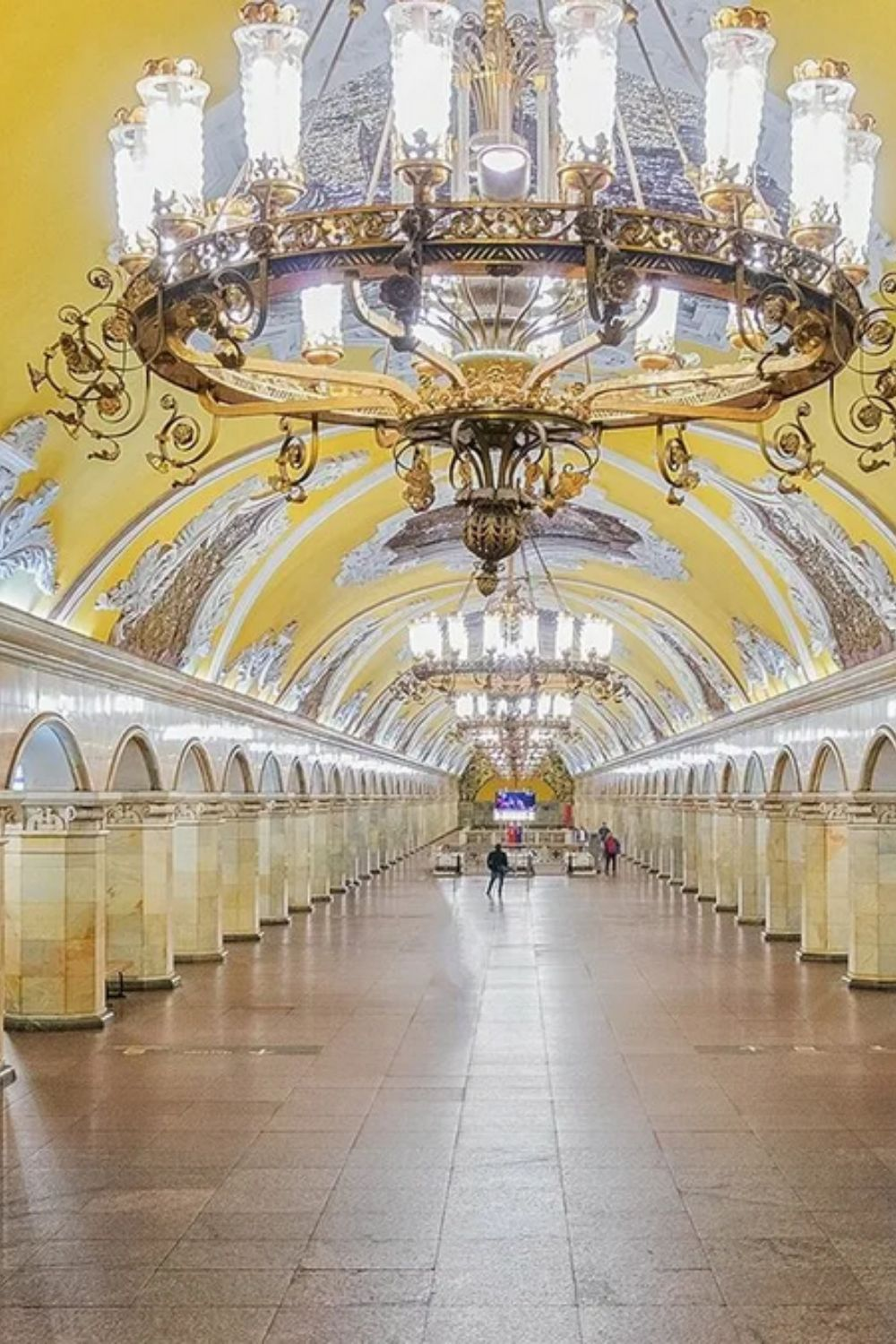
The result is an underground network whose oldest and most celebrated stations are genuinely among the most beautiful interior spaces in the world. Komsomolskaya station on the Circle Line, built in 1952, has a vaulted ceiling decorated with gold mosaic panels depicting scenes of Russian military history, including Nevsky, Suvorov, Kutuzov and the Soviet victories of the Great Patriotic War, all set against a background of yellow and white marble that glows in the warm lighting with the intensity of a baroque church interior. Kievskaya station, also on the Circle Line, is decorated with mosaic panels depicting the history of the Ukrainian people and the friendship between Russia and Ukraine, executed in a monumental style that makes the political content secondary to the extraordinary craft of the decoration. Mayakovskaya station, built in 1938 and designed by Alexei Dushkin, was awarded the Grand Prix at the New York World's Fair of 1939 and remains one of the most celebrated pieces of Art Deco design in the world: its stainless steel columns, its oval ceiling niches with their mosaic panels depicting a sky with aircraft and athletes and birds, and the quality of the light it achieves with its hidden sources, create an interior of peculiar, dreamlike beauty.
Riding the Metro from station to station, using each stop as a free museum of Soviet design and ambition, is one of the most rewarding activities available to any visitor to Moscow, and it requires nothing more than a Metro card loaded with a few journeys' worth of credit. A self-guided tour of the finest stations on the Circle Line, stopping at Komsomolskaya, Kievskaya, Novoslobodskaya, Taganskaya, Paveletskaya and Oktyabrskaya, takes a comfortable two to three hours and provides an education in Soviet aesthetics that no conventional museum exhibition could match.
Tips for the Moscow Metro: Buy a Troika transport card from any Metro ticket office rather than individual tokens: it is rechargeable, works on buses and trams as well as the Metro, and saves time at the turnstiles. The Metro operates from approximately 5:30am to 1am every day and is reliable, frequent and extremely busy during the morning and evening rush hours from 8 to 9am and 5 to 7pm. Avoid the busiest stations during rush hours if you want to appreciate the architecture: Komsomolskaya and Kievskaya are best visited mid-morning on a weekday when the platforms are relatively uncrowded.
5. Sparrow Hills: The Finest Free Panorama of Moscow
Every great city has its great viewpoint, the elevated place from which the scale and the character of the whole becomes suddenly, dramatically apparent. In Moscow, that viewpoint is Sparrow Hills, the ridge of wooded bluffs above the south bank of the Moscow River approximately 7 kilometres southwest of the Kremlin that provides the most comprehensive and most spectacular free panorama of the Russian capital available from any point in the city.
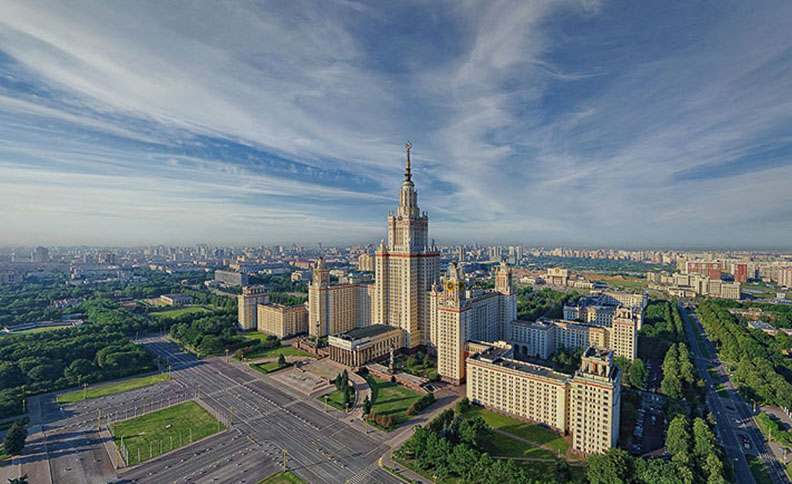
The viewpoint at the top of the ridge, accessible by Metro to Vorobyovy Gory station and then a short walk up through the trees, commands a view northward over the Moscow River that on a clear day encompasses the entire skyline of the city: the Kremlin and its towers in the middle distance, the Stalin-era skyscrapers of Moscow State University directly behind the viewpoint, the towers of the Moscow City financial district on the horizon, and the countless church cupolas and residential blocks and parks that fill the space between them. The bend in the Moscow River in the foreground provides a natural frame that makes the composition almost impossibly cinematic, and photographers at every level of seriousness find themselves shooting the same view over and over as the light changes through the afternoon.
The ridge above the viewpoint is occupied by the enormous Stalinist Gothic tower of Moscow State University, completed in 1953 and the tallest of the famous Seven Sisters, the group of skyscrapers commissioned by Stalin between 1947 and 1957 that gave Soviet Moscow its distinctive and still-striking silhouette. The university building, 240 metres tall, is closed to the public but its exterior is an impressive work of architecture in its own right, and the gardens and promenades around it are pleasant for walking. A small beach on the bank of the Moscow River directly below the viewpoint is popular with Muscovites in summer and provides a completely different perspective on the city from the water's edge.
Sparrow Hills is at its most spectacular in the late afternoon and early evening when the low sun illuminates the Kremlin and the city from the west, turning the gold of the cupolas and the red of the Kremlin brick into something that glows rather than merely shines. In winter, the slopes of the hills are used as a modest ski and sledging area by local families, and the frozen Moscow River below sometimes carries skaters, producing a scene of such specific Russian character that it is difficult to believe it is not a staged tableau rather than simply everyday Muscovite life.
Moscow is a city of enormous generosity to those who approach it without preconceptions. It gives its greatest square freely. It gives its most extraordinary railway freely. It gives its finest view freely. What it asks in return is that you look properly, that you pay attention, and that you resist the temptation to see only what you expected to see. Do that, and Moscow will surprise you every day.
Common tourist mistakes in Moscow: Underestimating the distances between major sights and relying on walking when the Metro would save considerable time and effort. Moscow is a physically very large city and its major attractions are often much further apart than they appear on a map. Always use the Metro between distant sights. Another mistake: exchanging currency at the airport or at hotel desks, where rates are significantly less favourable than at city centre exchange offices. And carry your passport at all times: Russian law requires foreign nationals to carry identity documents, and police checks, while not frequent for tourists in central Moscow, do occur.
Getting to Moscow: Arriving and Starting the Right Way
Moscow is served by three major airports. Sheremetyevo Airport (SVO), approximately 29 kilometres northwest of the city centre, is the largest and busiest, handling the majority of international long-haul and European traffic including Aeroflot's main hub operations. The most comfortable way to reach the city is a private airport transfer from Sheremetyevo to your hotel, which takes between 45 and 60 minutes depending on traffic and the time of day. The Aeroexpress train connects Sheremetyevo directly to Belorussky railway station in central Moscow in approximately 35 minutes, running every 30 minutes from early morning to late evening.
Domodedovo Airport (DME), approximately 42 kilometres south of the city, is the second largest airport and handles a significant proportion of domestic and international traffic. The Aeroexpress from Domodedovo reaches Paveletsky railway station in approximately 40 minutes. Vnukovo Airport (VKO), the smallest of the three main airports, is approximately 28 kilometres southwest of the centre and connected to Kievsky railway station by Aeroexpress in approximately 35 minutes. From any of the railway stations served by the Aeroexpress, the Moscow Metro connects you to the rest of the city at very low cost.
Comments
No comments yet. Be the first to share your thoughts!
Leave a Comment
Your comment will appear after moderation.