 Michelle
 London is, by some measures, one of the most expensive cities in the world. Hotel rooms, restaurant dinners and theatre tickets carry prices that can reduce a travel budget to rubble within days. And yet London is also, paradoxically, one of the most extraordinarily generous cities on the planet for the visitor who knows where to look. Its greatest museums are free. Its royal parks are free. Its rivers and markets and ceremonies and views are free. You can spend an entire week in this city absorbing world-class art, ancient history, contemporary culture and some of the most spectacular urban landscapes in Europe, and the cost of admission to all of it will be exactly zero. This is your essential guide to the ten best free experiences London has to offer.
1. Buckingham Palace and the Changing of the Guard
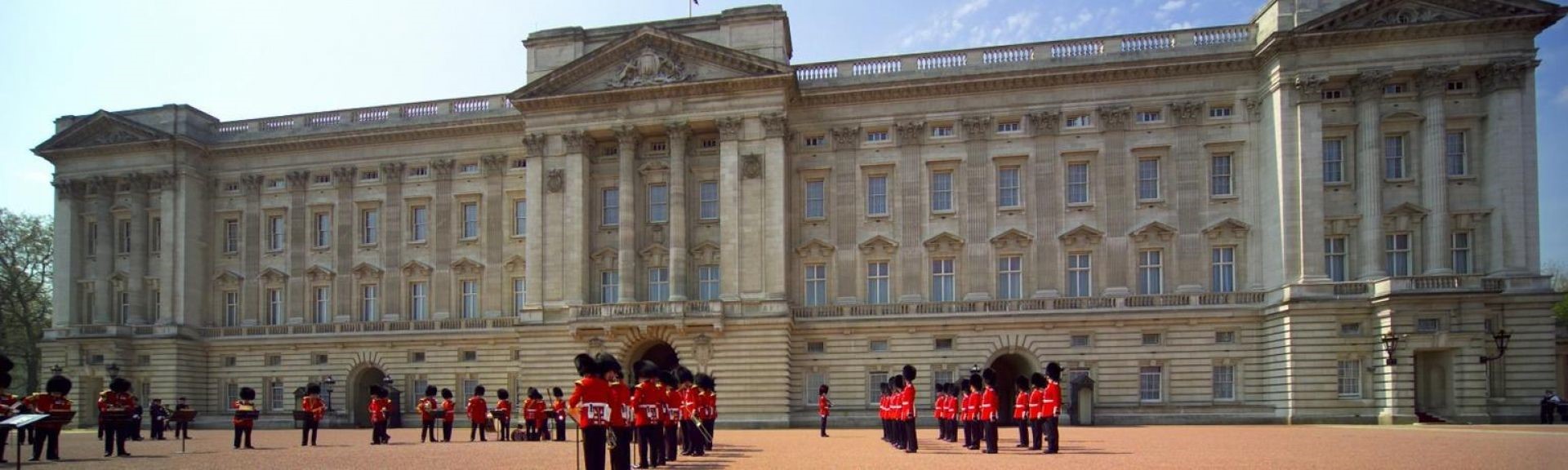
There are few sights in London that deliver the immediate visual impact of Buckingham Palace: the vast, cream-coloured facade at the end of The Mall, the gilded gates, the Victoria Memorial fountain gleaming in front of it and, if you arrive at the right moment, the extraordinary spectacle of the Changing of the Guard ceremony taking place in the forecourt with a precision and a formality that has been refined over centuries into something genuinely theatrical.
The palace itself has been the official London residence of the British monarch since 1837, when Queen Victoria moved in shortly after her accession. The building you see today is the result of multiple renovations, the most significant of which added the famous East Wing facade in 1913, but the core of the palace dates to the early nineteenth century, when it was transformed from the Duke of Buckingham's private house into a royal residence of appropriate grandeur. The forecourt, the balcony from which the Royal Family appears on great ceremonial occasions, the flag that flies when the monarch is in residence: every element of Buckingham Palace carries a weight of history and symbolism that rewards contemplation even from outside the gates.
The Changing of the Guard ceremony is one of the most popular free spectacles in London and deservedly so. The ceremony, in which the Old Guard is relieved by the New Guard with full military ceremony including a marching band, takes place in the forecourt of the palace and is entirely visible from outside. It typically runs on most days from April to July and on alternate days for the rest of the year, starting at 11am. The guards, in their famous red tunics and bearskin caps, march from Wellington Barracks nearby and the whole ceremony takes approximately 45 minutes from beginning to end.
Best time and position for the Changing of the Guard: Arrive at least 45 minutes before the ceremony begins to secure a position directly in front of the palace gates, which gives the clearest view of the full ceremony in the forecourt. In summer, the crowds are enormous: arriving an hour early is advisable. The best alternative viewing position is from the steps of the Victoria Memorial directly in front of the gates, which gives an elevated view above the heads of the crowd. Do not stand on the Memorial itself: this is prohibited and enforced by security staff.
2. The British Museum: Two Million Years of Human History, Free of Charge
If you could visit only one place in London and had to choose between everything the city has to offer, the British Museum would be a defensible answer. Founded in 1753, it is one of the oldest and most extraordinary museums in the world: a collection of eight million objects spanning two million years of human history, gathered from every civilisation and every continent, housed in a building of neoclassical grandeur in Bloomsbury and open to everyone, free of charge, every day of the year.
The collection is so vast that it is almost impossible to absorb in a single visit, and most seasoned London visitors will tell you that the best approach is not to try. Choose two or three rooms or galleries that genuinely interest you and give them the time they deserve, rather than rushing through the entire museum in a state of increasing bewilderment. The highlights that no visitor should miss include the Rosetta Stone, the granodiorite stele discovered by Napoleon's soldiers in Egypt in 1799 whose inscription in three scripts was the key to deciphering Egyptian hieroglyphics, displayed in Room 4 with a crowd of admirers around it at almost every hour of the day. The Elgin Marbles, the magnificent sculptural panels from the Parthenon in Athens, occupy Room 18 and represent one of the great debates in the international museum world as well as one of the most beautiful collections of ancient Greek sculpture in existence.
The Egyptian mummies in Rooms 62 to 63 are among the most popular exhibits in the museum and offer a visceral connection to a civilisation four thousand years old that is difficult to replicate anywhere else in the world. The Lewis Chessmen, the twelfth-century chess pieces carved from walrus ivory and discovered on the Isle of Lewis in Scotland in 1831, occupy a corner of Room 40 and are among the most endearing objects in the entire collection. And the Great Court, the extraordinary glass-roofed courtyard at the heart of the museum designed by Norman Foster and opened in 2000, is a magnificent space in its own right: the largest covered public square in Europe and a place where the scale and the ambition of the whole enterprise become suddenly, breathtakingly apparent.
Common tourist mistakes at the British Museum: Trying to see everything in a single visit. The museum has over 60,000 objects on display across three floors and dozens of rooms: a visitor who attempts a comprehensive tour will exhaust themselves and retain almost nothing. Plan your visit around two or three specific areas of interest, use the museum's free map to navigate, and build in time to sit in the Great Court and simply look up. The museum is busiest on Saturday afternoons and least crowded on weekday mornings, particularly in winter.
3. The National Gallery: Da Vinci, Rembrandt and Turner, All for Free
The National Gallery occupies the north side of Trafalgar Square in a neoclassical building that has overlooked one of London's great civic spaces since 1838, and its collection of over 2,300 paintings is, quite simply, one of the finest assemblages of Western European art in the world. The permanent collection is free, a fact that visitors from countries where major art museums charge substantial admission fees often find almost impossible to believe when they arrive and walk in off the street.
The gallery's holdings span seven centuries of painting from the mid-thirteenth century to 1900, covering every major school and every significant movement in Western art. The paintings that draw the largest crowds include Leonardo da Vinci's The Virgin of the Rocks, the only Leonardo in a British public collection and a work of such technical perfection and emotional depth that it is worth the journey to London on its own. Vermeer's Young Woman Standing at a Virginal, Rembrandt's haunting self-portraits from the 1660s, Van Eyck's extraordinary Arnolfini Portrait, Turner's blazing seascapes and Constable's luminous landscapes: the National Gallery is where British collectors assembled, over two centuries, the paintings that define European art at its finest.
Trafalgar Square itself, the great public space outside the gallery's front steps, is one of the finest free sights in London and worth experiencing at different times of day. Nelson's Column rises 52 metres above the square, flanked by Edwin Landseer's four bronze lions, and the fountains and the space around them are a gathering point for Londoners and visitors at all hours. The square has been the site of demonstrations, celebrations, New Year's Eve parties and public gatherings of every kind since it was laid out in the 1840s, and it retains a quality of civic openness and energy that many modern public spaces fail to achieve.
Best time to visit London: May and June offer the best combination of pleasant weather, long days and manageable crowds before the peak summer rush. September and October are excellent alternatives with beautiful light for photography and significantly lower hotel prices than August. The Christmas period from late November to early January transforms central London with extraordinary festive illuminations and markets that are free to walk through, and the major museums are often less crowded in the run-up to Christmas than at any other time of year.
4. The Tate Modern and the South Bank
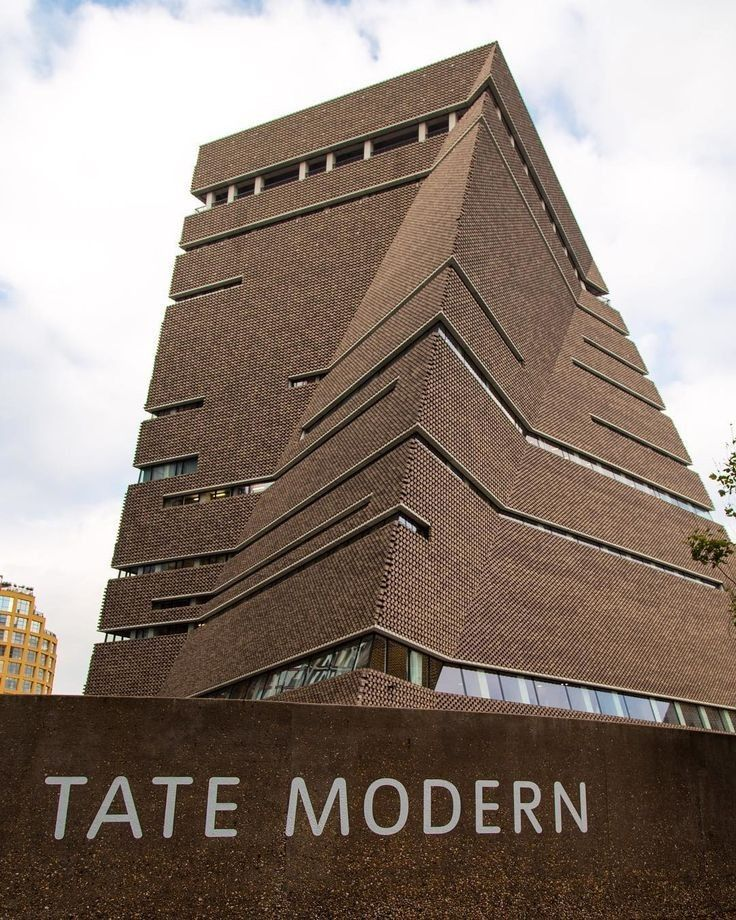
Housed in the magnificent brick bulk of a decommissioned power station on the south bank of the Thames, the Tate Modern is the most visited modern art gallery in the world and, for most of its extraordinary permanent collection, completely free. Opened in 2000 in the former Bankside Power Station designed by Sir Giles Gilbert Scott, the building is itself a work of art: the vast Turbine Hall that runs the length of the former industrial space is one of the most spectacular interior volumes in London and has been used over the years for some of the most ambitious and provocative large-scale art installations ever mounted anywhere in the world.
The permanent collection covers art from 1900 to the present day, with works by Picasso, Matisse, Dalí, Rothko, Pollock, Warhol, Bourgeois and dozens of other figures who shaped the history of twentieth and twenty-first century art. Wander freely through the galleries, spend as long as you wish with whatever work arrests your attention, and emerge onto the riverside terrace at the back of the building with one of the finest views in London stretching before you: the Thames in both directions, St Paul's Cathedral directly opposite, the Millennium Bridge leading across the water to the City.
The South Bank itself, the strip of riverside walkway that runs from Westminster Bridge to Tower Bridge along the south bank of the Thames, is one of the great free urban walks in the world. The Southbank Centre, with its bookstalls and buskers and outdoor events. The Globe Theatre. The Golden Hinde replica. Bermondsey Street. Borough Market. The view of the City from the Hungerford Bridge. None of it costs anything and all of it is extraordinary.
5. Hyde Park and Kensington Gardens: 625 Acres of Free Royal Parkland
Hyde Park and its western neighbour Kensington Gardens together form one of the great urban green spaces in the world: 625 acres of royal parkland in the heart of one of the most densely built and most expensive cities on the planet, open to everyone, free of charge, from dawn to midnight every day of the year. The park was first opened to the public by Charles I in the 1630s and has served as the lungs and the playground of central London ever since, playing host to the Great Exhibition of 1851, concerts for hundreds of thousands of people, political demonstrations and quiet afternoon walks in equal measure.
The Serpentine Lake, which stretches across the heart of Hyde Park, is one of the most beautiful bodies of water in inner London: in summer it is crowded with rowing boats and pedal boats for hire, and the lido on its south bank draws swimmers from early morning to late evening. In winter the lake reflects the bare trees of the park in a stillness that is as beautiful in its way as the summer crowds. The Diana, Princess of Wales Memorial Fountain at the western end of the lake is a more recent addition, a ring of flowing water in carved Cornish granite that attracts visitors and children in equal measure.
Kensington Gardens, which adjoin Hyde Park to the west, contain the Albert Memorial, the extravagant Gothic canopy commissioned by Queen Victoria in memory of her husband Prince Albert and completed in 1872, whose gilded figure of the Prince surveys the Royal Albert Hall across the road with an expression of considerable authority. The Serpentine Galleries, two small art spaces within the park itself, host changing exhibitions of contemporary art and are free to enter. And the Peter Pan statue in the gardens near the Serpentine, erected in 1912 by J.M. Barrie himself, is one of the most charming and most photographed small monuments in London.
6. The Natural History Museum: A Cathedral of the Natural World
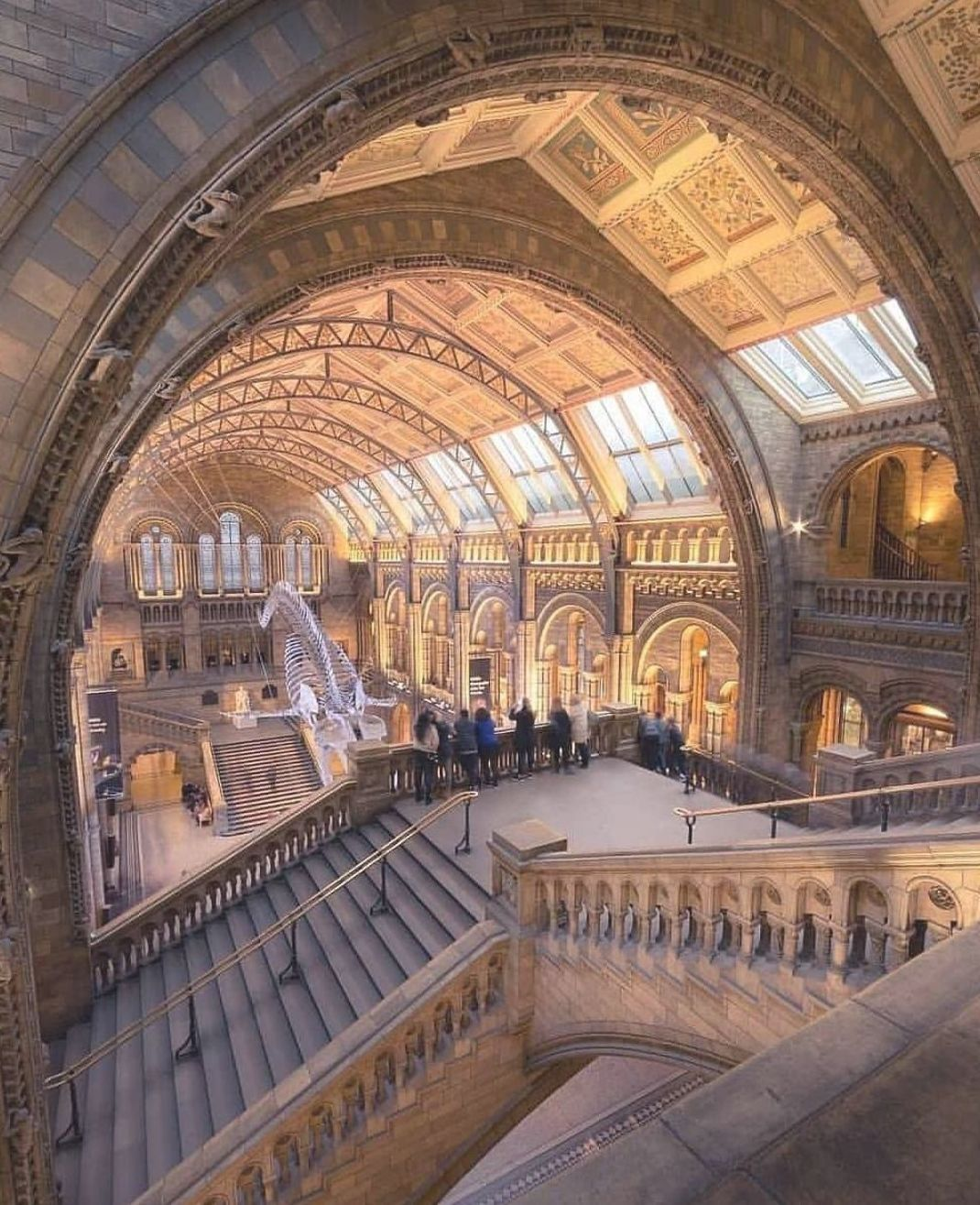
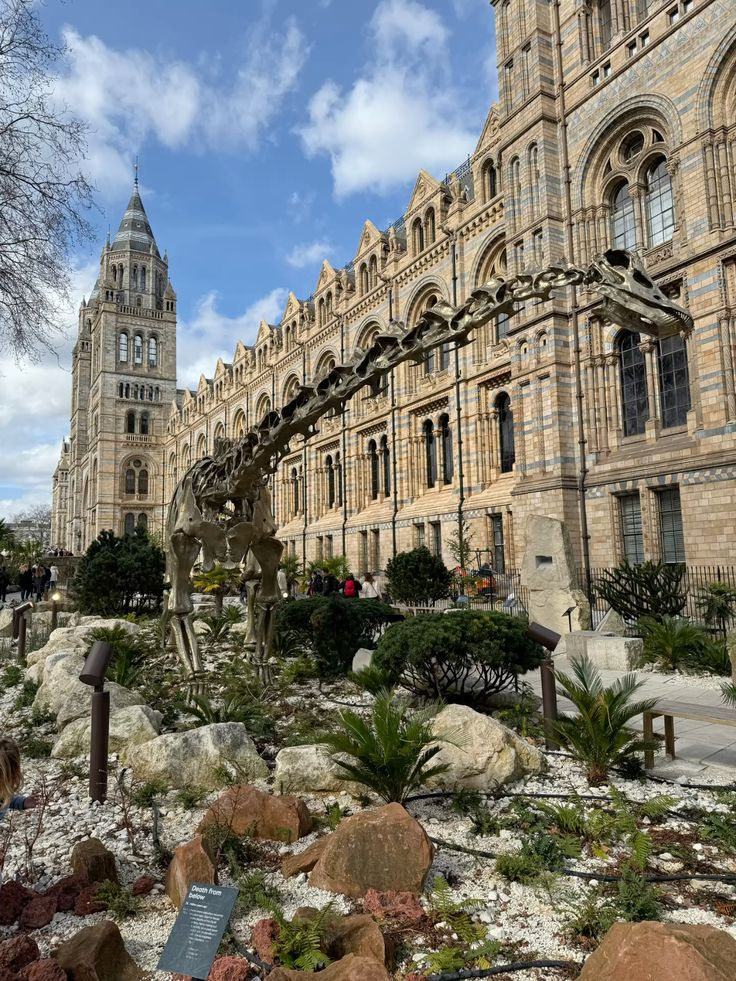
The Natural History Museum in South Kensington is, quite simply, one of the most magnificent buildings in London: a Romanesque cathedral of terracotta brick designed by Alfred Waterhouse and completed in 1881, whose twin towers and ornate facade are as extraordinary as anything inside it. And what is inside it is extraordinary indeed. The museum's collection of 80 million specimens spans nearly four and a half billion years of the Earth's history, from the first primitive life forms of the Precambrian to the megafauna of the Pleistocene to the biodiversity crisis of the present, and it is all completely free to visit.
The centrepiece of the Central Hall, the vast vaulted entrance space that greets visitors as they arrive, is the skeleton of a blue whale, 25 metres long and suspended from the ceiling in a diving pose that makes it look simultaneously enormous and effortlessly graceful. Before 2017, this position was occupied by the skeleton of a Diplodocus dinosaur known affectionately as Dippy, who has since toured the country and returned to the museum in a different gallery. Both are extraordinary in their own way, but the whale, the largest animal that has ever existed on Earth, has a quality of humbling grandeur that no dinosaur quite matches.
The dinosaur galleries are among the most popular in the museum and contain some of the finest fossil specimens in the world, including a cast of a Triceratops skull of staggering size and an animatronic Tyrannosaurus rex that continues to delight and terrify visitors of every age. The geology galleries house the Vault, a display of precious and semi-precious stones that includes the largest natural crystal ball in the world. And the wildlife photographer of the year exhibition, held annually in the museum from October to June, is one of the finest free photography exhibitions anywhere in Britain.
7. Tower Bridge and the Thames Path
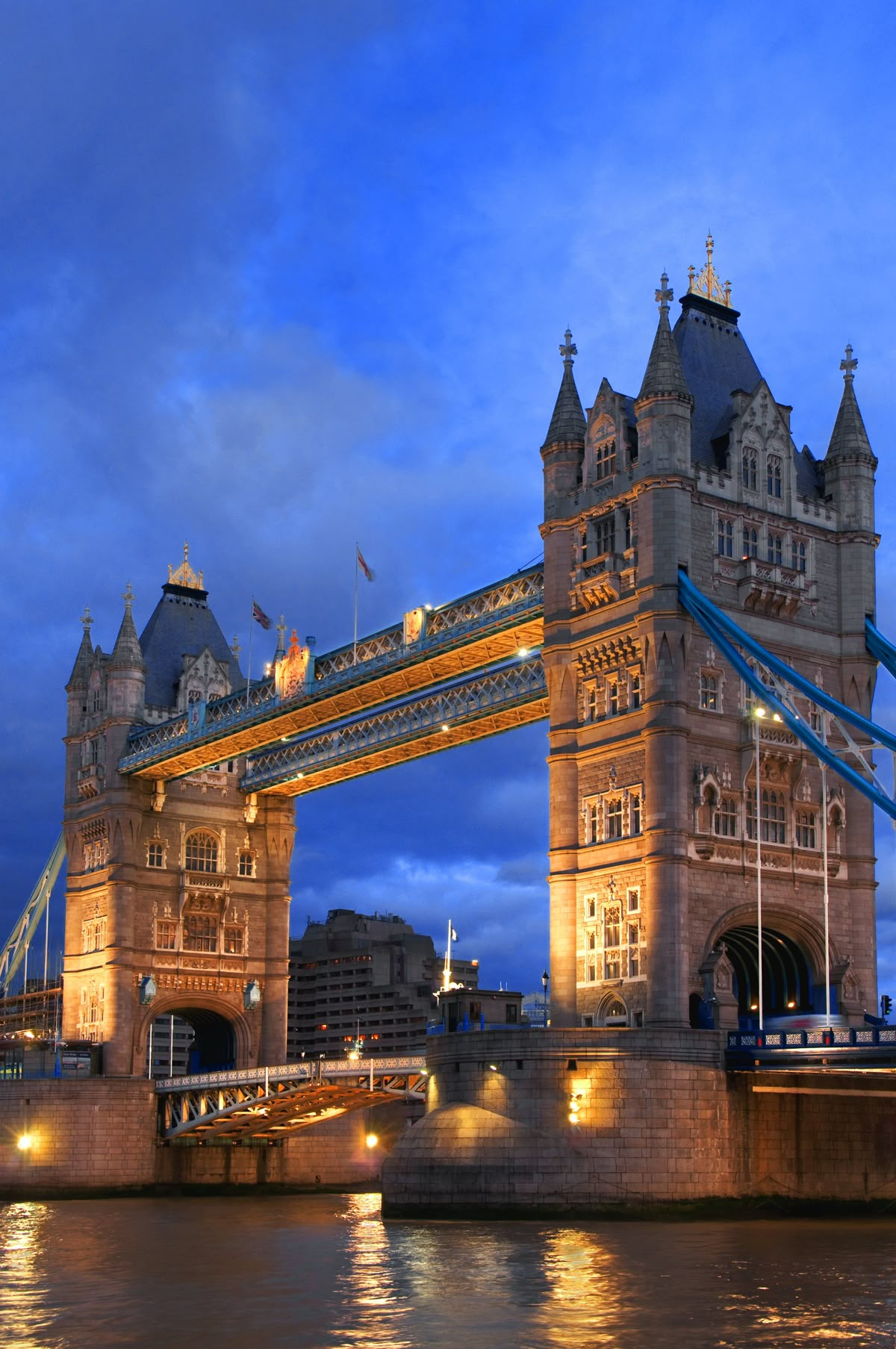
There are sights that exist in every imagination before you have ever seen them in person, and Tower Bridge is one of them. The twin Gothic towers rising from the Thames, the drawbridge between them that still opens several times a week to allow tall ships to pass through, the blue painted steelwork and the view from the bridge itself in both directions along the river: Tower Bridge is one of those structures that manages, despite its ubiquity on postcards and in photographs, to genuinely astonish when you see it for the first time in person. And walking across it is entirely free.
The bridge was completed in 1894 after eight years of construction, and its Victorian Gothic style was chosen specifically to harmonise with the nearby Tower of London, the ancient fortress on the north bank whose history stretches back to William the Conqueror in the eleventh century. The tower of the bridge on the northern side contains the paid exhibition, but the walk across the bridge itself, on the pedestrian walkways at road level, costs nothing and takes you directly to the south bank and the beginning of the Thames Path.
The Thames Path is a 296-kilometre long-distance walking route that follows the river from its source in the Cotswolds to the Thames Barrier in east London, but the central London section between Westminster Bridge and Tower Bridge is one of the finest urban walks in the world, entirely free and open at all hours. From the north bank you pass the Houses of Parliament, the Embankment Gardens, the Savoy, Somerset House, St Paul's Cathedral and the City of London. From the south bank you pass the South Bank Centre, the Globe Theatre, Tate Modern, Borough Market and Bermondsey. Every metre of it is interesting and almost none of it costs anything.
8. Borough Market: The Greatest Food Market in Britain
Borough Market, tucked beneath the railway arches on the south bank of the Thames near London Bridge, is one of the oldest food markets in Europe and, by common consent among people who take food seriously, the finest food market in Britain. There has been a market on this site since at least 1014, possibly earlier, and the current market in its permanent covered form has been trading since the eighteenth century. Visiting it is free: you walk in off Borough High Street or Stoney Street and find yourself immediately in a world of extraordinary food.
The market runs on Wednesdays, Thursdays and Fridays from 10am to 5pm, and on Saturdays from 8am to 5pm, with Saturday being the largest and most vibrant trading day. The stalls cover a range of produce that defies simple summary: raw ingredients of every kind from British and European artisan producers, including extraordinary cheeses from Neal's Yard Dairy, game from dedicated game merchants, bread from the best artisan bakers in the south of England, meat from farms whose husbandry and welfare standards are stated and verifiable, fish from day boats, and seasonal vegetables from market gardens across the Home Counties.
Alongside the ingredient stalls, the market is filled with cooked food vendors of exceptional quality, and the temptation to spend money here is significant. But walking through it is free, the smells alone are an education, and if you arrive early on a Saturday you will see the market at its best: the stalls fully stocked, the traders at their most energetic, and the regulars who come every week conducting the kind of considered, knowledgeable shopping that is a pleasure to observe. The view of Southwark Cathedral from the market, framed by the Victorian iron columns and the railway arches overhead, is one of the finest accidental compositions in London.
9. The Sky Garden: London's Highest Free Viewpoint
At the top of 20 Fenchurch Street, the City of London office tower whose distinctive upward-flaring silhouette has earned it the affectionate nickname the Walkie-Talkie, is one of London's best-kept open secrets: the Sky Garden, a three-floor publicly accessible garden at 155 metres above street level that offers a 360-degree panoramic view of London that rivals the London Eye and the Shard at a fraction of the price. It is, in fact, completely free to visit, though you do need to book your timed entry in advance through the Sky Garden website.
The garden itself is a genuinely beautiful space: a large, light-filled atrium planted with Mediterranean and South African species, including olive trees, lavender, succulents and flowering plants that change through the seasons, with the vast floor-to-ceiling windows providing an unobstructed view in every direction over the rooftops of the City. On a clear day you can see the Thames winding from the west all the way to the estuary in the east, with St Paul's Cathedral, the Shard, Canary Wharf, the towers of the City and the green spaces of south London all visible simultaneously.
The Sky Garden is particularly spectacular at dusk on a clear evening, when the city transitions from its daytime grey-blue to the amber and gold of a million lit windows, and the silhouettes of the cranes and towers of Canary Wharf begin to reflect in the river. Book your free ticket several days in advance, particularly for weekend visits, and arrive at the time specified on your ticket: the building operates strict timed entry and late arrivals may be turned away.
10. Primrose Hill: The Finest Free View in London
Every Londoner has their favourite free view of the city. Some swear by Greenwich Park, with its long southern prospect over the Old Royal Naval College and the Canary Wharf towers beyond. Others prefer the Waterloo Bridge at night, or the north side of the Hungerford Bridge as the sun sets behind the Houses of Parliament. But the view from Primrose Hill, the small but strategically elevated park on the northern edge of Regent's Park in NW3, has a particular quality of wholeness and spaciousness that makes it, in the opinion of many, the finest free panorama in the city.
The hill rises to 78 metres above sea level, which is enough in flat London to place you significantly above the rooflines of the surrounding neighbourhood and provide an unobstructed view southward over the entire central skyline: from the BT Tower on the left, through the cluster of City towers around St Paul's, to the Shard on the right, with Canary Wharf visible further east on clear days and the low ridge of the South Downs occasionally discernible in the far distance when the air is very clear. The panorama board on the hilltop identifies the major landmarks visible from the summit.
Primrose Hill is at its best in the early morning when the light is clean and the city is still relatively quiet, and in the late afternoon when the low sun illuminates the western-facing skyline with a warmth that makes the view almost painterly. The neighbourhood around the hill, known as Primrose Hill and part of the wider village of Chalk Farm, is one of the most charming and least touristy in central London: the streets of Victorian terraces, the independent shops and cafes, the proximity to Regent's Park and the canal make it worth an afternoon of wandering even beyond the hill itself.
London is the city that never stops surprising you. You can live here for a decade and still turn a corner and find something extraordinary that you did not know existed. And the most extraordinary thing of all is how much of it is completely free. The museums, the parks, the river, the views, the ceremony: London gives its best things away. You just have to know where to look.
Common tourist mistakes in London: Paying for the London Eye when the Sky Garden, Primrose Hill and Greenwich Park all offer comparable or superior views for free. Eating lunch in a restaurant near the main tourist sights, where prices are highest and quality is often lowest: walk ten minutes in any direction from Trafalgar Square or the British Museum and you will find far better food at far lower prices. Taking the expensive Heathrow Express when the Elizabeth line reaches central London almost as quickly at a fraction of the cost. And attempting to see too much in a single day: London rewards slowness and punishes the over-ambitious itinerary.
Getting to London: Arriving the Right Way
London is served by six commercial airports, of which Heathrow (LHR) is by far the largest and most important: the busiest airport in Europe for international passengers, located approximately 24 kilometres west of central London and connected to the city by an excellent range of transport options. The most comfortable and direct way to reach your hotel is a private airport transfer, which takes between 45 and 60 minutes depending on traffic and deposits you at your door without the stress of luggage on public transport.
Gatwick Airport (LGW), approximately 45 kilometres south of London, is the second busiest and handles a significant proportion of European and long-haul traffic. Stansted (STN) and Luton (LTN) serve predominantly low-cost carriers. London City Airport (LCY), in the Docklands east of the City, is the most centrally located and the most convenient for business travellers. All are connected to central London by a combination of rail, underground and private transfer options, and all are served by our airport transfer service.


Comments
No comments yet. Be the first to share your thoughts!
Leave a Comment
Your comment will appear after moderation.