 Michelle
 In 1776, Samuel Johnson — the most celebrated literary figure of his age — made a remark so precise and so enduring that it has never truly stopped being true: "A man who has not been in Italy, is always conscious of an inferiority, from his not having seen what it is expected a man should see." Two and a half centuries later, with cheap flights and digital maps and the entire world theoretically accessible to everyone, the observation still lands. Italy is not simply a destination. It is a standard of experience — a measure of how deeply you have allowed yourself to be changed by the world.
The Grand Tour — The Journey That Defined a Civilisation
For nearly two centuries — from the mid-1600s to the mid-1800s — the Grand Tour was the defining rite of passage for educated Europeans. Young aristocrats, poets, painters and philosophers would leave England, France and Germany behind and travel south, crossing the Alps in carriages and on mule-back, descending into a world of ancient ruins, Baroque churches, Renaissance masterpieces, volcanic landscapes and a quality of light that existed nowhere else on the continent. The Tour was not considered a luxury or an entertainment. It was an education — the final chapter of a gentleman's formation, without which he was considered incomplete.
The itinerary was remarkably consistent across the centuries. Venice was the glittering opening act — the city that seemed to float above reality. Florence was the school of the eye: the Uffizi, the Duomo, Michelangelo's David. Rome was the culmination of history — the Forum, the Pantheon, the Vatican, the ruins of an empire that had shaped the entire Western world. And then, at the southern extreme of the journey, was Naples: the wildest, most vital, most overwhelming city of the entire Tour — and the one that astonished travellers most of all.
"See Naples and die" — Vedi Napoli e poi muori — was not a warning. It was an acknowledgement. The city was considered so staggeringly beautiful, so complete an expression of life in all its joy and chaos and grandeur, that nothing experienced afterwards could possibly measure up.
Goethe arrived in Naples in 1787 and wrote that he now understood, for the first time in his life, what it meant to be alive. Turner came and left with canvases that tried to capture something the paint could barely hold — the particular gold of the Italian light on water, the silhouette of Vesuvius against a darkening sky. Byron, Keats, Shelley: all came south, and all were transformed. The Grand Tour produced not just educated gentlemen but some of the greatest works of art, literature and architecture in European history — because Italy, at its finest, does not merely entertain. It provokes. It unsettles. It demands a response.
Did you know? The word "tourist" itself derives directly from the Grand Tour. The travellers who undertook this journey were the first people in history to be called tourists — a word coined in the early 19th century to describe those who travelled for culture and education rather than trade or war.

1. Naples — The Most Misunderstood City in Europe
Naples has a reputation problem. Mention it to travellers who have never been, and you will often hear the same words: chaotic, dirty, dangerous. Mention it to travellers who have been, and the conversation changes entirely. Eyes light up. Stories come tumbling out — of the food, of the noise, of the extraordinary human warmth of the Neapolitan people, of the sheer, raw, irreducible vitality of a city that has been continuously inhabited for nearly 3,000 years and has never once stopped being fully, magnificently, overwhelmingly alive.
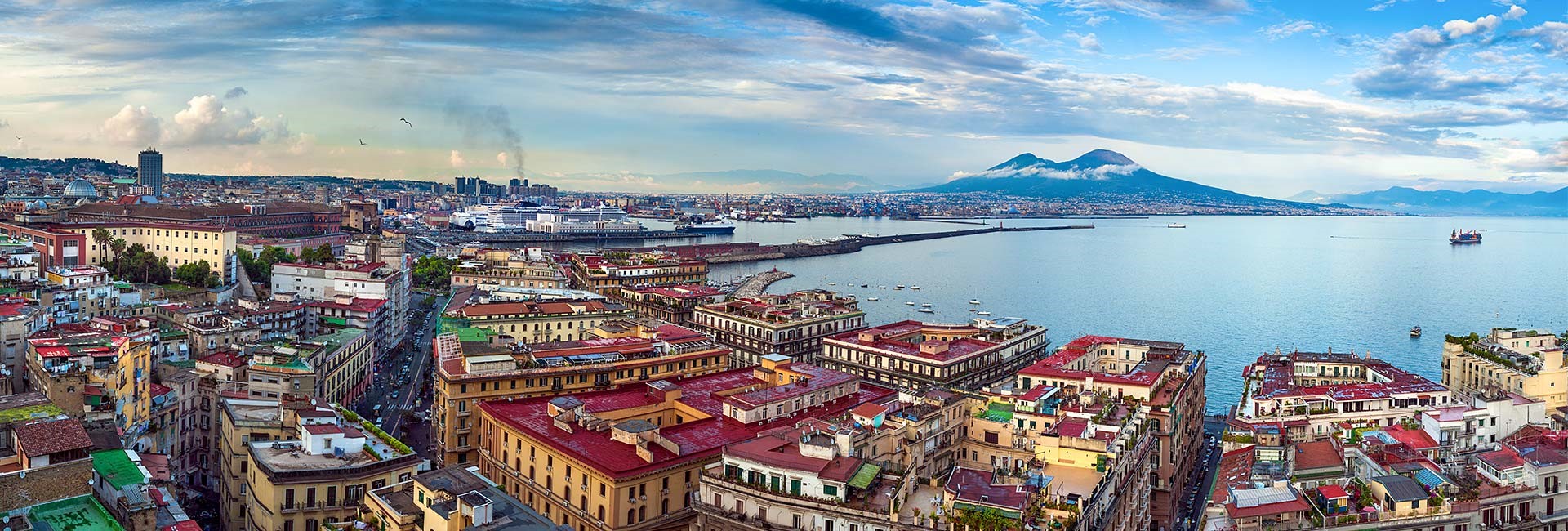
Naples is the third-largest city in Italy and the largest in southern Europe by metropolitan area — and it is, by almost any measure, the most intensely itself of any city on the continent. It does not perform for tourists. It does not curate itself or sanitise its contradictions. Walking through the Quartieri Spagnoli — the labyrinthine Spanish Quarter behind the seafront — you pass crumbling baroque palaces hung with laundry, shrines to Maradona tucked between shrines to the Madonna, children playing football in alleys barely wide enough for two people to pass, pizzerie with wood-burning ovens glowing in the dark. The city has a texture and a density of lived experience that most cities in the world simply do not possess.
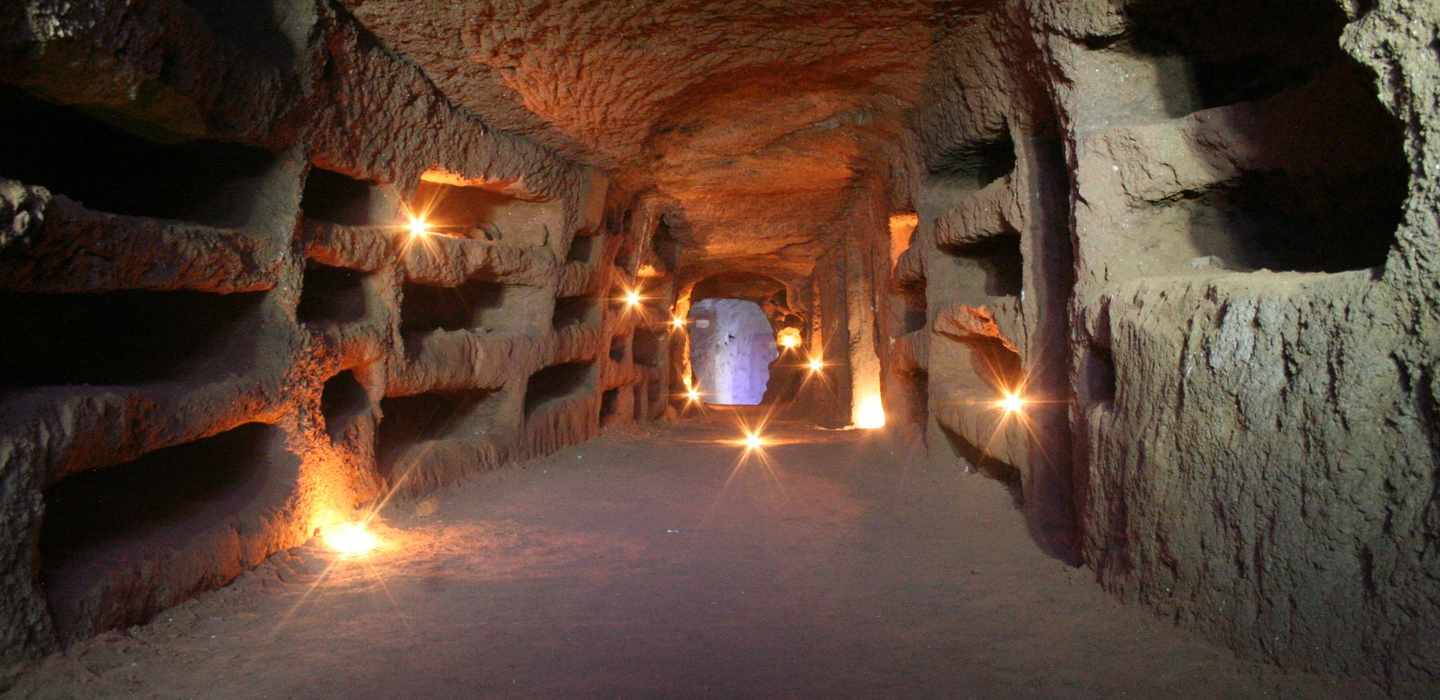
The UNESCO historic centre, declared a World Heritage Site in 1995, contains one of the greatest concentrations of historical monuments in the world — from the Greek foundations of Neapolis laid in the 6th century BC, through Roman, Byzantine, Norman, Angevin, Aragonese and Bourbon layers of history, each one leaving its mark on the urban fabric. Underground, the city is even more extraordinary: a vast network of tunnels, cisterns, catacombs and aqueducts dating back to Greek and Roman times, collectively known as Napoli Sotterranea — Naples Below — and open to guided visits that are among the most extraordinary underground experiences in Europe.
Where to base yourself: The historic centre (Centro Storico) puts you within walking distance of everything, but it is noisy. The Chiaia neighbourhood — elegant, leafy, close to the seafront — offers a quieter base without sacrificing convenience. For views, consider Posillipo, the aristocratic hillside district where grand villas overlook the Bay. All are easy to reach from the airport with a private transfer.
2. The Best Time to Visit Naples — and How to Plan Your Trip
Naples rewards visitors at almost any time of year — but as with all Italian cities, timing makes a significant difference to the quality of your experience. The city has a Mediterranean climate: winters are mild and occasionally wet, summers are hot and increasingly crowded, and the shoulder seasons offer the ideal balance of good weather, manageable crowds and — importantly — the full rhythm of Neapolitan daily life running at its natural pace.
The two finest windows for a first visit are April through June and September through October. In spring, the city is at its most photogenic — the light is extraordinary, the streets are vivid with colour, the sea is warming, and the Amalfi Coast (a 90-minute drive south) is accessible without the gridlock of high summer. September and October bring the warmth of summer without the crush: the sea is still warm enough to swim, the Pompeii excavations are cooler underfoot, and restaurants are less rushed. You get more attention, better service and a sense that the city is exhaling after the summer.
July and August are the months when the tourism infrastructure of the entire region is under maximum strain. The Amalfi Coast road becomes almost impassable without a very early start. Pompeii in August, under a sky of white heat, is an endurance test as much as an archaeological experience. If summer is your only option, book everything — accommodation, transfers, site tickets — well in advance, and plan your days around the heat: out early, resting indoors from noon to four, out again in the early evening.
When planning how many days to allow, be generous. A minimum of four to five days gives you time to explore the historic centre properly, make a day trip to Pompeii (absolutely not to be skipped), visit the extraordinary National Archaeological Museum — the greatest collection of Greco-Roman artefacts in the world — and spend at least one afternoon simply sitting somewhere beautiful, watching the city happen around you. If you can extend to a week, you will have time for the Amalfi Coast, the islands of the Bay (Capri, Ischia, Procida), and the Royal Palace of Caserta — the Italian Versailles, and one of the most breathtaking Baroque buildings in existence.

3. What to Eat in Naples — A Serious Subject
There is a moment that happens to almost every visitor in Naples. It usually occurs on the first or second day, in some entirely unassuming place — a counter with a wood-burning oven behind it, a harried server sliding a plate across the marble in front of you, a pizza that arrives in under ninety seconds. You take a bite. You stop talking. You look at the people you are with. And then, without quite planning to, you say: nothing I have eaten before has prepared me for this.
Neapolitan cuisine is not a regional variation of Italian cooking. It is its own thing — fierce, precise, built on a very small number of exceptional ingredients, and completely intolerant of compromise or substitution. The pizza Napoletana is the clearest example: a protected designation of origin product with strict rules governing the flour, the water, the San Marzano tomatoes, the fior di latte mozzarella (or buffalo mozzarella from the nearby Caserta plain), the temperature of the wood-fired oven (485°C minimum) and the precise technique of the pizzaiolo. The result — a slightly charred, soft, blistered disc that barely holds its toppings — is arguably the most perfect food ever devised by the human species. Do not leave Naples without eating it in its homeland at least once.
Beyond pizza, the Neapolitan table is one of extraordinary abundance. Spaghetti alle vongole — spaghetti with clams, white wine, garlic and parsley — is one of the great pasta dishes of the world. Ragù Napoletano, the slow-cooked meat sauce that simmers for hours and is served on rigatoni or ziti, is Sunday lunch elevated to a spiritual practice. Frittura — fried courgette flowers, battered anchovies, cubes of mozzarella — arrives in paper cones at street stalls and is consumed standing up, always, because sitting down would slow you down unnecessarily.
Food tips for Naples: Start every morning with an espresso at the bar — standing, as the locals do, because sitting down costs more and is considered slightly effete. Order a sfogliatella (the flaky, shell-shaped pastry filled with ricotta and candied peel) alongside it. At lunch, seek out the pizzerie fritto for fried pizza — a folded, deep-fried version that predates the baked variety and is consumed on the street. At dinner, never rush. And never, under any circumstances, ask for pineapple on your pizza.
For gelato, look for the word artigianale and avoid any establishment where the product is piled high in fluorescent mounds — that is industrial gelato, and it has no place in your itinerary. Neapolitan pastry shops (pasticcerie) are some of the finest in Italy: the babà al rum — a small, sponge cake soaked in rum syrup — is the city's emblematic sweet, and a great one, properly made, is a revelation. And if you happen to be in Naples during summer, do not leave without trying a granita al limone made with the lemons of the Amalfi Coast — a flavour so precise and so intense that it renders the memory of every other lemon-flavoured thing you have ever eaten entirely obsolete.
4. Common Tourist Mistakes in Naples — and How to Avoid Them
Naples is a city that repays preparation and punishes carelessness — not because it is dangerous, but because its rhythms and rules are its own, and travellers who arrive with assumptions formed by other Italian cities often find themselves confused or disappointed. Here is what experienced travellers consistently wish they had known.
Do not skip Pompeii. This sounds like the most obvious advice imaginable — and yet a surprising number of visitors to Naples treat Pompeii as an optional add-on rather than a non-negotiable. It is, without exaggeration, one of the most extraordinary archaeological sites in the world. The city frozen by the eruption of Vesuvius in 79 AD covers 66 hectares and is still being excavated: houses with frescoed walls still showing their original colours, bakeries with loaves still in the ovens, a theatre, a forum, bath houses, brothels, temples. Standing in a Pompeii street and looking up at the mountain that buried it is one of the most affecting experiences in all of Italy. Book your tickets online well in advance: the site attracts over 4 million visitors a year, and summer queues without a pre-booked slot can be several hours long. Arrive when it opens — 9:00 AM — and wear light clothing with comfortable shoes.
Do not eat near the main monuments. This applies everywhere in Italy but especially in Naples, where the tourist restaurant infrastructure around Piazza del Plebiscito and Castel Nuovo exists almost entirely to extract money from people who have not done their research. Walk three streets away from any major landmark before you sit down. If the menu has photographs, keep walking. If the waiter is standing outside waving you in, keep walking. The truly great places — the ones where Neapolitans eat — are almost never on a main square, almost always slightly difficult to find, and almost invariably worth the effort.
Tips to avoid queues: Book the National Archaeological Museum, Pompeii, and the Royal Palace of Caserta online before you travel. For the Amalfi Coast in summer, leave Naples no later than 7:30 AM — the coastal road becomes extremely congested after 9:00 AM. For the islands of the Bay, the first ferries of the morning are always the least crowded. And if you want to visit Napoli Sotterranea (the underground city), book the guided tour in advance — groups are limited in size and slots fill quickly.
Do not underestimate the National Archaeological Museum. Most visitors come to Naples for the pizza and the proximity to Pompeii — and entirely overlook what is arguably the city's greatest single treasure. The Museo Archeologico Nazionale di Napoli houses the finest collection of Greco-Roman artefacts in existence: bronzes from Herculaneum, mosaics from Pompeii (including the extraordinary Alexander Mosaic, originally from the House of the Faun), the Farnese collection of ancient sculpture, and the famous Gabinetto Segreto — the Secret Cabinet of erotic art from Pompeii, restored to public view after centuries of being locked away. Allow a minimum of three hours. It will not be enough.
Do not ignore the underground. Napoli Sotterranea — the network of Greek and Roman tunnels running beneath the city, used as an aqueduct for centuries and as an air-raid shelter during World War II — is one of the most atmospheric and extraordinary underground experiences in Europe. Guided tours depart from Piazza San Gaetano, descend 40 metres below street level, and take you through narrow passages lit by candlelight, past cisterns carved from the volcanic tufa by Greek workers in the 4th century BC. It is startling, slightly claustrophobic, and completely unmissable.
Day Trips from Naples — Vesuvius, the Amalfi Coast and the Islands of the Bay
One of the great advantages of basing yourself in Naples is the extraordinary range of day trips available within a 90-minute radius. The city sits at the centre of one of the most scenically and historically dense regions in Europe, and the excursions available from its doorstep would fill a month of itineraries.
Mount Vesuvius is the most dramatic. The only active volcano on the European mainland, Vesuvius is visible from almost every vantage point in Naples — a constant, brooding presence on the eastern horizon. The summit is accessible by bus from the Pompeii car park, followed by a 30-minute uphill walk on a well-maintained path. Standing at the crater rim, peering into the steaming interior of the volcano that buried an entire civilisation in a single afternoon in 79 AD, is one of the defining experiences of any Italian journey.
The Amalfi Coast is perhaps the most beautiful stretch of coastline in Europe — 50 kilometres of vertiginous cliffs dropping to turquoise water, punctuated by the white and pastel-coloured villages of Positano, Amalfi, Ravello and Cetara. The coast is best experienced by boat (which avoids the road traffic entirely) or by departing by car very early in the morning. Ravello in particular — perched 350 metres above the sea, its villa gardens open to the public, its annual music festival drawing performers from around the world — is worth a full day of your time and will stay with you for the rest of your life.
The islands of the Bay — Capri, Ischia and Procida — are each magnificent and each entirely different in character. Capri is glamour and geology: the Faraglioni sea stacks, the Blue Grotto, the Villa Jovis where the Emperor Tiberius spent his last years. Ischia is thermal springs and volcanic beaches and a lushness born of volcanic soil. Procida — small, intensely colourful, recently designated Italy's Capital of Culture — is the most authentic of the three, and the most moving: a working fishing island that has not yet been overwhelmed by the machinery of mass tourism.
Getting to the islands: Ferries and hydrofoils to Capri, Ischia and Procida depart from the Port of Naples (Molo Beverello) throughout the day. Capri is 50 minutes by hydrofoil; Ischia is 90 minutes by ferry or 60 by hydrofoil; Procida is 35 minutes by hydrofoil. Book tickets in advance in summer and always take the first morning departure — the islands receive enormous visitor numbers and the early hours, before the cruise passengers arrive, are by far the most peaceful.
Getting to Naples — Airports and Transfers
Naples is served by Naples International Airport (Capodichino, NAP), located approximately 6 kilometres northeast of the city centre. The airport receives direct flights from most major European hubs and — increasingly — from long-haul destinations via connecting flights in Rome or Milan. Getting from the airport to your hotel deserves careful thought, especially if you are arriving with luggage after a long journey.
The most comfortable and reliable option is a private airport transfer — door to door, with a driver who knows the city, a fixed price and none of the uncertainty of navigating public transport with heavy bags. The journey to the city centre takes approximately 15 minutes in normal traffic. The Alibus shuttle is also available, connecting the airport to Piazza Garibaldi (the main train station) and the Port in approximately 15 to 25 minutes, with departures every 20 minutes.
From Naples, the high-speed Frecciarossa train connects to Rome in approximately 70 minutes and to Milan in under three hours — making Naples an ideal southern base for a wider Italian itinerary. If you are planning to combine Naples with Rome, the train is unquestionably the best option: fast, comfortable, city-centre to city-centre, with no airport queues at either end.
Comments
No comments yet. Be the first to share your thoughts!
Leave a Comment
Your comment will appear after moderation.