 Michelle
 There are cities that make you feel like a tourist, and then there are cities that make you feel like an explorer. Istanbul is emphatically the second. This is the only city in the world that stands on two continents, Europe and Asia, divided by the glittering Bosphorus Strait, a waterway that has carried traders, warriors and pilgrims for more than two thousand years. The entire Sultanahmet district, the historic heart of old Constantinople, is a UNESCO World Heritage Site, densely packed with some of the most extraordinary buildings ever constructed by human hands. You will need several days to do justice to Istanbul, but if your time is limited, these are the five experiences you simply cannot miss.
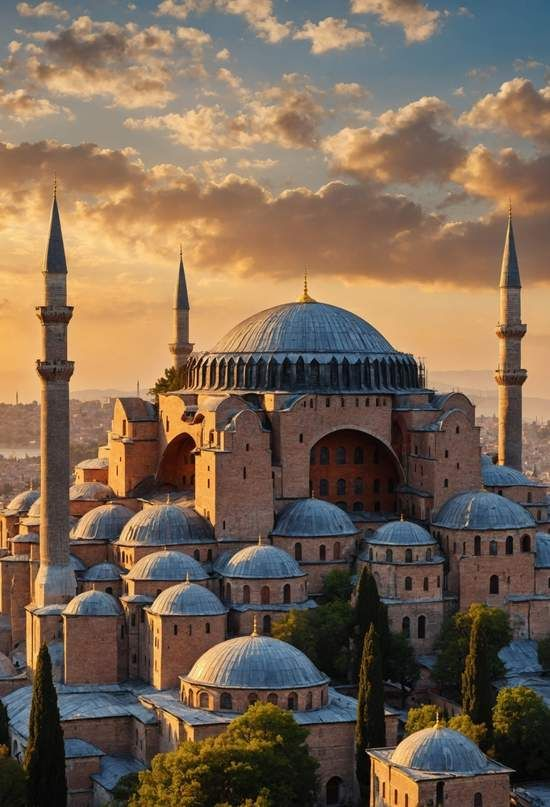
1. The Blue Mosque: Sultanahmet Camii and Its Six Minarets
The Sultanahmet Camii, known to the world as the Blue Mosque, is one of the most recognisable and most beautiful religious buildings on Earth. It was commissioned by Sultan Ahmet I, who was only nineteen years old when he began the project and who died just a few years after its completion in 1617. The architect, Sedefkar Mehmed Aga, was a student of the great Sinan, the master builder of the Ottoman golden age, and the mosque he designed represents the culmination of classical Ottoman architecture. You will see a cascade of domes and half domes, six slender minarets piercing the sky, and a vast courtyard that rivals the building itself in its elegance and proportion.
The mosque is famous for its interior, which is lined with more than twenty thousand handmade Iznik tiles in shades of blue, turquoise and white, which is why the world calls it the Blue Mosque. The tiles are arranged in floral and geometric patterns of extraordinary complexity, and they catch the light from the 260 windows in ways that change dramatically as the sun moves across the sky. The central dome rises forty three metres above the prayer hall, supported by four massive piers known as elephant feet, and the effect on first entering is one of sublime calm. The space is enormous yet intimate, decorated yet serene, a place that succeeds in feeling simultaneously grand and welcoming.
The mosque is still an active place of worship, which adds to the authenticity of the experience but comes with important rules for visitors. Women must cover their heads, and scarves are available at the entrance. All visitors must remove their shoes, and plastic bags are provided to carry them. Prayer times are strictly observed, which means the mosque is closed to non worshippers for approximately ninety minutes during each of the five daily prayers. The best time to visit is early morning, just after sunrise, when the light is beautiful and the crowds are thin. Entrance is free, though donations are welcome.
Pro tip: Visit the Blue Mosque at dusk when the call to prayer echoes across Sultanahmet Square and the mosque is illuminated from within. The tiles seem to glow with their own light, and the city below is reduced to a carpet of twinkling lamps. It is one of the most atmospheric experiences Istanbul offers, and it costs nothing but your time and attention.
2. Hagia Sophia: A 1,500 Year Old Wonder of the World
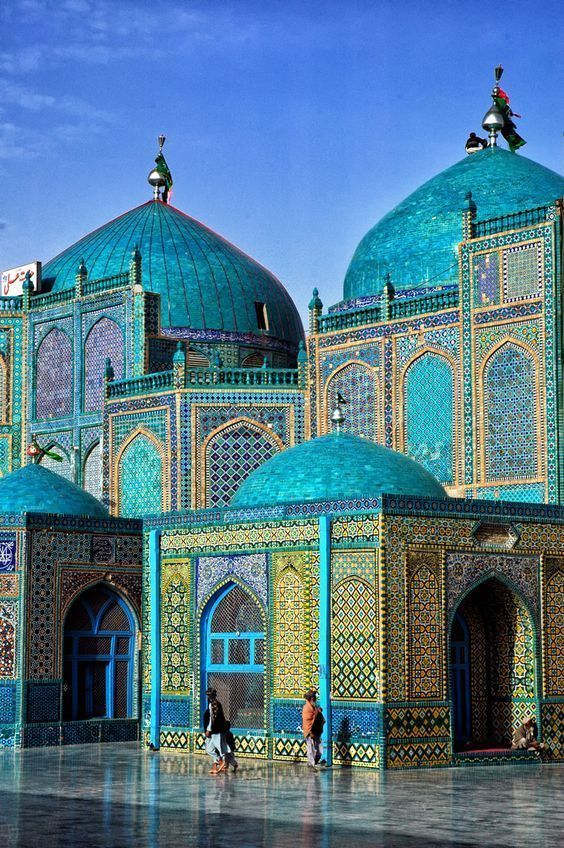
If the Blue Mosque represents the peak of Ottoman architecture, Hagia Sophia, the Church of Holy Wisdom, represents something even rarer. This is a building that has been at the centre of world history for nearly 1,500 years, serving as the greatest cathedral of Christendom for nine centuries, then as an imperial mosque for five centuries, then as a museum for eight decades, and now once again as a mosque. Walking through its doors is to walk through the layers of history itself.
The building was completed in the year 537 AD under the Byzantine Emperor Justinian I, who reportedly exclaimed upon its completion, "Solomon, I have surpassed you," referring to the Temple of Jerusalem. The architects, Anthemius of Tralles and Isidorus of Miletus, created a central dome that seemed to float on light, an engineering miracle that remained the largest cathedral in the world for nearly a thousand years. The dome is 55.6 metres above the floor and 31.7 metres in diameter, and when you stand beneath it, looking up at the ring of forty windows that circle its base, it genuinely does seem to be suspended from heaven rather than supported by the massive piers that actually hold it.
The interior is a palimpsest of faiths. Christian mosaics of Christ, the Virgin Mary and Byzantine emperors survive alongside enormous circular medallions inscribed with the names of Allah, the Prophet Muhammad and the first caliphs. The two religions are layered one over the other, sometimes literally, as when a mosaic of the Virgin and Child was plastered over during the Ottoman conversion and then uncovered again in the twentieth century. The effect is at once harmonious and profoundly moving: a building that has accommodated two of the world's great religions without entirely erasing either.
Time saving tip for Hagia Sophia: The queues for Hagia Sophia can be very long, especially in summer. Arrive at least thirty minutes before opening time, which is 09:00 though this varies seasonally and by prayer schedule, to be among the first inside. The upper gallery, accessed by a sloping stone ramp, contains the best preserved mosaics and offers the finest views down into the main space, so do not skip it. Since its 2020 reconversion to a mosque, entrance is now free, but prayer schedules apply as with the Blue Mosque.
3. Topkapi Palace: Four Centuries of Ottoman Sultans
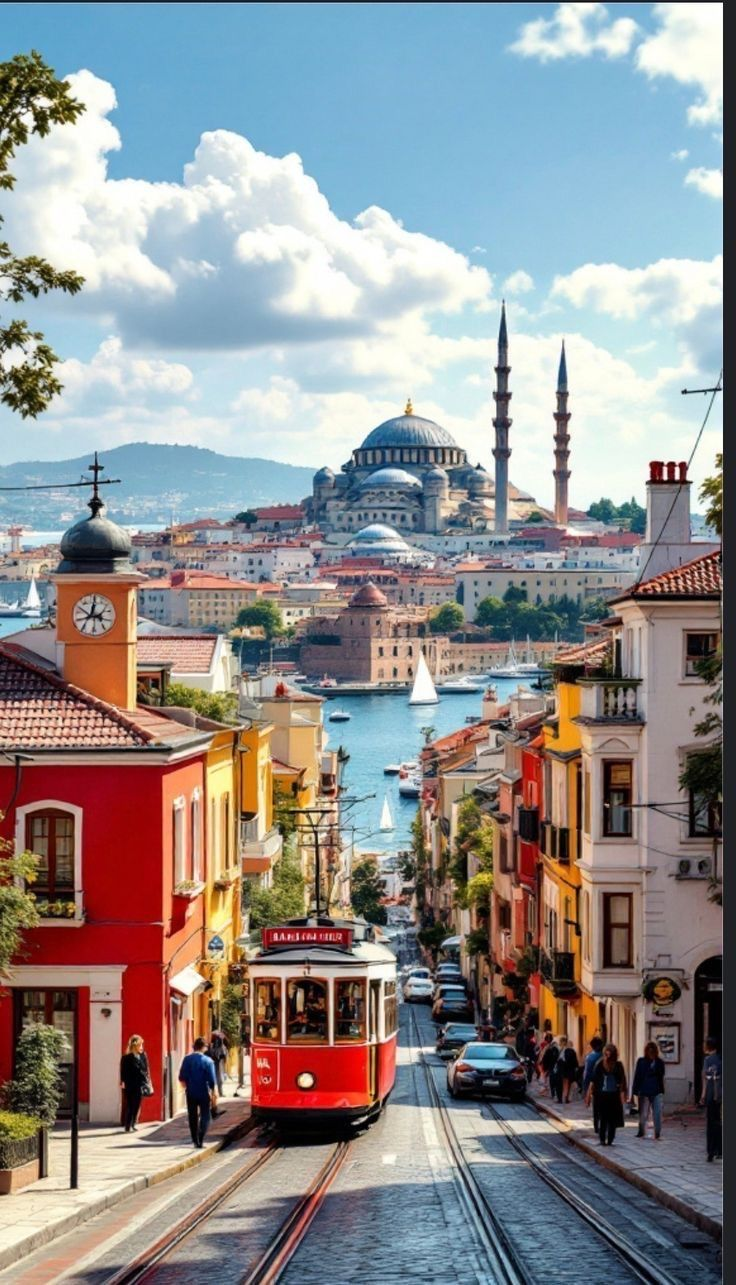
For nearly four hundred years, from the 1460s to the 1850s, Topkapi Palace was the political and residential heart of the Ottoman Empire. This sprawling complex of courtyards, halls, kitchens, barracks, libraries, mosques and residential apartments occupies one of the most commanding positions in Istanbul, perched on the promontory where the Golden Horn meets the Bosphorus Strait, with views that have not changed in centuries.
The palace was begun by Mehmed the Conqueror shortly after his conquest of Constantinople in 1453, and every sultan for the next four centuries added his own pavilions, kiosks and renovations. The result is not a single building but a city within a city, organised around four main courtyards separated by monumental gates. The First Court is the outermost, where the palace guards and service buildings were located. The Second Court, entered through the magnificent Gate of Salutation, contains the palace kitchens, where you can see the extraordinary collection of Chinese and Japanese porcelain, one of the finest in the world, and the Imperial Council chamber where the sultan's viziers conducted the business of the empire.
The Third Court was the sultan's private domain, and it contains some of the most breathtaking rooms in the palace. You will find the audience chamber where foreign ambassadors were received, the library of Ahmet III, and the Sacred Relics collection, which includes what is believed to be the staff of Moses, the sword of David and the mantle of the Prophet Muhammad. These are objects of extraordinary religious significance that draw pilgrims from across the Muslim world. The Fourth Court is a series of pleasure pavilions and terraced gardens with unbroken views over the Bosphorus, the perfect place to end your visit and absorb the scale of what the Ottomans created.
Practical tip for Topkapi Palace: Topkapi is enormous, so plan to spend at least three to four hours, or more if you want to see everything properly. The Harem section, where the sultan's family and concubines lived, requires a separate ticket and is well worth the extra cost. The tiled rooms and intimate scale provide a fascinating contrast to the public ceremonial spaces. Visit on a weekday morning to avoid the worst crowds, and wear comfortable shoes, as you will cover a lot of ground on sometimes uneven surfaces.
4. The Grand Bazaar and Spice Bazaar: The Art of the Bargain
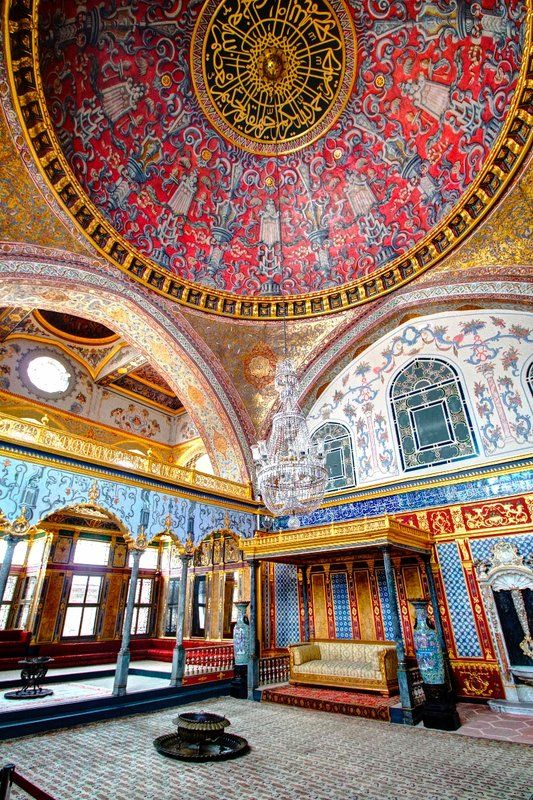
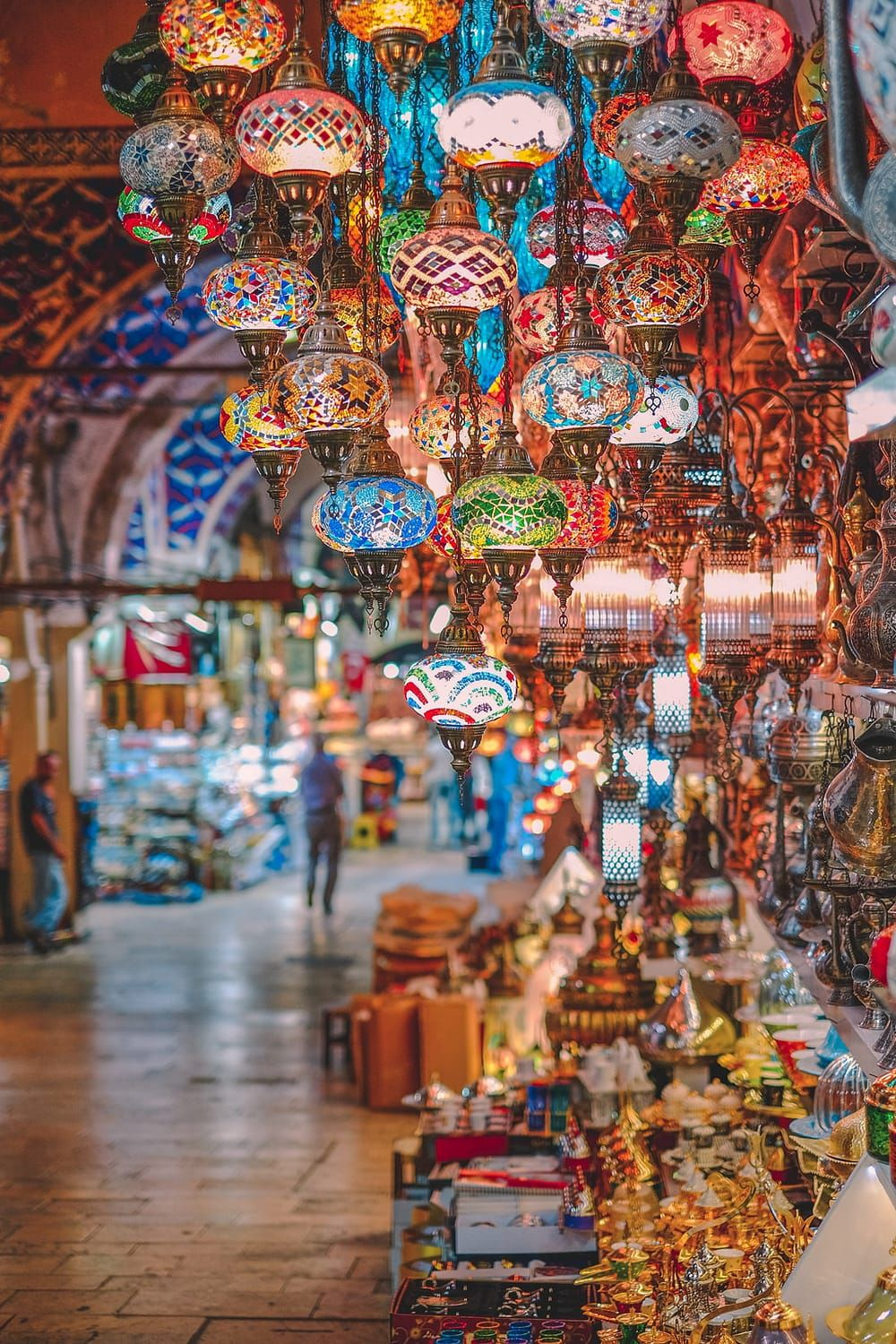
No visit to Istanbul is complete without surrendering yourself to the organised chaos of its great covered markets. The Grand Bazaar, or Kapali Carsi in Turkish, meaning Covered Market, is one of the largest and oldest covered markets in the world. It is a labyrinth of more than sixty streets and four thousand shops spread across an area that feels like a small town under glass. The market was begun shortly after the Ottoman conquest in the fifteenth century and has been expanding ever since, absorbing caravanserais, commercial inns and neighbourhoods into its ever growing footprint. Entering the Grand Bazaar is not like entering a shopping mall; it is like entering a city, one with its own logic, its own geography and its own rhythm.
The bazaar is organised by trade. Goldsmiths and jewellers are concentrated in the Kalpakcilarbasi area. Carpet sellers have their own quarter. Leather goods, ceramics, textiles, antiques, spices, lamps and hookahs each have their own neighbourhood. The best approach is to set aside several hours, allow yourself to get lost, and treat the experience as an exploration rather than an errand. The merchants are famously persuasive, and the art of bargaining is expected, so do not be shy. Offer half the asking price as a starting point, be prepared to walk away, and you will usually end up somewhere around sixty to seventy percent of the original quote. The negotiation is part of the entertainment, and a successful bargain conducted with good humour will often end with tea and a smile from the vendor.
The Spice Bazaar, or Misir Carsisi in Turkish, meaning Egyptian Market, is smaller, older and more specialised. It dates from the 1660s and is located just beside the Galata Bridge at the entrance to the Golden Horn. The smells here are the first thing you notice. You will see heaped mounds of Turkish delight in every imaginable flavour, saffron and sumac, cumin and cinnamon, dried fruits and nuts, lokum dusted with powdered sugar, and the famous Turkish coffee ground so fine that it is almost a powder. This is the place to buy edible souvenirs: spices by weight, boxes of lokum, dried figs and apricots, pistachios and walnuts, and the apple tea that seems to be offered everywhere. The later you leave your market visit in your trip, the more you will regret not leaving room in your luggage, so buy early and pack carefully.
Common tourist mistakes in the Grand Bazaar: Accepting the first price offered without bargaining. Shopping without a clear sense of what things should cost, so take a quick walk around the bazaar before buying anything. Forgetting that the Grand Bazaar is closed on Sundays and public holidays, which many guidebooks do not mention. Carrying large bills without smaller notes for negotiation, so bring a mix of denominations. The most common mistake of all is spending the whole day in the bazaar and missing everything else Istanbul has to offer. The Grand Bazaar is an experience, not the experience. Limit yourself to a morning or an afternoon, then go see something else.
5. A Bosphorus Cruise: Where Europe Meets Asia
The Bosphorus Strait is not simply a body of water. It is the dividing line between two continents, a marine highway that has carried the trade of empires for three millennia, and one of the most beautiful urban waterways on Earth. A cruise along its length, ideally from the Golden Horn up to the Black Sea entrance and back, is an essential Istanbul experience. It gives you a front row seat to the city's layered history, its waterfront architecture and its incomparable light.
The full Bosphorus cruise, operated by Sehir Hatlari, the city's public ferry company, runs from the Eminonu pier near the Galata Bridge up to the village of Anadolu Kavagi near the Black Sea. This is a journey of approximately ninety minutes each way. The ferries are inexpensive, authentic and not primarily tourist oriented, which adds to the charm. You will pass beneath the two Bosphorus bridges, cruise past the magnificent nineteenth century Ottoman palaces of Dolmabahce and Beylerbeyi, the medieval fortress of Rumeli Hisari built by Mehmed the Conqueror in just four months as preparation for his final assault on Constantinople, and the beautiful nineteenth century timber yalis, which are waterfront mansions that line the strait on both sides.
The ferries stop at Anadolu Kavagi for a couple of hours, giving you time to walk to the ruins of Yoros Castle, a Byzantine fortress with commanding views over the Black Sea entrance, and to eat fresh fish sandwiches at the waterfront restaurants before the ferry turns back. The round trip takes about four to five hours, and the best time to do it is on a weekday morning, when the light is good and the ferries are not packed with weekend crowds. Bring a jacket even in summer, as the wind on the Bosphorus is always cooler than inland, and the open upper deck is where the views are best.
Best time to visit Istanbul for weather and crowds: The ideal months are April to May and September to November. April brings the Istanbul Tulip Festival, when millions of tulips burst into bloom across the city's parks and roundabouts, a spectacular free show that is rarely mentioned in guidebooks. Autumn offers crisp, clear days and golden light perfect for photography. Avoid July and August if you can, as the city is packed, the queues are brutal, and the humidity can be oppressive. Winter, from December to February, is cold and often rainy, but the city is quiet, hotel prices are low, and the atmosphere of the covered bazaars and steaming tea houses is at its most authentic.
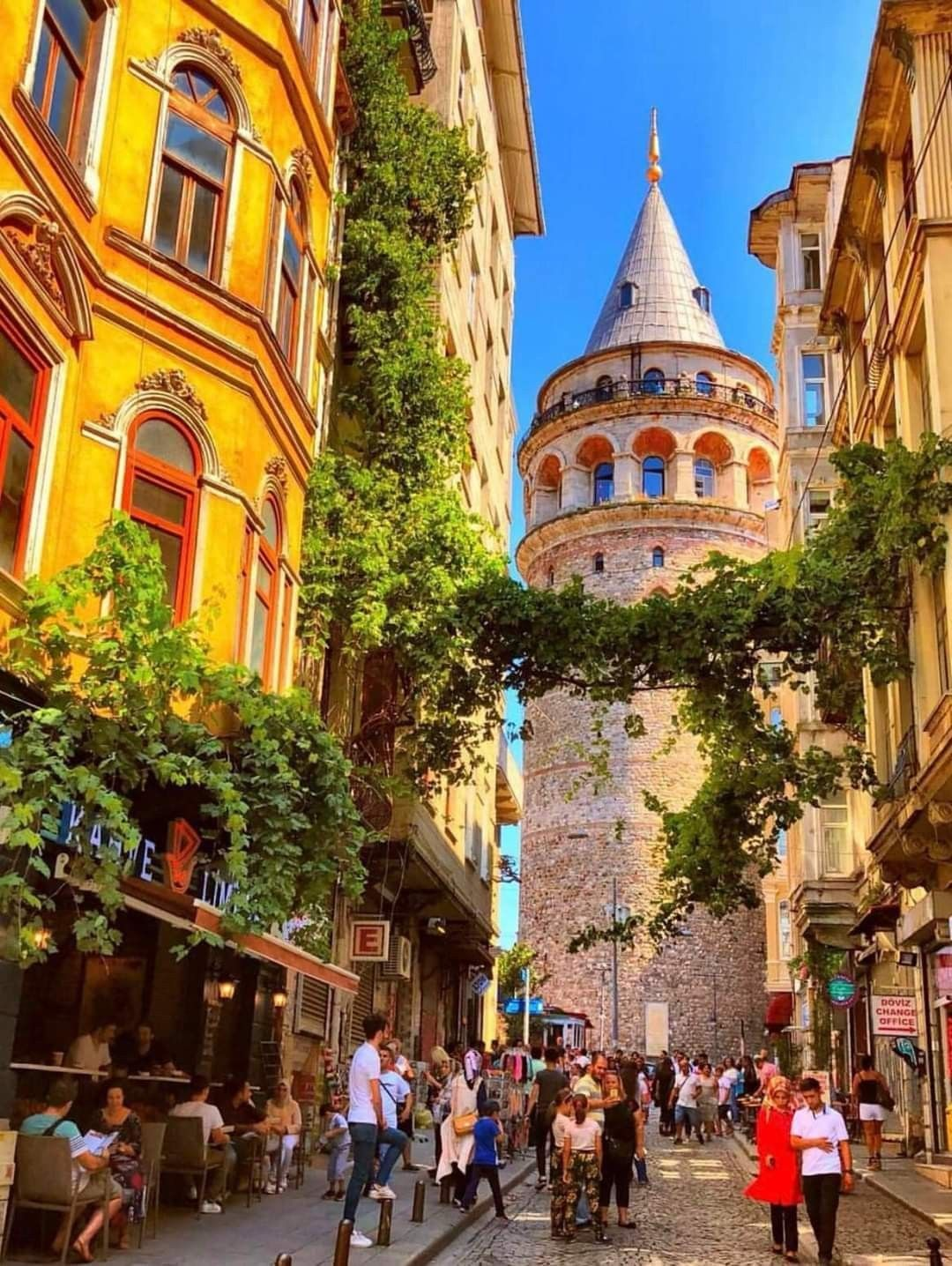
The great sixteenth century French writer Pierre Loti, who fell so deeply in love with Istanbul that he spent much of his life here, wrote: "Everything is beautiful here, everything is grand, everything is poetic. The sun is more beautiful than elsewhere, the sky is more beautiful, the moon is more beautiful." More than four hundred years later, travellers still say the same thing. Istanbul is not a city you visit. It is a city you fall into, and from which you never entirely emerge.
Getting to Istanbul: Arriving at the Crossroads of the World
Istanbul is served by two major airports. Istanbul Airport, located on the European side approximately forty five kilometres northwest of the city centre, is the main international gateway, with connections to virtually every continent. Sabiha Goekcen Airport, on the Asian side approximately forty five kilometres east of the Bosphorus, serves a growing number of international and domestic carriers, especially low cost airlines. You must know which airport you are flying into before you plan your transfer, as the distance between them is significant and crossing between continents takes time.
From either airport, the most comfortable way to reach your hotel is a private airport transfer, which meets you in the arrivals hall, helps with your luggage and delivers you directly to your door with no waiting, no changes and no navigating public transport after a long flight. From Istanbul Airport to Sultanahmet, the journey takes between forty five and sixty minutes depending on traffic. From Sabiha Goekcen to the European side, allow sixty to ninety minutes as you cross the Bosphorus Bridge.
For those travelling on a budget, public transport options exist. From Istanbul Airport, the Havaist buses run to Taksim, Yenikapi and other points, and the Metro line M11 connects the airport to the city rail network, though this requires changes to reach Sultanahmet. From Sabiha Goekcen, the Havabus shuttle runs to Taksim and Kadikoy. But for first time visitors, especially those arriving after a long flight, the convenience of a private transfer is hard to overstate. You arrive in Istanbul ready to explore, not exhausted from navigating unfamiliar systems.
Tips for avoiding queues at Istanbul's major sights: Book your Topkapi Palace ticket online in advance to skip the main entrance queue. The Harem section can be visited at quieter times by going just before lunch. For Hagia Sophia and the Blue Mosque, arrive before 09:00 to be among the first inside, and avoid Fridays when the midday prayer draws large crowds. The Grand Bazaar is least crowded on Tuesday and Wednesday mornings, and it is packed on Saturdays. If you are visiting in summer, the Basilica Cistern, the extraordinary underground water palace near Hagia Sophia, is a cool, quiet refuge during the heat of the afternoon.
Comments
No comments yet. Be the first to share your thoughts!
Leave a Comment
Your comment will appear after moderation.