 Michelle
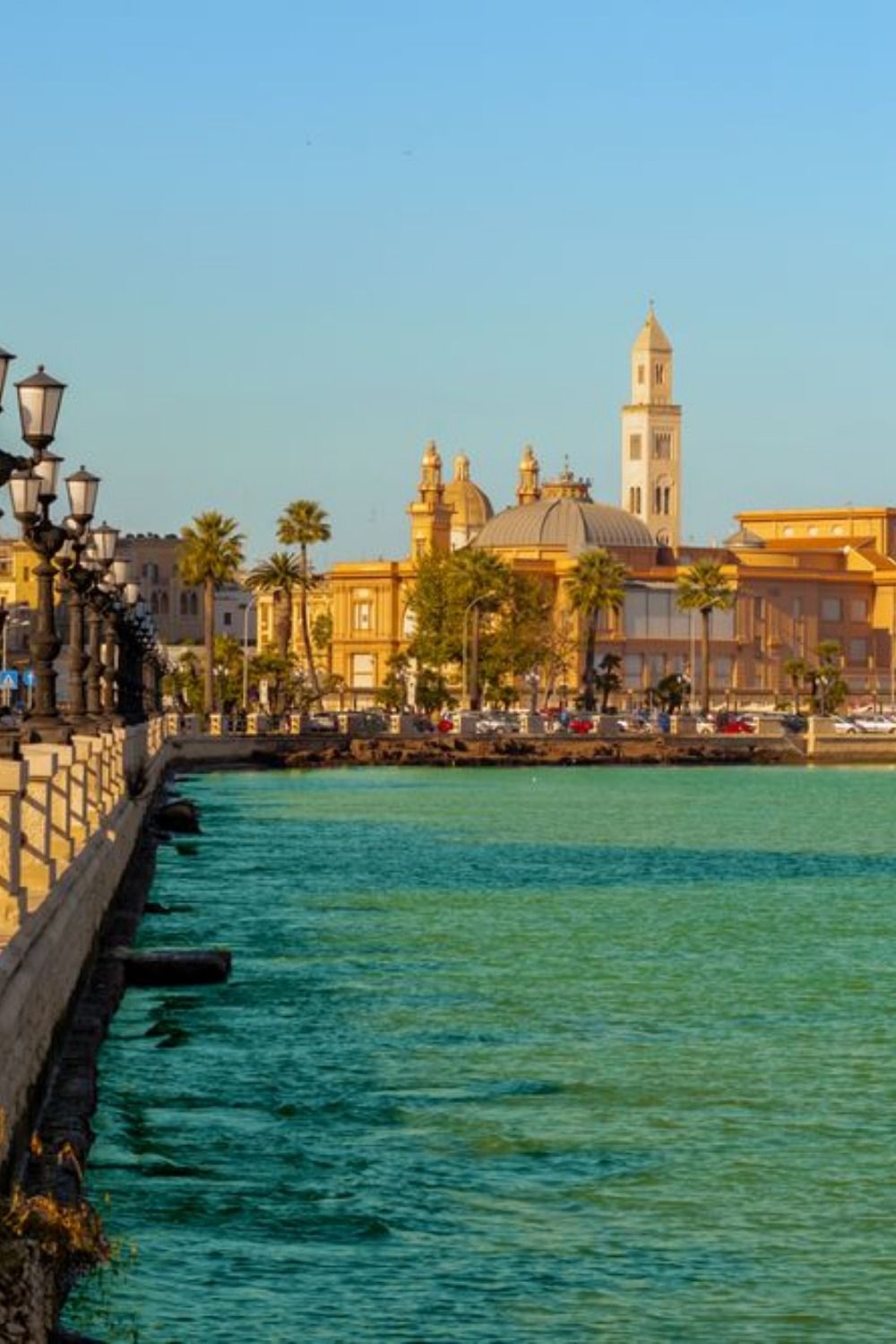
 Bari does not shout. It murmurs. It whispers its stories from the arches of its medieval alleyways, from the marble floors of its Norman basilicas, from the frying oil of its street food vendors and from the gentle lapping of the Adriatic against its ancient seawalls. I was born here, in a small apartment overlooking the Piazza Mercantile, and I have spent my entire life learning to listen. The city has been Greek, Roman, Byzantine, Norman, Swabian, Angevin, Aragonese, Bourbon and Italian. Every invasion left something behind: a recipe, a stone, a feast day, a curse. Five days is the minimum time required to begin understanding what they have left. Come with me. I will show you my Bari.
Day 1 — Bari Vecchia, the Basilica of Saint Nicholas and the Legend of the Stolen Saint
Begin your first morning in the heart of Bari Vecchia, the old city. This is not a museum quarter restored for tourists. It is a living neighbourhood, the oldest continuously inhabited part of Bari, where grandmothers still make orecchiette on wooden boards in the doorways of their houses and where the laundry hangs across the alleyways as it has for centuries. The streets are narrow, paved in chianche, the local limestone, polished by a thousand years of footsteps. Walk without a destination. Lose yourself in the labyrinth. Every corner offers a surprise: a hidden chapel, a Baroque balcony, a child chasing a ball, a cat sleeping on a windowsill.
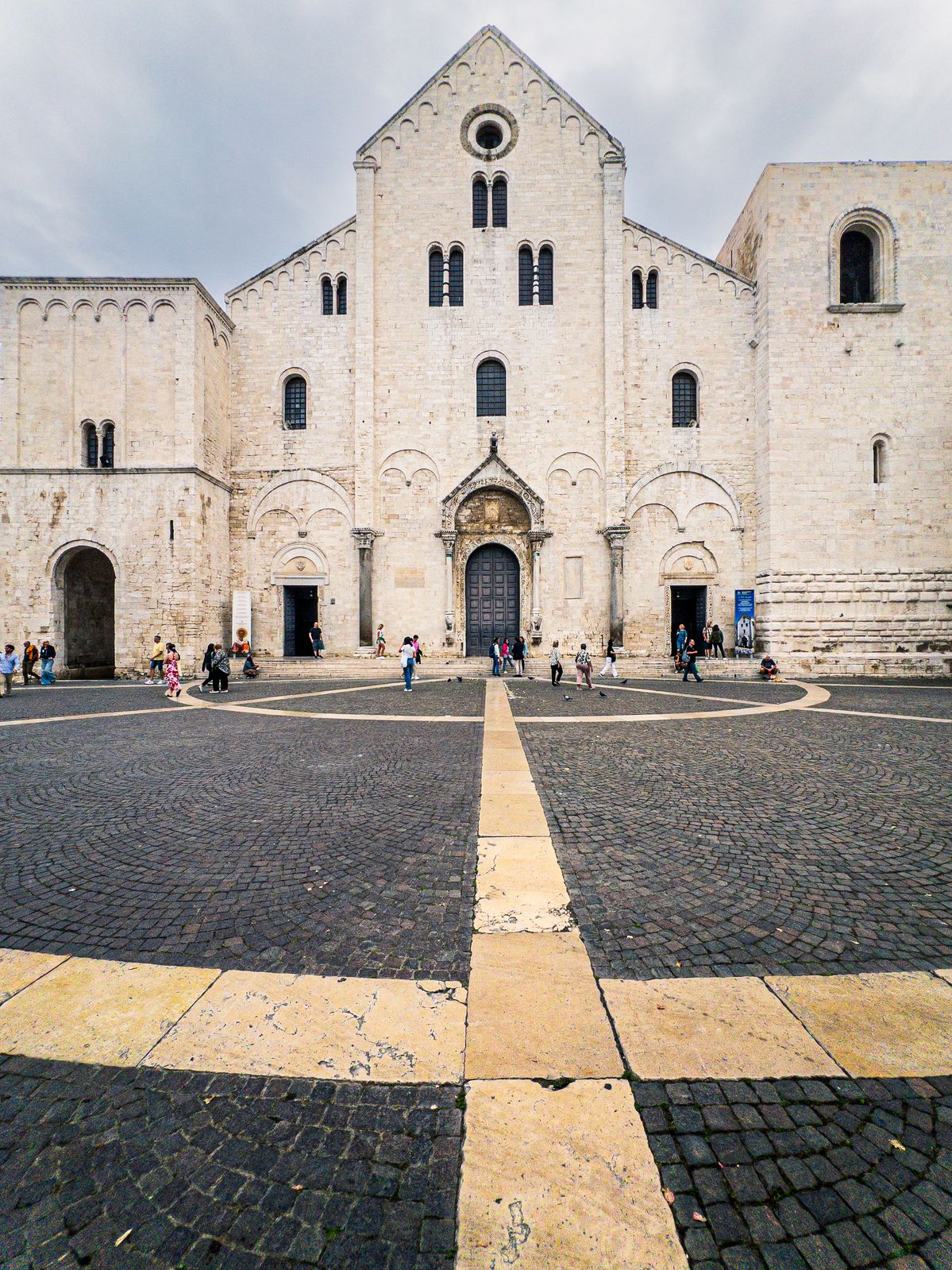
Your first fixed destination is the Basilica of Saint Nicholas, the most important Norman church in southern Italy. The basilica was built between 1087 and 1197 to house the relics of Saint Nicholas, the fourth century Bishop of Myra in Asia Minor. The story of how the relics arrived in Bari is one of the most curious in Christian history. In 1087, a group of Barese sailors, accompanied by a priest, sailed to Myra, broke into the saint's tomb, stole his bones, and brought them back to Bari in a daring raid. The Church was scandalised. The sailors were excommunicated. But the relics remained, and Bari became one of the most important pilgrimage sites in Europe. Saint Nicholas, whom you know as Santa Claus, is buried beneath the crypt of this basilica. The tomb is still visited by pilgrims from all over the world, especially from Russia and Eastern Europe, where Saint Nicholas holds a position of extraordinary veneration.
The architecture of the basilica is a masterpiece of Romanesque Pugliese. The exterior is severe, almost fortress like, with three portals decorated by intricate stone carvings of dragons, lions and fantastic beasts. The interior is vast and luminous, with three naves separated by ancient columns salvaged from Roman ruins. The ceiling is made of gilded wood, and the crypt, below the main floor, contains the tomb of the saint, surrounded by a forest of columns carved in the Byzantine style. A silver statue of Saint Nicholas stands above the altar, and the faithful still touch it, still pray to it, still believe in its power after more than nine hundred years.
A practical note. The Basilica of Saint Nicholas is open daily from 7:00 AM to 1:00 PM and from 4:00 PM to 7:00 PM. The crypt is accessible during these hours. Mass is celebrated in the basilica every Sunday at 11:00 AM, and visitors are welcome to attend. The dress code is respected: cover your shoulders and knees. The entrance is free, though a donation is appreciated.
For lunch on your first day, I will take you to La Tana del Polpo, a tiny seafood osteria hidden in a side alley of Bari Vecchia. The restaurant has no menu. You eat what the fishermen brought in that morning. The octopus is boiled and dressed with lemon, parsley and olive oil. The raw shrimp are sweet as candy. The spaghetti with clams is a miracle of simplicity. Do not ask for a menu. Trust the owner. He has been feeding Baresi for forty years, and he knows exactly what you need.
In the afternoon, walk to the Piazza Mercantile, the historic commercial heart of medieval Bari. The square is surrounded by the Palazzo del Sedile, the former seat of the city council, and the Colonna della Giustizia, the column of justice, to which debtors and criminals were once chained in public humiliation. A curious legend surrounds the column: if you walk around it three times while making a wish, the wish will be granted. It is a tradition among Baresi children, and you are welcome to participate, though I cannot guarantee the outcome.
For dinner, reserve at Al Pescatore, a family run restaurant on the edge of the old city. Order the antipasto di mare, a procession of small seafood dishes that will occupy your table for an hour. Then order the risotto alla pescatora, a creamy rice dish loaded with mussels, clams, shrimp and squid. The wine should be a Falanghina or a young Greco di Tufo, two white grapes that thrive in the limestone soils of Apulia. End your meal with a glass of Amaro del Capo, a Calabrian digestive served chilled, and a plate of fresh strawberries. You will sleep well.
Day 2 — The Swabian Castle, the Cathedral and the Stories of the Norman Conquerors
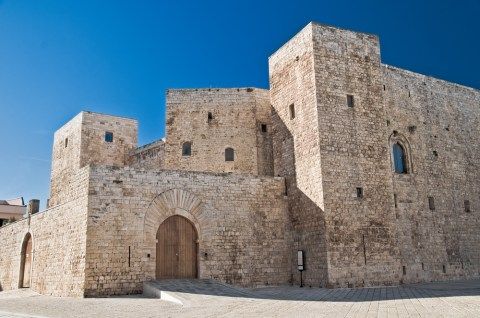
Your second day begins at the Castello Svevo, the Swabian Castle of Bari. The castle was built in 1132 by the Norman king Roger II, but it was expanded and fortified by the Holy Roman Emperor Frederick II in the 13th century. Frederick, known as Stupor Mundi, the Wonder of the World, was one of the most extraordinary figures of the Middle Ages: a king of Germany, a Holy Roman Emperor, a crusader, a poet, a scientist, and a patron of the arts. He spoke six languages, wrote a celebrated treatise on falconry, and kept a harem of Arab concubines. He also built or fortified dozens of castles across southern Italy, and the Castello Svevo of Bari is one of the most impressive.
The castle is a massive rectangular fortress with towers at each corner, surrounded by a dry moat. The walls are thick, the windows are few, and the atmosphere is one of military austerity. But the interior, which now houses the Museo Archeologico di Santa Scolastica, contains a remarkable collection of Apulian antiquities, including Greek vases, Roman mosaics, medieval pottery and a section dedicated to the history of the castle itself. The museum is not well known, even among Italians, and you will likely have the halls to yourself. Take your time. The view from the ramparts, across the rooftops of Bari Vecchia to the sea, is worth the admission price alone.
After the castle, walk the short distance to the Cathedral of San Sabino, the city's official cathedral. Unlike the Basilica of Saint Nicholas, which is a pilgrimage church, San Sabino is the seat of the archbishop of Bari. The cathedral was built in the late 12th century in the Romanesque style, and its interior is surprisingly austere, stripped of the Baroque additions that clutter so many Italian churches. The floor is a beautiful mosaic of geometric patterns in white and black stone. The crypt contains the relics of Saint Sabinus, a fifth century bishop of Bari, and the museum attached to the cathedral displays medieval manuscripts and liturgical vestments of considerable beauty.
For lunch, I send you to Panificio Fiore, a bakery on Via Oreste D'Andria that produces the finest focaccia barese in the city. The focaccia is thick, soft and oily, topped with cherry tomatoes, olives, oregano and a generous sprinkle of salt. Eat it hot, still warm from the oven, standing at the counter with a glass of iced tea. It costs two euros, and it is the lunch of every Barese student, worker and pensioner. You will understand why.
In the afternoon, walk to the Piazza del Ferrarese, a lively square that connects Bari Vecchia to the modern city. The square is named for the iron merchants who once traded here, and it is now a gathering place for young people, street musicians and families. From here, you can walk up the elegant shopping street of Via Sparano da Bari, the main artery of the 19th century expansion of the city, lined with palaces, boutiques and cafes. At the end of Via Sparano, you reach the Teatro Margherita, a beautiful art nouveau building that served as the city's municipal theatre and now houses a museum of contemporary art.
A curious story about Frederick II. The emperor was known for his religious scepticism, and legend has it that he enjoyed testing the faith of his subjects with bizarre experiments. In one famous story, he locked a prisoner in a barrel, fed him only wine and mustard for a period of weeks, then asked him to recite a prayer. The prisoner could not, and Frederick is said to have laughed and concluded that the man's faith was weaker than his hunger. The story is almost certainly apocryphal, but it captures the emperor's reputation as a rationalist and a provocateur.
For dinner, reserve at Osteria Al Duomo, a small restaurant located in the shadow of the cathedral. The menu is classic Apulian with a creative touch. Order the capocollo di Martina Franca, a cured pork shoulder that melts on the tongue, followed by the cavatelli con cime di rapa e salsiccia, a short ridged pasta with turnip tops and sausage. The wine list features producers from Salice Salentino, the Primitivo di Manduria and the Negroamaro of the Salento. The service is warm, the room is small, and the reservation is essential. Book at least two days in advance.
Day 3 — The Petruzzelli Theatre, the Seafront and the Fishing Port
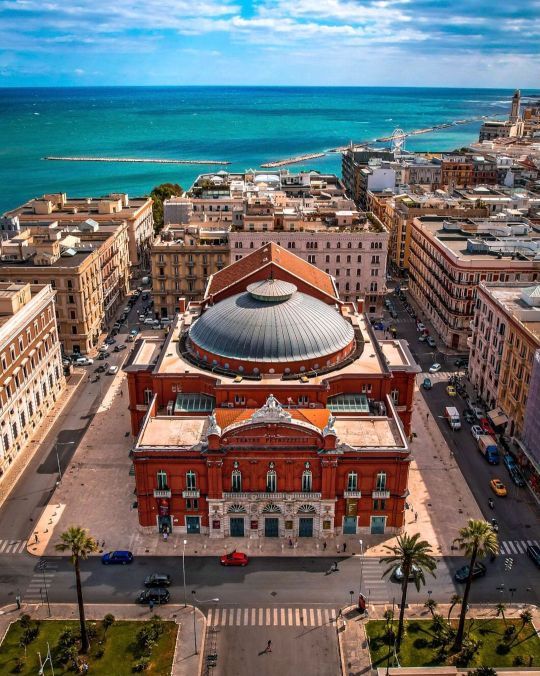
Your third day begins at the Teatro Petruzzelli, the largest private theatre in Europe and the most prestigious cultural institution in Bari. The theatre was built between 1898 and 1903 by the Petruzzelli family, wealthy shipowners and merchants, and it stands as a monument to the Belle Époque elegance that swept across Italy in the decades before the First World War. The interior is magnificent: a horseshoe of four tiers of boxes, all in gilded stucco, a ceiling painted with allegorical figures and a massive chandelier of Murano glass that weighs two tons.
The theatre's history is as dramatic as any opera performed on its stage. In 1991, a fire of suspected arson destroyed almost the entire building, leaving only the exterior walls and the grand staircase standing. The city was devastated. For seventeen years, the Petruzzelli remained a ghost of itself, a burned out ruin in the centre of Bari. But the city refused to let it die. A massive reconstruction project, funded by public and private donations, restored the theatre to its original glory, and it reopened in 2008 with a concert by the pianist and conductor Riccardo Muti. Today, it is once again the centre of Bari's cultural life, hosting opera, ballet, symphony concerts and popular music.
You can take a guided tour of the theatre in the morning, or you can attend a performance in the evening. The tour is well worth the time and cost: you walk through the foyer, the grand staircase, the boxes and the stage, and your guide will explain the history of the fire and the reconstruction with a passion that only Baresi can summon. If you attend a performance, book your tickets online at least two weeks in advance, especially for opera or major concerts.
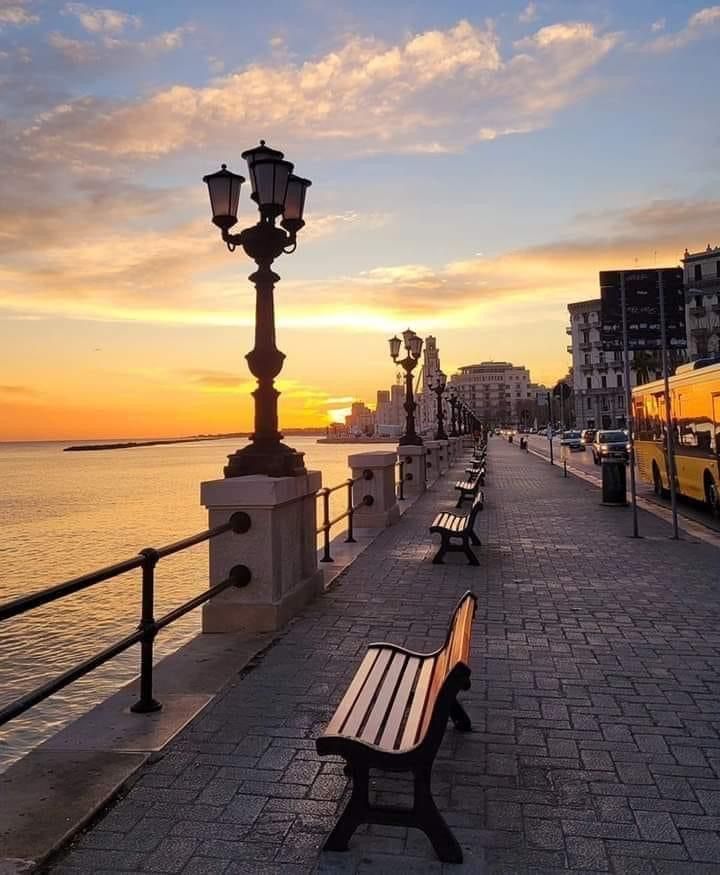
After the theatre, walk to the Lungomare Araldo di Crollalanza, the long seafront promenade that stretches from the old harbour to the neighbourhood of Palese. The views across the Adriatic toward the mountains of Albania are stunning on clear days, and the breeze off the sea provides a welcome relief from the summer heat. You can walk for hours along the seafront, past the yacht club, the tennis courts, the Art Nouveau villas and the ancient watchtowers that once defended the coast from Ottoman pirates.
For lunch, I will take you to the Porto Peschereccio, the fishing port of Bari, where the boats unload their catch every morning at 6:00 AM. The port is not a tourist attraction; it is a working harbour, filled with fishermen mending their nets, painting their boats and shouting across the water in the Barese dialect. Several small kiosks and restaurants serve the catch of the day directly from the boats. Order the frittura di paranza, a mixed fried seafood platter of tiny fish, shrimp and squid, served in a paper cone with lemon wedges. Eat it standing at a plastic table, with the smell of the sea and the diesel engines in your nostrils. It is the most authentic meal you will have in Bari.
In the afternoon, walk to the Pinacoteca Metropolitana, the city's art gallery, housed in the Palazzo della Provincia. The collection is not large, but it is choice, with works by Apulian painters from the 14th to the 18th centuries, as well as a collection of contemporary art by Italian artists of the 20th century. The gallery is quiet, uncrowded and free on the first Sunday of every month.
For dinner, reserve at Ristorante Il Caimano, a historic restaurant on the Piazza Mercantile. The restaurant specialises in the cuisine of the Terra di Bari, the agricultural hinterland of the city. Order the zuppa di pesce alla barese, a fish soup made with the catch of the day, tomatoes, garlic and chilli, served with toasted bread. Follow it with the sagne 'ncannulate, a hand rolled pasta shaped like a scroll, dressed with a ragù of lamb and pecorino cheese. End with the pasticciotto, a small filled pastry from the town of Lecce, with a sweet custard centre and a short crust shell. The wine should be a Primitivo di Manduria, full bodied and intense, the perfect partner for the robust flavours of the Apulian kitchen.
The Bari of the sea. Bari has always been a maritime city, and the sea is present in every aspect of its culture. The fishing fleet is still active, and the port still handles cargo and passengers, including ferries to Greece, Croatia and Albania. If you have time, consider a ferry trip to the Greek island of Corfu. The crossing takes eight hours overnight, and it is a romantic and memorable way to extend your journey to the other side of the Adriatic.
Day 4 — Orecchiette alle Signore, the Street Food of Bari and the Markets
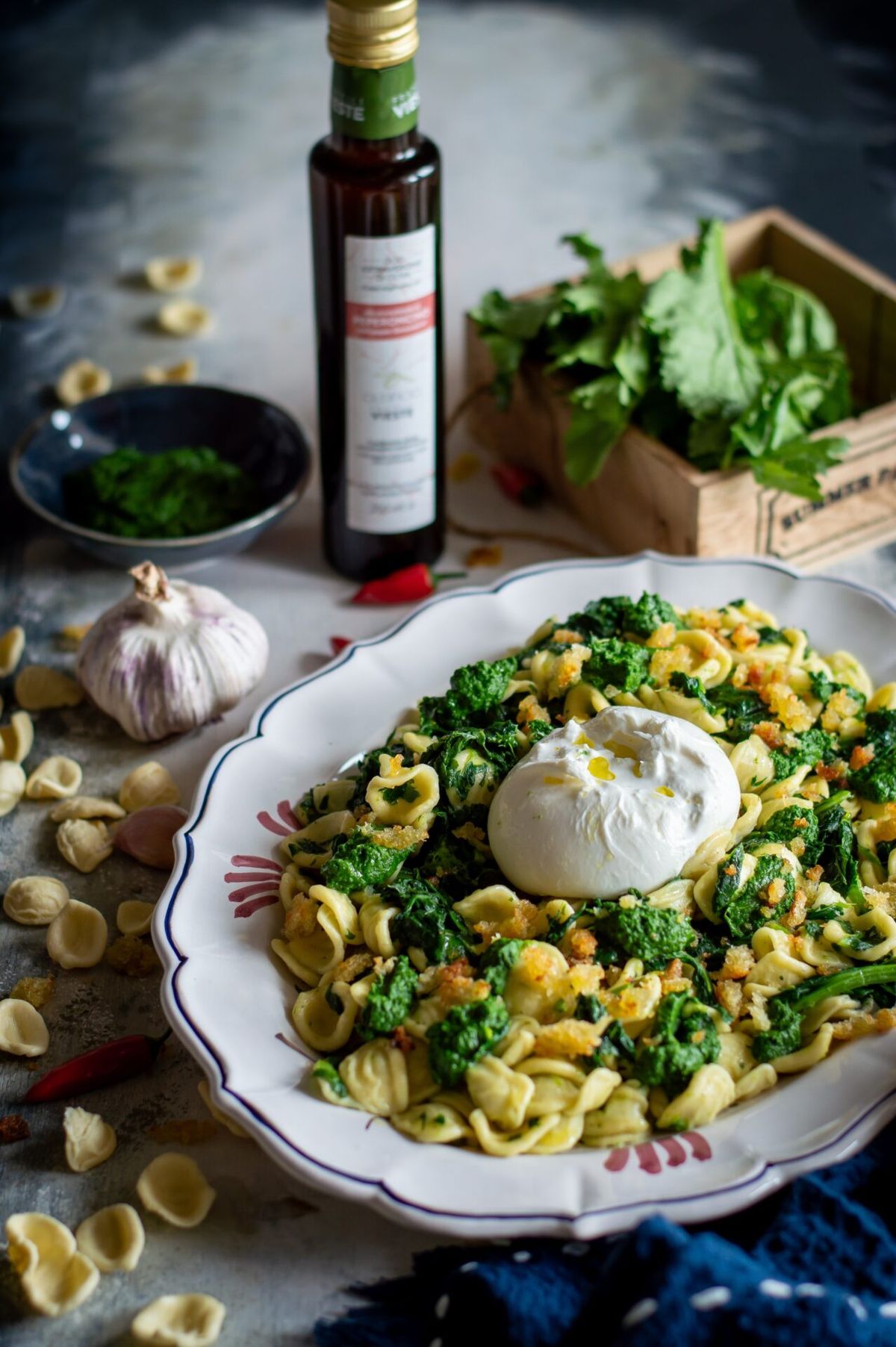
Today you will eat nothing but street food and you will not sit down once. This is the Barese way. Begin your morning in the Strada dell'Orecchietta, a narrow alley in Bari Vecchia where the women of the neighbourhood, the signore, sit on low wooden stools at their doorsteps and make fresh pasta by hand. They take a small piece of dough, press it with a knife, drag it across the wooden board and turn it inside out with a flick of the thumb. The shape that emerges is the orecchietta, the little ear, the most famous pasta shape of Apulia. They do this quickly, with the effortless grace of decades of practice, and they are happy to pose for photographs and answer questions, especially if you compliment their work.
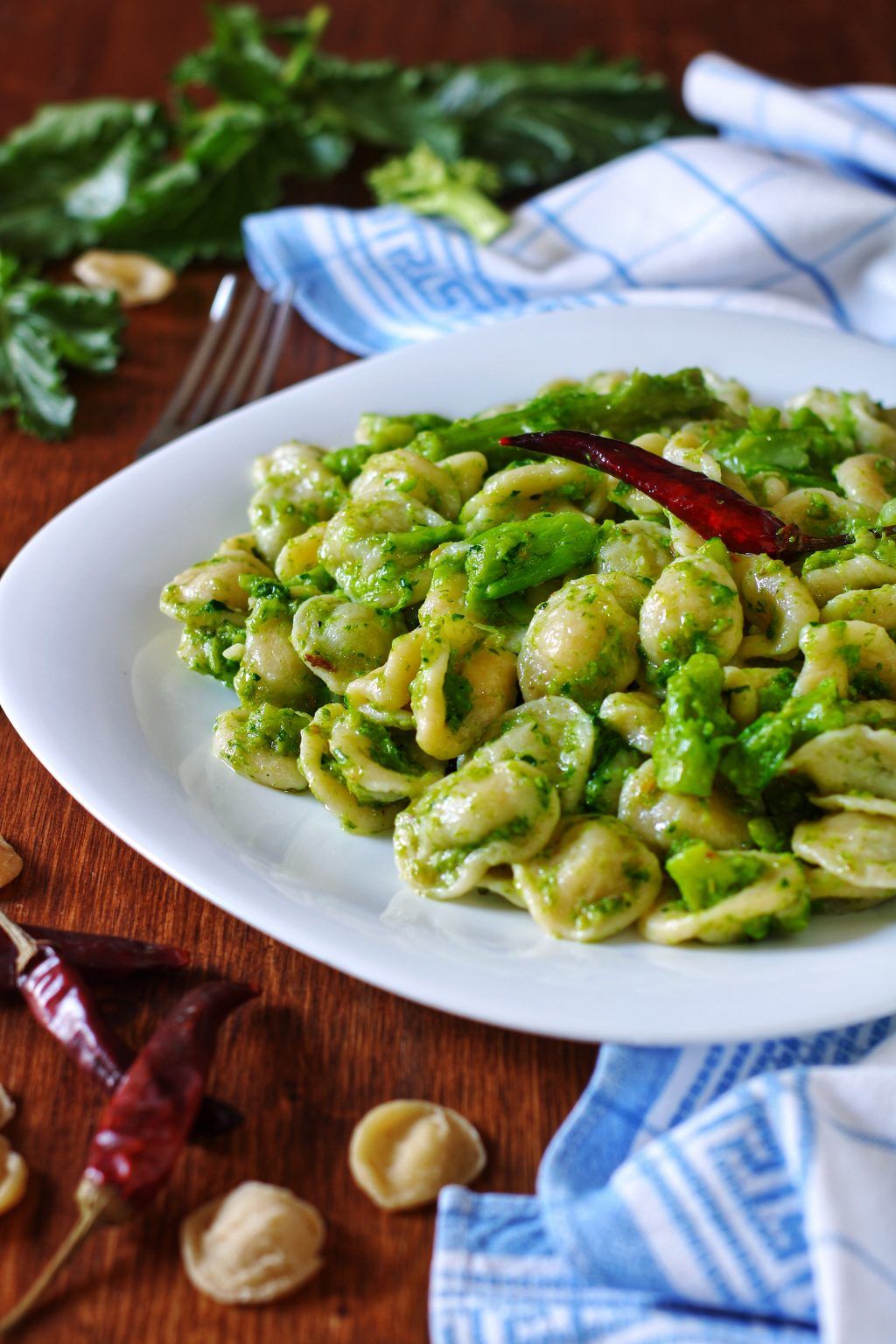
The orecchiette are traditionally served with cime di rapa, turnip tops, a slightly bitter green that grows wild in the fields of Apulia in the winter months. The pasta is boiled, the turnip tops are blanched, and both are sautéed with garlic, chilli and anchovies. The result is a dish that is salty, bitter, spicy and deeply satisfying. You can buy a portion of orecchiette alle cime di rapa from a street vendor in the alley, or you can wait for lunch and order it in a restaurant. I recommend the street vendor. Eating it standing, in the narrow alley where it was made, is the most authentic possible experience.
After the pasta demonstration, walk to the Mercato di Santa Scolastica, a covered market near the castle. The market is a riot of colour and sound: stalls selling olives, cheeses, salamis, fresh vegetables, dried fruits, spices, breads, pastries and, of course, fish. The vendors shout to each other across the aisles in the Barese dialect, a language as different from Italian as Catalan is from Spanish. Sample the olives of Cerignola, the burrata of Andria, the stracciatella of the Murgia plateau and the taralli, small savoury biscuits flavoured with fennel seeds and olive oil. You can spend an entire morning in the market without spending more than ten euros, and you will leave with a bag full of Apulian treasures.
For a true Barese street food lunch, find the cart of Michele u panzarottare, a legendary vendor who has been selling panzerotti from the same corner of the Piazza Mercantile for thirty years. Panzerotti are small, crescent shaped turnovers of pizza dough, filled with mozzarella, tomato and, sometimes, ham or mushrooms, then deep fried to a perfect golden brown. They are hot, they are greasy, and they are magnificent. Eat them immediately. Do not wait. The cheese will be molten, the dough will be crisp, and you will wonder why you ever ate pizza any other way.
For a sweet afternoon snack, visit Gelateria Gentile on Via Salvator Rosa, the most beloved gelateria in Bari. The flavours are Apulian: fico, fig, mandorla, almond, ficodindia, prickly pear, and the legendary Stracciatella barese, a vanilla base with shards of dark chocolate mixed with a sweet ricotta cream. Order a cone with two flavours, walk to the seafront, and watch the sun begin its descent over the Adriatic. This is the Bari of the senses, the Bari of taste and smell and touch, and it is as important as any basilica or castle.
For dinner, I send you to La Uascezze, a small restaurant on the edge of Bari Vecchia that specialises in the forgotten dishes of the Apulian peasant tradition. The name means the abundance, in the Barese dialect, and the menu is a revelation. Order the ciceri e tria, chickpeas with fresh and fried pasta, a dish that dates to the Middle Ages. Then order the polpo alla pignata, octopus cooked slowly in a terracotta pot with tomatoes, olives and capers. The wine should be a Nero di Troia, a dark, tannic red from the hills of the Daunia, named for the ancient city of Troy and the legendary hero Diomedes. It is a wine of considerable power, and it is the perfect companion to the deep, rustic flavours of this extraordinary kitchen.
The language of food in Bari. The Barese dialect has a rich vocabulary for food and cooking that does not exist in standard Italian. U panzarottare is the man who makes panzerotti. U strascinate is the long, hand rolled pasta of the region. U pettole are small fried dough balls served at Christmas. Learning a few of these words will endear you to the vendors and restaurant owners of the city. They appreciate the effort, and they will feed you accordingly.
Day 5 — Excursion to Alberobello, Polignano a Mare or Matera
On your fifth day, you leave Bari for a journey into the extraordinary landscape of Apulia. Three destinations are possible, and you must choose one. Each is unique, each is extraordinary, and each is accessible by public transport or by private transfer from the city centre.
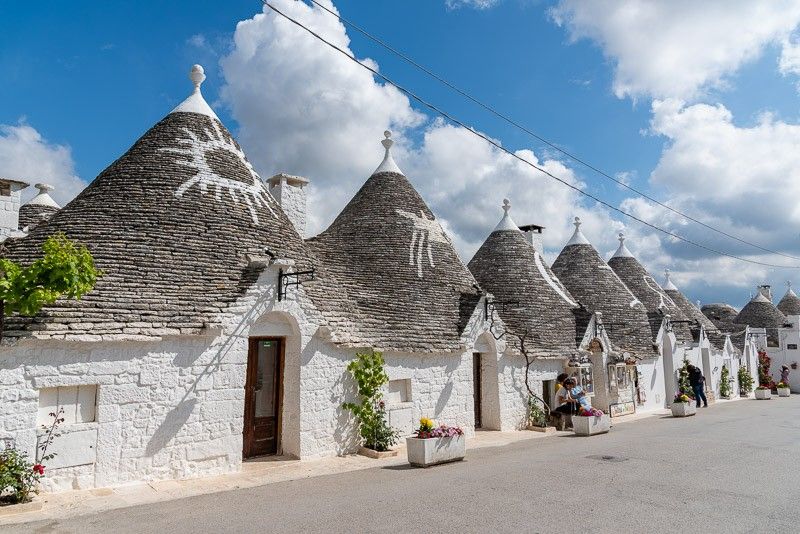
Alberobello, the Trulli of the Itria Valley. Forty five kilometres south of Bari, Alberobello is a town unlike any other on Earth. The trulli are whitewashed stone huts with conical roofs built from local limestone without the use of mortar, a technique of prehistoric origin that was revived in the 17th century as a tax evasion strategy. The roofs are decorated with primitive symbols painted in white lime: crosses, hearts, stars and mysterious geometric patterns of uncertain meaning. The two districts of the trulli, Rione Monti and Rione Aia Piccola, contain more than 1,500 of these remarkable structures, and the town is a UNESCO World Heritage site. You can walk through the trulli in a morning, visit a trullo that has been furnished as a museum, and eat lunch in a restaurant housed in a restored trullo where the walls are a metre thick and the temperature is cool even in August.
Polignano a Mare, the Cliffside Jewel. Thirty kilometres southeast of Bari, Polignano a Mare is one of the most photographed towns in Italy. The historic centre is perched on a limestone cliff that drops vertically into the turquoise water of the Adriatic. The houses are white, the alleys are narrow, and the sea views are breathtaking. The town is the birthplace of the singer Domenico Modugno, who wrote the song Volare, and a bronze statue of Modugno stands on the cliff edge, his arms outstretched as if he is about to fly. The most famous attraction of Polignano is the Grotta Palazzese, a restaurant built inside a natural sea cave, where tables are set on a platform suspended over the water. The restaurant is expensive and touristy, but the view is unforgettable. A more authentic experience is to walk down to the Cala Porto, the small beach at the base of the cliff, and swim in the crystal clear water.
Matera, the City of Stones. Sixty kilometres west of Bari, Matera is the third oldest continuously inhabited city in the world, after Aleppo and Jericho. The Sassi di Matera are two districts of cave dwellings carved into the soft tufa rock of the Gravina canyon, inhabited since the Palaeolithic era and continuously occupied until the 1950s, when the government forcibly evacuated the population due to the unsanitary conditions. The abandoned Sassi became a symbol of the poverty of the Italian south, and they were described in the novels of Carlo Levi as the shame of Italy. But the Sassi have been restored, repopulated and transformed into one of the most magical places in Europe. Cave churches covered in Byzantine frescoes, cisterns the size of cathedrals, rock cut palaces and tiny alleyways that open onto sudden, vertiginous views of the canyon make Matera a city of constant surprise. It was the European Capital of Culture in 2019, and it is the only place in Italy that can rival Venice for the strangeness of its landscape and the depth of its history.
Whichever destination you choose, you will return to Bari in the evening exhausted, exhilarated and hungry. For your farewell dinner, I have reserved a table for you at Ristorante Palazzo, a restaurant in the Murat district that represents the most refined expression of Apulian haute cuisine. The chef uses local ingredients exclusively, and the tasting menu of eight courses takes you from the coast to the mountains to the plains of the Tavoliere. The raw seafood, the homemade pastas, the grilled meats, the artisanal cheeses and the desserts are each prepared with a precision and a creativity that honours the traditions of the region while pushing them into new territories. The wine pairings are impeccable, the service is flawless and the bill, while not cheap, is less than you would pay for a comparable meal in Rome or Milan. It is the perfect end to a week in my city.
How to reach the day trip destinations. Alberobello and Polignano a Mare are accessible by train from Bari Centrale station. The journey takes 50 to 80 minutes, depending on the service. Matera is accessible by private bus from Bari Centrale or by train to the nearby town of Ferrandina, followed by a connecting bus. A private transfer is the most comfortable option for all three destinations, especially for families or anyone with mobility concerns. Book the transfer at least 24 hours in advance.
Common Tourist Mistakes in Bari
Spending only one day. Bari is not a day trip from Alberobello or Polignano. It is a city of more than 300,000 people, with more than two thousand years of history crammed into every street. One day gives you an impression, not an experience. Five days gives you the beginning of a relationship.
Eating in the tourist restaurants of Piazza del Ferrarese. The restaurants directly on the main piazzas are aimed at visitors who do not know better. They are not terrible, but they are overpriced and anonymous. Walk two streets toward Bari Vecchia, and you will find the real cooking of the city.
Skipping the Castello Svevo because you have seen enough castles. The castle of Bari is not a generic Norman fortress. It is one of the most important Swabian castles in Italy, and its association with Frederick II, one of the most fascinating figures of the Middle Ages, makes it unique. Miss it, and you miss an essential piece of Bari's identity.
Not carrying cash in the markets and street food stalls. The street food vendors, the small bakeries, the fruit stalls and the seafood carts of the Porto Peschereccio do not accept credit cards. If you arrive at the Mercato di Santa Scolastica without cash, you will watch other people eat while you stand hungry and frustrated.
Forgetting to cover your shoulders and knees in churches. Bari has more than thirty churches in the historic centre alone, and most of them enforce the dress code even in summer. A light scarf is the best investment you can make. It covers your shoulders, fits in a pocket, and transforms you from a turned away tourist into a welcome visitor.
The Best Time to Visit Bari
Spring from March to May and autumn from September to November are the ideal seasons for visiting Bari. The weather in March and April is mild and sunny, ideal for walking, and the almond and cherry trees blossom across the Murgia plateau. May is warmer, sometimes hot, but still far from the oppressive heat of July and August. The autumn months bring the olive harvest, and the new oil, pressed from the ancient trees of the Puglian countryside, is a revelation. September is still warm enough for swimming at the beaches of Palese and Santo Spirito, while November is cooler and wetter but offers the lowest prices of the year and the most authentic, least touristic experience of the city. The Feast of Saint Nicholas, on December 6, is the most important festival of the Barese calendar, and the city fills with pilgrims from across Europe. It is a wonderful time to visit, but accommodation must be booked months in advance.
Essential Practical Information
Getting to Bari. Bari Karol Wojtyła Airport (BRI) is located approximately 12 kilometres northwest of the city centre. A private transfer with Airport Connection takes 20 to 25 minutes and delivers you directly to your hotel. The Ferrovie del Nord Barese train runs from the airport to the city centre every 30 minutes and takes approximately 20 minutes. The ticket costs five euros. The AMTAB city bus line 16 also connects the airport to the city centre, with a journey time of 35 minutes. The private transfer is the most comfortable option, especially for late night arrivals or for travellers with luggage. Book at least 48 hours in advance.
Getting around Bari. The historic centre, Bari Vecchia, is compact and flat, and the best way to explore it is on foot. The modern city, the Murat district, is laid out on a grid plan and is also highly walkable. For longer distances, the AMTAB city bus network is extensive, but the schedules are not always reliable. Taxis are inexpensive by northern European standards, but they can be difficult to hail on the street. Use the ItTaxi app to book. The Metro is not useful for tourists, except for the line connecting the city centre to the suburbs.
Safety. Bari is a safe city, but like any large urban centre, it requires normal precautions. Keep your bag closed and in front of you in the markets. Keep your phone in your pocket. Do not leave valuables visible in a parked car. The neighbourhoods around the central station can be disorienting at night, but they are not dangerous. The greatest risk you face is being pickpocketed on a crowded bus, and that risk is lower in Bari than in Rome or Naples. Use your common sense, and you will be fine.
Language. English is spoken in hotels and high end restaurants, but it is not widely spoken elsewhere. Learn a few words of Italian: buongiorno (good morning), buonasera (good evening), per favore (please), grazie (thank you), dove si mangia? (where does one eat?). Your effort will be appreciated, and the response, even if you do not understand it, will be warmer than any reply in English.
Comments
No comments yet. Be the first to share your thoughts!
Leave a Comment
Your comment will appear after moderation.