 Michelle
 Switzerland is one of those countries that tends to be underestimated as a food destination. People think of the mountains, the watches, the banks and the pristine lakes. They think of chocolate, perhaps, and cheese. But Swiss food is far more interesting than its international reputation suggests. It is a cuisine shaped by four distinct cultures and languages, by centuries of Alpine necessity and ingenuity, and by an extraordinary quality of raw ingredients that money, cleanliness and altitude conspire to produce. To eat well in Switzerland is to understand a country that does almost everything quietly and extraordinarily well.
When Is the Best Time to Visit Switzerland?
Switzerland rewards every season, but the experience changes dramatically depending on when you arrive. Winter (December to March) is the most atmospheric time for food lovers: the mountain villages are blanketed in snow, the ski resorts are buzzing with life, and every restaurant and chalet is producing the hearty, warming dishes that Swiss cuisine does better than almost anyone. Fondue and raclette in a candlelit chalet with snowflakes falling outside the window is an experience that belongs specifically to this season.
Spring and autumn, particularly April to June and September to October, offer a Switzerland that is less crowded and in some ways more beautiful. The wildflower meadows of the Alpine slopes, the first outdoor markets of the year, the harvest season in the wine-producing cantons of Valais and the Ticino: these are the months when local produce is at its most vibrant and the farm-to-table restaurants of Zurich, Geneva and Bern are at their creative best.
Summer brings Switzerland's other great outdoor pleasures: lake swimming, mountain hiking, open-air festivals and the brilliant Alpine light that makes even a simple picnic on a hillside feel like a profound experience. The famous Swiss train journeys, including the Glacier Express and the Bernina Express, are at their most spectacular between June and September.
Food lover's tip: If you are visiting Switzerland primarily for the food, plan your trip around the Zurich Food Festival in late August or the Lucerne Gastronomy Week in autumn. Both events showcase the extraordinary range of Swiss culinary culture, from traditional Alpine dishes to the sophisticated contemporary cuisine of the country's Michelin-starred restaurants.
1. Fondue: Switzerland's Most Iconic Dish
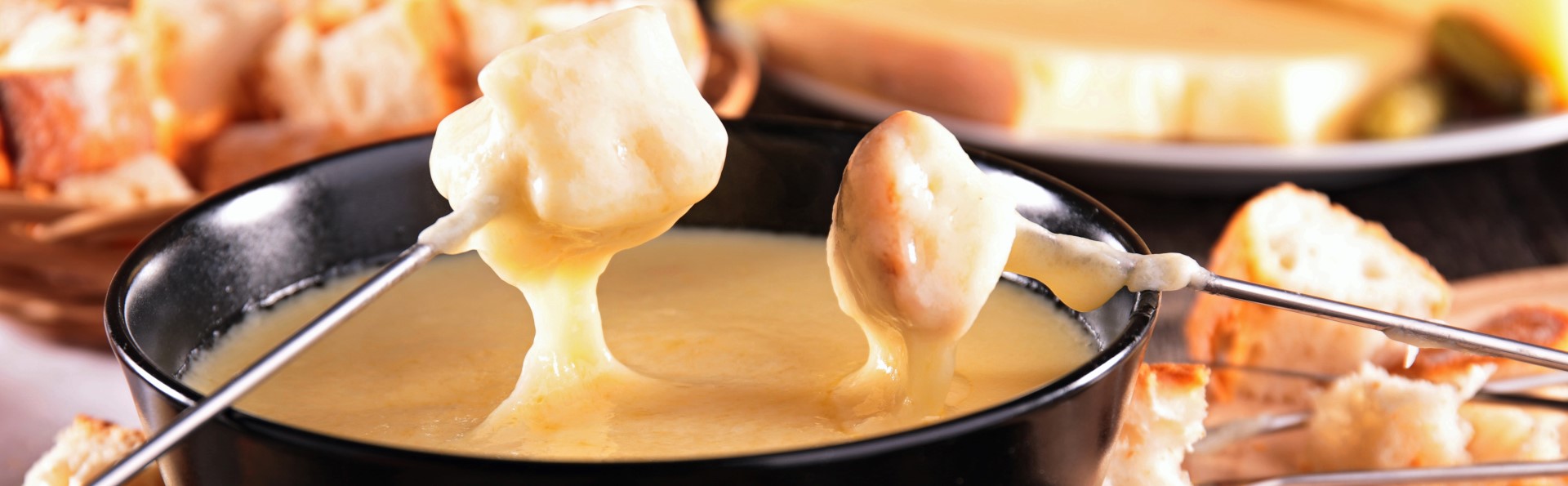
There is no dish more Swiss than fondue, and no dish that better captures the Swiss spirit of communal warmth, quality ingredients and unpretentious pleasure. The word itself comes from the French fondre, meaning to melt, and that is precisely what this dish is: a pot of molten cheese, kept warm over a small flame at the centre of the table, into which everyone dips cubes of crusty bread on long forks. It sounds simple. It is. And it is magnificent.
The secret, as every Swiss grandmother will tell you, lies in the cheese. The classic preparation uses a blend of Gruyère and Emmentaler, two of the great Swiss mountain cheeses, each contributing something essential: the Gruyère brings depth and nuttiness, the Emmentaler contributes a milder, slightly sweeter note and helps the mixture stay smooth. The cheeses are grated and melted slowly in a caquelon (a traditional earthenware or cast-iron pot) rubbed with garlic, with dry white wine added gradually to create a smooth, silky consistency. A splash of kirsch, the Swiss cherry brandy, is stirred in at the end and gives the fondue its characteristic clean, sharp edge.
Fondue is a deeply social dish. The pot sits at the centre of the table and everyone reaches in together, conversations overlap, wine flows and the meal becomes an event rather than simply a means of sustenance. There is even a tradition associated with it: if you drop your bread into the pot, you owe everyone at the table a forfeit. In some versions this means buying the next round of wine. In others, darker things. The Swiss are not entirely without mischief.
You will find fondue year-round in Swiss restaurants, but it is at its most authentic and most atmospheric in winter, particularly in the mountain cantons of Fribourg, Valais and the Bernese Oberland. The best fondue is always served with a glass of dry white wine and, counter-intuitively, never with cold water or beer: the Swiss believe, with characteristic conviction, that cold drinks cause the melted cheese to solidify in the stomach.
Where to try the best fondue: The town of Gruyères in the Fribourg canton is the spiritual home of Swiss fondue. The medieval hilltop village is impossibly picturesque and the restaurants clustered around its cobbled main street serve fondue made with cheese produced in the valley below. Book a table for lunch, when the light through the valley is extraordinary and the restaurants are slightly less crowded than in the evening.
2. Raclette: The Art of the Melted Cheese
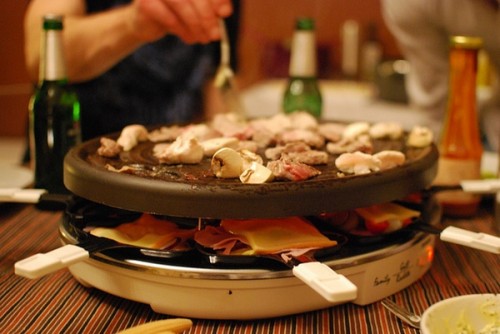
If fondue is the communal centrepiece of Swiss cuisine, raclette is its more intimate and equally irresistible companion. The name comes from the French racler, meaning to scrape, and it describes both the cheese and the method of preparing it. In its most traditional form, a half-wheel of raclette cheese is held close to an open fire or a special heating element until the surface begins to melt and bubble, and then the molten layer is scraped directly onto a plate. The result is a pool of intensely flavoured, slightly smoky melted cheese that is one of the most deeply satisfying things you will put in your mouth in Switzerland.
Raclette cheese is a semi-hard cow's milk cheese with a distinctively pungent aroma that belies a surprisingly nuanced flavour: nutty, slightly sweet, with a richness that develops and deepens as it melts. The finest raclette comes from the Valais canton in the southwest of Switzerland, where the cattle graze on high Alpine pastures and the milk has a complexity that reflects the herbs and wildflowers of the mountain meadows.
The classic accompaniments are non-negotiable: small, firm-fleshed potatoes boiled in their skins (the variety called Raclettekartoffeln, small and waxy, are the correct choice), cornichons (small pickled gherkins), pickled onions, and slices of dried meat such as Graubündnerfleisch (air-dried beef from the Graubünden canton). The acidity of the pickles cuts through the richness of the melted cheese in exactly the way a good dish should work. It is a simple and brilliant combination.
In modern Swiss restaurants, raclette is usually served using a tabletop electric grill with individual small pans, one per person, allowing each diner to melt their own cheese at their own pace. This format is more practical but slightly less theatrical than the original open-fire method. If you have the opportunity to try raclette prepared the traditional way, at a mountain festival or in a traditional Beiz (the Swiss-German word for a simple, unpretentious tavern), take it without hesitation.
What to drink with raclette: The Swiss are very specific about this. A glass of Fendant, the dry white wine made from the Chasselas grape in the Valais, is the traditional and correct choice. Its crisp acidity and mineral quality cut through the richness of the cheese in exactly the right way. Hot tea is the non-alcoholic alternative. Cold beer or water, as with fondue, is discouraged by tradition-minded Swiss.
3. Birchermüsli: The Breakfast That Changed the World
It is one of those curious facts of food history that one of the most universally eaten breakfast dishes in the world was invented in Switzerland at the turn of the twentieth century by a doctor. Dr Maximilian Bircher-Benner, a pioneer of nutritional medicine and wholefood philosophy who ran a sanatorium in Zurich, developed the original recipe in 1900 as a health food for his patients. He called it Apfeldiätspeise (apple diet food), and it consisted primarily of raw oats soaked in water, lemon juice and condensed milk, with grated apple and a small amount of ground nuts. The recipe was loosely based on a simple dish he had been served by a Swiss Alpine shepherd during a mountain walk, and he became convinced of its restorative and nutritional properties.
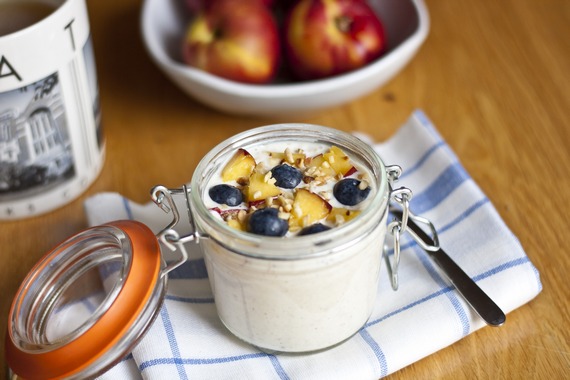
The modern Swiss version, known as Birchermüsli, has evolved considerably from the original but retains its essential character: rolled oats (usually soaked overnight in milk or apple juice to soften them), mixed with grated apple, chopped nuts (most commonly hazelnuts or almonds), dried fruit such as raisins, apricots or cranberries, and a spoonful of yoghurt or cream. The result is creamy, subtly sweet and genuinely satisfying: a breakfast that keeps you going through a morning of Alpine hiking without weighing you down.
In Switzerland, Birchermüsli is eaten not only at breakfast but also as a light supper, particularly in summer. The Swiss have a tradition called Znacht-Müesli (evening muesli), a light evening meal built around a generous bowl of Birchermüsli with fresh seasonal fruit. It is a quietly civilised habit that reflects the Swiss relationship with wholesome, unfussy food.
The Swiss secret: The key to a proper Birchermüsli is time. The oats must be soaked overnight, not for five minutes. Soaking them in fresh apple juice rather than milk gives a lighter, fruitier result. Grate the apple directly into the bowl just before serving so it does not discolour. Add a generous spoonful of full-fat yoghurt and a handful of toasted hazelnuts, and you have something that bears almost no resemblance to the cardboard muesli sold in boxes around the world.
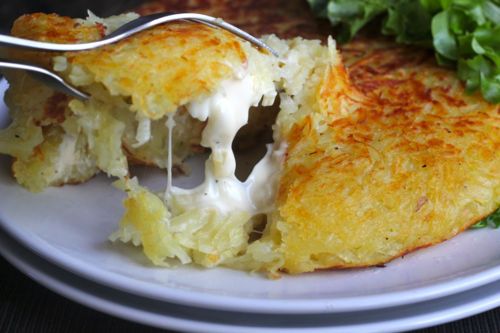
4. Rösti: The Golden Potato Cake of the Alps
Rösti is one of those dishes that rewards simplicity. At its core, it is nothing more than grated potato, pressed into a flat cake and fried in butter until golden-brown and magnificently crispy on the outside while remaining soft and yielding within. And yet in the hands of a skilled Swiss cook, rösti achieves something that transcends its humble ingredients: a dish of deeply satisfying texture and flavour that has become a symbol of German-Swiss identity so potent that it gave its name to an entire cultural phenomenon.
The Röstigraben, literally the "rösti ditch", is the Swiss term for the invisible but very real cultural and linguistic boundary between the German-speaking and French-speaking parts of Switzerland. Rösti is emphatically a dish of the east, of the German-speaking cantons, particularly the canton of Bern, where it originated as a simple farmers' breakfast. The potato cakes were traditionally made from cold, par-boiled potatoes grated on the morning of the day before, which gave them a starchier, more cohesive texture than freshly grated raw potato.
Today rösti is served at lunch and dinner all over Switzerland, and the variations are endless. The purist version is simply potato, butter and salt. But you will also find rösti topped with a fried egg, with sautéed mushrooms and cream, with Appenzeller cheese melted over the top, or served alongside a traditional Swiss veal stew. In the Zurich version, called Zürcher Geschnetzeltes, tender strips of veal in a cream and white wine sauce are served over a golden rösti: one of the most satisfying combinations in Swiss cuisine.
Rösti tip: Make sure you order rösti in a restaurant where it is made from scratch, not from a packet. The difference is enormous. Freshly grated potato, cooked slowly in butter in a heavy pan, develops a crust with a depth of flavour that no pre-made product can replicate. Ask the waiter. A good Swiss restaurant will always know the answer.
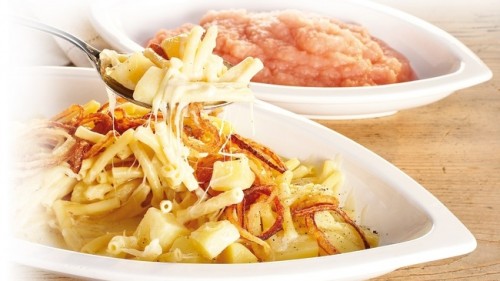
5. Alplermagronen: Mac and Cheese, Alpine Style
If you have ever wondered what Alpine herdsmen ate during the long summer months when they drove their cattle up to the high mountain pastures, the answer is something very close to Alplermagronen. This is Switzerland's version of macaroni and cheese, and it is the kind of dish that makes you understand immediately why it has survived for centuries in a culture defined by cold winters and hard physical work.
The name translates simply as "Alpine herdsman's macaroni", and the dish reflects its origins in the practical constraints of life at altitude. The ingredients are exactly those that were available to a herdsman in a mountain alp: pasta (which kept well in dried form), potatoes (which grew at altitude), onions, cheese from the summer milk, and a small amount of cured pork or bacon for flavour. Combined together, they create something that is far more than the sum of their parts.
In its classic form, Alplermagronen is made by layering cooked macaroni with sliced boiled potatoes and onions, then blanketing everything in a generous quantity of melted Alpine cheese (usually Gruyère or Appenzeller) and finishing it in the oven. The result is bubbling, golden-topped and intensely comforting. It is traditionally served with crispy fried onions scattered over the top, which add a contrasting texture, and alongside a serving of warm apple sauce. The sweet-savoury combination of apple sauce with the rich, salty cheese and pasta is unexpected and completely addictive.
You will find Alplermagronen on the menu of virtually every mountain restaurant in the German-speaking cantons, and in many traditional restaurants in Zurich and Bern. It is unapologetically hearty food, ideal after a morning of skiing or a long mountain hike. Order it and eat every last bite. This is not the moment for restraint.
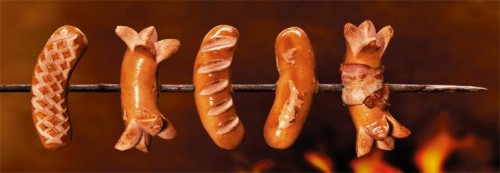
6. Cervelat: Switzerland's National Sausage
Every country has a sausage, and Switzerland's is the Cervelat. It is consumed in such quantities and with such enthusiasm that it has been officially designated the Swiss national sausage, and surveys have found that the majority of Swiss people consider it an important symbol of national identity. This is not as strange as it sounds. The Cervelat is a very good sausage.
At its core, the Cervelat is a mixture of equal portions of beef, pork, bacon and pork rind, finely minced and seasoned with a precise blend of spices before being stuffed into a natural casing and cold-smoked for approximately one hour. The result is a sausage of smooth, dense texture and complex, mildly smoky flavour: substantial enough to satisfy, refined enough not to overwhelm. The traditional preparation involves slitting the ends of the sausage into an X shape before grilling, which causes the ends to curl back in a characteristic four-petalled flower. This is the aesthetically correct way to present a grilled Cervelat, and the Swiss take it seriously.
There are, in fact, many ways to eat a Cervelat. Grilled over charcoal or on a mountain bonfire, it acquires a slightly charred, smoky exterior that is delicious with a smear of Swiss mustard and a piece of fresh bread. Sliced cold into rings and dressed with chopped onion, oil, vinegar and mustard, it becomes a classic Swiss Wurstsalat (sausage salad), a simple and completely satisfying lunch dish. It can also be sliced into a salad, eaten with bread and pickles, or incorporated into a fried rice or pasta dish. The Swiss are not sentimental about culinary tradition when practicality is concerned.
The Swiss summer ritual: On the first of August, Switzerland's national day, virtually every family in the country gathers around a bonfire and grills Cervelat sausages on sticks. The sausage is as central to the Swiss national celebration as the fireworks. If you are in Switzerland on August 1st, find a bonfire, grab a stick and join in. You will be welcomed.
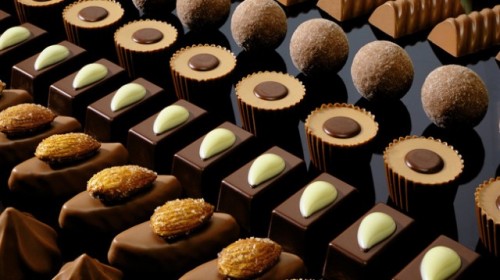
7. Swiss Chocolate: The Finest in the World
Swiss chocolate did not simply become famous: it earned its reputation over more than a century of technical innovation, rigorous quality standards and an almost obsessive commitment to craft. The story begins in the mid-nineteenth century, when a series of Swiss inventors and chocolatiers developed the processes that transformed chocolate from a rough, bitter product into the smooth, silky, complex confection the world now associates with Switzerland.
The critical innovation was milk chocolate. In 1875, Daniel Peter, working in collaboration with Henri Nestlé (whose condensed milk was the key ingredient), produced the first commercially successful milk chocolate bar in Vevey, on the shores of Lake Geneva. Two years earlier, Rudolph Lindt had invented the conching process, a prolonged mechanical mixing of the chocolate that gave it an unprecedented smoothness and allowed it to melt on the tongue in the way that is now expected of fine chocolate. These two discoveries, together with the extraordinary quality of the Alpine milk used in production, created a product that was genuinely unlike anything else in the world at the time, and the Swiss chocolate industry has never looked back.
Today Switzerland produces approximately 180,000 tonnes of chocolate per year and Swiss people consume more chocolate per capita than almost any other nation on Earth (around 10 kilograms per person per year, a figure that requires a moment of admiring contemplation). The major names, Lindt, Toblerone, Nestlé, Cailler, Frey, are known globally. But the most interesting chocolate in Switzerland today is produced by the small artisan chocolatiers who work in workshops in Zurich, Geneva, Basel and Lucerne, creating handmade truffles, pralines, ganaches and bars using single-origin cacao and a level of attention to craft that produces chocolate of extraordinary complexity.
Swiss chocolate is equally extraordinary as an ingredient. It elevates a simple fondue au chocolat to something close to perfection. Melted and poured over a scoop of vanilla ice cream with a splash of Cognac, it becomes one of the great simple desserts. And eaten on its own, on a mountain terrace in the late afternoon sun with an espresso, it is as close to a perfect moment as any food can deliver.
Where to buy the best Swiss chocolate: Skip the airport shops and the tourist boutiques on the main shopping streets. Instead, seek out an independent chocolatier. In Zurich, Sprüngli on the Paradeplatz is an institution, and their Luxemburgerli (small macarons) are a revelation. In Geneva, Du Rhône Chocolatier and Stettler are the benchmark for handmade pralines. Buy a small selection, eat them slowly, and pay attention to what you are tasting.
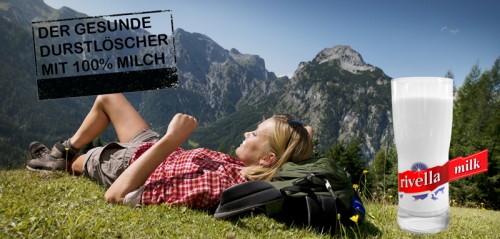
8. Rivella: Switzerland's Most Mysterious Drink
Every country has a drink that foreigners find puzzling, and Switzerland's contribution to this category is Rivella. Invented in 1952 by Robert Barth, Rivella is a carbonated soft drink made from milk whey, the liquid byproduct of cheese production, combined with water, herbs and a closely guarded blend of flavourings. It is slightly sweet, gently tart, vaguely reminiscent of lemon and something else you cannot quite identify, and it is by some considerable distance the most popular soft drink in Switzerland.
The Swiss drink Rivella with the same ease and frequency that other nations drink cola or lemonade. It is the drink of hiking lunches, of school cafeterias, of family barbecues and Alpine restaurant terraces. It comes in four varieties: the original (red label), a low-calorie version (blue label), a green tea version (green label) and a soy-based version (yellow label). The original is the one to try first.
Non-Swiss visitors tend to react to Rivella in one of two ways: either immediate enthusiasm, or complete bewilderment. There is rarely a middle ground. The milk whey base gives it a slightly unusual mouthfeel compared to conventional soft drinks, and the flavour is genuinely unlike anything else in the world of beverages. It is worth trying on principle alone, and the chances are you will find yourself buying a second bottle before the day is out.
Beyond Rivella, Switzerland has a serious and largely undiscovered wine culture. The Valais canton produces some outstanding whites from the Chasselas grape and powerful reds from Pinot Noir and the indigenous Cornalin grape. The Ticino canton, bordering Italy, makes excellent Merlot. Most Swiss wine is consumed domestically and very little is exported, which means that visiting Switzerland is one of the few ways to discover a wine culture of genuine quality that the rest of the world has not yet fully noticed.
Common Tourist Mistakes When Eating in Switzerland
Ordering fondue in summer without thought. Fondue is available year-round, but it is a heavy, warming dish designed for cold weather. Eating a full fondue on a hot July afternoon may be less enjoyable than you hoped. In summer, focus on lighter Swiss dishes: fresh lake fish, a cold Wurstsalat, a plate of Alpine charcuterie with bread and mustard. Save the fondue for a cool evening or a mountain restaurant at altitude, where the logic of the dish makes immediate sense.
Buying chocolate in airport shops and tourist boutiques. The chocolate sold in Swiss airports and tourist shops is mostly the same industrial product you can find in supermarkets worldwide, just in slightly better packaging at significantly higher prices. The genuinely extraordinary Swiss chocolate is in the independent chocolatiers and small artisan workshops in the city centres. The extra ten minutes of walking is worth it without question.
Assuming Swiss cuisine is only about German-speaking cantons. Switzerland has four linguistic and cultural regions, each with its own distinct food traditions. The French-speaking cantons (Romandy) have a cuisine that reflects proximity to France: refined, wine-focused, with excellent cheese and charcuterie traditions. The Italian-speaking Ticino has a cuisine close to Lombard and Piedmontese Italian. The Romansh-speaking Graubünden has some of the most distinctive and least-known food in the country: Bündnerfleisch (air-dried beef), Maluns (a fried potato and flour dish) and superb barley soups. Explore beyond the obvious.
Budget tip: Switzerland is expensive, but eating well does not have to break the bank. The best value meal in Switzerland is the Tagesmenü (daily menu): a set lunch of two or three courses offered by almost every restaurant in the country from Monday to Friday, typically at a price that is 30 to 40 percent lower than ordering the same dishes from the evening menu. Ask for it when you sit down. In Swiss-German, say "Haben Sie ein Tagesmenü?" You will be warmly answered and considerably better fed.
Comments
No comments yet. Be the first to share your thoughts!
Leave a Comment
Your comment will appear after moderation.