 Michelle
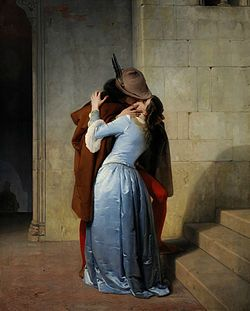
 Close your eyes. You are standing in a narrow street in Verona, Italy. The year is 1302. The stone walls on either side of you are damp with evening fog. Somewhere behind a shuttered window, a woman is singing a melody you do not recognise. And in the distance, you hear shouting. Two groups of young men, their cloaks swirling in the torchlight, are facing each other across a small piazza. One group wears the crest of the Montecchi. The other wears the crest of the Capuleti. You have just arrived in the city of star-crossed lovers, and the story of Romeo and Juliet is about to begin. This is what you would see if you could travel back in time.
Prologue: The City of Star-Crossed Lovers
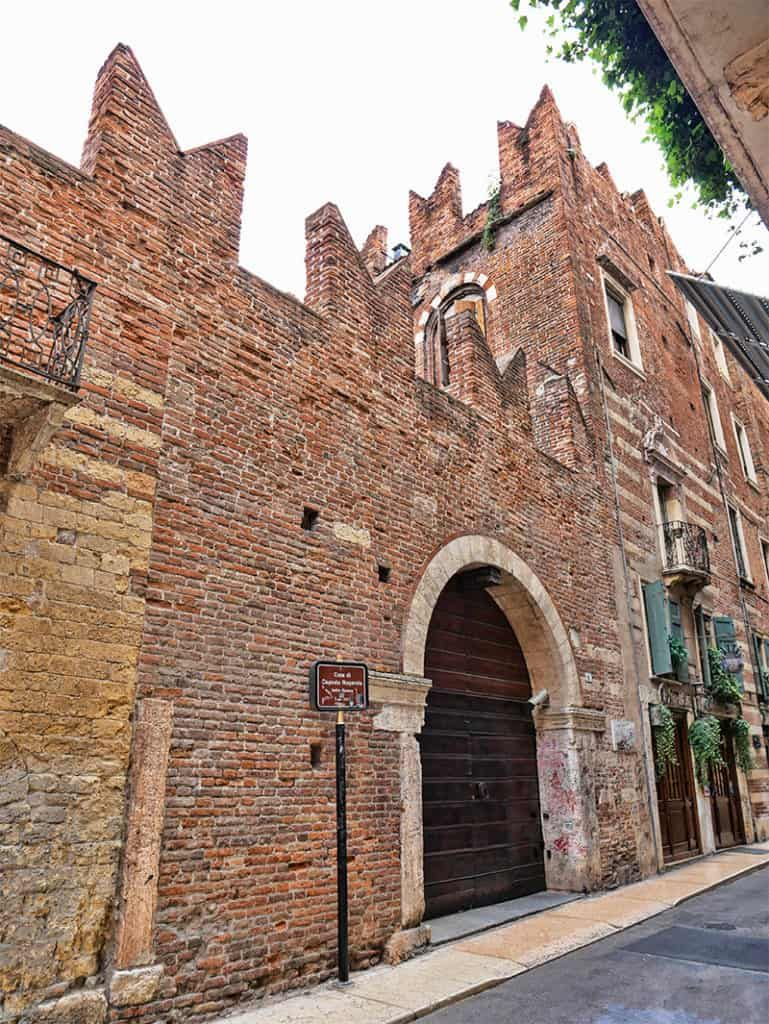
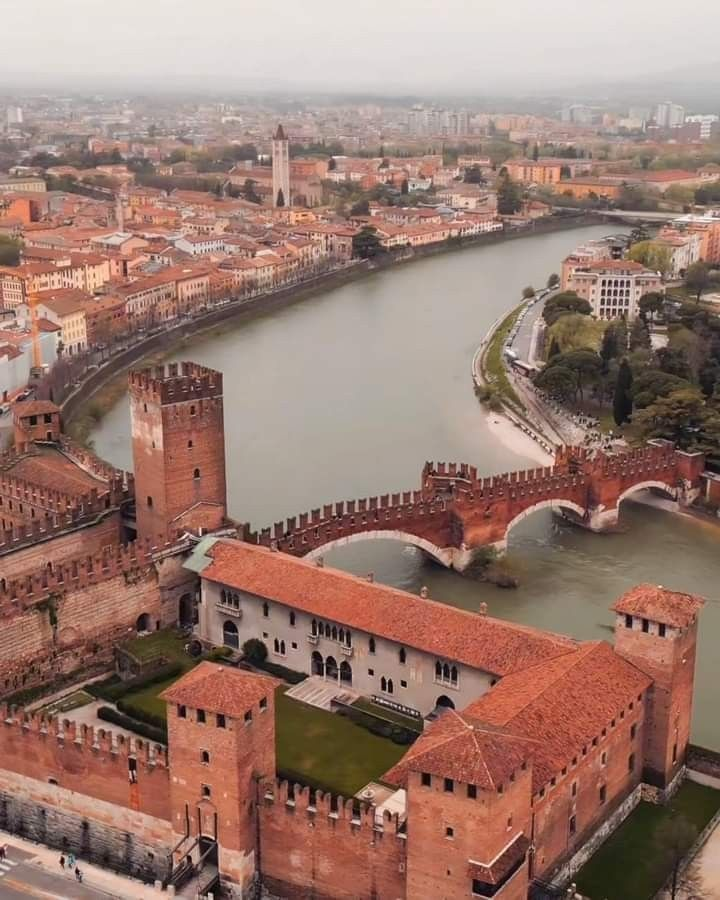
Verona is not a large city. You could walk from one end of the historic centre to the other in less than an hour. But within these ancient walls, bounded by the looping curve of the Adige River, more history has been written than in cities three times its size. The Romans left an arena that still hosts opera performances every summer. The Scaligeri family left a dynasty of Gothic tombs that seem to float above the pavement. And somewhere in the tangled alleyways between Piazza delle Erbe and Via Cappello, a story was born that would become the most famous love story in human history.
Shakespeare never visited Verona. He wrote 'Romeo and Juliet' in London around 1595, drawing on an Italian poem by Matteo Bandello and an English translation by Arthur Brooke. But he understood something essential about this city. Verona is a place of walls. The Montecchi and the Capuleti, the real families that existed here in the 13th and 14th centuries, were political rivals, not enemies in a blood feud as Shakespeare imagined. But the feeling of being trapped, of being unable to love freely because of the walls that others have built, is the authentic Veronese emotion.
If you travelled back in time to 1302, you would see a city of about 40,000 people. The streets would be narrow and dark, the windows small to keep out the summer heat. Horses and mules would carry goods to the market at Piazza delle Erbe. The smell of roasting chestnuts would mix with the odour of tanneries along the river. And you would hear stories, whispered in the porticoes, about two young people who had dared to love across the dividing line. Whether they were real or imagined does not matter. Their story has become more real than history itself.
The Most Common Mistake: Most tourists visit Verona as a day trip from Venice. They rush to Juliet's House, wait in line for an hour to touch the statue's breast, take a photograph of the balcony, and leave. This is a tragedy. Verona reveals itself in the evening, when the day-trippers have gone and the streets belong to the Veronesi. Stay overnight. Walk the walls at sunset. Eat at a trattoria on a side street. That is when you will find the ghost of Romeo and Juliet.
The Historical Truth: Did Romeo and Juliet Really Exist?
You are standing in the Piazza dei Signori, the political heart of medieval Verona. The statue of Dante Alighieri looks down at you from his marble pedestal. Dante lived in Verona for several years after being exiled from Florence. And in his 'Divine Comedy', written between 1308 and 1320, he mentions two families: the Montecchi and the Cappelletti. He writes, 'Come verranno i Montecchi e i Cappelletti' — 'as the Montecchi and the Cappelletti will come'. Dante was not speaking of fictional lovers. He was speaking of two powerful Guelph families who were locked in a bitter political rivalry.
Historians have traced the Montecchi family to the city of Verona, where they served as magistrates and merchants. The Cappelletti, sometimes spelled Capuleti, were also a real family, though their power base was in nearby Brescia. There is no documentary evidence of a Romeo Montecchi or a Giulietta Capuleti. But there is a tomb, and there is a house, and there is a balcony, and there is a story that has been told for more than seven centuries.
If you travelled back in time, you would not meet the lovers themselves. But you would meet their families. You would see the young men of the Montecchi wearing their distinctive striped cloaks, and the young men of the Cappelletti wearing red and yellow. You would see the feuds that erupted into sword fights in the narrow streets. And you would understand that the story Shakespeare told was not a fantasy. It was a dramatisation of a real social disease: the violence that occurs when tribalism overrides love. The Veronese knew this. They still know it today.
Casa di Giulietta: The Balcony and the Bronze Touch
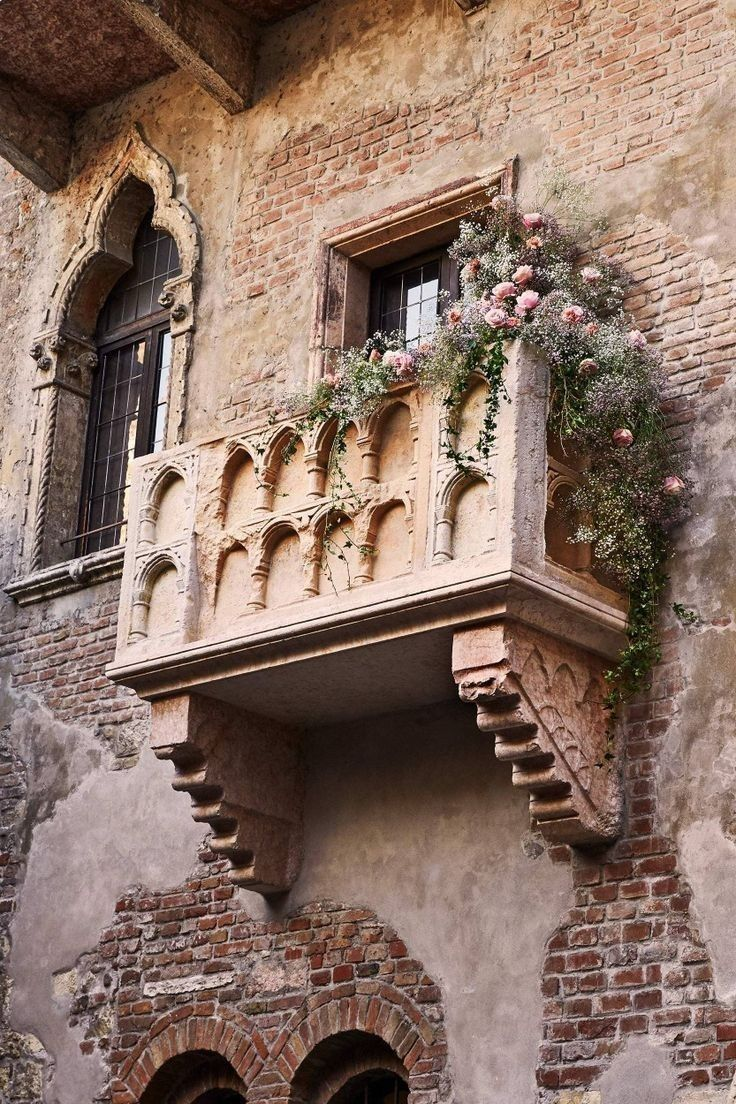
You emerge from a narrow alley onto Via Cappello, and you see the queue first. It snakes around the corner, a line of tourists stretching for a hundred metres, all waiting for the same thing: to touch the right breast of the bronze statue of Juliet that stands in the courtyard of a 13th-century house. The tradition is that touching her breast brings good luck in love. Thousands do it every day. The bronze has been polished to a golden shine by so many hands.
This house, the so-called Casa di Giulietta, belonged to the Dal Cappello family. The name 'Cappello' is close enough to 'Capulet' for the inventive tourist industry of the early 20th century. In 1905, the city of Verona purchased the building and began transforming it into a shrine to Shakespeare's heroine. The famous balcony was added in 1936. It did not exist in the 14th century. There was no stone balcony for Romeo to climb. But does that matter?
Imagine you are standing in this courtyard in 1302. The building in front of you is a modest medieval house, three storeys high, with a small garden at the back. The windows are simple openings in the stone wall, protected by wooden shutters. Behind one of those windows, if the legend is true, a young woman named Giulietta once stood and looked out at the moon. Below, a young man named Romeo whispered her name. The wall is real. The courtyard is real. The possibility that two people once loved each other here, in defiance of their families, is real. The balcony does not need to be authentic. It is a symbol. And symbols can be more powerful than facts.
Inside the house, you can visit the museum, which contains period furniture, frescoes and a small collection of Shakespeare-related art. But the real magic is in the courtyard. Look up at the window. Imagine the night. Imagine the whisper. And then, if you wish, join the queue. Touch the statue. Leave a letter. Thousands of people leave letters to Juliet every year, asking for advice about love. Volunteers from the 'Juliet Club' answer every single one. It is a strange, beautiful, entirely Veronese thing to do.
How to Avoid the Queue: The queue at Casa di Giulietta can exceed two hours in summer. The best time to visit is early morning, immediately after opening at 8:30 AM, or late afternoon, after 4:00 PM. The courtyard is free to enter; only the museum requires a ticket. If you want to avoid the crowd entirely, visit in winter, when Verona is cold but nearly empty.
Casa di Romeo: The House of the Montagues
A ten-minute walk from Juliet's House, on the other side of Piazza delle Erbe, lies Via delle Arche Scaligeri. Here, at number 4, stands a simple medieval building with a small plaque on the wall. It reads: 'This was the house of the Montecchi, made famous by Shakespeare's Romeo.' Unlike the Casa di Giulietta, which receives thousands of visitors every day, Casa di Romeo is almost always empty. Most tourists walk past without noticing it.
If you travelled back in time to 1302, you would see this house as a functioning residence of a wealthy merchant family. The Montecchi were not princes, as Shakespeare imagined them, but wool merchants and bankers. Their wealth came from trade, not from inherited lands. The house would have been bustling with servants, apprentices and family members. Romeo, if he existed, would have lived here. He would have walked out this door on the night he first saw Giulietta at a masked ball. He would have returned here after killing Tybalt. And he would have left this house for the last time, walking toward the apothecary's shop and then to the Capulet tomb.
The building is privately owned, so you cannot enter. But stand outside for a moment. Look at the stone walls. Touch the ancient wood of the door. The Montecchi and the Capuleti have been dust for more than six centuries. But the house remains. That is what history feels like. It is not grand or theatrical. It is ordinary. And that is precisely why it is moving.
Insider Tip: From Casa di Romeo, walk five minutes to the Arche Scaligeri, the Gothic funerary monuments of the Scaligeri family who ruled Verona in the 13th and 14th centuries. These elaborate tombs, with their spires and iron grilles, look like something from a fairy tale. They are among the most extraordinary funerary monuments in all of Europe, and most tourists miss them entirely.
La Tomba di Giulietta: The Empty Sarcophagus
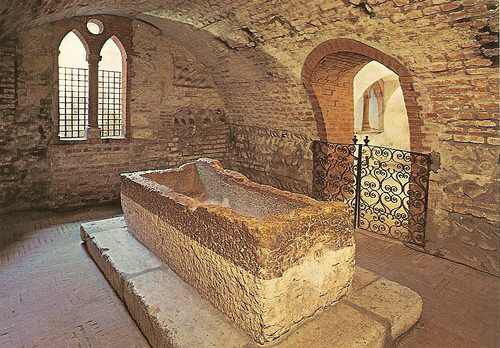
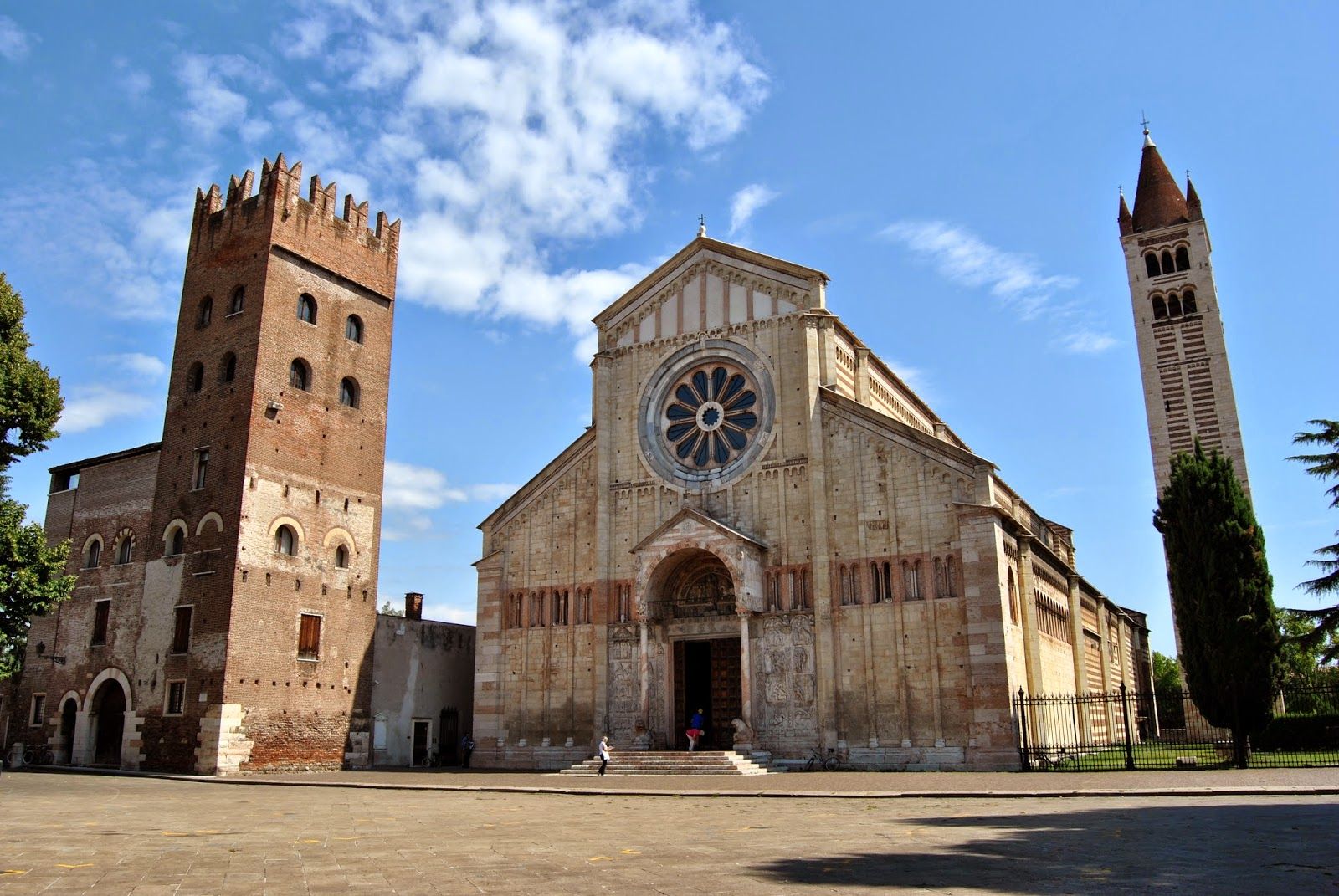
Leave the crowded centre and walk south, across the Ponte Pietra, the ancient Roman bridge that arches over the Adige River. On the other side of the river, in a quiet residential neighbourhood, you will find the Monastery of San Francesco al Corso. In the crypt of this church lies an empty red marble sarcophagus. This, according to tradition, is the tomb of Juliet.
The story says that after Romeo and Juliet died, the Capulet family placed their daughter's body in the family crypt, which was located in this monastery. The tomb was rediscovered in the 19th century, during a wave of Romantic enthusiasm for Shakespeare's play. Guides began bringing tourists to see it. The sarcophagus is indeed old enough, dating from the 14th century. But there is no inscription linking it to a Capulet. The tomb is empty. Juliet is not here.
But do not let that diminish the experience. The crypt is peaceful, cool and silent. You will be almost alone here, even in high season. The red marble sarcophagus sits in a small chapel, surrounded by fresh flowers left by visitors. A basin nearby contains offerings: coins, love notes, photographs. People come from all over the world to pay their respects to a woman who may never have existed. That is the power of story. That is the power of love.
If you travelled back in time to the day after the tragedy, what would you see? You would not see a funeral. The Capuleti would have buried their daughter in secret, to avoid further scandal. You would see a family in mourning, their windows shuttered, their servants wearing black. You would hear the bells of San Francesco tolling a single, somber note. You would feel, in the stone walls of this crypt, the weight of a grief that would last for generations. The tomb may be empty. But the grief was real.
The Secret Crypt of San Francesco al Corso
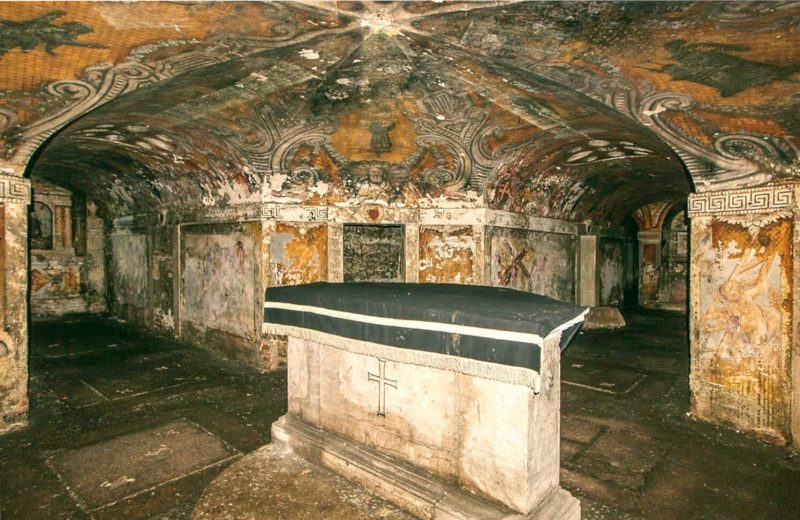
Here is the secret that almost no one knows. The crypt that contains Juliet's tomb is not the only crypt in the Monastery of San Francesco. There is a second, lower crypt, hidden beneath the floor of the church. It was discovered during a restoration in the 1970s, and it is not open to the general public. But if you ask politely at the monastery's reception, explaining that you are a scholar or a particularly devoted admirer of Shakespeare, the Franciscan friars have been known to open it.
This lower crypt is older, darker and stranger than the upper one. It contains the remains of anonymous medieval monks, their bones arranged in patterns on the stone floor. The walls are covered in faded frescoes of saints and angels. And in the centre of the crypt, there is a stone altar. The legend, passed down among the friars, says that this was the original burial place of Giulietta Capuleti before her body was moved to the upper sarcophagus. Whether this is true is impossible to verify. But standing in that dark, cold space, surrounded by the bones of men who prayed for the souls of the dead, you will feel something. That is enough.
Practical Tip: The Monastery of San Francesco al Corso is open daily from 9:00 AM to 6:00 PM. Entry to the crypt is free, though a small donation is appreciated. The monastery is a functioning religious institution, so dress respectfully and speak quietly. The lower crypt is rarely open; ask at the ticket desk when you arrive.
Walking the Walls: Where the Feud Lived
The feud between the Montecchi and the Capuleti was not a private matter. It was a public spectacle. The streets of Verona were the stage. And the city walls, which still stand in long, preserved sections, were the boundaries of the warring territories.
If you travelled back in time to 1302, you would see the young men of the two families wearing identifying marks on their clothing. A Montecchi might wear a striped cloak. A Capuleti might wear a red cap. When they met in the street, the insults would begin. Then the shoving. Then the drawn swords. The city authorities tried to maintain order, but the feuds were too deep. Exiles were common. Deaths were common. And at the centre of it all, two young people who dared to imagine that love could overcome tribalism. They were wrong, of course. But their failure is what makes them immortal.
Today, you can walk the same streets. Start at Piazza dei Signori, the political centre. Walk to Piazza delle Erbe, the marketplace where merchants have sold goods since Roman times. Follow the arrow-straight corso to the Arena, the Roman amphitheatre where Romeo and Juliet never went but where you can hear Verdi and Puccini on summer evenings. Then cross the Ponte Pietra and climb the stairs to Castel San Pietro, the hilltop fortress that offers the best view of the city. From here, you can see the red-tiled roofs, the green curve of the Adige, and the distant mountains. This is the Verona that Romeo and Juliet knew. This is the Verona that Shakespeare imagined. And it is yours to explore.
What to Eat and Drink in Verona
Verona is not a tourist city in the way that Venice or Florence are. It is a working city, a trading city, a city of markets and traffic and real life. And the food reflects that. You should eat where the Veronesi eat, not where the guidebooks send you.
Pasta e Fagioli: A thick soup of pasta and beans, the traditional winter dish of Verona. Order it at a trattoria on a cold evening and you will understand why the Veronesi have survived so many centuries. Risotto al Tastasal: A risotto made with a meat sauce that contains pork and beef. Robust and comforting. Pastissada de Caval: An ancient Veronese dish of horse meat stewed for hours in red wine and spices. It is not for everyone, but it is authentic. Pandoro: Verona's Christmas cake, a star-shaped, fluffy cake dusted with powdered sugar. Verona's rival to Milan's panettone and, many argue, superior.
Where to eat these dishes? Locals recommend Osteria Le Vecete (Via Pellicciai, 8) for authentic Veronese cuisine in a 15th-century building. Trattoria Al Pompiere (Vicolo Regina d'Ungheria, 5) for elegant but unpretentious dining. And for aperitivo, follow the students to the bars around Piazza dei Signori and order a glass of Soave, the local white wine, or a Spritz, the Venetian cocktail that has conquered all of northern Italy.
Comments
No comments yet. Be the first to share your thoughts!
Leave a Comment
Your comment will appear after moderation.