 Michelle
 You have heard the stories. A friend visited New York and spent three thousand dollars in four days. A colleague took her family of four to Times Square for lunch and the bill was higher than her rent. New York has a reputation. It is not entirely undeserved. But the people who tell those stories missed something essential about the city. They paid for the wrong experiences. They stood on crowded observation decks when they could have walked the Brooklyn Bridge for free. They took expensive tourist ferries when the Staten Island Ferry offers the same view at zero cost. They ate in Times Square when ten blocks away, the best pizza in the world costs three dollars a slice. Here is the truth: New York can be experienced magnificently on a shoestring budget. You just need to know where to go. These ten places are where you start.
1. The Staten Island Ferry: Lady Liberty for Free
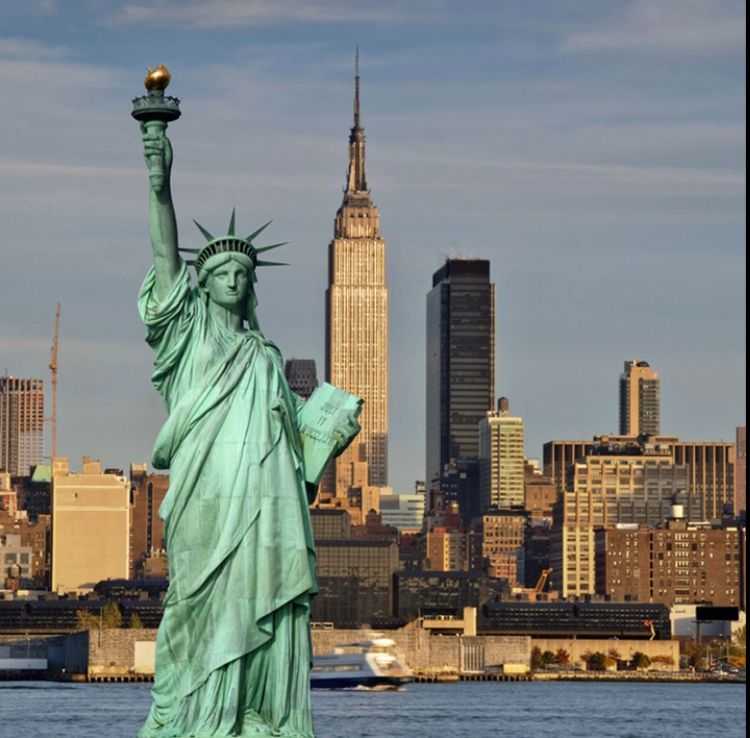
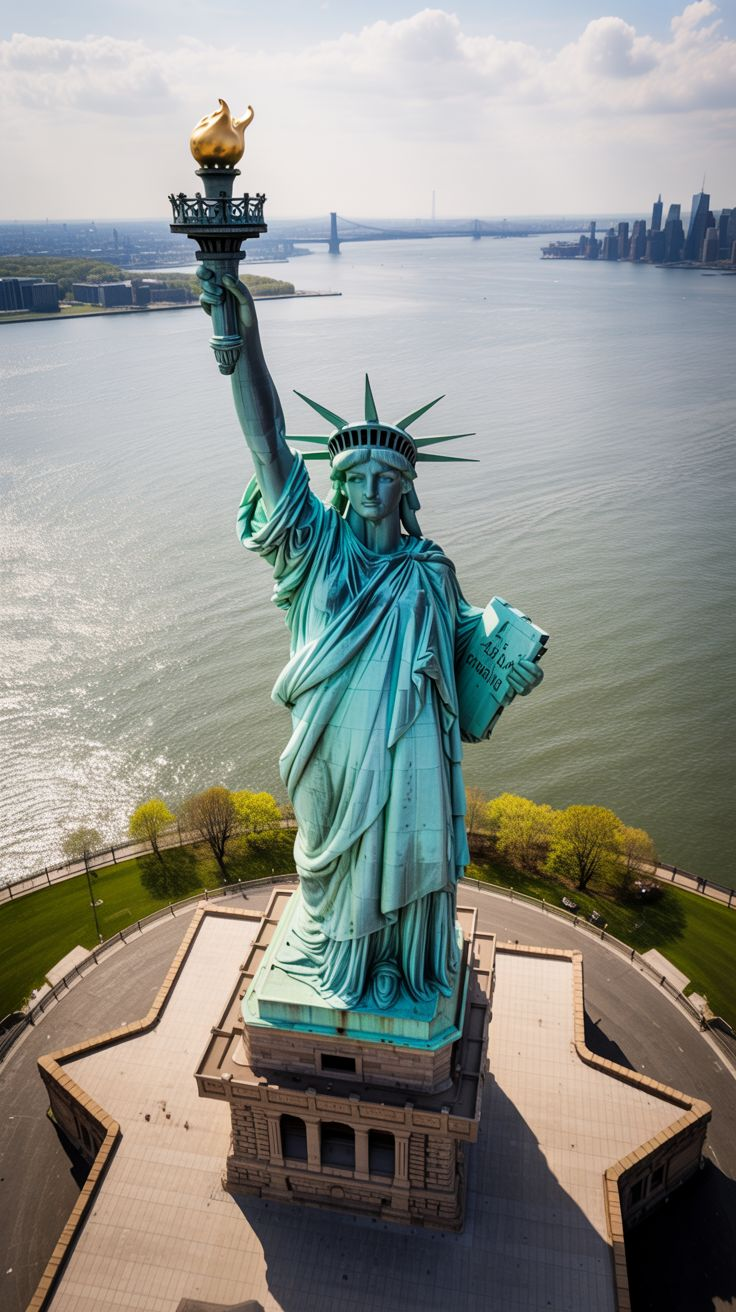
The tourist boats that circle the Statue of Liberty charge forty, fifty, sixty dollars per person. They are crowded, rushed and overpriced. The Staten Island Ferry costs nothing. It runs 24 hours a day, 365 days a year, and the ride from the Whitehall Terminal in lower Manhattan to the St. George Terminal on Staten Island takes exactly twenty-five minutes. You board, you find a spot by the railing, and you watch as the Statue of Liberty emerges from the harbour. The ferry passes within a few hundred metres of Liberty Island. The view of the Manhattan skyline from the harbour is one of the most magnificent urban panoramas in the world. Do it at sunset. The gold light on the glass towers will break your heart. Do it at night. The skyline lit up against the black water will make you understand why the poets wrote about New York. The ferry continues to Staten Island. You can get off and explore the quiet, leafy neighbourhoods of the island, or you can stay on the boat and ride back to Manhattan for another round of views. Either way, you have not spent a penny.
Insider's Tip: The best spot on the Staten Island Ferry for photographs is the right side of the boat going toward Staten Island (the port side) and the left side coming back (the starboard side). That is the side that faces the Statue of Liberty. The ferries leave every thirty minutes during peak hours, every hour during off-peak. The ride is free. You do not need a ticket. Just walk on.
2. The High Line: A Park in the Sky
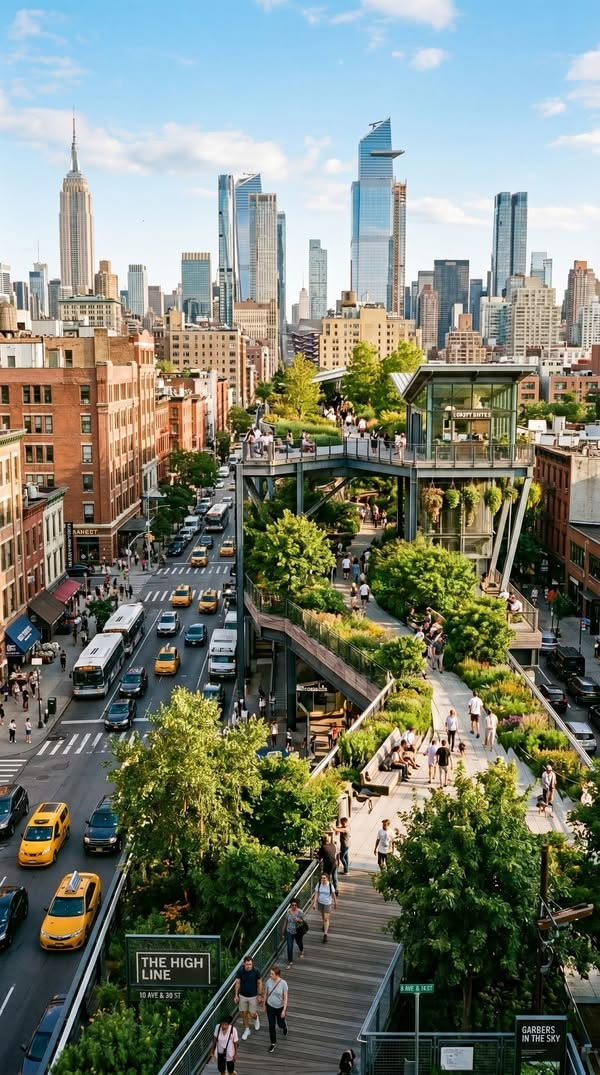
There is a park in Manhattan that floats ten metres above the streets. It is built on an abandoned elevated railway line, a relic of the industrial age that ran from 34th Street down to Gansevoort Street in the Meatpacking District. For thirty years after the last train ran in 1980, the tracks lay rusting, overgrown with weeds, a forgotten scar on the city's west side. Then a group of neighbourhood activists had an idea. They proposed turning the old rail line into a public park. The city was skeptical. The idea was too strange, too expensive, too impractical. But the activists persisted, and in 2009, the first section of the High Line opened. It was an instant phenomenon.
Today, the High Line is one of the most visited attractions in New York. More than eight million people walk its paths every year. The park is a marvel of landscape architecture: wild grasses and flowers grow alongside the old railway tracks. Art installations appear in unexpected places. The views of the Hudson River and the Manhattan skyline are spectacular. You walk and you walk, and you forget that you are walking through Chelsea, that the galleries and shops and restaurants are just below your feet. The High Line feels suspended, both above the city and somehow separate from it. The best time to visit is early morning, when the park is nearly empty, or at sunset, when the light turns the old steel tracks to gold. The park is free. It is open from 7:00 AM to 10:00 PM, and it will change the way you think about what a park can be.
3. Central Park: 843 Acres of Urban Paradise
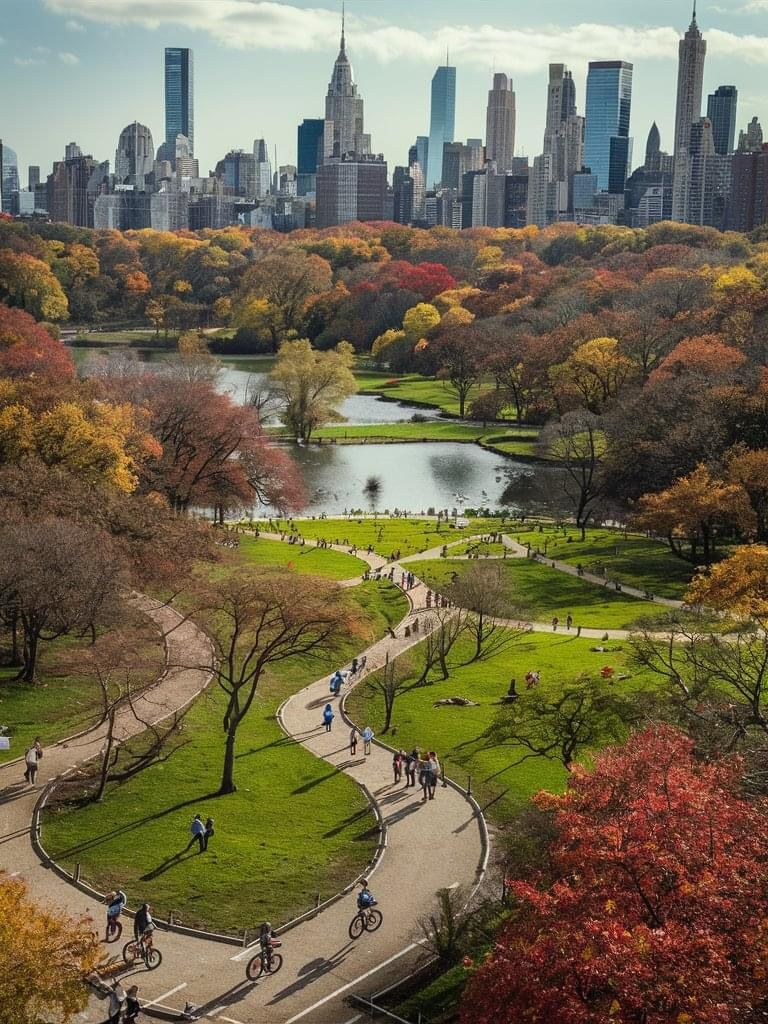
Central Park is the miracle that every city wishes it had. It is 843 acres of undulating meadows, rocky outcroppings, wooded paths, lakes, fountains, statues, bridges and ball fields, all of it carved out of the middle of the most expensive real estate on earth. The park opened in 1858 and has been the heart of Manhattan ever since. You can spend a day in Central Park and not see the same thing twice. You can rent a boat on the Lake, though that costs money. You can watch the skaters at Wollman Rink in winter, though that costs money too. But you can also walk, sit, read, nap, people-watch, bird-watch, photograph, picnic, climb rocks, chase dogs, listen to street musicians, and attend free concerts all without spending a dollar.
The highlights are famous for a reason. Bethesda Terrace, with its angel fountain and its vaulted arcade, is the most beautiful space in the park. Bow Bridge, with its cast-iron arches, is the most romantic. The Mall, a wide pedestrian promenade lined with American elms, is the most majestic. The Conservatory Garden, at the park's northeast corner, is the most peaceful. But the real joy of Central Park is getting lost. Take a path at random. Climb a rock. Follow a sound. You will find something unexpected: a pianist at an outdoor piano, a puppet show for children, a wedding party posing for photographs, a man walking his parrot on a leash. Central Park is not a single attraction. It is a thousand small wonders waiting to be discovered.
4. The Brooklyn Bridge: Walk Between Boroughs
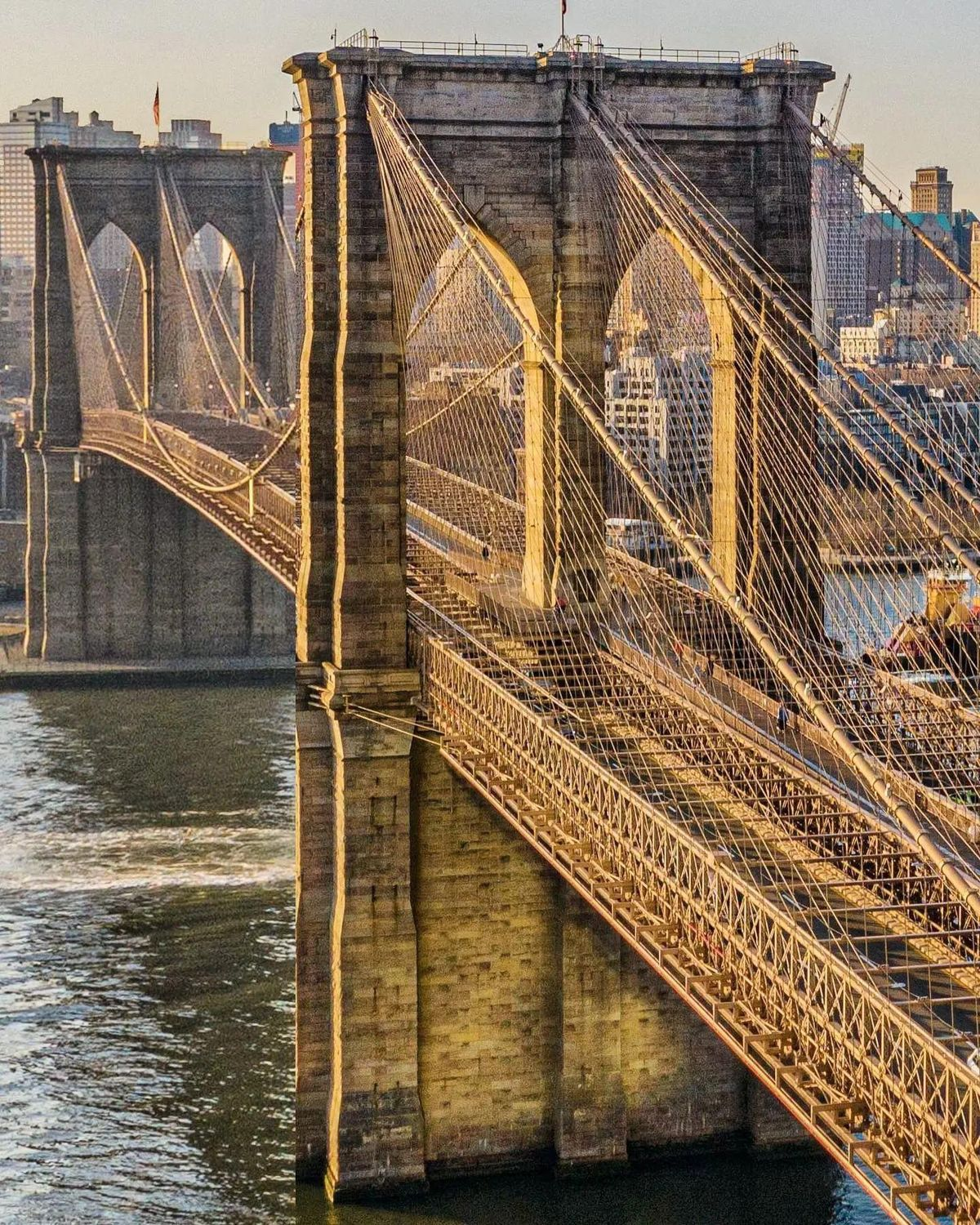
The Brooklyn Bridge opened in 1883 after fourteen years of construction. It was the longest suspension bridge in the world, and it remains one of the most beautiful. The Gothic stone towers, the crisscrossing steel cables, the wooden pedestrian walkway elevated above the traffic: the bridge is a masterpiece of engineering and a monument to human ambition. The walk from Manhattan to Brooklyn takes about thirty minutes at a leisurely pace. You start at City Hall, on the Manhattan side, and follow the pedestrian path up the ramp. The view of the Manhattan skyline opens before you. The bridges of the East River stretch out to the north and south. The Statue of Liberty is visible in the distance. By the time you reach the Brooklyn side, you have earned a pizza.
The best time to walk the bridge is at sunset. The city glows. The lights begin to flicker on. The skyscrapers catch the last rays of the sun. If you have the energy, continue into Brooklyn Heights, the charming neighbourhood that sits at the foot of the bridge. The Brooklyn Heights Promenade offers the finest view of the Manhattan skyline anywhere in the city: the skyline is framed by the bridge itself, the river reflecting the lights, the silhouette of the Statue of Liberty in the distance. Take your photograph. It will be the best photograph of your trip.
Photography Tip: The most common mistake tourists make on the Brooklyn Bridge is walking only halfway and turning back. Keep going all the way to Brooklyn. The view from the Brooklyn side is far superior, and the neighbourhood of Brooklyn Heights is a hidden treasure of brownstones and quiet streets. The best photograph of the bridge is not taken from the bridge itself. It is taken from the Brooklyn Bridge Park, looking back toward Manhattan. Walk south along the park after dark. The reflection of the bridge lights on the water is unforgettable.
5. Grand Central Terminal: Architecture of Ambition
Grand Central Terminal is not a train station. It is a cathedral of transit, a Beaux-Arts masterpiece that makes every other railway station in America look like a bus depot. The ceiling of the main concourse is painted with a magnificent celestial mural: the zodiac, the stars, a midnight blue sky that is, wonderfully, backwards. The astronomers who advised the painter were looking at the stars from the wrong perspective. The ceiling shows the heavens as they would appear from outside the galaxy, not from the earth. It is a mistake that makes the ceiling more magical than any correct astronomical representation could be.
You do not need a train ticket to explore Grand Central. The main concourse is open to the public. Look up. Look at the chandeliers, the marble floors, the famous four-faced clock on the information booth. The clock is one of the most valuable objects in the station: solid brass, estimated to be worth ten million dollars. The whispering gallery, near the Oyster Bar, is a acoustic phenomenon. Stand in one corner of the vaulted archway, have your friend stand in the opposite corner, and whisper. The sound travels along the curved walls. You will hear each other as if you were standing side by side.
The Market at Grand Central is a food hall of extraordinary variety. You can eat well here, though that costs money, or you can simply browse, watching the commuters rush past, feeling the energy of a city in motion. The Transit Museum Annex, on the lower level, displays vintage railway memorabilia. It is small, free, and fascinating. Grand Central is free. It is open from 5:30 AM to 2:00 AM. It is a place where the past and the present of New York meet, and you are welcome to witness the meeting.
6. The New York Public Library: Reading Room of Dreams
The main branch of the New York Public Library, at Fifth Avenue and 42nd Street, is one of the most beautiful public buildings in America. The stone lions, Patience and Fortitude, have guarded the entrance since 1911. The interior is a Beaux-Arts fantasy of marble staircases, arched windows and vaulted ceilings. The Rose Main Reading Room is the heart of the library. It is two city blocks long, with fifty-two-foot ceilings, chandeliers of amber glass, and long oak tables where writers, students and dreamers have worked for over a century. Thomas Wolfe wrote 'Of Time and the River' at these tables. Malcolm X studied here. It is a place of profound quiet in the loudest city in the world.
The library is free and open to the public. You do not need a library card to enter. You can sit in the reading room, read a book, write in a journal, or simply stare at the ceiling and think. The library also hosts free exhibitions in the Gottesman Hall, with treasures from the collection: a Gutenberg Bible, a first folio of Shakespeare, the original Winnie-the-Pooh toys. The Bryant Park behind the library is a lovely spot for a picnic. The park has free tables and chairs, a carousel for children, and in winter, a free ice skating rink (bring your own skates).
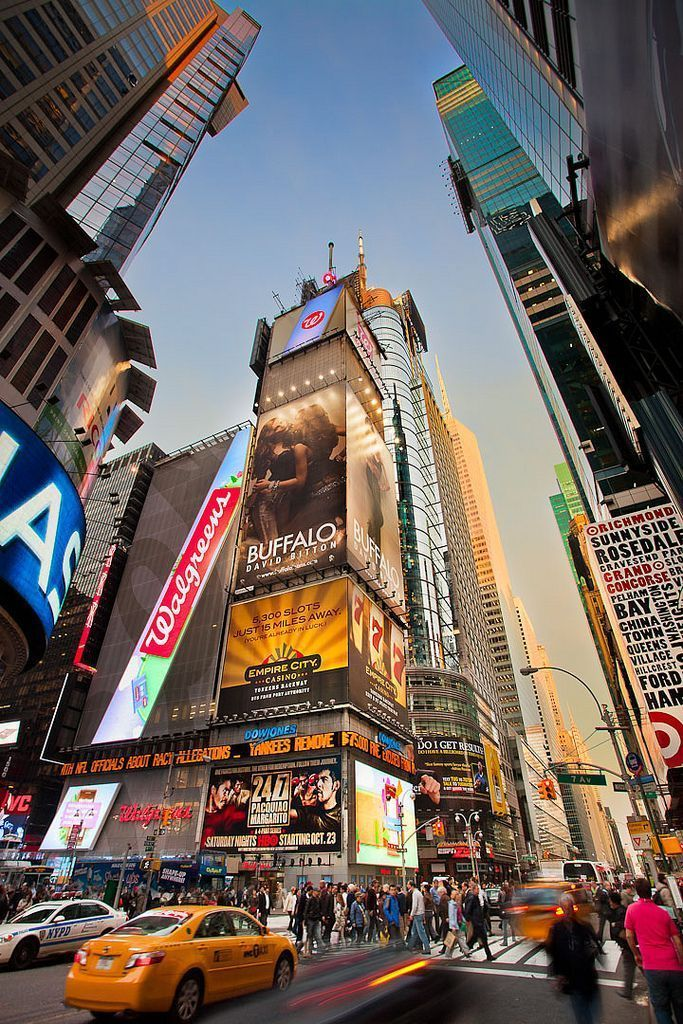
7. Times Square: The Electric Carnival
Times Square is overwhelming, exhausting, ridiculous and magnificent. It is the only place in New York that looks exactly like the movies. The billboards are the size of buildings. The crowds surge like a river. The costumed characters, the street performers, the tourists from every country in the world: it is chaos, organised chaos, a celebration of commerce and spectacle that is entirely unapologetic about what it is. You will either love it or hate it, but you cannot ignore it.
You should visit Times Square at night. That is when the billboards are fully illuminated, the digital screens creating a light show that never ends. The effect is disorienting and thrilling in equal measure. You should also visit Times Square in the early morning, around 6:00 AM, when the crowds are gone and the screens are still glowing. The square is nearly empty then, and you can stand in the middle of it, surrounded by the electric wilderness, and feel the strange, lonely majesty of the place. Times Square is free to visit, as long as you do not buy anything. The visitors centre, at 7th Avenue and 46th Street, has air conditioning and clean bathrooms. The TKTS booth, in the middle of the square, sells discounted theatre tickets, though that costs money. But walking through Times Square costs nothing, and it is an experience you will remember.
8. Free Museums and Cultural Institutions
Many of New York's best museums have free hours or pay-what-you-wish admission. The Metropolitan Museum of Art, the American Museum of Natural History, the Brooklyn Museum, and the Museum of Modern Art have suggested admission prices, but they are technically pay-what-you-wish for New York State residents. If you are not a resident, you can still visit on certain free days. The Met is free for everyone on Friday evenings from 4:00 PM to 8:00 PM. The Museum of Modern Art is free on the first Friday of each month from 4:00 PM to 8:00 PM. The Brooklyn Museum is pay-what-you-wish on the first Saturday of each month.
The 9/11 Memorial, at the World Trade Center site, is free to visit. The two reflecting pools, set in the footprints of the Twin Towers, are surrounded by bronze parapets engraved with the names of the nearly three thousand people who died in the attacks of September 11, 2001, and the bombing of February 26, 1993. It is a place of profound sorrow and profound beauty. The memorial is open daily, and no ticket is required, though you may need to pass through security. The museum beneath the memorial requires an admission fee, but the outdoor memorial itself is free.
The National Museum of the American Indian, in lower Manhattan, is completely free. It is located in the Alexander Hamilton US Custom House, a Beaux-Arts building of staggering beauty. The collection includes Native American art and artifacts from across the Americas, and the museum offers free guided tours. The Federal Hall Museum, on Wall Street, is also free. It stands on the site where George Washington was inaugurated as the first president of the United States. The museum explores the early history of American government, and it is small enough to explore in thirty minutes.
9. Hidden Gardens and Secret Spaces
New York is full of secret gardens, hidden courtyards and unexpected quiet places that cost nothing to enter. The Conservatory Garden, at the north end of Central Park, is the only formal garden in the park, and it is nearly empty on most days. The garden is divided into three sections: French, Italian and English, each with its own fountains, sculptures and seasonal flowers. The entrance is at 5th Avenue and 105th Street. It is free and open daily from 8:00 AM to dusk.
The Greenacre Park, on East 51st Street between 2nd and 3rd Avenues, is a pocket park designed by the landscape architect Hideo Sasaki. A twenty-five-foot waterfall cascades down a stone wall. Tables and chairs are scattered among the trees. Office workers eat their lunches here, but few tourists find it. The park is open to the public, and it is one of the most peaceful spots in midtown. The Ford Foundation Atrium, on East 42nd Street, is a twelve-story interior garden, a greenhouse of tropical plants and hanging vines. The building is open to the public during business hours, and the atrium is a stunning example of modernist landscape architecture.
The Elevated Acre, at 55 Water Street in the Financial District, is a one-acre park on the roof of an office building. It is accessible by a long escalator from the street level. The views of the East River and the Brooklyn Bridge are magnificent. The park has a lawn, trees and seating areas, and it is almost never crowded. It is free and open daily from 7:00 AM to 7:00 PM. These hidden gardens are the New York that only New Yorkers know. Discovering them feels like finding a secret.
'One belongs to New York instantly. One belongs to it as much in five minutes as in five years.' — Tom Wolfe
10. Practical Tips for Budget Travel in New York
Getting to New York: New York is served by three major airports: John F. Kennedy International (JFK), LaGuardia (LGA) and Newark Liberty (EWR). The most comfortable way to reach Manhattan is by private airport transfer, which takes approximately 45 to 60 minutes from JFK, 30 to 45 minutes from LaGuardia, and 45 to 60 minutes from Newark. Public transport is cheaper but less convenient: the AirTrain to the subway from JFK takes about an hour; the bus to the subway from LaGuardia takes about 45 minutes; the AirTrain to New Jersey Transit from Newark takes about an hour.
Getting Around New York: The subway is your best friend. A single ride costs $2.90, and a seven-day unlimited MetroCard costs $34. The subway runs 24 hours a day, and it is the fastest way to get anywhere in Manhattan, Brooklyn, Queens and the Bronx. The bus system is slower but useful for crosstown travel. Walking is the most rewarding way to see the city. Much of Manhattan is surprisingly walkable, and you will discover things from the sidewalk that you would miss from the subway.
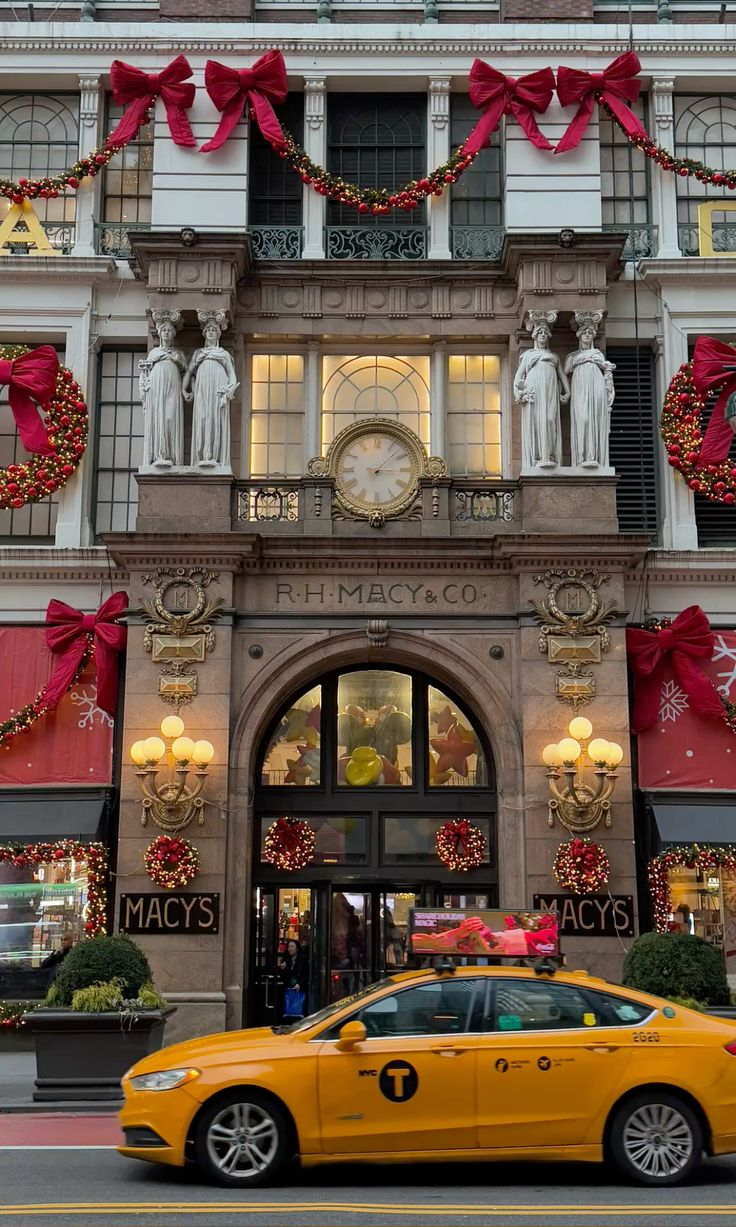
Best Time for a Free Tour of New York: Spring (April, May) and autumn (September, October) are ideal. The weather is mild, the parks are at their most beautiful, and the seasonal crowds are smaller than in summer. Summer is hot and humid, but the city has a energy that is hard to resist. Winter is cold, but the holiday decorations in December are spectacular, and the Christmas markets are free to browse. The ice skating rinks in Central Park and Rockefeller Center are expensive, but watching the skaters is free.
What to Bring: Comfortable walking shoes. A reusable water bottle (the tap water in New York is excellent, and there are public fountains in most parks). A portable phone charger (you will be using Google Maps constantly). A small backpack for souvenirs and snacks. And an open mind. New York is not a museum. It is a living, breathing, chaotic, magnificent city. The best experiences are the ones you cannot plan.
Comments
No comments yet. Be the first to share your thoughts!
Leave a Comment
Your comment will appear after moderation.