
Airport to City Centre, Getting to Paris & Getting Around, Connectivity and Tips About Paris
What’s in this guide
There are cities that you visit, and then there is Paris, which visits you. It settles into your memory differently from any other place on earth: not as a collection of monuments and meals, but as a mood, a particular quality of light falling across a wet cobblestone street, the sound of café chairs being arranged on a terrace at seven in the morning, the smell of bread at a boulangerie door. Paris does not simply offer experiences; it offers a way of existing that most people have no name for until they have spent a week in it.
This is a city that has shaped the way the entire world thinks about food, art, fashion, philosophy, and the very idea of urban life. To walk its arrondissements with any degree of attention is to walk through the accumulated decisions of some of the most restless, most brilliant, most contrary minds in the history of civilisation. Whether it is your first visit or your fifth, Paris will confound your expectations and exceed them simultaneously. This guide will help you arrive prepared, move through the city with confidence, and leave already planning your return.
“Paris is always a good idea.” — Audrey Hepburn
When Is the Best Time to Visit Paris?
Paris rewards visitors in every season, but not equally. The city’s light changes dramatically through the year, and the difference between Paris in April and Paris in August is the difference between a city at ease with itself and a city under siege from the consequences of its own fame.
Spring: April, May & June
- Temperatures 12–22°C
- Chestnut trees in blossom
- Terrace season begins in earnest
- Long, luminous evenings
- Avoid Easter weekend (very busy)
Autumn: Sept & Oct
- Temperatures 13–21°C
- Summer crowds dissipate
- Golden light on the Seine
- Paris Fashion Week (Sept)
- The finest season for bistro food
Winter: Nov–Feb
- Temperatures 3–10°C
- Christmas markets and fairy lights
- Museums at their emptiest
- Lowest hotel prices of the year
- Short days, but atmospheric
Summer: July & Aug
- Temperatures 25–35°C
- Eiffel Tower queues of 3 hours
- Many bistros close in August
- Highest prices of the year
- Book every ticket months in advance
The Parisian secret: The last two weeks of September are when the city returns to itself after the summer exodus. The weather is warm, the light is extraordinary, the bistros are full of locals rather than tourists, and the cultural season reopens in full force. Come then, if you possibly can.
Getting to Paris & Getting Around
Paris’s two main airports
Paris is served by two principal airports. Charles de Gaulle (CDG), 25 km northeast of the city centre, is one of Europe’s busiest international hubs, with four terminals spread across a vast complex. Orly (ORY), 14 km to the south, is smaller and handles primarily domestic, charter, and short-haul European flights. A third facility, Beauvais-Tillé (BVA), serves ultra-low-cost carriers and lies 85 km north of the city: the transfer time should be factored carefully against any apparent fare saving.
Airport to city centre: your options in 2026
| Option | Time | Cost | Best for |
|---|---|---|---|
| Private Transfer Door-to-door, fixed price Recommended |
~45–60 min (CDG) | From €80 | Families, groups, first-timers |
| RER B Train CDG → Gare du Nord and beyond |
~35 min | €11.80 | Solo travellers, light luggage |
| Le Bus Direct CDG → Eiffel Tower, Montparnasse |
45–75 min | €18 | Hotel near Trocadéro or Gare de Lyon |
| Orly: Orlyval + RER B ORY → Antony → city centre |
~35 min total | €13.90 | Orly passengers, budget option |
| Official Taxi Fixed fare applies from both airports |
40–80 min (CDG) | €176 left bank / €195 right bank (CDG) | Late night, heavy luggage, small groups |
RER B caution: The RER B is efficient but pickpockets target travellers on the stretch between CDG and Gare du Nord. Keep bags in front, do not place luggage on the overhead rack, and remain aware of your surroundings when the train fills at Gare du Nord.
Getting around the city
Paris has one of the most comprehensive urban transit networks in the world. The Métro runs 16 lines covering virtually every corner of the city; a single ticket costs €2.15 and is valid for one journey. The Paris Visite pass offers unlimited travel on the Métro, bus, RER within Paris, and the Montmartre funicular: the 2-day pass costs €20.05, the 5-day pass €42.30.
Walk whenever the map permits: The distance from the Louvre to Notre-Dame is a 20-minute walk along the Seine. From the Musée d’Orsay to the Eiffel Tower is 25 minutes through the 7th arrondissement. Paris rewards the walker above all others; some of the city’s finest discoveries happen in the gaps between destinations.
The Essential Paris: What You Cannot Miss
Paris is one of the most visited cities on earth precisely because its most celebrated attractions are, without exception, as remarkable as their reputation suggests. The Eiffel Tower is breathtaking. The Louvre is overwhelming in the best possible sense. Do not allow familiarity with the images to blunt your readiness to be astonished by the reality.
The Eiffel Tower
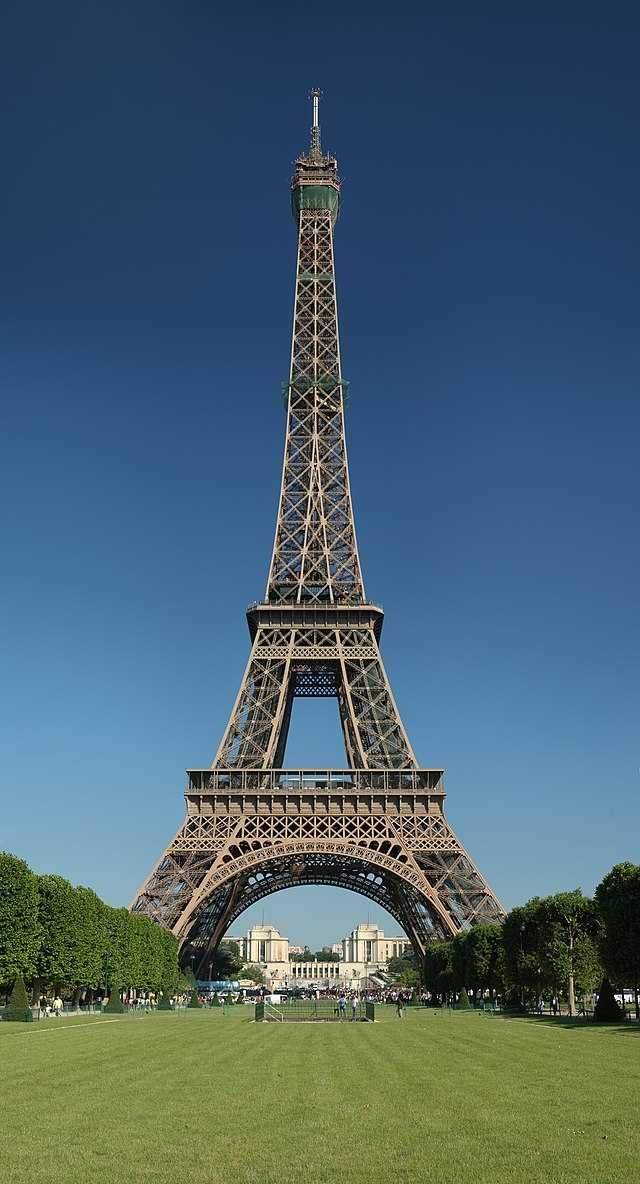
Gustave Eiffel’s iron tower was constructed in 22 months for the 1889 World Exhibition, initially derided by the Parisian literary establishment as a monstrosity, and within a decade had become the most recognisable structure on earth. It remains so. At 330 metres, it held the title of the world’s tallest building for 41 years. The summit platform, at 276 metres, offers a panorama of extraordinary clarity on fine days: the whole of the Haussmann city spread beneath you, the Seine glittering in its great looping bends, and on clear winter mornings, the outline of Mont Blanc on the horizon. There are three levels: the first (57 metres), the second (115 metres), and the summit. Buy the summit ticket; you will not regret the extra expense.
The Louvre
The Louvre is not a museum in any conventional sense. It is a civilisation, housed inside a former royal palace, containing 35,000 works across 60,600 square metres of galleries that would take, at a pace of one second per artwork, eleven hours to traverse without stopping. The Mona Lisa is there, smaller than everyone expects and surrounded by a crowd larger than anyone wants. The Venus de Milo is there, and the Winged Victory of Samothrace at the top of its grand staircase, which is arguably the most dramatically staged sculpture in the world. Go with a plan: choose two or three rooms, give them the attention they deserve, and return. The Louvre cannot be done in a single visit and should not be attempted as if it can.
Notre-Dame de Paris
Notre-Dame reopened its doors in December 2024, five and a half years after the fire that destroyed its spire and much of its roof on the night of 15 April 2019. The restoration, carried out by 250 specialist craftspeople working with medieval techniques and 21st-century precision, has returned the cathedral to a condition arguably finer than it had been for decades before the fire. The interior is immaculate; the light through the rose windows has been freed of the grime of centuries. To stand in the nave and look up at the vaulting is to understand, in the bones rather than the intellect, why the Gothic builders conceived of their cathedrals as material arguments for the existence of the divine.
Musée d’Orsay
If the Louvre is the museum of civilisation, the Orsay is the museum of a single extraordinary moment in Western art: the period between 1848 and 1914 when painting reinvented itself entirely. Monet’s haystack series, Renoir’s Le Moulin de la Galette, Van Gogh’s self-portraits, Degas’s dancers, Cézanne’s card players, and Seurat’s Circus are all here. The building itself, a converted Belle Époque railway station with its magnificent clock faces and glass ceiling, is part of the experience. The top floor, where the Impressionist collection lives, is one of the great rooms in the world.
The Palace of Versailles
Louis XIV moved his court to Versailles in 1682 and spent forty years constructing the most grandiose statement of absolute monarchy in the history of architecture. The palace contains 700 rooms; the Hall of Mirrors alone, 73 metres long and lined with 357 mirrors that multiply the light from 17 arched windows, is among the most extraordinary interior spaces in Europe. The gardens, designed by André Le Nôtre, extend across 800 hectares and contain more than 50 fountains. The Trianon estate, a ten-minute walk through the gardens, offers a more intimate counterpart: the Grand Trianon is where Louis XIV escaped his own grandeur, and the Hameau de la Reine is where Marie-Antoinette played at rustic life.
Sacré-Cœur and Montmartre
The white Romano-Byzantine basilica of Sacré-Cœur crowns the Butte Montmartre, the highest point in Paris, and has been visible from every elevated vantage point in the city since its consecration in 1919. The view from its forecourt over the Haussmann city below is exceptional at any hour. But the real pleasure of Montmartre lies not in the basilica itself but in the neighbourhood surrounding it: the Vignes vineyard (one of only two working vineyards within Paris), the Place du Tertre with its resident portraitists, the Moulin de la Galette, and the streets where Renoir, Picasso, Van Gogh, and Toulouse-Lautrec once kept studios. Come early in the morning, before the tourist groups arrive, and the hill recovers something close to its old bohemian character.
The Paris Museum Pass: is it worth it in 2026?
The Paris Museum Pass provides skip-the-line entry to more than 50 museums and monuments, including the Louvre, the Musée d’Orsay, Versailles, and the Centre Pompidou. It does not cover the Eiffel Tower, temporary exhibitions, or audioguides. For visitors planning three or more major museum visits, it pays for itself readily.
Three-day Museum Pass strategy: Day 1: Louvre (morning, enter via Richelieu wing), Palais-Royal gardens, and the passages couverts of the 2nd arrondissement. Day 2: Musée d’Orsay followed by a walk along the Left Bank to Saint-Germain-des-Prés. Day 3: Versailles for the full day; book the earliest slot and allow six hours.
How to Avoid the Queues
Paris receives more tourists than any other city in the world. The queues at its principal attractions can, in high summer, consume a significant portion of a day. A systematic approach to booking and timing eliminates this problem almost entirely.
The essential rule: Book the Eiffel Tower summit, the Louvre, and Versailles before you leave home. In July and August, Eiffel Tower summit tickets sell out three to four weeks in advance. The Louvre operates a strict timed-entry system; arriving without a booking will result in a very long wait at the Pyramid.
- Eiffel Tower: Book at ticket.toureiffel.paris. The stairs queue moves faster than the lift queue. The most atmospheric time to visit is either at dawn or at dusk when the tower’s light display begins; a slot around 9pm in summer combines the golden hour panorama with the spectacle of the lights coming on.
- Louvre: Book at ticketlouvre.fr and enter via the Richelieu or Denon wing doors rather than the main Pyramid. Wednesday and Friday evenings, when the museum stays open until 9:45pm, are considerably quieter than daytime sessions and offer a more contemplative experience of the collections.
- Versailles: Buy the Passport ticket at chateauversailles.fr. Arrive before 9am when the gates open. The Hall of Mirrors is manageable before 11am and genuinely unpleasant after noon in summer. Visit the Trianon estate in the afternoon when the main palace crowds have thickened.
- Notre-Dame: Timed entry is required during peak periods. Book at notredamedeparis.fr. Arriving at opening time (currently 8am on weekdays) gives you the nave largely to yourself for the first twenty minutes, in the extraordinary silence that Gothic cathedrals seem designed to amplify.
- Montmartre: Visit on a weekday morning before 9am. The Place du Tertre, unbearable by 11am with tourist activity, is quietly atmospheric at dawn. The vineyard, the windmill, and the views are all at their best before the coaches arrive.
What to Eat in Paris: and Where
French gastronomy is a UNESCO Intangible Cultural Heritage, and Paris is its capital. To eat well in this city requires no exceptional effort or expense: it requires only the discipline to walk ten minutes away from any major monument before choosing a restaurant, and the willingness to trust a blackboard menu written in French.
Croissant au Beurre
The croissant is not an item of breakfast so much as a daily test of a boulangerie’s seriousness. A good one is laminated with unsalted butter into dozens of shattering layers; a bad one is straight-sided and doughy. Look for croissants that curve: the curve indicates pure butter. A straight croissant uses margarine.
Steak Frites
The great democratic dish of the Paris bistro, ordered by everyone from factory workers to philosophy professors for the past hundred and fifty years. The steak is typically onglet (hanger) or entrecôte, cooked precisely to your specification. The frites are thin, twice-cooked, and unspeakably good. Order it with a glass of Côtes du Rhône.
Poulet Rôti
The rotisserie chicken from a charcuterie or market stall, dripping its juices onto the potatoes beneath it on the spit, is one of the great smells of Paris on a Saturday morning. Buy half a chicken, a bag of roasted potatoes, and a baguette, and eat it in the nearest square. This is Paris at its most honest and most delicious.
Escargots de Bourgogne
Six snails in their shells, swimming in garlic, parsley, and salted butter that has been coaxed into something transformative by the heat of the oven. Order them at any serious bistro. Use the small fork. Do not leave a drop of the butter: that is what the bread is for.
Sole Meunière
A whole Dover sole, dredged in flour, cooked in foaming brown butter with lemon and parsley. One of the simplest preparations in French cuisine and, when correctly executed, one of the most revelatory. It is said to have been the dish that converted Julia Child to French cooking on her first day in Paris.
Le Plateau de Fromages
The French cheese course is a separate event from dessert, not a substitute for it. Ask for a plateau at any serious bistro and a trolley will arrive bearing anything from four to sixteen varieties. Camembert, Comté, Roquefort, Munster, and Brie de Meaux are the canonical entries. Take your time. Finish the wine.
Tarte Tatin
Caramelised apples baked beneath a pastry shell, then inverted: the result is sticky, burnished, and unexpectedly complex. A dessert invented by accident in the Loire Valley and perfected by every serious Paris pâtisserie since. Order it with a spoonful of crème fraîche, never with ice cream.
A Glass of Wine at the Zinc
The zinc-topped bar counter of the Paris bistro is one of civilisation’s more pleasant inventions. A glass of Beaujolais, a Muscadet, or a natural Languedoc red, drunk standing at the bar for €4 to €6, is the most Parisian thing you can do at noon on a Tuesday. Do not sit down. Stand, drink, observe, and repeat.
Where to eat
The 11th arrondissement (Bastille, Oberkampf, Charonne) is the heartland of the modern Paris bistro movement: serious cooking, natural wine, no tourist menus, and real reservations required.
- Bistrot Paul Bert — 18 Rue Paul Bert
The paradigm of the classic Paris bistro: a handwritten blackboard menu that changes daily, a steak frites of legendary consistency, an extraordinary cheese trolley, and a wine list composed by someone who clearly loves their work. Reserve at least a week in advance. - Septime — 80 Rue de Charonne
The restaurant that defined the nouvelle vague of Parisian cooking: ingredient-led, technically brilliant, almost always fully booked. Reserve online the moment reservations open, typically three to four weeks ahead.
The 7th arrondissement and Saint-Germain-des-Prés remain the territory of the classic Left Bank bistro, where the tradition of serious French cooking has been maintained without pretension or self-consciousness.
- L’Ami Jean — 27 Rue Malar
A Basque-inflected Paris bistro of boisterous warmth and extraordinary cooking. The rice pudding served in a vast communal bowl is famous across the city. Noisy, joyful, and absolutely essential. - Le Comptoir du Relais — 9 Carrefour de l’Odéon
At dinner, a brasserie with a terrace on one of the great corners of Saint-Germain. At lunch on weekdays, a single-sitting prix fixe of remarkable ambition at a price that feels almost dishonest.
The tourist trap signal: Any restaurant on or immediately adjacent to the Champs-Élysées, the Boulevard du Montparnasse tourist strip, or within a hundred metres of the base of the Eiffel Tower is, with very few exceptions, a profoundly unrewarding place to eat. The quality falls and the price rises in precise proportion to the proximity to famous landmarks. Walk away without hesitation.
Mistakes to Avoid in Paris
Paris punishes the incurious visitor and rewards the attentive one. Most of the mistakes that first-timers make are easily avoided with a little foreknowledge.
- Do not attempt the Louvre without a plan. Arriving at the Pyramid and hoping for the best is a recipe for queuing for an hour, seeing the Mona Lisa over forty shoulders, and leaving feeling defeated. Book a timed entry slot, identify two or three rooms you genuinely want to see, and be ruthless about sticking to them.
- Do not confuse politeness with coldness. Parisians are not unfriendly; they observe a different set of social conventions. A simple “Bonjour monsieur” or “Bonjour madame” before any transaction is not optional etiquette but a genuine social requirement. Those who omit it are perceived, correctly, as rude. Those who include it will find the city considerably warmer.
- Do not eat on the Champs-Élysées. The avenue is magnificent to walk; it is an unreliable place to dine. The restaurants exist for the foot traffic, not for the quality of their kitchens. Take the Métro two stops and eat somewhere local.
- Do not ignore the passages couverts. The covered arcades of the 2nd arrondissement, the Galerie Véro-Dodat, the Passage des Panoramas, and the Galerie Vivienne, are among the city’s most atmospheric and most overlooked spaces. They date from the 1820s and 1830s and feel entirely removed from the 21st century.
- Do not take unofficial taxis. Official Paris taxis are metered and now operate under a fixed-fare system from both CDG and Orly airports. Drivers soliciting fares inside the terminal buildings or on the pavement outside arrivals are unlicensed and should be declined firmly. Use the official taxi rank.
- Do not visit Versailles on a Monday. Versailles is closed on Mondays. Many tourists discover this at the entrance gate. Check before you travel and plan your Versailles day accordingly.
- Do not order a café au lait after noon. Milky coffee is a morning beverage in France. After noon, a visiting foreigner ordering a grand café au lait in a serious bistro will not be refused, but they will be noticed. After lunch, the correct order is an espresso, or un café, served in a small white cup with a single piece of dark chocolate. Accept the convention gratefully; the coffee is excellent.
- Do not neglect the free Paris. The city’s greatest pleasures cost nothing: the Seine at dusk, the Palais-Royal gardens, the Canal Saint-Martin on a Sunday afternoon, the bouquinistes along the Left Bank, the view from the Pont de Bir-Hakeim, and the perfectly strange experience of sitting in any Parisian square doing nothing in particular at four o’clock on a Tuesday. Slow down. Paris repays patience extravagantly.
Practical Information for Paris 2026
Money and payments
Paris is almost entirely cashless. Card payments, including contactless, are accepted in virtually every café, market stall, boulangerie, and museum. Keep €20 to €30 in cash for the occasional market vendor or small neighbourhood bakery that prefers it. ATMs are widely available; avoid those charging commission near major tourist attractions.
Water
Paris tap water is safe, clean, and free. Wallace fountains, the ornate green cast-iron drinking fountains that have supplied the city since 1872, are found throughout the arrondissements. There are now also sparkling-water fountains in several public parks. Carry a refillable bottle and use them without hesitation.
Connectivity
EU visitors use their domestic plans without roaming charges. Non-EU visitors should purchase a French SIM from Orange, SFR, or Free Mobile on arrival; the CDG terminal shops stock them. Free Wi-Fi is available at all major museums, in all Paris Métro stations, and in most cafés.
Safety
Paris is a safe city. The main risk for tourists is pickpockets, concentrated around the Eiffel Tower, at the base of the Sacré-Cœur steps, on the RER B between CDG and Gare du Nord, and on Métro Line 1 (the tourist corridor between La Défense and Vincennes). Keep bags in front, avoid wearing expensive jewellery visibly, and be alert when metro doors open at busy stations.
Emergency numbers
Public holidays and special events
July 14, Bastille Day, is the French national holiday: a military parade along the Champs-Élysées in the morning and fireworks from the Trocadéro at night. Many museums close on May 1 (Fête du Travail). September brings both Fashion Week and the Journées du Patrimoine, when hundreds of private and government buildings normally closed to the public open their doors free of charge for a single weekend.