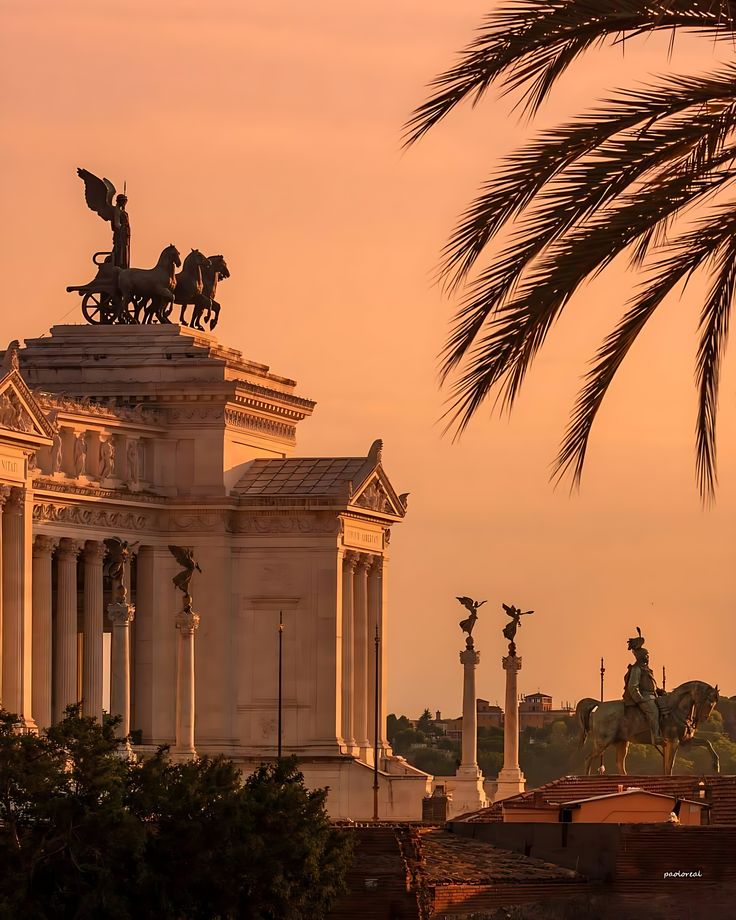

Airport to City Centre, Getting to Rome & Getting Around, Connectivity and Tips About Rome
What's in this guide
There are places you pass through, and then there are places that claim you. Rome is the latter. No other city on earth compresses so much history, beauty, chaos and quiet grace into a single living organism — a place where you can eat a cornetto at a marble bar that has stood since Napoleon’s time, then turn a corner and find yourself face to face with a triumphal arch built for an emperor who died two thousand years ago.
Rome is not a museum. It is a city that breathes, argues, honks its moped horns and argues some more — and then, just when you’re overwhelmed, it hands you a glass of cold white wine at a table on a cobbled piazza and makes everything right again. Whether this is your first visit or your fifth, this guide will help you see Rome as clearly — and as deeply — as possible.
“If you are tired of Rome, you are tired of life.” — Henry James
When Is the Best Time to Visit Rome?
Timing your visit correctly can make the difference between a magical trip and a sweaty, queue-filled ordeal. Rome is technically open year-round — and every season has its own character — but not all seasons are created equal.
Spring — April & May
- Temperatures 16–24°C
- Wildflowers at the Forum
- Fewer queues than summer
- Beautiful photography light
- Avoid Easter Week (very busy)
Autumn — Sept & Oct
- Temperatures 18–26°C
- Summer crowds gone
- Golden light, rich colours
- Lower hotel prices
- Best season for food
Winter — Nov–Mar
- Temperatures 5–14°C
- Lowest prices & crowds
- Intimate, authentic feel
- Short daylight hours
- Some sites reduce hours
Summer — July & August
- Temperatures 35–40°C+
- Massive crowds everywhere
- Queues of 2–3 hours
- Highest prices
- Book everything months ahead
The insider window: The last two weeks of September and the first two weeks of October are Rome’s secret sweet spot — summer heat is gone, the city exhales, restaurants are back in full swing after August, and the afternoon light turns the travertine stone to pure gold.
Getting to Rome & Getting Around
Rome’s two airports
Rome is served by two airports. Fiumicino (FCO) — officially Leonardo da Vinci International Airport — is the main hub, 32 km southwest of the city centre. Ciampino (CIA) is smaller, primarily used by low-cost carriers, about 15 km southeast of the centre.
Airport to city centre — your options in 2026
| Option | Time | Cost | Best for |
|---|---|---|---|
| Private Transfer Door-to-door, fixed price Recommended |
~45 min | 60 Euros | Families, groups, first-timers |
| Leonardo Express Fiumicino → Roma Termini only |
32 min | €14 per adult | Solo travellers, light luggage |
| FL1 Regional Train Fiumicino → Trastevere, Ostiense |
45–60 min | ~€8 | Budget travellers |
| Airport Bus Pubblic Transport |
50–70 min | €11 | Budget, but slow in traffic |
| Taxi (official) White cabs only — fixed fare |
45–75 min | ~€50/70 ...depending on drop off location | Late night, small groups |
Leonardo Express price note: The official Trenitalia price is €14. Some third-party resellers charge up to €17.90. Always buy directly from trenitalia.com or at station machines.
Getting around the city
Rome is best explored on foot. For longer distances, the metro has three lines: Line A (Spanish Steps, Vatican, Termini), Line B (Colosseum), and Line C. A single ticket costs €1.50 and is valid for 100 minutes.
Walk more than you think: The Colosseum to the Trevi Fountain is a 25-minute walk through some of Rome’s most beautiful streets. Rome rewards the walker — always choose to walk if time allows.
The Essential Rome — What You Cannot Miss
Rome has enough to fill a lifetime of visits. For a first trip, focus on these — not because they are the most famous, but because they are genuinely, jaw-droppingly extraordinary.
The Colosseum, Roman Forum & Palatine Hill
The world’s largest amphitheatre, built in 70–80 AD, once held 50,000 spectators watching gladiatorial combat. Walk through the Roman Forum and climb Palatine Hill for a panoramic view that makes 2,000 years feel like yesterday. All three are covered by one ticket.
Vatican Museums, Sistine Chapel & St Peter’s Basilica
Over 7 km of corridors, 70,000 works of art, and the Sistine Chapel where Michelangelo painted the most astonishing ceiling in human history. St Peter’s Basilica is free but requires covered shoulders and knees.
The Pantheon
Built around 125 AD and so perfectly preserved it feels like the Romans only left yesterday. The oculus — 9 metres wide — is the only source of light. Entry now requires a ticket.
Borghese Gallery
The most underrated museum in Rome. Bernini’s sculptural masterworks, Caravaggio’s paintings, and Raphael’s portraiture in a baroque villa surrounded by beautiful parkland.
Trevi Fountain
Standing in front of Nicola Salvi’s baroque masterpiece as the water thunders around Neptune’s chariot is one of those genuinely spine-tingling travel moments. Toss a coin over your left shoulder with your right hand — legend says you’ll return to Rome.
Piazza Navona & Campo de’ Fiori
Two piazzas that define Roman life. Navona dazzles with Bernini’s Fountain of the Four Rivers. Campo de’ Fiori hosts a lively morning market and transforms after dark. Ten minutes apart on foot.
The Roma Pass — is it worth it in 2026?
The Roma Pass 72-hour gives you free entry to your first two museums, up to 35% discount on over 45 attractions, and unlimited metro and bus travel. It does not cover the Vatican Museums or the Leonardo Express.
Roma Pass strategy: Use your two free entries for the Colosseum (saves €16) and the Capitoline Museums. Day 2: Vatican. Day 3: Borghese Gallery. A very efficient three-day itinerary.
How to Avoid the Queues
Rome’s main attractions draw millions of visitors. Without a plan, you will spend hours standing in line. With a plan, you’ll walk straight in.
The golden rule: Book everything online before you leave home. Colosseum tickets sell out 30 days ahead. Borghese sells out 3–4 weeks ahead year-round. The Vatican can be booked out for months.
- Colosseum: Arrive at opening (9am). Avoid 11am–3pm in summer — this is when crowds and heat peak simultaneously.
- Vatican: Book the first slot (9am). Wednesday mornings are blocked by the Papal Audience. Avoid the last Sunday of the month (free = catastrophic queues).
- Borghese Gallery: Book directly at galleriaborghese.it. The 360-visitor limit is strictly enforced. Check again 2–3 days before — cancellations do appear.
- Trevi Fountain: Dawn visits (5:30–7am) reward you with near-solitude — one of Rome’s great quiet pleasures.
What to Eat in Rome — and Where
Roman cuisine is built on cucina povera — the art of making extraordinary food from humble ingredients. No cream in carbonara. No olive oil in cacio e pepe. The genius is in the technique.
Cacio e Pepe
Pecorino romano, black pepper, pasta water. When perfect, it coats every strand in a silky, deeply savoury sauce. Rome’s most uniquely Roman dish.
Carbonara
Guanciale, egg yolk, pecorino, black pepper — no cream, ever. The heat of the pasta emulsifies the egg into a velvety sauce. Order it everywhere.
Amatriciana
Guanciale, San Marzano tomatoes, pecorino, chilli. Served on bucatini — the most deeply satisfying pasta in existence.
Gricia
Guanciale, pecorino, pepper — no tomato, no egg. The lesser-known ancestor of carbonara and amatriciana. Order it to seem like a local.
Supplì
Fried rice balls stuffed with ragù and mozzarella that stretches into a long strand — the Romans call it al telefono. Perfect street food.
Pizza al Taglio
Rectangular, sold by weight, eaten standing up. Look for pizza bianca — white pizza with olive oil and rosemary — as a warm afternoon snack.
Gelato Artigianale
Look for artigianale. Real gelato is in metal tubs with lids. Pistachio should be grey-green, not bright green. Avoid anywhere near tourist sights.
Espresso al Banco
€1–1.20 standing at the bar. Sitting down in a touristy square can cost €4–6 for the same cup. Drink it in two sips and go.
Where to eat
Testaccio is where Romans eat properly — unpretentious, local, serious about ingredients.
- Felice a Testaccio — Via Mastro Giorgio 29
The cacio e pepe legend. A waiter mixes your pasta at the table. Reserve ahead — packed since 1936. - Flavio al Velavevodetto — Via di Monte Testaccio 97
Carved into Monte Testaccio. The carbonara is award-winning. - Piatto Romano — Via della Paglia 1–3
Smaller and less famous — arguably the best bang for your euro in Testaccio.
Trastevere — charming and increasingly touristy, but good places remain on the side streets.
- Da Enzo al 29 — Via dei Vascellari 29
Brilliant cacio e pepe and amatriciana. Book ahead. - Roma Sparita — Piazza di Santa Cecilia 24
Cacio e pepe in a crispy parmesan cheese shell. The one Anthony Bourdain called transcendent.
The tourist trap test: Photos on the menu, staff outside inviting you in, giant laminated menu in six languages — walk past. Real trattorias have short Italian-only menus and are full of locals by 8:30pm.
Mistakes to Avoid in Rome
Every city has tourist traps. Rome has elevated them to an art form.
- Don’t skip the dress code. Vatican, Pantheon and all churches require covered shoulders and knees. Carry a light scarf.
- Don’t eat near major monuments. Walk 10 minutes in any direction — quality doubles, price halves.
- Don’t buy tickets from touts. Book online before you arrive.
- Don’t touch the fountains. The Trevi Fountain fine is up to €450. Use the 2,500 free nasoni for drinking water.
- Don’t wear flip-flops. Rome’s cobblestones will destroy your feet and your mood.
- Don’t try to see everything. Non basta una vita. Slow down and let the city come to you.
- Don’t order a cappuccino after noon. Romans drink milky coffee only in the morning. After lunch: espresso.
- Don’t take unlicensed taxis. Only white official taxis. Fixed fare from Fiumicino to centre: €50.
Practical Information for Rome 2026
Money & payments
Rome is largely cashless. Keep €20–30 in cash for markets and small bars. ATMs are widely available — avoid high-commission ones near tourist sites.
The nasoni — Rome’s free drinking fountains
Over 2,500 nasoni throughout the city. Cold, clean, completely free. Carry a refillable bottle.
Connectivity
EU visitors use domestic plans without roaming charges. Non-EU visitors: buy a local SIM (TIM, Vodafone, WindTre) at the airport.
Safety
Rome is generally safe. Main risk: pickpockets on the metro (Line A at Termini, Spagna, Barberini) and crowded tourist areas. Keep bags in front, use a money belt for passports.
Emergency numbers
Public holidays
April 21 (Rome’s birthday), June 2 (Republic Day) and August 15 (Ferragosto) may affect museum hours. The first Sunday of the month many state museums are free — meaning enormous queues.