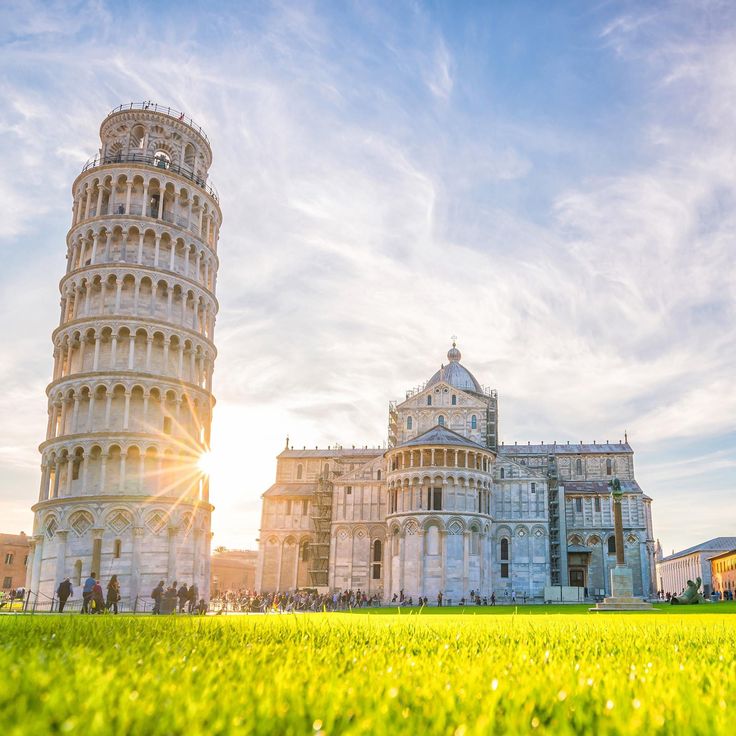

Airport to City Centre, Getting to Pisa & Getting Around, Connectivity and Tips About Pisa
What's in this guide
Every year, millions of visitors arrive in Pisa, photograph the Tower from every possible angle, perhaps climb it, buy a refrigerator magnet, and leave — having spent, on average, two hours in one of Tuscany’s most interesting cities. This is the great Pisa mistake.
The Tower is extraordinary — genuinely so. The physics of it, the audacity of it, the sheer wrongness of a building of that size leaning that far and remaining upright for 850 years is something no photograph fully prepares you for. But the Piazza dei Miracoli around it — the Cathedral, the Baptistery, the Camposanto — represents one of the greatest concentrations of Romanesque architecture in Italy, and it is largely rushed past in the scramble to pose for photographs.
And beyond the piazza: a medieval city of river palaces, one of Europe’s oldest universities, churches of extraordinary quality, a street food culture that belongs entirely to Pisa and to nowhere else, and a calm, authentic Tuscan life that Florence — 80 km away and overwhelmed with visitors — has long since lost. Give Pisa a day. Give it two. It will repay you in full.
“The tower of Pisa is a beautiful work of art, whose inclination, though undesigned, has enhanced its attraction beyond measure.” — John Ruskin, The Stones of Venice
When Is the Best Time to Visit Pisa?
Pisa’s climate is typically Tuscan — warm, dry summers and mild winters — with the added benefit of sea breezes from the Tyrrhenian coast 10 km west. The Campo dei Miracoli is exposed and treeless: summer heat on the piazza between noon and 3pm can be punishing.
Spring — April & May
- Temperatures 16–24°C
- Tuscany in bloom
- Campo not yet at peak crowds
- Long evenings on the Lungarni
- Book Tower weeks ahead
Autumn — Sept & Oct
- Temperatures 18–26°C
- Summer crowds gone
- Golden light on the marble
- University in session — lively
- Best season for eating
Winter — Nov–Mar
- Temperatures 5–14°C
- Fewest tourists of the year
- Tower walkable without crowds
- Some sites reduce hours
- Authentic Pisan atmosphere
Summer — Jul–Aug
- Temperatures 32–37°C
- Campo midday heat brutal
- Tower booked solid: plan ahead
- Tourists at maximum density
- Visit at dawn or dusk only
The dawn visit: The Piazza dei Miracoli opens at 8am. Arriving in the first 30 minutes — with the dew still on the grass, the marble catching the morning light, and almost no other visitors — is one of the genuinely great travel experiences in Italy. The Tower itself can be reserved for the 8am slot. The contrast with the same piazza at noon is total.
Getting to Pisa & Getting Around
Pisa Galileo Galilei Airport (PSA)
Pisa’s airport — named for the city’s most famous scientist — is one of the best-positioned airports in Italy: just 2 km from the city centre, 80 km from Florence, and served by the PisaMover automated shuttle directly to Pisa Centrale station. It handles a growing number of European routes including many low-cost carriers serving Florence as “Pisa Airport.”
Airport to Pisa and beyond — your options in 2026
| Option | Time | Cost | Best for |
|---|---|---|---|
| Private Transfer to Pisa Airport → hotel, door-to-door Recommended |
~10–15 min | Fixed | Families, groups, luggage |
| PisaMover Shuttle Airport → Pisa Centrale (automated) |
5 min | €2.70 | Light luggage, city centre |
| Private Transfer to Florence PSA → Florence, door-to-door |
~60–75 min | Fixed | Florence-bound travellers |
| Train to Florence PisaMover + Pisa Centrale → Florence SMN |
~1h 20min total | €9–15 | Budget, light luggage |
| Official Taxi To Pisa city centre |
~10 min | ~€10–15 | Quick, no booking needed |
The PisaMover: The automated people-mover between the airport and Pisa Centrale station runs every 8 minutes, costs €2.70 and takes exactly 5 minutes. It is one of the most efficient airport connections in Italy. From Pisa Centrale, the Campo dei Miracoli is a 20-minute walk or a 5-minute taxi ride.
Getting around Pisa
Pisa is a compact, largely flat city and is best explored entirely on foot. The Campo dei Miracoli is 20 minutes’ walk from the train station; the Lungarni and Borgo Stretto are 15 minutes from the Campo. The city bus network covers the outer neighbourhoods; a single ticket costs €1.50. Pisa also has one of the best cycling cultures in Italy — bike rental is widely available and the flat terrain makes it genuinely practical.
The Essential Pisa — What You Cannot Miss
The Campo dei Miracoli is the obvious starting point — and rightly so. But the complete Pisa experience requires crossing the Arno and discovering the medieval river city that most visitors never reach.
The Leaning Tower (Torre Pendente)
Construction began in 1173. By the time the third storey was complete in 1178, the soft alluvial subsoil was already causing the lean. Work resumed in 1272 and continued intermittently for nearly 200 years — each phase of construction slightly overcompensating for the tilt, producing the subtle banana-curve in the tower’s profile that is still visible today. It reaches 56 metres on the high side and leans 3.97 degrees from vertical. Between 1990 and 2001, engineers reduced the lean by 44 cm to ensure structural stability. You can still feel the lean as you climb the 294 spiral steps — the staircase seems to rise toward you on one side and fall away on the other. At the top, the seven bells that Galileo Galilei used for his gravity experiments are still there.
Pisa Cathedral (Duomo)
Begun in 1063 to celebrate a naval victory over the Saracens — funded, quite literally, by the spoils of war — the Cathedral is one of the finest Romanesque buildings in Italy, and the model from which Romanesque architecture across Tuscany developed. The façade of blind arcades and inlaid marble panels was the template for cathedrals in Lucca, Pistoia, Siena and beyond. Inside, the pulpit by Giovanni Pisano (1301–1311) is among the supreme achievements of Italian Gothic sculpture — a nine-panel narrative carved with a density and emotional power that prefigures the Renaissance by 150 years. The bronze lamp hanging in the nave is the famous “Galileo’s Lamp” — its swinging, legend holds, inspired his formulation of the law of the pendulum.
Baptistery
The largest baptistery in Italy — started in 1152 by Diotisalvi, modified by Nicola Pisano and his son Giovanni over the following century, producing a building that shows three distinct architectural styles layered into a single structure of extraordinary coherence. Inside, the pulpit by Nicola Pisano (1260) is the critical monument: the work that re-introduced classical sculptural values into Italian art after 700 years of Byzantine convention, directly launching the tradition that leads through Giovanni Pisano, Arnolfo di Cambio, Giotto and Donatello to Michelangelo. The acoustics of the Baptistery are also remarkable — guides demonstrate them daily, filling the domed interior with a sustained chord that fades for almost 20 seconds.
Camposanto Monumentale
The monumental cemetery on the north side of the piazza — a Gothic cloister of extraordinary elegance, begun in 1278, its soil allegedly brought from Golgotha by crusaders returning from Jerusalem. The cloister once contained the finest cycle of 14th-century frescoes in Italy — the Triumph of Death, the Last Judgement and related works — which were 80% destroyed by an Allied incendiary bomb in 1944. The sinopie (underdrawings) were recovered and are displayed separately in the Sinopie Museum. The fragments that survived are still visible in the renovated Camposanto interior, haunting in their incompleteness.
Lungarni & Borgo Stretto
Walk south from the Campo for 15 minutes and cross the Arno at the Ponte di Mezzo — the medieval bridge at the heart of the city’s street life. On both banks, the Lungarni — the palace-lined riverfront promenades — are the most beautiful river walk in Tuscany outside Florence, largely unknown to tourists. Palazzo Gambacorti on the south bank has been the town hall since the 14th century. The Borgo Stretto — a long arcaded shopping street north of the bridge — is where Pisan daily life happens: the coffee bars, the market stalls, the university students. The covered Mercato delle Vettovaglie (19th-century iron market hall) is one block away.
Museo Nazionale di San Matteo
On the Lungarno north bank, the San Matteo museum contains the most important collection of medieval sculpture in Tuscany outside Florence — and is visited by almost no one. Works by Nicola Pisano, Giovanni Pisano, Tino di Camaino and Nino Pisano; paintings by Simone Martini, Masaccio (a polyptych panel from his earliest period), and works from the entire Tuscan medieval school. The setting is a former Benedictine convent of austere Gothic beauty. Entry €5.
The Leaning Tower — Everything You Need to Know
The Tower is the centrepiece of any visit to Pisa. Here is the complete guide to booking it, climbing it and making the most of it.
Booking
Book exclusively at opapisa.it. Third-party resellers use the same ticket system but charge a premium. Your entry time is fixed at 30-minute intervals from 8am. Only 45 visitors are admitted per slot. Cancellation is possible up to 15 days before the visit. In peak season (April–October), book at least 2–3 weeks ahead. In July and August, book a month ahead or more.
Strictly enforced rules: Children under 8 are not permitted to climb the Tower. Bags larger than a small backpack must be left at the luggage storage desk on the piazza (€3–5). Arrive at your reserved slot time — if you are more than 15 minutes late you lose your ticket without refund. No food or drink inside the Tower.
The climb
The Tower has 294 steps in a continuous spiral staircase carved into the wall thickness. It is narrow — one person wide in places — and steep in sections. The lean is immediately perceptible on the staircase: on one side the steps feel as though they are rising toward you; on the other they fall away. There are seven levels with external galleries offering increasingly dramatic views over the Campo and the city. The climb takes 15–20 minutes at a comfortable pace.
At the top
The bell chamber at the summit holds seven bells, still tuned to a musical scale — they are no longer rung, as the vibration would accelerate the lean. The view from the top gallery is 360°: the Campo dei Miracoli immediately below, the Arno valley to the south, the Apuan Alps to the north, and the Tyrrhenian sea glinting 10 km to the west on clear days.
The best photo of the Tower: Is not taken from inside the piazza. Walk to the Via Santa Maria side streets north of the Campo, or to the Piazza del Duomo north-east corner, and you will find angles that show the full lean against an uncluttered sky. The classic “holding up the Tower” photograph is taken from the far east end of the piazza, facing west.
Campo dei Miracoli tickets
The Campo ticket system covers four monuments separately from the Tower. The current prices in 2026:
- Cathedral only: €5. The cheapest entry to the Campo. Includes the Cathedral interior with the Giovanni Pisano pulpit and Galileo’s Lamp.
- 2-monument pass (Cathedral + one other): €8. Add the Baptistery, Camposanto or Sinopie Museum to the Cathedral.
- Full Campo pass (all 4 monuments): €15. Cathedral + Baptistery + Camposanto + Sinopie Museum. Recommended for a complete visit. Does not include the Tower climb.
- Tower climb: €20 (always separate). Book at opapisa.it before arrival. Campo pass tickets can be bought on-site at the ticket offices on the north side of the piazza.
What to Eat in Pisa — and Where
Pisan cuisine is Tuscan at its core but with its own specific character — shaped by the university, the port and the centuries of maritime trade that brought rice, salt cod and spices into a city that also had access to the finest Tuscan olive oil, Chianti wine and Maremma cattle. The defining Pisan foods are cecina, torta co’ bischeri and the city’s exceptional baccalà.
Cecina
Pisa’s name for chickpea flatbread — farinata in Genoa, socca in Nice. A thin, slightly crispy, deeply savoury disc baked in a wood-fired copper pan, eaten in a paper wrapper with black pepper. Pisa’s version is slightly softer than the Ligurian. Il Montino in Vicolo del Monte is the most celebrated address. Queue at the counter, eat on the street.
Torta co’ Bischeri
Pisa’s unique sweet tart — a pastry shell filled with a mixture of rice, dark chocolate, candied fruit, pine nuts and spices. Bischeri is the Pisan word for “foolish,” allegedly referring to a noble family who sold their land to the Florentines for a bad price. A slice costs €2–3 at any Pisan pasticceria. It is the city’s most distinctive sweet and found nowhere else in Tuscany.
Baccalà alla Pisana
Salt cod braised with leeks, tomato, black olives, pine nuts and capers — the Pisan version of a dish common across the Mediterranean, distinguished by the local use of Ligurian olive oil and the particular sweetness of the leek base. Found at any serious traditional restaurant in the city and particularly good in autumn and winter when the university term is in session.
Schiacciata con l’Uva
In September and October, during the grape harvest, bakeries throughout Pisa fill their windows with schiacciata all’uva — flatbread dough baked with fresh Sangiovese grapes pressed into the top, sweet and slightly fermented from the must. One of the great seasonal foods of Tuscany and available for a matter of weeks.
Salame Toscano
Pisan butchers make one of the finest Tuscan salami — coarsely ground pork fat and meat, seasoned with black pepper and garlic, aged for a minimum of three months. Eaten on unsalted Tuscan bread (pane sciocco) with a glass of Morellino or Sangiovese. Buy it at the Mercato delle Vettovaglie and eat it on the Lungarno.
Pici al Cinghiale
Hand-rolled thick spaghetti — pici — with wild boar ragù, rosemary and red wine. The most Tuscan of all pasta combinations, found on every serious trattoria menu from September through March. The pasta is made fresh daily; the boar is slow-cooked for at least four hours. Order it.
Morellino di Scansano
The wine of the Maremma coast — Sangiovese-dominant, a little rougher and more mineral than Chianti Classico, with a warmth and directness that pairs perfectly with the cecina and the baccalà. A glass in a Pisan osteria costs €3–4. A bottle to take away from the Mercato delle Vettovaglie: €8–12.
Gelato Artigianale
Pisa’s university population means the city has a genuinely competitive gelato scene. Look for small metal tubs, natural colours and the word artigianale. Gelateria De’ Coltelli on the Lungarno Pacinotti is widely considered the finest in the city: small production, seasonal ingredients, no artificial colours.
Where to eat
The best eating in Pisa is in the streets between the Borgo Stretto and the Arno — particularly around Via San Frediano, Via Cavalca and the streets of the university quarter between Piazza dei Cavalieri and the river. Avoid everything within 200 metres of the Campo dei Miracoli.
- Osteria dei Cavalieri — Via San Frediano 16
The finest traditional restaurant in Pisa, in a 16th-century palazzo between the university and the river. Outstanding cecina, baccalà alla pisana and seasonal Tuscan cooking. Book ahead. - Il Montino — Vicolo del Monte 1
The most beloved cecina and torta co’ bischeri specialist in the city since 1969. Cash only. Always crowded with students and locals. Queue at the hatch, eat on the steps. €3 for a full portion of cecina. - Lo Schiacciasassi — Via San Martino 14
Seasonal Tuscan cooking at fair prices. The pici al cinghiale and the ribollita are outstanding. Friendly service, good local wine list, no tourist pricing.
For pastry and market food:
- Gelateria De’ Coltelli — Lungarno Pacinotti 11
The finest gelato in Pisa. Seasonal flavours, small production, no artificial colours. Sorbetto di more (blackberry) and pistachio are the benchmarks. - Mercato delle Vettovaglie — Piazza delle Vettovaglie
The covered 19th-century iron market. Fresh pasta, local salami, Tuscan cheeses, seasonal fruit. The best place to buy torta co’ bischeri to take home.
The Campo tourist trap: Every restaurant within sight of the Leaning Tower charges inflated prices for food that is often mediocre. Walk 15 minutes south to the Borgo Stretto and Lungarni area. Quality doubles, price halves, and you eat alongside actual Pisans rather than tour groups.
Mistakes to Avoid in Pisa
Pisa’s most common mistake takes only two hours. Here is how to avoid all of them.
- Don’t visit the Tower without a pre-booked ticket. Walk-up ticket availability is limited and unpredictable. In peak season (April–October), the 45-person-per-slot system means all good morning slots are gone by the time you arrive. Book at opapisa.it before you leave home.
- Don’t leave after two hours. The Campo dei Miracoli alone deserves a full morning. The Cathedral pulpit, the Baptistery acoustics and the Camposanto frescoes are each major artistic experiences. Cross the Arno in the afternoon and discover the city most visitors never see.
- Don’t eat near the Campo. The restaurants facing the piazza are among the worst value in Tuscany. Walk 10–15 minutes south. The quality difference is immediate and dramatic.
- Don’t skip the Baptistery. Nicola Pisano’s pulpit (1260) is the single most important work of art in Pisa that is not the Tower. It launched the rediscovery of classical sculptural values that eventually produced the Renaissance. Its position in art history is equivalent to Giotto’s in painting. Most visitors walk past it to photograph the Tower.
- Don’t be late for your Tower slot. Your entry is timed. If you arrive more than 15 minutes late, you lose your ticket without refund. The Tower keeps no waiting list at the gate.
- Don’t skip Lucca. Twenty-two kilometres from Pisa (30 minutes by train, €4), Lucca is one of the most beautiful small cities in Italy — its intact Renaissance walls, medieval towers and exquisite Duomo make it the perfect half-day combination with Pisa. Arrive in Pisa in the morning, go to Lucca in the afternoon.
- Don’t use the airport transfer to just get to Florence. If you fly into Pisa Airport and need to go to Florence, a private transfer (1 hour) is the most comfortable option — but if you have an afternoon free, stop in Pisa first. The airport to the Campo is 15 minutes. You can see the Tower, the Cathedral and the Baptistery and still reach Florence for dinner.
- Don’t miss cecina at Il Montino. Queue at the counter in Vicolo del Monte 1. Order cecina. Eat it on the street. It costs €3. It is the most authentic food experience in Pisa and the one most visitors never find.
Practical Information for Pisa 2026
Money & payments
Pisa is largely cashless. Keep €10–20 for Il Montino (cash only), market stalls and the occasional old-style osteria. ATMs are widely available throughout the city centre.
Dress code
The Cathedral, Baptistery and all Pisan churches require covered shoulders and knees. The Tower itself has no dress code but does require sturdy footwear — the marble steps can be slippery, particularly when damp.
Connectivity
EU visitors use domestic plans. Non-EU visitors: SIM cards from TIM, Vodafone or WindTre available at the airport and throughout the centre. Free WiFi at the airport and in many cafes throughout the city.
Safety
Pisa is a very safe city. The main risk is minor pickpocketing around the Campo dei Miracoli in peak season. The university population makes the city lively and safe at all hours in the centre. The Lungarni are comfortable day and night.
Emergency numbers
Day trips from Pisa — the best of western Tuscany
Lucca — 22 km, 30 min by train (€4). Intact Renaissance walls (walk on top), medieval towers, exquisite Romanesque Cathedral. The finest half-day trip from Pisa and arguably one of the most beautiful small cities in Italy. Florence — 80 km, 45–80 min by train depending on service (€9–15). The obvious combination — fly into Pisa, stop for the Tower, continue to Florence. San Miniato — 40 km, 30 min by train. The truffle capital of Tuscany, host of the White Truffle Fair in November. Volterra — 50 km by private transfer. A hilltop city of Etruscan origins with a medieval centre of extraordinary austerity and some of Italy’s finest alabaster workshops. Cinque Terre — 80 km north, 1h by private transfer or 1h 40min by train. The five clifftop fishing villages of the Ligurian coast. Livorno — 25 km south, 25 min by train. Pisa’s harbour city — underrated, authentic, with the finest seafood in Tuscany.