
Airport to City Centre, Getting to Agrigento & Getting Around, Connectivity and Tips About Agrigento
What's in this guide
In 582 BC, Greek colonists from Gela and Rhodes sailed along the southern coast of Sicily, climbed a ridge above the sea and founded a city they called Akragas. By the 5th century BC it was the fourth largest city in the Greek world after Athens, Corinth and Syracuse, and its citizens commissioned temples of a scale and ambition that has never been equalled anywhere in the Greek world.
Two and a half millennia later, those temples are still there. The Valle dei Templi, the Valley of the Temples, preserves the most complete and most extraordinary ancient Greek city outside Greece itself. Seven temples, a sacred sanctuary, an early Christian necropolis, and one of the most evocative archaeological landscapes in the world: golden limestone columns against blue Sicilian sky, almond and olive trees in the spaces between, the sea glinting in the distance. It is not a ruin. It is a civilisation in suspension.
Sixty kilometres to the north, on a hillside above the Gulf of Castellammare, the isolated Doric temple of Segesta occupies a position so perfectly calculated: a bowl of hills on three sides, the sea on the fourth: that it seems less built than discovered. It was never completed. The column drums have no fluting. The floor of the cella was never laid. And yet it is, by near-universal agreement, the most beautiful Greek temple in existence.
Akragas: the finest city of mortals. Pindar, Pythian Odes, 490 BC
When Is the Best Time to Visit?
The Valle dei Templi and Segesta are outdoor archaeological sites with very little shade. The timing of your visit is one of the most important practical decisions you will make: the difference between a transcendent experience and an ordeal by heat is measured in hours.
February & March. Almond Blossom
- Temperatures 12–18°C
- Almond trees in full bloom in the valley
- Almost no tourists
- Sagra del Mandorlo in Fiore (Feb)
- Extraordinary photographic light
April & May
- Temperatures 18–25°C
- Wild flowers across the valley
- Spring light on the golden limestone
- Manageable crowds
- Best conditions for the full park walk
Autumn: Oct & Nov
- Temperatures 18–26°C
- Harvest season in the surrounding hills
- Summer heat gone
- Evening light show continues
- Very few visitors
Summer: Jun & Sep
- Temperatures 35–42°C
- Zero shade on the site
- Midday is genuinely dangerous
- Visit only at dawn or evening
- Evening light show: extraordinary
The almond blossom window: In February, the ancient almond trees that grow between and around the temples come into full white blossom: a phenomenon so celebrated that the Sagra del Mandorlo in Fiore festival has been held here every year since 1934. The temple of Concordia surrounded by white almond blossom is one of the great landscape compositions in Italy, and the site is almost entirely empty. If you can visit in February, do.
Summer heat warning: In July and August, temperatures at the Valle dei Templi regularly exceed 40°C. The site is almost entirely exposed limestone with no shade between temples. Visiting between 11 am and 5 pm in summer is a genuine health risk, not merely an inconvenience. If visiting in summer, use only the dawn opening (8:30am) or the evening light show (from 7:30pm). Bring at least 2 litres of water per person.
Getting to the Valle dei Templi: Segesta
Location
The Valle dei Templi is located immediately south of Agrigento city, on the southern coast of Sicily. Segesta is in the northwest of Sicily, 60 km from Palermo and 130 km from Agrigento. Neither site is easily reachable by public transport from the other, which is why a private transfer allowing you to combine visits and control timing is by far the best option for most visitors.
Getting there: your options in 2026
| From | To | Time | Best option |
|---|---|---|---|
| Palermo | Valle dei Templi (Agrigento) | ~2h | Private transfer or train (2h 30min, €13) |
| Palermo Airport (PMO) | Valle dei Templi (Agrigento) | ~2h 15min | Private transfer (recommended) |
| Catania | Valle dei Templi (Agrigento) | ~2h 30min | Private transfer (train: 3h 30min+) |
| Palermo | Segesta | ~50–60 min | Private transfer or train (Segesta-Tempio station) |
| Within the Valle dei Templi | East to West zone | ~1h walk | Walking (flat terrain) or shuttle bus |
Why a private transfer makes all the difference here: The Valle dei Templi and Segesta are both isolated sites where arrival time is critical (early morning or evening). A private transfer allows you to: (1) arrive at the Valle dei Templi at exactly 8:30 am opening; (2) wait at the site during the midday heat in an air-conditioned car; (3) combine Segesta with the Valle dei Templi on the same day; and (4) return directly to your hotel without navigating Sicilian train connections. It is the difference between a logistics problem and a perfect day.
Segesta by train: the scenic option
There is a train station called Segesta-Tempio on the Palermo-Trapani line. Only one of two or three trains per day stop there. If the timetable works for you (check carefully at trenitalia.com), the journey from Palermo takes about 1 hour and deposits you 1.5 km from the temple, which is easily walkable. This is a beautiful and atmospheric way to arrive, but the infrequent service means you must plan very carefully around the return train.
Valle dei Templi. The Complete Guide
The archaeological park of the Valle dei Templi covers approximately 1,300 hectares and is divided into two main zones: the Eastern Zone (the most dramatic, containing the best-preserved temples) and the Western Zone (the ruins of the largest temples, more fragmentary but equally significant). Between and around them, olive trees, almond trees and wild herbs occupy the same ground where Pindar celebrated victory and Theron built his empire.
Temple of Concordia (Tempio della Concordia)
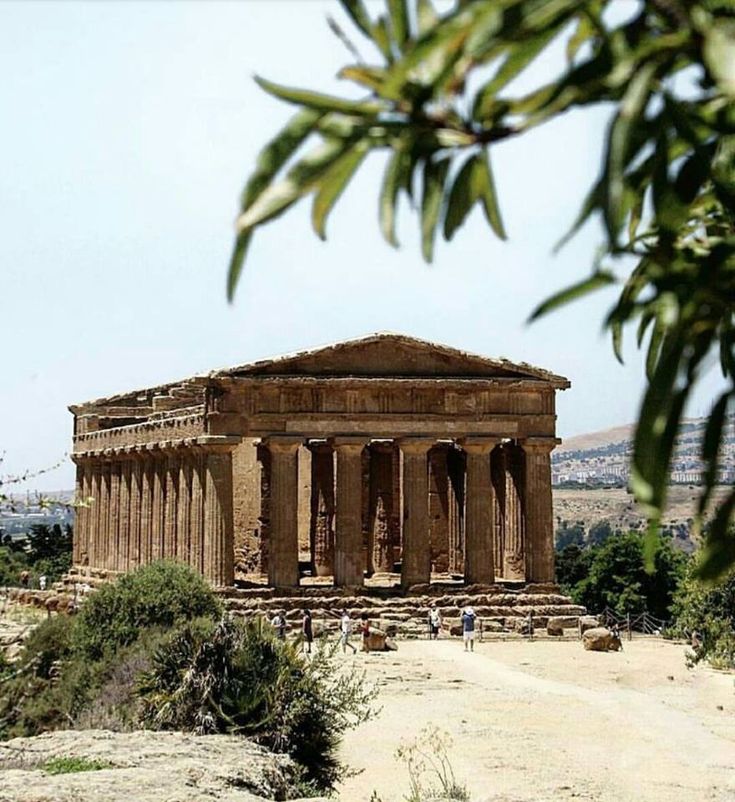
The best-preserved Doric temple in the world and arguably the most beautiful. Built around 430 BC, it owes its extraordinary state of preservation to a single fact: in the 6th century AD, the Bishop of Agrigento converted it into a Christian church, filling the spaces between its columns with walls and cutting doorways through the stone. This saved it from the medieval quarrying that destroyed the other temples. The result is a building that has stood for 2,450 years with 34 of its original 36 columns still upright. In the afternoon light, the golden limestone turns the colour of honey. Walk around it completely: the colonnade, the cella, the opisthodomos: and you are standing where Greeks stood in the 5th century BC looking out over the same sea.
Temple of Hera Lacinia (Juno)
At the eastern end of the Via Sacra, on the highest point of the ridge, the Temple of Hera overlooks the valley and the sea on three sides. Built around 450 BC, it was partially destroyed by fire: the scorch marks are still visible on some column drums: possibly during the Carthaginian sack of 406 BC. Thirty columns and much of the entablature survive. The approach along the ancient road, with the temple appearing above the ridge line against the sky, is the finest arrival sequence in the valley. Walk it rather than taking the park shuttle.
Temple of Heracles (Eracle)
The oldest temple in the valley, built around 510 BC (slightly before the Athenian Parthenon) and the one most loved by the Akragantines themselves, who built a cult around the hero Heracles. Much destroyed (only 8 of the original 38 columns were re-erected in 1924 by a British archaeologist named Alexander Hardcastle), but the section with standing columns has the most romantic atmosphere in the valley: eight drums rising from an almond grove, the sea visible through the gaps.
Temple of Zeus Olimpico (Olympeion)
When complete, this was the largest Doric temple ever built: 113 metres long and 56 metres wide, covering an area larger than a football pitch. Built to celebrate the Akragantine victory over the Carthaginians at the Battle of Himera in 480 BC, it was so enormous that it was apparently never finished (or finished in such a compromised form that the ancient sources disagree on its appearance). The temple fell in an earthquake in the medieval period and was subsequently used as a quarry; what remains is a vast plain of tumbled limestone. The key to understanding it is in the museum: the Telamon, a 7.5-metre figure of a man with arms raised, used (or designed to be used) as an architectural support, gives the scale of what this building intended.
Temple of the Dioscuri (Castore e Polluce)
The most photographed image in the Valle dei Templi: four columns and a section of entablature from the Temple of Castor and Pollux, re-assembled from fragments in the 19th century (somewhat inaccurately, archaeologists now believe) into a composition that is technically a pastiche but remains the most elegant silhouette in the western zone. Set against the sea at sunset, it is the defining visual of the site. Nearby, the foundations of the sanctuary of the chthonian deities: a space of outdoor altars and sacred enclosures dedicated to Demeter and Persephone: are among the most atmospheric in the park.
Museo Archeologico Regionale Pietro Griffo
The finest archaeological museum in Sicily, housed in a former convent of San Nicola adjacent to the park, provides the essential context for what you have seen in the valley. The centrepiece is the reconstructed Telamon (7.5m), laid horizontally so you can study every detail of its carved face and massive arms. Beyond it: the extraordinary Ephebe of Agrigento (a marble youth from c. 480 BC, among the finest Greek sculptures in Italy), the valley’s coin collection, painted vases, architectural terracottas and a display of the city’s water management system: a feat of hydraulic engineering as impressive as the temples themselves.
The evening light show
From April to October, the Valle dei Templi offers evening visits: the site opens from 7:30pm, the temples are dramatically lit, the temperature is bearable, and the effect of floodlit golden limestone against a darkening Sicilian sky is extraordinary. Tickets: €10. Book at valledeitempli.net. This is the recommended visit for anyone arriving in summer; the dawn opening is equally fine but requires early arrival from Palermo.
The photographer’s secret: The Temple of Concordia faces slightly east. The best light falls on its eastern façade at dawn (8:30–9:30am) and on its western façade at dusk (5–7pm depending on season). The evening light show (artificial) produces the most dramatic images but the most plastic quality. Dawn gives the truest light: the golden limestone at its most golden, the sea at its most silver. Come for both if you can.
Segesta: The Isolated Temple
Segesta was not a Greek colony. It was an Elymian city: one of the indigenous Sicilian peoples who may have been descended from Trojan refugees (according to the Greeks and Romans, who had obvious narrative incentives for this claim) and who built their city in the northwestern hills of Sicily in a state of near-permanent conflict with the Greek city of Selinus to the south.
In approximately 420 BC, the Elymians commissioned a Doric temple in the Greek style: possibly as a diplomatic statement toward Athens, with whom they were seeking an alliance against Selinus. The temple was never finished. The column drums have no fluting. The interior cella floor was never laid. The roof was never completed. And yet the essential structure: the stylobate, the columns, the entablature, the pediment: is entirely intact, in a state of preservation that makes even the Temple of Concordia look embattled.
The temple
Thirty-six columns of local limestone, 9 metres tall, surrounding a never-completed cella on a three-stepped platform. The columns are peristyle (surrounding the building on all four sides) and their slight entasis (the almost imperceptible swelling that Greek architects built into columns to prevent the optical illusion of concavity) is still visible if you look carefully. The site is entirely open: there is no fence around the columns, no barrier, no distance enforced between you and 2,400 years of stone. You can walk among them, touch them, sit on the steps. The silence, broken only by wind and occasionally by the buzzards that circle overhead, is one of the most complete in Italy.
The hill view: From the temple, a footpath (20 minutes) or a shuttle bus (included in the site ticket supplement) climbs to the Greek theatre above: a 4th-century BC theatre of modest size but extraordinary position, cut into the hillside and looking north over the Gulf of Castellammare and the mountains of western Sicily. The view from the cavea is among the finest from any Greek theatre in Italy. In summer, the theatre hosts classical drama performances.
Getting to Segesta
Segesta is 60 km from Palermo (50–60 minutes by private transfer via the A29 motorway). The site is located just off the A29 motorway, well signposted. There is a car park at the entrance. Tickets (€10) are bought at the site entrance; no advance booking is required. The site is open daily from 9am to one hour before sunset.
Segesta + Erice in one day: The hill town of Erice: a medieval city in a cloud at 750 metres above Trapani: is 30 minutes from Segesta by private transfer. Combining both in a half-day from Palermo is one of the finest excursions in western Sicily: the isolated Greek temple in its open valley, followed by the medieval streets and the almond pastries of Erice’s famous pasticcerie. Return to Palermo for dinner.
Tickets, Practical Planning & Itineraries
Valle dei Templi tickets 2026
- Full park ticket: €15 (Eastern + Western zones). Reduced €8 (EU citizens 18–25). Under 18 free.
- Museo Griffo only: €10. Separate ticket for the archaeological museum near San Nicola.
- Combined park + museum: €20. Best value for a full-day visit. Book at valledeitempli.net.
- Evening visit (Apr–Oct): €10. From 7:30pm. Temples illuminated. No museum access in the evening.
Suggested itineraries
Valle dei Templi Full Day
8:30am: Arrive at park opening (Eastern entrance). Walk the Via Sacra from Temple of Juno to Temple of Concordia to Temple of Heracles. 10:30am: Western zone: Temple of Zeus and Temple of the Dioscuri. 12pm: Lunch in Agrigento old town (return to car or take bus). 3pm: Museo Griffo: see the Telamon and the Ephebe. 6pm: Return to the park for the evening golden hour light on the Temple of Concordia. Best of all worlds.
Valle dei Templi + Segesta + Erice
Day 1: Full Valle dei Templi as above. Stay overnight in Agrigento (or drive back to Palermo). Day 2: From Palermo: private transfer to Segesta (60 km). Arrive 10am. Temple visit (1 hour). Shuttle bus to theatre (30 min). Lunch near the site. Afternoon: 30-minute drive to Erice. Medieval town, almond pastries, views over Trapani. Return to Palermo for dinner. The finest two-day Sicily circuit from Palermo.
Segesta Half-Day from Palermo
Leave Palermo 9am. Arrive Segesta 10am. Visit the temple (45 min). Take the shuttle bus to the theatre (30 min view). Return to Palermo by 1pm in time for lunch in the Ballarò market. This is the most time-efficient visit to one of the finest ancient monuments in Europe. Highly recommended as a first introduction to Sicilian archaeology before the deeper immersion of the Valle dei Templi.
What to Eat Near the Valle dei Templi
Agrigento sits at the edge of the Sicani hills: a landscape of wheat, almonds, pistachios and sulphur-tinged earth, and its cuisine reflects this inland, agricultural character: heavier and more austere than the coastal Sicilian cities, shaped by centuries of poverty and the land’s specific produce. The food of the area is not fashionable. It is serious and extremely good.
Pasta con i Finocchietti
Pasta (usually spaghetti or bucatini) with wild fennel from the hills, sardines, saffron, pine nuts and raisins: the Agrigento version of the Palermitan pasta con le sarde, with a slightly sweeter profile. A dish that tastes of the specific landscape around these temples.
Agnello delle Madonie
Slow-roasted lamb from the Madonie mountains north of Agrigento, seasoned with wild herbs, lemon and olive oil from the valley’s own trees. Found at any serious agriturismo or trattoria around the park. Order it on Sundays when it is prepared properly.
Mandorle di Agrigento
The almond trees that bloom in the Valle dei Templi in February are part of a living almond-growing tradition: the Agrigento almond (particularly the Pizzuta d’Avola variety from nearby Naro) is considered among the finest in the world. Buy bags of toasted almonds, marzipan and almond pastries at any pasticceria in Agrigento old town.
Cassata Agrigentina
The local version of the Sicilian cassata: a dome of ricotta, sponge cake and candied fruit covered in marzipan, with a slightly different proportion of ricotta to sponge and a local taste for bitter orange peel. Available at every pasticceria in the old town. Eat it cold.
Pesce Azzurro
The bluefish of the southern Sicilian coast: mackerel, anchovies, sardines, tuna grilled, marinated or preserved in olive oil. The coast at Porto Empedocle (5 km from Agrigento) lands some of the finest fish in Sicily. Ask any restaurant which species arrived that morning.
Sfinci di San Giuseppe
Fried ricotta doughnuts: a Sicilian tradition specifically associated with the feast of St Joseph (March 19). In Agrigento, they are sold from street stalls throughout the spring and make a perfect, fuel-giving breakfast before the temple walk.
Vino della Valle dei Templi
The DOC zone of the Valle dei Templi produces wines from Nero d’Avola, Grecanico and Inzolia on the same hillsides as the ancient city. Nero d’Avola: dark, warm, slightly tannic: is Sicily’s finest indigenous red grape and pairs perfectly with the area’s lamb and grilled fish. Order the local producer rather than the famous names.
Arancine di Agrigento
Agrigento’s version of the Sicilian fried rice ball: slightly larger than Palermo’s, filled with ragù and peas or butter and mozzarella, with a thick, crispy coating of breadcrumb. The best are found at the bar-pasticcerie in the Agrigento old town that open at 7am and sell out by noon.
Where to eat in Agrigento
The best eating is in Agrigento old town (the medieval hill town above the archaeological park, not the lower modern city), particularly around Via Atenea and the streets near the Cathedral.
- Trattoria dei Templi in Via Panoramica dei Templi 15
The most celebrated restaurant near the park. Excellent pasta con i finocchietti, grilled fish from Porto Empedocle, and a local wine list that takes the area’s DOC producers seriously. Book ahead for dinner. - Osteria Expanificio in Via Ficani 3, Agrigento old town
A small, well-priced osteria in the historic centre. Outstanding arancine, pasta al forno and local Nero d’Avola by the carafe. The most authentic lunch in the city. - Agriturismo Villa Athena in Via Passeggiata Archeologica 33
The only hotel inside the archaeological park. The restaurant terrace faces directly onto the Temple of Concordia: arguably the finest restaurant view in Sicily. Dinner in particular is extraordinary. Book months ahead in summer.
Practical eating note: There is a cafe bar inside the Valle dei Templi park (near the Temple of Concordia), but it is expensive and limited. Pack water (at least 2 litres per person in warm weather), energy snacks and sunscreen. A proper meal is best taken in Agrigento old town before entering the park in the morning or after your visit in the evening: not during the midday heat inside the site.
Mistakes to Avoid
The Valle dei Templi and Segesta reward preparation and punish the casual. Here is how to get the most from both.
- Don’t visit the Valle dei Templi between 11am and 5pm in summer. The site is exposed limestone with almost no shade. Temperatures exceed 40°C. Use the dawn opening (8:30am) or the evening light show (7:30pm). This is not a preference: it is a safety issue.
- Don’t skip the Museo Griffo. Without the museum, the fragments and foundations of the western zone make little sense. The Telamon and the Ephebe of Agrigento seen after the park walk transform the entire experience. The museum is one of the finest archaeological collections in Italy and is almost always quiet.
- Don’t rush through the site in 90 minutes. The Valle dei Templi is a 1,300-hectare city, not a single monument. Allow a full day. Walk between temples rather than taking the shuttle. The landscape between them: the ancient olive trees, the wild herbs, the fragments of walls: is as important as the temples themselves.
- Don’t underestimate the distance from Palermo. Agrigento is 130 km from Palermo: 2 hours by road. Many visitors book a day trip from Palermo and arrive at 11am in July, spending the worst hours of the day on the most exposed site in Sicily. If visiting from Palermo: leave by 6:30am to arrive at the 8:30am park opening. Alternatively, stay overnight in Agrigento.
- Don’t try to visit Segesta and the Valle dei Templi on the same day by public transport. They are 130 km apart and public transport connections between them are extremely slow. Use a private transfer if you want to combine both, or visit them on separate days.
- Don’t miss the Segesta theatre. Most visitors to Segesta see the temple, take the photograph and leave. The shuttle bus to the Greek theatre (10 minutes, €2) reveals a completely different aspect of the site and the view north over the Gulf of Castellammare is among the finest from any Greek theatre in Italy.
- Don’t eat inside the park at the tourist bar. The prices are inflated and the food is mediocre. Pack snacks and water, have a proper breakfast in Agrigento old town before entering, and eat a proper meal after your visit.
- Don’t visit in February without checking the almond blossom calendar. The almond trees in the Valley of the Temples typically blossom in February (sometimes late January), but the precise timing varies by year. Check the Sagra del Mandorlo in Fiore festival date for 2026 (normally held in the first two weeks of February): the festival marks the peak blossom period.
Practical Information 2026
Valle dei Templi opening hours
The park opens daily at 8:30am. Closing time varies by season: 7pm in winter, 10pm in summer (evening visit). The site museum (Museo Griffo) opens 9am–6pm (last entry 5pm). On the first Sunday of the month, entry is free: expect significant crowds.
Segesta opening hours
Open daily from 9am to one hour before sunset. Theatre shuttle bus operates during opening hours (€2 supplement). No advance booking required. Tickets (€10) at the site entrance. The site is occasionally closed for conservation work or special events. Check at parcoarcheologicosegesta.it before visiting.
What to bring
Water (2 litres minimum per person in warm weather). Sunscreen and a hat: the site has almost no shade. Comfortable walking shoes: the terrain is uneven limestone. A light layer for the evening visit (temperatures drop quickly after sunset). A camera with a wide-angle lens: the temples are too large for a standard lens at close range.
Getting around the Valle dei Templi
The park has a free shuttle bus between the eastern and western zones. The full walk between all temples covers approximately 4 km of slightly uneven terrain on paths and ancient roads. The site is partly accessible for visitors with mobility difficulties: the shuttle bus and the paved paths serve the main temples, but some sections involve uneven ground.
Where to stay
Inside the park: Villa Athena (unique position facing the Temple of Concordia, expensive but extraordinary). Agrigento old town: several B&Bs and small hotels in the medieval hill town, 15 minutes’ walk or 5 minutes’ drive from the park entrance. In Palermo: the most practical base for combining the Valle dei Templi with Palermo itself, Segesta and other western Sicily sites. Transfer to Agrigento is 2 hours.
Emergency numbers
Other archaeological sites nearby
Selinunte: 55 km west of Agrigento. The ruins of the ancient Greek city of Selinus: Segesta’s great rival: covering 270 hectares: the largest archaeological park in Europe. The eastern temples (partially re-erected) are the finest in scale after the Valle dei Templi. Sciacca: 45 km west, a beautiful thermal spa town on the coast with a spectacular medieval centre and outstanding seafood. Eraclea Minoa: 40 km west of Agrigento, a small but perfectly positioned Greek theatre overlooking white chalk cliffs above the sea: almost completely unknown to tourists and entirely extraordinary.